Battles were fought across the country during the U.S. Civil War more than 150 years ago. A few of those battles were fought right here in Arizona.
As a matter of fact the farthest west Civil War conflict was near Picacho Peak, the summit that sits 50 miles north of Tucson.
Did you know experts say it was not a battle?
This is what happened when Union and Confederate soldiers came across each other near Picacho Peak in 1862.
Depending on whose historical documents you read, the Civil War battle at Picacho Peak happened on two different days. Union soldiers said it was on April 15, 1862. The Confederates said it was on April 16. Historians say it took place April 15.
“No! No battle. Of the participants in the actual engagement on both sides would have been 23 soldiers,” said Jay Van Orden, a retired Arizona Historical Society curator.

Van Orden has also spent decades reenacting pivotal moments of the old southwest, including the Union and Confederate Civil War gun fight at Picacho Peak.
“At most it turned out to be a skirmish. It was never to happen. Neither side intended to shoot anybody,” he added.
Well, at least not until the California Union Cavalry reached Tucson. The volunteer army group of several dozen soldiers were traveling 500 mile for a surprise attack on Confederate soldiers stationed in Tucson. The Union soldiers marched east from Yuma to Casa Grande on a route that today is Interstate 8.
Lt. James Barrett led one of two small groups sent to sweep for Confederate rebels. Barrett and his men stumbled upon 10 confederate rebels lounging around a camp site. Without the rest of the cavalry, he and his small troop confronted the enemy.
“For almost an hour, the Union and Confederate soldiers at the base of Picacho Peak played a cat and mouse game,” said Andy Masich, author of a book about the Picacho Peak encounter.

"They were taking pot shots at each other firing and moving, firing and moving and never really quite seeing their adversaries,” Masich said.
He said when the rest of the cavalry arrived, Barrett and two of his men were dead, and others were injured. Barrett and the others were buried near the scene, and the Union Cavalry retreated.
Years later, the two buried soldiers were reintered in Tucson. Barrett’s grave remained on the foothills of Picacho Peak. The grave marker deteriorated over the years, and Barrett’s gravesite was lost.
“He was the first to die for the Union in Arizona, and that’s one of the reasons we do remember the skirmish at Picacho Pass,” Masich said.
About the Picacho name. Picacho in Spanish means high peak. So when we say Picacho Peak, we are actually saying Peak Peak. That is why experts often refer to it as Picacho Pass.
-
 Long-distance runner Louis Tewanima lays claim to being the first Arizonan to ever make the podium at the Olympic Games. In 1912, the very same year Arizona became a state, Tewanima won a silver medal in Stockholm, Sweden.
-
 Janelle Molony has delved into that history in her new book "Birds Gone Wild (And Other Stories of Arizona Ostrich Ranching)."
-
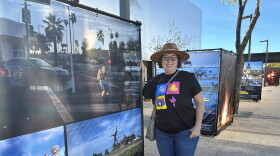 Maryvale is hosting its first ever arts festival this weekend, celebrating local artists and other creatives from the neighborhood. The event will also feature a photography exhibition honoring the work of the late Arizona Republic photojournalist Nick Oza.
-
 Legend has it that in the Superstition Mountains east of the Phoenix metro area, there is a vein of gold. It’s called the Lost Dutchman’s Gold Mine — and it’s never been found, though many people have tried.
-
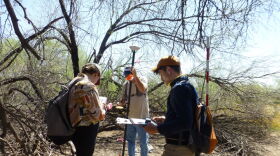 Matt Kroot, archaeologist and an assistant professor in ASU’s School of Human Evolution and Social Change, worked on a project about the city's history starting in 1923.