


Arizona added the second most battery storage of any state nationwide in the first three months of this year.
That’s according to a new report from the Solar Energy Industries Association.
Arizona added about 940 megawatt hours of utility-scale battery storage in the first quarter of this year. That’s about as much energy as 1,000 homes use for a month.
It's also, however, about 36% less than was added the same time last year in the state.
Despite that drop, SEIA anticipates there will still be strong battery storage growth for the rest of the year nationally. Joan White with the organization says batteries have a specific strength relevant this year.
“Unlike fossil fuels that have high price volatility related to geopolitical occurrences, solar and storage have a very stable price profile. So I think in this particular moment, we're seeing a lot of utilities look to solar and storage," White said.
She says batteries are helping utilities handle peak power later in the day.
"They're storing solar power during the day, and then when the sun goes down, they're covering that high ramping period when you suddenly have a lot of demand popping onto the system in the evening," White said.
The report also found that beyond utility growth, data centers drove strong growth off the grid.
-
 Last month, Corporation Commissioner Lea Márquez Peterson asked Arizona utilities to explain how prices and reliability could be impacted if the Pacific Northwest's Bonneville Power Administration does not join their new resource trading market.
-
 The Arizona Corporation Commission is facing a complaint accusing it of violating the state’s open meeting law after it voted to redact video of a public meeting where commissioners talked about a staffer who was recently fired.
-
 Data analyst Abhay Padgoankar says a group of around 100 data centers and other large industrial users have nearly all of the increased demand on APS's system in recent years. To keep up with demand, he says, the utility is buying more power from outside suppliers and charging that across the entire rate base.
-
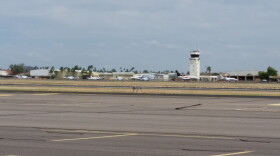 The Mesa City Council approved landing fees at Falcon Field airport in March to help keep the airport self-sustaining. In April, the Federal Aviation Administration initiated a review over concerns the fees target specific airport users.
-
 New federal data shows a wide gap in the amount of carbon pollution produced by electricity generation across the West, reflecting stark differences in how states produce their power.


