Rising oil prices have increased costs for many industries, including aviation, resulting in costlier airline ticket prices and canceled flights.
For flight schools, such as Texas-based Thrust Flight, rising fuel costs could also affect flight training costs.
Patrick Arnzen is the CEO of Thrust Flight school, which offers courses at Mesa’s Falcon Field. He says flight training is already very expensive.
“It makes operating a business like mine incredibly difficult,” Arnzen said. “When you attribute 30% of the cost of a flight directly to fuel, it's a big number.”
Flight schools like Thrust Flight use both aviation gas and jet fuel. Data from the International Air Transport Association show prices for jet fuel have more than doubled in the last year, but the organization does not track avgas prices. Avgas is high-octane gasoline — usually 100LL (low-lead) — and is used for piston-powered aircraft, whereas jet fuel, like Jet A, is kerosene based.
Arnzen said his students pay a fixed cost, but if fuel costs remain high, he will have to raise tuition for his students next year.
“Fuel prices affect us the same way it affects us at the gas pumps for our cars and for our trucks, so you know we've seen a huge increase in our fuel cost as we do flight training for all of our students,” Arnzen said.
Arnzen said he will evaluate prices at the end of the year.
-
 Phoenix Sky Harbor is now offering a driverless shuttle bus called Ohmio to transport passengers from the East Economy parking lot to the Sky Train Station.
-
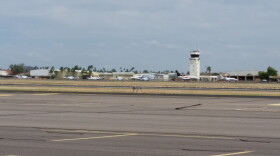 The Mesa City Council approved landing fees at Falcon Field airport in March to help keep the airport self-sustaining. In April, the Federal Aviation Administration initiated a review over concerns the fees target specific airport users.
-
 The nominee for lieutenant governor on the Democratic ticket is brushing aside the multiple speeding tickets he got while mayor of Mesa.
-
 Arizona voters will decide the fate of two propositions aimed at restricting taxes. But where will funding for city services and state roads come from without them?
-
 Phoenix is asking for input on a plan to add more electric vehicle charging stations around the city. The Charging Infrastructure Action Plan finds the city has more than 900 charging station locations and more than 2,700 charging ports, but wants to add up to 1,900 more ports by 2030.