


Semiconductors are small electronic building blocks that are key to making the computer chips found in all kinds of devices — from phones and laptops to defense weapons. And they have a growing role in Arizona’s economy.
Many people have moved to Arizona from Taiwan to support TSMC’s rapidly accelerating expansion north Phoenix. One factory is up and running off Interstate 17 and Loop 303 following an initial $12 billion investment in 2020.
About 15 minutes south of TSMC’s campus is CactiFlower, a restaurant that specializes in Taiwanese comfort food.

Its owner M Elizabeth Heubusch takes me in the kitchen as she makes a dish called lu rou fan. It’s pork belly, served over rice. She adds a fried egg and seaweed on the side.
“Non-compromising Taiwanese food that makes people feel at home when they eat it — from presentation to how it looks, how it smells, everything — that's a whole experience for us," Heubusch said.
Heubusch spent much of her childhood in Taiwan. Now she lives in Phoenix where she’s building her business to cater to the city’s growing Taiwanese population.
“Sometimes they come after work and they're like, 'I just need something that tastes like home. I had a bad day,'" Heubusch said.
Heubusch says she wants to provide a cultural soft landing spot for migrants from Taiwan.
“I do feel like food — a lot of people say this but I really mean it — food is culture and culture creates community," Heubusch said.
Developers are also trying to meet that growing community. Halo Vista is a proposed 2,300 acre development planned next to TSMC’s campus that is set to include housing, restaurants and shopping.
And the Taiwanese government announced this summer plans to open what it’s calling a Cultural and Economic Office in Phoenix, which will provide consular services to Taiwanese nationals in Arizona.
Arizona’s relationship with Taiwan goes back decades
TSMC may be the catalyst behind these growing ties between Arizona and Taiwan, but Phoenix Mayor Kate Gallego says connections between their governments go back decades. The island’s capital Taipei and Phoenix became sister cities in 1979.
“It has been a deep relationship with students exchanged and economic development," Gallego said.

A lot of Arizona’s early interest in the '70s surrounded Taiwan’s ramping industrial sectors. At the same time, Gallego says, Arizona wanted to loosen ties with communist China.
“Part of the relationship came out of battles around different political movements that were happening," Gallego said.
Arizona Commerce Authority President Sandra Watson says as the state looked to diversify its economy following the 2008 housing crisis, leaders looked to Taiwan again. Watson says her first trip to TSMC in 2013 was part of the state’s efforts to build up its semiconductor manufacturing capabilities.
“It was an intentional strategy. It was something that we all felt was necessary to ensure that Arizona continued to grow," Watson said.
And since then, the economic and geopolitical value of the kinds of computer chips TSMC produces has only grown.
Watson says in just the last three years, trade between Taiwan and Arizona jumped from $3 billion to over $21 billion.
“So in a very short period of time, we've seen those trade numbers increase significantly," Watson said.
Watson’s latest delegation to the island this summer included over 100 state and city leaders.
TSMC’s chips, AI and the U.S. economy
Artificial intelligence is currently a major driver of growth in the U.S. economy, as tech companies have invested billions in AI infrastructure. Arizona Sen. Mark Kelly says that makes access to TSMC’s chips more crucial than ever.
“If we lost access to TSMC semiconductor chips on the island of Taiwan, the estimates are that we could lose 10% of our gross domestic product, our GDP, in a year or two," Kelly said.

Kelly sponsored the Chips and Science Act, which provided funding to support domestic production of computer chips. He says it’s a national security issue, as China has ramped up military pressure against Taiwan.
“That communist government headed by Xi Jinping, they want to take over Taiwan," Kelly said.
So the U.S. and Arizona governments have worked to attract TSMC, who in turn has made record investments in Arizona.
'They are creating a life here'
Back at CactiFlower, M Elizabeth Heubusch says as more Taiwanese nationals have new opportunities in Phoenix, she hopes her restaurant can be a cultural bridge between Taiwanese and Americans.
“It's not just for the job. They're creating a life here," Heubusch said.
After the smells in the kitchen, I couldn’t resist ordering my own dish of lu rou fan. Heubusch serves it and leaves to tend to her regulars.
I take a bite and as the fat from the tender pork dissolves on my tongue, I learn what home tastes like for someone who’s moved 7,000 miles to make computer chips in the Arizona desert.

-
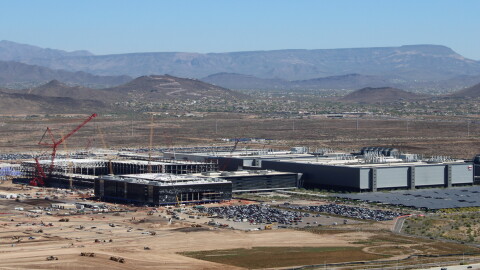 Alex Hager/KJZZArizona business and political leaders have leaned on Taiwan to help transform the state into a hub for semiconductor manufacturing. But the island faces other pressures. KJZZ has obtained multiple letters addressed to Gov. Katie Hobbs from China’s LA consulate protesting the office and asking the state to stop building political ties with Taiwan.
-
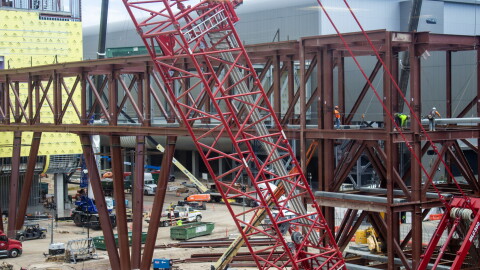 Greg Hahne/KJZZTSMC has elevated Taiwan’s prominence on the global stage. So why is it investing $265 billion in Arizona?


