


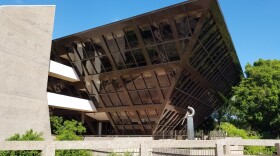
ASU is conducting a full-scale emergency response exercise Thursday at Grady Gammage Auditorium.
Between 7 a.m. and 3 p.m., community members will see an increase in emergency personnel including police units, fire trucks and ambulances on ASU’s Tempe campus. The goal of this exercise is to test the university’s ability to coordinate with local partners in the event of a multiple casualty-incident.
“These exercises are essential to ensuring our teams are ready to respond quickly and effectively during a real emergency,” said Matthew Melendez, emergency management coordinator with the Office of Enterprise Risk and Resilience Management. “By training together under realistic conditions, we strengthen our preparedness and reinforce our commitment to keeping our campus community safe.”
ASU conducts training exercises of this scale on a regular basis to enhance coordination with municipal partners and to continually refine emergency procedures.
Normal campus operations will continue during the exercise, and the university appreciates the community’s patience and understanding as this important preparedness work is carried out.
-
 Several window panels were broken at the Fisher Industries facility. The parent company, North Dakota-based Fisher Sand & Gravel, is contracted by the federal government for border wall construction. Tempe Police say investigators believe multiple people arrived around 4 in the morning to damage the building.
-
 Tempe officials are scheduled to hold informational meetings Thursday to review a proposed ordinance that would ban automatic license plate readers.
-
 Arizona State University's recent performance, which borders physical theatre and dance, will debut in Paris at UNESCO’s MOST Climate Summit.
-
 Locals have been calling on Dan Harkins to reopen Valley Art theater to once again screen “The Rocky Horror Picture Show.” Robrt Pela says it would be an ode to the value of small business.
-
 The city of Tempe is considering an ordinance that would limit the use of automatic license plate readers. The proposal would also destroy all its existing ALPR data and penalize city staff for violations.


