


The University of Arizona’s San Xavier research mine in Sahuarita has been the site of a lot of activity. Both the mining industry and federal government see it as an asset for studying new technologies amid a surge in demand for U.S. critical mineral production.
James Werner, director of the San Xavier Mine, says this had made for a busy and exciting time for the mine and School of Mining Engineering and Mineral Resources.
“What excites me is the industry coming back,” said Werner. “If you look at how you know mining kind of died in the United States, we became very heavily reliant on importing everything. Bringing it back stateside to me is a good thing. It provides jobs. It provides the minerals we need for everyday life.”
History of the mine
The San Xavier Mine commercially produced silver, lead, zinc and copper for around 70 years. In 1975, the University of Arizona bought it to serve as a full-time laboratory where new generations of mining engineers could get hands-on training.
For years the charming old style of the mine was fine for students to study in, but as mining and mineral production is beginning to take off again across the state, Werner says it's been in need of some modernization.
“Machines got bigger and the size of excavations underground got bigger — we kind of outgrew what the mine used to be — being a very historic, old-school, pushing ore carts around underground,” Werner said.
In 2020, Werner says, the University of Arizona paid to expand the mine entrance to allow trucks and heavy-duty machines passage, rather than just wooden carts.
The mine today
Werner says the plan is to keep San Xavier as a research mine, but to broaden that purpose a bit.
For the last seven years, he says, the mine has focused on bringing in partnerships with federal agencies, local mining industries and startups, in need of a space to test their equipment.
Students get opportunities at jobs and scholarships, and the companies get a lot in return, too, says Moe Momayez, associate head of the School of Mining Engineering and Mineral Resources.
“The advantage that the mine has is that we are a non-producing mine. So if the partner companies want to test a new technology, for example, they can have access 24/7. Whereas, if they were to test the same technology in a production mine, they may not get access, or they may have very limited time to test,” said Momayez.
Following the $20 million grant from the Department of Energy, San Xavier could be getting a major upgrade. According to a University of Arizona press release, the funds will go toward expanding the mine and equipping it with new technologies, like a microgrid.

Arizona as a mining leader
Werner says the Arizona mining workforce is around 50,000 and that 75% of the nation’s copper comes out of the state.
Similarly, the University of Arizona has one of the oldest mining schools. It is one of only 14 accredited programs in the nation, which graduates about 15 to 25 professionals each year.
Momayez says his program has 50 post-grad students, including graduate and doctoral candidates, at the moment. These students are solving a broad range of industry challenges.
“From geomechanics to mine planning to optimization to mineral processing, hydrometry, geometallurgy, materials characterization, and on and on and on,” said Momayez.
More-sustainable mining?
San Xavier Mine will also be the site of a pilot process plant for mineral waste, says Werner.
“Arizona has a lot of mine tailings, which is waste material from the mineral processing at a mine site, and some of those are 100, 100-and-some-odd years old,” said Werner. “So there's a lot of research going into how you can economically go back in and mine some of this old waste in a tailings pond or a tailings impoundment to be able to recover some of the additional metals that we know are still left in there.”
The pilot, which was funded in February, aligns well with the expansion, says Werner, to be able to support even more in-house research and innovation.
-
 Back in March, the U.S. Forest Service transferred ownership of more than 2,400 acres to Resolution Copper — following a 2-1 ruling by a panel of 9th Circuit judges that legally cleared the way for the land exchange to be finalized.
-
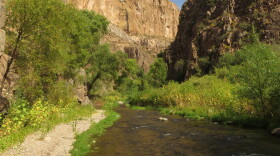 Locals are raising concerns about harms to water and wildlife habitat from proposed copper mining, groundwater pumping and pipelines near a rare, fragile landscape.
-
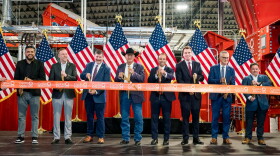 Cyclic Materials recovers rare earth magnets from devices, such as electronics, hard drives, and medical equipment to supply local industries. The process also refines critical minerals such as copper, aluminum, and steel.
-
 The Department of Interior rolled back habitat protection rules in the Endangered Species Act in July. Arizona and about 20 other states say in new legal filings that the Trump administration acted illegally.
-
 The United Nations Special Rapporteur on toxics and human rights called for Mexico and the mining company Grupo México’s to make good on promises to the community more than a decade after the historic spill.


