


The U.S. Senate has confirmed Mexico’s new ambassador, voting 49 to 46 along party lines to approve former CIA officer Ronald Johnson.
His confirmation comes as some are becoming increasingly concerned that the United States would take unilateral military action against cartels in Mexico.
During his committee hearing last month, Johnson said his first choice would be to work with the country, but he didn’t rule out military action without buy-in from Mexico.
“I know that President Trump takes very seriously his responsibility to safeguard the lives of U.S. citizens, and should there be a case where U.S. citizens are at risk, I think all cards are on the table,” Johnson told senators.
Johnson served as ambassador to El Salvador during Trump’s first term. He was also questioned during the committee hearing about his close relationship with that country’s president, Nayib Bukele, during this time as ambassador. Bukele has agreed to imprison deported migrants from the U.S. in past months, and has been accused of human rights abuses during his years-long crackdown on gangs in the Central American country.
Democratic Sen. Jeanne Shaheen asked Johnson about an Amnesty International investigation that found Bukele was surveilling journalists using the spyware program Pegasus. Johnson said he was unaware of Bukele’s surveillance of civil society while ambassador.
-
 In Sonora, mothers comb through the desert to try to find the remains of their missing children, even as Mexican officials say the number of homicides across the country is in decline.
-
 Some communities remained difficult to access after flooding from Tropical Storm Polo.
-
 The Arizona Game and Fish Department warns that Arizona is at risk of the flesh-eating parasite after recent cases in New Mexico and northern Mexico.
-
 The new sanctions target more than 40 entities and individuals who the U.S. Treasury Department says are aligned with the Mayiza faction of the Sinaloa cartel.
-
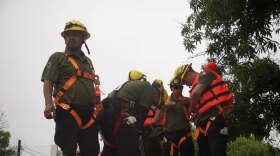 Tropical Storm Polo left coastal areas in Sonora flooded Tuesday, but left other parts of the state with little rainfall as it began to dissipate.


