


Mexico’s president says her country will escalate legal action after U.S Immigration and Customs Enforcement officers fatally shot a Mexican national in Texas on Tuesday.
The shooting in Houston comes after Mexico earlier this spring called for thorough investigations into other deaths of its citizens in the United States relating to immigration enforcement and detention.
More than a dozen Mexican nationals have died either in ICE custody or during immigration enforcement operations since last year, when President Donald Trump took office and ramped up immigration enforcement.
Mexico filed an amicus brief earlier this year in a lawsuit alleging poor conditions at the Adelanto ICE Processing Center outside of Los Angeles. At least four Mexican nationals who have died in ICE custody since the start of 2025 were being held at that facility.
Mexican President Claudia Sheinbaum said in her daily morning press conference Wednesday that her country will pursue additional legal measures.
Mexico will now “go further” than prior diplomatic notes to the United States and a request for a hearing on the topic from the Inter-American Commission on Human Rights made earlier this year, Sheinbaum said.
“We can’t permit the mistreatment of our people in the United States,” Sheinbaum said.
In addition to this week’s fatal shooting in Houston, ICE reported the death of a Mexican national under their custody in Laredo, Texas, in late June.

Full conversation on The Show
LAUREN GILGER: ... It’s been months since Rene Good and Alex Pretti were shot and killed by federal agents in Minneapolis amid the Trump administration’s immigration crackdown. And for a while there, tensions died down.
But now, immigration enforcement is surging again. Earlier this month, federal immigration officials detained more than 10,000 people in five days. And then, a man who had lived in the U.S. for more than three decades was shot and killed by ICE officers in Houston. They claimed he tried to use his van as a weapon when they attempted to pull him over, an account that has been disputed.
The man, Lorenzo Salgado Araujo, was a Mexican national, and now Mexican President Claudia Sheinbaum says her government will ask for criminal charges in his killing and the deaths of more than a dozen other Mexicans caught up in the U.S.’s immigration system.
Here to tell us more about it is KJZZ’s Nina Kravinsky with our Hermosillo Bureau. Good morning, Nina.
NINA KRAVINSKY: Good morning, Lauren.
LAUREN GILGER: OK, so Nina, Salgado Araujo is just the latest Mexican national to die in the U.S. amid this immigration crackdown. Tell us more about the context here.

NINA KRAVINSKY: Yeah, so Mexico said last week that 17 Mexican nationals have died either in U.S. immigration custody or during immigration enforcement operations since the start of Trump’s term last year. But even before this high-profile case in Texas that you just mentioned, Mexico had been expressing its concerns about the treatment of its citizens in the U.S. You know, just in Arizona, two Mexican nationals have died in immigration custody since the beginning of Trump’s term. And the Mexican Consul General in Phoenix has asked for thorough investigations into those deaths.
LAUREN GILGER: So, it sounds like Mexico has already tried diplomatic routes here before now they’re asking for these criminal charges.
NINA KRAVINSKY: Yeah, exactly. So, Mexico says it’s filed several diplomatic letters with its counterparts in the U.S. about these deaths. Even after Salgado’s death last week, Mexican President Claudia Sheinbaum said her country would go further, you know, it’s sort of moving out of the diplomatic sphere is how they characterized it and into a new realm. You know, yesterday she said her government had officially filed requests for criminal charges with the U.S. Department of Justice and with state prosecutors’ offices in the United States.
LAUREN GILGER: Right. So, tell us more, Nina, about their request to file criminal charges. Like, can they do that in the U.S. justice system?
NINA KRAVINSKY: Yeah, you know, so Mexico isn’t actually charging anyone here, right? ... Basically, what it’s doing is going to U.S. prosecutors and asking them to consider criminal charges related to these 17 deaths of Mexican nationals. You know, the requests on their own don’t carry any legal weight. But they do sort of mark an escalation in how Mexico is talking about this issue.
You know, the foreign minister said last week here in Mexico that the issue of ICE-related deaths was the most important issue before his department right now. ... Sheinbaum yesterday called on all of her country’s political parties and Mexico’s Congress to condemn what she characterizes as violations of human rights of Mexicans who live in the U.S. She has been careful to say though that, you know, Mexico and the U.S. maintain normal diplomatic relations and that this doesn’t mark some sort of new phase of the U.S.-Mexico relationship.
LAUREN GILGER: Sounds like President Sheinbaum is walking something of a fine line here.
NINA KRAVINSKY: Definitely a tale as old as time for her. She really has been since she took office. Mexico would say it’s incredibly important to keep these channels of communication open with the U.S. The two countries share a long border and are historically, you know, partners in security and economic issues.
So, she’s been really careful not to say or do anything that could, frankly, provoke the Trump administration. But at the same time, she clearly feels that it’s also important to characterize the issue of these ICE-related deaths as a human rights issue. That kind of high-wire act with the U.S. has really defined her presidency from the start, which was just a few months before Trump took office.
LAUREN GILGER: Right. OK, so what else is Mexico doing, Nina?
NINA KRAVINSKY: Yeah, so alongside these requests for criminal charges, Mexico’s foreign minister also said the country would file cease-and-desist letters to U.S. companies that operate immigration detention centers where there have been deaths of Mexican nationals.
And, you know, Mexico is taking this into the international law realm. They’ve formally raised this issue with the [Office of the ] UN High Commissioner for Human Rights and the Inter-American Commission on Human Rights, too.
LAUREN GILGER: All right. KJZZ’s Nina Kravinsky joining us from Hermosillo. Nina, thank you so much for your reporting here, appreciate it.
NINA KRAVINSKY: Yeah, thanks Lauren.
LAUREN GILGER: And in response to inquiries from other media outlets, the Department of Homeland Security has said there is no spike in deaths related to immigration enforcement.
-
 The constitutional reform requires presidential and gubernatorial candidates in Mexico to renounce any non-Mexican citizenship.
-
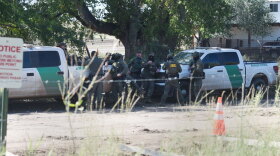 On Monday, dozens of agents swarmed a stretch of private land where the activists had been camped in and around a centuries-old cottonwood tree. Contractors tore down the tree and agents made multiple arrests.
-
 Dr. Jesús Maximiano Verduzco Soto turned himself in to authorities in Hermosillo after evading arrest for months.
-
 Nearly 30 people have died from heat stroke in the Mexican state south of Arizona this year.
-
 In Sonora, mothers comb through the desert to try to find the remains of their missing children, even as Mexican officials say the number of homicides across the country is in decline.


