

The Arizona Department Of Transportation will use a $27 million federal grant to research the use of low-carbon transportation materials in Arizona. Funded by the Inflation Reduction Act, the study will explore innovative uses for recycled asphalt and concrete.
It’s the largest investment in the agency’s history committed to tracking and improving ADOT’s usage of sustainable road materials. The agency said it’s one of 39 state transportation departments to recently receive grants under the federal program.
ADOT spokesman Steven Olmsted said the agency has probably spent the last 10 years trying to define what sustainable pavements look like.
“But what we specifically get out of it is a much improved format to measure pollution reduction, energy efficiency, construction water use," Olmsted said.
In Arizona and nationally, state transportation departments are accelerating their ability to make more sustainable efforts and meet the public’s transportation needs, he said.
“I think there’s a wide set of concerns — just as Arizona residents — for quality of life," Olmsted said.
ADOT will start its research in early 2025.
-
 Phoenix Sky Harbor is now offering a driverless shuttle bus called Ohmio to transport passengers from the East Economy parking lot to the Sky Train Station.
-
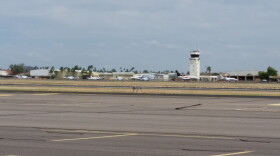 The Mesa City Council approved landing fees at Falcon Field airport in March to help keep the airport self-sustaining. In April, the Federal Aviation Administration initiated a review over concerns the fees target specific airport users.
-
 The nominee for lieutenant governor on the Democratic ticket is brushing aside the multiple speeding tickets he got while mayor of Mesa.
-
 Arizona voters will decide the fate of two propositions aimed at restricting taxes. But where will funding for city services and state roads come from without them?
-
 Phoenix is asking for input on a plan to add more electric vehicle charging stations around the city. The Charging Infrastructure Action Plan finds the city has more than 900 charging station locations and more than 2,700 charging ports, but wants to add up to 1,900 more ports by 2030.


