


U.S. Citizenship and Immigration Services, or USCIS, says it will start conducting anti-Americanism screenings while considering applications for various immigration benefits.
USCIS fields applications spanning work permits and short term immigration statuses like humanitarian parole, to green cards and citizenship.
The agency says it will now assess immigrants’ histories of requests for parole and any involvement in “anti-American or terrorist organizations” or “anti-semitic activity” while considering applications for things like work permits and citizenship.
It also says it’s expanding social media vetting overall and that anti-American activity will be a “negative factor” in that analysis.
“America’s benefits should not be given to those who despise the country and promote anti-American ideologies. U.S. Citizenship and Immigration Services is committed to implementing policies and procedures that root out anti-Americanism and supporting the enforcement of rigorous screening and vetting measures to the fullest extent possible,” USCIS Spokesman Matthew Tragesser said in a press release about the policy. “Immigration benefits — including to live and work in the United States — remain a privilege, not a right."
The press release does not say what qualifies as “anti-American” or how exactly the screening process would work.
“Traditionally we wouldn’t have to look at what people have stated on social media, or even what they might have clicked ‘like’ to,” said Tucson immigration attorney Mo Goldman. “I don’t think it’s clear how far the government may go to try and find some sort of basis to potentially deny someone on the basis that they are violating some sort of good moral character.”
Goldman says he and other attorneys have already seen social media playing a larger role in things like visa considerations. Now, applicants asking for green cards and naturalization may also face that scrutiny. But he says terms like anti-Americanism are broad, subjective terms that are hard to define — and USCIS will now have broader discretion to decide.
“If your thought process, or your ideology, your belief system, is not in lock step with this administration, then you are potentially an enemy of the government,” he said. “It’s very frightening to me that the government can use their discretion in this way, I think it’s chilling on a person’s freedom of speech — and mind you, people who are not citizens, still have those freedoms.”
Goldman says it’s also not clear how the screening will be done or how expansive it will be — further complicating how lawyers advise their clients.
-
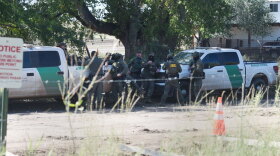 On Monday, dozens of agents swarmed a stretch of private land where the activists had been camped in and around a centuries-old cottonwood tree. Contractors tore down the tree and agents made multiple arrests.
-
 New research shows the ancient site is much older than previously thought. In fact, it’s now confirmed to be the oldest known scientifically dated geoglyph in the Americas, 2,000 years older than the first Pyramids built in Egypt.
-
 Protesters have been camped out in a plot of private ranch land in Lochiel for over two months now, trying to block wall construction as it neared a towering cottonwood tree that was the last of a grove slated for destruction to make way for two, parallel steel bollard walls.
-
 Ahmed Soliman has no ties to Equatorial Guinea. The 30-year-old man was born in Egypt and brought to the United States. when he was just 4 years old. He grew up in Phoenix. Now he’s believed to be in a hospital in the African nation.
-
Activists have spent the last 70 days camped around and inside a cottonwood tree right along the border in the tiny town of Lochiel. The tree was the last of an old grove estimated to be up to 250 years old.


