


Arizona Gov. Katie Hobbs said the Hoover Dam — and the dealmaking that made it possible — should provide inspiration for the states fighting over the future of the Colorado River.
Hobbs visited the dam on Memorial Day to participate in a ceremonial lighting ceremony as part of America250, a touring celebration of the country’s 250th anniversary.
She used the visit to highlight the yearslong negotiations over the future of the river and the states that rely on its water, which have yet to yield a concrete agreement.
Hobbs said those states, and their federal counterparts, should look to the past, alluding to the contentious negotiations that led to the Colorado River Compact deal signed more than a century ago.
“Today’s leaders from the seven Colorado River states and the federal government must channel the resolve of those who came before us and take bold action to secure our future,” Hobbs said.
The Colorado River Compact, signed in 1922, paved the way for the creation of the dam, which now serves as a water source for 16 million people.
“We cannot let ourselves be constrained by political squabbles and legal battles,” Hobbs said. “We must come together and do our part to protect the Colorado River behind this dam that is a lifeline to millions of Americans.”
Arizona and the other Lower Basin states are still negotiating with the federal government and Upper Basin states over how the Colorado River’s shrinking water supply should be divided in the future.
-
On Sept. 8, KJZZ water reporter Alex Hager presented your questions and concerns to a panel of experts.
-
 Officials say the new plan is like digging in the "couch cushions" for promises to save Colorado River water, but compensation from the Arizona Water Banking Authority could help reach a larger goal.
-
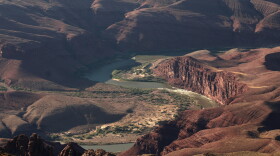 Arizona is still working on a deal with California and Nevada to spread out the pain of cutbacks, but they are still figuring out which cities and farms will use less water.
-
 Plans for a massive film studio and retail complex in Tonopah also include a large-scale data centerThe developer, Anita Verma-Lallian, says it could be the largest film studio in the country.
-
 California Gov. Gavin Newsom has declared a state of emergency ahead of what is expected to be a Super El Niño. That extra water presents challenges and opportunities to an area in the midst of ongoing drought.


