


Arizona lawmakers are preparing to vote on a state budget plan this week. But the spending plan won’t include the renewal of a funding source for K-12 public schools.
The Legislature must pass a state budget ahead of a June 30 deadline to avoid government shutdown.
Democratic Gov. Katie Hobbs and legislative Democrats wanted the budget to include an extension of Proposition 123 — a voter-approved measure to boost education funding with revenue from the state land trust.
Hobbs has been pushing for a Proposition 123 extension for years now, but Republicans disagreed on what to use the education money for and how much revenue to spend on it.
They also argued that it’s irresponsible to account for Proposition 123 while crafting the budget when it’s uncertain whether voters would approve it at the ballot in November.
Sen. John Kavanagh (R-Fountain Hills) said Proposition 123 isn’t included in the deal, which requires bipartisan support.
Leaders in the state House and Senate have spent several weeks negotiating a budget plan that can pass the Republican-controlled legislature and get Hobbs’ signature.
-
 The Florence Unified School District’s governing board has voted to close three schools due to enrollment declines and budget issues. The district needs to cut its budget by $5 million to $7 million.
-
 Teresa Leyba Ruiz taught math for much of her career and served as president of Glendale Community College. She defeated Arizona state treasurer Kimberly Yee in last week’s election.
-
 Andrew Abraham is a research associate at Northern Arizona University and co-lead on this research, which was published in Current Biology.
-
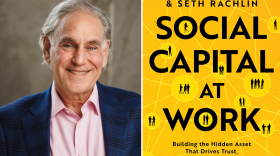 Seth Rachlin is an assistant teaching professor in ASU’s School of Social and Behavioral Sciences and co-author of the new book "Social Capital at Work: Building the Hidden Asset that Drives Trust, Engagement and Performance."
-
 The Maricopa County Attorney’s Office cleared Arizona superintendent-elect Teresa Leyba Ruiz of wrongdoing after her Republican opponent in this year’s election accused her of violating a state law barring the use of public school resources to influence an election.


