


The "One, Big Beautiful Bill" is front and center in the race to represent southern Arizona’s Congressional District 6, as Republican Rep. Juan Ciscomani and Democrat JoAnna Mendoza paint different pictures of the district and how that legislation is helping — or harming — its residents.
Ciscomani brought in some high-profile backup in August, when House Speaker Mike Johnson and Treasury Secretary Scott Bessent joined him on a tour of a Frito Lay factory in Casa Grande, a rapidly expanding city about an hour south of Phoenix that sits at the northern edge of CD6.
“Life is good here in Casa Grande,” Bessent told reporters after the tour.
Ciscomani, Bessent and Johnson all used the tour to make the pitch that Republican policies, and especially the "One, Big, Beautiful Bill," are working for residents in CD6, one of just 18 competitive districts across the country that could determine which party controls Congress after the midterms.
“We're putting manufacturers, small businesses, working families in the best possible position to succeed, and we're going to continue to do that,” Johnson said. “I believe we're going to hold the Republican majority in this midterm election. It's a fateful one.”
The visit, which largely focused on the ways Republicans believe corporate tax cuts will spur job growth, came as polling shows Ciscomani locked in a close race with Mendoza, a Marine Corps veteran who grew up in a farmworker family in a nearby rural community.

A hand out or a hand up?
To Mendoza, Trump’s signature legislation, also called HR 1, hasn’t been all that beautiful for CD6 residents, who, like other Americans, are dealing with a rising cost of living, driven by inflation and oil prices.
Mendoza blames Republican changes to SNAP food assistance included in HR 1, like more stringent work and reporting requirements, for making it harder still for residents in the district to access social services.
Mendoza said that’s hurting working families and children who rely on those programs — programs that she says made it possible for her to rise out of rural poverty and eventually become a Marine Corps drill sergeant.
“I share that with people because these programs are not — they're not a handout,” she said. “They're a hand up. And certainly families like mine use them when they needed them.”
Since the state began implementing the changes, around half a million Arizonans have lost SNAP benefits, outpacing other states across the country.
That equates to a nearly 50% enrollment drop since July 2025, when HR 1 became law, according to the Center on Budget and Policy Priorities. That includes more than 182,000 children who lost coverage.
Republicans have defended the changes, saying they are designed to root out waste and fraud in the program.
In other words, the new rules are working as intended by identifying people who shouldn’t be receiving benefits, they say.
“We want to make sure that we protect that safety net for the people that that was meant to do,” Ciscomani said at a debate earlier this month. “There's a lot of fraud out there.”
But critics, including many SNAP recipients, have complained that it's the new bureaucratic hurdles that are causing otherwise qualified Arizonans to lose coverage.
And data from the state agency responsible for administering food assistance obtained by KJZZ backs that up. It shows the Department of Economic Security has dropped over 3 million calls as Arizonans try to complete required phone interviews to qualify for SNAP.
Jobs
Ciscomani said the massive tax cut package included in HR 1 is a boon for his constituents, calling it “one of the most consequential pieces of legislation in our lifetime.”
During the factory visit, he pointed to items like no tax on tips or overtime that will keep more money in their pockets — as well as corporate tax cuts that he says will grow the economy.
“(It) represents the largest tax cut in American history made permanent,” Ciscomani said. “Largest share of tax relief directly to low and middle income Americans. Protects and creates up to 7.2 million jobs, 1.4 million manufacturing jobs specifically, like those right here in Casa Grande.”
Again, Mendoza pushed back, though she says she supports changes like no tax on tips that benefit working people.

restaurant on Aug. 19, 2026.
But Mendoza says the larger bill is hurting the local economy, not building it up, pointing to the Lucid Motors electric car manufacturing facility located just a few miles from the Frito Lay plant where Ciscomani stood by Bessent and Johnson.
Lucid announced plans to layoff around 1,000 workers from the plant, which Mendoza attributed to HR 1’s elimination of a federal electric vehicle tax credit.
“They're creating this instability for people,” she said. “They're saying, you know, you need to demonstrate that you're applying for jobs or that you're working. How the heck are people supposed to do that if they cannot, if they're laying people off and there are no jobs?”
Ciscomani defended the legislation and said whether a company hires or lays off employees should be based on private business decisions, not federal tax credits.
“For all those at home to know, that is a tax credit that people that can afford $100,000 cars get for buying that car, so that's not impacting the middle class,” Ciscomani said.
Lucid’s vehicles retail for between $70,900 and $114,900, according to its website. However, the tax credit of up to $7,500 was available to people who purchased dozens of different new and used electric vehicles that sell for less.

Is life good in CD6?
Ultimately, it will be up to CD6 voters to decide whether the "One, Big, Beautiful Bill" has been a boon or a bust for their community.
George Scott, who works with the local chamber of commerce in rural Benson, acknowledged that life can be tough in districts like his and thinks the Republican tax cuts will help.
“I believe in the tax cuts, because it’s just hard to make ends meet in rural Arizona,” he said.
And he credited Ciscomani with being active in communities like his and delivering federal dollars, like money for fire stations and projects at a local military base.
A few weeks after Ciscomani’s visit, Casa Grande resident Terri Arvizu appeared alongside Mendoza on a panel hosted by advocacy groups Climate Power and Rural Action Arizona.
“You know, I talk to my neighbors, I talk to co-workers and everybody's struggling,” Arvizu said. “We need more in our community. We need the resources, we need the help. We don’t feel like anyone is hearing our voices.”
She said she is struggling with rising utility and grocery costs, and has to limit her air conditioning use to control her budget. She said she’s seen multiple factories close in her community, which needs more jobs.
She says she used to work in Phoenix but took a pay cut to take a job closer to home to cut back on driving due to gasoline costs.
She said two of her kids commute to Phoenix for work, about 50 miles away. Another goes to Tucson, a roughly 70-mile drive.
“And here all these taxes are going — being paid for what?” Arvizu said. “No jobs. Paying taxes for these buildings. It's sad. There isn't jobs.”
So, is life good in CD6? It depends on who you ask.
-
 Find everything you need to know about elections in Arizona and Maricopa County from KJZZ's politics team.
-
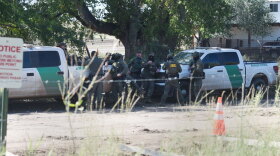 On Monday, dozens of agents swarmed a stretch of private land where the activists had been camped in and around a centuries-old cottonwood tree. Contractors tore down the tree and agents made multiple arrests.
-
 Federal court says AZ lawmakers can't block transgender individuals from amending birth certificatesA federal appeals court ruled that state lawmakers can't block transgender individuals from getting an amended birth certificate because they have no proof of receiving gender-related surgeries.
-
 Arizona Attorney General Kris Mayes has joined a multistate coalition that’s fighting federal changes to Head Start programs.
-
 Phoenix is asking for input on a plan to add more electric vehicle charging stations around the city. The Charging Infrastructure Action Plan finds the city has more than 900 charging station locations and more than 2,700 charging ports, but wants to add up to 1,900 more ports by 2030.


