Researchers from the University of Arizona discovered that the earliest North Americans living in New Mexico, experienced abrupt environmental shifts within single generations during the last ice age.
The earliest evidence of humans in North America are footprints found in White Sands National Park, and could be up to 23,000 years old.
A team of researchers from the University of Arizona and U.S Geological Survey studied fossilized pollen from the site, and were able to determine what the climate was like for those early humans on a timescale equivalent to a single generation — around 50 years.
They found a sudden shift in vegetation and sediment which shows the area changed from a dense pine forest to a pinyon and juniper forest in around 100 years, and humans would have been around to witness it.
This corresponds with global climate shifts at the time, and the recession of Lake Otero, an ancient lake which would have covered almost all of the current National Park during the ice age.
-
 Rattlesnakes are known as scary or violent creatures, but researchers found that their personalities and behavior may be more complex than people believed.
-
 Current forecasts often give warnings about hailstorms 30 minutes in advance. Researchers at Colorado State University say their models may be able to lead to alerts hours or days ahead of time.
-
 Arizona has reported 345 measles cases since 2025 — the largest case count in decades. But October was the first month in over a year with no confirmed cases in the state.
-
 Drought and climate change have cut deep into the Colorado River's reservoirs, and Arizona rains did little to boost Lake Powell and Lake Mead.
-
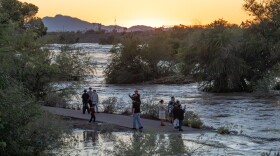 Heavy rains caused the Salt River Project to release extra water into the Salt River. That will impact plants and animals that live in the river.