


The fires that burned through LA last year destroyed tens of thousands of buildings. Learn about the ASU professors who are using new tech to document that. Plus, the outlook for flu and COVID-19 seasons this fall and winter.
Ways To Subscribe


-
 Tim Agne/KJZZState health officials say they’ve confirmed nearly a thousand COVID-19 cases in the last week. At the same time, lots of Arizonans are starting to think about getting flu and COVID-19 shots for the year.
-
 Jordan K. Ellis, Gallery Books/HandoutReporter Danny Funt says even with the increase in the availability of legal sports betting, and noted increases in people doing it, it’s even more prevalent in our society than we think it is.
-
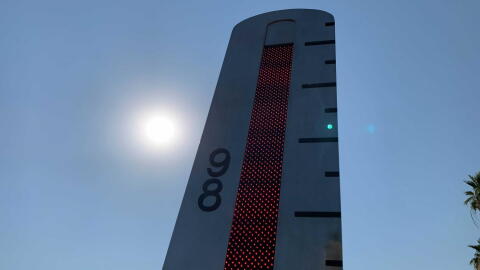 Tim Agne/KJZZThe climate and sustainability program at Discovery Partners Institute at the University of Illinois Urbana-Champaign wants to find ways to get people heat information that is more specific to particular locations at particular times, rather than a static kind of map.
-
 Arizona State UniversityTwo ASU professors are showing a very personal documentary at the Venice International Film Festival, which is taking place through Sept. 12. And they’re doing it with new technology, which allows for a more immersive experience.
-
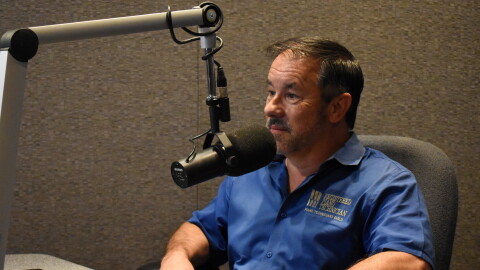 Amber Victoria Singer/KJZZThere are many symphonies and orchestras throughout metro Phoenix, but Scott Helms leads one that is on something of a mission.


Transcript
ANNOUNCER: KJZZ’s original production, The Show, is supported by Banner Health, Arizona’s largest nonprofit healthcare system. Last year, Banner reinvested more than $1.1 billion in community health and charity care. Banner Health, nonprofit for Arizona. bannerhealth.com/nonprofitforaz.
MARK BRODIE: Hi, I’m Mark Brodie, co-host of The Show, an original production from KJZZ. Every weekday, we bring you the latest news and culture from across the state. You can find much more at theshow.kjzz.org. Here’s today’s episode.
MARK BRODIE: Good morning. It’s The Show here on KJZZ 91.5 in Phoenix. I’m Mark Brodie. Coming up, the effort to provide more localized heat data, and the ASU professors who used new technology to tell the story of last year’s L.A. wildfires in a very personal way.
But first, state health officials say they’ve confirmed nearly 1,000 COVID cases in the last week. It’s been almost a year since Arizona had a weekly count that high, but officials say they’re not concerned about that since it’s lower than average for this time of year. At the same time, lots of Arizonans are starting to think about getting flu and COVID shots for the year. And with me to talk more about all this is Will Humble, executive director of the Arizona Public Health Association. Will, good morning.
WILL HUMBLE: Morning, Mark.
MARK BRODIE: So, do you share state health officials’ lack of concern about the increased number of COVID cases here?
WILL HUMBLE: Yeah, I mean, the thing is that it’s been an increase in the number of COVID cases that they’ve been able to identify, mostly through healthcare facilities and stuff. But it’s starting at a really low baseline, so you can see a big increase percent-wise and really not have it be of big significance in terms of public health.
MARK BRODIE: OK. Does this tell us anything about what the next several months are going to look like, or is it more instructive to look elsewhere?
WILL HUMBLE: Yeah. No, it doesn’t tell us much about the — like there’s three big respiratory viruses: RSV, influenza and COVID-19. And so, like what you saw about the blip in COVID, that doesn’t tell us anything.
But what we can do — and if you ask me, “Are we going to have a bad influenza respiratory season?” I don’t know, but the clues are really in the Southern Hemisphere. Because they’re finishing — we’re finishing our summer, they’re finishing their winter and their respiratory virus season. So what we do in public health is this time of year look like, “Hey, what’s happening in New Zealand, Australia, Brazil, Chile, those kinds of places?”
And luckily, at least so far, there haven’t been any new wildcard viruses or — sometimes there can be a change in the antigen strain, like the strain of influenza late in their winter, which is late in our summer. That hasn’t happened this year. So that’s a good thing. That tends to weigh on the side of having more of a normal, typical influenza season rather than a really bad one. Same with RSV and COVID.
MARK BRODIE: Does that indicate then that the strains of influenza that are in the vaccine are a good match for what people are seeing sort of in the world?
WILL HUMBLE: Yeah, good question. And yes, so far, all the matches are good. So the vaccines that are in the pharmacies or coming to your local pharmacy in the next week or two, those are all geared for the exact viruses that were circulating in the Southern Hemisphere during their winter.
So that’s the best we can do. You can’t be a mind reader with the viruses, but you can use surveillance for the Southern Hemisphere to help inform your preparation. And so far, so good. So it’s a good match. But something could come at the very end of their winter — like now — and pose a problem for us when we get to our winter. But so far, so good.
MARK BRODIE: If that were to happen, are we just kind of out of luck here?
WILL HUMBLE: Not out of luck, because the vaccines will still provide protection. And no matter what the strain is, the vaccines will prevent you from ending up in the hospital or healthcare or having a really bad outcome.
So the vaccines always help. The question is like, are they rock solid or not? And that depends on, does a wildcard strain come out of the Southern Hemisphere or evolve here in our winter? That can happen, too.
MARK BRODIE: So, do you have a good sense of when is sort of the ideal time to be getting — let’s assume people want to get a flu and COVID shot together, one trip, just get it all out of the way. Like, I feel like we hear sort of sometimes it’s good to get it early, maybe sometimes it’s good to wait until a little bit to give you more protection through later in the winter. Like, when should we be looking to do this?
WILL HUMBLE: Yeah. So these vaccines provide you really good protection for about six to seven months — let’s just say six. So if you get vaccinated Sept. 1, like around now, like if you add six months to that, you’re going to have protection into the early spring here in Arizona.
But if you wait until — I usually wait till like Oct. 15 to Oct. 30. And then I’m pretty much guaranteed that I’ll have protection — it takes about two weeks for the antibodies to kick in and stuff — so you’re going to be protected for sure by the Thanksgiving holiday, and it will give you that extra protection into like March. So we get our vaccines in mid-October. But it’s not a mistake to get it now. Not a bad thing.
MARK BRODIE: It seems like there’s really no wrong answer here. Like as long as you’re going to get it, get it now, get it next month. But it seems like your message is get it now, get it in a month, but get it.
WILL HUMBLE: And yeah, and don’t wait till like the holidays. Don’t wait till like New Year’s and stuff. Get it ahead of time, and then you’re ahead of the curve.
MARK BRODIE: In terms of RSV, which I think is for a lot of people sort of the third wheel of these trio of respiratory illnesses, do we have a sense of what this coming — these next few months might look like in that world?
WILL HUMBLE: No, not really. But we do have advantages today that we didn’t have like three or four years ago, because there’s a good, safe and effective vaccine for RSV now. It’s focused and recommended for senior seniors, so like people 75 and up, because they’re at the highest risk for having a kind of pneumonia from an RSV infection. And also little babies, newborns.
And so the recommendation is for moms to get — upcoming moms to get the vaccine if their kids are going to be born between October and in the respiratory virus season, at the beginning of the third trimester get the RSV vaccine. Then when baby comes, baby’s protected from RSV from the mom’s antibodies.
So those are two groups we think about with RSV: infants and then senior seniors.
MARK BRODIE: And for folks sort of in the middle of those age ranges, like if they get RSV, is it fair to say they might not even know that’s what they have?
WILL HUMBLE: Yeah, they might not know that’s what they have, but they also might spread it to someone like a grandparent or something like that. So yeah, it’s just like a really runny nose that you don’t really know what it is, but you’re still functioning at work, you don’t spike a big fever. Those are kind of the symptoms for someone in their 40s, for example, with RSV.
MARK BRODIE: What are vaccination rates looking like for flu and COVID in Arizona? I mean, for a lot of illnesses, it seems like they’re not super high. Is that the case also for flu and COVID?
WILL HUMBLE: Yeah, but it’s a bit of a black box, because it’s not something that we have good reporting data on. I mean, you’d have to look at the sales of volume that’s happening in CVS and Walgreens and the pharmacies and doctors’ offices and how much inventory’s been used. So I can’t really answer the question because like we don’t have good data on what — there’s survey data and stuff.
MARK BRODIE: Self-reporting type stuff?
WILL HUMBLE: Self-reporting. And typically, it’s the same every year. The people who are most motivated to get the influenza, especially the influenza vaccine — which doesn’t carry the baggage, the political baggage that COVID had. Seniors are still like, “Yeah, I want it.” And so people over 60 tend to be the biggest enthusiasts about the influenza vaccine, and for good reason.
MARK BRODIE: Yeah, because it’s particularly dangerous if they get it. Interesting. All right, that is Will Humble, executive director of the Arizona Public Health Association. Will, thank you as always.
WILL HUMBLE: Right. Take care. Thanks.
MARK BRODIE: Lots of us check the weather forecast this time of year with a sense of dread. The 10-day outlook can look like a lot of 100s. But my next guest says it would be more helpful if we could see more dynamic and localized heat data. Ashish Sharma leads the Climate and Sustainability Program at Discovery Partners Institute at the University of Illinois Urbana-Champaign and wants to find ways to get people heat information that’s more specific to particular locations at particular times, rather than a static kind of map. Sharma joins me, and Ashish, why is it important for people in a particular neighborhood to know it’s going to be this temperature at this time of day?
ASHISH SHARMA: Well, if you look at within a day, like in 24 hours, the temperatures in Phoenix will not always be 110 degrees or above 100 degrees. There would be windows of time when the temperatures would be very high, and there would be times when the temperatures would be cooler, relatively speaking.
So, if we can tell communities that these are the times during the day when the heat exposure could be a lot more and then you can take advisories during those times, that would be really helpful for communities. At the same time, if communities are thinking that they’re always vulnerable to heat, I think that might not always be true. There could be variations within the 24 hours, within the seasons when the communities are more vulnerable and when they’re less vulnerable.
MARK BRODIE: Is it kind of like, you know, a lot of people know that, you know, for example, if you go out maybe after, you know, when the sun starts going down or go down in the evening, it’ll be a little bit cooler. Is that kind of the thing you’re talking about, a way to make sure people can still get outside when it’s really hot, but maybe not at the hottest time of the day?
ASHISH SHARMA: Yes. So, you can tell them, "This is the hot period of the day. Maybe you should avoid going out." I’ll give you a few examples. If, say, you are in office and in the afternoon you want to take a break, you might want not to go on east side of the building, because you know this side of the building is relatively hot. Maybe take a walk on the other side of the building where it’s cooler. So how can we provide much more granular information and advisories for people to think about heat as a solution?
MARK BRODIE: Well, so how do you go about trying to gather and then provide that kind of granular data in terms of what the temperature is or might be in a very sort of hyper-local part of a community?
ASHISH SHARMA: Yeah, that’s a very good question. And what we do, I can give examples from Illinois. This is something that we have started doing. We are providing active weather forecast for the whole state of Illinois. We are going down to very high resolutions to neighborhood scales so that we can predict what the temperature would be. And in all fairness, it’s not just temperature. It’s the heat stress or heat index, as you can think of.
So let’s break it down into three parts. First is purely the temperature, so that you measure on a thermometer. Other one could be the heat index. Heat index is what National Weather Service many times share, which is a combination of temperature and relative humidity. And the third one could be what the body feels as heat. What that means is, is a variable that is a combination of temperature, relative humidity, winds and solar radiation.
So when all these four values are combined, then you can see how much a body will feel heat exposure. So if you can provide that kind of information to people at a very high resolution, not just a static map. Because if you look at traditionally what we have done as a community is we say, "This is the heat map generally for Phoenix. This is how the heat stress, or if you go a step forward combining with social vulnerability, heat vulnerability map for Phoenix area or Chicago area, and we use that to develop policies."
But in reality, that map is not always true. That map can be used as a proxy when you’re thinking of long-term planning, but when you’re looking at emergency management or operational planning, we might need to look at it in a very dynamic fashion: where the heat gets stagnant, where it moves from one location to another because of local advection or, in Phoenix, for example, valley flows that happens within the Valley, so the heat distributions might change.
MARK BRODIE: Are there ways that you could imagine that policymakers would maybe find this kind of information handy as well?
ASHISH SHARMA: Yeah, you can visit our website on the product that we have created, but I think there are a lot of few examples that you can think of from other parts of the world that we should think of incorporating. If I reflect back on what we in the U.S. do and what other global economies or countries are looking at and doing creating solutions, one thing is we need to think a little bit outside the box.
For example, in the U.S. we always think about engineered solutions. Where could we put sprinklers, misters, and where could we put cool roofs, where could we put reflective roads? And so on. A lot of engineered solutions. But if you go to Europe or Asian countries, you might see, in addition to these, they’re also looking at many cost-effective solutions that we might want to adapt. And those could be related to behavioral choices.
For example, having advisories that says, "OK, it’s a heatwave period. We encourage communities and people to wear light-colored clothes." That might really help communities. How many ads or advertisements do we see that during heatwave periods, we should avoid greasy food, right? That might really help to adapt to the extreme heat temperatures.
Likewise, the third example could be around fountains, water fountains. In my own experience, we in the U.S., we have a lot of water fountains which are in public parks or public parks or schools in these kind of places. But those are not the regions when there is a strong heatwave or higher temperatures where people would go. People might be commuting to work, people might be in public spaces for some of the other reasons. So how many water fountains do we see in the U.S. which are along the transit corridors or public places where people can leverage these kind of things? In Europe, I have seen when I traveled to multiple places, there are public fountains in high-traffic areas where people are taking advantage of. I think these are small steps that we should think about while we do work on engineered solutions to mitigate and adapt to heat.
MARK BRODIE: The tool that you created, do you think it would at some point, or would it be desirable to scale it up to places beyond Illinois? Like, is this the kind of thing that that might be able to be replicated or scaled to to have in the Phoenix area or in Arizona at some point?
ASHISH SHARMA: Yeah, definitely. Yeah, we have a vision to scale it, but we didn’t want to start big. We wanted to start something and validate and pilot it over in Illinois, primarily because we are working here and that we have really good partnerships, and once this is — we have made it operational, we are making advancements as we speak, and our vision is to scale it nationally. And if we can get more resources, then we would like to make it global and so on, and how can we partner with other regions to share the frameworks that we have so that they can also adapt to it?
MARK BRODIE: Ashish Sharma leads the climate and sustainability program at Discovery Partners Institute at the University of Illinois Urbana-Champaign.
MARK BRODIE: Good morning. It’s The Show on KJZZ 91.5. I’m Mark Brodie. Coming up, for LGBTQ and allied musicians in the Valley, being part of a local wind ensemble offers a safe space.
SCOTT HELMS: I see our mission as kind of twofold: to be a a supportive community for our — for the people in it. But the other is to serve as kind of — I guess you could say cultural ambassadors [LAUGHTER] to the wider community, regardless of orientation.
MARK BRODIE: We’ll hear from the founding artistic director of Phoenix’s premier pride band.
But first, two ASU professors are showing a very personal documentary at the Venice International Film Festival, which is taking place now. And they’re doing it with new technology, which allows for a more immersive experience. "Out of the Ashes" tells the stories of people who lost their homes in the wildfires that burned through Pacific Palisades and Altadena, California, last year. The fires destroyed more than 16,000 buildings and killed more than 30 people. Nonny de la Peña is program director at ASU’s Narrative and Emerging Media Program. Rory Mitchell is a professor of practice there. They’re also both co-directors and co-writers of the documentary. They join me to talk more about it. And Nonny, let me start with you. Am I right that you’re from L.A. originally?
NONNY DE LA PEÑA: Yeah, both Rory and I are from L.A., which is one of the reasons this project is so special. And I’ve been working in what we call now XR technologies, these emerging technologies for narrative storytelling, for about 20 years. And for Rory and I, this project was incredibly, you know, important and special, because we really love this city, and we decided we needed to do this project together.
MARK BRODIE: So Rory, what is it about this particular story, telling, you know, what happened with these fires and the loss that people endured, that spoke to you and said to you, "This is something we need to work on"?
RORY MITCHELL: Yeah, I think after the first few days, you know, we felt that we had to go out and do what we do, which is to to document what was a historic tragedy. Really, like the worst tragedy the city — the worst natural disaster, I think, the city has experienced. I guess there’s some question about how natural it was and who might have been at fault. That’s not for for us to talk about.
But, you know, we knew that it was going to be historic, and we knew that it had to be had to be documented. And using these immersive and spatial tools that Nonny and I have been working with for for some time and are fascinated by the affordances that they allow storytelling.
MARK BRODIE: Yeah, Nonny, talk about, if you could, the technology that you were using. Because this is not just going out like with a video camera or an iPhone or something like that. Like, this is a very different type of documenting you were doing.
NONNY DE LA PEÑA: Yeah, right after the fires broke out, I knew that we needed to deploy the new technologies that we’ve been, really, frankly, developing here at Arizona State University. I got my colleagues and students, and we began to do something that’s called Gaussian splats. Sometimes people have heard of Gaussian mathematics, some people understand Gauss in terms of, you know, lens settings, etc. for film.
But what this was, a relatively recent breakthrough, to use the Gaussian mathematics to allow us to use video and photographs to capture a scene and then translate it into fully dimensional content.
MARK BRODIE: Rory, what does using that kind of technology do for this story, and maybe how does it show itself to viewers in a way that sort of a straight documentary just on film or video does not?
RORY MITCHELL: Well, this is really a unique spatial archive. And I think we talk about the history of framed entertainment or documentary in which you have a rectangle hanging on the wall, and now we’re stepping through that rectangle into the scene itself, and you’re stepping into the world. And we’re able to put people standing in the ashes of our subjects’ homes.
And that’s a much more visceral and a much more intense experience than really anything that humans have experienced in the form of a captured media before.
MARK BRODIE: Nonny, was it hard to convince the subjects that you talked to to talk about this? I mean, it’s a pretty personal thing and pretty significant loss that these folks endured.
NONNY DE LA PEÑA: Well, there were a couple of things here, Mark. About a year and a half before this fire, I had a fire. My electric bicycle battery blew up and pretty much, because I’d moved during COVID, all of my gear and computers, etc., etc., and all my personal stuff, into my studio in the back of my home. I pretty much lost everything.
And I scanned my own remains, and it was really useful in my literal fights with the insurance company, because I could find things like a couch frame that they didn’t want to pay on, and they had to pay on it.
So I immediately wanted to help folks who’d been, you know, devastated by the fire. Most of these people whose homes we went to were friends of mine. We — both Rory and I know dozens and dozens of people who lost their homes.
So I would usually check with them before I went to scan. And for some of these people, they hadn’t been back yet. They didn’t know what their home looked like, and I was providing them one of the first visuals. And then what we found, especially as time went on, people really wanted to talk about their experience, A, because they didn’t want people to forget, and B, because it’s natural to want to express what you went through.
RORY MITCHELL: You know, we found that like the grieving process happens in different stages for different people at different times. And that the process of telling that story, or possibly when you can’t tell your own story, to experience someone else’s story that’s similar to yours can kind of provide you with the enough detachment that you’re able to access and confront parts of your story that you haven’t been able to to that point.
MARK BRODIE: Nonny, what was that like going to friends’ houses and seeing what was left and what was not left before they saw it even, and maybe having to tell them what their situation was?
NONNY DE LA PEÑA: So this is like places, for example, that the home had been my son’s cello teacher for 10 years, or the place where I’d had my first child’s baby shower. I mean, these were incredibly close personal friends. And there were some times where I would just have to stop, I mean, I mean, and go and sit in the car.
I mean, one place was I’m standing over the remains of a room where I had literally kissed one of my dear friends goodbye the night before she died of cancer a year previously, and now just a rubble over that room.
So some of it would sometimes be incredibly, incredibly emotional. And obviously for my friends, trying to tell them what what’s left, I think they saw like the fires and they kind of knew.
MARK BRODIE: Rory, for viewers of this documentary, like what is the experience like? You talk about sort of stepping inside the rectangle on the wall. Like, what is it — what is the experience like for people who will be watching this?
RORY MITCHELL: Well, when you put a VR headset on, we talk about these as experiences, because you really have to experience this in order to start to understand what it feels like. Because when you put a VR headset on, and you can then take a, when you take a step, the entire world moves with you, so that you’re able to step through this digital world that we’ve created that looks, because of the Gaussian splats that Nonny was mentioning, looks incredibly lifelike and photorealistic.
And so as you turn your head to the right, you can look over here. It’s just your, your bodily experience is akin to our bodily experience in real life. And so in this particular experience, as you, you know, walk to the front door of of this house, and one of our subjects greets you and says that this is this is their house, and you see their house start to build around them, because we took photos and videos that they had shot in their homes and using a variety of processes, we managed to build spatial assets out of it in order to reconstruct their homes around them as they tell their story.
So if you turn your head to the right, you’ll see the ashes of their homes, and if you look up, you just just over here, so it’s kind of merged together as space and time are kind of collapsed upon each other.
MARK BRODIE: Nonny, what do you hope that people who who see this take away from it?
NONNY DE LA PEÑA: So in terms of, you know, personally in my career, this is an extraordinary moment to be able to tell the story like this, tell a story like this. Now we’re talking about a story that is personal in Los Angeles, telling a story that’s so personal as someone who’s grown up in the city, who’s, you know, so many of our friends have been affected by what happened.
And I just hope that as people go through this piece in this much bigger, bigger part of it all, this represents one of the many, many fires that are burning across the world. And we need to recognize that, and we need to recognize it by hearing personal stories to really understand the impact of what’s going on.
MARK BRODIE: Rory, how about you? What do you hope that that folks who see this take away from it?
RORY MITCHELL: I think that the thing that we found throughout all of our interviews was how much our subjects and our communities cared for each other. In every story, our subjects went and checked on their neighbors before they fled before the fires themselves.
And what we’ve seen after the fires is a tremendous outgrowth of people coming together to help each other heal, to help each other rebuild, to help Los Angeles and the Palisades and Altadena come back to to where it was. So that’s — I think that there is there’s hope. There’s, I think, there’s a lot of hope in this story, too.
NONNY DE LA PEÑA: I think, Mark, that was one of the things Rory and I really talked about, is we didn’t want people to walk away from this feeling like, "Oh, my god, there’s nothing we can do." And I know that the people that we interviewed, they all also felt really — that was really important that we provided a sense of inspiration.
Each of these individuals who lost their homes recognize that their loved ones matter more, that their, you know, what they were left with, despite the the incredible pain of having lost many personal items, that we can rise. We can rise out of the ashes, and we can come together to build something super beautiful for for the future.
MARK BRODIE: All right. Nonny, Rory, thanks to you both so much. I really appreciate it.
NONNY DE LA PEÑA: Bye now.
RORY MITCHELL: Thanks so much for having us, Mark.
MARK BRODIE: That’s Nonny de la Peña and Rory Mitchell with ASU’s Narrative and Emerging Media Program. They’re also co-directors and co-writers of the documentary "Out of the Ashes," which will be showing at the Venice International Film Festival, which runs through Sept. 12.
MARK BRODIE: Good morning. It’s The Show on KJZZ 91.5. I’m Mark Brodie.
There are many symphonies and orchestras throughout the Valley, but our next guest leads one that is on something of a mission. Desert Overture is what Scott Helms calls Phoenix’s pride band. They’re a wind symphony made up of LGBTQ+ players and allies. Helms is its founding artistic director. This weekend, they’ll be playing at Tempe Center for the Arts alongside renowned pianist James Adler, who made his orchestral debut at 17 years old playing alongside the Chicago Symphony Orchestra. He’ll be premiering two pieces.
Helms came into our studios recently to talk more about it with my co-host Lauren Gilger, beginning with the origins of Desert Overture and how he got involved from the very start.
SCOTT HELMS: I moved to the Valley in 2006, and I have a background in band directing. And I knew from the time I moved to a big metropolitan area that I really wanted to start one of these pride bands. And kind of set my sights on it, and by 2010, we got it going.
LAUREN GILGER: That’s amazing. So it didn’t take you long to to make this dream happen. [LAUGHTER] When you say like "one of those pride bands," is this a thing? They exist all over the country?
SCOTT HELMS: It is a thing. There’s actually an international organization called the Pride Bands Alliance. And there are, I believe, 32 member bands.
LAUREN GILGER: So you’re part of this kind of broader community, this bigger legacy.
SCOTT HELMS: Yes.
LAUREN GILGER: Yeah. So this one, I understand, and the name in particular, is sort of a tribute to a marching band that used to be in Phoenix back in the ’80s?
SCOTT HELMS: It is, yeah. The pride bands movement started in the ’80s, and there was one in Phoenix that was called Desert Overture. I believe that they were mostly a marching band, not so much a sit-down concert band like we are. And they were going strong until the AIDS crisis hit, and like so many LGBTQ organizations back then, their membership was just decimated to the point where they couldn’t — they folded. So when we started this group and learned of that history, we decided, you know, we really need to pay tribute to the people who paved the way for us to be able to do this.
LAUREN GILGER: Wow, okay. That’s amazing. Okay, so I want to back up and talk about you a little bit and how you got here. You said you moved here in 2006. And it sounds like you kind of had this goal in mind from the very beginning. Why? Like, what was it about your history, your story, that made you want to do something like this, not just in terms of doing something musically, but also doing something for the LGBTQ+ community?
SCOTT HELMS: Well, in terms of the musical end of things, I’ve been a quote-unquote "band geek" since I was in fifth grade. And in fact, I grew up in a musical family. So I’ve been around music all my life. And anybody who has been involved in a large music organization like a band or an orchestra or a choir knows that once you get involved and get the bug, it never really goes away.
LAUREN GILGER: What instrument do you play?
SCOTT HELMS: I play trumpet. I also play organ and piano, but in the band, I play trumpet.
LAUREN GILGER: Wonderful, okay.
SCOTT HELMS: As far as the LGBTQ community aspect of it, I went through a really difficult childhood in terms of being closeted. I grew up in a very small town that would have been dangerous for me, I think, in some ways, to have been out. I know the struggles from that of feeling so alone. And I wanted to kind of take the band idea and marry it, so to speak, with creating a safe space for people who are maybe going through the same thing that I did when I was a kid and having trouble coming out or feeling comfortable being open about who they are.
LAUREN GILGER: Yeah. When did you finally come out?
SCOTT HELMS: I think I was like 22. Coming out is a never-ending process. It’s not something you just do once and you’re done, because you meet new people, you have work situations, you have social situations with people who don’t know, and in each of those situations, you have to make a decision, a conscious decision, of how open you are willing to be and how open you feel like you can be safe.
LAUREN GILGER: What did it feel like when you came out that first time at least?
SCOTT HELMS: It was awful. [LAUGHTER]
LAUREN GILGER: Not the catharsis you wanted?
SCOTT HELMS: Well, it was, and it wasn’t. I was outed, actually. So it was pretty traumatic. I was outed to my family and to all my best friends. And there was some turmoil there, because, of course, they have a process to go through, as well, in coming to terms with a new big piece of information that they had never had about me before. So they’re getting to know a side of me that they never knew existed. So that was rough, but we worked through it. And I’m very close with my family, and I’m glad I went through it. Even though it was hard, I’m glad I went through it.
LAUREN GILGER: Yeah. So when you say you have to come out all the time, it’s this unending process, like, is that exhausting?
SCOTT HELMS: Well, it can be, certainly. If you would imagine for a straight person who’s married and has a family at home, going to work and never being able to mention any reference to any of your family — never mention your spouse, never mention your kids, any of that — it is exhausting.
LAUREN GILGER: That sounds exhausting, yeah.
SCOTT HELMS: And I went through that early on when I was a public school teacher. I was a middle school and high school band director in a very, very conservative area. And I constantly had to think ahead of time of what came out of my mouth. So it was exhausting.
LAUREN GILGER: Yeah. Okay, so you spent a lot of your life kind of in that closet, right? Like keeping yourself secret and hidden and not being able to be open or, let alone, public about your own identity. So what does it feel like now when you get to get up in front of a crowd in front of the Desert Overture and direct the symphony that is all about LGBTQ+ pride and community?
SCOTT HELMS: It’s invigorating. I tell people it’s my passion. It really feels liberating, and especially to have such a supportive audience. So it just feels terrific.
LAUREN GILGER: What do you feel like is your mission in trying to not just like bring talented musicians together on the stage, but to do it with this kind of message behind it?
SCOTT HELMS: Well, I see our mission as kind of twofold: to be a supportive community for our musicians —
LAUREN GILGER: Yeah, for the people in it, yeah.
SCOTT HELMS: — for the people in it. But the other is to serve as kind of — I guess you could say cultural ambassadors to the wider community, regardless of orientation. Music is a universal language. It’s something that everybody enjoys. It’s something that everybody can understand on some level and get away from the cultural issues of the day. And to that end, it allows an opportunity for us to build a bridge of acceptance. Certainly, the acceptance of the LGBTQ community now is way better than it was when I was young. But there are still cultural challenges for sure. The trans community right now is really facing it. So this gives us an opportunity for people to come and just realize that we’re just people like everybody else, and just trying to live this life and make it through the world happily. And if we can communicate nonverbally somehow through music that we have a commonality, we have a lot more in common than we have different. I like to say maybe if they hear us in the concert hall, they’ll be more likely to hear us at City Hall.
LAUREN GILGER: I guess that makes sense. Scott Helms, founding artistic director of Desert Overture, joining us. Scott, thank you so much for coming in. Appreciate it.
SCOTT HELMS: Thank you for having me.
MARK BRODIE: Good morning. It’s The Show on KJZZ 91.5. I’m Mark Brodie.
The 2026 NFL season gets underway tomorrow. Yes, it’s a Wednesday. Earlier this year, the American Gaming Association forecast bettors would wager more than $1.5 billion on the Super Bowl legally. Reporter Danny Funt says even with the increase in the availability of legal sports betting and noted increases in people doing it, it’s even more prevalent in our society than we think it is.
Funt has covered the sports betting boom for the Washington Post and other outlets. His latest book is called "Everybody Loses: The Tumultuous Rise of American Sports Gambling." When Funt spoke with me earlier this year, the interview started with whether we know how much the market has grown in terms of whether there are more people gambling on sports overall, or the same number of people as before, but gambling more money, or more people gambling more money.
DANNY FUNT: There’s good reason to think the answer is all of the above: more people, more money on more things. It’s a conspicuously understudied area, though. There hasn’t been a national study conducted by the federal government of gambling prevalence since 1999. And when I ask people why, whether it was lawmakers or people in the industry or researchers, many of them speculate that it’s by design, that the industry is resistant to studying things as basic as how much betting goes on, and certainly how many people have betting problems, because the industry would face greater scrutiny and politicians would face criticism, potentially, for authorizing this. As Keith Whyte, the former longtime head of the National Council on Problem Gambling, put it, "They want to count the revenue. They don’t want to count the bodies."
MARK BRODIE: Well, how is it that this industry got so big and so powerful, so seemingly so quickly?
DANNY FUNT: A huge piece of it was that they convinced the sports leagues to champion sports betting, which is surprising when you think of the fact that for a century, the leagues were the biggest opponents of gambling outside of Nevada, saying it was an evil that would destroy sports. That’s something you heard commissioners saying barely a decade ago. What I found in my book was that as this case that eventually went to the Supreme Court to strike down that federal ban was being argued in appellate courts at the federal level, representatives of the gambling industry were meeting secretly with the leagues. In those meetings, the industry explained this would make so much money for the leagues, not just because of all the partnerships they would sign with gambling sponsors, but because of the indirect revenue they would get from their TV audience growing so much. So for the NFL, for example, the most popular league to bet on, in these meetings, they learned that the study suggested that between the direct revenue and the indirect revenue if legalization were to take place across the country, the league would make more than $2 billion every year. And as multiple people put it, that was just too good to pass up.
MARK BRODIE: Yeah, I would think that for any league, or you referenced states looking to legalize this as a way to bring in revenue, I would imagine it would be awfully difficult to turn down that kind of potential revenue.
DANNY FUNT: It would. Particularly for, you know, the NFL just make so much money, they eventually got on board, but they were actually a little delayed. It was the NBA and Major League Baseball who were at the forefront of this 180. And it’s noteworthy because last season, two players on the Cleveland Guardians were indicted for allegedly fixing specific pitches.
MARK BRODIE: Well, does it seem as though there’s any appetite to scale this back? I mean, you reference the Guardians pitchers, there’s a not insignificant scandal in the NBA, college basketball has had point shaving issues in the past. Does it seem as though now that the toothpaste’s out of the tube, like can you squeeze it back in somehow?
DANNY FUNT: You can, because there’s so much to determine short of prohibition, whether it’s restrictions on ads, on the types of bets you can place that tend to lead people toward compulsive behavior, on industry practices that I learned so much about talking to people in the business who say these companies can target the most vulnerable customers and exploit them in pretty ruthless ways. All of that is grounds for more stringent regulation. As for what will trigger that, I give a lot of weight to what I heard from former Major League commissioner Fay Vincent, who passed away a couple of years ago. I spoke with him shortly before his passing, and he said he doesn’t think that the moral argument would win out, that people would grow shocked by the public health crisis that was unfolding or on how much money people are losing. He thought that the threat to the integrity of sports is what would move the needle.
MARK BRODIE: I want to ask you about another aspect that you looked into for your book, which is sort of the information that we get as information consumers, whether or not we’re placing wagers on games. And it seems as though the fact that sports gambling is legal and that there are so many agreements and deals between news organizations reporting information and the sportsbooks maybe has an impact on what kind of information we’re seeing.
DANNY FUNT: I devoted a whole chapter to sports media’s embrace of gambling. For one, just because it’s just as shocking as what as the 180 that the leagues did. But I also thought it was important because it could have a chilling effect on what sports journalists are covering. I heard from people who’ve worked at ESPN, at all sorts of prominent sports media outlets, that the enormous amount of money in advertising that’s being spent in sports media is causing people to bite their tongues when they are considering covering something that could be embarrassing for the sportsbooks or embarrassing for the leagues for doing business with the gambling industry. As one person put it, it’s as if sports media is being bribed by all this advertising. And that as a journalist, I find really concerning.
MARK BRODIE: I wonder, as you were reporting this book and talking to more and more people, what surprised you the most?
DANNY FUNT: Yeah, I would say two things in particular. One was just I expected a lot of people in the industry who I talked to to be very defensive, and I encountered some of that, but to hear those people say things are getting out of hand, we shouldn’t be allowed to be exploiting people in the way we are, whether it’s with misleading ads or certain targeted marketing, or the way that we don’t intervene if we have a feeling someone has a gambling problem, I did not expect to hear that from people in the industry. And the other thing that really shocked me was there’s this whole side of the business that caters to so-called VIP customers, people losing thousands of dollars every week, and often much, much more than that. And, you know, as an occasional $10 or $20 bettor, I just had no idea what that’s like and the unbelievable privileges that those customers get, whether it’s throwing out the first pitch in a Major League Baseball game, or having your kids get to take batting practice on a big league field, or play pickup basketball in an NBA court. It’s also the most dangerous, because you’re using all those perks to egg on just a unbelievable pace of betting, and if a customer shows signs of, "Hey, maybe I’m — this is getting out of control," there’s so much pressure, I learned, to look the other way. That I found so alarming in that whole side of the business. My jaw was open as I was hearing people tell me about it.
MARK BRODIE: Yeah, I can imagine. All right, that is journalist Danny Funt. His new book is called "Everybody Loses: The Tumultuous Rise of American Sports Gambling." Danny, thanks so much. I appreciate it.
DANNY FUNT: My pleasure. Thank you.
MARK BRODIE: Thanks for listening to The Show’s podcast. The Show is produced by Sativa Peterson, Nick Sanchez, Amber Victoria Singer, Athena Ankrah and Ayana Hamilton. The Show was created by Jon Hoban. Our executive producer is Amy Silverman. You can find more of The Show and sign up for our newsletter at theshow.kjzz.org. You can also find us on Instagram @kjzztheshow.