


The state Board of Education is in the process of considering changes to the A-F school grading system. What those revisions could look like. Plus, an award-winning playwright comes back to Phoenix for a reading.
Ways To Subscribe


-
 U.S. Customs and Border Protection/HandoutRight in the middle of Phoenix, there is a temporary holding facility where detainees are being held much longer than they are supposed to be and ICE agents have called 911 multiple times.
-
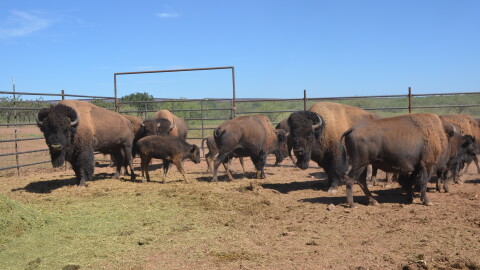 Nina Kravinsky/KJZZIn the Sonoran Sky Islands region, one organization is working to bring back native species. But it’s running up against a lengthening border wall.
-
 Sujey Vega/HandoutYou might not realize it, but Latinos make up the second largest demographic group in the Church of Jesus Christ of Latter-day Saints. In fact, the Mormon temple in Mesa was the first ever to offer religious rites in Spanish.
-
 Evelina Fernández/HandoutEvelina Fernández grew up in Phoenix, but her memories of this city are less than fond.
-
 Sky Schaudt/KJZZGenerations of Latino immigrants have come to the United States in search of the American Dream. But today, that dream can seem more elusive than ever. And a new report from the Pew Research Center shows Latinos are split on whether or not the American Dream is attainable today.
-
 Casey Kuhn/KJZZThe Arizona Board of Education is in the process of making changes to the state’s A-F letter grade system for public schools.


Transcript
ANNOUNCER: KJZZ’s original production, The Show, is supported by Banner Health, Arizona’s largest nonprofit healthcare system. Last year, Banner reinvested more than $1.1 billion in community health and charity care. Banner Health, nonprofit for Arizona.bannerhealth.com/nonprofitforaz.
LAUREN GILGER: Hi, I’m Lauren Gilger, co-host of The Show, an original production from KJZZ. Every weekday, we bring you the latest news and culture from across the state. You can find much more at theshow.kjzz.org. Here’s today’s episode.
LAUREN GILGER: Good morning, and welcome to The Show here on KJZZ 91.5 in Phoenix. I’m Lauren Gilger.
Coming up: Latinos, the American dream, and November’s election. And we meet an award-winning playwright who’s returning to Phoenix and a not-so-great childhood memory of this place.
But first, while we aren’t seeing headlines about immigration agents swarming U.S. cities right now, ICE is still detaining and deporting record numbers of people. And right in the middle of Phoenix, there is a temporary holding facility where detainees are being held much longer than they are supposed to be, and ICE agents have called 911 multiple times.
Jerod MacDonald-Evoy has the story for the Arizona Mirror, and he’s on the line now to tell us more. Good morning, Jerod.
JEROD MACDONALD-EVOY: Good morning, and thank you for having me on.
LAUREN GILGER: Thank you for coming on. So, tell us first about these holding facilities. “Temporary” is in the name. How long are migrants being held?
JEROD MACDONALD-EVOY: Yeah, these temporary hold facilities have kind of come under scrutiny across the country. Places like New York, Los Angeles and Baltimore have made headlines for kind of the conditions at these facilities. They’re supposed to stay there between three to 12 hours. That’s what ICE has officially told past auditors of these facilities. But so far, we’re seeing that the average number in the first year of Trump’s second term has gone from nine hours to roughly 19 hours, and that’s continuing to increase.
LAUREN GILGER: So 19 hours doesn’t sound like an incredibly long amount of time, right? But these are not made for people to be there for any longer than 12 hours — like no beds, no medical services, no food. What are these places like?
JEROD MACDONALD-EVOY: Correct. These facilities, they’re known to have no beds. There are about, I believe, 10 holding rooms that are just kind of concrete rooms where people are meant to just kind of be processed and held there until they’re taken to another facility, whether that’s Florence or taken to be deported or released. But these rooms, there’s no on-site medical, hence why ICE has been calling for emergency services at this facility in the past few months.
LAUREN GILGER: Right. So as we see these kind of times people are being held in these holding facilities go up, you also are seeing medical issues go up. What kinds of things are you reporting here? What kinds of 911 calls have happened?
JEROD MACDONALD-EVOY: I was able to obtain about 11 911 calls for the past six months, and these calls varied from things like fall injuries, where it was an older individual who fell while being taken to the hold rooms, or there were multiple people who had seizures that ended up needing medical assistance from ambulances who then had to drive them to local hospitals to be treated. There was also several instances of people with chest pain who were older, who were complaining that maybe they were having a heart attack.
LAUREN GILGER: You had a story of a pregnant woman as well who they had to call 911 for, right?
JEROD MACDONALD-EVOY: Correct. There was a pregnant woman in early December of last year who they called 911 for because she was having stomach pain and there was some white mucus that was concerning to the ICE agents. They ended up calling 911, and that person was transported to a local hospital Code 3, which is when the ambulance and emergency services go with sirens. And also noted in the CAD readout, they had ALS, which means advanced life support measures were given.
LAUREN GILGER: Wow. OK. So can be very serious indeed. Jerod, have we ever seen times of folks being held in these kinds of holding facilities that are meant to be for 12 hours this long before?
JEROD MACDONALD-EVOY: Well, this particular facility has a bit of a past with holding people for longer periods of time. I looked at data that was released via FOIA from the Deportation Data Project, which is ICE’s own data on people when they come into these facilities. There’s been individuals who stayed in 2022 for — there’s an individual who stayed in 2022 for 211 days. There was one person who stayed for 97 days in 2024. That was under the Biden administration, and we’re seeing those numbers again under Trump 2.0. There was an individual who stayed recently this year for over 80 days.
And sometimes this facility has also reached over its kind of population max, which is supposed to be around 150 detainees. This year, it’s reached 155. In the past, it’s also reached 263 for a single day. So we’re seeing the number of people staying going up as well as the length of stay go up in the past year.
LAUREN GILGER: People being impacted there. Jerod, what about oversight here? Like, doesn’t Congress have oversight of ICE, of facilities like these?
JEROD MACDONALD-EVOY: Congress is supposed to have oversight capabilities at these types of facilities. ICE has kind of pushed back on that, saying that because these are temporary hold facilities, they’re not detention facilities, so certain things in regards to their oversight capabilities don’t apply here.
Courts have ruled twice now, though, that Congress does have oversight capability on these facilities, and we’ve seen the result of that here in Arizona, where we had Congresswoman Ansari, Grijalva and Stanton visit another one of these temporary hold facilities in Mesa and found some pretty horrific conditions, they said.
LAUREN GILGER: Yeah, yeah. So let me ask you about ICE’s point of view here. Like you said, they say, “You know, these don’t need congressional oversight, they’re only temporary.” But there are Inspector General reports of places like this, right?
JEROD MACDONALD-EVOY: Not Inspector General, but what are called PREA audits, which is — it’s the Prison Rape Elimination Act. It was passed in the early 2000s to address rape and sexual assault in jails and federally run detention and correctional facilities.
This facility has had two of those PREA audits — one in 2017 and one in 2022 — that found some deficiencies, but they said they were addressed, specifically with the fact that this facility also is known to hold juvenile detainees. It will often hold families and things like that. And they found two instances where there were younger people who allegedly had sexually abused someone else. Those cases were then later deemed to be unsubstantiated by ICE itself.
LAUREN GILGER: Wow, lot to watch for. Thank you for your reporting on this, Jerod. Jerod MacDonald-Evoy is with the Arizona Mirror. Jerod, thanks as always. Appreciate it.
JEROD MACDONALD-EVOY: No problem. Thank you.
LAUREN GILGER: It’s been about 200 years since bison roamed in the Mexican state of Sonora. From the Fronteras Desk, KJZZ’s Nina Kravinsky reports on an effort to change that and how one organization is working to rewild its patch of borderlands.
NINA KRAVINSKY: A penned herd of American bison grunt and shuffle after a recent vet check. Their dark eyes peer out from the shaggy black hair around their massive faces.
PETER WINSER: There’s a little baby over there, which is not so little anymore. They grow fast.
NINA KRAVINSKY: The calves, now a few months old, have tiny, pointed horns, like miniature versions of the adults’ stately, curved ones. They were born here on the Cuenca Los Ojos Nature Preserve, where Peter Winser is the conservation director. They became the first wild bison born in the Mexican state of Sonora in about two centuries. Soon, they and the rest of the herd are set to be released from their mandatory quarantine and will be able to range free on around 10,000 acres.
This is the Sky Islands region, stretching from where Sonora meets Chihuahua to the south, and Arizona meets New Mexico to the north. Deserts, grasslands, and complex mountain ranges flow into one another to become one of the most ecologically diverse places on Earth.
PETER WINSER: The vision we have is that bison will roam here and do whatever they want to do. And there’ll be prairie dogs, and there’ll be pronghorn and elk, and there’ll be anything else that has an ecological function here that used to be here, that were removed mostly by habitat destruction and human hunting.
NINA KRAVINSKY: The reintroduction of those species is part of the binational nonprofit’s vision to restore its more than 120,000 acres just south of the U.S.-Mexico border. Bison do a lot for the ecosystem. As they roam long distances, they carry seeds in their dung and hair. Their uneven grazing creates habitats for birds and small mammals in the grasslands. And when they die, their carcasses provide protein for scavengers and the soil.
CURTIS FREESE: So that’s all part of this longer, kind of big vision of bringing back a kind of a self-sustaining ecosystem that requires minimal human intervention to keep it going.
NINA KRAVINSKY: Curtis Freese is a conservation biologist and co-founder of American Prairie, a nonprofit nature reserve in Montana, which reintroduced bison several years ago. He consults Cuenca Los Ojos on their bison reintroduction.
CURTIS FREESE: And so you got this whole chain of wildland and rewilding ideas underway, and all of them depend on big, intact areas that get connected with each other, one way or the other.
NINA KRAVINSKY: As we talk, Freese and Winser are dwarfed by the towering, rust-red border wall behind them. The U.S.-Mexico line makes up the northern border of Cuenca Los Ojos. Winser and I hurtle east down the Sonoran highway, parallel to the snaking border wall.
PETER WINSER: The potholes here are like — yeah, like that. You can look to your left here, and the big mountain ranges in the way way back there that are kind of hazy blue, that’s still Cuenca. And the next mountain range over is still Cuenca. So it’s — it sort of, it goes and goes.
NINA KRAVINSKY: Hills begin to rise around us, and we move out of the lower grasslands and into the mountains. Jagged rock formations punctuate the rugged terrain.
PETER WINSER: When I look at this, I’m thinking about cats.
NINA KRAVINSKY: It’s an ideal habitat for the many species of wild cats that roam this land, like pumas, ocelots, and bobcats. Cuenca Los Ojos has also captured images of jaguars on wildlife cameras. Recent ones indicate this area could be the northernmost breeding population of the elusive, almost mythical felines. The biggest cat species in the Americas needs vast tracts of uninterrupted land to roam. But the lengthening border wall is increasingly threatening their ability to move here. From the highway, gashes of cleared land are visible deep in the mountains, where construction workers are making way for more border wall.
Deep in a valley, a spring-fed stream gurgles year-round, shaded by giant sycamores and cottonwood trees.
PETER WINSER: This kind of habitat is rare nowadays in Sonora, and even more rare in New Mexico or Arizona, where it’s just not something like this much around anymore. It used to be, but not anymore.
NINA KRAVINSKY: Decades of waterway restoration has laid the groundwork for the rewilding project Cuenca Los Ojos is now undertaking, Winser says. The conservation project has spent years transitioning what were once cattle ranches into more natural habitats, and working to strengthen the watershed as it does so.
PETER WINSER: Jaguars are coming up here on their own and finding a habitat that’s suitable is due to the water availability and the vegetation.
NINA KRAVINSKY: Back by the bison and the border wall, grasses made tall by recent monsoons grow past our knees. As the border wall stretches longer on Cuenca Los Ojos, wildlife cameras show animals unable to cross, despite the small wildlife doors cut into the 30-foot border wall. Conservationists like Winser fear the planned double wall in some areas will make it even harder for wildlife to cross.
PETER WINSER: Our whole rewilding idea on this side now is like we’ll get the most biodiversity and the healthiest ecosystem and the best mix of animals we could possibly get. And hopefully in the future, we can also help the government, if they ask us, to say, “These are hotspots where animals are trying and trying and trying again to cross. So this would be a great place to take a torch to this wall and cut a big hole.”
NINA KRAVINSKY: Cuenca Los Ojos’ new bison herd ambles in their pen, preparing to do what generations before them have done: roam. The red wall, looming in the distance, will be their northern border.
Nina Kravinsky, KJZZ News, San Bernardino, Sonora.
LAUREN GILGER: Good morning. It is The Show here on KJZZ 91.5. I’m Lauren Gilger.
Coming up, how one playwright’s family stories of growing up in Jerome influenced her writing.
EVELINA FERNÁNDEZ: I grew up listening to stories from my grandmother, as they were told to my mother, and then my mother told them to me, about women that lived in that little town. A lot of my plays are based on, you know, the oral history of my family.
LAUREN GILGER: We’ll hear how her newest work incorporates the stories of women in her family. But first, generations of Latino immigrants have come to the United States in search of the American dream. But today, that dream can seem more elusive than ever. And a new report from the Pew Research Center shows Latinos are split on whether or not the American dream is even attainable today, but they’re also more optimistic about their own children’s future.
It all says a lot about one of the nation’s fastest growing demographics, and it could change the way our elections shape up this fall. Here to talk about it all is Mike Madrid, a longtime political consultant, co-host of The Latino Vote podcast, author of “The Latino Century” as well. Good morning, Mike. Thanks for coming back on The Show.
MIKE MADRID: Yeah, thanks for having me. Always love to be with you guys.
LAUREN GILGER: Glad to have you. So this Pew data shows — I’m going to give some stats here: One in five Latinos say they have achieved the American dream. 33% say they are on their way to achieving it. But they also say that nearly 20% say the American dream is just out of reach. 27% say it doesn’t even exist. Are you surprised by these numbers?
MIKE MADRID: They’re a little bit troubling because they have shown that Latinos have sort of backed off of this really rosy, optimistic view of the country. And the times, the unsettled times, frankly, there’s a lot of terror striking the heart of the community right now. I am — I am always amazed at the resilience, however, of Latinos and their optimistic belief about this country and where it’s going. One of the most beautiful parts of this finding is — is that it is the immigrant themselves, that the — the people who have naturalized or come here seeking opportunity that remain the most optimistic about the idea of America, even though we’re in these really troubled times.
LAUREN GILGER: Right, I loved that as well. The report basically highlights that U.S.-born Latinos are more likely than immigrants to say that the American dream has become harder to attain. What does this reflect to you? Like, you talk a lot in your work, Mike, about basically the Latino demographic being a story of assimilation.
MIKE MADRID: Yeah, the generational differences are the most telling about how political attitudes are developed, and this — this poll really shows that perfectly. As you just mentioned accurately, it is — the longer Latinos are here, the more they have been kind of shifting right, the more they have lose — lost their ethnic anchoring with Latino culture. So there’s a sort of misun — misunderstanding that it is like Latinos that bring this very conservative, socially conservative or right-wing position with them. It’s actually the exact opposite. It is those that are here the longest that start to look like the overall electorate in America, and that is a traditional story of assimilation.
LAUREN GILGER: Yeah, yeah. But those people who have been here the longest are now also the most skeptical of this idea of the American dream. I mean, talk about what this might say about politics or what Latinos, this kind of essential voting demographic in the country now, might be interested in or concerned about heading into November.
MIKE MADRID: So overwhelmingly, this is an issue of affordability and cost of living. The economy has always, for decades, been the single largest driver of political decision-making for Latinos, and it’s gotten even more acute during these times of extraordinary economic anxiety. What I argued in my book and what continues to play out is that as Latinos become more second, third, and even now a fourth generation, the politics of Latino — Latino politics is changing because Latino voters themselves are changing. And it becomes less — a focus much less focused on issues like immigration and naturalization, and far, far more focused on issues like affordability and economic opportunity.
LAUREN GILGER: Yeah, yeah. What the American dream thing means to Latinos, it means even more so than most of the American population, what you said there about financial stability. So let me ask you about this other part, Mike, because I think this is fascinating, and maybe speaks to that idea of resiliency and optimism that you mentioned at the beginning. That Latinos also here show that they’re more optimistic about essentially intergenerational progress. Like, more than half of Latinos in this Pew study said their children’s standard of living will be better than their own. Even more said that their standard of living is better than that of their parents.
MIKE MADRID: And this is really the beauty and I think the hope for the American project continuing forward, that belief that their children’s lives will be better than their own is something that is inherently American, or at least has been up until recent generations. The group that no longer believes this are white Americans. And that, I think, explains our politics, where you have an older, whiter America that has frankly been the, you know, received the largesse of one of the most prosperous generations in American history, has the most negative views of the country and its future. But here now emerges this younger, poorer, browner group that has the widest, most optimistic view of who we are. And that again, that idea, that that aspirational, “My children can have it better than I have,” is what creates the sacrifice and opportunity and commitment to this country that’s sorely needed at this moment.
LAUREN GILGER: That’s really interesting. So let me ask you lastly, Mike, about about what this might look like. If someone, a politician, you know, someone running right now wants to tap in from the Democratic side or the Republican side to that younger, more optimistic Latino generation, what should they talk about? Like, what might work with that kind of population?
MIKE MADRID: Boy, that’s such a great question because that’s really going to define who — which party is the majority party in this next generation, certainly in the next decade. The first thing is it does have to be aspirational. It does have to believe in this commitment of where we’re going. I think too often there’s this negativity that is dividing us, that says America’s best days are behind it, and you can’t trust the institutions anymore broadly. What I think the moment, the vacuum that’s been created is this need to have candidates speaking to where we’re going with specific pol — specific policy solutions, but recognizing and tapping into this very emotional sense that America’s greatest days are ahead of it if we all build it together, and that opportunity still remains with us, and we need to do everything we can to accentuate it.
LAUREN GILGER: What party do you think, Mike, is best fit to try to tap into that, to deliver that message right now?
MIKE MADRID: Well, my whole book was predicated on the idea that both are failing at this moment. They’re consumed by culture wars rather than economic aspiration. At the moment, like I said, this shift back from Republicans towards Democrats in the polling is much more indicative of a rejection of the Republican Party than an affirmation of the Democratic Party. But that stands in contrast to the exact same scenario in reverse two years ago. So Latinos are the largest swing vote, but they’re not being compelled aspirationally to either party. They’re being negatively pushed by whichever party is in power that de-prioritizes these economic issues and incessantly focuses on these cultural issues that Latinos really could not care much about.
LAUREN GILGER: Yeah, sounds like a big opportunity. Mike Madrid, longtime political consultant, co-host of The Latino Vote podcast. The book is “The Latino Century: How America’s Largest Minority Is Transforming Democracy.” Mike, thank you as always. Really appreciate it.
MIKE MADRID: Always great to be with you. Thank you.
LAUREN GILGER: Good morning. It’s The Show on KJZZ 91.5. I’m Lauren Gilger.
The Arizona Board of Education is in the process of making changes to the state’s A through F letter grade system for public schools. Earlier this summer, the state Auditor General’s Office released a report on them. Among other findings, the report showed the letter grades don’t clearly communicate school performance. Last month, the board voted to get rid of a category that went into the grades, known as bonus points, although some of the components that made up that category will go into other areas that will still be considered. That was the first of what will likely be a series of votes. The final policy decisions could come by the end of the year. That would mean the next set of letter grades would reflect the new criteria.
Karla Phillips-Krivickas is a member of the State Board of Education. She’s also the co-founder of the advocacy group Champions for Kids. She spoke with my co-host Mark Brodie, who asked, in a perfect world, how would these A through F grades be used?
KARLA PHILLIPS-KRIVICKAS: I think the priority should be, and this is my personal opinion, should be to provide information to parents, especially in Arizona where we give parents so many school choices. Parents need as much information — this is just one piece of the puzzle — but as much information as they can find to make those really hard decisions. But over time, those letter grades have become — have served different purposes. For instance, our State Charter School Board uses letter grades as part of their consideration for contract renewals and extensions. It can be a determinant of whether a school gets identified for state improvement services. So there’s some other purposes it serves.
MARK BRODIE: It seems as though, and there was a report not that long ago from the Auditor General’s Office, which found that it’s maybe not serving those purposes, and it’s maybe not giving a real indication of how schools are actually doing. How did the board feel about this? It seems as though there wasn’t a whole lot of disagreement. The board seemed to agree with the findings and the recommendations here.
KARLA PHILLIPS-KRIVICKAS: Well, I would urge everybody to read our official board response. I’m not speaking for the board. But I will speak as somebody who’s watched these systems evolve for a couple decades in Arizona and nationally. They evolve. We’ve learned more. We can measure things better, and we learn lessons from other states, quite frankly. And also, the federal law changed a few times that had some influence on how states did this, too. But I think we’re learning better, and we’re trying to do better.
MARK BRODIE: Do you think that the current system is in need of change? I mean, one of the findings of the report was that about three-quarters of the schools in the state got either an A or a B, which seems like a lot for schools to get that high of a grade. Do you think that the system is ripe for the kind of change that the board is looking at?
KARLA PHILLIPS-KRIVICKAS: I think from a time perspective, it is. Again, we’ve learned a lot more. We’ve watched other states over the past 10 years. We haven’t had substantive changes to the system, calculations even, in quite some time. In fact, there are some items that were part of the current system that when they were incorporated, the board at the time said, “These are things we want to kind of test out and pilot.” Well, now we’re going back, and that was the purpose of the meeting on Monday, is we went back and looked at some of these things and say, “All right, have these worked over the past — we have 10 years of data?” And of course, we had a big COVID pause, for lack of a better term, which also kind of made it difficult to evaluate how things have gone the past 10 years.
MARK BRODIE: OK. So, I know this is a very complex, complicated formula here, but can you sort of give us the thumbnail version of how the current letter grades are calculated, and then we’ll talk about how that might change?
KARLA PHILLIPS-KRIVICKAS: Sure. And it’s important to note that what I’m about to say right now is not that different across all the states. So they all — every state has some type of system, whether it be a letter grade, a star rating system. And they’re usually comprised of what we call the six components.
One is proficiency, the percent of students who are proficient on the state test in grade level.
Two is growth, what’s how schools are moving those kids over a one to three years time.
Three is graduation rate. And graduation rate closure, like are we closing that gap?
And what we also call college and career readiness, which are a variety of like your ACT test scores, your SAT scores, ASVAB, the military prep schools. They look at a bunch of different indicators for that.
And we also have a separate component for English language learners.
And these aren’t things — these are really the only things that we have as a state to look at. And so what’s changed over time is kind of how we weight them and put them all together.
MARK BRODIE: OK. So how are you looking to potentially change this? Like, what changes might be on the horizon?
KARLA PHILLIPS-KRIVICKAS: Well, we are implementing the changes that the Legislature mandated. So the Legislature changed the law that — they made lots of changes, but the one that we’re really wrestling with now, and it’s sticky. So those six components I just listed, right now, they’re all, for lack of a better term, amalgamated into one letter grade, right?
MARK BRODIE: OK.
KARLA PHILLIPS-KRIVICKAS: So it’s really hard to tell why that school is an A or B.
MARK BRODIE: It’s like having a cake, but not really knowing how much of each ingredient is in it.
KARLA PHILLIPS-KRIVICKAS: Right. And it’s delicious, but what we have to do now is pick apart all those ingredients. So what the law says now is that we have to give an individual letter grade to each of those components. So a school will get a letter grade on proficiency, a letter grade on growth, a letter grade on graduation rate. So the level of transparency for the public and parents is going to dramatically increase.
MARK BRODIE: So if you are a parent and you are particularly interested in one of those components, you will be able to then look and say, “OK, School X in college and career readiness has this grade. In growth and graduation rates, it has this grade.” And then you can, if you care, you can look at the overall, but you can really see each individual component there.
KARLA PHILLIPS-KRIVICKAS: Mm-hmm.
MARK BRODIE: And will the weighting be changed in terms of how all those components make the final letter grade?
KARLA PHILLIPS-KRIVICKAS: That remains to be seen. That’s what we’re working on right now.
MARK BRODIE: How big of a change would you say that will be when it’s fully implemented?
KARLA PHILLIPS-KRIVICKAS: I have no way to predict what the new weights will be, if there’s going to be new weights. We’re not there yet. But just the fact that you’ll be able to see the components separately is a sea change. Some other states have done this. Ohio does this, Texas does this. So again, we’re not the first. We’re learning from other states that have broken them out by indicators or components and giving them separate grades or rates.
MARK BRODIE: I mean, it kind of makes sense. If the whole point is for parents and families to be able to see how a school is doing, to let them see how a school is doing in more areas seems like it would make a lot of sense.
KARLA PHILLIPS-KRIVICKAS: Yeah, because you can have a school that has, let’s say, 60% to 70% of their kids passing the state test, and then you can have a school that is only, let's say, 30% to 40%. But they’re taking the kids that they get, and they’re making amazing gains or growth. And that’s — it’s fair for them to get that credit, and it’s also fair for the public to see that.
MARK BRODIE: I’m wondering, sort of on a philosophical level, like how do we compare schools? Because what happens in one school is unique in many ways to what happens in that school, even if the curriculum is the same, the classes are the same. There are different teachers, there are maybe different policies about getting extra credit or attendance or things like that. So can we really, do you think, compare and evaluate schools this way?
KARLA PHILLIPS-KRIVICKAS: That’s a really great question, and I’ve been giving it a lot of thought, obviously. But again, I can’t stress enough that this is just the latest step or evolution in a system that’s been in place for decades nationally and statewide. So in other words, we’re not making it in isolation. Other things have changed over the past 30 years in Arizona, including all the school choices that we have. But comparing schools is hard.
The other thing that we have now that we didn’t have 10, 15, 20 years ago is social media as much as we do now. We know that a lot of parents get that information from them and from each other. Again, this is just one piece of the puzzle and wasn’t intended to always be just the only gold star that you’re going to get. Schools take great pride in their letter grades or their school rankings, so it’s something that they value as well, because they know that it’s something that they can communicate to parents.
MARK BRODIE: Do you have a feeling or maybe an opinion on how this should work in terms of when the new weights happen and the new system is set in place, do you think that it will still be the case that three-quarters of the schools in the state are getting A’s and B’s? Do you want it to be different than that?
KARLA PHILLIPS-KRIVICKAS: One, I have no way of knowing that. I mean, we’re just starting to see preliminary data based on a lot of different choices, like kind of scenarios that we could make. Even my own personal views on this have evolved over time as I’ve learned and grown. I mean, how do you measure what is an A school? And that’s really the philosophical question that we have to ask, and we’re going to wrestle with that answer.
MARK BRODIE: All right. That is Karla Phillips-Krivickas, a member of the Arizona Board of Education, also co-founder of the group Champions for Kids. Karla, thanks so much.
KARLA PHILLIPS-KRIVICKAS: Thank you so much for having me.
LAUREN GILGER: You might not realize it, but Latinos make up the second largest demographic group in the Church of Jesus Christ of Latter-day Saints. In fact, the Mormon Temple here in Mesa was the first ever to offer religious rites in Spanish. And in ASU Professor Sujey Vega’s book, “Mormon Barrio,” she tracks the history of it back more than a century.
Vega herself is not LDS. In fact, she was raised Catholic, though she’s no longer practicing. But as she told me in the spring, her research with Latino LDS communities kept reminding her of her own Catholic grandmother.
SUJEY VEGA: I kept seeing, because I was interviewing a lot of older women for the initial part of it, which was a history of Mesa — Mesa’s LDS Latino population. And I was — I was sitting across these women as they were telling their their — their histories, and I was just, at some point, looking at their hands, and they reminded me of my grandmother’s hands when she was praying the rosary. Now, rosaries aren’t used in LDS faith, but I just — I don’t know. I felt like I was sitting across from my grandmother, and she had passed away. And so there was this connection to her faith. And I remembered going to, you know, Mass with her in Mexico and — and just the good memories, the memories of community that I was — I always connected with that sense of commitment to a faith, to a higher power.
LAUREN GILGER: Yeah. So you’re approaching this research and this book as, obviously, an academic, but also as someone with this kind of deep religious background and roots. I want to ask about some of the history here, because I think people will be surprised to learn that the second largest population within the LDS Church are Latinos. How far back does this go?
SUJEY VEGA: Well, let’s see. In Arizona itself, the first Latino or Spanish-speaking ward in Arizona was 1918, so well over a hundred years ago. I want to say the first Mexican convert was in the 1880s, and it was in Sonora, so just south of where we are today.
LAUREN GILGER: But you talk about the fact that even though this history goes back a long time, and even though lots of the people who are Latino and LDS are not like new converts because of that, right? They still tend to talk about a sense of otherness, or separate from the predominantly white leadership of the church, right?
SUJEY VEGA: Yeah, and I think that’s one thing that I question. And I try to thread that needle between respecting the community, respecting those people that spoke to me, both members and ex-members, whilst also finding moments of important critique here and there, right? So that the leadership of the church is still very much a white, male leadership. You have some international men that have been accepted into it. But what I make reference to in the book, it’s not just based on race in terms of the exclusion from leadership, but also class. And that to me is a bigger issue, because a large population of the LDS community that has been converting, whether they be Latinos or from other nations, are not necessarily, you know, business owners or lawyers or medical doctors. But that’s who you tend to have in the leadership.
LAUREN GILGER: Interesting. Class is a difference there, as well. But there is a history of sort of an almost like a racial caste system within the LDS Church, right? Where for a long time, like Black or even any darker-skinned people were considered inferior until what, the 1970s?
SUJEY VEGA: Yeah, so that’s an interesting point because you have LDS Latino members joining the church before that change was made where Black men were finally able to get the priesthood, right? But LDS Latinos didn’t really engage with that conversation when they were talking about their history. So it was separate and apart. However, when you have millennials, or the children of converts, they often talked about that, and how that was a moment of concern for them and their faith. They would find out these moments and try to navigate what they actually felt and what they actually believed in, very similar to my experience with the Catholic Church, right? How do you reconcile your faith with the organization of the church or the practices of the church that you don’t agree with?
LAUREN GILGER: Right. So along those lines, you talk about the kind of push-pull factors that have, over 100 years of history, attracted Latinos to this church. I mean, talk about what those are, and maybe the similarities, right? Like I think we would assume most people who are Latino are Catholic. Maybe historically they are, but that’s definitely not the case anymore. There is an incredible diversity of religion within this community.
SUJEY VEGA: Absolutely. And I think that that’s something to keep in mind, that folks converted to the LDS Church both because they were — they were either Catholic, they were non-practicing, and/or Protestant. Typically, the LDS Church will cite the notion of the family and the importance of the family for Latino converts, and why LDS faith works for them. What I found to be the case is that yes, it does, right? Obviously, having a faith that prioritizes family in the same way that you have culturally for ever prioritized family makes sense to them.
But by and large, the reason for conversion was a journey of oneself, right? The ability to read, the ability to have a conversation, right, with, in this case, like missionaries that would come to your home and talk about faith in a way that you may have never had a chance to before in a typical, whether it’s a Protestant church or Catholic Church, right? You’re just kind of given the liturgy. This idea that they could come to a personal attachment, that they can reflect on what they feel and what they — what their faith is, that they can have a personal connection to God was something the interviews kept coming back to.
LAUREN GILGER: That’s fascinating. So before I let you go, we have to talk about the title of the book, right? These “Mormon Barrios,” these communities that Latino members have formed. Talk about what they’re like, what the people told you there. How did you see their culture and faith intersect in these communities?
SUJEY VEGA: Well, first and foremost, you mentioned this earlier, that not all Latinos are immigrants. But for immigrant communities that form, they go into specific wards, Spanish-speaking wards, or what they in Spanish are called barrios. And when immigrant communities go into these wards where they feel connected, where they don’t have to explain their culture, where their conversations about such a deep topic like faith, they can do that in their own language, right, and fully embrace what they’re feeling, that’s a level of support that I don’t necessarily see happening in English-dominant churches.
And in part because though you have generations of LDS members who, you know, great-grandfathers, right, went — converted to the church, and so they are just like me when I was Catholic, expected to follow the faith. But for LDS barrios or, you know, Latino wards, there is a sense of community. There is a sense of joviality, so like laughter, fun, silliness during events, you know. There is — and especially for some of these members who have given up their own biological family because the biological family didn’t convert, and so they still want that sense of family, and you get that in these wards.
And then the other cool thing about it is the wards have a mix of different ethnic Latino ethnicities. So again, you have Peruvians, you have Chileans, you have Mexicans, you have Salvadorans, you have Guatemalans, right? And so you have an interesting moment of collective identity, but also the acceptance of variety. Right, so you get to try pupusas as well as you get to try tamales, or maybe tamales from different regions.
LAUREN GILGER: So very diverse, but connected by this faith. It sounds like fun.
SUJEY VEGA: Yeah. No, I mean it was. It was a fun time to go sometimes to these events. You know, I went to like, I think it was a Father’s Day or Mother’s Day, and it was just the funnest, funniest, just to see the — people were performing, the moms had a dance, the dads had something that they did as well. There was food, there was children running around. It just felt home. And I think that that’s where in the book I really — I wanted to make sure that was evident, that there is this importance of home in these Latino wards that needs to be not just recognized, but also protected. I would not want these these wards to close in the future as had been done in the past.
LAUREN GILGER: Yeah. All right, we’ll leave it there for now. That is Sujey Vega, an ASU associate professor in the School of Social Transformation there, as well as the author of the new book, “Mormon Barrio: Latino Belonging in the Church of Jesus Christ of Latter-day Saints.” Sujey, thank you so much for coming on. Congratulations on the book.
SUJEY VEGA: Thank you. It was a pleasure.
LAUREN GILGER: Good morning. It is The Show on KJZZ 91.5. I’m Lauren Gilger.
Our next guest this morning grew up in Phoenix, but her memories of this city are less than fond. When playwright Evelina Fernández was 9 years old, her parents got divorced, and she moved from Phoenix to East L.A., where she still lives and writes today. Now she is an award-winning playwright, screenwriter, and actor, a founding member of the Latino Theater Company and the Los Angeles Theatre Center. And later this month, she’ll be back in Phoenix as the recipient of Arizona Theatre Company’s 2026 National Latine Playwrights Award for her play, “Blow Away the Clouds.” They’ll be holding a staged reading of it on September 17th, and I spoke with her more about it.
Tell me about your memories of Phoenix, like what comes to mind when you think of this place?
EVELINA FERNÁNDEZ: Well, I mean, first of all, I remember it being really hot. So much hotter than it is in California. So I did, you know, go to elementary school there, and I do remember my school, Jorgensen Elementary School. And I remember that we used to walk barefoot in very hot dirt to go to the Broadway Pool. I don’t even know if that place exists anymore, right?
But yeah, the memories are not great. I mean, it was a time when my parents were going through a divorce, so that, you know, is probably the most impactful memory that I have, you know, that we left. And I remember the day that Mom and I got on a Greyhound bus, and I looked out the window, and I thought, “Wow, I’ll never see Phoenix, Arizona, again.” But I have.
LAUREN GILGER: You have, you have. And you’re back now for this, so it’s a little bit full circle.
EVELINA FERNÁNDEZ: Yeah. And I do go back, because my family owns a home in Camp Verde, Arizona, and I do go back for writing retreats. My mom was born in Jerome, Arizona, so since I do write a lot about mining towns, I do go back to Jerome, Arizona. I love that little town.
LAUREN GILGER: It’s a cool town, yeah.
EVELINA FERNÁNDEZ: And my dad is still there. He’s 101 years old, so he’s still there, yeah.
LAUREN GILGER: 101. Wow, OK. And this particular play we’re talking about here, “Blow Away the Clouds,” is set here in Arizona and in a small mining town, not unlike Jerome. And in the 1930s, tell us about sort of the the backdrop here.
EVELINA FERNÁNDEZ: Well, I grew up listening to stories from my grandmother as they were told to my mother, and then my mother told them to me, about women that lived in that little town. And so every single one of the characters in “Blow Away the Clouds” is based on a real woman — four women that really existed, and whose story I heard throughout my lifetime. I heard the stories from my mom, I heard the stories from my grandmother. A lot of my plays are based on, you know, the oral history of my family. And so this is one of them.
LAUREN GILGER: So tell us about — is it Milagros? Is that how you say her name?
EVELINA FERNÁNDEZ: Yeah, Milagros. So Milagros is the woman who, you know, she’s very religious, but she has friends who have problems, problems that deal with pregnancy, infidelity, spiritual problems. And so they all come to her because they say she’s good. She’s like the best friend in the whole town, so everybody comes to her with their problems.
And also, it’s in the middle of the Great Depression of 1932. And at that time, the conditions in the mines at that time for Mexican men were were not good, very, very bad, very dangerous. My grandmother used to talk to me about black lung and how many miners died from black lung, and and they were underpaid and overworked. And so these women are wives of mine workers.
And of course, there’s the rich families, the mine owner families, and the poor families, and they all live on different sides of town. And so many of the women work for the rich families. And there’s that conflict. There’s that feeling like life isn’t fair.
LAUREN GILGER: A perpetual theme, I’m sure, yeah.
EVELINA FERNÁNDEZ: And so she has to decide if she’s going to help her friends or not, you know, when they’re asking her to do things that she really doesn’t want to do. So it’s kind of a play about friendship, sisterhood, solidarity, society and religion. You know, how do we — how do we reconcile our religious beliefs with what is going on in our real life?
LAUREN GILGER: Yeah. Well, I wanted to ask you about that because I read that you were raised Catholic, though you don’t practice now. But you had this really great quote I read where you said you grew up thinking angels and spirits lived among us, right? This kind of melding of the real and the spiritual worlds that’s so present in Catholicism. I wonder, you know, where does that show up in your plays? How do you like to explore that in these characters?
EVELINA FERNÁNDEZ: Well, Gabriel García Márquez is my my favorite writer. And so I do use a lot of magical realism in my plays. Like for example, the last play I wrote, “The Storyteller,” is a woman who is dying of dementia. Her guardian angel sits next to her the whole time, and they have conversations.
In this one, what I use is the limpia, right, the cleansing, because one of the women believes that she’s been cursed. A lot of beliefs, right? Somebody’s backyard has fallen in because of the of the digging in the mine. And so they say that at night she can hear the spirits yelling from hell, right? And yeah, I mean, we do believe in spirits, and we believe in curses, and that’s so beautiful. And I love writing about those beautiful cultural beliefs that I grew up with and so many other, you know, Mexicans and Mexican Americans have grown up with.
LAUREN GILGER: So I wonder, because you say that you write so many of your plays kind of from your family’s oral history, from women that you grew up hearing about all the time. I mean, what does that do for, I guess, your own sense of of self and identity? I mean, does it help you understand where you come from and what that means to you?
EVELINA FERNÁNDEZ: Well, yeah. I mean, I remember my grandmother was a very strong woman. She’s the one that came from Mexico during the Mexican Revolution with my grandfather, and they landed up in Jerome, Arizona. So she was a very strong woman, and consequently we have a lot of strong women in our in our family.
And I remember my son was around — I want to say maybe 12 years old, and he realized something, right? He was like, “Hey, Mom, why do the women run our family?” And I had to think about it. I had to like, wow, we really do. And we do. I mean, it’s that’s the kind of family I have. You know, whereas other families, it’s a more patriarchal, it’s not that way in our family.
And so what was my response to my son? It was, “I think because the men like it that way.” Probably wasn’t the best answer, but that’s all I could come up with at that moment.
LAUREN GILGER: Not a bad answer, though. Not a bad answer. All right, well, we’ll leave it there for now. That is Evelina Fernández joining us, an award-winning playwright. She is the 2026 National Latine Playwrights Award winner. Thank you so much, Evelina, for coming on the show. Congratulations.
EVELINA FERNÁNDEZ: Thanks so much, Lauren. It was great talking to you.
LAUREN GILGER: Thanks for listening to The Show’s podcast. The Show is produced bySativa Peterson, Nick Sanchez, Amber Victoria Singer, Athena Ankrah and Ayana Hamilton. The Show was created by Jon Hoban, and our executive producer is Amy Silverman. You can find more of The Show and sign up for our newsletter at theshow.kjzz.org. You can also find us on Instagram @kjzztheshow.