


Phoenix has more investor-owned homes that just about any other city in the country. Find out how that’s impacting potential home buyers and renters. Plus, the earthquake that drained the desert — and a piece of lost Arizona history.
Ways To Subscribe


-
 Arizona Department of Corrections/HandoutNow, one state lawmaker is demanding answers from the Arizona Department of Corrections as budget cuts put a stop to a planned HVAC overhaul across our state’s prison system.
-
 Getty ImagesRoselyn Tso is the former director of the Indian Health Service, which is responsible for providing health care to Native Americans and Alaska Natives.
-
 Nick Blumberg/KJZZArizona has removed more residents from food assistance programs than other states. However, there are millions of dollars that are available to help Arizona families during the summer — when free meals at school aren’t offered — that are not being used.
-
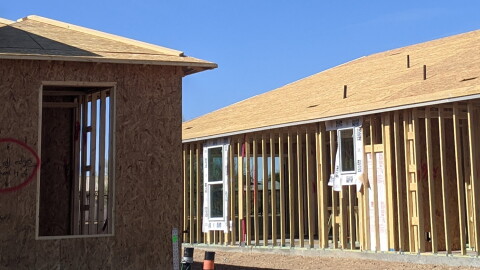 Sky Schaudt/KJZZA new report raises concerns about the number of single-family homes in the Valley that are owned by institutional investors. It also finds Phoenix is the top market in the country for build-to-rent homes.
-
 University of Nebraska Press/HandoutWe don’t really think about the Southwest as a hotbed of seismic activity. But Mary Elizabeth Reynolds' forthcoming book shines a light on a massive earthquake here that changed our state’s water trajectory.
-
 Visit Mesa/HandoutFrom Sept. 15-19, the light and the jagged volcanic cliffs will line up just right to cast a shadow that resembles a cougar on the Superstition Mountains as the sun sets between 5:30 and 6 p.m.
-
 Getty ImagesAs AI makes its way into the classroom, schools across the country are moving to put in restrictions and AI use. The Show spoke with one Arizona education expert to learn find out what these new rules could mean for the future of K-12 learning.


Transcript
ANNOUNCER: KJZZ’s original production The Show is supported by Banner Health, Arizona’s largest nonprofit healthcare system. Last year, Banner reinvested more than $1.1 billion in community health and charity care. Banner Health, nonprofit for Arizona. bannerhealth.com/nonprofitforaz.
MARK BRODIE: Hi, I’m Mark Brodie, co-host of The Show, an original production from KJZZ. Every weekday we bring you the latest news and culture from across the state. You can find much more at TheShow.KJZZ.org. Here’s today’s episode.
MARK BRODIE: Good morning, it’s The Show here on KJZZ 91.5 in Phoenix. I’m Mark Brodie.
LAUREN GILGER: And I’m Lauren Gilger. Coming up, how Arizona schools are grappling with AI and screen time.
MARK BRODIE: And how the prevalence of investor-owned homes in the valley impacts both potential renters and buyers.
LAUREN GILGER: But first, we all know it’s been a scorching hot summer in Arizona this year — the second hottest summer on record, in fact. And as those temperatures rose to sometimes record highs, cooling systems failed in Arizona’s state prisons, leaving thousands of inmates relying on things like swamp coolers, fans and styrofoam coolers filled with ice.
Now, one state lawmaker is demanding answers from the Arizona Department of Corrections as budget cuts put a stop to a planned HVAC overhaul across the state prison system.
Keira Riley has the story for the Arizona Mirror, and she’s here now to tell us more. Good morning, Keira.
KEIRA RILEY: Good morning.
LAUREN GILGER: OK, so how bad, Keira, has it gotten in some Arizona prisons this summer when it comes to the heat?
KEIRA RILEY: Well, I think it’s no mystery to anyone who’s been outside their house this summer, you know, the triple-digit heat can be unbearable. And you can imagine how much worse that is when you can’t escape it — or you have to work in it, you know, eight-hour days or more.
LAUREN GILGER: Yeah, 100%. What do inmates say? You talked to some.
KEIRA RILEY: Yeah. They mentioned, you know, there’s swamp coolers running, they have access to ice and ice water, but, I mean, it’s not enough. You know, one inmate I spoke to, his bunk is at the very end of the hall against a wall that heats up all day. It doesn’t cool down until around 11 a.m. He puts a fan in his face, he drinks water, he has ice, but it’s still — it’s still not enough, you know, against these triple-digit temperatures.
LAUREN GILGER: There are — there is some AC in some places in these prisons, it sounds like. Like guards are not working without air conditioning, right?
KEIRA RILEY: I mean, to some extent. The guards’ offices are typically air conditioned. You know, often times they’re not in the office all day. But I mean, you know, inmates describe the humid, you know, kind of heat of the swamp cooler hitting the the cold glass from the air conditioned office. So, you know, yeah, guards’ offices and then their classrooms as well, but those aren’t, you know, open all the time ... far from it.
LAUREN GILGER: OK. So the Arizona Department of Corrections Rehabilitation and Reentry did have like a heat mitigation plan, right, with some money behind it — millions allocated to like an overhaul of the HVAC system in the state’s prisons, which apparently needs it. What happened to that plan?
KEIRA RILEY: Yeah. So, you know, a few years ago the state did make a sizable investment into converting all the units to HVAC. But, you know, ultimately, you know, after I think two fiscal years, the Legislature cut that budget down to nearly nothing. And so now 20 units that are occupied by inmates, and four that are unoccupied ... run off these cooling systems and have no HVAC systems in place.
LAUREN GILGER: Right. OK. And this is as we’re seeing Arizona summers just get hotter and hotter. So without the funding, what exactly are prisons doing? They have an extreme heat safety and relief strategy that they use to try to keep people safe. Is it working?
KEIRA RILEY: You know, in some token, yes. You know, it’s lessening the effects, but I mean at a certain point, you know, there’s nothing that is the same as AC. You know, swamp coolers cannot rise to that level. No amount of ice or water or a fan in your face, you know, is going to really get rid of, you know, get it lower than like 85 a lot of the time. So, I mean, it’s still hot. There’s no way around it.
LAUREN GILGER: So this also comes, Keira, as the Department of Corrections is headed to receivership, right, and this very long ongoing lawsuit over its — what’s been decided to be constitutionally deficient healthcare in the state’s prisons. How does this kind of fit into that picture?
KEIRA RILEY: Yeah. I mean, you know, extreme heat does impact certain populations more than others. Obviously senior inmates or inmates with mental illness who are prescribed psychotropic medications are especially vulnerable to high heat. But I mean it takes a toll on the general population as well.
And so, you know, when you talk about heat-related illness, and you have this healthcare system that is constitutionally — and has been found by a court — not up to par, you know, it creates a concern about the response and care of the people who are impacted most by this heat.
LAUREN GILGER: And you found that there has been some research done, kind of academic research done across the country about extreme heat in prisons as extreme heat is becoming more common. What did they find?
KEIRA RILEY: Yeah ... not anything surprising to, again, anyone who’s been outside. ... Lewis, the prison where I spoke to the inmate, you know, they topped out at 114 degrees in this study. And again, the study is looking at the temperature outside, and so there is kind of a bridge of and a gap in data in the true temperature inside prisons. So that is kind of another hurdle. But I don’t think it’s, you know, rocket science to say that if it’s 113, 114 degrees outside, it’s incredibly hot inside with no AC and kind of limited cooling capacity.
LAUREN GILGER: Is this safe for prisoners?
KEIRA RILEY: No. I mean, I think it ... studies have shown it exposes them to comorbidities and can exacerbate existing, you know, health conditions. So, no, I think, short, it’s not safe.
LAUREN GILGER: And prisoners are already kind of more likely to live shorter lives essentially, right?
KEIRA RILEY: Yeah, absolutely.
LAUREN GILGER: Now, let me ask about the representative that I mentioned in the intro, Rep. Walt Blackman, here is — is issuing a subpoena in this from the Department of Corrections. He wants answers basically about extreme heat in Arizona prisons. What’s being done? What’s he looking for?
KEIRA RILEY: He’s looking for in like health-related incidents as well as the current systems and, you know, the maintenance, maintenance costs and upkeep of keeping the HVAC systems we have on and the cooling systems as well, keeping them working and avoiding outages. ...
LAUREN GILGER: We mentioned the budget cuts that have resulted in this HVAC overhaul being stalled essentially. Any chance that this will be an issue coming up at the [Legislature], and that that funding could be restored?
KEIRA RILEY: I think, you know, it’s definitely, you know, a way to open the door. Rep. Blackman kind of said in his letter, "I’m not, you know, assigning blame from the jump, but just trying to get an understanding of how the Legislature can better support the prisons in — in this conversion plan.”
And so, you know, I think he hasn’t said definitively whether he’ll take legislative action, but I think there’s a high possibility that this could come up in the next session.
LAUREN GILGER: Yeah. But it’s always hard politically, right, and you’ve covered the Capitol for a long time, I know, Keira, like is it — is it a difficult issue to kind of rally anyone behind when you’re talking about prisoners?
KEIRA RILEY: Absolutely. But I — I think, you know, there is a bit of a change in the tide when you think about, I guess, the amount of money that is poured into prisons. And so, you know, from that perspective, I think lawmakers have had a closer eye on how we’re spending, you know, the multibillion dollar budget for the Department of Corrections, and what are the results we’re seeing? What is the final product?
LAUREN GILGER: And when you’re talking about the costs of prisons in the state, we should mention there have been lawsuits in other states about extreme heat in prisons. Are we seeing or likely to see that kind of thing happen here as well?
KEIRA RILEY: I mean, definitely it’s a possibility. ... I think we’ll see. I think, you know, it would take, you know, some kind of harm, and so we’ll just have to watch the courts for that.
LAUREN GILGER: Yeah. All right. Keira Riley had the story for the Arizona Mirror. Keira, thank you very much for coming in, and I appreciate your reporting here.
KEIRA RILEY: Thank you for having me on.
MARK BRODIE: The U.S. Senate last month confirmed Mark Cruz as the new director of the Indian Health Service. He’s previously worked in the Federal Department of Health and Human Services and Interior Department, as well as for two Republican members of Congress.
My next guest was the last permanent director of IHS. Roselyn Tso resigned from the position in January 2025. The agency is responsible for providing healthcare to Native Americans and Alaska Natives. And when I spoke with Tso earlier, I asked if there are challenges to running a department like IHS that are unique to it compared to other healthcare operations.
ROSELYN TSO: Well, um, generally speaking, probably not because there’s, you know, our whole, our entire healthcare system is challenged from time to time, whether you look at resources, or workforce, or those kinds of things to keep to keep an operation going. I think what probably distinguishes Indian Country’s healthcare system from other healthcare systems is probably some of the remotenesses that that our facilities are at, or where our people live.
And so trying to make sure that we’re connecting people to the healthcare that they need, Number 1, and the healthcare system that works for them, I think is really important. And certainly we’re we’re learning a lot more about rural healthcare, and as we do that, you know, as as I said earlier, some of the things that that tribal organizations and tribal governments have done to improve healthcare system for their people in their tribal communities is something we could probably all take something away from.
MARK BRODIE: What are some of the best ways to try to do that? You mentioned, you know, a lot of a lot of tribal members live in places that are not necessarily close to healthcare providers, and they also don’t necessarily have reliable internet service. So like telehealth, I would imagine, could also be a challenge in some cases. How do you how do you try to make those distances a little smaller and maybe make access to care more available?
ROSELYN TSO: One of the things that I’ve really been thinking about, and this has really been since you noted the time that I’ve been out of Indian Health, the federal government arena anyway, with regards to healthcare, is really looking at how can we uh utilize technology, how can we utilize um the what is around us maybe that we haven’t quite all explored to improve healthcare for people.
Some of our social drivers of health continue to be transportation. So even if we could get people to where they need to be in terms of referrals or in terms of being able to see a provider, we have to look beyond that. We have to look at just what is that uh patient also dealing with, as you alluded to, transportation for example. How do we address that? And so I think that there are ways that we can continue to look at using technology that might be available to us.
The other part I think is the more we can invest in encouraging our tribal communities to to look at ways that our tribal people better understand their healthcare, uh to take those small steps that need to be taken to really uh understand, for example, blood pressure.
And do you understand, do our people really understand, what does that mean? What do those numbers mean, and how do we Number 1, if they are high, um what is it that we’re doing, as opposed to, you know, your provider coming in and just saying, “OK, Roselyn, your your blood pressure’s high, so we need to do A, B and C.” Are there other steps, there are other steps, that we can take before that maybe before a medication is is uh recommended, or things like that, that we can start to take care of ourselves.
And so that really gets into the preventive care. If we can, as a healthcare system for our tribal people, start to look at prevention, and there’s lots of good programs out there that do that. How can we do that? And some of that can be u- utilizing technology in remote locations, whether it might be a smartwatch, whether it might be a pedometer, whether it might be a place where people can walk and and exercise. Maybe looking at those kinds of things a little bit different.
And that takes, those are just all things that are great ideas, but it takes time and it takes change in tribal communities to be able to do that. So what I have seen work the best is when tribal communities determine what are the needs in their tribal communities and then they take it and address for themselves.
MARK BRODIE: Well, so which do you think is the bigger challenge then: getting individuals to sort of do the things that you’re talking about and maybe taking a little more ownership over their own health, or some of the systems changes in terms of figuring out and deploying technology and maybe recruiting more providers, that kind of thing?
ROSELYN TSO: Well, it’s going to be on both sides. You know, there are things that we can help the system maybe have better outcomes if we are better understand our own healthcare needs. And then there’s the other component where maybe we have people that that absolutely need to make sure that they get into their healthcare provider and get the medication that they need and to be able to address that, because they they do both connect and they they’re going to work hand-in-hand if we’re able to do it.
But I, going back though, I would say that that my experience has been that those communities, again, whether it be American Indian and Alaska Natives or any other community, that take that community need, because just because there’s 575 federally recognized tribes, we should not assume that every tribe has the same challenges and every tribe can solve the same challenges the same way. That’s, that’s not it.
MARK BRODIE: To the point you were making about the number of federally recognized tribes, did you find that the needs are similar across that wide swath of of people across this country?
ROSELYN TSO: I think generally speaking, you can say that there’s probably not enough resources. Because, you know, tribes would argue that, you know, the federal government has a a responsibility to provide healthcare to American Indians and Alaska Natives. And these are established through treaties that have been in place for years, executive orders and things that have been in place to support healthcare for American Indians and Alaska Natives in exchange for land and other resources that were taken from from the people. And these are documented.
So when you look at it just strictly from that perspective, and you look at a tribal community and and the funding that comes to Indian Health Service through Congress, you’re probably looking at 50, if we’re lucky, 50 to 55% need of funding that’s needed to support the healthcare for people. So you’re already out the door trying to provide healthcare for half of the resources that you that you need to address the needs of that community, without even looking at the data and the healthcare needs that are out there.
So you start with sort of a deficit, and then you’re constantly trying to make up those additional resources to to try to make sure that we best, we provide the best care possible to our to our tribal uh community members and our relatives. But then you look at all the other things like, you know, you you really, it’s it’s nearly impossible if you have a small community to bring in a physician. You you can’t support a physician in that community. So what else can you do? How else can you look at providing the care that you need?
And some of these there’s some great examples out there in Indian Country where care is being provided, and maybe it’s through telehealth, maybe it’s using other technologies that allow us to to address the needs of the people that we have.
MARK BRODIE: All right. Roselyn, thanks so much. I really appreciate it.
ROSELYN TSO: Thank you as well.
MARK BRODIE: Roselyn Tso is a former director of the Federal Indian Health Service.
LAUREN GILGER: Good morning, it is The Show here on KJZZ 91.5. I’m Lauren Gilger.
MARK BRODIE: And I’m Mark Brodie. Coming up, a major earthquake hit the borderlands in the 1800s and changed the water trajectory of the Southwest forever. We’ll hear from an author who dug into the history.
LAUREN GILGER: But first, during the pandemic, schools had to bridge the so-called digital divide. They had to make sure every student had a laptop at home and internet access so they could all learn remotely. But now as AI makes its way into the classroom, that landscape is shifting. Communities across the country are moving to put in restrictions on screen time in the classroom and limits on AI use.
New York City public schools, the nation’s largest school district, is implementing screen time limits in schools, banning the use of generative AI for students through eighth grade and restricting its use for older students to vetted programs. And our next guest this morning says what they’re doing is actually a lot more nuanced than headlines might make you believe.
Janice Mak directs the Lab for Human-Centered Technology Futures at the Mary Lou Fulton Teachers College for Teaching and Learning Innovation at Arizona State University, and I spoke with her more about it.
JANICE MAK: They are actually taking the time to take a year pause. Uh they’re doing some intentional pilots, which I think is really an important approach to really make sure that they’re collecting the evidence space um to make the right decisions. Uh you see Connecticut and North Carolina recently as well, uh taking this nuanced approach to distinguish, like Connecticut is distinguishing between um personal-use devices versus those used for educational purposes. We see North Carolina uh really focusing on the purposeful use of technology. So while we do see some states and some districts taking the approach of blanket screen time limits, yeah, uh the direction is really becoming more nuanced, um and really the focus on purposeful use of intentional use of educational technology in classrooms for active learning.
LAUREN GILGER: That makes a lot of sense. You survey, right, teachers, districts, sometimes students, it sounds like, on this kind of technology — how they use it, how it helps them, hurts them, etc. What do they say?
JANICE MAK: Yeah, I would say actually, there are there’s a mix. There’s definitely concern. So I’ve had students talk about their concerns around, they don’t want it to replace their own thinking. It’s about agency, it’s about trust, so those are a lot of things I’m hearing from students. Um, but at the same time, you know, the research is really showing that we it really depends on how it’s implemented in the classroom. So it really has to do with the design of the and the pedagogy and how it’s implemented um, the extent to which these tools can benefit student learning. So, there are some uh really interesting things, projects that I’m a part of, which are, you know, designing like a SyllaBot, a syllabus helper at ASU, um, and what we do is though, we design it based on the learning sciences, on a body of literature, um, we focus on user groups, we get user feedback, um, and then we iterate. And so, uh, I think there’s intentional ways to go around designing tools that can be of use, um, but there’s also, you know, remembering that there’s not one tool that’s going to solve it for everybody. We have to design for learner variability.
LAUREN GILGER: Right. So, I mean, yeah, the initial I think reaction in schools was, this will replace students actually learning and and help them cheat, right? But you’re saying there are ways that that you’re working on firsthand that are ways to use this technology in good in good ways. Do do teachers and students see that as well? Are they also excited about the opportunity here?
JANICE MAK: I think they are, and then um there’s also I think it’s interesting, there’s one case in particular that I think of um, where we heard from a teacher um, who was piloting uh a tool with her class and her students, and they found themselves almost interrogating the technology, and so using it as an opportunity to um critique it in a sense. It was a way to even bring in AI literacy, um AI evaluation into the classroom, mm-hmm.
LAUREN GILGER: So, let’s talk about the equity issue in this as well, because as you mentioned, like during the pandemic, it was about access. It was about getting federal dollars so that every kid could have a laptop, right, because they needed it. But now it seems like that conversation has maybe shifted, right? Like, now you’re seeing the equity conversation around technology in parenting and schools flip, where it’s like if you have a family where the parents both have to work all the time, those kids are going to be on a screen all the time or dealing with AI much more often. And it’s the the kids from those more wealthy, affluent families that are going to have more restrictions. The districts full of those kids are going to have more restrictions. Is that what you’re seeing at the local level in schools, too?
JANICE MAK: Uh, I’m not really seeing that, but I can say, for example, we do have a state requirement that requires schools to establish policies that um limit students’ use of devices during the school day, mm-hmm, um, but it still allows teacher-directed educational uses, and it does allow and recognizes situations um including emergency medical needs, but really what we’re seeing is more about establishing boundaries about when and why personal technology is being used. Um, so Tolleson Union has had actually has a great um, interesting example um, because they really approached it as an implementation question, and so rather than simply saying that like phones are bad, let’s ban them, the district actually piloted different approaches, um, and so they tested them and they found that, as you know, the lock box approach at Sierra Linda High School showed the most promise, and so they’re ultimately adopting those, um, so they put their phones away, students put their phones away during class, but then regain access during designated times. Mm-hmm. But the important thing to remember is that Tolleson is not a technology-free district, so they still have district-issued laptops, they still have instructional technology, and they still have um guidance around generative AI, preparing students to use AI responsibly. So that’s I think there’s a distinction there, so they’re not saying, “We don’t want students to use technology.” They’re saying, “We want to distinguish between a personal device that can interrupt learning, um, and a technology that, you know, teachers in our districts and our schools are deliberately and intentionally selecting to advance, you know, learning outcomes.”
LAUREN GILGER: Sure. Do you think that this district-by-district, almost school-by-school, maybe even classroom-by-classroom sometimes approach to dealing with technology, AI in particular, is the best approach? Would it be better if there were actual policy, regulation guidelines from the state level, even the federal level?
JANICE MAK: Yeah, so the I think every level um has its own function. Arizona, for example, is very local control, um, and so there is a state policy, but then schools, each um, and districts are coming up with their own policies. But federally, we have, you know, broad protections and rights, you know, have been established, and then the state sort of establishes those expectations and equity, safety, accountability, and then it’s up to the district to establish imple- implementation and the procurement, um, and then the schools and teachers are the ones making those instructional decisions um within those guardrails. And so I think ideally the system and the layers and the macro, micro, and meso all work together, um, but really thinking that one level can solve the whole problem um is not is not the approach either, and so really Is that approach happening, Janice? Like, are you seeing policy come down or is it more the other way around right now, almost coming from the bottom up? Yeah, so I would say um based on my some research that I’ve done recently, the state level is simultaneously dealing with, as we’ve seen, um cell phone bans, screen time debates, um, and then also AI, a lot of them are working on AI guidance, and so districts right now themselves, because they’re seeing students use it, teachers use it, districts um oftentimes are in the position of uh coming up with their own guidance and their own approaches, because that’s what happens in these times of rapidly emerging technology. Um, oftentimes we see policy vacuums, we see sometimes some lags in the research, so I mean there’s a lot of work being done in the field right now, but that’s kind of where we’re Where we are now. Yeah. Mm-hmm. Yeah.
LAUREN GILGER: OK. Janice Mak directs the Lab for Human-Centered Technology Futures at the Mary Lou Fulton Teachers College for Teaching and Learning Innovation at ASU. Janice, thank you very much for coming on. Thanks for talking about this, I appreciate it.
JANICE MAK: Thank you.
LAUREN GILGER: Good morning, it is The Show here on KJZZ 91.5. I’m Lauren Gilger.
MARK BRODIE: And I’m Mark Brodie. Arizona has removed more residents from food assistance programs than other states in the wake of new work requirements approved last year by Congress. But my next guest says millions of dollars that are available to help Arizona families during the summer, when free meals at school aren’t offered, are not being used.
Yana Kunichoff has reported on this for Arizona Luminaria. She joins me now to talk about what she found. Yana, good morning.
YANA KUNICHOFF: Good morning.
MARK BRODIE: So, we’re talking about SUN Bucks here. What what are SUN Bucks?
YANA KUNICHOFF: Yeah, SUN Bucks, also called Summer EBT, is basically $120 that eligible families can get to use on food when free school meals are not available.
MARK BRODIE: And so these are generally for families who send their kids to school, they maybe get free breakfast and free lunch because of their their income, yeah?
YANA KUNICHOFF: Yeah, exactly. It’s families who get income-based free school meals, families who are homeless, and then there’s some like if they get Medicaid and also have an income meet the income level, um, then they can get this, they can get this money. So it’s families who need a little bit of help in this particularly stretched time.
MARK BRODIE: And you reported that last summer there was more than $17 million that went unused. Why is that?
YANA KUNICHOFF: Yeah, so there’s a policy analyst named David Rubel, who’s been following what actually happens to this Summer EBT money, which states around the country get, and basically families maybe didn’t know how to apply, family didn’t families didn’t know to change their address to get the card, but that meant that of the $77 million available last year, $17 million was not spent. So that’s 22%, and that money doesn’t stay around to be used for other food aid, right? That’s just no longer available for this support.
MARK BRODIE: And is this money that is coming from the federal government?
YANA KUNICHOFF: Yeah, it’s federal there’s federal funds that are distributed through state agencies.
MARK BRODIE: OK. So, you mentioned maybe people who have moved or or didn’t have a card. Like is that sort of those administrative reasons, like a a the main reason why this money didn’t get to the people who needed it?
YANA KUNICHOFF: Yeah, that’s the understanding of folks I’m talking to. I think there’s some similarities to what we’re seeing with this huge drop in SNAP, that you have to sort of be able to follow how the program works, ... know to keep the card from last summer, which maybe some families do or don’t know. Last summer families who were on SNAP also had this money automatically loaded on their cards, so as we’re seeing this huge drop in SNAP, those families might not know that they would have to apply for a different card to get this money. So, there’s sort of these bureaucratic hurdles that are impacting people’s access to the aid.
MARK BRODIE: Obviously we’re sort of toward the end of summer, and most if not all districts are are back in school now, but like are there efforts to try to prevent this from happening next year?
YANA KUNICHOFF: Yeah, so, there’s national and local nonprofits are gathering feedback from families, No Kid Hungry specifically, to be like, “What was your experience with this program?” Also, what families should know is because the money you — can use the money for 122 days after you get it, families who have applied a little or got the money applied a little later in the summer, got their money later in the summer, they could possibly use it up until November. So I think it is worth calling the SUN Bucks hotline, and that number is 1-833-648-4406, just to check.
MARK BRODIE: OK. So, Yana, you mentioned and I referenced also the decline in participants in SNAP overall. Is that having a role here as well in terms of eligibility or anything else?
YANA KUNICHOFF: Yeah, so families who get SNAP are automatically eligible, so that could impact whether kids are eligible here, though there’s obviously other factors for eligibility for Summer EBT. But the big change is whether the money would automatically ... come on someone’s EBT card. That just would have been an easy way for folks who were automatically eligible to get it, that now they might not have available if they’ve lost SNAP benefits — which we know is over 200,000 kids across the state.
MARK BRODIE: Right. So is it safe to say then that it’s potentially anyway easier for families that are already on SNAP to then get these SUN Bucks? It sounds like ... they have the card already in theory at least, and the money is is loaded onto it, as opposed to maybe having to proactively try to figure out how to get access to it?
YANA KUNICHOFF: Yeah, absolutely. I think that that’s the most direct access is families who are already have SNAP benefits, and others either have to apply, if they’ve applied and been accepted, but the state has a wrong address for them, they have to update their address with the Department of Economic Security. So I think it just kind of — there’s multiple steps, and it’s not clear, at least from numbers last year, it seems like hundreds of thousands or tens of thousands of families are not doing that.
MARK BRODIE: Is there any sense of like how these families are making sure that they and their kids have enough to eat without this money?
YANA KUNICHOFF: Yeah, some of what I’ve heard is that food bank access, or people coming to food banks for support, has gone up by quite a bit. So I think just places that have already been kind of filling the gaps in people’s access to basic nutrition are seeing a sharp rise in need.
MARK BRODIE: And you mentioned a sharp rise. I mean, as we’ve talked about with general SNAP cuts, not just people with families, like food food banks are really seeing a a pretty dramatic increase in need, right?
YANA KUNICHOFF: Yeah, no, they they are. The the folks that I talked to, I think said it’s over 20%. I think some of also just — what this is telling me is that there’s a lot of people who were struggling and now there’s even more people in the state who are struggling. You know, $120 for folks on a steady salary might not seem like a lot of money, but I think for a lot of families, it can like really really help them stretch um stretch as needed through the summer.
MARK BRODIE: Sure. All right, that is Yana Kunichoff with Arizona Luminaria. Yana, thank you.
YANA KUNICHOFF: Yeah, thanks for having me.
MARK BRODIE: A new report raises concerns about the number of single-family homes in the valley that are owned by institutional investors. The paper, from the American Economic Liberties Project, finds Phoenix is behind only Atlanta in terms of the number of properties that are owned by these groups. Estimates range from 33,000 to 72,000 single-family rental homes owned by institutional investors in the valley.
The paper also finds Phoenix is the top market in the country for build-to-rent homes. As the name suggests, these are units that are built specifically to rent out to tenants. This trend started in the late 2010s, but the report says these issues affect potential buyers as well as renters.
Laurel Kilgour is research manager at the American Economic Liberties Project and author of this report. She joins me, and Laurel, when we’re talking about institutional investors, who exactly are we talking about here?
LAUREL KILGOUR: Yeah, so largely private equity firms, um there are a bunch of other corporate configurations that you can use, but it’s basically like mass ownership of homes, usually backed by Wall Street capital.
MARK BRODIE: So homes being used as an asset, like you would like these institutions would see pretty much any other asset?
LAUREL KILGOUR: Yeah, as an asset, and this is a story where Phoenix has been used as a testing ground for Wall Street since just after the Great Financial Crisis. And actually, Phoenix was the very first testing ground that Wall Street used for this new asset model. So Phoenix, um, Invitation Homes started in 2012, and by the next year, 2013, it had launched the first securitization that was backed entirely by expected rental income from single-family homes.
MARK BRODIE: OK, so you mentioned that Phoenix has sort of been this this test case. Obviously, there’s a lot of factors that went into getting the city where it is now, but can you sort of give us the thumbnail version of how it is that that we got here?
LAUREL KILGOUR: Yeah, so housing is obviously a complicated market, there are a ton of factors, you know, one of the things that’s been uh you know one of the biggest factors has been the the Federal Reserve rate hikes, you know, zoning is another factor, but what I focus on in the paper is is the trend towards financialization um and some of the challenges in building homes. So we build 20% uh less homes across the country, the rate of construction is 20% lower now than it was in the 1990s.
And I, you know, go into some of the deeper history of that, we used to have totally different federal laws frameworks and and local laws around how we finance home building. So it was really that local money was kept locally to support a lot of, you know, home builders of many different sizes, and and over time, we sort of dismantled that framework and moved to a more financialized model where it’s very hard for small builders to get enough capital to build, and the larger builders don’t have the right incentives because they’re responding to Wall Street. They don’t have as much incentive to to build uh starter homes in particular.
So there’s this this is sort of the background condition of why uh single-family rentals came about, is that we’re we’re not building enough, and so these single-family landlords didn’t create this housing shortage problem, but they took advantage of it, and they’ve made it a bit worse by buying up single-family homes in a lot of places.
MARK BRODIE: What was the impact of the Great Recession and the foreclosure crisis that hit this area especially hard?
LAUREL KILGOUR: Yeah, so that that was a that was a huge impact. Um, I think it was 11% of homes in Maricopa County were foreclosed, you know, just after the 2008, you know, uh crash. Um, so that was, you know, a huge reason why uh that was a focus for Wall Street, you know, so Wall Street really in the past had not been involved in buying up single-family homes because it was just not efficient to buy up one here or there, whatever.
But when you had all of these homes available to purchase in bulk, and the administration, the Obama administration was actually encouraging uh Wall Street to buy up these foreclosed homes in bulk to to sort of prop up the market and and resolve things quickly. Um, and they made that choice instead of adjusting mortgages, helping people stay in their homes, or at least giving ordinary families, you know, sort of a a first opportunity to buy before Wall Street stepped in. Instead, they were really focused on, “Let’s just efficiently get this to Wall Street, get all of this, you know, bought up by someone.”
And Wall Street was interested in the Phoenix area in particular partly because there were a lot of a lot of foreclosed homes available. Also, because there were some other factors that just made it very attractive. So Arizona has a very low property tax rate, so that makes it very easy to just hang on to an asset, don’t have a lot of carrying costs, even if even if the houses stayed vacant for a while while you were trying to rent them out, you know that event, you know, eventually you’re, you know, it’s it’s going to be an appreciating area.
A lot of jobs coming into Phoenix, they knew there would be population growth, so they knew that the prices would recover, that that turned out well for them. Arizona, the sort of landlord-tenant laws in Arizona were also a factor. We have very fast evictions in Arizona, right, and you can get entire process done in under a month, so that was also very attractive to investors, that there was very little downside risk compared to other places in the country.
MARK BRODIE: So is the fact that so many homes here are still owned by investors nearly 20 years after the Great Recession started, is that sort of an unintended consequence of what you’re talking about with what the Obama administration was trying to do?
LAUREL KILGOUR: Yeah, absolutely.
MARK BRODIE: So why is this a problem? Like if I’m somebody who’s living in Maricopa County and I’m looking for a place to rent or even to buy, why does it matter if the property’s owned by an investor or by somebody who lives down the street?
LAUREL KILGOUR: Yeah, that’s a great question, and there has been some good academic research recently showing that there is a difference in institutional investors are much more aggressive about hiking rents uh more uh more and faster than mom-and-pop landlords. So that that’s true in a bunch of places. Um, they are also uh more eager to evict.
Um, another thing that has been less uh appreciated in the conversation is that these institutional investors are more aggressive about challenging the, you know, sort of property tax valuations of the houses, so they actually contribute less to the community, which is a harm that I think is less appreciated, so they’re paying less in taxes towards schools, roads, all of the things that that you need. So on the renter side, there’s also um, I think what’s also notable is that uh the FTC uh had a lawsuit against Invitation Homes that they settled for $48 million in 2024 uh about the upkeep of these properties, and also the junk fees.
MARK BRODIE: OK, so let's talk about some ways out of this, potentially. I know your report references a few of them, but let’s talk about the 21st Century ROAD to Housing Act, which, among many other provisions, includes a cap on the number of units institutional owners can own. That seems like it would be helpful for this, is it truly helpful?
LAUREL KILGOUR: Yeah, absolutely. So, so the ROAD to Housing Act was a bipartisan, huge omnibus collection of a lot of different housing bills, and some of them were about making it easier to get federal financing into construction, various different ways of boosting supply, which is important. There was also this uh provision that does provide a cap on future purchases um by institutional investors, so they they cannot buy more if they already own at least 350 homes.
MARK BRODIE: Not getting rid of what they already have.
LAUREL KILGOUR: It it does not get rid of anything that they already have, so everything else is grandfathered in, and so I think that is a a next step that both state and federal policy makers can look at. There are existing federal bills out there that would require kind of a phase divestiture, so you’re not flooding the market all at once, but you’re eventually going to sell off this inventory so to ordinary families instead of to Wall Street. So that is an additional step that that we can take.
Another additional step um that we can take at the federal level is to strip out some of the tax breaks that incentivize Wall Street to buy up these single-family homes. Um, you know, I think that that’s a very common-sense solution that would be another good step.
MARK BRODIE: All right, that is Laurel Kilgour, research manager with the American Economic Liberties Project. Laurel, thanks so much.
LAUREL KILGOUR: Of course, pleasure to be here.
MARK BRODIE: Good morning, it’s The Show on KJZZ 91.5. I’m Mark Brodie.
LAUREN GILGER: And I’m Lauren Gilger. We don’t really think about the Southwest as a hotbed of seismic activity, but our next guest’s forthcoming book shines a light on a massive earthquake here that changed our state’s water trajectory. Mary Elizabeth Reynolds is author of “The Quake That Drained the Desert,” which tells the story of a 7.4 magnitude earthquake that hit near the U.S.-Mexico border on May 3, 1887, and has had long-lasting impacts. I spoke with her more about it, and how she came across this lost piece of Arizona history.
MARY ELIZABETH REYNOLDS: I first heard about this earthquake because I was working for the town of Sahuarita, and we were trying to take care of a West Nile virus problem that they were having in the town. And it’s a mosquito-borne disease, and we had someone from the state health department talk to us about how there have always been mosquito-borne diseases in Arizona, even back in the 1800s when there was a lot of malaria problems at some of the army bases here in Arizona like Fort Lowell, here in Tucson, Camp Verde up in Northern Arizona.
And he said there was also a malaria problem in St. David, Arizona, and he said it was really bad, and the Mormon community wanted to leave that area. But they didn’t leave, and one year, in 1887 on May 3, there was a massive earthquake in Sonora, Mexico. That earthquake caused the San Pedro River to surge, and it wiped out all the malarial pools, so there were no more mosquitoes and the town was saved.
And so I thought to myself, what is this earthquake? I never heard about it. But then I remembered in Tucson, I went to high school at Catalina High School, and there were what we called earthquake bands in the floor of the hallway, and there were these steel bands that would allow the building to flex if there was an earthquake. So I had known somehow that there were earthquakes in Arizona, in Tucson, but I had never heard of this particular earthquake.
LAUREN GILGER: But this was no small earthquake. Like as you’re getting at there, I think we could infer based on the surge in the San Pedro River you mentioned, right? Like this was really big. Describe just the the impact of this for us.
MARY ELIZABETH REYNOLDS: Well, researchers today have analyzed the data, and they estimate it was a 7.4 magnitude earthquake, which is just like the earthquakes that happened in Colombia and Venezuela this summer. So we all saw the total devastation of those earthquakes.
LAUREN GILGER: Those are major, yeah.
MARY ELIZABETH REYNOLDS: And and back in 1887, you know, people were living in this area were living in adobe buildings, basically one-story buildings. And at the epicenter at the town of Bavispe, Sonora, Mexico, there were 700 people living there, and every house was destroyed.
The walls moved so much that every roof collapsed on top of the people that were inside the houses, and also the church. There’s an amazing photograph of the church that has its walls but no roof, because the roof has fallen in.
So 41 people died in Bavispe. Another nine people died in other places in Mexico. No one was killed in Arizona, but the earthquake was felt as far away as El Paso; Santa Fe, New Mexico; and it even rang church bells 1,000 miles away in Mexico City.
LAUREN GILGER: Some of the stats here are just staggering. People in Tucson thought it was a volcano, right? Like there was debris, dust flying up in places?
MARY ELIZABETH REYNOLDS: Well, yes, in Tucson, it was as if you were on a ship at sea and the ocean was moving below you. So people ran out of the buildings, some of them were sick with nausea in the street, and they looked up at the Santa Catalina Mountains, which are the big mountains just outside of Tucson, and they could see dust flowing from the tops of the mountains.
And then at night, there were fires on the mountains because the earthquakes caused rocks to fall, and they sparked against each other, and the forest caught on fire. So people thought there were volcanoes in the Catalina Mountains and in the Chiricahua Mountains, which are closer to Tombstone.
LAUREN GILGER: My goodness. So you mentioned the surge in the San Pedro River, geysers basically shot up from this river in Southern Arizona there when this happened. And that is going to bring us to the next part of this book, right, which is the the long-term and sort of modern-day implications of this earthquake many, many years later, and its connections to our water sources today. Can you kind of connect the dots for us there?
MARY ELIZABETH REYNOLDS: There was in Tucson, the earthquake made El Ojito Spring, which had been providing water to Tucson for at least 200 years, that spring went dry. At the McCay house, the well in the backyard went dry. At San Xavier Mission, the mission spring also stopped at the time of the earthquake.
But fortunately for the Tohono O'odham farmers near the mission, another spring opened up. And as you mentioned in St. David, the San Pedro River surged, and the people there also discovered artesian springs, which continue to water their walnut groves and their pistachio trees today.
But here in Tucson, there was a problem with the water. You didn’t have the main spring anymore, and so the people in Tucson had to figure out a way to tap into the Santa Cruz River upstream from town to provide water to the people in Tucson. But it also just shows that earthquakes, they close up springs in one place, but they may open them in another.
But this was also a time of great boosterism for Southern Arizona. You could grow eight crops of wheat a year because it was a mild climate. You could have cattle, and the railroad had just come to town, and so the cattle could be shipped back to Eastern markets.
So people were really trying to create basically a Midwestern atmosphere here in the desert. So there were cotton fields that used a lot of water, there were wheat fields that used a lot of water, so they’re always trying to pump more and more water out of the ground.
So now the Colorado River, we’re understanding there’s a limited supply in the Colorado River, right, so the states are, as you know, the states are having to come together to decide who’s going to who’s going to get cut, what water is going to be cut. It’s not going to be cut from California, it’s going to be cut from Arizona.
LAUREN GILGER: One of the things that surprises me here is that it’s not something we think about when we think about the Southwest, the Sonoran Desert. You might think about the San Andreas Fault, but you don’t think about a lot of seismic activity happening in this part of the world.
MARY ELIZABETH REYNOLDS: No. No, you don’t. But in Arizona, actually the most seismically active part of the state is sort of the northwest corner between Phoenix and the Grand Canyon. There’s a lot of seismic activity there, and according to the Arizona Geological Survey, every 5 to 10 years there is a moderate earthquake in Arizona.
And some of your listeners might remember in 2015, there’s there was a 4.1 magnitude earthquake near Black Canyon City, which is just north of Phoenix, and I’m sure many people in Phoenix felt that earthquake.
There was another one on the New Mexico-Arizona border in 2014, near Duncan there was a 5.3 magnitude earthquake, and actually I know people in Tucson who felt that. They said, like, one of the drawers in my dresser slid open. They noticed that the the curtains inside were waving, but there was no breeze, and it was because of that earthquake. It was on Easter Sunday.
LAUREN GILGER: So it does happen. It does happen here.
MARY ELIZABETH REYNOLDS: Yes.
LAUREN GILGER: Let me ask you then, Mary, could this happen again? I think anytime there’s an earthquake conversation, people wonder that: Could it be worse? Could it be bad again? Could it impact our water supply now as it’s so dire?
MARY ELIZABETH REYNOLDS: Yes, it could happen again, and I think everyone should be prepared. You should think about what do you do during the earthquake. And I’ll tell you right now, this is what you do: You drop, cover and hold on. Water lines could be damaged, electricity might be out. So you just have your disaster preparedness kit like you would for anything, and that way you can get through the aftermath of the earthquake.
LAUREN GILGER: OK. Well lots to keep in mind. Mary Elizabeth Reynolds, author of the new book “The Quake That Drained the Desert” joining us. Mary, thank you so much for coming on The Show, thanks for talking about this, I appreciate it.
MARY ELIZABETH REYNOLDS: Thank you, Lauren. It was great to talk to you.
LAUREN GILGER: Thanks for listening to The Show podcast. The Show is produced by Sativa Peterson, Nick Sanchez, Amber Victoria Singer, Athena Ankrah and Akeyana Hamilton. The Show was created by Jon Hoban, and our executive producer is Amy Silverman. You can find more of The Show and sign up for our newsletter at TheShow.KJZZ.org. You can also find us on Instagram @KJZZTheShow.