


It’s been almost a year since flash floods hit Globe, Arizona, killing three people and causing nearly $100 million in economic damage. Where the community stands now after being denied FEMA funding. Plus, the Nogales street that made a new list of endangered landmarks.
Ways To Subscribe


-
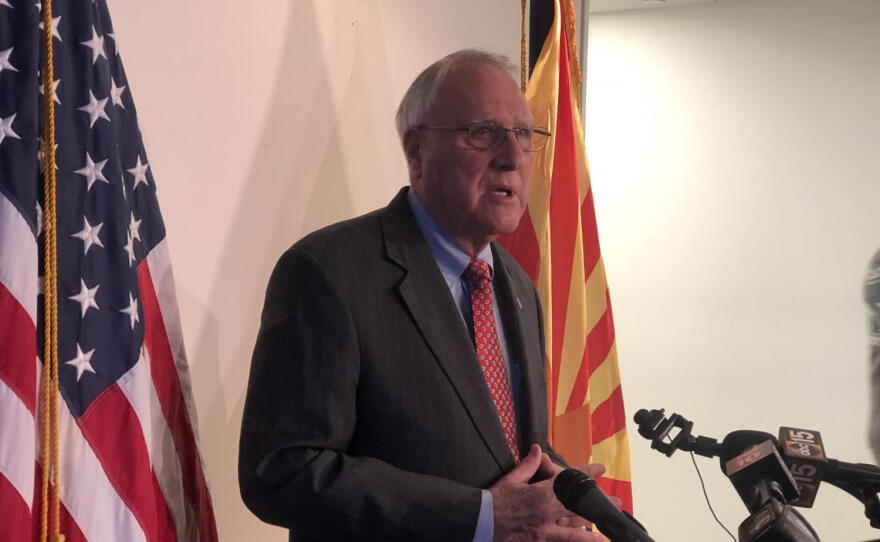
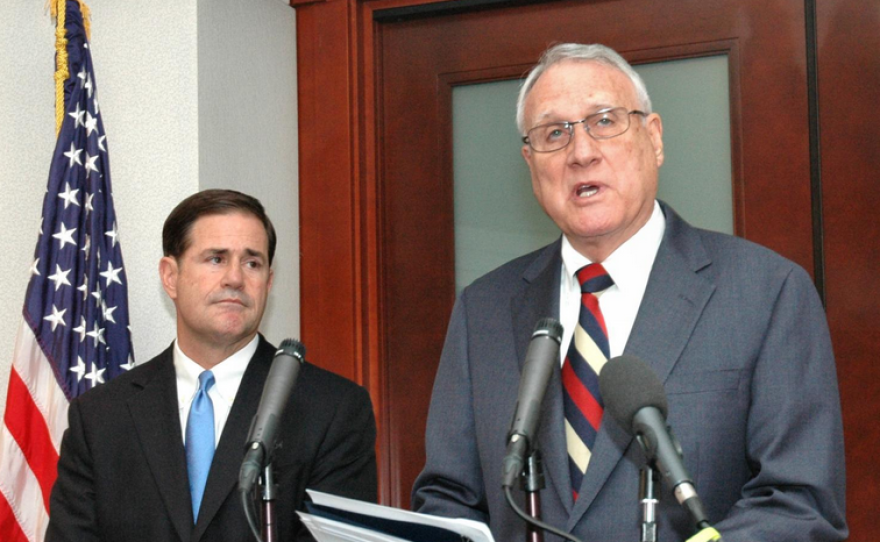
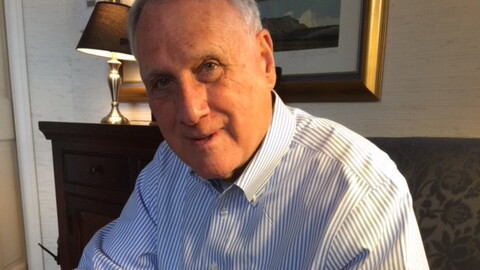 Phil Latzman/KJZZFormer Sen. Jeff Flake, who also served as ambassador to Türkiye during the Biden administration, joined The Show to talk about Kyl’s life and legacy.
-
 Samad Khan/Cronkite NewsOn Sept. 26, 2025, the small community of Globe, Arizona, was hit with a flash flood that no one saw coming. The city of about 7,000 people was hit with more than 2 inches of rain in 24 hours. The waters flooded creeks and roads and washed through downtown businesses and homes. Three people died.
-
 Sky Schaudt/KJZZCuts to Arizona’s SNAP rolls are much higher than every other state. The question of why has been dogging the state, and KJZZ's Camryn Sanchez has some answers and some ideas about what's next.
-
 Murphy Woodhouse/KJZZAn area of Nogales, Arizona, has made the list of the 2026 Endangered Latinx Landmarks, put out by the group Latinos in Heritage Conservation.
-
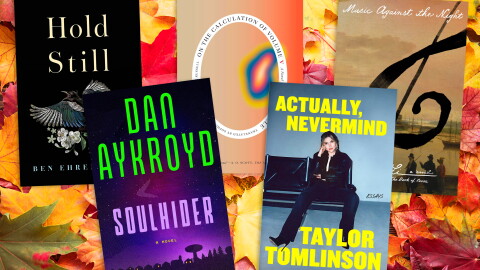 City Lights; New Directions; Farrar, Straus and Giroux; Harper; Gallery Books; Getty Images/IllustrationSept. 22 is the first day of fall, even though it doesn’t necessarily feel like it outside. But those high temperatures don’t mean we can’t talk about books for the season.
-
 Stina Sieg/KJZZNostalgia can be a powerful force — be it in advertising or in the TV shows and movies we choose to watch. But how well do marketers know who is nostalgic for which time period? A new scale aims to help figure that out.


Transcript
ANNOUNCER: KJZZ’s original production The Show is supported by Banner Health, Arizona’s largest nonprofit healthcare system. Last year, Banner reinvested more than $1.1 billion in community health and charity care. Banner Health, nonprofit for Arizona. bannerhealth.com/nonprofitforaz.
MARK BRODIE: Hi, I’m Mark Brodie, co-host of The Show, an original production from KJZZ. Every weekday, we bring you the latest news and culture from across the state. You can find much more at theshow.kjzz.org. Here’s today’s episode.
LAUREN GILGER: Good morning and welcome to The Show here on KJZZ 91.5 in Phoenix. I’m Lauren Gilger.
MARK BRODIE: And I’m Mark Brodie. Coming up, Globe was hit by deadly flash flooding one year ago. We’ll hear from that city’s mayor on recovery efforts.
LAUREN GILGER: And creating a scale for marketers to gauge when to use nostalgia from specific eras.
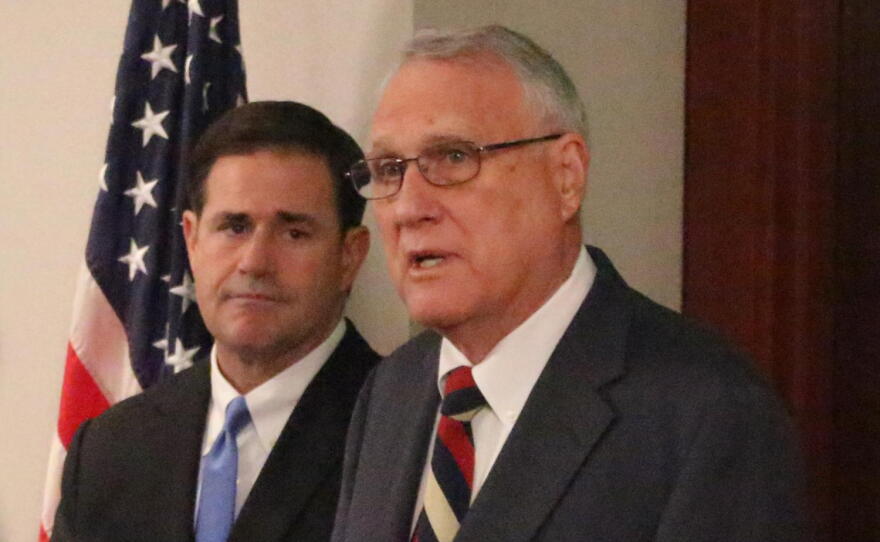
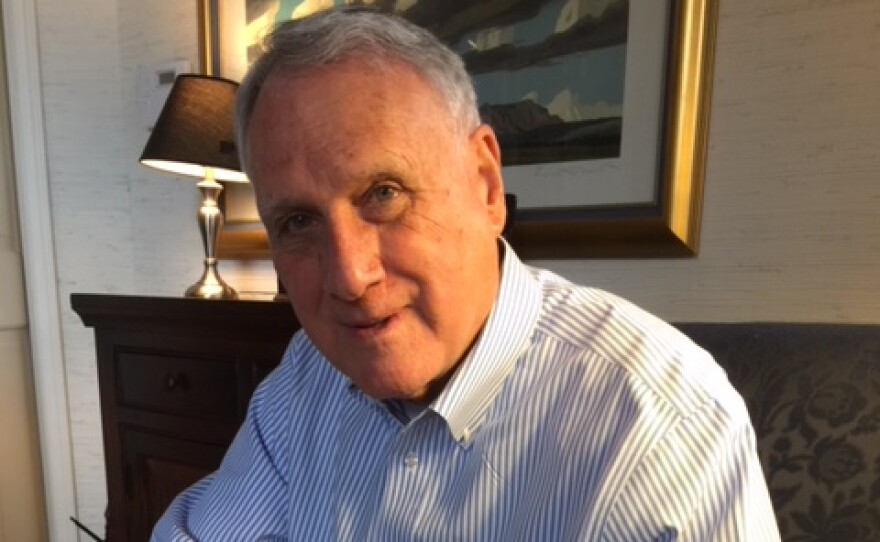
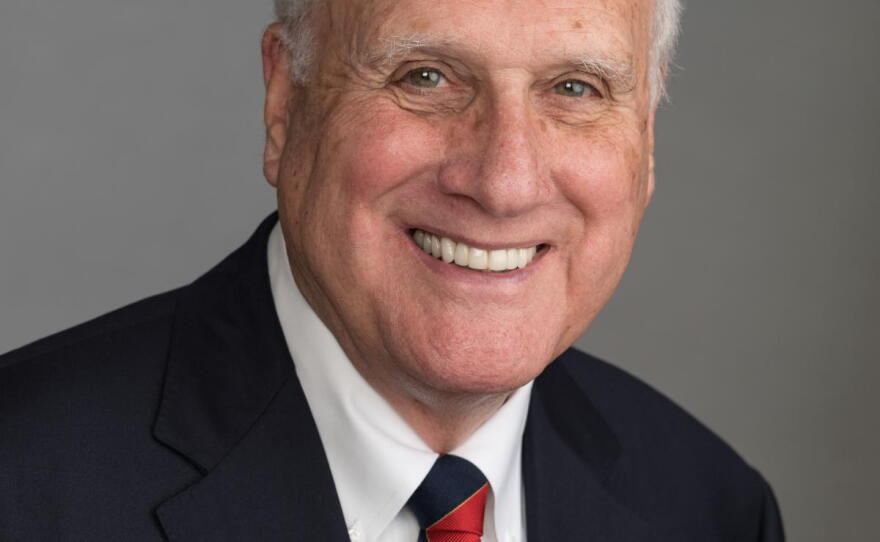
MARK BRODIE: But first, former U.S. Sen. Jon Kyl has died. He was 84. Kyl announced his withdrawal from public life late last year after being diagnosed with dementia. Kyl served two stints in the Senate. He retired from the first in 2013, but was later appointed by then-Gov. Doug Ducey to fill the remainder of Sen. John McCain’s term after he had died. In a statement, Kyl’s family says he, quote, “belonged to all of Arizona, a state he loved and explored with vigor, curiosity and wonder.”
With me now to talk about Sen. Kyl’s life and legacy is another former U.S. senator from Arizona, Jeff Flake. He also served as ambassador to Turkey during the Biden administration. Ambassador Flake, good morning.
JEFF FLAKE: Good morning.
MARK BRODIE: Do you remember the first time you met Jon Kyl?
JEFF FLAKE: Oh, yes. That would have been in the 1990s —
MARK BRODIE: And what was that like?
JEFF FLAKE: Well, I respected him greatly. I was chairman or director of the Goldwater Institute at that time and had not yet gone to Congress. But Jon Kyl was just going to the Senate at that time. And he had already served Arizona in the House. And let me just say, there has been no more committed public servant for Arizona and for Arizona’s needs than Jon Kyl over the years.
MARK BRODIE: What stood out to you working alongside him? Because, as you referenced, you did go to the House while he was in the Senate. What was that working relationship like? What were some of the issues that you guys worked together on?
JEFF FLAKE: Well, Jon never sought the limelight, ever. He was always the workhorse. He did, I think it was nine Indian water settlements during his years. Those are tough, intricate negotiations that went on to make sure that the Indian tribes had the water that they deserved and that Arizona could also grow as a state. And that just personified him, working on those issues that weren't, you know, sexy or anything, but just required a lot of work. That was Jon.
MARK BRODIE: OK. So you mentioned the phrase “workhorse,” and there’s often, you know, sort of a conventional wisdom that states can have senators can be workhorses or showhorses. Did Sen. Kyl acknowledge the workhorse title? Because that was something that a lot of people used to describe him. How did he feel about that?
JEFF FLAKE: Yeah, well, he would never admit to anything that praised him. He was just a humble man who worked hard and was extremely effective and well-respected. I had the difficulty of ... going and following him in the Senate and trying to fill those shoes, and that was a difficult thing.
And then, as you mentioned in the intro, he came back after Sen. McCain passed away and served for another few months, and I got to serve with him again. And I can tell you, it was just a pleasure all the time. And I talked to him just late last year when he was withdrawing from public life, and we had a wonderful conversation talking about some of the work that he had done. And I made sure that he knew how appreciative that all of us are for his hard work.
MARK BRODIE: Did you go to him for advice? You mentioned that you replaced him in the Senate. Did you ask him for any kind of advice before you joined that chamber?
JEFF FLAKE: You bet. And when I went to the House, before I was elected to the House, he gave me the best advice I ever got. He told me, he said, “When you get there,” he said, “make sure your family is involved.” He said, “They will either resent your service, or they will revel in it.” And that, I made sure to do that. My wife, Cheryl, you know, I commuted back to D.C., but she made sure the kids were there for the important events, and we did it as a family ... because that would be something that the family would resent if they weren't involved and didn't know of it. And that was the best advice I ever got.
MARK BRODIE: So you mentioned you had the opportunity to speak with him late last year. Do you have a sense of maybe what he is most proud of or what issues he was most glad to have been able to work on?
JEFF FLAKE: Oh, certainly. All Western states have similar kind of issues: public lands issues, water issues. And those, you know, it takes a workhorse and somebody who isn't interested in the limelight to get down in the weeds of. And I think that that would be what he’s most proud of, that Arizona has been able to grow responsibly and sustainably. And it’s his adopted state, and we’re sure glad that he decided to move to Arizona when he did.
MARK BRODIE: One of the other things that he was kind of known for was, sort of in the legal world, being involved in helping nominees to the U.S. Supreme Court. I’m wondering if you can sort of speak to his legacy in terms of what the court looks like now and his role in who’s there and who’s not.
JEFF FLAKE: Yes. Well, Jon Kyl was very much a conservative, and he was, as you mentioned, he was instrumental, always on the Judiciary Committee. And afterward being asked by the White House to be the sherpa to bring certain nominees through. And there was nobody more effective than Jon Kyl in doing that, because he had so much respect from his colleagues and his former colleagues. And so he was very effective in that, and he would be proud that it’s a conservative court.

/ kyl.senate.gov
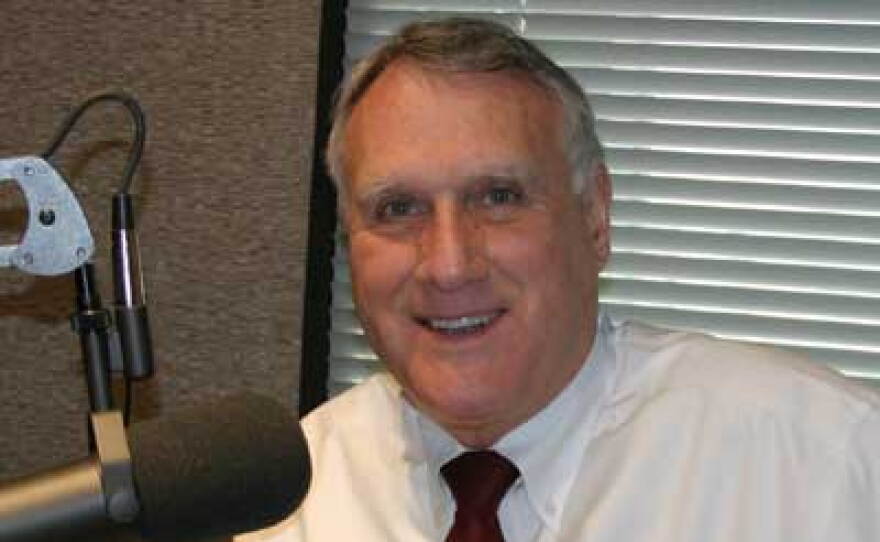

MARK BRODIE: So when you think back on what Jon Kyl has meant to both the U.S. Senate — an institution I know that you also care deeply about, and the state of Arizona — what comes to mind for you?
JEFF FLAKE: Well, I mean, the Senate and the entire U.S. government relies on public servants who are there to serve a cause greater than their own self-interest. And he certainly personified that. He was the consummate public servant. In it, you know, he could have made a lot more money and been a lot more comfortable doing something else, but he was a true public servant, and Arizona benefited significantly.
MARK BRODIE: All right. We’ll have to leave it there. That is former U.S. Sen. Jeff Flake, also ambassador, helping us remember former U.S. Sen. Jon Kyl, who has passed away at the age of 84. Ambassador Flake, thanks so much for your time and your insights. I appreciate it.
JEFF FLAKE: Thank you very much.
LAUREN GILGER: Last year, on Sept. 26, the small community of Globe, Arizona, was hit with a flash flood that no one saw coming. The city of about 7,000 people was hit with more than 2 inches of rain in 24 hours. The waters flooded creeks and roads and washed through downtown businesses and homes. Three people died. But the city was denied funding from the Federal Emergency Management Agency, FEMA, and now, one year later, the recovery is ongoing. Al Gameros is the mayor of Globe, and he is on the line now to tell us more about what it looks like there now, one year later. Good morning, Mayor. Thanks for coming back on The Show.
AL GAMEROS: Good morning. Thank you for having me.
LAUREN GILGER: So it’s been a year next week since these devastating floods hit your community. What are you thinking about this week as this anniversary approaches?
AL GAMEROS: You know, I guess what I’m thinking about is how far we’ve come since that time frame, really, from the very first day seeing the destruction that tore through our residential area and through our northern part of our downtown area, and really thinking, “How would we clean this mess up? How would we recover?” And really, it’s been amazing to see the amount of work done. The cleanup was amazing. The people that came in to help us in that, that was one major step there.
LAUREN GILGER: Yeah. So talk about that, like, early days, the people who showed up to help clean up, to, you know, scoop mud and get rid of debris. It was thousands of people, right?
AL GAMEROS: There was, yes. Initially, again, I just want to make sure that we remember those that were lost in this flood. Initial 48 hours was recovery, rescue and recovery, making sure we didn’t have anybody else out there. Those were our priorities, and then opening up our main highways. And on Sunday, two days after the flood, we opened it up, and there was thousands of people that showed up downtown with shovels, rakes, whatever they had, a lot of local contractors with their dump trucks and loaders and started the cleanup from there.
LAUREN GILGER: Yeah. So where are you now in terms of recovery, in terms of rebuilding? Are businesses still closed? Are they coming back?
AL GAMEROS: You know, I’ll have to say we are open. All the businesses that were open, except for one, are now open from before the flood. And we’re talking quite a bit of them. We’re talking hundreds of thousands of dollars that they had to personally invest back into their business to open up.
You know, when you talk about FEMA funding, you talk about FEMA funding, it brings no funding to residents or business. That’s all for public infrastructure is what it is. And so it’s difficult. You have to reinvest. A lot of people took out small business loans that was activated with the state declaration.
LAUREN GILGER: Yeah. Let’s talk about that federal funding, that FEMA declaration that you didn’t get, even on appeal. We had you on The Show some months ago to talk about that and just the massive economic impact that these floods had on Globe. What do you think that denial of federal funding has done to the recovery process?
AL GAMEROS: Well, I think it hasn’t slowed us down, but I have mixed feelings about the, you know, not being approved for the FEMA. We are working with the state very closely. They have been very good with us. We are working on 75% reimbursement, so we still have to put 25% out of our coffers in order to complete projects. But the FEMA declaration would have been huge for us, knocking our match to 10%.
You know, they denied us three days before the deadline that our final report was due in December of ’23. And we had initially about $36 million in damage that we had initially assessed. And with the final report, we turned in $96 million in damage just to our city. Again, this isn’t the county, that isn’t town of Miami, but just our city. And they still denied us and said that that didn’t rise to the magnitude or severity for a declaration.
LAUREN GILGER: Right. I mean, so the state, as you mentioned, has stepped in, included $10 million for flood recovery there in Globe and also in neighboring Miami. How far has that gotten you? You mentioned you’ve been able to reimburse people to a certain extent.
AL GAMEROS: Well, we were approved for an NRCS federal funding funds in the amount of $24 million about — it’s been 220 days, almost exactly. $3 million of that was to engineer. Our priority was our waterways and our creekways to build capacity in case we had another flood of this extent.
So $3 million was for engineering. To date, we have spent $10 million on clearing debris out of the creek, plus stabilizing some walls along the creek wall. The match for us is $2.5 million, and we were fortunate that the state and Gov. Hobbs allocated the $10 million to Gila County, so Globe received $2.5 million, so that covered the initial $10 million of Phase 1 and 2.
LAUREN GILGER: So let me ask you more about those retention walls, that kind of effort to make sure this doesn’t happen again. I mean, we’re under flash flood warnings, you know, yesterday in the state. I think there are probably more coming today. What are you concerned about? Do you think you’re ready?
AL GAMEROS: I think we are. You know, I’m very confident, very comfortable with what we with Tiffany Construction, who we hired, and the engineering that was done taking it down to to really historic levels. We’ve had a lot of buildup, and especially since the Telegraph Fire ’21, we’re getting more debris and water that flows through our creeks. We have 2.8 miles of creek that flows from our southern end of town and all the way to downtown.
So that’s the $10 million that we spent it on, just 2.8 miles. And we did stabilize some of the walls with rock, but our Phase 3 is going to be some roads that are still washed out that we’re going to have to do some rebar and shotcreting and then rebuild these roads again in the next eight months.
LAUREN GILGER: Let me ask you in the last minute or so here, mayor, about the community. I mean, you mentioned you’re open for business, almost everybody has reopened there in the downtown area who was flooded out. Have people stayed? Have people left? Has this made the community there stronger?
AL GAMEROS: You know, I think it showed the resilience of our community and really wanting to reinvest in what we have here. Obviously, the sad part is we had, there was five homes that had to be torn down in our southern end, and those families had to relocate either in the community or out of the community. But as far as businesses, we are back open. Our recovery continues, and it will continue for years.
LAUREN GILGER: Yeah. All right, we’ll leave it there. Al Gameros, the mayor of Globe, Arizona, joining us. Thank you very much, mayor, for coming on. Appreciate it.
AL GAMEROS: Thank you.
LAUREN GILGER: Good morning. It is The Show here on KJZZ 91.5. I’m Lauren Gilger.
MARK BRODIE: And I’m Mark Brodie. Coming up, how do you measure nostalgia? We’ll hear from a marketing professor on a new scale that evaluates nostalgia for different eras.
LAUREN GILGER: But first, states across the country have been cutting people off of the SNAP rolls. The Supplemental Nutrition Assistance Program has been shrinking since Republicans in Washington enacted new work requirements for the federal food aid program last year. But cuts to Arizona’s SNAP rolls are much higher than every other state. Here, 55% of SNAP recipients were kicked off the program. That’s roughly 500,000 people, including close to 200,000 kids.
The question of why has been dogging the state, and now our own KJZZ’s Camryn Sanchez has some answers. Good morning, Camryn.
CAMRYN SANCHEZ: Good morning.
LAUREN GILGER: OK, so you have been covering this story from the beginning, breaking news here, and you’ve talked to leaders on both sides of the aisle about these cuts, as well as people in line at the food bank about what happened in their situations, right? Now you have found that the agency that’s responsible for confirming basically who qualifies for SNAP benefits reported dropping more than 3 million calls. This is when people call in. Tell us about what happened here.
CAMRYN SANCHEZ: Yeah, so this is kind of summing up and kind of confirming a lot of what we heard from folks who say that they lost their benefits over the last year or so, which is DES is asking people to do phone interviews now. And a lot of folks told me at line in a for St. Mary’s Food Bank, actually, that they get on the phone and then either DES doesn’t answer or doesn’t respond to them and they can’t get through, they can’t complete their interview, and then that results in them getting dropped from the program because they don’t have a completed interview.
LAUREN GILGER: And there’s a timeline on that, right?
CAMRYN SANCHEZ: It’s a 30-day timeline, yeah.
LAUREN GILGER: Right. So you have 30 days, you have to call and have this interview, and people can’t get through. That must be infuriating. What do people say?
CAMRYN SANCHEZ: Basically what you just said. [LAUGHTER] And it’s not just folks from that one incident, either. I mean, we’ve received a lot of outreach and I’ve talked to a lot of folks who say something very consistent along those lines. And as for DES, they’ve said, you know, they kind of acknowledge that people are complaining about the problem, but they said that they’re understaffed and underfunded, and that’s kind of the issue.
LAUREN GILGER: Right, so DES’s response there is notable. But these are their own stats, these dropped calls that you found, right?
CAMRYN SANCHEZ: Yeah, dropped calls, and then a high percentage of applications being rejected. And, you know, these statistics are being reported to the federal government, and DES has to make these regular reports. But this information hadn’t previously been available.
LAUREN GILGER: Yeah. What made you go down this path, Camryn? Why did you want these numbers about calls?
CAMRYN SANCHEZ: I wanted to confirm what people had been saying and get into the statistics of it. I think also, we’ve heard a lot of the changes that the federal government made to the SNAP program in the "One Big Beautiful Bill" were aimed at mitigating waste, fraud and abuse. We’ve heard that line from Republican lawmakers in particular over and over again at the state level and the federal level.
But what people were telling us here is that they are eligible and just as eligible as they have been for SNAP benefits — people who have been on it maybe for a while — but for the first time ever, they just weren’t able to complete the process, and that’s why they weren’t able to get benefits anymore. And, you know, these statistics corroborate that to an extent.
LAUREN GILGER: And then you see people in line at the food bank. Here at the Arizona state Capitol, Republicans have told you, right, that the folks who were kicked off, these 500,000 people, were people who shouldn’t have been on there to begin with, right?
CAMRYN SANCHEZ: Yeah, they’ve said that if people are being kicked out of the program, it’s a good thing because it means that we’re getting rid of some of that abuse and we’re streamlining things and making them run more smoothly.
LAUREN GILGER: Yeah. Republicans, as you said, in Washington made these changes on the argument that there’s a lot of waste, fraud and abuse in these kinds of benefit programs. Tell us exactly about the work requirements and what changes were made.
CAMRYN SANCHEZ: Yeah, so this wasn’t just SNAP. I mean, Medicaid also we’ve heard that cuts are incoming and that they’ve wanted to beef up these requirements. For SNAP, you know, folks, the folks that I’ve talked to, again, they’ve said that they are still eligible, even with the new work requirements, and that they are either looking for work or people have said, you know, that they’re struggling with disability and leave and stuff like that.
And oftentimes there’s a family with one or two breadwinners and other dependents who are maybe older adults or young kids. A lot of these are families that we’re talking about where the kids obviously don’t work, so that doesn’t really apply to those folks. But the work requirements, yes, they did get increased. You do have to, you do have to work more and work longer hours to apply for these benefits.
LAUREN GILGER: Is there a lot of paperwork involved in that kind of stuff for folks, Camryn? I mean, we’re talking about a call, like on-demand interview process as well, but there’s a lot of steps, it sounds like, to prove it.
CAMRYN SANCHEZ: Yeah, you also have to apply and reapply. You can’t just apply once and then get benefits forever. You have to keep reapplying and proving your eligibility over and over and over again. So if your circumstances change, then you also could lose access to your benefits that way.
LAUREN GILGER: Is there waste, fraud and abuse, though, in these programs, Camryn?
CAMRYN SANCHEZ: I mean, I would say there’s probably waste, fraud and abuse in every government program that has ever existed. But it’s sort of to the extent, and is — I think also the question is, are these changes actually targeting that? Are these changes really mitigating all of the waste, fraud and abuse, or are there other ways that they should be doing that?
LAUREN GILGER: Yeah. So you mentioned DES’s response here, the agency sort of responsible for this. They say they’re underfunded, understaffed. By how much? Like, what’s the situation look like there?
CAMRYN SANCHEZ: Apparently by several dozen people. I mean, they are saying that they really don’t have the capacity. And we’ve heard similar stuff from DES on other programs, like they administer unemployment, DDD. So it’s not just the SNAP program. And DES has, you know, changed over time. It’s a state agency that relies on funding from the state Legislature and the budget process. But I think that DES is saying that if they did have more staff, things like, you know, the call center would be less of an issue.
LAUREN GILGER: So what’s next, then, Camryn? Like, is DES now under pressure to fix this problem, to make some changes? Are they going to hope they get more funding next time around?
CAMRYN SANCHEZ: Well, I think one important element of this is the federal government, actually, because DES applied for a waiver, which we’re using right now, and doesn’t expire for another couple years. And that waiver is what allows DES to do these phone interviews as opposed to all in-person interviews. But it comes with conditions.
And this federal waiver, which is administered through USDA, which ultimately runs like big SNAP, requires, you know, DES to run the program well. And so these statistics that we were given are actually from a report that was given to the federal government. And so we could potentially lose out on that waiver, which means DES would have to reconfigure everything that they’re doing. So I think there’s pressure from that side.
And then also there’s been pressure from Democratic lawmakers who who are concerned about SNAP cuts and who are less concerned about all these people being the perpetrators of waste, fraud and abuse who may want to put more more into the agency going forward. I’ve heard less so from state Republican lawmakers, but there’s a lot of finger-pointing that’s gone around. They say it’s Hobbs’ fault, you know, other Democrats blame the federal government for the changes that they’ve made, etc.
LAUREN GILGER: Yeah. Last 30 seconds here. What do advocates have to say about this? I know we’ve heard a lot about the kids involved in these SNAP cuts. 200,000 is a big number, but, you know, 500,000 people is a lot of people. It must have kind of trickle-down effects.
CAMRYN SANCHEZ: Yeah, advocates have said it’s shocking and that it’s frustrating, and also that nobody really has a safety net in place that can help all of these people. Food banks is something that we’ve talked about, but food banks, you know, weren’t necessarily prepared for the large influx of folks that started, you know, going and relying on them more. And food banks historically don’t provide the same amount of food, literally, that SNAP has provided for families, and so I think that advocates are feeling basically overwhelmed.
LAUREN GILGER: KJZZ’s Camryn Sanchez joining us from our politics desk. Camryn, thank you.
CAMRYN SANCHEZ: Thank you.
LAUREN GILGER: Good morning. It’s The Show on KJZZ 91.5. I’m Lauren Gilger.
MARK BRODIE: And I’m Mark Brodie. An area of Nogales, Arizona, has made the list of the 2026 Endangered Latinx Landmarks put out by the group Latinos in Heritage Conservation. The Morley Avenue district is on this year’s version of the list. And as my next guest explains, some building plans near the border could have an impact on the area’s future.
Alessandra De Zubeldia is a reporter with the Nogales International and has written about this. She joins me. And Alessandra, for those of us who maybe haven’t been to Morley Avenue, where is it, and what’s it all about?
ALESSANDRA DE ZUBELDIA: So the Morley Avenue Arts District is in Nogales, Arizona. It was once bustling with commerce. There were a lot of stores. It was the place to be in Nogales, Arizona, and it was also the place to be for a lot of people in Nogales, Sonora. So that commerce strip actually existed before the actual border fence was put up, and for a long time, it was a place that attracted people from the other side of the border to come over and shop.
Over the years, it hasn’t been as bustling, there hasn’t been as much investment in the area. Some people believe simply, you know, there isn’t enough encouragement from city officials or county officials to make it, you know, an attractive place to to set up a business, but there’s been many factors over the years. Now, if you go, it’s definitely much quieter than what I just described it being in, you know, decades before. But it still is considered, you know, a very important and special part of Nogales, Arizona, and despite it slowing down in in more recent times, there has definitely been a investment in the arts and in the nonprofits by people that are really trying to bring life back to Morley Avenue.
MARK BRODIE: Well, it sounds like even though maybe it isn’t, as you reference, what it once was, it’s still considered a pretty significant, important and maybe even symbolic part of town. Is that accurate?
ALESSANDRA DE ZUBELDIA: Oh, definitely. Yes. As someone who’s, you know, still rather new to Nogales, being there since February, that is a place that you hear about right away from locals. If there isn’t an event going on, it’s usually on Morley. It looks historic, it looks quaint, it’s colorful. So, yeah, it’s definitely still very relevant to to people.
MARK BRODIE: OK. So what about the the plans to expand the Deconcini Port of Entry? Like, how might that impact what happens on on Morley Avenue and and what else might be able to be there?
ALESSANDRA DE ZUBELDIA: Yeah, so the current footprint for the port expansion, if it moves forward as is, which it’s still in, you know, the early stages, so the footprint could change, but the current one would be removing the first block of Morley. And then for the other ones I mentioned that technically wouldn’t be torn down and taken through eminent domain, there still would be impacts, you know, during this six- to 10-year construction period.
There’s definitely going to be impacts to to the strip that isn’t technically being torn down, whether that be, you know, noise or just anything that comes with construction, you know, not having as many places to park or losing access to the entry of Morley from the side that’s closest to the border, which I think would be shut off during construction. So even those places that wouldn’t be torn down, they definitely would be experiencing the impacts of this, you know, big construction project for about a decade.
MARK BRODIE: What are folks on Morley saying about that? Because I would think there’s sort of like this duality of thinking that, like, the port is so important to their businesses in terms of allowing people to legally cross the border and shop and go to their restaurants and everything. But at the same time, as you reference, that’s a big sort of disruption to what they’re doing to expand the port.
ALESSANDRA DE ZUBELDIA: Yeah, so I would say people have a a nuanced take on it. So very few people I’ve spoken to are completely against to any form of port modernization or expansion. They understand that there has to be updates, that, you know, there’s technologies and such that aren’t currently fitting what CBP needs. But what I continuously hear from people on Morley and throughout Nogales is that they want responsible expansion that really is tailored to what Nogales is and what Nogales needs.
MARK BRODIE: What about the the placement of the Morley Arts District on the Endangered Latinx Landmarks list? Like, what are folks in in that community saying might the impact of that be?
ALESSANDRA DE ZUBELDIA: Yeah, so people were pretty excited about that, even though it doesn’t necessarily mean direct funding or it doesn’t, you know, necessarily mean that it’s going to put a stop to it. And actually, the the person that applied for it, her name is Martha Barrón — she goes by Chiquis Barrón — she made it clear that she, this movement for her is not anti-port in any way, but again is more so growth from a responsible viewpoint that that centers the people of Nogales.
So they’re excited about it as an opportunity mostly to bring attention to the issue because the organization that issued it is called the Latinos in Heritage Conservation, and they’re a national group that has a pretty good network. So mostly what they’re doing here is they’re seeking to bring awareness nationally about a, you know, small, rural community where most people not may not really be aware of of the port expansion or even of what Nogales is, Morley Avenue.
So the goal is for this new designation to bring that awareness. They do so through storytelling, through videos and, you know, putting out that information to to their partners. And then beyond that, they’re also a key player in helping these groups, these community groups, apply for the National Registry of Historic Landmarks, or National Register of Historic Places.
And while that list doesn’t assure that, again, that it will stop the project, it doesn’t cancel out eminent domain, however, it does add more guardrails and more hoops that the federal government would have to to work through, and potentially more protections for people that, you know, could be losing their businesses in the area.
MARK BRODIE: Well, it sounds like they they see it as sort of maybe a way to protect the area and maybe forcing a a rewrite of the the expanded port, right? Like to get it maybe expanded, built in a different location or a different way to protect this area. Is that is that a fair assessment?
ALESSANDRA DE ZUBELDIA: Yes, my my understanding of their goals with this is definitely beyond bringing awareness to the area and its value, it is to have more of a documented say of what Morley Avenue is, its value, and then that to potentially influence, you know, the next footprint.
MARK BRODIE: All right. That is Alessandra De Zubeldia with the Nogales International. Alessandra, thanks so much.
ALESSANDRA DE ZUBELDIA: Thank you.
MARK BRODIE: Next Tuesday is the first day of fall, even though it doesn’t necessarily feel like it outside. But those high temperatures don’t mean we can’t talk about books for the season.
With me now to do just that is Valley-based book critic Mark Athitakis. Mark, welcome back.
MARK ATHITAKIS: Thank you very much for having me.
MARK BRODIE: So you have some recommendations for us here, and I want to start with one that is written by the son of a very well-known author who has, it sounds like kind of, — he’s sort of taken a difficult time in his life and made it into something that sounds really quite beautiful.
MARK ATHITAKIS: Yes, the book is called “Hold Still” by Ben Ehrenreich, and his mother is the well-known muckraking journalist Barbara Ehrenreich, best known for writing the book “Nickel and Dimed,” where she engaged in quote-unquote “unskilled labor” to see what those jobs working as a waitress or as a maid, what those experiences were really like.
And Ben is a fine writer in his own right. He’s written beautifully about the desert and mythology of it. When Barbara died in 2022, he undertook this process of, “I’m going to write a story every day to help process this experience.”
And so this book, “Hold Still,” is kind of a collection of 80-odd, you might call it flash fiction. Sometimes it’s dealing with mythology, sometimes it’s talking about his healing process, his relationship with his family. And it’s not as mournful as you might expect because what it is is seeking a kind of centering through story.
He talks a lot about: What are the stories that we tell ourselves or the stories that we ignore when we are going through an experience like this? And I can see this is an eminently teachable book as well for people who are trying to learn to, how are you going to express yourself through this? So it is a, I wouldn’t call it easy uplift, but I wouldn’t call it just sad, mournful writing.
MARK BRODIE: A little bit of a lot of things, it sounds like.
MARK ATHITAKIS: Exactly, yeah.
MARK BRODIE: OK, so you also have a book called “On the Calculation of Volume,” and this is one of, it sounds like a series of books?
MARK ATHITAKIS: Yes, it is a seven-part series. The fifth will be coming out in November, I believe, so it’s time to catch up now. So this has become a little bit of a indie hit. The author’s name is Solvej Balle, I believe that’s how you pronounce it. She’s a Danish writer, and the idea is the main character is keeping a diary diary of her experience of being stuck on the same day, Nov. 18.
Now, we’ve seen this movie and it’s called “Groundhog Day,” right? But the thing that she does really remarkably is talk about some of the kind of the existential consequences of this.
If you miss seasons, you can travel to a different place every day and experience that. You reset as a person every day, but the resources that you consume do not. So what does that mean in terms of stewardship of resources? She is also not alone in this. There are other people who are stuck in this same kind of time loop. What does society look like when you are separate from that society?
So it is a fun read just to kind of think about what some of the the challenges and maybe some of the freedoms that come with this experience. And it’s beautifully written, very well-translated, and the books themselves, each one is about 200 pages, so it’s not going to be too not too stressful.
MARK BRODIE: Not a a literal or figurative heavy lift there, it sounds like.
MARK ATHITAKIS: Exactly.
MARK BRODIE: OK, so another one you have is called “Music Against the Night,” and this is a historical fiction?
MARK ATHITAKIS: Yes, it is. And so this is by Yiyun Li, who is one of my favorite living writers. She’s won the National Book Award. People with longish memories may recall that during the pandemic, she convened a global group read of “War and Peace” so that we could get through those first early months. And she’s a teacher herself and is a, just a very engaging person in that role.
This novel is her second historical novel, and it’s about the lives of two classical composers and performers and their relationship. We’re talking about the 1700s, 1800s. And the difficulty of initially having this transatlantic relationship, building a relationship, splitting away from each other as their creative and their romantic instincts start to split and divide. And she is just a wonderful, elegant writer as well.
MARK BRODIE: And doing that in a time before, like, cellphones and FaceTime.
MARK ATHITAKIS: Exactly, exactly.
MARK BRODIE: OK, so that sounds maybe like a bit of a downer, so let’s talk about something, some books that are coming out that maybe will not be downers. Some comedians have biographies or autobiographies, including Larry David, of course, from “Seinfeld” and “Curb Your Enthusiasm” and many other things; stand-up Taylor Tomlinson; Chuck Lorre, who’s the guy behind “The Big Bang Theory” and and many other many other shows. These sound — I’m sure they won’t all just be like laugh-out-loud like every page, but probably a little more uplifting.
MARK ATHITAKIS: Yes, absolutely. The Chuck Lorre’s book, “Sitcom,” which is kind of the story of his life, is — I think there’s something that is about being a comedian that forces you to be self-deprecating. One fun thing about this this particular book is that he includes the scripts of a couple of his early pilots for “The Kominsky Method” and for “The Big Bang Theory,” and he is scrawling all over the page about how angry he is at himself at how bad these jokes are. So it’s kind of an object lesson in how much work goes into being a comedian.
And Taylor Tomlinson’s book especially, it’s called “Actually, Nevermind,” and it’s either just out or just about to be, is talking about her experience growing up in a very religious family. She had entree into the clean comedy world and then had to make a decision about, that’s not where I want to stay. I want to evolve beyond this. And so talks a lot about the the craft and the experience and being a woman in comedy and the things that you have to navigate in order to earn success in that business.
MARK BRODIE: And interesting to have a memoir coming out by somebody — obviously she’s accomplished a lot already, but she’s not she’s not old, she’s pretty young.
MARK ATHITAKIS: No, she’s not. But she has lived a lot. She talks a lot about the experience about losing her mother at a young age. She talks a lot about her experience coming out, talks about her experiences with mental wellness, mental illness as well. So, and she also, she led a TV program called “After Midnight,” which kind of imploded a couple of years ago. It was very funny, but so she certainly has enough material to work with.
MARK BRODIE: OK, before I let you go: Dan Aykroyd, also a comedian, might remember him as one of the Blues Brothers, he has a sci-fi novel?
MARK ATHITAKIS: Things are weird. I suppose when you’re successful like that, you can pursue and follow your bliss. Yes, it’s a novel called “Soul Hider,” which is a just a a fun little lark of a sci-fi novel. I think if you’re a hardcore sci-fi fan, it may not necessarily appeal, but it is about a mild-mannered person who is recruited to help broker a kind of peace agreement between two warring extraterrestrial groups, so.
MARK BRODIE: Maybe a mission from God, as it were?
MARK ATHITAKIS: It is, or ...
MARK BRODIE: As in “The Blues Brothers”?
MARK ATHITAKIS: Or a variation on the Coneheads, who knows?
MARK BRODIE: One way or the other. All right. Mark Athitakis, thanks as always for coming in to talk about books to look for this fall. Appreciate it.
MARK ATHITAKIS: Thank you very much.
LAUREN GILGER: Good morning. It is The Show here on KJZZ 91.5. I’m Lauren Gilger.
MARK BRODIE: And I’m Mark Brodie. Nostalgia can be a powerful force, be it in advertising or in the TV shows and movies we choose to watch. But how well do marketers know who is nostalgic for which time period or personal time period, like a childhood or college years?
A new scale aims to help figure that out. It’s called the Nostalgia for Eras Scale, and details on it were published recently in the Journal of Advertising. Caleb Warren is a marketing professor in the Eller College of Management at the University of Arizona and one of the researchers on this. He joins me. And Caleb, can you first off describe what the Nostalgia for Eras Scale actually is?
CALEB WARREN: Sure. So, just to give a little background, there’s been a fair amount of research on nostalgia, which is a sort of sentimental longing for the past. But it’s treated the past as this one monolithic thing.
And what Matt, my co-author, and I thought was missing was this idea that when people are nostalgic, most of the time they’re not just nostalgic for any time in the past. They’re nostalgic for very particular times. And we wanted to know, well, you know, what times in the past are people nostalgic for, and why are they nostalgic for those times?
And there wasn’t an instrument to measure this because generally the research, like the scales that existed, were all about, you know, “How much do you miss the good old days?” or maybe it’s more specific, like childhood. But there wasn’t a scale that could measure, like, how nostalgic are you for the 1990s or the 1960s or the Old West or the 2000s.
So that’s what — that’s what we set out to do was try to both come up with a way of — a different way of thinking about nostalgia and also measuring nostalgia where we could measure it for different discrete time periods, which we call eras.
MARK BRODIE: So how exactly does it work? Like, do you try to take a particular brand or a particular product or a particular demographic of people and try to figure out which era will make them feel the most nostalgic?
CALEB WARREN: The scale itself is straightforward. So you can issue it to any sample or population, and you plug in whatever era you’re interested in. So you can say the 1990s, you can say the 1960s, you can say the Old West, you can say personal eras: your childhood, your 20s. And then it asks a bunch of questions about this time — about this era.
So some of the items measure how their feeling — warm feelings towards the era. So “I associate this time with mostly positive things.” A second set of measures is about how much loss they feel: “I’m sad things are no longer like they were then.” A third set of items is about the view that this time was sort of simple or ideal or pure: “There was less chaos back then.”
And then you can basically add up the scores for all of these items, and they’ll give you a validated measure of how nostalgic the population who’s answering this was for that particular time. And so if you wanted to compare different eras, you take the same measures and ask them once about the 1990s and once about the 2000s or the 1950s or whatever other time period you were interested in.
MARK BRODIE: So if I’m a company that’s looking to use nostalgia in a commercial or marketing campaign, how would I go about using this to try to reach as many people as I could who maybe don’t feel nostalgic for the same time?
CALEB WARREN: So if your customers are not nostalgic or are all nostalgic for different times, then it’s going to be hard to evoke nostalgia or appeal to them with a nostalgic ad because even if you’re trying to evoke nostalgia in one of your advertisements, you usually need to do that by evoking a certain time.
Occasionally there are ads that try to show sort of the past across eras, but mostly nostalgic ads are showing one particular time in the past. Where this scale would be more useful is if companies are not sure which time in the past their consumers are most nostalgic for. And then they could use the scale to figure out, “Oh, OK, our target customers are more nostalgic for the 2000s,” or “They’re more nostalgic for the 1960s.” And then they could use that to create an ad that’s set in the 1960s versus 2000s.
Or if they’re in the sort of the content business or they’re producing movies or documentaries or TV shows — Netflix wants to know, “Should we greenlight a show set in the ’60s, or, you know, another ‘Wonder Years,’ or a show set in the ’80s, like another ‘Stranger Things’?”
MARK BRODIE: What is it about thinking about the past or seeing ads or TV shows or movies about the past that is so appealing to us as consumers?
CALEB WARREN: This is one of these questions that I think the existing answer that’s talked about doesn’t totally satisfy me. So the standard answer, if you look at the research, is, well, people enjoy nostalgia because it helps them feel more connected to themselves and to others, especially when they’re feeling that connection is lacking.
And I think that’s true, but I’m not really sure why, taking a step back, why people experience nostalgia generally. Is there an adaptive benefit of it? Is this sort of an offshoot of some other psychological process that happens? Because I don’t see a whole lot of benefit for reminiscing or, you know, wanting to transport yourself back to this time that not only doesn’t exist anymore, but one of the reasons it’s appealing is that it does seem very different than time today.
So it’s sort of a curious phenomenon, I think, and I’m not sure we have a really good understanding for why people regularly experience nostalgia or why they tend to enjoy it. Now, there’s definitely some mixed feelings there. Nostalgia is not a purely positive emotion. There’s happiness also mixed with loss and longing.
MARK BRODIE: So how would you like to see this scale used now that you’ve developed it and put it out there?
CALEB WARREN: That’s a good question. What I’d like to see used even more than the scale is the idea that people are nostalgic for particular times in the past, certain eras, rather than the past in general. And also, it might not just be the time when they were 20 years old.
It’s going to depend on how they think about that time period. And that is very much shaped by the media and the stories that they tell their friends and their family, and the photos they have, and the movies they’ve seen representing that time, and the advertisements they’ve seen representing that time.
And because of that, people could be nostalgic for times they never lived through. Like, the Old West is a recurring one in the United States, anyway, where there is a subsection of the population who I would say are nostalgic for the Old West, and that’s part of the appeal of Western movies and TV shows and, like, Wells Fargo ads, where, for a section of the population, the values represented during that time — like independence, freedom, you could make your own way, you could live separate from bureaucracy and organizations and you had space — that’s going to lead to nostalgia because of these sort of shared values that those times represent.
MARK BRODIE: All right. That is Caleb Warren, a professor of marketing at the University of Arizona Eller College of Management. Caleb, thanks so much. I appreciate it.
CALEB WARREN: Thank you.
MARK BRODIE: Thanks for listening to The Show’s podcast. The Show is produced by Sativa Peterson, Nick Sanchez, Amber Victoria Singer, Athena Ankrah and Ayana Hamilton. The Show was created by Jon Hoban. Our executive producer is Amy Silverman. You can find more of The Show and sign up for our newsletter at theshow.kjzz.org. You can also find us on Instagram @kjzztheshow.