


Civics education in high school is supposed to teach you how government works — and what it means to be a citizen. But, a new survey find most students are afraid to say what they actually think in class. Plus, the company behind a major charter school chain is under criminal investigation.
Ways To Subscribe


-
 Getty Images/StockThe CEO of American Leadership Academy is under scrutiny, as his political action committee is being investigated for allegedly funneling corporate money to Republican legislative candidates
-
 Arizona State University/CourtesyCivics education in high school is supposed to teach you how government works and what it means to be a citizen. But a new survey finds most students are afraid to say what they actually think in class.
-
 Sky Schaudt/KJZZRandy Cerveny, a professor of geographical sciences at Arizona State University, says the rainfall is one of the first signs of what’s likely to come this fall and winter.
-
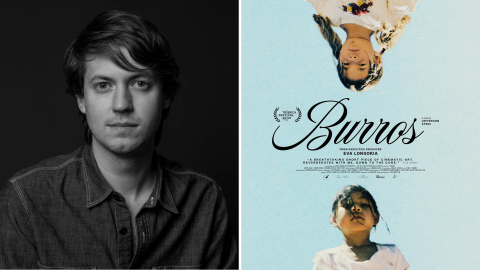 Anisha Sisodia, "Burros"/CourtesyJefferson Stein's award-winning short film “Burros” was shot entirely on the Tohono O’odham reservation with a cast entirely from the community.
-
 As American citizens celebrate 250 years since the country's foundations, Trevor Nelson, a writer who lives in the Valley, shared with KJZZ the role one ancestor played in helping the United States become an independent nation.
-
 Shawn M./CourtesyOn KJZZ's SOAPBOX, The Show turns over the the mic to listeners. In the latest series, listeners tell their own true stories on the theme of Misbehaving. Tempe writer, performer and storyteller Kim Porter has always been a stickler for rules. So when her high school best friend did nothing but break the rules — you can imagine what happened.


Transcript
ANNOUNCER: KJZZ’s original production The Show is supported by Banner Health, Arizona’s largest nonprofit healthcare system. Last year, Banner reinvested more than $1.1 billion in community health and charity care. Banner Health, nonprofit for Arizona, bannerhealth.com/nonprofitforaz.
LAUREN GILGER: Hi, I’m Lauren Gilger, co-host of The Show, an original production from KJZZ. Every weekday, we bring you the latest news and culture from across the state. You can find much more at theshow.kjzz.org. Here’s today’s episode.
LAUREN GILGER: Good morning and welcome to The Show here on KJZZ, 91.5 in Phoenix. I’m Lauren Gilger. Coming up, could there be an upside of the coming super El Niño here in Arizona? And a new documentary was cast entirely with people from the Tohono O’odham Nation.
But first, Glenn Way is the CEO of Charter One LLC, the management company overseeing one of the largest charter school networks in the state. And now, his political action committee is facing a criminal investigation, accused of violating campaign finance law by funneling corporate money to Republican legislative candidates. Way founded the first American Leadership Academy charter school in 2009 and has expanded the company today to 27 campuses across the state, with more in other parts of the country. And our first guest this morning found the Attorney General’s Office is investigating that PAC, dubbed the Educational Freedom Fund. Jerod MacDonald-Evoy broke the story for the Arizona Mirror and is on the line now to tell us more. Good morning, Jerod.
JEROD MACDONALD-EVOY: Good morning.
LAUREN GILGER: OK, so tell us more about this complaint and who filed it. It was filed on behalf of a former teacher, it sounds like?
JEROD MACDONALD-EVOY: Yeah. The complaint, which was filed in January 2025, was filed by a law firm that’s kind of connected to Democratic causes. And it was filed on behalf of a former schoolteacher who also has worked for the Arizona Education Association, which is one of the state’s largest teachers unions.
LAUREN GILGER: OK. And what does it allege?
JEROD MACDONALD-EVOY: So it alleges that ... that this PAC, the Educational Freedom PAC, donated around $83,000 in direct contributions to candidates. And this money was funneled through Charter One LLC. And in Arizona, corporate entities are banned from giving money directly to candidates, whether that is directly or through routing through a PAC. And so that would be a violation of Arizona’s campaign finance law, which would be a Class 2 misdemeanor. And the complaint alleges that this PAC was used to facilitate those types of donations.
LAUREN GILGER: That’s quite a bit of money. This, you say, is not the way that campaign finance law works in Arizona. Was there a way to do this legally, Jerod? Like, can you funnel money to candidates not through a corporate entity?
JEROD MACDONALD-EVOY: Well, corporate money in elections is generally mainly used for things like IEs, independent expenditures, ads, things like that. Corporate money is generally not allowed to be given to candidates at all, either in federal or state election law.
LAUREN GILGER: Yeah. You got records on this related to the investigation. What does the Attorney General’s Office have to say here?
JEROD MACDONALD-EVOY: The Attorney General’s Office has kind of declined to comment on this, citing that it is an ongoing investigation.
LAUREN GILGER: OK. ... You mentioned the amount of money here, but tell us about the PAC itself. And have they had anything to say for themselves? Have they responded to this complaint?
JEROD MACDONALD-EVOY: Yeah, the attorneys representing the PAC have actually responded. They first responded to the Secretary of State’s Office, who was the entity that did refer this to the Attorney General’s Office. And they said that during that cycle, 2022 to 2024, the former treasurer, who is Youssef Khalaf, was responsible for kind of the compliance of this PAC and, inadvertently, as they said, authorized the PAC to contribute to candidates using funds that it got from Charter One, which is what would trigger the issue with the law.
He’s been let go as the treasurer, and they hired a different compliance agent — or compliance company, and they’ve been kind of going through and auditing their the PAC, they said, in their response to the Secretary of State, and are working to kind of correct the filings that are online to kind of be compliant with that.
LAUREN GILGER: OK. They are also kind of arguing that this wasn’t illegal. How do they make that argument?
JEROD MACDONALD-EVOY: Yeah, they say that Charter One is what’s called a disregarded entity for tax purposes. And that basically, to them, since it’s a sole individual who contributes to this LLC, and it’s not a corporate LLC, it’s a personal kind of account, that that does not trigger the law.
LAUREN GILGER: OK. There is a long list of candidates, Jerod, who this PAC donated to. Can you tell us who’s on that list?
JEROD MACDONALD-EVOY: Yeah, it gave around $1,000 to a large number of candidates. I believe it’s around 20 in total. You have people like — they’re all people who are within the Arizona state Legislature. People in leadership positions like Ben Toma or Teresa Martinez. It also gave to kind of some high-known kind of education freedom advocate-type people like Matt Gress, who’s been big on supporting charter schools and the ESA program. You have people like T.J. Shope and Sine Kerr and Janae Shamp and Warren Petersen — a lot of kind of the who’s who of the Republican leadership in the Legislature.
LAUREN GILGER: Have any of those candidates had anything to say about this money, this PAC?
JEROD MACDONALD-EVOY: As far as I’m aware, no.
LAUREN GILGER: So let’s just look at the situation here, right? Like if you’re looking at a complaint filed on behalf of this former teacher who has connections to the Arizona Education Association, the teachers union and a PAC funded by this big charter school company, the person who owns it, and going to a lot of these pro-school choice candidates. I mean, is this sort of a proxy war?
JEROD MACDONALD-EVOY: It could be seen as that. I mean, the union has their own PAC, which makes a lot of donations as well through their own different means and ways to candidates or in support of candidates. And then you have this association that’s doing it as well. This is one of the biggest issues within Arizona politics, which is what they call “educational freedom.” And this is going to become and continue to be kind of a big area where we’re going to have proxy wars with money in regards to politics.
LAUREN GILGER: Yeah. Jerod, what’s next in this process?
JEROD MACDONALD-EVOY: The attorney general will continue to review the complaint and decide if they will bring charges or not on this. And we will have to see what happens.
LAUREN GILGER: No timeline on that yet?
JEROD MACDONALD-EVOY: Not that I’m aware, no.
LAUREN GILGER: But cases like this have been pushed forward in the past, right?
JEROD MACDONALD-EVOY: Correct. There were two individuals in Kingman, Arizona, in 2021 that were prosecuted on this by former Attorney General Mark Brnovich, who had made similar kind of donations through a corporate entity to politicians.
LAUREN GILGER: Interesting stuff. All right, Jerod MacDonald-Evoy with the Arizona Mirror joining us. Jerod, thanks as always. Appreciate it.
JEROD MACDONALD-EVOY: No problem. Thank you.
LAUREN GILGER: More often than not, the political landscape in our country today is anything but civil. But our next guest this morning says that’s what makes civics and learning to debate civilly more important than ever. Liam Julian is chief of programs and public policy at the Sandra Day O’Connor Institute, which surveyed recent alumni of their National Civics and Debate Program about their experiences in their high school civics classes. And they found they’re likely to censor themselves. 58%, in fact, said they didn’t say what was on their mind in class for fear of how others might react. Almost all of them said it was because of their classmates. I spoke with Julian more about it.
LIAM JULIAN: Well, I think the biggest finding is that when the students self-censor, they are most concerned about their classmates. So we asked them, “When you hold back in class, what are you concerned about?” 91% said that they were worried about their classmates’ reactions, and that’s compared to 41% who were worried about the teacher.
LAUREN GILGER: And this is of a specific group of kids, right? Like these are kids who are obviously interested in civics and politics and government, right? Were you surprised that even this group of kids was unwilling to sort of voice their opinions all the time in classes like this?
LIAM JULIAN: We were. We were. You know, we’ve heard from them that our sort of civics and debate program that we offer is one of the only places where they actually get that kind of conversation. That’s what led us to dig deeper into this, to sort of really try to understand a little bit more about what was happening in their high school classes.
I had expected that these students would certainly have been comfortable volunteering in their classes and talking about civics issues. They do that with us. That’s the whole basis of our program. So this was a little alarming because, certainly, we can’t prove this, but you would assume that if a majority of these students are self-censoring in their civics classes, it really makes you wonder about students who are not joining an extracurricular high school debate program. What are they not saying, you know? So ...
LAUREN GILGER: I think it makes sense in light of the kind of divisive political rhetoric we hear, the kind of political environment we’re in right now. But let’s talk a little bit about the teacher’s role here and what they can do, or maybe are doing in some instances, to try to I guess like ease that social anxiety that kids feel in classes like this about speaking up, about debating, about disagreeing with anyone. Are there ways that teachers can do this well?
LIAM JULIAN: There are. I should say, though, that teachers, I mean, they are in a tough spot themselves. Last year, we interviewed teachers about this exact idea, what was going on in civics classes, and we found that almost 80% of civics teachers are uncomfortable teaching civics today, in large part because they fear that they’re going to be embroiled in some kind of controversy, that they fear that they don’t have the preparation necessary to touch on these topics in the right ways. So teachers themselves are feeling pressure.
That said, there are strategies that teachers can use to sort of encourage this sort of classroom engagement that is so crucial for a civics class. And I think the first thing that can be done is that you actually make constructive disagreement — you make that like an explicit civic learning outcome. You say in your class, “That is something we are going to practice in class. We are going to practice disagreement. This is a civic skill,” so that it kind of makes that the norm.
And the other thing, too, is to sort of enlist students themselves in shaping the norm that you want to create in your classroom. A lot of teachers do this. They basically get students to volunteer, “What would a really productive classroom discussion look like? How can we disagree in this class with each other in a constructive, productive way?”
One thing that a lot of teachers told us that they do that is really effective is, at the start of school especially, people take anonymous positions. And that’s another way to sort of get people practice, get students practice in disagreeing without requiring them to sort of put their political beliefs out there in the first week of school, you know? So different strategies.
LAUREN GILGER: Yeah. So, I mean, bottom line here, I want to emphasize something you just got at there, which is that the definition of civics is at hand here, right? Like, are we just learning how government works and what it means to pass a bill and make it into a law, or are we learning how to be citizens of a democracy, right? I mean, this is the thing that kids seem to be missing out on today.
LIAM JULIAN: That’s exactly right. Any subject in school, there’s knowledge and there’s skills. And when we talk about civics, I would argue that the civic skills are so crucial. So, yes, students need civics knowledge. They need to understand how their government works, and it’s been widely reported that that is not really where we need it to be, right? The civics knowledge isn’t getting transmitted.
But what is less reported is the sort of lack of practice in these civic skills. And this continues to translate. So if students don’t get this practice in high school, the question is, do they ever get it? What we’ve seen on college campuses kind of leads you to think that actually maybe not. You know that maybe high school is the place where they really need to start learning how to disagree.
And I’ll say something else, too, which is just that I think what doesn’t get conveyed to students enough is that disagreement is at the heart of what it means to be a citizen in the United States. It’s kind of baked into this country. We’ve been disagreeing since the jump, so to speak. We’ve gotten to where we are through productive disagreement and compromise. And that’s just so crucial. It’s just such a crucial civic skill to learn.
LAUREN GILGER: Were these conservative students who were worried, liberal? Do we know if the political bent of any of these respondents mattered or changed their responses here?
LIAM JULIAN: Well, we saw some of that in the qualitative responses when we asked them. So it was on both sides. You know, we had conservative students who felt that their views wouldn’t be welcome, and there were more liberal students who felt their views wouldn’t be welcome. And that sort of tracks with the broader research on this, which is that there’s really no difference when you’re talking about your political affiliations. There’s really no difference.
I guess what I’m trying to say is that everyone’s uncomfortable. It doesn’t particularly matter if you’re on the left or the right, you’re still potentially self-censoring in these situations.
LAUREN GILGER: So you talked about some ways in which teachers can kind of create the environment so that students feel comfortable to learn how to disagree, right? But I mean, what do you think the broader impact of that could be or should be on the country, on future leaders, as I’m sure many of these students are?
I mean, if we can get back to a place, or maybe get to a place in American politics in which we’re bringing up students who know how to disagree, who know how to debate, who know how to still respect one another, what do you think that does for the health of this country?
LIAM JULIAN: I think it’s crucial for the health of the country. Regardless where you fall on the political spectrum, you look at the political sort of discussions and debates that we’re having today, and I think pretty much everyone thinks that they could improve. I do think that this is a crucial skill, and that by imparting it to students, we are setting them up to be better citizens and to lead us in better ways.
Justice O’Connor always used to talk about how, you know, civics is not something that’s just sort of passed on in the gene pool, this understanding of what it means to be a citizen. This has to be taught to each new generation. And so the knowledge and skills are just absolutely crucial to continue to convey to new generations.
LAUREN GILGER: Yeah. All right, we’ll leave it there. Liam Julian is chief of programs and public policy at the Sandra Day O’Connor Institute, joining us to talk about this recent survey on civics and students. Liam, thank you for coming on The Show. Appreciate you coming on.
LIAM JULIAN: Well, thanks so much for having me.
ANNOUNCER: And this is The Show.
LAUREN GILGER: Good morning, it is The Show here on KJZZ 91.5. I’m Lauren Gilger. Coming up, an Arizona writer reflects on his ancestor’s role in the signing of the Declaration of Independence 250 years later.
But first, flash floods and rain hit the Valley last week. Sky Harbor recorded about 3/10 of an inch of rain in the official count, but places like Cave Creek and Mesa and Scottsdale got a lot more, more than 3 inches in fact.
And our next guest this morning says it’s one of the first signs of what’s likely to come this fall and winter as the much-anticipated super El Niño is brewing in the Pacific Ocean and comes our way, and it could have an upside for our water-challenged state. Randy Cerveny is professor of geographical sciences at ASU and is here now to tell us more. Good morning, Randy.
RANDY CERVENY: Good morning.
LAUREN GILGER: Thanks for coming in, as always. So we got rain last week and I immediately wrote you a note and said, all of this rain, right, flash flooding, cooler weather, this is a big deal here. Is this the super El Niño, this kind of very headlined phenomenon that’s coming our way? Is this the first signs of it?
RANDY CERVENY: Well, it’s got some of the aspects of that. It’s also typical monsoonal flow because the two things are going to actually be interrelated. What we have is actually the idea that moisture comes up from the Pacific Ocean and from the Gulf of California and gets channeled into Arizona or New Mexico, as is going to happen this week.
LAUREN GILGER: OK. OK. So let’s talk about what this could look like in the Valley, right? Like we have this big super El Niño system. We’re seeing headlines all over the world, in fact, about its impacts. First of all, just tell us like, what is this?
RANDY CERVENY: Well, El Niño is a periodic warming of the central Pacific Ocean. Normally, what happens is you’ve got this really cold current called the Humboldt Current that comes up from Antarctica and runs along the coast of South America and then arcs into the Pacific Ocean, making the Pacific Ocean cold. But about every — well, until recently, about every five or seven years, we would have this readjustment where a big surge of warm water would come back from Australia and cover the Pacific Ocean. Now it’s happening more frequently.
LAUREN GILGER: Right. Right. Surprise, surprise. OK, so in the Southwest, as we’re seeing implications happen, as I said, all over the world for this super El Niño, what could this look like this fall and winter?
RANDY CERVENY: Well, just the latest news tells us that we have exceeded the temperatures of the ocean that were seen back in ’97, which is one really super strong El Niño that hit the Southwest. And it’s even become stronger than the one back in 1982, which is kind of what we gauge all El Niños against. So it’s online to become unprecedented, basically.
LAUREN GILGER: Wow. So unprecedented in terms of rainfall. We’re looking at potential flash flooding, I’m guessing, then here across the state?
RANDY CERVENY: Well, not always, but yes, in this particular case, we think it’s a pretty good shot that the fall and the winter are going to have above-normal precipitation throughout the Southwest. And that is, as we were talking about earlier, that could be both good and bad.
LAUREN GILGER: Right. OK, so let's talk about the good part of that, right? Because there does seem to be an upside here potentially for the Southwest as we talk about Colorado River cuts and our drying up reservoirs in Lakes Powell and Mead up north. All of this incredible challenge in terms of drought in the state, rain seems like a good thing. Like getting a lot of rain this fall and winter should be good for us in some ways, right?
RANDY CERVENY: Exactly. We’ve been in what’s called now a megadrought, a drought that’s not lasted just one or two years, but it’s basically been lasting over the Southwest for the last 30 years. And while one year — even an exceptionally wet year — isn’t going to totally recover that, it’s definitely going to help. And we need all the water that we can possibly get going into those reservoirs. That’s where the fall and the winter rains help so much.
LAUREN GILGER: Why is it fall and winter rains that help more than, you know, the monsoon rains, for example, that we see in the summer?
RANDY CERVENY: Well, the monsoon rains tend to cause flash flooding. They run off really fast and they don’t get a chance to be stored. So when we have the fall and the winter, it tends to be more gentle rain or it tends to be snow, and that allows it to be percolated down into the soil and slowly run off into the reservoirs where the reservoirs can hold on to it.
LAUREN GILGER: Right. A lot of this, though, always if we’re talking about reservoir levels and levels in the Colorado River, right, like has to do with snow in the Rocky Mountains up north, even further north, right?
RANDY CERVENY: For some of the reservoirs, yes. I mean, definitely for the Colorado River, for Lake Mead, Lake Powell — that’s where the water’s coming from. For us in the East Valley, SRP is in charge of the reservoirs that are along the Salt River, and so those supply most of the water to the east part of the Valley.
LAUREN GILGER: OK, so there are other ones down here that could be impacted by a lot of that fall and winter rain as well. OK, so let’s talk about the other side of that. That’s the upside, which is a big one potentially, a big upside for us as we’re facing all of this drought. But the downside, right, is potential flash flooding where, you know, we’ve seen we’re seeing concerns about that in New Mexico right now. California’s worried about their beaches washing away as this super El Niño comes in. Like, what are the downsides in Arizona, potentially?
RANDY CERVENY: Well, we’ve already seen some of that. Last week, if you remember, the Grand Canyon had that horrible, horrible flash flood that occurred in part due to the massive amount of moisture, but also in part due to the big fire that we had there last year that vegetation holds water in. When you get rid of the vegetation, you have a big storm, it flashes. And so we will probably see more of those kind of events, particularly in the fall, as as we move forward.
LAUREN GILGER: Especially anywhere there’s been a forest fire, wildfire, things like that, where you’re going to see that kind of runoff, it can be very dangerous, right?
RANDY CERVENY: Right. And keep in mind that over the Southwest over the last few years, we’ve had lots of big fires, so there are lots of fire scars that could be potentially problematic for flash floods.
LAUREN GILGER: Right. We’re seeing water rush down Oak Creek Canyon right now that is black from ash and soot, right?
RANDY CERVENY: Oh, yes.
LAUREN GILGER: What are you watching for, Randy, in the last minute or so here as we go forward into this, what could be as you say, unprecedented El Niño? What’s on your radar, not no pun intended?
RANDY CERVENY: Well, actually, that is one thing that we look at. But right now, we tend to look a lot at the satellite photos, and we want to see how many hurricanes are being born off the west coast of Mexico. You know right now, one of the the plus sides for the East Coast, during El Niño, we have less hurricanes in the Atlantic. And actually, so far this year, we’ve just passed the normal height of the Atlantic hurricane season, we haven’t had a named hurricane yet in the Atlantic Ocean.
LAUREN GILGER: That is an interesting point. All right, global implications as we said. Randy Cerveny, professor of geographical sciences at ASU, joining us. Randy, thank you so much. As always, appreciate it.
RANDY CERVENY: My pleasure.
LAUREN GILGER: Good morning, it’s The Show on KJZZ 91.5. I’m Lauren Gilger.
A little girl named Elsa plays outside her house in the desert on the Tohono O’odham Reservation, and she comes across another little girl just her age. She is a migrant who has been separated from her father in the desert, and she’s all alone.
But none of that matters to Elsa, and she can’t understand anything that Eda, the other little girl, says. She takes her along with her that day, eating tortillas, playing inside a gas station/casino, and to her grandmother’s house for dinner, where the grown-up world gets involved.
It’s all part of the short film called “Burros.” It was shot entirely on the Tohono O’odham Reservation with a cast entirely from the community. And it made a real splash on the festival circuit, premiering at Tribeca, playing 76 festivals, winning 20 awards. It will be released digitally this week for everyone to see.
Jefferson Stein wrote and directed the film, and he told me he wrote it after he got interested in the cross-border reservation.
JEFFERSON STEIN: I think it was like just a way for me to kind of process how I was feeling about everything with no real inclination that it would ever get made. I’m not from there. I’m not not Native. I’m a filmmaker, and I kind of shelved it.
And then I met a producer Liz Cardenas in Dallas and was telling her about the project. She is Latina. Her father was born in Mexico City, and she was really moved by it and said, “We have to make this film. We have to make it.” I was like, “How are we going to do that?”
So that kind of began the journey of driving to the Nation. We tried meeting people and started forming connections.
LAUREN GILGER: So you go to Sells. You’re on the reservation down there trying to meet people, tell them about this idea you have. How did you get people on board? Like were the tribal members there relatively skeptical of you at first?
JEFFERSON STEIN: Yeah, so I actually did have a friend who is Tohono O’odham, and she was kind of like saying, you know, “Expect skepticism, expect these things.” And that’s kind of how I went going in.
And we ended up getting onto the community council’s agenda. So it was a Saturday morning, 8 a.m. We drove from Los Angeles, Liz and I, and we presented the film to them and just said like, “This is something that, what do you guys think? Is this something you guys would want to do, be interested in?”
And I think we were scheduled for 20 minutes on the agenda, and we ended up having this like, this hour-and-a-half-long conversation, very emotional, stories were shared, and it was extremely moving. And they ended up passing a motion to approve the film in that meeting.
LAUREN GILGER: Well, I mean, you cast it entirely from the reservation, right? Like everyone there is a member of the tribe, everyone in the film is like a real person, which is kind of amazing, too. How did you decide how to do that? Why cast it from that place? Why not bring in actors who can play the part?
JEFFERSON STEIN: Yeah, that’s a really good question. It’s something that I thought about really early on. Is it going to be this thing of bringing in Native actors from Los Angeles? And very quickly in even in the writing process, I said if this ever happens, it needs to be non-actors from the nation if at all possible, right?
People playing versions of themselves and community members because, again, the film is about connection and language, and O’odham is spoken in the film, as well as Spanish and English. It’s this sort of story where Elsa speaks O’odham and English, and Ena speaks only Spanish. And Elsa’s grandmother is the trilingual bridge who speaks all three. Virginia Patricio is O’odham, but born in Mexico, and so she and a lot of women in that generation spoke all three languages.
And very few people on the nation, to my knowledge, speak all three today. And together, we really wanted to show this like multi-generational progression of language, and really the preservation of the O’odham language as well because it’s a language that’s being spoken — I think there’s 6,000 something like that, 6,000 members that live on the nation. It’s a language that they’re really trying to preserve.
LAUREN GILGER: Yeah. There are a couple of moments I think are really amazing. I want to ask you about how you came up with them, what this was like. I mean, specifically, the two girls are playing with the stick, right, which is sort of a sport they play on the reservation down there. And one of them, Elsa, picks up the empty can, which was left by migrants in the desert, and they start playing with it.
[CLIP OF CHILDREN PLAYING FROM “BURROS” PLAYS]
But that’s like clearly a sign of people just like her friend there who were going through and maybe was left by her father or something like that, right?
JEFFERSON STEIN: Yes. Yeah, it’s quite stark. I wanted to place the girls in the foreground. I wanted it to be a story about really being lonely and finding a friend is really what it’s about at its core, and to show that side from a child’s perspective, untainted really by a lifetime of news and media and all of just biases and all these things we sort of develop as we age, and to kind of show what it could be without all of that.
[CLIP OF CHILDREN PLAYING FROM “BURROS” CONTINUES]
And so putting the literal news stories in the background of the film, seeing the helicopter flying in the background of Mondo’s, was a way to kind of place the adult world on the periphery and put us sort of inside of the viewpoint of two children’s perspective.
LAUREN GILGER: Right. That’s interesting now that you say that, I’m remembering: It’s shot like at their eye level, right? They look up at the grown-ups, right?
JEFFERSON STEIN: Yeah. And it’s amazing, it’s this thing in film, too, is like a lot of times actors are much shorter than you expect in real life, you know? And it really is a testament to point of view, you know, and perspective and where you place the camera.
I saw when I was much younger a film by Benh Zeitlin called “Beasts of the Southern Wild.” And I remember him talking about placing the camera always at her eye level, and that was like one of the first things I decided. And I really stuck with that.
When I had many conversations with Cole Graham, our cinematographer, it’s like we will always be at their level. We’re never looking down at them, we’re never really looking up at them, we’re always at the eye level. And they’re small, they’re 5 or 6 years old, you know? And they look giant, I guess, on screen, especially when you see it in the cinema.
LAUREN GILGER: Right. So let me ask you just lastly about about getting this film out there, right? Like it’s about to have kind of a digital release, so more folks can watch it, but it’s gone through the festival circuit, won many awards, garnered a lot of celebrity attention. What are your goals here for this and getting it into the world?
JEFFERSON STEIN: Yeah, I want the film to be seen. I think when anyone makes something, whether it’s like any type of art, the goal is to get people to look at it.
And, yeah, I think like this has just been a very long journey for all of us from this whole thing essentially for me starting in 2015 to festival premieres. It was invited to the United Nations Permanent Forum on Indigenous Issues last year, so I went and talked at NYU about the film.
It’s just had this life that I never expected. And I know that really none of us really did, you know? You make a short film and then get some festivals, and etc. So I’m just blown away, truly. I think all of us are, at the attention and and just that people care, truly, you know?
You get your friends together and you meet some amazing people and you make something you hope a couple of people see it, and I think we’re all just more than more than happy of what’s happened with the film and and hope now that it’s finally in its online release, anyone will be able to see it online forever.
LAUREN GILGER: Yeah, anyone will be able to see it. All right. That is Jefferson Stein, the writer, director, producer of “Burros,” the short film we’re discussing. Jeff, thank you so much for coming on The Show. Congrats on the film, it’s great.
JEFFERSON STEIN: Thank you so much, I appreciate it.
LAUREN GILGER: Good morning, it is The Show on KJZZ 91.5. I’m Lauren Gilger. As the country has celebrated its 250th birthday this year, many people are reflecting on those two and a half centuries.
That includes our next guest. Trevor Nelson lives in the Valley and writes the Won’t Fix report on Substack. One of his posts was about an ancestor of his who was one of the signers of the Declaration of Independence. His five-times-great-grandfather, Thomas Nelson Jr., signed his John Hancock nine spaces below the actual John Hancock. My co-host, Mark Brodie, spoke with Trevor Nelson earlier about his ancestor and how he thinks about that lineage. But they started with a little bit about who Thomas Nelson Jr. was.
TREVOR NELSON: Yeah, so Thomas Nelson Jr. is a third-generation American. His grandfather came here from England. He was born in Yorktown, and he’s part of what’s considered Virginia’s First Families, or one of them. You know, honestly, in those times, these families were built on kind of the same European system. So he was being groomed to take places of power, and he was a leading merchant, businessman. He was in the House of Burgesses under the king, and he was a member of the Governor’s Council.
And then during the war, he was a brigadier general — well, he was a colonel first under the 2nd Virginia Infantry. And then he actually was elected to fill George Washington’s seat in the Second Continental Congress when Washington left to go command the Continental Army.
MARK BRODIE: And his time both sort of in the army and afterwards, it seems very interesting in doing some reading. It seems like he sort of put a lot on the line, both himself in the military, but also his finances, yeah?
TREVOR NELSON: He did, yeah. So there’s a lot of interesting ins and outs to this, but the short story is when he was — he was governor after Jefferson under British law — and then he ran his businesses, had enormous amounts of wealth, and gave a personal loan of around $2 million to help finance Virginia’s war costs. He actually offered money to the first cannonball that hit his home because he thought the officers had occupied the house. It’s still in Yorktown. You can go visit it. It has cannonballs in the side of it.
MARK BRODIE: Wow.
TREVOR NELSON: It’s pretty crazy. But that $2 million, and that was legit in the time $2 million, that’s not adjusted for now.
MARK BRODIE: That’s a lot of money.
TREVOR NELSON: A lot of money. And that was never repaid. But he died of asthma, they think, or they called it consumption. We’re not sure if it’s, you know, tuberculosis or just being fat and happy. We don’t know.
MARK BRODIE: So what does that lineage mean to you? I mean, as you say, you are related to somebody who signed the Declaration of Independence, which is not something a whole heck of a lot of people can say. I guess I’m curious, like as you were growing up and learning about him, what maybe did it mean to you then, and what does it mean to you now?
TREVOR NELSON: Well, I mean, when I was younger, it didn’t mean much. It was just kind of a family thing. I in fact, at one point, I thought it was just like family lore.
MARK BRODIE: Like you didn’t believe it?
TREVOR NELSON: Yeah, I just thought, oh, that’s kind of crazy. But, you know, when when I was older, I was taking AP Government in high school, and I mentioned this to my AP government teacher, and he was like, “Well, prove it.” So I, you know, got on the phone with my grandfather, and he’s like, “Oh, let me send you an enormous amount of documents.”
And that’s when I kind of started family history, tried to do a little more research. And sure enough, the majority of my extended family through my grandfather and like my cousins and stuff were all members of — there’s an association for signers or descendants of signers of the Declaration of Independence. And in order to get into that, you have to prove your lineage, which is kind of exciting.
And what that did is that spurred on in me in that conversation with my AP government teacher that there’s something bigger to this than just, “Oh, I’m learning about history.” Like it’s personal. For lack of a better metaphor, it’s in my blood.
MARK BRODIE: Yeah.
TREVOR NELSON: But what’s interesting about that, Mark, is it’s not — there’s a lot of us because there’s a lot of signers, and there’s a lot of descendants of signers. But it’s not just my story or my family’s story. This is an American story.
And what specifically like when I read about him, what he sacrificed and what he gave to the country is a story that I think we should all pay attention to. And, you know, he didn’t get a musical. There’s not a book written about him because he didn’t have a marketing firm after him. He wasn’t active. You know, he wasn’t like Jefferson went on to do bigger things. Washington, of course, is Washington.
MARK BRODIE: Yeah.
TREVOR NELSON: But, you know, Thomas went to cotillions and dances with Jefferson. But he also didn’t keep a lot of journals. He wasn’t a journaler. In terms of what that does for me is it made me kind of dig in a little deeper. And I think one of the bigger pieces it does for me is it helps me reflect on what it is they left behind. You know, he was a slave owner. That’s horrible. That’s a terrible thing.
But it’s not his whole legacy. He also put together and helped form a government built by imperfect men that is built to be changed. It’s built to be updated. It’s built to meet the modern times. That’s something that hadn’t been done before, and that’s why it’s still here 250 years later. And we’re seeing a lot of that friction right now, but that friction’s normal.
And we should remember, I think, that one of the core things of this whole experiment that we call America is that the power comes from people, comes from us, and we hold that ultimate power. That was revolutionary at the time. So those are things that help me reflect on that when I study about him and what does it mean to me, that’s what it means to me.
MARK BRODIE: Yeah. So you mentioned his sacrifice, and I think in modern times, when we talk about sacrifice, it’s very often the military comes up, you know, people sacrificing, you know, to join the armed services or maybe as first responders. But it seems like Thomas Nelson Jr. had kind of a different type of sacrifice. And I wonder how you reflect on that, given sort of where we are right now.
TREVOR NELSON: Yeah, I think for I can’t speak for him, obviously, and he didn’t leave a lot of records, but some of the stuff that he did very much talk about is that he emboldened in me as his descendant, and I think people can learn from this, is that sacred honor meant something. His money, his fortune, his land, his time, his sacred honor meant something.
And that cost him very specifically money, it cost him his life. He’s one of these men who served in the government, for better or for worse, until he wore himself out. And that’s a level of sacrifice that I think that we should all think about when we think about America.
And that’s why people like members of the armed services are put on that pedestal, because it is a sacred honor they’re putting their lives on the line. You know, he fought in the battles. He was leading men, he was leading the Virginia militia to fight against tyranny. And I think that’s a that’s something we should all reflect on.
And that’s something I think, since the power derives from us, we should show up to these town halls, we should show up to the city council meetings, we should show up in the Legislature, we should vote. We shouldn’t take for granted this amazing privilege we have to live in a country that at the same time it’s so broken, is so fixable, and it just takes us to just lean in and give a care.
MARK BRODIE: When you think about your five-times-great-grandfather, are there other people, either currently or through history in public life, that kind of remind you of him?
TREVOR NELSON: Not specifically, but I think I see snippets of it. I see men and women who who take their role in our society seriously, and they serve and they give their time. But I don’t have one specific because I don’t feel like there’s there’s very few like him because he never got any payback. There was no We learn in like the "Hamilton" musical that they built this huge financial system and paid back the states. He was he was dead before that ever happened, and his family didn’t get any, you know, they didn’t get any recourse for that $2 million or the other stuff that they did.
But it’s, no, I don’t I can’t think of an individual who does this, but I see it in different people. And actually, it’s one of the lenses I look at for who I vote for in a weird way. I want to look for that person who is serving, I want to look for that person who takes it seriously and isn’t just there to gaslight people or keep themselves in a position of power just to be in that position of power.
MARK BRODIE: All right, that is Trevor Nelson, author, among other things, of Won’t Fix report on Substack. We were talking about his five-times-great-grandfather, Thomas Nelson Jr. Trevor, thanks so much. It was nice to talk to you.
TREVOR NELSON: Thank you very much, Mark.
LAUREN GILGER: On KJZZ’s Soapbox, The Show turns over the mic to locals. In 2025, we explored the theme of misbehaving. Tempe writer, performer and storyteller Kim Porter has always been a stickler for rules, so when her high school best friend did nothing but break the rules, you can imagine what happened.
KIM PORTER: When I was 20, I got in a huge fight with my best friend Shawn when I found out he’d been hooking up with my boyfriend. So I vowed to never forgive him.
But a few weeks later Shawn’s mom, Norma, died.
I’d met Shawn in high school when we were riding the same school bus to a speech tournament. We’d pulled over at a gas station and Shawn had lowered the window and started making barnyard noises at a chubby lady pumping gas. Because I’m a stickler for proper decorum, I said, “You’re just making yourself look bad.” And because Shawn never met a boundary he didn’t test, he said, “Should we be best friends?”
We had a lot in common, but we differed fundamentally on the question of misbehaving. Shawn told me that as a Taurus, I was the most rule-obsessed sign of the zodiac. And as a Sagittarius he was the most lawless.
We were best friends until a few weeks ago.
Then his mom died.
I was torn. On the one hand I really wanted to do the right thing thereby proving to Shawn that I was a better person than him. On the other hand, proving I was a better person than him didn’t seem like the right thing under the circumstances.
I waffled for days until my mom showed me Norma’s obituary, which said there was to be a viewing that night.
“Go. It’s the right thing to do.”
By the time I arrived at the funeral home the family had already gone. It was just me and the funeral director.
He led me to a room and said, “And when you’re done, rest in chair.” And he pointed to a wingback chair next to a table with a bouquet and a book.
“Thanks.” I said.
Rest in chair? Does he think I’ll faint or something? Maybe he’s right.
I braced myself, but when I saw Norma in her coffin I didn’t faint.
After I paid my respects I turned to go, but the man stopped me.
“Please. Rest in chair.”
“I’m OK. Thank you.”
“For the family. Please, rest in chair.”
“OK. Thanks.” I said, and I sat.
Why was this man making me rest in this chair. And how on earth is this for the family? Couldn’t he see I was fine? Does he know something I don’t know? Like are some people overcome with emotion as they’re driving away?
I tried to rest. But the man just stood there, head tilted, eyebrows raised, staring at me. Minutes passed. In desperation I tried to act rested. I stretched, sniffed the bouquet, and picked-up the book whose title, I noticed, read, “Registry”.
I heard it. Reg-is-ter. Rest-in-chair.
“Oh.” I said. “Register?”
“Yes. Please.”
The man was right, on the way home I was overcome with emotion, humiliation. You know who would really love this story? Shawn.
So I called him. And we were friends again. Until he hooked up with my new boyfriend.
LAUREN GILGER: That was Tempe writer Kim Porter in 2025. You can hear her story again and find more Soapbox essays at kjzz.org.
LAUREN GILGER: Thanks for listening to The Show’s podcast. The Show is produced by Sativa Peterson, Nick Sanchez, Amber Victoria Singer, Athena Ankrah, and Ayana Hamilton. The Show was created by John Hobin, and our executive producer is Amy Silverman. You can find more of The Show and sign up for our newsletter at theshow.kjzz.org. You can also find us on Instagram @kjzztheshow.