


Senate Republicans are launching an investigation into Gov. Katie Hobbs on the eve of the election. Now the senator on the attack is trying to avoid conflict of interest allegations. Plus, the day-to-day lives of the earliest Western women to come to Arizona.
Ways To Subscribe


-
 Howard Fischer/Capitol Media ServicesSen. Jake Hoffman announced former Arizona Supreme Court Justice Andrew Gould will act as special counsel in the Senate’s impending investigation. And that represents something of a capitulation from the Freedom Caucus leader. Politics reporter Camryn Sanchez joined The Show to talk about it.
-
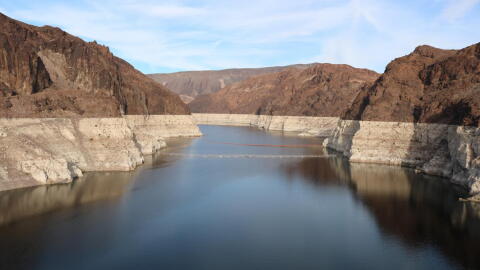 Gabriel Pietrorazio/KJZZWith Colorado River water cuts coming to the lower basin states, a longstanding debate may be bubbling up to the surface, advocates say what water there is should go toward filling Lake Mead.
-
 Alisa ReznickData shows Citizenship and Immigration Services is processing fewer naturalization applications and rejecting people more frequently than it did under the Biden administration, even as fewer applications come in.
-
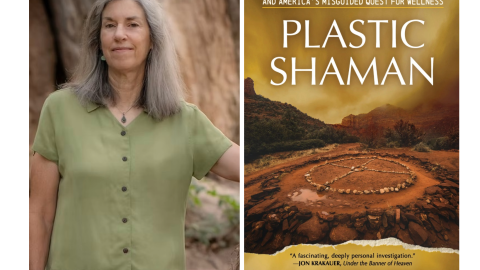 Bill Hatcher, Annette McGivney/CourtesyFollowing the death of three people during a sweat lodge ceremony over a decade ago, a new book looks into why people are drawn to Indigenous ceremonies — even when they’re led by non-Natives.
-
 Marina Oya/Red Bull Content PoolLast summer, JREAMZ was knocked out Red Bull's Dance Your Style competition at nationals. This year, having gone on to win the national title, she’ll face dancers from around the world in October.
-
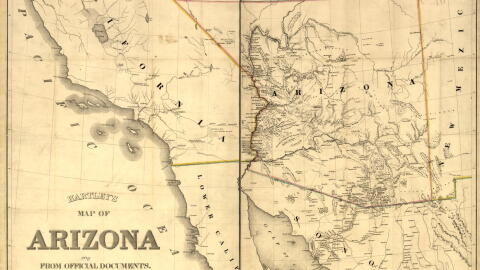 Library of Congress/Geography and Map DivisionSome of the earliest women to come to Arizona from the East Coast were military wives. Arizona writer Laoise O’Shea documented what some of their lives were like on Substack.


Transcript
ANNOUNCER: KJZZ’s original production The Show is supported by Banner Health, Arizona’s largest nonprofit healthcare system. Last year, Banner reinvested more than $1.1 billion in community health and charity care. Banner Health, nonprofit for Arizona. bannerhealth.com/nonprofitforaz.
LAUREN GILGER: Hi, I’m Lauren Gilger, co-host of The Show, an original production from KJZZ. Every weekday, we bring you the latest news and culture from across the state. You can find much more at theshow.kjzz.org. Here’s today’s episode.
MARK BRODIE: Good morning. It’s The Show here on KJZZ 91.5 in Phoenix. I’m Mark Brodie.
LAUREN GILGER: And I’m Lauren Gilger. Coming up, the debate over whether to fill Lake Mead at the expense of Lake Powell.
MARK BRODIE: And a look at the day-to-day lives of some of the earliest women who came west to Arizona.
LAUREN GILGER: But first, Democratic Attorney General Kris Mayes let fellow Democrat Gov. Katie Hobbs off the hook last month when she announced she would not prosecute in an alleged pay-to-play scheme uncovered by the Arizona Republic in 2024. The controversy surrounds Sunshine Residential Homes, which got a nearly 60% rate increase after the foster care provider donated about $500,000 to Hobbs’ campaign and the Democratic Party. Mayes said there’s no evidence that Hobbs broke the law here and declined to prosecute, but Republicans in the state legislature aren’t ready to let the case die. This week, Sen. Jake Hoffman announced former Arizona Supreme Court Justice Andrew Gould will act as special counsel in the Senate’s impending investigation. And that represents something of a capitulation from the Freedom Caucus leader. Camryn Sanchez is here from our politics desk to explain it all. Good morning, Camryn.
CAMRYN SANCHEZ: Good morning.
LAUREN GILGER: OK. So, last week, Camryn, we had Sen. Jake Hoffman launching his own investigation into these pay-to-play allegations, even though the AG found the governor wasn’t at fault. What did he have to say about that? Why is he doing it?
CAMRYN SANCHEZ: Which, by the way, would not have been the first, second or even the third investigation, because we had the attorney general’s thing, and also there’s Maricopa County Attorney Rachel Mitchell, and there’s the auditor general who works sort of for the state Legislature. So —
LAUREN GILGER: Lots of folks have looked into this.
CAMRYN SANCHEZ: Yes. And so, basically, Hoffman, his announcement came on the heels of Kris Mayes saying that she didn’t see anything that she could prosecute here. Athough she also did recommend in her report that she released that they beef up their transparency laws because she acknowledged, basically, that it kind of looks bad, even if it’s not going to court.
But he and, I guess, other Republican state lawmakers don’t believe that she did her due diligence. They say off the bat that it was a farce. Hoffman says that it was not a real investigation and that Mayes is doing basically Hobbs a favor, I guess because they’re both Democrats.
And so he’s going to take things into his own hands and he issued subpoenas to — well, he said he issued subpoenas to Hobbs and Mayes and a bunch of their staff, to the head of Sunshine Residential, to all these folks who were going to have to come in and testify to his committee. Although Mayes and Hobbs told me yesterday that they never received those subpoenas. But that was the plan until —
LAUREN GILGER: Right. This all changed, right, this week.
CAMRYN SANCHEZ: Yes.
LAUREN GILGER: And this was because it’s all happening, it sounds like, on the eve of this election, right? Gov. Katie Hobbs up for reelection, being challenged by Republican Andy Biggs. So, this move from Sen. Hoffman to look into this himself in his own committee to subpoena people was met with some questions about his role in the governor’s race in the campaign. Tell us what’s going on behind the scenes here.
CAMRYN SANCHEZ: Right. So, he was telling us, “This is going to be a completely impartial, nonpolitical investigation. It has nothing to do with politics. I would do this to any elected official at any time.” And we were like, OK, but also, he in his capacity outside the Legislature has this advertising agency and consulting firm, and he’s getting paid to help support Biggs’ campaign with advertisements and stuff.
We were like, OK, so you’re being paid $1 million-plus to assist Biggs’ campaign in fighting against the Hobbs campaign, their competitors, and you’re going to bring Hobbs in and grill her about this thing before early ballots go out, and people are going to see that and ask how it can be impartial.
He did not like that question. He initially declined to comment on it. Then he said he could chew gum and walk at the same time. But afterwards, I think there was sort of a barrage of all of our stories that came out and basically cited that connection. And then they decided to take things in a different direction.
LAUREN GILGER: Right. So he has changed course this week, announced the appointment of Andrew Gould, as I said, as special counsel, and he’s transferring the investigation out of his own committee into the Senate Committee on Appropriations. Is this in response to those questions? What’s he saying about it?
CAMRYN SANCHEZ: Yeah, he blamed the media. He said the “crooked media” sort of was running cover for Hobbs and Kris Mayes, which is a term that he uses frequently, and that we had basically decided the outcome of this investigation before it started. So, to take away that excuse from the crooked, fake news media, he is moving it to Farnsworth so that it can be, you know, unquestionable.
LAUREN GILGER: OK. So, is this surprising, Camryn, that Sen. Hoffman did this? He’s not usually one for capitulating like this.
CAMRYN SANCHEZ: I was a little surprised, to be honest. Hoffman actually runs two committees. One of them is the Gov Committee, and one of them is what’s called the DINO Committee. And in that committee, basically he grills Hobbs’ appointees to lead state agencies, and he’s been running that for a few years, and we’ve had some very contentious hearings.
And so, I’ve seen Hoffman in action many times where he basically is up there on the dais and he’s asking all these tough, intense questions, and it gets really contentious. So I thought that this is basically going to be a version of that.
And so for him to change it up and delegate, I do wonder if maybe some other leadership members spoke to him, or if they sort of caucused amongst themselves and said, “You know, we don’t want every headline going forward to be Biggs’ consultant grills Gov. Hobbs,” stuff like that.
LAUREN GILGER: Tell us about this special counsel who’s now been appointed, former Supreme Court justice. Is he seen as someone who can be impartial here?
CAMRYN SANCHEZ: I would say it’s a very different kind of person than Hoffman, but I don’t know that Democrats could see him as impartial. I mean, he did run for Republican office, for example. He was a Supreme Court justice, so he has experience from the court side of things. But I still, you know, the term impartial, I don’t know if he would meet that standard for Democrats, the way that they see this.
LAUREN GILGER: For Democrats. What’s next in all this, Camryn? Should we expect this investigation to move very quickly in light of a very close election coming up here?
CAMRYN SANCHEZ: They haven’t given us a date, but I could see it happening before Oct. 7, which is when I believe the early ballots come out. I just don’t know exactly what we’re expecting to come out of all of this that would be different than, again, what Mayes said, what the auditor general’s looking into, what Maricopa County Attorney Rachel Mitchell is doing.
LAUREN GILGER: OK. So, let me ask you lastly about this alleged conflict of interest from Jake Hoffman here, his role as a political consultant. It’s come up more than once in recent news cycles, right?
CAMRYN SANCHEZ: Oh, yeah. I mean, he’s been working with Turning Point for a long time. He’s kind of got his hands in a lot of things. He’s represented us with the Republican national stuff, and he has been active in Arizona politics for a long time working on other campaigns. But it’s also not entirely unique. I mean, a lot of them have jobs outside of the Legislature and a lot of them work on stuff like that.
LAUREN GILGER: Right. So, not entirely out of the ordinary, but certainly raised questions here. All right, KJZZ’s Camryn Sanchez joining us from our Politics Desk. Camryn, thanks as always. Appreciate it.
CAMRYN SANCHEZ: Thank you.
MARK BRODIE: As the upper and lower basin states of the Colorado River fight among themselves and with the federal government over new rules for the over-allocated river, an idea that’s been around for a while may be gaining some steam. It’s called Fill Mead First, and basically says that if there isn’t enough water in the Colorado River’s two main reservoirs, Powell and Mead, why not think about consolidating the water that is there in Lake Mead? That would save that reservoir, supporters say, and also give Glen Canyon a chance to restore itself. Needless to say, this would likely be a difficult plan to pull off, both logistically and politically. But that doesn’t stop advocates from making their case. Eric Balken is one of them. He’s the executive director of Glen Canyon Institute. And, Eric, it seems like it’s safe to say that we’re kind of at this point, right? Like, there isn’t enough water to fill both reservoirs.
ERIC BALKEN: Yeah, and, you know, it’s interesting that you say that because the Fill Mead First concept, as we kind of put it together in the late-2000s, this was a point in time where the idea that climate change was impacting the system, that’s when people really started to grasp that concept. So, that’s when Powell and Mead, you know, they really dropped dramatically from 2000 to 2005. They sort of rebounded in the late-2000s.
But that’s when we started to see some really good science come out. There was a paper from the Scripps Institution of Oceanography titled, “When Will Lake Mead Go Dry?” That was a bombshell paper, and it really changed the conversation around Colorado River management. Nowadays, right, if you look at where Powell and Mead are today, their combined storage has not been this low since 1957.
So, we’re in a situation where we have way too much storage. And on the ground, you know, these dams, this water infrastructure, it’s being pushed to its limit. They were not designed to operate at low levels. So, now there’s an infrastructure component of this conversation as well. So, saying Fill Mead First today is almost a misnomer, because you can’t even fill Mead. A more appropriate way of saying it today would be Save Lake Mead.
MARK BRODIE: Why would Mead be the one to save as opposed to Powell?
ERIC BALKEN: If you were to poll all of the decision-makers and stakeholders in the Colorado River Basin and ask them which reservoir is more important, Powell or Mead, I would wager that most of them would say Lake Mead. It’s a bigger reservoir. It generates more hydropower. It generates more tourism revenue.
The Las Vegas metro area pulls its water directly from the reservoir, in contrast to Lake Powell, where the only direct consumer of reservoir water is Page, Arizona, and the LeChee Chapter of the Navajo Nation.
Lake Mead plays a very different role in the basin. It is the top of the lower basin. It is very integral to how water works in the lower basin. Lake Powell and Glen Canyon Dam, that was built to send water to Lake Mead.
MARK BRODIE: So, one of the other things that folks who are advocating for this are talking about is that the amount of water that Lake Powell loses is just astronomical in terms of both evaporation and the water that sort of seeps into the sandstone that is at the bottom of Lake Powell, and that Mead is maybe a more shore-up reservoir, you wouldn’t lose quite so much. Is that a valid argument for doing this, do you think?
ERIC BALKEN: It’s part of the argument that should be considered when thinking about how to best store water in a declining hydrology. Now, it’s notoriously difficult to calculate evaporation and seepage at reservoirs. The technology is getting better.
So, the question you’re asking is, would it save water or would it lose water if we put all of the water in Powell down into Mead? The best available data that I’m aware of was from a study from Jack Schmidt at Utah State University from about 10 years ago. He estimated that Fill Mead First could save around 30,000 to 50,000 acre-feet of water.
It’s a very complicated question to answer because you have to consider what the jumping-off point is. But the available data is suggesting that it would either be a break-even or it might even save some water.
MARK BRODIE: OK. Under this scenario, what would you ideally like to see happen to Lake Powell and Glen Canyon Dam?
ERIC BALKEN: So, what we have been advocating for is that the Bureau of Reclamation begin studying consolidating water storage in Lake Mead and studying modifications at Glen Canyon Dam, including bypass tunnels around the dam that would allow it to operate all the way down to river level. This would look similar to the original diversion tunnels that were built when the dam was first being constructed.
Because what’s happening right now is that once the reservoir behind Glen Canyon Dam drops below the hydropower penstocks, the only way that water can get through the dam is through these four smaller tubes called the river outlet works. The river outlet works were not designed to be used full-time.
So, what we’re asking the federal government to begin analyzing is, let’s start looking at bypass tunnels around Glen Canyon Dam. You could keep the dam in place as a backup facility in case of a massive flood event or in the unlikely event that more water and a wetter hydrology returns. But this would allow water to flow freely through the Grand Canyon into Lake Mead. You could operate the reservoir at all levels, and you wouldn’t have this sort of infrastructure limitation.
MARK BRODIE: So, under this scenario, would there be any water left in Lake Powell? And I mostly ask because, you know, you mentioned even though maybe there’s more recreation and tourism on Lake Mead, I think the folks of Page, Arizona, would have something to say about that.
ERIC BALKEN: So, what becomes of Lake Powell Reservoir after that? That’s a whole other conversation about, say that the dam is modified, say that you have the ability to bring the reservoir down to even lower levels or to run a river level. I think that’s when you start to have that conversation with communities and stakeholders about what the future of Glen Canyon actually is.
There is not enough water in this river system to fill Powell and Mead. There’s not enough water to fill even Lake Mead. There’s not enough water to fill one of them. So, the future for Glen Canyon as we see it, we think it should be a national park with a free-flowing river. And I understand that there are a lot of people who love the reservoir and they have a lot of memories there, but it doesn’t change the hydrology. It doesn’t change the facts on the ground.
So, we don’t think it makes sense to look at Glen Canyon as an empty storage tank anymore. We want people to start thinking of Glen Canyon as a living, breathing place.
MARK BRODIE: So, at the end of the day, I mean, it seems like the bottom line here is the thinking is one more full reservoir is better than two less full reservoirs. What odds do you give of this happening? Like, do you think at some point in the not-too-distant future, given where we are sort of hydrologically, climate-wise, politically, infrastructure, do you think that this has legs? Like, do you think this is going to happen?
ERIC BALKEN: I mean, if you look at where the hydrology is going and where the reservoirs are now, they’re already on the brink. I think Mother Nature is pushing this idea on us faster than we’re actually grappling with it.
I personally don’t think Lake Powell will be there in 20 or 30 years. I just don’t see how it could work. You know, I hear a lot of people when we post things online, they say, “Oh, fill Powell.” It’s like, I understand why you’re saying that, but fill Powell with what? So, as climate continues to warm, as we see more pressure on this river system, I just think it’s going to be politically less realistic to try to prop up Lake Powell while Lake Mead suffers.
MARK BRODIE: I mean, but with all the various sort of impediments to doing this, it seems like maybe it makes sense to do it, but it just seems like there’s so many things that have to go right, so many challenges to overcome, that actually doing it would be difficult.
ERIC BALKEN: Well, things can change quickly, right? If you think about the Berlin Wall, for example, if you asked people two months before the Berlin Wall came down if that was going to happen, they’d probably say no. There were sort of things taking place around geopolitics and everything that slowly led to that sort of pivotal moment where it came down, and then everything changed all at once.
I think we’re reaching our Berlin Wall moment at Glen Canyon Dam. I think once we really hit the critical elevation point and we really start to see Lake Mead continue to drop and we see that pressure on the lower basin states, you know, I just think that things are going to change whether we like it or not.
MARK BRODIE: All right. That is Eric Balken, executive director at the Glen Canyon Institute. Eric, thanks so much for the conversation.
ERIC BALKEN: Thanks, Mark. Great being on.
LAUREN GILGER: Good morning. It is The Show here on KJZZ 91.5. I’m Lauren Gilger.
MARK BRODIE: And I’m Mark Brodie. Coming up, a little more than a decade ago, three people died in Sedona during a sweat lodge ceremony led by a man who repackaged and sold his version of Native American spiritual practices.
ANNETTE MCGIVNEY: And he was a white guy. He had no connection to Indigenous culture in his own personal history. But it was very lucrative at the time to have these self-help seminars.
MARK BRODIE: We’ll hear from an author whose newest book explores the harm inside the wellness industry through that story.
LAUREN GILGER: But first, some of the earliest women to come to Arizona from the East Coast were military wives. And our next guest says when they arrived, they weren’t always prepared for the life they found here. Local writer Laoise O’Shea documented what some of their lives were like in the harsh desert recently on Substack and came into our studios to tell me more about them. She told me she wanted to write about women in the untamed desert, and she remembered a certain historic diary she had read.
LAOISE O’SHEA: I was trying to figure out what to write about, and I remembered this diary that my grandfather had given to me over Christmas, and it was called “Vanish Arizona,” and it was about Martha Summerhayes and her story. And I started reading it and was amazed at how strong she was and the struggles that she went through living in Arizona.
LAUREN GILGER: Right. So, tell us about Martha Summerhayes. This is quite a quite a story, but, you know, like a lot of women probably around that time, she came from the East Coast with her husband, who was in the military, kind of ended up in this place that, you know, she probably never thought she would.
LAOISE O’SHEA: Absolutely. I think what’s interesting about her is coming into Arizona, she actually had this idea that it would be kind of glamorous because she spent time with her family in Germany and spent time with the military in Europe, which was kind of lavish in a way. And so she had this idea that going to Arizona with her husband in the U.S. Army would be the same, but she was sorely mistaken and arrives and was — it was a very big culture shock. It was definitely not what she had expected coming over.
LAUREN GILGER: OK. So, you’re reading her diary. What year are we talking about here? Give us the setting.
LAOISE O’SHEA: So, we’re talking 1871 to 1873, before the railroad came here, which was one of the stories that stuck out to me is she arrives at the Port of Yuma and she has to go with her husband to Fort Whipple with other soldiers, and she talks about getting there. And she goes, “Well, they started marching.” And I had to reread it for a second and go, “Marching from Yuma to Fort Whipple? OK.” And that’s just one of the examples of some of what she had endured.
LAUREN GILGER: Right. So, she’s sort of tagging along in this kind of wild world to her. Tell us just about — like diaries are so interesting, right? Because especially historic diaries, tend to be super detailed. What they ate, what they wore, what they did, what they saw. I mean, what was her life like? What was the day-to-day?
LAOISE O’SHEA: Well, she basically would follow her husband from different — like Fort Whipple and to other parts of Arizona. And so part of it was spending time outside when they would march to different places, and I mean, she would be in a wagon, but still, very, very harsh. But her day was almost like a — I would say a housewife at the time, but without a lot of resources. So, she had to learn how to cook without a lot of items maybe in the East when you had a mother nearby or another woman nearby, perhaps, she had to figure it out on her own. And so she was able to gain insight from some of the Native Americans, for example. She gave birth and didn’t really know what to do with child rearing, and so at one point, the Native Americans actually taught her how to carry her baby in a cradleboard. And so there’s this part where she leaves Fort Whipple and went to some other fort, and when she was there, the women almost laughed and were shocked at the cradleboard. They’d never seen that before. These are women that also came from the East.
LAUREN GILGER: Sure. Yeah. So, that’s interesting. Like, she was kind of on her own and turned to the Native American women to sort of teach her how to be a wife and a mother, which was kind of the role of many women at the time.
LAOISE O’SHEA: It was. And and just gaining insight from them and just, who do you go to and you’re alone, not knowing how to raise children and how to cook and how to do these things and having little supplies, and probably the solace and the peace that she got from that, from interacting with them.
LAUREN GILGER: Yeah. You talk about in this essay also other women in that era. Tell us what they had to say about their own lives.
LAOISE O’SHEA: Absolutely. So, there’s this book called “Doing What the Day Brought,” and it’s a really wonderful book. It includes interviews of women that came from the East to the West. I believe the time is about late 1800s to the 1920s, and it was compiled by some U of A professors, so it’s a local book. But there’s a couple different things. One woman talks about how they were able to fight against kind of that isolation that the desert brings in, and she says, “If there was a newlyweds in the neighborhood, very often they would go over and teach her their specialty in cooking. They would leave the recipe for her, which was very thoughtful and very nice. And if anyone was sick, they took care of them at home. The neighbors took care of anyone who was ill.”
LAUREN GILGER: So, it was a community effort.
LAOISE O’SHEA: It was, absolutely.
LAUREN GILGER: That’s a very stark contrast, I think, to motherhood today, which you make in this piece as well. What did you see there? Like, what struck you about reading this? Were you jealous in a way?
LAOISE O’SHEA: Yeah, I was. I mean, I went into motherhood not knowing a whole lot, and just like a lot of mothers these days, I wasn’t raised around children. So, it was very shocking to me. And if I had a group of women that would come into my home and just show me friendship, I think it would have brought me so much joy and would have put me at ease, absolutely. Really what I gathered from reading a lot of different kind of excerpts of this is it was survival.
LAUREN GILGER: So, you draw this interesting contrast, right, between this very harsh, kind of Wild West world in the Sonoran Desert in this kind of settler era in the West and these women coming from the East Coast in their fancy dresses and layers and corsets and all these things, right? I mean, this probably wasn’t an easy place to live in that way. They did adapt.
LAOISE O’SHEA: They did. They did. And they found their way, and we read it with Martha Summerhayes, we read it with these other women. Another thing that they did is, sometimes some people don’t know, but the West was actually more progressive than the East, mainly because more women had to take on maybe some of those masculine roles. So, for example, there’s another excerpt from “Doing What the Day Brought” where a woman talks about herding cattle. She goes, “I would get on my horse and bring in the cows from the pasture. I helped milk the cows and brought the cans to the house. Then I helped feed the calves and take care of them. I loved to be outside.” So, not only is she adjusting to it and adapting, but she loved it.
LAUREN GILGER: Not the kind of traditional feminine role they probably would have been playing in New York or Philadelphia or something. Definitely different. So, talk a little bit about, I know you’re from Cave Creek, your family is from there, and you kind of have deep roots here. How do you think about the desert?
LAOISE O’SHEA: Yeah. So, Cave Creek, if you haven’t been, small town, probably 10, 15 years ago, when I would go into Phoenix and say I’m from Cave Creek, I’m 30 minutes away, people wouldn’t even know where it was. So, a little different now. But, you know, it’s beautiful when you’re up there. I was surrounded by Spur Cross and Black Mountain and the Blue Wash waterfall and these beautiful sunsets and these homes that almost live in cohesion with the desert. And so growing up, I was able to appreciate the desert from that feminine standpoint of it being beautiful, full of mystery. There’s a quote by Barry Goldwater that said something like, “If I had a mistress, it would be the Grand Canyon.” And I view it a very similar way. I find, yeah, I find the desert is just, I’m enamored with it and I still am. And that’s why I feature it in a lot of my writing, and being in Cave Creek and being around the beauty of that made me fall in love with it.
LAUREN GILGER: Yeah. OK. Well, we’ll leave it there. That is Laoise O’Shea joining us to talk about her piece on the mothers of the desert. Laoise, thank you so much for coming in. Appreciate it very much.
LAOISE O’SHEA: Thank you so much. Appreciate it.
MARK BRODIE: Tomorrow is the last day of Constitution Week. The annual celebration began on Sept. 17 with Constitution Day and Citizenship Day, commemorating the historic document’s signing in 1787 and all those who have become U.S. citizens. From the Fronteras Desk in Tucson, KJZZ’s Alisa Reznick looks at how that process has changed under President Trump.
ALISA REZNICK: It’s a hot morning at the Tumacácori National Historical Park, just south of Tucson. A small group is set up on folding chairs in front of one of the site’s main attractions, a striking mission-style church made of pale stone and brick. This historic O’odham homestead once hosted Yaqui and Apache communities and Spanish mission settlements. Fourteen people from four different countries are here today to take their oath of allegiance to the U.S. Constitution. It’s the final step in the citizenship process.
OFFICER: All persons who are taking the oath, please rise and raise your right hand and repeat after me the oath of allegiance.
ALISA REZNICK: A special oath ceremony happens here at Tumacácori every year in honor of Constitution Day and Citizenship Day.
OFFICER: Congratulations. You are all now citizens of the United States of America. How about a round of applause?
ALISA REZNICK: For Nancy Navarro, the ceremony marked the end of a yearlong process and nearly three decades in the U.S.
NANCY NAVARRO: It represents a lot to me and to my family, Navarro said.
ALISA REZNICK: She’s originally from Guanajuato, Mexico, and was undocumented before becoming a permanent U.S. resident. Her husband and two daughters were all born here. She gets teary-eyed talking about what it means to finally be at this moment.
NANCY NAVARRO: Freedom. Freedom to walk here, to have a voice.
ALISA REZNICK: To live without fear, she says. For Navarro’s daughter, Elizabeth, watching her become a citizen is a relief.
ELIZABETH NAVARRO: So, in many ways, I think the last year felt like a renewal of the fear that I felt when my mom was undocumented.
ALISA REZNICK: She says under the second Trump administration, permanent residency no longer seems like a guarantee of safety.
ELIZABETH NAVARRO: I don’t always feel the safest because of what I look like. I don’t always feel the safety for my family either, because of what they look like.
ALISA REZNICK: The process of becoming a citizen has changed under this administration. Data shows Citizenship and Immigration Services is processing far fewer naturalization applications and rejecting people more frequently than it did under President Biden, even as fewer applications come in. Applicants were denied roughly twice as often between April and June of this year than they were during the same period of 2024. Applicants now face ramped-up screening processes, increased English language proficiency requirements and an expanded civics test. USCIS says reforms are needed to ensure citizenship is reserved for those who qualify.
ELIZABETH TAUFA: And I think that that’s the difference, is the previous administration said naturalization is important, so we should make it accessible, and this administration is saying naturalization is important, we need to make it as hard as possible for people to get it.
ALISA REZNICK: Elizabeth Tafua is an attorney with the Immigrant Legal Resource Center. She says at the same time, denaturalization efforts are up, with the government petitioning a court to strip someone of their citizenship. Fifty such cases were filed in July, the highest monthly total on record.
ELIZABETH TAUFA: We’re really seeing the administration be really hostile openly to the eligible-to-naturalize population and also naturalized citizens, to the point where people say, “I don’t know if it’s worth it to naturalize.”
ALISA REZNICK: Karime Rodriguez helps community members fill out citizenship applications as an organizer with the political action group LUCHA. She’s also in the process of applying herself. She says she understands the fear.
KARIME RODRIGUEZ: It has crossed my mind once or twice before as well. But, you know, I just want to be able to participate civically, and it’s something that I also try to encourage our members about.
ALISA REZNICK: Back at the oath ceremony in Tumacácori, that’s a mindset Nancy Navarro knows well.
NANCY NAVARRO: Being able to vote has been a dream of mine since I arrived in this country, she says. I never thought I’d actually be a citizen.
ALISA REZNICK: When we talked, she had just come from registering to vote with Pima County. Alisa Reznick, KJZZ News, reporting from Tumacácori.
LAUREN GILGER: Good morning. It’s The Show on KJZZ 91.5. I’m Lauren Gilger.
MARK BRODIE: And I’m Mark Brodie. The wellness industry is worth trillions of dollars, and that sometimes includes traditions that are said to be affiliated with Native American culture. That all came to a head more than a decade ago when three people died in Sedona during a sweat lodge ceremony led by James Arthur Ray.
A jury convicted Ray on three counts of negligent homicide as a result, but acquitted him of the more serious manslaughter charges. He served time in prison and was released in 2013. Ray died in January of last year.
The story of that sweat lodge ceremony and the larger issues with the wellness sector are told in the new book, “Plastic Shaman: The True Story of a Deadly Self-Help Retreat and America’s Misguided Quest for Wellness.”
Annette McGivney is a Colorado-based journalist and author. She’ll be talking about her book at Changing Hands Bookstore in Tempe tomorrow. She joins me to talk about this.
And, Annette, can you remind us about who James Arthur Ray was and what happened at this particular retreat he was leading in northern Arizona?
MARK BRODIE: Annette, can you remind us about who James Arthur Ray was and what happened at this particular retreat he was leading in northern Arizona?
ANNETTE MCGIVNEY: James Arthur Ray was a self-help superstar back in the early 2000s. He did your typical self-help seminar stuff, but he mixed that in with Native American spirituality.
And he was a white guy, he had no connection to Indigenous culture in his own personal history, but it was very lucrative at the time to have these self-help seminars about how to make more money and how to be happy and all that, combined with sacred Native American rituals.
So in October 2009, James Ray led a retreat in Sedona that cost $10,000 per person. It was a five-day retreat, and it was all the kind of stuff that self-help people talk about as far as like improving your life and your business.
But then they did some sacred rituals. They went on a vision quest — his version of that — and then he also, the final capstone experience, was a what he called a Lakota sweat lodge, and said he’d been trained by a Lakota medicine man, which was a lie.
But the 56 or 54 people that went into that sweat lodge believed him and they trusted that he knew what he was doing, and three people that participated in that event died from heatstroke, and then 20 others were taken to the hospital. Some of them were seriously injured and remain injured to this day. And so it became national, international news, actually, right after it happened.
MARK BRODIE: So, what did you learn about maybe how prevalent or how common this kind of thing is, or maybe was at that time, in terms of people who were not Native Americans taking people who in many cases spent a lot of money to do what they called Indigenous ceremonies or practices of some sort?
ANNETTE MCGIVNEY: It was quite common, especially in the Southwest, in places like Sedona that are tied to Native American history and culture. But it wasn’t just a new trend at that time in the early 2000s. It dates back to the late 1980s when the New Age movement kind of became popular, a secular spirituality.
So it became really commercially lucrative for people to say they’d been trained by a medicine man or say they were like descended from Native American ancestors, even though they weren’t, as a way to sell these rituals as part of their self-help business.
MARK BRODIE: What is the appeal to people to have that kind of thing, like to go to a sweat lodge or to have, to take part in some kind of Native American ceremony as a way to heal something that you feel might need healing?
ANNETTE MCGIVNEY: Right. I dive into that into the in the book because it’s a very complex question. And first of all, Native Americans, traditional medicine people, knowledge keepers, their rituals, their sacred ceremonies are not for sale. They do not endorse any non-Native people commercializing their spirituality.
So as far as the longing goes, like why would someone who’s not Native American want to sit in a sweat lodge and endure that kind of heat or a vision quest, which is very difficult?
And as far as like what I learned from my research and reflecting on my own attraction to Native American culture living in the Southwest, is that white Americans, descendants of European immigrants, many of us, you know, lost our ancestry. We lost our culture when our relatives came to the United States and abandoned their Irish heritage or whatever, English or Spanish. And so because many of us don’t know what our own ancestry is and we don’t know what the rituals are around that, is one thing.
And then the other thing is here we are, we live in the Southwest, we feel like we’re kind of almost indigenous to this land, you know, and and there’s a desire to connect with this landscape. And so, you know, I’m not condemning that desire. I am guilty of the same thing, and I kind of became more aware of the problems with that in researching this book.
MARK BRODIE: Did the incident in Sedona with these visitors and James Arthur Ray, like did that change how non-Native people market themselves, or to the extent that they that others were doing these kinds of ceremonies, like did that put a stop to it in any way?
ANNETTE MCGIVNEY: Right. Yeah, I’ve followed this like since I started researching, I mean, I’ve followed it since it happened in 2009. And, you know, living so close to Sedona for so many years, I’ve been aware of what goes on there specifically.
And so, of course, right after the sweat lodge and all the news around that, people like guides in Sedona quit marketing Native American sweat lodges.
But while sweat lodge ceremonies per se have not been happening overtly in the way that they were in the past being sold, there’s still that kind of what I would call adjacent Native American marketing, which is in Sedona, like you’ll find many people saying they are shamans.
MARK BRODIE: What is the response now among Native American communities to the fact that this is continuing to happen and is very lucrative for the people who are kind of appropriating a culture that is not theirs?
ANNETTE MCGIVNEY: It makes them mad. You know, like the last thing for the sources that I’ve interviewed for this book — and also I’ve done many stories about Native American culture and Native American issues around their homelands and things like that — I’ve never come across a Native American who supports selling their rituals or participates in that.
They find it very offensive, and either they may protest against it — which I write about in the book, there was a group that protested against James Arthur Ray — or more commonly, they’ll just drop out and ignore it and turn their backs to it.
So like in Sedona, for instance, the Yavapai-Apache Nation, their reservation is right down the road from Sedona, but you’re not going to find them in Sedona participating in any of that Native American-oriented tourism business. They stay away from that, even as they — it would be very lucrative for them to say, “I’m actually Indigenous to this area, and I will take you on a tour.”
But they don’t want to participate. They don’t want to compromise what they believe as the their spiritual relationship to their homeland by making money off of that type of thing.
MARK BRODIE: All right. That is Annette McGivney, a Colorado-based journalist. Her newest book is called “Plastic Shaman: The True Story of a Deadly Self-Help Retreat and America’s Misguided Quest for Wellness.” Annette, always great to talk to you. Thank you so much.
ANNETTE MCGIVNEY: Thank you, Mark.
MARK BRODIE: Good morning. It’s The Show on KJZZ 91.5. I’m Mark Brodie.
LAUREN GILGER: And I’m Lauren Gilger.
The top 16 street-style dancers from across the country battled for a national title last weekend. Dancers from Los Angeles, Orlando, Chicago and, yes, Phoenix met up in Tampa, Florida, for the chance to represent the U.S. at an international competition in Zurich coming up in October.
Well, the Valley’s own Josette Sanaphav, who goes by JREAMZ when she’s dancing, took home the trophy and is headed to Switzerland in just a few weeks. The Show’s Athena Ankrah went to the Red Bull Dance Your Style qualifiers last summer and met JREAMZ and her mentor, RaeRae, before the two went head-to-head for the first time.
ATHENA ANKRAH: Andrea Panacostas goes by RaeRae when she’s dancing, which is most days. She and her wife, Lea Roman, have run The Jukebox Dance Studio in Mesa for the last 15 years.
RAERAE: The Jukebox, we pride ourselves in being an all-street-style dance studio. We don’t do like jazz, ballet-type. It’s all centered on hip-hop. So, we do popping, Campbell locking, vogue, waacking, krump, breaking, all of that.
ATHENA ANKRAH: On a recent Saturday night, RaeRae joined 15 other dancers at The Van Buren in downtown Phoenix for a street dance battle competition, the Red Bull Dance Your Style qualifiers for the Western region of the country. Tonight’s winner will move on to nationals in San Francisco and potentially earn a spot in the world finals in L.A. later this year.
ANNOUNCER: It’s heard that one of the biggest dance competitions in the world, the Red Bull Dance Your Style World Finals.
ATHENA ANKRAH: It’s a high-profile event. Clips from these battles have attracted hundreds of millions of views online. The competition mostly features a variety of street styles, though each dancer presents a distinct blend in their movements.
RAERAE: We’re sourcing from the ground. It’s from Black and Brown people in the U.S., right? So, it came from Africa. It came from New York. So, it’s very centered on the ground and the earth. For me personally, I take from my upbringing coming from the Philippines. In Filipino culture, we have this dance called Pandanggo sa Ilaw, where you have like candles on your hands, and then you have to dance with it while holding it without it falling. So, I feel like that’s kind of where I get that poise when I when I do some of my popping.
ATHENA ANKRAH: RAERAE knows some of her competitors from previous battles, but there’s one she’s most anxious to see.
RAERAE: And I’m also going to be battling with one of my students, which is what I’m really, really excited about.
ATHENA ANKRAH: RaeRae has been a teacher and mentor to Josette Sanaphav, aka JREAMZ, for years. So, she says it’s tricky to balance her pride as an educator with the competitive energy of the battle.
RAERAE: Like, I battle with my wife all the time, and when it comes down to it, it’s like, you’re going for anyone’s heads. But I feel like when I see her battle, I’m going to just want to be in her corner, honestly, because we’ve been training her since she was like 9, 9, 10 years old, and she’s 17 now. So, it’s really, really exciting to see her grow up into this and like battle. And like, especially with Red Bull, this is like one of her dreams. So, yeah, watch out for her. Her name is JREAMZ, actually.
ATHENA ANKRAH: This battle doesn’t have official judges. The audience gets to decide who advances in the competition. The venue starts to fill up for the sold-out show, and the dancers in the audience know what they’re looking for.
TRISTAN: My name is Tristan, aka Tris, aka Lil Skills. So, things like, you know, waacking, popping, locking, breaking, krump, housing, Chicago footwork, anything under the sun, really, you know, something that that speaks true to the culture.
ABBY: My name’s Abby. I came out here because I’ve always wanted to see this. It’s on my bucket list, and I fit more in here than anywhere else, even though I’m terrible at it. My feet work is more like left, left, left, left. It’s not even left, right.
ATHENA ANKRAH: More than 1,000 people filed into The Van Buren, which was set up like an arena with a small stage in the middle of the room, surrounded by spectators in bleachers and on the floor just a couple of feet away from the stage.
ANNOUNCER: Are we ready? Red, you first!
ATHENA ANKRAH: Two dancers stand on opposite sides of the stage, and each improvises to one minute of the same song. Members of the crowd hold up cards to vote for either the blue side or the red side to win the battle. It’s bracket-style, so once you’re out, you’re out. But until then, the energy from the crowd is buzzing as dancers glide across the floor and pop to the beat. As soon as JREAMZ takes to the floor in the third battle of the evening, the crowd is pumped.
ANNOUNCER: Right now, joining me on the red side, we got JREAMZ!
ATHENA ANKRAH: JREAMZ is dancing in the krump style, with a bend in her knees and her arms like hammers, pounding down on the air in front of her to the beat. RaeRae and JREAMZ say this style is all about displaying explosive energy.
RAERAE: I’ve studied krump for seven years now, and it’s very raw and unapologetic, and it kind of like shows your ugly as and making it kind of beautiful in a way.
JREAMZ: Krump, I love how raw it is. It’s such an expressive dance where like you can put like everything into it. And like, krump is, some people think it’s aggressive, but like that’s a way to express yourself.
ATHENA ANKRAH: JREAMZ is moving so quickly that when she freezes, it leaves you holding your breath until the tension is released in time with the music. Offstage, JREAMZ is a sweet, smiley 17-year-old, but here, her face matches her movements. She contorts it absentmindedly within a sort of permanent and expressive grimace.
JREAMZ: If I’m battling, sometimes I look mean. I’m not mean, but like, sometimes I look mean, or sometimes I look like smiley. It just depends on like the moment in the song, that’s that’s how I’m feeling in that moment.
ATHENA ANKRAH: She twists on her toes to turn her knees inward and drops to the floor. She tucks and rolls, pushing her hands against the floor and flipping back onto her feet. JREAMZ moves on to the next round.
ANNOUNCER: In the blue corner, represents Chandler! You got RaeRae!
ATHENA ANKRAH: When RaeRae steps on stage for her first battle, it’s clear she’s a hometown favorite. Like JREAMZ, RaeRae is krumping, but she’s more selective in her movements. She mixes in hand tutting, where different shapes and angles are made with the hands and arms, and she isolates movement in different parts of her body while the rest of her stays still.
RAERAE: It was like just me, the music, my hometown. I’m home.
ATHENA ANKRAH: Her long braid swings behind her, and as she notices its momentum, she grabs hold of it and manipulates it in time with her moves. Both RaeRae and JREAMZ make it to the semifinals. They might even battle each other for the win. It looks even more likely when JREAMZ moves on to the finals. But RaeRae does not move past the semis. Even still, she can’t stop smiling. JREAMZ is in the finals against Jabari Gooding, a dancer from Las Vegas. Before they even tally the crowd’s votes, there’s a clear winner. Looking around the room at all of the crowd’s red cards, she breaks into a sob.
ANNOUNCER: Red Bull Dance Your Style finalist winner is in the red corner, JREAMZ!
ATHENA ANKRAH: JREAMZ, a 17-year-old from North Phoenix, in her first year of the competition, has won the chance to compete at the national finals in San Francisco on Aug. 23.
JREAMZ: I’ve never like experienced something like that. I mean, I’ve been dancing for a long time, like since I was really little, but I’ve watched these battles like on YouTube like as a little girl, and like now I’m actually battling people that I would have like, you know, I would have never imagined. And when I saw my parents, oh, my goodness, that was so something I can’t even explain. Like, to see them proud of me, too, like that everything that they’ve supported me in is like really like worth it, you know?
ATHENA ANKRAH: Her coach and mentor and fellow competitor, RaeRae, says she couldn’t be more proud.
RAERAE: And I couldn’t like contain myself. I was bawling like right when everyone like put their red cards up, I’m like, ah! And I saw her face, she was already crying. As a as a teacher, as a mentor, like I want her to level up far beyond what what I’ve ever been, you know what I mean? And she’s exceeded that. Like, and for people to see it, you know, like dancers and non-dancers alike, it’s like undeniable, like what she brings.
ATHENA ANKRAH: For The Show, I’m Athena Ankrah.
LAUREN GILGER: Last summer was JREAMZ’ first year in the competition. She was knocked out at nationals in San Francisco, but this year, having gone on to win the national title, she will face dancers from around the world in Zurich on Oct. 24.
MARK BRODIE: Thanks for listening to The Show podcast. The Show is produced by Sativa Peterson, Nick Sanchez, Amber Victoria Singer, Athena Ankrah and Ayana Hamilton. The Show was created by Jon Hoban. Our executive producer is Amy Silverman. You can find more of The Show and sign up for our newsletter at theshow.kjzz.org. You can also find us on Instagram @kjzztheshow.