


Should public schools be forced to spend more in the classroom? Republican lawmakers think so. Learn about the choice in front of you on your November ballot. Plus, why some kids with autism diagnoses aren’t getting services both in and out of school.
Ways To Subscribe


-
 Sky Schaudt/KJZZAround 3% of U.S children aged eight are diagnosed with autism. But an ASU professor found many of these kids were diagnosed through schools and not in a clinical setting.
-
 Getty Images/StockAs Arizona Republican lawmakers point out, districts spend just 52% of their budgets on instructional expenses like teacher pay. And now, they’re hoping voters will force schools to up that number to 60% — or face the consequences. It’s the subject of Proposition 320, and KJZZ’s Wayne Schutsky joined The Show to explains both sides of the issue.
-
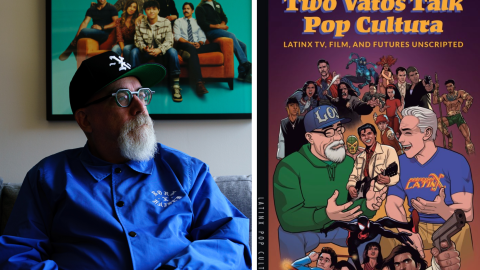 Hudson French, University of Arizona Press/CourtesyEmmy-winning writer-producer and ASU professor Peter Murrieta is releasing a book this October based on his pop-culture focused podcast with Frederick Luis Aldama.
-
 Matthew Casey/KJZZWhen natural disasters hit a community, there’s naturally talk of rebuilding. That work, though, takes workers to do the rebuilding. Saket Soni is director of a group called Resilience Force, which represents people who do this kind of work in what’s called the resilience economy.


Transcript
KJZZ’s original production The Show is supported by Banner Health, Arizona’s largest nonprofit healthcare system. Last year, Banner reinvested more than $1.1 billion in community health and charity care. Banner Health, nonprofit for Arizona. bannerhealth.com/nonprofitforaz.
MARK BRODIE: Hi, I’m Mark Brodie, co-host of The Show, an original production from KJZZ. Every weekday, we bring you the latest news and culture from across the state. You can find much more at theshow.kjzz.org. Here’s today’s episode.
MARK BRODIE: Good morning. It’s The Show here on KJZZ 91.5 in Phoenix. I’m Mark Brodie.
LAUREN GILGER: And I’m Lauren Gilger. Coming up, some children with autism diagnoses get services in school, but not out of it, and vice versa. We’ll find out why.
MARK BRODIE: And we’ll meet the NAU doctoral student inspired by Iron Man who’s making newer, better orthotics.
LAUREN GILGER: But first, public education advocates in Arizona have been railing against inadequate state funding for a decade. You’ve probably heard stats that say Arizona consistently ranks among the lowest per-student funding — we’re 49th in the nation right now, according to the National Education Association. And when it comes to teacher pay, the picture is a little better. The NEA ranked us 29th in the country in teacher pay in 2024, with an average teacher making about $62,000 a year.
But as Republican lawmakers point out, districts spend just 52% of their budgets on instructional expenses like teacher pay. And now they’re hoping voters will force schools to up that number to 60% or face the consequences. It’s the subject of Proposition 320, and KJZZ’s Wayne Schutsky is here from our politics desk to explain it all to us. Good morning, Wayne.
WAYNE SCHUTSKY: Good morning.
LAUREN GILGER: OK. So Prop 320 was put on the ballot by conservative lawmakers like State Senator Jake Hoffman, Freedom Caucus, who argues that putting just over half of state funding toward the classroom is just not enough. It doesn’t seem like a lot, right, Wayne, if you kind of put it that way? Where do districts spend their money?
WAYNE SCHUTSKY: Yeah, it’s been on the downward trend for years. I believe we got as high as 59% at one point; now we’re down closer to 52%. They want this 60% threshold that they say would be the bare minimum needed for things — we’re talking about direct classroom expenses, like you said. So teacher pay, substitutes, athletics, things that are directly what the students are doing at school. I would say that overall classroom spending is like 68%; that includes some other support services that don't fall into that instructional bucket.
LAUREN GILGER: Right. So that’s part of this debate, which we’ll get to. But tell us about the argument that the Republicans at the state Legislature who put this on the ballot are making. Why 60%?
WAYNE SCHUTSKY: Because they say instructional expenses go to the kind of the heart of what should be happening in a school. So, you know, students are going to school for what? Instruction. And so these are things like textbooks, teacher pay — these are the direct expenses. And that if we’re falling below that 60% threshold, then that basically means money’s being diverted to too many non-education items that might be needed to help a school, but aren’t the core mission of a school.
LAUREN GILGER: Yeah. So there was a debate about this proposition on Arizona PBS. Let’s hear what that side had to say. They were represented by Matt Beienburg with the Goldwater Institute.
MATT BEIENBURG: You have school districts like Tucson Unified spends $200 more per kid, Roosevelt $500 more per kid on administration than some of their peers. So there’s a lot of opportunity to cut the fat and say, “Let’s reorient this back toward student instruction.”
LAUREN GILGER: So we heard there he mentioned administrators. Is this kind of all about what administrators make?
WAYNE SCHUTSKY: I wouldn’t say all about. Administration makes up a little over 10% on average in the state of these school budgets. So it’s a good chunk, but it’s not the biggest chunk. But I will say that, especially in school districts I’ve covered over the years, what administrators make has always been a point of contention. You know, superintendents make hundreds of thousands of dollars a year. And part of that is it’s just a job where there’s a smaller pool of people you’re pulling from. It’s a contentious job. You deal with a lot of public backlash whenever you do something they don’t like. And so they’re having to pay these superintendents especially more and more just to entice them to take these jobs.
LAUREN GILGER: Yeah, it’s hard to get people to take them. This comes, Wayne, as, you know, a bigger chunk of the state budget is going toward state funding, even though we mentioned we’re still 49th in the nation when it comes to per-student spending. The chunk of the budget that goes toward funding public schools is a lot higher than it used to be.
WAYNE SCHUTSKY: Yeah, I mean, it’s almost half of the entire general fund at this point. I think we’re at like 46% the last graphic I saw put out by the Legislature. So, yeah, we spend a lot of money on this. And so this debate is really about how we’re divvyed up that money. And, you know, we don’t have enough time today to get into all of the disagreements about how we’re divvyed it up. But this is just talking about that chunk going to public schools and, again, where should that money be going.
LAUREN GILGER: OK. So let’s talk about what the other side of this debate has to say here. Public school advocates are very opposed to this idea of kind of forcing districts’ hands when it comes to how they spend their money and where their budget goes. Tell us why.
WAYNE SCHUTSKY: Yeah, this goes back to what I mentioned before. Instructional spending is at around 52%, but overall classroom spending closer to 70%. And so they’re saying that this instructional spending definition is just too restrictive and that it’s going to force them to cut things that a lot of people might assume is part of instructional spending. We’re talking about speech pathologists, therapists, nurses, school security, things that —
LAUREN GILGER: Counselors.
WAYNE SCHUTSKY: — counselors, some of the infrastructure that allows for teaching to happen, air conditioning, you know. And they’re saying, you know, these expenses aren’t going to go away. So we’re either going to have to cut something, if we’re forced to bump up in one area up to 60%, then all these other expenses that don’t fall in that bucket are going to see cuts.
LAUREN GILGER: Yeah. Let’s hear from the other side on that Arizona PBS debate. This is Jimmy Arwood with the Arizona School Boards Association.
JIMMY ARWOOD: And the fact is schools spend close to $7 in $10 on classroom spending. And classroom spending is different. Classroom spending is special education educators. It’s nurses. It’s instructional supports to ensure that teachers are getting the resources that they need.
LAUREN GILGER: So, Wayne, there would be a financial penalty for districts that don’t kind of hit this 60% threshold if this passes?
WAYNE SCHUTSKY: There is a financial penalty included, but before they, yeah, before they get there, there is a kind of a pathway where they have to increase their spending by a certain percentage each year until they reach that 60%. Now, if they don’t, then, yes, there’s a potential that they could lose what’s called Classroom Site Funding, which is this tranche of state funding that goes to schools.
There’s also an opportunity for the state superintendent to give them waivers if they’re, you know, if they don’t meet it by that certain timeframe. So there is a penalty ultimately, but there are a lot of pathways to, I guess, mitigate that before they get there. But, again, critics say that even getting there at all is going to cause pain. So even if schools are able to accomplish it, it’s going to cause cuts somewhere else.
LAUREN GILGER: Yeah. And we should say this doesn’t apply to every district school; it’s to the big ones in the biggest counties, right?
WAYNE SCHUTSKY: That’s right, yeah. I believe it would apply to all the schools in Maricopa and Pima counties, and then in other counties, it would be any school with more than 7,500 students.
LAUREN GILGER: OK. One of the ways that districts in our state have often raised money to sort of supplement that state spending in Arizona is with bonds and overrides, Wayne, which are also on your ballot, right? And those have also raised questions recently about how districts spend public money. I’m thinking of a proposed, I think, $80 million domed football stadium in one district, right?
WAYNE SCHUTSKY: Yeah. And when I talk to people, a lot of people kind of get confused about what each of these things are. They kind of get lumped together as school funding on your ballot. But, yes, Arizona has always relied on bonds and overrides to allow school districts to go out and seek extra money that isn’t being provided by the state.
Now, the bonds typically go to things like school buildings, like or an $80 million domed stadium, which was voted down. But and and kind of those hard like, you know, infrastructure buildings, that kind of thing. And then the overrides are actually allowing school districts to spend a higher percentage on their maintenance and operations, which is more of that stuff on the school site, the daily expenses. It can go towards teacher pay, it can go towards after-school programs, full-day kindergarten, all of those types of things.
So they’re kind of very two separate things, but they both fall in that realm of helping bump up school pay. It just shows how complicated school funding is in Arizona and difficult for the average person to understand, because you’ve got this state money coming in and then all these extra potential funding sources depending on the district, depending on where you live and if voters approve it.
LAUREN GILGER: Yeah. Well, we’ll see what voters do in November. KJZZ’s Wayne Schutsky with our politics desk joining us. Wayne, thanks as always.
WAYNE SCHUTSKY: Thank you.
MARK BRODIE: Around 3% of children the age of 8 in the U.S. are diagnosed with autism, according to the Centers for Disease Control and Prevention. The numbers are similar in Arizona. But my next guest has some questions about those diagnoses and where they’re coming from.
Joshua Anbar is a clinical assistant professor at ASU, where he tracks the prevalence of autism in Arizona. He says that happens in even-numbered years among 4- and 8-year-olds. And in his new research, he found over the past several surveillance cycles, about half of the kids who had been diagnosed with autism had only been given that diagnosis through the education system and not in a clinical setting. That means those 8-year-olds were eligible to get services in school, but not outside of it.
Anbar joins me to talk more about this and what it means. And, Joshua, is this discrepancy due to the fact that those kids just weren’t being evaluated by a clinician?
JOSHUA ANBAR: That is an excellent question, and the short answer is we don’t know. The longer answer is that it’s complicated. There needs to be more work and more research done to really understand what’s happening with those kids who do not have a clinical diagnosis.
We do know that there is a subset of kids who had both special education records and clinical records that had something to do with development, but there wasn’t really agreement there. So there wasn’t agreement between the clinicians and the special education personnel in the school systems. And so we really need to understand what’s happening there in order to more fully answer that question.
MARK BRODIE: Are there different evaluations given in a clinical setting versus an educational setting?
JOSHUA ANBAR: Yes. So in an education setting, a special education evaluation is really focused on those factors that can influence your ability to succeed in an educational environment, to do well in school. A clinical evaluation is really focused on specific social behaviors, on specific developmental behaviors and developmental milestones, and various gross motor function, that sort of thing. So they are looking at different things, and they use different tools to evaluate those things.
MARK BRODIE: Does this kind of point to the general difficulty of diagnosing autism spectrum disorder? I mean, it’s not like you can take a blood test and say, yes, you have it, or no, you don’t.
JOSHUA ANBAR: Yeah. So this is a reflection of that. In order to diagnose autism, no matter what context it’s occurring in, we have to do various testing, various observation. So we’re triangulating what we think the challenge is.
MARK BRODIE: It’s interesting, though, because I would imagine that there must be some overlap, right? Like if a student is struggling in school and they get a diagnosis, that obviously affects like their social interactions at home or with friends outside of school. And I would imagine vice versa, right?
JOSHUA ANBAR: That’s what you would think, and that makes some intuitive sense. However, in the data, we’re not seeing that in the way we would expect to see it. The big question is why is that occurring. And it could very well be that a lot of kids get a special education exceptionality for autism, they’re getting services through the schools, parents are satisfied with that, and so there’s no need to get a clinical evaluation from a parent and family perspective.
It could be that there are financial barriers or access barriers. There are not a lot of clinicians out there who can diagnose autism. Waitlists can be very, very long. On average in this country, for an autism evaluation, you’re on a waitlist for 13 months.
MARK BRODIE: Wow.
JOSHUA ANBAR: It’s a long time. So these are barriers to getting an autism evaluation. So it could be that these barriers are preventing that from occurring.
But on the flip side, as you alluded to, we’re also seeing that kids who have a clinical diagnosis of autism, roughly a quarter of them don’t get special education services. So there is some systematic disagreement between our education system and our health system.
MARK BRODIE: Is there some disagreement, do you think, between the clinical world and the educational world about whether a child actually is autistic or not, or is it just a matter of one maybe hasn’t been tested or evaluated or specifically diagnosed?
JOSHUA ANBAR: I think it’s a combination of both. I think that the critical piece is is that the priorities of our education system and the priorities of our health system are different. Our education system, its priorities are: How do we educate this child? How do we ensure their success in an education setting? How do we prepare them for success after high school? — that sort of thing.
Our health system has a different focus. It’s focused on not just health and well-being, but it’s focused on development. It’s focused on behaviors that can disrupt everyday living. So they have different lenses that they’re looking at this thing we call autism through.
MARK BRODIE: What are the implications of this disparity?
JOSHUA ANBAR: So there are a couple of different implications. One of the big implications is what happens to those kids who only have a special education exceptionality for autism. The way our special education system works is that it provides services for kids straight from kindergarten to when they separate from secondary education, either when they graduate from high school or they age out of high school if they’re not able to graduate. Once they leave high school, however, once they’re done with their primary and secondary education, those services go away.
So this has huge implications if roughly half of kids aren’t getting a clinical diagnosis. What happens to them after they become adults? So that’s one major implication. Another major implication is what is happening to those kids who have a clinical diagnosis, but are not getting special education services. Are they able to succeed academically without special education services, and that’s why they’re not getting them? Or are they being left behind because the way our special education system is set up, it’s not set up to support this particular subset of children? And we don’t know what their particular needs are, and that’s where, again, more research is needed.
MARK BRODIE: It seems from an outsider’s perspective that this shouldn’t be such a difficult problem to solve, right? Like if a student has a diagnosis from an educational standpoint, like why shouldn’t that also qualify them for some kind of services outside of school and vice versa? Why is this so hard?
JOSHUA ANBAR: That is a great question. And the reality is that the reason it’s hard is that these are two separate systems governed by two separate sets of priorities. And because they have these competing sets of priorities, their evaluations don’t necessarily line up.
MARK BRODIE: Is there work being done on this? Like is anybody trying to figure out a way to come up with some kind of evaluation that maybe both camps could use that would satisfy both of their needs, that might ultimately help these kids?
JOSHUA ANBAR: There are conversations that are happening. There has been a push to develop working groups between clinicians and special educators, people who provide clinical services as well as teachers, both in special education and in general education, who are supporting children with autism.
And the definition of autism from a clinical perspective has changed over time. We have introduced new terms. The term "autism spectrum disorder" did not exist as a clinical term until 2013.
MARK BRODIE: Mm-hmm.
JOSHUA ANBAR: And we’ve also changed the clinical criteria for diagnosing autism. So there are opportunities to make change, to have conversations about what is this thing autism that we’re talking about and how can we create a unified definition that both educators and clinicians can use.
MARK BRODIE: We talked about some of the implications of this disparity. I also wonder if there’s an educational implication here for students who maybe have a clinical diagnosis, but not an educational one, or vice versa. Because even if you have the services in school, that doesn’t necessarily help you at home when you’re like struggling to maybe do your homework or work in a group project if you’re having sort of social dynamic challenges, things like that. Like there must be educational implications to all of this, also, right?
JOSHUA ANBAR: There are. There are significant educational implications. So if you have a kid who has a clinical diagnosis of autism, but is not receiving special education support, that means that for eight hours of their day, a third of their day, they’re in an environment that may not be able to best support them and allow them to succeed in the fashion that they should be able to best succeed in.
Now, a school district official might come back and say, "Well, they’re able to succeed academically, and so if they’re having some social problems, that’s OK. But they’re succeeding academically, and that’s our priority." And they would be right. But it also doesn’t look at the kid as a holistic individual who has needs beyond just succeeding academically or having a stable home life.
And so this is the big question of what is it that we’re talking about when we say that one in 31 or one in 32 kids here in Arizona have autism when half of them only have a special education exceptionality. They’re getting support in school, but they’re only in school eight hours a day. Two-thirds of their lives are at home where they may not be getting support. That’s a lot of time that parents are trying to figure out how to navigate the needs of their child. And then, of course, as I mentioned earlier, those kids with a clinical diagnosis who aren’t getting supports at schools.
MARK BRODIE: All right. Joshua, thank you so much. I really appreciate it.
JOSHUA ANBAR: Thank you.
MARK BRODIE: Joshua Anbar is a clinical assistant professor at ASU.
LAUREN GILGER: Good morning. It’s The Show on KJZZ 91.5. I’m Lauren Gilger.
MARK BRODIE: And I’m Mark Brodie. Coming up, how the “Iron Man” movies and his grandfather’s battle with cancer inspired an NAU student to engineer a better ankle mobility device.
SAM HOPKINS: We had up to three people moving him around the house at any given time. And it was really difficult to see him just navigate life always having to be essentially carried or picked up out of bed. So around then is when Iron Man 3 came out, and I was like, “Oh wow, that’s really fascinating. I want to be able to do that so I can help my grandpa stay active.”
MARK BRODIE: We’ll hear from the student developing a new wearable robotic device for people with muscle weakness and mobility issues.
LAUREN GILGER: But first, Peter Murrieta has had a long and successful career in film and television. He is a multiple Emmy winner known for series like “Mr. Iglesias,” “Lopez,” “Greetings from Tucson” and Disney’s “Wizards of Waverly Place.” Today, he’s the deputy director of ASU’s Sidney Poitier New American Film School.
And now he’s out with a new book alongside leading Latinx media studies scholar Frederick Luis Aldama called “Two Vatos Talk Pop Cultura.” It came out of their podcast where they talked about, well, pop culture, and I spoke with him more about it.
PETER MURRIETA: I realized when you pick up these academic books, a lot of times there are assumptions that media analysts make about how we do what we do and how it really works inside. And so we started doing this podcast together, and then we started talking about, like, should we write a book?
And my favorite thing about the book is, I don’t remember what the other title was, but when we sent it to the publisher and they got a look at us, they were like, “That’s not the title of this book. The title of this book is ‘Two Vatos Talk.’” They were like, “That’s what the title is.”
LAUREN GILGER: OK, so let’s talk about it a little bit, right? Like, you’re looking at 70 years of history here, which is a heck of a lot to squeeze into a book. But let's talk about a little bit of the — some of the highlights, maybe, along those many decades. When we talk about some of the oldest examples that you look at in the book, what are we thinking of?
PETER MURRIETA: I’d love to talk about “I Love Lucy.”
DESI ARNAZ (AS RICKY RICARDO): Lucy, what are you doing?
LUCILLE BALL (AS LUCY RICARDO): Honey, remember what you said to me the first time you met me?
DESI ARNAZ (AS RICKY RICARDO): I sure do. I said you were a cute little chicken.
LUCILLE BALL (AS LUCY RICARDO): Well, I got something to tell you about this cute little chicken. She has crow’s feet!
PETER MURRIETA: Desi Arnaz had so much to do with the beginnings of television and how to rerun a show, how to syndicate a show, how to shoot a show live with a studio audience. Like, he had so much to do with the creation of that business model. And he and Lucy made so much money they ended up buying a studio.
Like, that to me is an example of sort of behind the scenes, but in front of the camera as a crazy husband. But behind the scenes, the two of them just were a force to be reckoned with.
LAUREN GILGER: Right, right. I mean, and such a huge cultural impact in so many ways. I have to ask you about Zorro if we’re talking about kind of older film and TV here, right? Because you’re actually related to him, or at least to the real guy that character was based on, is that right? That’s crazy!
PETER MURRIETA: Yes! That is absolutely correct. That is absolutely correct. There’s a book that traces the history of the character of Zorro and traces it all the way back to my ancestor, Joaquin Murrieta, who was this person who was in the California Gold Rush and lived a very colorful life. He fought for what he thought was fair, and he ended up being an influence on several people, but among them, the creator of Zorro.
THE ZORRO THEME SONG: Out of the night, when the full moon is bright, comes a horseman known as Zorro.
PETER MURRIETA: Who made him a little bit more Spanish than Mexican and a little bit more wealthy than — I certainly would love to have had that wealth and have it handed down to me. But no, it’s really amazing. And to find that out is just incredible. And I’ve actually co-written a novel about that, but that’s not what we’re here to talk about.
LAUREN GILGER: I mean, obviously, you are very well known for “Wizards of Waverly Place.” You were a writer, producer, showrunner on this for a long time. This launched Selena Gomez’s career. But it was about putting a Latina on the Disney Channel, right, when that really hadn’t happened before. What was the conversation like around that back in the day?
PETER MURRIETA: Oh, wow. That was, well, you know, I got a videotape a couple years before that. Do you want to develop for Disney Channel? And they had this young girl on it, and I chose not to at that time. And then a couple years later, this opportunity came up, and it was a script called “The O’Malleys.” And it was about an Irish family, and I said, “I’ll do it, but I want to do it if I can make it Latina.”
SELENA GOMEZ (AS ALEX RUSSO): ... After you see how good we’re doing, maybe you can graduate everyone and I can get back in the wizard competition.
DAVID HENRIE (AS JUSTIN RUSSO): Yeah!
SELENA GOMEZ (AS ALEX RUSSO): But if you don’t think we’re doing very good, we’ll just settle with putting me back in the competition.
DAVID HENRIE (AS JUSTIN RUSSO): Oh, yeah.
PETER MURRIETA: And they were like, “Well, who would that be?” And I was like, “What about that that girl you showed me video on a couple years back? Is she still around? Is she still available?” And it was a fight to get them to recognize that, not because they didn’t recognize her talent, but they had already promised her to another show that was shooting a pilot. And I was like, “Well, you greenlit ours first, so let’s go.” So we brought her in and it was magic, literally.
LAUREN GILGER: That’s amazing. Right. But I mean, like, it was supposed to be an Irish family. Was there pushback to making it a Latina script?
PETER MURRIETA: I think there’s little bits and pieces inside it. You know, I remember going to a run-through where there was a poster on the wall, and someone was like, “What is that?” And I was like, “Oh, it’s a travel poster for Mexico.” And they’re like, “Could it be more nondescript Latino?” And I was like, “Where’s the country of Latino? I don’t know where that is, but this is a Mexican family, and they can be Mexican, and that’s cool.”
I think it’s really about educating folks about that we’re not a monolith and that we are many people. You know, when I was a child in the west part of the country watching “Chico and the Man” on TV, we thought because he was portrayed as such, that that was a Mexican guy in East L.A. who lived and worked as a mechanic.
JACK ALBERTSON (AS ED BROWN): Chico! Chico!
FREDDIE PRINZE (AS CHICO RODRIGUEZ): Buenos días.
JACK ALBERTSON (AS ED BROWN): What's that?
FREDDIE PRINZE (AS CHICO RODRIGUEZ): The bathtub.
JACK ALBERTSON (AS ED BROWN): What's it doing here?
FREDDIE PRINZE (AS CHICO RODRIGUEZ): Waiting to be installed.
JACK ALBERTSON (AS ED BROWN): Right next to the pump? Listen, kid, washing their windshields is as far as I go.
FREDDIE PRINZE (AS CHICO RODRIGUEZ): It's for me. I'm going to connect it up in the closet in the bathroom so I can take a bath.
JACK ALBERTSON (AS ED BROWN): What's the matter with the bathroom upstairs?
FREDDIE PRINZE (AS CHICO RODRIGUEZ): Well, it's inconvenient, especially when I'm getting dressed for a date.
JACK ALBERTSON (AS ED BROWN): You don't get dressed, you get upholstered.
PETER MURRIETA: And didn’t know until I met friends from New York that, oh no, that guy Freddie Prinze, he’s Puerto Rican. And those are the kinds of things where it’s just about educating people, just educating people, and that’s what this book is trying to do.
LAUREN GILGER: Yeah, absolutely. You have a whole chapter on Latinx and sci-fi. I have to ask about that. Give us an example or two there.
PETER MURRIETA: Oh, my god, my favorite anecdote about that. Unfortunately, it didn’t didn’t see the light of day yet, but I wrote a movie for DreamWorks, and it was based on a book, and it was called “Lowriders in Space.” And Salma Hayek was one of the producers along with me, and she told me a story that she was up for some big part in some sci-fi franchise — she wouldn’t say what — but somebody told her, “Well, there’s no there’s no Mexicans in space.” And so she was like, “All right, we’re going to put Mexicans in space, man.”
LAUREN GILGER: “Lowriders in Space” is amazing.
PETER MURRIETA: Yeah, yeah, yeah. But I think I think the “Star Trek” future that we were promised of equity and non-conflict is still out there for us, still out there for us.
LAUREN GILGER: Well, so let me ask you about that, because part of the premise, right, of this book too is that representation of Latinos, Latinx people in the culture and pop culture maybe has stagnated. Talk a little bit about where you think that stagnation has happened, you know, what that looks like, yeah.
PETER MURRIETA: Sure. 2003 and ’04 is like the year it almost happened. We had “Resurrection Blvd.” on Showtime. George Lopez’s show had just debuted. ”Greetings from Tucson,” my first show, had just debuted. “Ugly Betty” was coming. There were these opportunities, and it felt like it was inevitable that we would land with our proper and due representation.
I think that you can watch and follow the economics as we’ve had contraction due to the streaming wars and less shows being made and less people advancing. All that hard work of getting people mentored and trained to become showrunners and writers and actors who can carry a whole show, we’re kind of still here, kind of in a holding pattern, kind of waiting for opportunity, and we just have to keep celebrating the opportunity when it comes.
LAUREN GILGER: Yeah. Do you think those opportunities continue to come? I mean, are you concerned that the stagnation will continue in the future?
PETER MURRIETA: Yeah, I’m always concerned. Of the two of us, I’m always concerned.
LAUREN GILGER: You're the one.
PETER MURRIETA: Yeah, yeah. You know, when I started in this business many, many years ago, I remember thinking if somebody had told me when I was 20, like, “Oh, you’re going to be signing up to be in a freelance business for 30 years,” I would have gone, “Oh, no, no, no, no, no, no, no.”
But that’s what it is, right? It’s a freelance business. And every time you work, you think to yourself, no matter how young or old you are, you’re like, “That’s it. That’s the last job I’ll ever have. Oh boy, I didn’t save enough.”
But I think I am concerned because the avenues are getting smaller. But where I’m not concerned is the technology is making it easier and easier and easier to get your story out there. I’m working with someone right now — I can’t say who it is — we’re working on a show idea, and we are entertaining very, very deliberately like the idea of do we go pitch this show to all the places or do we just make four of them and then have it and put it out on your social media, person who has a big social media? And then it’s a different conversation. So I’m very excited about that future.
LAUREN GILGER: That’s very interesting. Yeah, the game has changed, for sure. But I mean, so you’re teaching now, right? Like you’re teaching this next generation of students.
PETER MURRIETA: I’m teaching, I’m writing, yes.
LAUREN GILGER: Right. So so that’s got to be hopeful to you as well. Like, are there kids who come up through your classes who you’re like, these guys, these girls, these gals are going to make the next history of this? Like, they’re going to throw the gauntlet down and do this entirely differently and and change the industry again.
PETER MURRIETA: A hundred percent. I mean, it gets me almost emotional, I would say — my family would say he’s never emotional — but it almost gets me emotional about the the hope for the future is based on these people. When when people in my professional life say to me, “What are you doing teaching?” I’m like, “I am building a wave of people that never I could do a show at a time with 180 people. I’m educating hundreds and hundreds of people every semester, and it’s going to become a wave that you can’t turn back.”
LAUREN GILGER: OK. Peter Murrieta, deputy director of the ASU Sidney Poitier New American Film School and professor of practice there as well, also obviously a longtime TV producer and writer. Thank you very much.
PETER MURRIETA: Awesome. Bye.
LAUREN GILGER: The new book, “Two Vatos Talk Pop Cultura,” is out next month from the University of Arizona Press.
LAUREN GILGER: Good morning. It is The Show on KJZZ 91.5. I’m Lauren Gilger.
MARK BRODIE: And I’m Mark Brodie. When natural disasters hit a community, there’s naturally talk of rebuilding. That work, though, of course, takes workers to do the rebuilding. And that’s where my next guest comes in.
Saket Soni is director of a group called Resilience Force, which represents people who do this kind of work in what’s called the resilience economy. He’ll be speaking virtually this evening at an event put on by ASU’s Future Security Initiative. I spoke with Soni earlier and asked how he describes the resilience economy.
SAKET SONI: So I’m a labor organizer who spends most of his time in disaster zones. When hurricanes, floods and fires hit, hundreds, sometimes thousands of people lose their homes overnight. I represent the workers who come in to repair them.
These are the workers who we call resilience workers. This is a workforce that has emerged over the last 20 years as climate change has become more frequent and more destructive. So our work and the work of these workers is rooted in the aftermath of Hurricane Katrina back when we thought of climate disasters and extreme weather as anomalies, right? Freak occurrences. They were the exception rather than the norm. Now, they’re the new normal.
MARK BRODIE: So given the number of years it’s been since Hurricane Katrina, how have you seen this workforce and this industry evolve over those years?
SAKET SONI: Well, the workers over the last 20 years have gone from city to city, storm after storm, rebuilding home after home each time disaster hits. And I saw them becoming highly skilled, but also acquiring along the way on the road a deep sense of vocation, the same kind of sense of commitment and vocation that firefighters and healthcare workers have. So that’s how that’s how the workers evolved.
At first, the work that they did was largely seasonal, surges of intensive disaster response work followed by off-seasons. But as weather became a constant challenge, we’ve seen the work happen year-round.
And along that journey, the industry they work in has grown. So as more and more disasters hit, more and more insurance money and FEMA money has been has been flowing into repairs. Companies have been growing, and and now what we’ve got is an industry full of these large companies who have these subcontracting chains, and at the bottom of the chain, there are these these workers.
MARK BRODIE: Well, so when you talk about this being more of a year-round kind of thing now, you know, we hear, for example, about how wildfire season is now just a 12-month-a-year kind of thing. Have you seen the kinds of disasters that these workers are responding to changing and expanding?
SAKET SONI: Yes, and that’s why we’re building out a new American profession called the certified climate technician. So the idea is that the old order was a hurricane hits or fires burn, homes are damaged and there’s a period of repairs that lasts sometimes weeks, sometimes months, sometimes in in large cities a few years. But the work was mostly repair work.
Now what we have is that in, you know, almost half the ZIP codes in America where disaster has hit, it’s not the first disaster. In fact, most places where disasters happen are experiencing repeat events where every new disaster means you need to not just repair, but prepare for the next one. And, you know, climate adaptation is becoming a large-scale need in America. So these trained professionals are needed, not just people who can do the work once, but who can rebuild and repair even as they adapt and prepare.
MARK BRODIE: I’m especially interested in that preparation, sort of that preventative work. When you think of a place like Phoenix, which obviously does not have hurricanes and tornadoes and a lot of sort of the natural disasters that one thinks about typically, wildfires, you know, knock on wood, don’t hit in the city itself or in the metro area itself. I wonder, though, if, you know, given the the heat and the increase heat that we are seeing year over year in the Phoenix area, if there’s work that, you know, these professionals might be able to do or maybe are doing to try to help folks adapt to it and maybe not fall victim to some kind of a heat-related disaster later on.
SAKET SONI: Yeah, that’s very important. Phoenix is exactly the kind of place where you need a year-round resilience workforce helping a place and its community adapt. Of course, you’re going to need surge relief work during particularly hot periods to go door to door, check on people, you know, make sure people are OK, help those who are not.
But also, the year-round adaptation work can include installing and maintaining shade structures, planting trees and long-term tree maintenance, adapting and maintaining cooling centers. And then there is the need to weatherize homes and communities.
MARK BRODIE: Would that kind of work though be still done by the the folks who sort of go from community to community after a disaster, or is that maybe more a permanent, you know, Phoenix-based workforce that’s doing that work here?
SAKET SONI: Well, although we started in our work by protecting those who go from place to place, the real end goal is local people doing the work where they live. So, you know, the end game for Phoenix really should be a a cohort, a cadre, a workforce that lives there, and the need to prepare and adapt translates into good, long-term, career-building jobs.
MARK BRODIE: So we’ve talked about how this sector has grown over the last couple of decades. How big do you think it’s ultimately going to get?
SAKET SONI: Well, extreme weather isn’t going anywhere, and it’s not going to happen purely in episodes of fires, floods and hurricanes. Extreme heat will continue to rise, and so the resilience economy will grow into a multibillion-dollar economy. And the really important thing here is that every dollar we spend preparing saves between $5 and $15 down the line repairing.
MARK BRODIE: So as this economy is growing, how are the workers doing? Like are their wages growing? Are their safety protections improving for the folks who are doing this work?
SAKET SONI: Nowhere near fast enough. The workers we represent, the ones who go from city to city, are still following hurricanes, floods and fires, getting to places that need rebuilding and sleeping in their cars, sleeping on parking lot floors, wake up in the morning, washing themselves with bottles of water, and then getting on rooftops to repair homes in record-breaking heat conditions. This is in Florida, Louisiana and across the Southeast.
In states like Colorado and California where public officials are more aware for of the need to adapt, more money is being put into state budgets for preparation, and that’s fueling some amount of work, you know, work to do ecological management, for example, or make homes fireproof.
But not enough money is being spent to make sure that wages are high and work is safe. And the reason for that, I think, is we in America still want to do this on the cheap, when in fact, you need a skilled, scaled workforce, and that costs money.
MARK BRODIE: Saket Soni is director of a group called Resilience Force. He’ll be speaking this evening as part of ASU’s Future Security Initiative, which is a partnership between the university and the D.C.-based think tank New America.
MARK BRODIE: Good morning. It’s The Show on KJZZ 91.5. I’m Mark Brodie.
LAUREN GILGER: And I’m Lauren Gilger. Orthotics are wearable medical devices that go places like your knee or your ankle, and if you have something like cerebral palsy, they can be a lifeline. But the current ones available can be heavy and bulky, and our next guest has a new model that could help fix that.
Sam Hopkins is a doctoral student of mechanical engineering at NAU who’s working to build a new orthotic ankle device that would be more flexible and adaptive to changing terrain. And now he’s been granted funding from the NIH to do it at Professor Zach Lerner’s Biomechatronics Lab. I spoke with him more about it and how Iron Man inspired him to do this work.
SAM HOPKINS: So these are orthotics that are essentially ankle braces. They’re kind of like wearing a ski boot, for example. Now, you don’t normally wear a ski boot through your everyday life, but we use them for people who have mobility disorders like cerebral palsy. That’s a neuromuscular condition that happens shortly before, during or after birth that leads to some complications with muscle development and control. Typically, that impacts ankle function. And so what that looks like is typically something like a crouch gait, where an individual walks with their knees extra flexed. And ankle-foot orthosis gives that person more stability and support for that ankle.
LAUREN GILGER: So, OK. So these I think people might have a picture in their head of what they look like, how they work. Tell us a little bit about you and how you got into this work, though. Do you have any kind of personal connection to these kinds of devices? You know anyone who’s lost mobility in their life?
SAM HOPKINS: So I got into this because I was really fascinated with the concept of Iron Man as a kid.
LAUREN GILGER: Like Tony Stark Iron Man?
SAM HOPKINS: Exactly. And when I was about 13, my grandfather was affected by esophageal cancer. Now, it was a pretty slow process for him as he lost his mobility, because he couldn’t really eat, stay active, and chemotherapy took a toll on his body. And so that meant for my family, we had up to three people moving him around the house at any given time. And it was really difficult to see him just navigate life always having to be essentially carried or picked up out of bed. Wow. So around then is when Iron Man 3 came out, and I was like, “Oh wow, that’s really fascinating. I want to be able to do that so I can help my grandpa stay active.”
LAUREN GILGER: That's really cool. So now you're you're doing the work at NAU there as a doctoral student. Tell us a little bit about how these current kind of ankle brace, ski boot-style orthotics look and function. Like are they clunky? How do they work for folks?
SAM HOPKINS: So I say ski boot because it’s really something that most people have an idea of, but a ski boot’s really thick, big. Ankle-foot orthosis is actually going to be something thinner, but it’s just the rigid plastic part of the boot, essentially. So it can slide into people’s shoe. That gives them the extra support and it’s pretty light, which is what we want when you’re actually wearing a device.
The problem comes in in that the orthotics don’t adapt or adjust as you move about your daily life. You know, as you’re walking, you’re driving, you’re hiking, your ankle’s doing a lot of different things, but an orthotic is just a plastic shell that gives you support, but it doesn’t really do a lot more than that for you, and it actually restricts your ankle.
LAUREN GILGER: Hm. So you’re working on one that’s made of carbon fiber. You’re 3D printing those parts, right? How is yours different?
SAM HOPKINS: So ours is robotic. It’s adjustable, so it can be stiff when you need the support, but it can also be flexible when you need that ankle motion for like driving or walking up and down stairs.
LAUREN GILGER: How did you come up with this specific model and kind of develop it? Did it take a lot of trial and error?
SAM HOPKINS: So when I got to the lab, Dr. Lerner already had some ideas in the back of his head for what to do, and I was able to create my device based on some of his concept work. What that looks like is we have a very stiff material, and we’re able to adjust that material property on the fly while you’re walking. And that’s where the real novelty of the device comes in.
LAUREN GILGER: Mm-hmm. So it’s lightweight in a way, but it’s also sort of adjustable. There are springs involved in this. Is it motorized?
SAM HOPKINS: It’s a spring. We use actually tiny servomotors to reconfigure how that spring works, but we’re not directly motorizing your ankle with this device. On the other hand, we do have devices that are motors that we attach essentially to your ankle so that way you’re getting that assistance directly from that motor rather than a spring.
LAUREN GILGER: Yeah. You’re working on, it sounds like, other sorts of, you know, devices, things like, you know, Iron Man might have used, right? Tell us just about the world in which these kinds of devices exist. Like, I don’t think most people know what goes into creating something like this so that somebody can, you know, have a little bit more mobility.
SAM HOPKINS: So the concept is actually really simple in that we are essentially replicating what your body is already doing. You have bones that provide support to your body, and you have muscles that allow you to move. Well, what we do is take our rigid carbon fiber parts and strap them next to your joints and then use the motor as essentially almost like a a secondary joint.
And that’s why we call them exoskeletons, because they function exactly like your normal skeleton and your normal muscles, but they give you that assistance in parallel, essentially, right next to your own joints.
LAUREN GILGER: Right, on the outside there. That’s fascinating. Have you ever tried it on? What’s it feel like?
SAM HOPKINS: Yes. Oh, I have to wear them all the time. It’s more subtle. You feel it kick in, but as you walk you get, “Oh, OK. I don’t really know what it’s doing for me.” It’s actually the moment you turn it off that you really feel, “Whoa, like I’m suddenly walking through molasses without it.”
LAUREN GILGER: Oh, that’s fascinating. Is it like when you walk on one of those moving walkways at the airport and then you step off and realize you’re slow?
SAM HOPKINS: Exactly, exactly like that.
LAUREN GILGER: So you have won a fellowship from the National Institutes of Health to continue this research. What’s your goal here?
SAM HOPKINS: This fellowship is actually a predoctoral training grant, they call it. So it’s designed to give me more experience to grow as a research independent researcher. So I’m essentially leading this project, but I’m also networking with a local prosthetist and orthotist and other professors from different universities like University of Michigan and University of Washington so I can really get the experience of developing my own hands-on project. Where I want to go with that is, you know, a professorship or an industrial engineer scientist position.
LAUREN GILGER: So in the end, do you hope that you and this kind of broad team of people you’re working with on this can kind of re-envision, remake the way that these kinds of devices work for folks?
SAM HOPKINS: Exactly. We want to develop something that’ll be more effective than the current technology.
LAUREN GILGER: All right. Sam Hopkins, doctoral student at NAU, joining us to talk about this project. Sam, thank you very much. Congrats on the fellowship, and and good luck.
SAM HOPKINS: Of course. Thank you so much, Lauren.
LAUREN GILGER: Thanks for listening to The Show podcast. The Show is produced by Sativa Peterson, Nick Sanchez, Amber Victoria Singer, Athena Ankrah and Ayana Hamilton. The Show was created by Joh Hoban, and our executive producer is Amy Silverman. You can find more of "The Show" and sign up for our newsletter at theshow.kjzz.org. You can also find us on Instagram @kjzztheshow.