


Why the president may be losing a normally solid GOP voting bloc: ranchers. And inside ICE’s billion-dollar plan to expand Arizona’s immigration detention capabilities. That and more on The Show.
Ways To Subscribe


-
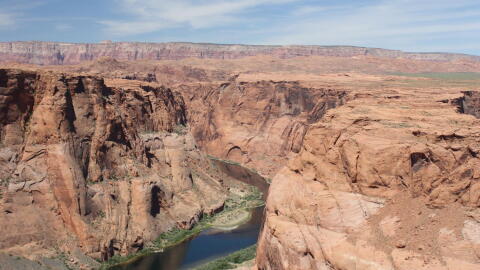 Trevor Huxham/KJZZAs demand grows, tech companies are looking toward tribal lands to expand on construction of data centers. But, tribes are moving to stop them.
-
 Getty Images/FileRanchers aren’t happy about Trump’s plan to cut beef prices, threatening a normally reliable Republican voting block.
-
 Tim Agne/KJZZAmong many other provisions, the bill would limit the number of times student-athletes could transfer from one school to another. It would also address name, image, and likeness, or NIL, payments that athletes can get, and generally prevent conferences from cutting the number of varsity or Olympic sports a school in that conference has to offer.
-
 Dermont Stevenson/Cronkite NewsICE has signed a series of contracts worth up to $7.3 billion to expand detention in five states following the failure of ICE’s plan to buy warehouses and turn them into detention facilities.
-
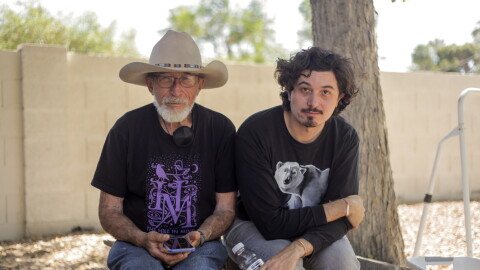 Shaunte Glover/CourtesyFlagstaff musician Joshua Hill spoke with The Show about his new album and collaborating with his father, Greg, on stage before he died of dementia.


Transcript
KJZZ’s original production “The Show” is supported by Banner Health, Arizona’s largest nonprofit healthcare system. Last year, Banner reinvested more than $1.1 billion in community health and charity care. Banner Health, nonprofit for Arizona. bannerhealth.com/nonprofitforaz.
LAUREN GILGER: Hi, I’m Lauren Gilger, co-host of “The Show,” an original production from KJZZ. Every weekday, we bring you the latest news and culture from across the state. You can find much more at theshow.kjzz.org. Here’s today’s episode.
Good morning and welcome to “The Show” here on KJZZ 91.5 in Phoenix. I’m Lauren Gilger.
Coming up, why the president may be losing a normally solid GOP voting block: ranchers. And inside ICE’s billion-dollar plan to expand Arizona’s immigration detention capabilities.
But first, data centers are proving controversial across the country, and now tech firms are targeting Indian Country, where they’re being met with a new round of intense opposition. Here in Arizona, the Hualapai Tribe in northern Arizona is enacting a moratorium on data center development on its nearly 1-million-acre reservation. This as the community is facing several potential data center developments in the region.
KJZZ’s GABRIEL PIETRORAZIO covers Indigenous affairs for us and joins us now with more. Good morning, Gabriel.
GABRIEL PIETRORAZIO: Good morning.
LAUREN GILGER: Okay, so talk about the Hualapai Tribe first and what prompted this move from them.
GABRIEL PIETRORAZIO: Sure thing. I think that just like any community in this country, we’re seeing lots of conversations around data centers and how they impact everyday life for all communities, including Tribal nations. And what we’re seeing there, especially as I mentioned before, that the Hualapai Tribe depends greatly on the Colorado River. Their reservation hugs 108 miles of the Colorado River. I recently whitewater-rafted with the tribe and was experiencing that and seeing this precious resource that they want to protect. And so part of that is the reason behind the council moving for this resolution that basically outlines how they are against the irresponsible development of these hyperscale data centers on the Hualapai Reservation. And I recently spoke to Chairman Dwayne Clark about that.
DWAYNE CLARK: We definitely want to make our stance known that we oppose anything here on the Hualapai Reservation. We also want to look out for Arizonans.
LAUREN GILGER: So, Gabriel, there’s another interesting example of this kind of controversy happening nearby in Page, right near Horseshoe Bend, this kind of amazing tourist destination up there in the north part of the state, where the city council there in Page overwhelmingly approved this data center development. But then there’s the Navajo Nation chapter nearby, and they’re not so happy about this, right?
GABRIEL PIETRORAZIO: That’s right. We’re looking at now almost a year since the sale, the pending sale, for 500 acres to this company, Huntley LLC, which looks to potentially build a $10 billion 500-megawatt data center there near the Glen Canyon National Recreation Area, which is near Lake Powell, the iconic Horseshoe Bend that everyone sees on social media.
And we’re seeing there’s pending feasibility study to determine whether this is even possible. That’s what the sale is kind of contingent on. And the local LeChee Chapter, which is the closest part of like the northern end of the Navajo Nation that sits just south of Page, passed a resolution earlier this year, excuse me, in February, and basically said that “We’re against that sale. They weren’t really consulted, nor were the impacts of a possible data center coming to Page considered for like the Navajo people who live in and around there and the considerations for the environment.”
To the city’s own credit, they acknowledged that they’re not even sure where the water would come from, and that would be the responsibility of Huntley, the data center developer, to determine where that legal means of water would be acquired from. There was speculation they mentioned on their website about that it could come from Lake Powell, but there’s nothing that’s concrete at this time.
LAUREN GILGER: But Lake Powell at historic lows, we should note. Okay, so this is also not only happening in Arizona, this targeting of kind of Big Tech to Tribal land for data centers. It’s also an issue that’s arising in the New Mexico governor’s race, right?
GABRIEL PIETRORAZIO: That’s correct. And we’re hearing a lot about this now as Deb Haaland, who was Biden’s former interior secretary, who was the first Native American woman cabinet member, speak about data centers and making a pledge on the campaign trail ahead of the November election. Let’s hear from her there.
DEB HAALAND: Data centers must go above and beyond these guardrails to be eligible for aid from state business programs. All of this must come with careful monitoring, real enforcement, and accountability for any failure to uphold their end of the deal.
LAUREN GILGER: So that’s also in the Southwest, Gabriel, but this goes beyond that. The Cherokee Nation is speaking out about this as well, and that’s one of the largest groups in the country. What do they have to say?
GABRIEL PIETRORAZIO: And before we get to Cherokee, a quick disclaimer as well that the Haaland campaign also received monies from executives who are tied to Oracle, as well as Clayco, which is one of the construction partners for Project Jupiter, which is like a really big data center project that’s being considered in New Mexico at this time. So we’re hearing kind of these guardrails being set up by former Interior Secretary Haaland, but at the same time, there’s money that is potentially coming from data center developers trying to possibly influence future policy if she were to be elected, because her idea is to create essentially a moratorium on day one statewide for New Mexico.
LAUREN GILGER: Which we’ve also seen other states do as well. Yeah, tell us about Cherokee.
GABRIEL PIETRORAZIO: Yeah, and so Cherokee was interesting. Oklahoma as a whole is really where a lot of the data center Indigenous movement has really started in Oklahoma, because traditionally conservative, right, like Republican state, a lot of the tribes lean more conservative generally speaking, and with their leadership as well. But they’ve taken a very like proactive role. Cherokee Nation in particular created a task force that was just for data centers. They offered a published report—it’s like 37 pages, it focuses on the study of the impact of data centers on the economy and natural environment. And this, the findings essentially of this survey and what they found, led to this banning of data center development and projects on the reservation itself, but also like adjacent trust lands that they own.
LAUREN GILGER: Okay. Last minute or so here, Gabriel. Put this into context for us. Like, why are we seeing, you think, Big Tech target Tribal land here? And, you know, there are some big environmental questions at play in places that are often environmentally kind of targeted.
GABRIEL PIETRORAZIO: For sure. Honor the Earth, the nonprofit, has been tracking over 100 data center proposals in and around Tribal lands across the United States. It gives you a bit of perspective. As we know, Tribal lands often intersect with rural lands and rural communities, and as we’re seeing now with the federal agenda for sell-offs of public lands, we’re seeing that a lot of these places where they intersect and overlap are on the table now for development, whether that’s housing and in this case, data centers, big, large swaths of land.
And the federal government is trying to facilitate some of that at a time when, you know, we’re talking about AI not being necessarily regulated by the federal government despite calls from Congress and other people to do so. So we’re seeing a lot of competing interests play, but again, Tribal lands, rural lands of America are at risk to data center development because of the lack of regulation that comes with projects of that sort being developed on those sites essentially.
LAUREN GILGER: Yeah. Okay, leave it there for now. Lots to watch for, though. KJZZ’s GABRIEL PIETRORAZIO joining us, covers Indigenous affairs here at the station. Thank you so much, GABRIEL, appreciate it.
GABRIEL PIETRORAZIO: Thanks for having me.
LAUREN GILGER: Well, if you’ve gone out for a steak lately, you know beef prices are sky-high. So President Trump proposed a solution: a plan to remove tariffs from 300,000 metric tons of imported beef and sell it at a discount. Problem is, American ranchers are not happy about it, and they are a normally reliable Republican constituency.
Now it’s trickling down to some GOP candidates on the ballot this fall, including some here in Arizona. Samuel Benson has the story for Politico, and he’s on the line now to tell us more. Good morning, Sam. Thanks for coming on.
SAMUEL BENSON: Hey, good morning. Thank you for having me.
LAUREN GILGER: So, just how high are beef prices right now? Like, what’s behind that trend to begin with?
SAMUEL BENSON: Well, if you look at the tracking the federal government does of any commodity prices, beef prices are as high as they’ve ever been on record. They’re almost twice as high as they were during Trump’s first term — excuse me — in 2016 to 2017. And so everyone feels it when you go to the grocery store and you try and, you know, buy ground beef or steak or whatever, you’re seeing the prices here.
So the president knew that this could be a political liability going into the midterm elections in the fall, and his proposal was essentially to provide, as you mentioned, an opportunity for imported beef to come into the country without tariffs and at a 25% discount. And the idea was that this would drive down prices. What I don’t think he perhaps didn’t expect, or the immediate backlash was, that a lot of the Republicans in farm states are the ones producing, you know, domestic beef, are being undercut here and there’s been some real backlash.
LAUREN GILGER: Right. So let’s talk about that, because you talked to ranchers in some farm states, like you say, including a cattle rancher in southern Arizona here. What did these folks have to say? What are they upset about here?
SAMUEL BENSON: Well, the ranching industry in the United States has been facing tough times for a number of years. In addition to what agriculture across the board is feeling right now with high fertilizer prices, high fuel prices, so their input costs are through the roof, ranchers are also dealing with kind of really low herd sizes. And so there’s not a lot of cattle that are being run comparatively with past years. And so they’re already in this process where they’re trying to rebuild their herds. That means that you don’t want to kill your cattle, right? You want to just grow up your herd, but that means that you’re not getting profits off of selling beef.
So they were already kind of in this tough situation, and they would like to see, you know, the White House and the administration prop up the domestic beef industry in order to help rebuild the herd instead of seeing it, you know, perhaps undercut by imports. And so when folks say, you know, they acknowledge that the president’s plan was probably to bring down the costs, but the best way we can do that is to bring down the input costs. Bring down the cost of fuel, bring down the cost of fertilizer and feed, and that’s going to make life a lot easier for these ranchers.
LAUREN GILGER: You mentioned fuel. That is a big pressure point, not just for cattle ranchers, but for farmers across the country right now, right?
SAMUEL BENSON: Yeah, diesel prices also are skyrocketing across the country. They’re nearing $7 a gallon, which is just unfathomable. We’re less than six weeks until the election. Not for ranchers, but for farmers that have row crops, you’re going to go into harvest season now, so you’re going to be filling up your diesel tanks. And this is really the worst possible time to have a diesel crisis.
LAUREN GILGER: Right. So let's talk about the political implications here then, Samuel. Like, this is becoming a campaign issue for some Republicans on the ballot. Are they distancing themselves from the president on this issue?
SAMUEL BENSON: Yeah, a lot of battleground Republicans aren’t shy in saying that they’re very upset with the prices of beef and specifically with this plan. They think it, you know, it undercuts domestic industry. And so I’m most interested in kind of the four Senate races in the Heartland: in Texas, Kansas, Iowa and Nebraska. And by happenstance, those happen to be the four states with the largest cattle herds. So these are states that have a lot of ranchers, a lot of people that work in the beef and meat industry.
And they were disappointed. So you have Republican incumbents or candidates running in those states, and almost all of them have been pretty explicit in saying they oppose the plan, and they would like to see the president, you know, change his mind. And we had reporting yesterday at Politico — my colleague Meredith Lee Hill scooped that there are some White House officials that are exploring whether to cut back on this, to reverse the plan, recognizing that it’s a real political liability only weeks before a key election.
LAUREN GILGER: Right. And you write that this sort of plays into a larger narrative this election cycle in kind of rural America that Trump and the GOP have turned their backs on this part of the country that has been solidly supportive of the president for so long. This is a narrative I think we’re seeing play out in southern Arizona in a tight congressional race here, but another kind of races around the country as well.
SAMUEL BENSON: Yeah, I mean, there’s been a building farm crisis in rural America for some time. I mean, the costs are just getting unsustainable. You see thousands of family farms shutter every year. And so we thought this would be a huge issue in 2018, in 2020, in the 2022 midterms, and every year rural America ends up coming out for Republicans. It’s been that way for decades and we haven’t seen any real break.
But there are signs, I think, that this cycle, folks in red states think there could be a change. Those states that I mentioned, including Iowa and Nebraska, I think are great examples of this, where you have some statewide candidates and congressional candidates who are Democrats or independents that are getting a lot of support in ways that we may not have seen before. I think Kansas is the same.
And so we’ll know, you know, better in six weeks whether there is any real political ramification for Republicans, or if we see rural voters stick with them like they have in past cycles. But the fact that there’s this much consternation over a single policy effort that’s having real-world impacts for Republican voters, I think is significant.
LAUREN GILGER: Yeah. And does this, you think, give Democrats, even in some of those conservative states and in tighter races like we’re seeing here in Arizona, some rare openings that they, you know, might be able to take advantage of in different ways?
SAMUEL BENSON: Yeah, and we’ve already seen some of them take advantage of this. An example that I mentioned in the piece is in Nebraska, where Dan Osborn, an independent running against the Republican Pete Ricketts, is already up on air with an ad, you know, talking about this policy specifically. You know, he holds up ground beef from Argentina and ground beef from Nebraska and says, “What would you rather have?” Talks about the prices and how this is undercutting ranchers.
And so I wouldn’t be surprised if that becomes part of the closing message in other states. And the reason why is because, one, it’s so unpopular, and two, cost of living and the economy are going to be the number one issue deciding who wins this year’s election. And this plays right into that.
LAUREN GILGER: Plays right into that. All right, Samuel Benson with Politico joining us. Thanks so much, appreciate you coming back on the show.
SAMUEL BENSON: Of course. Thank you.
LAUREN GILGER: Good morning. It’s “The Show” on KJZZ 91.5. I’m Lauren Gilger.
LAUREN GILGER: Coming up, we’ll hear about a musical collaboration between a son and his father suffering from dementia.
But first, the U.S. Senate is expected to vote soon on a measure known as the Protect College Sports Act. Among many other provisions, the bill would limit the number of times student-athletes could transfer from one school to another. It would also address name, image, and likeness, or NIL, payments that athletes can get, and generally prevent conferences from cutting the number of varsity or Olympic sports a school in that conference has to offer.
There are passionate arguments on both sides of this debate as some observers worry about the future of college sports. To delve into some of them, my co-host Mark Brodie spoke with Victoria Jackson, an associate clinical professor of history at ASU and co-director of the Great Game Lab there. And they started with what she thinks about the bill.
VICTORIA JACKSON: Just the existence of this bill at all is fascinating to me. It’s a bipartisan bill in a moment of political polarization. It’s a reflection of the success of athlete activism to get better treatment and rights over the past 15 years. And now it for me represents an awareness that we need better policymaking to like deal with the reality of those improved benefits and rights, and then also just kind of chart the course forward for the entirety of the college sports enterprise from here on out.
MARK BRODIE: So supporters of this bill have been referring to sort of the chaos of college athletics in terms of, you know, how much some of the student-athletes can get paid and the transfer portal, you know, people leaving and coming and going and being recruited every which way. Do you get the sense that the provisions in this bill would put an end to that to the extent that that is desirable?
VICTORIA JACKSON: Well, it’s funny because critics will say it’s always been chaos, it’s always been wild, but now that the athletes are enjoying some of the fruits of the chaos and the extravagant spending, like now we have to put mechanisms of restraint in place.
But I do think to a certain degree, and I do also think this opens the door for maybe potential future mechanisms of restraint when it comes to coaches’ salaries or buyouts or whatever else, like yeah, we do need some mechanisms of restraint. This is a distinctive enterprise. It’s elite — some would say professional — sports being operated by institutions of higher education. It doesn’t exist anywhere else in the world, and so I think we need to acknowledge that.
That said, there has been a long-running desire by the NCAA and member institutions to gain some antitrust protections, and this is the primary goal from an NCAA perspective. And so there, they’re limited, but there are some major antitrust protections that are part of the bill.
MARK BRODIE: So when you talk about the professionalization, I mean, in a lot of ways, one of the things that folks who are not happy with the way the current system works is that, you know, college football and college basketball coaches basically build a new roster from scratch every single year, and players and student-athletes are going to the school where they will make the most money. It’s very much like a professional league like the NBA or the NFL. Is that a problem, do you think? Like, is that something that needs to be reined in somewhat?
VICTORIA JACKSON: Well, two of the main kind of priorities of these antitrust protections are around athletes’ compensation and also their mobility, so exactly what you’re talking about. The eligibility piece, the NCAA really wants to be able to put into place rules that are age-based eligibility, so that an athlete’s clock starts, you know, after their 19th birthday, the beginning of the academic year following that. And no matter what, that’s when your clock starts.
The second is this mobility issue, which is that because there were so many kind of antitrust challenges to the ability of athletes to transfer, the transfer rules just kind of got lifted. And, you know, we have athletes who’ve competed across four years at four different institutions. And so, you know, coaches can do that, but more chaos comes from the perspective of people trying to operate this industry when it’s the athletes doing that. So it would place a one-year, one-time transfer rule in place, with exceptions.
MARK BRODIE: So is that a good thing, do you think, those kinds of things in terms of limiting mobility and, you know, the amount of time that people can transfer and sort of that age window that you talked about?
VICTORIA JACKSON: You know, I am somebody who is on the side of athletes’ rights, but I do think policy by antitrust, and also just the ability to continually go to the courts and disrupt the rules, isn’t good policy. And so I do think we need some mechanisms of restraint again, if further on down the road, there are additional ones that aren’t just focused on athletes, but other component parts of this business that I do believe is an unsustainable business model.
MARK BRODIE: Well, when you talk about getting the courts involved, I mean, we saw just earlier this year with, you know, rulings that allowed players, football players who left college, signed contracts with NFL teams, then be allowed to come back and play for college, it just seems like there’s so much uncertainty that, you know, while maybe isn’t great for the industry, to an extent, it’s probably not great for the student-athletes either, right?
VICTORIA JACKSON: Well, I think that that is such a good example to showcase where we are in the year 2026 with college sports, because the line has collapsed between amateur and professional.
MARK BRODIE: So one of the other things I want to ask you about with this particular bill is its impact on Olympic sports, because I know this is something near and dear to your heart as a former Olympic sport participant. The supporters, again, are saying this will be good for, you know, for sports like swimming and diving, track and field, things like that. Do you see it that way?
VICTORIA JACKSON: This is another piece of this that I just love, because it’s a window into where we are. Because first women’s sports, and then Olympic sports, were used as this like protective shield in the past when anytime there was legislation coming forward, it was about athletes’ rights. And well, we can’t, or, you know, in the courts, too, “We can’t give more to football players, because then women’s sports will die. We can’t give more to football players, because then Team USA will no longer be on top of the medal table.”
And so what I love about where we’re at is that we’re aware of this industry professionalizing, but we’re putting mechanisms and structures in place to ensure that these institutions of higher education will continue to maintain women’s and Olympic sports at the levels, scholarship-wise and roster spot-wise, as they were in the 2024–2025 academic year.
And, you know, we have proponents of this bill saying, “If it doesn’t pass, women’s and Olympic sports will die.” We have critics of this bill that say, “It will kill women’s and Olympic sports.” In my takeaway is that we’ve gotten to a point where everyone understands we have to preserve and work to preserve women’s and Olympic sports. So I think — I think we did it. Like, everybody gets it now, and I do think, in good faith, everybody is really concerned about this. And at the level of the local institution, I don’t think an athletic director is going to be making any cuts anytime soon, as well, anywhere in the country.
MARK BRODIE: So let’s assume this bill passes, both the Senate and the House, and the president signs it. What do you think the ultimate impact on college athletics will be?
VICTORIA JACKSON: I don’t think it will have that big of an impact.
MARK BRODIE: Really?
VICTORIA JACKSON: No. I think that we’ll continue to see athletes being able to make money from third parties and NIL deals. I think we’ll see an expansion of revenue sharing. This bill actually does that. It goes beyond the cap placed by the House settlement for the total amount being shared with athletes, but it also has a provision, which again, I think is really good, that you can go above the cap as high as $5 million if that money is going to athletes in women’s and Olympic sports.
So I do think it’ll bring some stability. I don’t think athletes will experience unnecessary restraints on their ability to make money, on their eligibility, on their mobility. I don’t have a Doomsday opinion of this bill.
MARK BRODIE: All right, that is Victoria Jackson, an associate clinical professor of history at ASU and co-director of ASU’s Great Game Lab. Victoria, it was great to talk to you. Thank you.
VICTORIA JACKSON: Yeah, thank you, Mark.
LAUREN GILGER: Good morning. It is “The Show” here on KJZZ 91.5. I’m Lauren Gilger.
ICE has signed a series of contracts worth up to $7.3 billion to expand detention in five states. And here in Arizona, that adds up to a $1.2 billion contract to be spent in Florence. The move comes after ICE’s nationwide plan to buy up commercial warehouses and turn them into immigration detention facilities failed. One of those warehouses was located right here in Surprise, where residents banded together to protest the move. And since, ICE has abandoned the plan and moved to sell some of the warehouses.
Michael Wriston first reported on the multibillion-dollar project for Project Salt Box, a data-driven watchdog group that tracks the money behind immigration detention, and he’s on the line now. Good morning, Michael.
MICHAEL WRISTON: Hey, good morning, Lauren. Thanks for having me back.
LAUREN GILGER: Thanks for coming on The Show. So ICE abandoned its plan essentially to house immigration detainees in warehouses like this one we saw in Surprise. You’re reporting that ICE is now moving toward basically building facilities on land that it already owns. Is that what we’re seeing happen here?
MICHAEL WRISTON: Yeah, that’s an accurate assessment. Essentially with the warehouse plan, you know, hesitating to say falling apart, but essentially running into obstacles, ICE is looking for options to capitalize on land that they already own, maybe the site of existing prisons or ICE field offices, to begin building detention capacity that would be under the purview of the federal government, owned and operated by the federal government. And so that’s what this contract is demonstrating.
LAUREN GILGER: OK, so one of those contracts here in Arizona in Florence, $1.2 billion, it was awarded. What do we know about what those plans might look like?
MICHAEL WRISTON: Sure. So earlier this summer, the government sent out a solicitation to contractors asking if there would be anybody available to begin building — what it was asking for were secure housing units — what it described in its contract documents as single-story jail cells that could hold, you know, one to two detainees per room with cameras pointing inward, some recreation yards for people to go outside, clinics, administrative offices to support it, things of that nature.
But essentially what they were looking to do is build a number of these secure housing units on existing federal detention space. So lots of that in Florence, obviously. And so what that would do is, again, this would be a federally owned, federally operated facility that wouldn’t run into many of the issues that the warehouses did earlier this year.
LAUREN GILGER: OK, so this contract in Arizona in Florence was awarded to GardaWorld, this company — the same company, in fact, that was supposed to retrofit the Surprise warehouse. What do we know about that company?
MICHAEL WRISTON: Yeah, GardaWorld is the U.S. branch of a Montreal, Canada-based company that actually has its leadership in the UK. But they do a number of services across the United States, from armed guards, you know, bank ATM armored truck-type work, and they also do a lot of guard services for the federal government.
The contract that they got for the facility, the warehouse in Surprise, was their first federal contract for ICE. And since then, they’ve been awarded several hundred million dollars to continue doing work for ICE. But this is the big one. This is $1.2 billion that they would get over the next couple of years to build detention facilities from the ground up.
LAUREN GILGER: OK, so that’s just here in Arizona. But as we mentioned at the top, this is part of a much bigger plan that adds up to more than $7 billion across the country in other states. Where else are these contracts being awarded?
LAUREN GILGER: OK. What’s the timeline on this? Has any of this been built yet?
MICHAEL WRISTON: No, but the timeline that ICE outlined is very specific. They want these facilities built within one year of the money being allocated and what they call a task order being sent out. A task order essentially being an order for the construction itself. So with the contracts awarded, we could see these facilities begin construction as soon as, you know, next week, and then they would have to be done within the next year.
LAUREN GILGER: Wow, OK. So, Michael, what does all of this say about the need for detention capacity from DHS? Like, is ICE running out of space? We know this is all happening as there is this massive deportation effort from the Trump administration.
MICHAEL WRISTON: And as of this summer, you’re absolutely right, up to 60,000 people were arrested in a single month. The expectation is that about 100,000 people were arrested over the course of the summer. And ICE only has an estimated 65,000 detention beds at any given time. So if the numbers hold, they are short on detention space, and their need to increase has not gone away since the warehouse initiative earlier this year. So this is very much in line with expanding their detention capacity to hold as many people as they can at a time.
LAUREN GILGER: We are two years into the Trump administration, but there could very likely be a change of guard in the future as the next election approaches in 2028. If that were to happen, if a Democratic administration took control and didn’t want to do this kind of stuff, what could happen to all of these construction projects, all of this public money that’s being spent?
MICHAEL WRISTON: Admittedly, very little. The way that the "One Big Beautiful Bill Act" — the appropriation bill and the reconciliation bill that was passed last summer — is structured is that this money is good until January of 2029, so effectively when a new administration would be coming into office.
By that time, the expectation is that all of the money would be spent and any work ordered would be completed. And the timelines that ICE have set, finishing construction within a year, fit that. So if they award a contract next week or next month, and ICE has it completed by this time next year, and that facility exists on federal land, there’s no walking it back. There’s no unbuilding the building unless the next administration makes it a priority to demolish the buildings that it just spent billions constructing.
As for contracted detention space, that’s probably where a new administration would have the most flexibility. If it’s contracting private detention space from a GEO Group or a CoreCivic, some of ICE’s largest ... for-profit prison providers, they could cancel those contracts and they would have more control over that.
LAUREN GILGER: OK. We’ll leave it there for now. Michael Wriston with Project Salt Box joining us. Michael, thanks so much for coming on, appreciate it.
MICHAEL WRISTON: Thanks again.
LAUREN GILGER: During the pandemic, musician Joshua Hill returned to his hometown of Flagstaff, Arizona, to help take care of his dad, who was suffering from dementia. He began playing music with him and discovered he could sing, and that the music seemed to calm him. Their collaborations turned into a project called Song Cycle and culminated in him on stage with his ailing father, improvising a song in front of hundreds of people.
At the same time, Hill was writing his own music — music that turned into his newest album, “Cowboy Dream,” which is out this month. I spoke with Hill more about the album, his dad, dementia, and music, and it’s today’s Deep Dive.
JOSHUA HILL: My father’s dementia and the pandemic at the same time really was like a reckoning of reality for me, and I think for a lot of us. I mean, it was — I can’t believe, all the time I’m just like, we had this global thing happen, everybody. It seems like we’ve sort of moved on, but like I’m still kind of catching up to that.
LAUREN GILGER: I think a lot of people have that feeling. So yeah, it was a moment of crisis and reckoning in many ways, it sounds like. I mean, talk more about that writing process and the way that you conceptualized these songs, right? It sounds like you almost reverse-engineered it, like you’d start with a sound first. Was that sort of starting with an emotion first for you?
JOSHUA HILL: I mean, it could be anything. One of the songs, “I Am Tree,” was literally me walking up to a pond and looking at a tree every day.
[SONG “I AM TREE” BY JOSHUA HILL PLAYS]
JOSHUA HILL (SINGING): Tree sits at the edge of a pond and it sees itself in the still water
[“I AM TREE” CLIP FADES OUT]
JOSHUA HILL: And then I would take photos of it, and then I would kind of like turn the photo around and then, like turn the photo upside down, and then depending on what the reflection looked like, sometimes it looked like it wasn’t upside down or sometimes it just had like a characteristic. And so I kind of like go and walk up to a tree and then walk home and then kind of like futz around with sounds, and then that would become something.
[“I AM TREE” FADES BACK IN]
JOSHUA HILL (SINGING): And the birds start drinking And the fish start swimming And the tree can no longer see itself And it says, “I don’t know why” “I don’t know why”
[“I AM TREE” CLIP ENDS]
LAUREN GILGER: And as you’re saying, this is happening as you’re watching your dad go through dementia, which is so I think difficult for so many people who have experienced that kind of caregiving role. Can you tell us about your dad, Joshua?
JOSHUA HILL: Oh yeah. So Greg Hill, he was a painter, and he lived in Flagstaff, Arizona. And he would tell you the first time he met you that he was born in Oklahoma, and at the age of 8, he moved to Roswell, and then he would tell you his whole life story the first time he met you. And he was a very charismatic, just like really full-of-life person. Very complicated person, too, you know, but just like much loved.
He was an engineer for most of his working life, and then in I would say in about his 40s or so, he started painting. And painting became the rest of his life really up until memory loss, until dementia came in in 2020. And kind of around the time that his diagnosis came on, that’s kind of when I discovered that Greg had this secret talent for music.
LAUREN GILGER: So he became a musician very late in life, it sounds like.
JOSHUA HILL: Very late in life, but it’s like he always kind of wanted to do it, but maybe just didn’t have the discipline to like learn to play guitar or something. Like, I started playing guitar because he had a guitar hidden in the closet that he had bought in the ’80s and then never could quite get the chords figured out.
LAUREN GILGER: Right. Well, so this brings us to this kind of really innovative and very beautiful project that you created with him as he was suffering from dementia called “Song Cycle.” You and your dad performed this together. He came out on stage as part of this performance and played and sang with you.
[CLIP FROM GREG AND JOSHUA HILL’S “SONG CYCLE” PLAYS]
JOSHUA HILL: All right, let’s give it up for Greg Hill, everybody. How you doing, Dad?
GREG HILL: OK, how about you?
JOSHUA HILL: OK. I heard you have a thing in your pocket, a piece of paper. Can I — I heard you have a — we were looking for a starting place here. Let’s see, what do we got here? “Life is what you make it.”
GREG HILL: “Love is what you make it.” To say, or whatever.
JOSHUA HILL: Ooh. Life and love are what you make it.
GREG HILL (SINGING): Love is what you know, light is what you give it
JOSHUA HILL (SINGING): Love is what you know, it’s what you’re given
GREG HILL (SINGING): Love is what you know ... and it gives
[“SONG CYCLE” CLIP ENDS]
JOSHUA HILL: Really the origin of that is I discovered when I was in my mom’s house kind of taking care of him that when I could get him to sing, that he would kind of release a lot of emotion, or he would just kind of like it would just kind of almost like calm his body. And he was just kind of able to express, and it didn’t always make logical sense, but it seemed powerful.
[ANOTHER “SONG CYCLE” CLIP PLAYS]
JOSHUA HILL (SINGING): How can I know if I’ve made it?
GREG HILL: You don’t.
JOSHUA HILL: (Laughing)
[“SONG CYCLE” CLIP ENDS]
JOSHUA HILL: And so I was able to — there’s a short film I put out called “What Would You Say” that was really the first time he ever sang. And then that led to applying to some festivals, and probably the most kind of prestigious performance was at REDCAT, which is in the Walt Disney complex in downtown Los Angeles. It’s a kind of ragtag 200-seat theater down there.
And we got into a festival, and yeah, I worked with a team, and we kind of built this show, and the whole idea was that there would be a moment where Greg and myself would go on stage and we would improvise.
And we started the show by saying, “OK, we’re being careful, we don’t want to exploit this person, but here’s what’s going on. You know, I think we’re going to be OK,” and we were really careful that he was dignified in his performance. But we basically just had this performance where it was kind of like there was a framing around it of documentary footage I had shot and stories and poetry my mom had written. And then this kind of improvised performance.
[ANOTHER “SONG CYCLE” CLIP PLAYS]
GREG HILL: I’ve been some of the people in the last year or two that some of the illnesses we didn’t even know about it, and I didn’t know about it, and I still kind of don’t know about it. And like I can’t drive my car anymore, and that sort of thing. And at first, I just cried a lot, you know, and that didn’t seem to do much. So I’m crying again. But I just know that there are a lot of people that have needs that they didn’t need to have, and hope that everyone gets whatever need they need to have that.
JOSHUA HILL (SINGING): Life is what you make it. Life is what you make it . Life is what you make it. Sing if you want. Fly if you want. It’s gonna be all right.
GREG HILL: Mmm, thank you.
[“SONG CYCLE” CLIP ENDS]
JOSHUA HILL: So my dad, never a musician, basically his first show was for a couple hundred people and he’s like getting a standing ovation, and he loved it. He was so happy.
LAUREN GILGER: It’s really amazing to watch, honestly.
JOSHUA HILL: Yeah. Yeah, thank you, thank you.
LAUREN GILGER: But it says so much about this link that I think has been well researched now between music and memory, right, and how powerful music can be in dementia. What did it mean to you, not just to get to kind of do that with him, which I’m sure was really moving for you, but also to like watch music impact him in this way in this time in his life when, you know, he probably needed it?
JOSHUA HILL: You know, it’s interesting because I think the fact that we were able to share that experience together — I mean, music has always been my primary language. Like I’d be much better just playing this interview on violin to you or something rather than talking.
LAUREN GILGER: I’m sure it would be great.
JOSHUA HILL: But basically I think the fact that he was really able to just kind of like take a stand for who he was and express himself, I think that was so important to him as an artist and as an artist who just — I think he just really like needed that, and I needed that, too, because just to be able to kind of step onto the biggest stage that I had been on and to have him with me there was honestly one of the greatest honors of my life.
And I think it also was just something that we could do up until the end, you know, even if it was—there was a certain point where I decided I was going to stop filming him and I was going to just kind of do it, like just play music with him and kind of just have it be private.
And even until his passing, like the day he was passing, I mean it’s like music was part of that. And it often is at the end of life. Music is something that is — it affects us and it just kind of like calms us to our core. And it explains the unexplainable.
LAUREN GILGER: Yeah. Yeah, that’s a really good way to put that, I like that. So your dad has since passed away, as you’re getting at there. And now you’re out with this new album, which is, you know, kind of full of these songs that you began exploring as you were caring for him. Was producing, getting this album out into the world, I mean, was this part of your grieving process?
JOSHUA HILL: I mean, I’m still in it. You know, I think like, yeah, definitely. I mean, I think the thing that really happened when he passed, and I’m sure happens for anyone who loses a parent or someone so significant, is it’s like you have to kind of rediscover your life. You have to — you just have to like find a new energy and flow for how you’re going to navigate the world. And so I just feel like I’m ready for a new chapter, and I really just wanted to put out this, just kind of throw my hat out into the ring of like these songs are what my experience has been, and it’s kind of helped me through this like valley.
[SONG “GATHERED IN WINTER” BY JOSHUA HILL PLAYS]
JOSHUA HILL (SINGING): Gathered in winter, gathered as one, to welcome the longest night, and bury the sun.
[SONG CLIP FADES OUT]
JOSHUA HILL: The kind of arc of the album is that there’s this kind of transformational — it’s like a sunrise. It’s almost like it goes all into a deep valley of kind of difficulty and facing a lot of dark truths, but then you kind of wake up out of the dream and there’s another day. And I think a lot of those lessons you learn through caregiving, that it’s so hard and it’s impossible.
And I have to shout out my mom, who did the bulk of the caregiving, that—and she’s just like, she’s in Wales right now, like she’s having her life, you know, she’s doing it. You want to just kind of like not let that experience take away the fact that there’s another—there’s going to be a new day. There’s going to be another chapter.
LAUREN GILGER: So is there a song we should end this interview on, Joshua?
JOSHUA HILL: Oh my goodness. Why don’t we do “For a Little While.”
[SONG “FOR A LITTLE WHILE” BY JOSHUA HILL PLAYS]
JOSHUA HILL (SINGING): This will be my home for a little while. This will be my home for a little while.
[SONG CLIP FADES OUT]
JOSHUA HILL: There’s almost very few words, it’s almost like a mantra, and it’s just like, this is my home. This is what I have for right now. This is my body and my heart and my love, and this is it. This is it, and that’s like, let’s make the best of it, you know?
LAUREN GILGER: A good note to end on. Joshua Hill, multidisciplinary musician and artist, joining us. Thank you so much, Joshua, for coming on The Show. Thanks for telling us your story and congrats on the album.
JOSHUA HILL: Thank you so much, Lauren. Really appreciate you.
[SONG CLIP FADES BACK IN]
JOSHUA HILL (SINGING): These will be my hands for a little while. These will be my hands for a little while. These will be my hands for a little while. For a little while.
LAUREN GILGER: All right, that’s it for today’s edition of “The Show.” Don’t forget you can follow us on Instagram @kjzztheshow, and you can sign up for “The Show’s” weekly newsletter, it is called Radioheads. Sign up at theshow.kjzz.org.
For Mark Brodie,, I’m Lauren Gilger. Thanks for joining us.
You’ve been listening to “The Show” podcast. You can find more of “The Show” and sign up for our newsletter at theshow.kjzz.org. You can also find us on Instagram @kjzztheshow.