


A judge has rejected Maricopa County’s request to end oversight of the Sheriff’s Department, stemming from Joe Arpaio’s administration. Find out why one supervisor on why he disagrees with that decision. Plus, an ASU performance takes on consumption and climate change.
Ways To Subscribe


-
 Christina Estes/KJZZThe U.S. Supreme Court revived a voting database that previously identified eligible voters as non-citizens. Could it be used in Arizona this close to the election?
-
 Tim Agne/KJZZSome Maricopa County Supervisors are calling for an end to federal oversight of the sheriff’s department, claiming the issues in the original lawsuit that led to a monitor have been resolved.
-
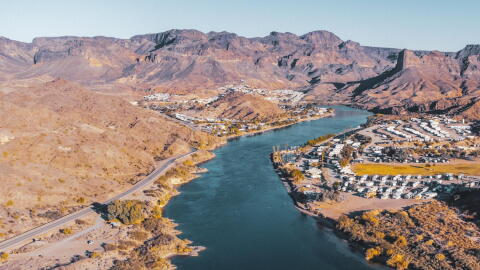 Getty Images/StockWhile the future of Colorado River as a river source is dim, both state officials and private companies, including Amazon, are stepping up to the plate to help save its remaining reservoirs.
-
 Getty Images/Corbis Documentary RFThe Greater Phoenix Chamber of Commerce is trying to help certain Valley companies find a new pipeline of workers by connecting them with high school students.
-
 Sky Schaudt/KJZZThis professor has focused her career on workers, retirement, unions, inflation and more. Her most recent project analyzes the quality of work-life in Arizona and how it compares nationally.
-
 Arizona State University's recent performance, which borders physical theatre and dance, will debut in Paris at UNESCO’s MOST Climate Summit.


Transcript
ANNOUNCER: KJZZ’s original production The Show is supported by Banner Health, Arizona’s largest nonprofit healthcare system. Last year, Banner reinvested more than $1.1 billion in community health and charity care. Banner Health, nonprofit for Arizona. bannerhealth.com/nonprofitforaz.
LAUREN GILGER: Hi, I’m Lauren Gilger, co-host of The Show, an original production from KJZZ. Every weekday, we bring you the latest news and culture from across the state. You can find much more at theshow.kjzz.org. Here’s today’s episode.
MARK BRODIE: Good morning, it’s The Show here on KJZZ 91.5 in Phoenix. I’m Mark Brodie.
LAUREN GILGER: And I’m Lauren Gilger. Coming up, a Maricopa County supervisor on why he hopes to appeal a judge’s ruling to keep federal oversight of the Sheriff’s Department.
MARK BRODIE: And ASU’s theater program is heading to Paris to present at a U.N. climate summit.
LAUREN GILGER: But first, the U.S. Supreme Court handed President Trump another win late last week when the conservative majority revived a controversial immigration database that the Trump administration says is key to combating illegal voting.
Critics, however, say the SAVE database has mistakenly identified some eligible voters as noncitizens attempting to vote.
So, could this database be used here in Arizona heading into November’s elections, which are just weeks away? Sasha Hupka with Votebeat is here in studio now to tell us.
Good morning, Sasha. Thanks for coming in.
SASHA HUPKA: Good morning. Thanks for having me.
LAUREN GILGER: Let’s begin with the SAVE system, this big database, right, Sasha? This is an expanded version of this program that’s kind of up for debate right now in this particular court case. Tell us how it works.
SASHA HUPKA: That’s correct. So, when you look at SAVE, it’s this massive system or tool that has been used for years by the Department of Homeland Security. And initially, it was sort of created to check immigrants’ eligibility for public benefits, things like Social Security and food stamps.
Eventually, that sort of was expanded. People figured out they could use it for other things, right? And so in Arizona, for a very long time, our election officials have used the SAVE system, but they’ve used it in a very specific way, a very limited way, to check voter citizenship if they provided certain unique identifiers, like a naturalization number.
Then last year, the Trump administration expanded this database to allow it to be used as a mass voter verification tool. And so the main component of that was allowing it to be used such that an official could input somebody’s Social Security number or, in many cases, a mass batch of Social Security numbers and receive back some sort of indication as to whether that person was a citizen or not. And so since then, we’ve seen it be used in this expanded way, and that’s what the courts have been weighing in on.
LAUREN GILGER: OK. So, when we say that this system has incorrectly flagged some voters as illegal, how big of a problem is that?
SASHA HUPKA: That’s a very big problem because I think initially, when election officials in various parts of the country started putting in voters’ information, some of them, I think, expected that just implicitly they could trust this system, that whatever it handed back would be the truth.
And, you know, here in Arizona, we require proof of citizenship upon registration, but in many other states, that’s not necessarily the case. Voters there sign under the penalty of perjury to attest to their citizenship, but they’re not actually required to hand over a passport or anything like that. And so it’s sort of been more of an unknown, potentially, in other states than it has been here. And when these election officials heard back from SAVE like, “Hey, these people aren’t citizens,” some of them, including in Texas, took steps to actually cancel these people.
But then the problem is, if you then find out, “Oh, that person was in fact a citizen. They are an eligible voter,” you land yourself in a position where you’ve potentially disenfranchised somebody, right? Because you canceled or took steps to begin to cancel their registration.
LAUREN GILGER: So that was happening to some people. Now the Supreme Court is allowing the program to be used again before this election, and this came after a lower court judge had put it on hold. There was a dissent in the Supreme Court decision. Tell us what the three liberal justices had to say here.
SASHA HUPKA: Yes. So, there was a dissent. We saw that these justices were really concerned by what had happened in Texas, Missouri and other states. And they felt that, you know, the potential of harm that this system had to the voter really outweighed its benefit to the government. And so based on that and privacy rights, they dissented and said, “You know, we would not have allowed the Trump administration to move forward with using this expanded database.”
LAUREN GILGER: OK. So, what does this mean heading into the midterm elections, which are not far off here, Sasha? Will this be used in Arizona in this kind of mass way?
SASHA HUPKA: Not in a mass way. And the reason why is because there is a federal law that essentially prohibits that within 90 days of an election. Currently, we’re sitting at about 30-something days out. We’re a few weeks out from the general election.
And so we’re in essentially a blackout period for mass removal of voters from the rolls. Election officials will be able to use it, though, in an individualized way, similar to the ways in which they were using it previously to confirm certain people’s citizenship. They will still be able to do that.
LAUREN GILGER: So, what does Secretary of State Adrian Fontes have to say about this? Will he be using this heading into the election?
SASHA HUPKA: Well, I think Fontes would maybe make the point — and to be clear, I don’t want to speak for him here, but I have heard him make the point — that, you know, we were already using this. It’s just that the way in which this has been expanded and the ways in which it could be used in a mass way was different.
And so, you know, if you look again at that federal law, we’re within that 90-day period. You’re not going to see before the election there being mass removals of voters. And in fact, even prior to this getting blocked by lower courts and then this Supreme Court decision, you only saw two Arizona counties that had used this in a mass way. They used it very differently: Maricopa and Yavapai.
Maricopa County used it to flag about 200 people on the voter rolls who Recorder Stephen Richer said he thought were not citizens, but he’s never answered questions about whether he vetted those people. And so there’s a concern that a lot of those people very likely are citizens.
And then you saw in Yavapai Recorder Michelle Burchill used it, but the way in which she used it, she did go back and really vet these people and found only a very small number of noncitizens on her voter roll who were, of course, then cancelled. She did also find, though, that the tool could be used to flag dead voters and that there are other sort of ways in which you could responsibly use this tool.
So, you know, there’s sort of a double-edged blade when it comes to SAVE. On one hand, it’s not reliable, and so no one should just be taking its conclusions at face value. That can cause great harm. On the other hand, I think that Arizona, in terms of how it’s used this system in the past and also the ways in which Yavapai County used it, is a good example of how it could still be helpful. You just have to be careful with it.
LAUREN GILGER: You have to be careful with it. All right, lots to watch for going forward. Sasha Hupka with Votebeat joining us. Sasha, thanks so much, as always.
SASHA HUPKA: Thank you.
MARK BRODIE: A federal judge earlier this month rejected a request from Maricopa County to end oversight of the County Sheriff’s Department.
That oversight, including a court-appointed monitor, stems from a 2007 lawsuit over racial profiling practices of then-Sheriff Joe Arpaio.
But in his decision, Judge Murray Snow cited statistics that showed Hispanic drivers are still 40% more likely to be pulled over by MCSO deputies than white drivers, and that those traffic stops last longer for Hispanic drivers.
Tom Galvin is one of the Maricopa County supervisors and wants to see an end to the federal oversight. Galvin stopped by the studio recently to talk about this, and I started our conversation by asking for his reaction to the judge’s decision.
TOM GALVIN: Yeah. Well, first of all, I just want to provide a little context for your listeners: is that the Maricopa County Sheriff’s Office has been under federal oversight for probably about 13, 15 years, maybe 12 years.
This action was taken by the Maricopa County Board of Supervisors, in our role as controlling the power of the purse. We set out the budget for all county departments, including the Sheriff’s Office. So, we’re the ones who filed what is called a Rule 60(b) motion. It was not the Sheriff’s Office, but we did it because we believe it infringes on our powers. Frankly, we’re not surprised by the decision, and I hope that we pursue an appeal.
MARK BRODIE: OK. Now, the judge did say that there might be some wiggle room to undo some of what the monitors are doing or make some changes there. Does that seem like a fair middle ground to you?
TOM GALVIN: No. We need to go for everything we’ve asked for because everything we’ve asked for has been very reasonable. The whole basis of this federal oversight was that when Joe Arpaio was sheriff, he lost the lawsuit. And the basis of the lawsuit was that he promulgated policies, including racially discriminatory traffic stops.
But since then, we have had three sheriffs, including in both political parties. All of these sheriffs have been elected by the voters in Maricopa County, including a sheriff who ran against Arpaio and got him out of office. So, in my opinion, in the United States of America, the voters decide how things should go, and to me, the voters have decided who runs the Sheriff’s Office.
Not one sheriff since Joe Arpaio has promulgated policies that are racially discriminatory. There is no policy today at the Sheriff’s Office that says you’re going to do traffic stops based on racial differences. So, for that reason, we believe the judge should have granted us relief from these federal oversight matters concerning and pertaining to the original basis of the lawsuit.
MARK BRODIE: The judge, though, did point to evidence that while there might not be a policy as there was during the administration of Joe Arpaio, that there are still some racial disparities happening with traffic stops, which was a big reason in his decision to not get rid of the monitor, get rid of the oversight, basically saying, “Look, it’s still kind of happening here, and there’s no reason to think that absent this monitoring, it won’t go back to happening.”
TOM GALVIN: Those are basically just on statistics, but you have to look at the basis of the lawsuit: the policies of the department. The current sheriff does not have any policy directing or instructing his deputies to perform traffic stops for racial discriminatory reasons. And the monitor himself said the difference in arrest rates is, quote, “not associated with bias,” unquote.
So, for those reasons, you can have all different reasons of why statistics might come out that way, but you have to go back: Does the Sheriff’s Office enact racial discriminatory policies? They do not. In fact, they got rid of them. Paul Penzone was sheriff; he got rid of any policies that Joe Arpaio had enacted. And the two subsequent sheriffs, including [Russ] Skinner and now Jerry Sheridan, the incumbent, haven’t returned them. So, they’re not doing that at the Sheriff’s Office, and that’s the whole basis why we filed in court. And we’re doing so on behalf of the taxpayers. It’s very expensive.
MARK BRODIE: So, does it come down to you then that the basis of the lawsuit were these specific policies, maybe not so much the end result? Like, if the end result is still kind of happening, but it’s not because of specific policies, to you and your colleagues on the board — most of them, anyway — that means that the oversight should be done with?
TOM GALVIN: Yeah, because the basis of the lawsuit were the policies. The policies were in place. Not one person in Maricopa County today supports, advocates for, or is implementing those policies, whether that’s the sheriff, whether that’s the people that report to the sheriff, or whether that’s the Board of Supervisors, who provide the power of the purse — we provide the budget to the Sheriff’s Office.
And if any elected official had enacted in any activity that I would believe violates the constitutional rights of our citizens, I, for one, would be opposed to funding those programs, and I believe my colleagues would as well. So, what we told the judge is the Sheriff’s Office is not engaging in racial discriminatory practices. The federal oversight for that matter should be revoked.
It is costing us tens of millions of dollars a year. The monitor himself makes $2 million a year, which I think is absolutely outrageous. And for this, this is why I’ve been fighting for the taxpayers since I announced the initiation of this lawsuit last year.
MARK BRODIE: Do you think that there need to be more, if not direct policies, maybe more initiatives within the Sheriff’s Department, given where the numbers are in terms of the drivers who are stopped, the length of time that they are stopped, what those statistics say? Does there need to be more of an effort to try to bring those numbers down?
TOM GALVIN: OK, if we do, then we would need to spend considerable resources to do that, but right now we’re spending them on compliance. And we’re spending on compliance for matters that have been taken out 10, 15 years ago.
So, I would love to address those issues, and this is the problem that I have: is that I believe certain aspects of this federal oversight are actually hurting the people that they’re meant to help, for that reason, based on your question.
MARK BRODIE: OK. So, the judge, as I referenced, mentioned that there could be some places to reduce oversight. If the appeal is unsuccessful, would you be up for looking for ways to maybe reduce some of that oversight, maybe reduce some of the costs?
TOM GALVIN: Any relief. I think we are overdue. There’s been a fight over how much this has cost. Some people said it’s been $100 million. Our budget office says it’s been north of $300 million. But for me, I measure it in terms of years. We’ve been under oversight for 13 years. It’s way too long.
MARK BRODIE: So, it sounds like you are confident that if the oversight were to go away, that there would not be any more discrimination, stops of motorists of particular ethnicities, any more of that than there is now, and ideally, there would be less. Is that — I don't want to put words in your mouth.
TOM GALVIN: Well, right. I would compare it to any law enforcement agency in the country that is not under federal oversight. You can never guarantee perfection on the actions of human beings, but at the same time, it’s under our control whether or not to endorse policies that are explicitly and proactively discriminatory or violating constitutional rights.
And I don’t think you or any of your colleagues in the media could point to any policy right now, official policy of the Sheriff’s Office, that tells employees or deputies to violate constitutional rights. It just doesn’t exist. So, for that basis, I think the monitor has done his job. I think the federal judge has done a tremendous job of changing the culture of the Sheriff’s Office.
But what we had with that sheriff at the time was a very unique situation with a very unique individual who, frankly, was attracting a lot of national attention, for good and for bad. The three sheriffs since then, I have seen, are not, you know, media glory hounds. They know they have a very serious job. They care about their employees at the Sheriff’s Office. I care about the employees at the Sheriff’s Office. This has affected morale. This has affected recruitment. This has affected attrition. All of those things.
Last year, we enacted the biggest pay increase at the Sheriff’s Office in more than 15 years under my chairmanship. These are things that I care about. You want the best and the brightest in that agency. So, even if you remove the federal oversight, it doesn’t necessarily mean that those abusive policies would be enacted the next day, and no one would be supportive of that. And ultimately, once again, politicians are subject to the voters’ wishes. You would have to defend your record and your policies at the ballot.
MARK BRODIE: OK. That is Maricopa County Supervisor Tom Galvin. Tom, thanks a lot.
TOM GALVIN: Thank you so much.
LAUREN GILGER: Good morning, it’s The Show on KJZZ 91.5. I’m Lauren Gilger.
MARK BRODIE: And I’m Mark Brodie. Coming up, a performance art project examines the era of human activity and its effect on our planet. We’ll hear from the creator of "Anthropocene" before she heads to a UNESCO climate summit in Paris.
LAUREN GILGER: ... We’ve all heard how dire the future of the Colorado River is, especially for us who rely on its water here in Arizona. But just how much would it cost to help save it? And who should be ready to foot the bill?
Well, the state and just about every municipality in it are getting ready to shell out a whole lot in water conservation efforts. And now, one big player in the private sector is stepping up, too: Amazon. The online retail giant has pledged $20 million to water-saving efforts in Arizona and California as part of a longer-term effort.
KJZZ’s Alex Hager joins us now with more on the plan and the role of private business in our collective water futures. Good morning, Alex.
ALEX HAGER: Good morning, Lauren. Thanks for having me.
LAUREN GILGER: Thanks for coming on. So, tell us more first, Alex, about this plan from Amazon to spend money on saving water here. What are they going to do?
ALEX HAGER: Yeah. So, what we know so far is that it’s $20 million out the gate. That’s going to fund a few different water conservation projects, perhaps most notably here, they’re going to upgrade irrigation efficiency with a tribe in northern Arizona that they did not name, citing some ongoing negotiations. And that is also part of a longer-term plan where they are creating this collaborative. I believe they’re bringing together a few different companies to join these efforts, and the goal there is raising $100 million for water conservation over the course of two years. And just to put this into context a little bit, this is a fairly significant amount of money from the private sector. I can’t say conclusively that it is the, you know, single largest corporate tranche of money for ... water conservation, but it is certainly the largest in recent memory for me.
LAUREN GILGER: Yeah. OK, so let me ask you about this quote from Amazon that you reported, Alex. They told you that, , “Companies that benefit from being in that basin have an opportunity and really a responsibility to help solve those problems.” So, I want to talk about that responsibility from the private sector, what it means, how much have private businesses gotten involved, for example, in helping with kind of the water shortage on the Colorado River, Alex — which really impacts businesses, too, right?
ALEX HAGER: Yeah, we’re seeing it more lately. And, you know, I was skeptical of this sort of thing initially, both Amazon’s announcement and when I started hearing other companies do this a few years ago. You know, it’s not every day that large corporations act purely out of the goodness of their own hearts.
So, I talked about this with the head of a group called Business for Water Stewardship. It’s an organization that really is focused on rallying money from private companies for this kind of thing, for water conservation. And, you know, over about five years, they rallied about $30 million for water conservation projects.
And the head of that group told me they’re mainly doing it for two big reasons. They see risk. And the first is operational risk. Basically, if you are building big factories, or shipping hubs, or any kind of large industrial infrastructure, if you’re putting it in a place where you want it to operate long-term, it is going to be a problem if there is not a long-term water supply. So, the first thing is they’re trying to mitigate that risk.
The second thing is reputational risk. And the idea there is that as this water crisis is getting bigger, it is attracting more attention and a lot of hard opinions. We’re seeing it showing up in campaign ads now, right? ... And I think the idea there is that companies know that if the water crisis becomes big enough that everyone has an opinion about it, they want to be part of the solution rather than the problem.
I mean, we’re seeing this with data centers right now, right? I mean, there’s companies that now have a significant amount of risk in terms of setting up data centers in communities because those communities are so concerned about their impact to the water system that they might protest the construction of that. So, companies, I think, are looking to make sure that they can operate for a long time, and then people will let them operate for a long time.
LAUREN GILGER: A balance there, for sure. OK. So, let’s put this into context, though, in terms of how much money this is, right? Like, this is, as you say, a significant investment from the private sector, $20 million, part of a larger thing overall, right? But how much money might it take, Alex, to really save enough Colorado River water to like make a dent? It’s so dire, right?
ALEX HAGER: It is going to take a lot of money. When we talk about saving Colorado River water, there’s a few big ways that we do it. Typically, it is paying farmers, very large agricultural users of water, to just pause growing. A lot of times, it is paying cities to save maybe a little less water by making their systems more efficient or reducing leaks in some of their pipes.
All of those programs cost billions of dollars. We saw the Inflation Reduction Act under the Biden administration ... allocated $4 billion for those. That money is still on its way out the door in some cases, and we have just seen new calls for another $2 billion. So, $20 million is a relative drop in the bucket. But the federal government might not be able to foot this bill by itself, and I wouldn’t be surprised if we see more money from more places kind of chip in to this water conservation work.
LAUREN GILGER: So, most of that money, as you’re saying, comes from governments, taxpayers, things like that. I mean, like, you mentioned some of the ways in which we can and are paying people to save money in various ways in city or ag, right? But I mean, like, can you save enough? Like, how much is it just that we are too many people and too much going on in this region?
ALEX HAGER: That is the big question. You know, right now, one of the big questions for the Colorado River going forward is how much can we cut back on water through a voluntary basis where people get to choose how much they cut and when and then get paid for it, and how much is this problem big enough and expensive enough that it will be significantly easier for big governments to find some way through a way that doesn’t get them sued to force people and businesses to use less water.
LAUREN GILGER: Yeah. OK, so Amazon says that this plan, they know like isn’t going to solve the whole problem here, but it does seem like it’s part of this bigger effort. Talk a little bit about their long-term goal. They use the word momentum.
ALEX HAGER: Yeah, I think the big thing that we see in that regard is, you know, sort of the “teach a man to fish” approach, right? Is that one of the ways that we can save water is by paying people right now to guarantee that they will use less water for say, two years. Or ... you can give them money for some sort of project that kind of guarantees repeated savings. So, instead of just using less, it is coming up with infrastructure that just uses less by itself — like programs that are more effective at detecting leaks or sprinklers that use less water to grow the same amount of crops or grass on someone’s lawn, that kind of thing. So, I think what they’re alluding to here is the idea that they could get a lot of value out of putting money into these projects that have kind of year-after-year returns.
LAUREN GILGER: ... Is water augmentation a part of this conversation ever, Alex, from the business side?
ALEX HAGER: Not that I have heard yet. Most of this seems to be concerned with saving water in places that are already using it. I’ve seen other companies give water for, you know, agricultural equipment that is automated. So instead of having to go out into the field and turn a crank to shut off the water, you can do it with the touch of a button and you save water in the amount of time it takes you to do that. But I have not yet heard of corporate money going towards augmentation projects.
LAUREN GILGER: All part of this larger conversation. All right, KJZZ’s Alex Hager. Thank you so much for coming on, Alex. Appreciate it.
ALEX HAGER: Thanks for having me.
MARK BRODIE: The Greater Phoenix Chamber of Commerce is trying to help certain Valley companies find a new pipeline of workers by connecting them with high school students.
The ElevateEdAZ program focuses on high-demand industries, including advanced manufacturing, construction, financial services, health sciences, and IT. Isabel Gonzalez, vice president of ElevateEdAZ, says the goal is to close that talent gap many of these companies are facing.
ISABEL GONZALEZ: What we’re trying to do is connect more employers who say they’re struggling to connect, identify and retain talent. And we’re sort of helping them with the solution and acting as a single point of contact or entry point with tapping into high school talent.
MARK BRODIE: Gonzalez says this is a talent development strategy as well as an economic development one. She says Arizona has talented high school students, but that they might not know about certain industries, even if they’re looking to hire.
ISABEL GONZALEZ: We really think about making sure that while we are seeing a lot of folks come into Arizona and we’re importing a lot of talent, we really want to grow our own and make sure that our employer current and prospective businesses that want to come into the state can see a plan and systems in place that help develop the talent that they need.
MARK BRODIE: ElevateEdAZ is currently working with more than 20 schools and about 100 businesses, including the one owned by Rick Stone. He’s the founder and CEO of S Stone Solutions and Research Collective, which does human-centered design focused on applied research, development, and system optimization. For example, his firm would think about how a soldier might interact with their equipment and how that can be done more safely and efficiently.
Stone stopped by the studios earlier, and I asked how long his company has been working with the ElevateEdAZ program.
RICK STONE: We started fall 2025. Brought on two interns spring of 2025. We grew that cohort, added another intern, and they were all focused on human systems engineering and software testing.
MARK BRODIE: What appealed to you about bringing in high school students to do this?
RICK STONE: I thought it was a great way to support the community. I’m from Phoenix originally, and I would have loved the opportunity to have the ability to go to a company and learn these kind of skills, learn these new types of engineering. So, the kids that I had come in for that 2025 cohort were software and aerospace. They’d never heard of human systems or human factors, so for them to get exposed to that and see how it ties into their specialties was extremely novel and something that, for me, I find personally gratifying. I mean, you know, I have a daughter who’s also in high school now, and I’d love for her to have opportunities like that. Unfortunately, her school isn’t part of the program — and then I have a younger son who maybe in the future his school will be part of that program and we can keep growing. But I think it’s critical for these kids to have the ability to work in, you know, an organization, see how they fit inside the machine, and then how, even though they are an intern, they are having an impact on the output of that organization.
MARK BRODIE: Did you find that they were beneficial to your company?
RICK STONE: A hundred percent. So, for this cohort, I had them do a lot of human factors work, so they did a lot of interviews and design. So, I had them interview several user types. It helped with their ability to, you know, speak publicly, to not be afraid to ask questions. And then I had them make designs of a new software. We had already been making the software, so we already had something that was pretty far down. We’ve been, you know, at that stage at a pilot working on it.
At the final event for their cohort in the spring 2026 before they graduated, they presented their design, and we invited their families to come see it. And some of their designs were something we never thought of, and that we actually took those components and put it into the core software that we flushed out. And that’s, you know, partially because they’re high school students. They’re not afraid to ask those questions. They’re going to ask questions that maybe an adult might think is obvious, and they’re getting these different perspectives, these kind of new way of looking at things that can really bring a fresh set of eyes to whatever project they’re working on.
MARK BRODIE: Have you brought on more interns for 2026?
RICK STONE: Yes. So, this current cohort, I have three students, and I’m probably going to keep the same three for the fall and spring. And they’re all seniors in high school.
MARK BRODIE: So, do you find that in general you have trouble finding workers, like for your company or specifically or broadly in your field?
RICK STONE: Yes and no. Where I see the ElevateEd really being helpful for the workforce as a whole is when you bring on employees fresh out of university who don’t have that experience, there’s a lot of things that just aren’t taught in school. So, having these kids go through, and then when they graduate college, assuming they take, you know, no other internships, I feel like they’re going to be much better prepared even just basic, I’d say office etiquette.
You know, they learn very early on: don’t call your boss, “Bro.” ... Things like that. You know, it’s funny, but you see college kids doing it. When they finished, they were, you know, very professional. They learned how to speak and make a point without fear of being rejected, and that’s what I find difficult to find in younger people sometimes where, you know, they’re so kind of nervous or they don’t know how to have those interactions.
MARK BRODIE: I would think even basic things like you mentioned, like how to talk to your boss or your coworkers, how to dress in an office, or maybe things that some high school students haven’t experienced before.
RICK STONE: Oh yeah, those are all, you know, things they learn very quickly.
MARK BRODIE: Are you hoping or planning at some point to hire some of the people that you’ve had in as interns?
RICK STONE: Oh, 100%. Yeah, if they come back to the Valley. One of them, she got a full ride to NYU. You know, very proud of her. You know, she ever wants to come back, definitely a very talented engineer. One of the other ones went to Chicago. If he ever comes back, definitely hire him in a heartbeat. Both extremely talented hard workers.
MARK BRODIE: In terms of the actual content of not so much like the learning how to be in a workplace, but like what it is that you do, how prepared were these students when they first walked in your door?
RICK STONE: That’s a interesting question. I would say they were prepared to have an open mind. None of them were familiar with that branch of engineering or science. They were familiar with software testing, but they never executed on it. They knew what they knew from school. What they learned in school in their engineering courses were more of those traditional, you know, coding, some basic electrical, mechanical, 3D printing.
The hard part of interviewing and pulling requirements from a user, they had never done. So, from that perspective, I don’t think they were particularly well prepared, but it was also something that they knew coming in. This is a skill they wanted to learn, or they wanted to know more about this branch or, “Hey, this is maybe something I want to do in the future,” and they adjusted very quickly.
MARK BRODIE: Rick Stone is founder and CEO of S Stone Solutions and Research Collective, based in Phoenix.
MARK BRODIE: Good morning, it’s The Show on KJZZ 91.5. I’m Mark Brodie.
LAUREN GILGER: And I’m Lauren Gilger. Our next guest this morning has spent her career focused on workers, retirement, unions, inflation and more.
Teresa Ghilarducci is a labor economist, author, and professor at The New School for Social Research, where she directs their Wealth Equity Lab. Right now, she’s a visiting professor at ASU’s Center for Work and Democracy, overseeing their latest project on the State of working Arizona.
She told me she started the project because there were a lot of reports about how businesses and the economy is doing, but workers are a big part of that picture. So they’re spending the year looking at how workers are doing in our state — from pay to worker protections to health insurance coverage and the employers and their ability to pay workers.
So, how do we stack up?
TERESA GHILARDUCCI: Actually, good and pretty bad. There’s one area that Arizona does very well in, and that is the low end of the wage scale, because the minimum wage was increased in what, 2016? And it was indexed to inflation. So that has meant that Arizona has one of the highest minimum wage in the country, and certainly one of the highest relative to the typical wage.
So the Arizona minimum wage has a real effect on making life affordable for low-end workers. Our preliminary research shows that kind of the number of working poor people is a little lower in Arizona, meaning you, in many places in this country, you can work full-time and not be able to lift yourself above the poverty level, much less a kid or two.
The metric of the percentage of people who are working and are still poor is pretty low in Arizona. You know, and that really helps the businesses where low-income people shop. You know, there’s a lot of multiplier effects when you raise the wages for people at the very bottom.
LAUREN GILGER: OK. So, that’s the good side. What about the other side of the argument here?
TERESA GHILARDUCCI: Yeah, so we really rank low in terms of worker protections or the rights of workers to have a voice in what their what their standards are. So for the typical worker, there’s hardly any way for a typical worker to raise their wages, their health insurance, their sick leave protection and their retirement.
LAUREN GILGER: That’s interesting, right? That history in the state goes back so far, right? Like, this has been the ethos of the state for so long.
Is this part of that kind of catchphrase you’ll hear all the time in Arizona when all of these issues come up and they’ll say, “Well, we’re a right-to-work state, so that’s not going to fly here.” What does that mean for folks?
TERESA GHILARDUCCI: Yeah, exactly. Right, it’s this kind of knee-jerk, ideological position, rather than anything else. And just for you to know a little bit about me, I am really interested in mining — gold mining, coal mining, extractive mining, any mining. I’m quite interested in the working conditions and also the technology of it. So, Arizona absolutely fascinates me.
LAUREN GILGER: Yeah, lots of mining here.
TERESA GHILARDUCCI: Yeah, lots of mining here, and the state was really founded between the fight between the copper mine owners and everybody else. So the conflict between labor and companies and the community and mining companies has really does define the attitude and the the very existence of Arizona as a state, not a territory.
And the verdict is that most of the time the mine owners are very powerful, and they’ve won. Mining is an industry that either you extract profits or you pay your workers and you help protect the environment. And the more you pay workers and protect the environment, the less profits there are. So it’s a very kind of crude industry for that reason.
And so it’s too bad that the attitude toward unions have been set by a mining industry, and it really should update its attention to worker protection and to to higher wages and even to rights.
LAUREN GILGER: Right. But you’ll hear in the state, right, that that the lack of unions — only 4% of workers in the state are unionized, about there — lots of folks here will say that’s a good thing in terms of economics. Like, opponents will say you can’t force people to join a union and pay union fees, they’re against collective bargaining and being required — and that this kind of creates a more business-friendly environment, right? Like, it attracts new businesses, creates more jobs, that kind of thing. I’m guessing you disagree with that, but tell us why.
TERESA GHILARDUCCI: Yeah. I mean, if it were true that being hostile to unions and being a low-paid state was good for business, then Mississippi would be the richest state in our union. You know, it turns out the correlations don’t even work.
Places in this country and also in this on this globe that actually have a healthy balance between profits and workers’ pay are among the richest places on the planet. So, for instance, New York and California probably produce the most productivity of any of our states, Illinois is up there in terms of just the value added for their own GDP and for the kind of innovation and being leaders in the globe in terms of economic sectors, and they have among the the highest levels of unionization.
LAUREN GILGER: You’ll also argue, right, that there’s an employer case to be made for high work standards for workers.
TERESA GHILARDUCCI: And this is where I put on my hat as an educator. I’m a labor economist. I’ve taught labor economics, you know, for over four decades now.
And so I am deeply in the research on the research question that is probably the oldest in labor economics, which is: What is the relationship between high pay and worker voice and the health of the employer that’s affected, of the industry if many of the employers are organized, and for the health of the economy, for the nation’s economy? And the results are not mixed. The evidence really points to a strong, positive relationship between high pay, dignity at work, and productivity and profitability for the company.
What are the pathways? The main pathway is that workers stay on the job, that you really reduce turnover, you get something called loyalty. And with loyalty, you get more worker effort, you get workers actually participating in the processes at work.
You know, workers know more than any supervisor could know, or management in the C-suite. And so if you can actually get workers to reveal that knowledge about how things could be done better, then you get higher productivity.
Work is a lot more complicated now than it was when you just had people harvest or mine. Workers have a lot of relationship with the customers, workers have a lot of judgment on the job, and as work gets more and more complicated, that will increase.
And so having a loyal workforce around you has real payoffs. There are so many ways that that’s been studied, but over 200 years of research — and a lot has happened in the last 10 years — labor economists will, and so will business professors, will agree that there is a positive relationship between high-performance workplaces and profitability.
LAUREN GILGER: Yeah. All right, we’ll leave it there. Teresa Ghilarducci joining us. She’s a labor economist and author, the Bernard L. and Irene Schwartz Chair of Economic Policy Analysis at the New School for Social Research and director of the Wealth Equity Lab there. She’s in Arizona now working with the Center for Work and Democracy at ASU overseeing the State of Working Arizona project. Teresa, thank you so much for coming on The Show. I appreciate it.
TERESA GHILARDUCCI: It was so great to meet you and to have this intelligent conversation. Thank you.
MARK BRODIE: Good morning, it’s The Show on KJZZ 91.5. I’m Mark Brodie.
LAUREN GILGER: And I’m Lauren Gilger. “Anthropocene” is a big idea. It’s a contested term in the scientific world, a proposed geological epoch that’s defined by our own human activity on the planet.
And it’s the title of our next guest’s latest project, a decadeslong endeavor that tackles consumption, climate change and human progress.
Rachel Bowditch is the performance’s project director and co-vision keeper alongside Karen Jean Martinson. She calls the show physical theater rather than dance. And it’s headed to Paris this week, where they’ll perform it at UNESCO’s MOST Climate Summit.
I spoke with Bowditch more about the project, and she told me the road to creating this show has been long and winding.
RACHEL BOWDITCH: I was living in New York City, and I went to see an exhibit at the Historic Society. And there was a little installation of a New York coffee cup with a bagel, and next to it was all of the things that it took to make the bagel, to do the coffee, from the fuel, to the water, all the things that everyday New Yorkers took for granted, sort of the DNA of consumption. And I remember thinking, “I want to make a piece about this somehow,” but I didn't know what it was.
And then flash forward, I was doing a workshop with Moisés Kaufman, and we were working with AI and the concept of AI. And I built a scene using our cellphones with people having intimate conversations with Siri. “Siri, tell me you love me. Siri, hold me and tell me everything’s going to be OK.” And I just had a vision of actors in these various boxes, all isolated in their own worlds.
And so I knew I wanted to make a play with people in these boxes, scenically, but I didn’t know what that was. Flash forward to 2018, I was at Harvard as a fellow, and they brought someone in from the United Nations to talk about the climate crisis. And she kept using the word anthropocene, anthropocene. And I remember not knowing that term and looking it up on my phone, saying like, “What is that term?” And it’s the current geological age that we’re in.
It’s a contested term. Scientists are arguing that we’ve entered into the Anthropocene. Prior periods are the Holocene, Pleistocene, these various eras. But we’ve entered into this new era where the geological record is being impacted by humanity.
LAUREN GILGER: More than anything else.
RACHEL BOWDITCH: Yes. And so when I heard that term, I said, “That’s an umbrella term for these complex ideas from sustainability to chains of consumption, descalation of consumption, all of the complexity of our current moment.” And so I said I want to do a performance around this, and I had a class at ASU where we investigated the term anthropocene. What is it? And then I presented it to our main stage season at ASU in the theater department, and Karen Jean Martinson was like, “Do you need a dramaturg?” And so she joined the project, and since then we’ve been really co-vision keepers of the project.
LAUREN GILGER: This has been a real evolution like over your entire career, almost, of creating this thing. So, tell us for this radio audience that is only listening to this, what does this look like? It’s really, it’s striking. You’re talking about movement, some dance, some other types of movement. You’re talking about lots of lighting, sound. What’s it like?

RACHEL BOWDITCH: Yeah, we wanted to make a play that was visually striking, and so we’re not doing psychological realism where characters are talking to each other. We are doing a piece where there’s a lot of visual dramaturgy, so there’s a lot of visual images. So, we have a media designer, sound designer. The whole thing has this beautiful soundscape, and we work together to create a rich visual world with a three-story set. There’s projection surfaces, and the screens open and close, revealing and concealing the actors.
We built a world in which every character — there’s 12 actors — plays five or six roles. So we see a flash of a character throughout history. So, the mother, there’s a character who’s a mother, we might see her and her daughter, and then we see her in the Industrial Revolution, then we see her in the 1950s, then we see her in fast fashion. So, we see sort of these historical continuums that are threads interweaving.
And one of the key points during the development of this is our media designer said, “If you make a play about everything, you make a play about nothing.” Because “Anthropocene” is such a big concept, so we really honed in on that, and were asking ourselves, “What is this play about?” And so we decided that it was about the story of the escalation of consumption through time, looking at historical patterns, starting from the Silk Road, the first East-West trade route, all the way into where we are now, fast fashion, and we’re sort of hurtling ourselves off this edge of consumption where, if we keep going in this direction, it’s not a good scenario.
So we actually perform a collapse scenario where at the end of the play, the stage is full of boxes and plastic and Amazon boxes and plastic is falling from the sky, and then boom, all the actors collapse, and there’s just this moment of rebirth and reemergence. The idea is leaving the audience with this sort of gut punch of, “How am I going to contribute to this?” or, “How am I going to make change?”
LAUREN GILGER: Wow. So, quite a commentary there. And like, you’re talking to the audience in a very specific way, it sounds like. Talk about the costumes here. They’re very striking. You can recognize parts of them as you watch it: Target bags, Starbucks cups in there, right?
RACHEL BOWDITCH: The most elaborate costumes are from the Silk Road, where they’re wearing these very elaborate, beautiful dresses — men in dresses, as people say. And then in the fast fashion section, we took Target bags and created these elaborate costumes, basically hot-gluing Target bags together in a way to sort of illustrate fast fashion, consumerism.
And there’s a whole section with plastic ocean, plastic rain. One of the actors has this big piece of plastic and wraps it around their waist like a dress and is playing with plastic, and it becomes very beautiful, but at the same time, it’s a commentary on all the plastic.
LAUREN GILGER: So, you described it really beautifully, but the impact of this, I wonder about reaction from audiences, right? You’ve been working on this in various iterations for so long. And I think at a time in which people have become much more aware of some of these themes, not just climate change and consumption, but definitely fast fashion, the amount of plastic, the plastic island in the ocean, right, that we hear about these days. What do you hear from folks who watch this?
RACHEL BOWDITCH: I think one of the best reactions we received was we were doing a designer run with our crew who were going to be backstage, but they were watching the show beforehand. And a couple of them afterwards said, “I need to go reconsider my life.”
And that for so many, all the way from the performers, we have them all make a sustainability commitment, and they have a sustainability buddy where they make a commitment: “I’m not going to use plastic bags. I’m going to ride my bicycle instead of drive my car,” making these commitments to each other. So, that started with the cast becoming more conscious, all the way to me and my collaborator, like, we got solar on our house, we drive hybrid cars, I compost, like, we’re trying to do that within our own lives. And then with our audience members, so many of the audience members afterwards were saying how impactful it was and just going back to think about what they could do in their own habits and their own lives.
LAUREN GILGER: So, it’s changed things drastically for you, for the people involved in this, for the people who see it.
RACHEL BOWDITCH: Yeah, and we got a lot of incredible feedback of, you know, “Take this beyond Arizona,” and, “This should tour nationally.” So, we’re getting a lot of that feedback as well, which has been helping us with our fundraising to be able to bring this to Paris. And who knows where that will take us beyond, because we’re performing for 35 different nationalities at the UNESCO climate conference. So, this could be the beginning of something much bigger.
LAUREN GILGER: Is that where you’d like to take it, somewhere much bigger?
RACHEL BOWDITCH: Part of us are, you know, we’ve been working on it for seven years, we’re like, “This is our last hurrah.” And then a friend of ours were like, “No, this is actually maybe the beginning of something.” So, we’ll see. Just going to let it unfold.
LAUREN GILGER: Rachel Bowditch, theater professor at ASU. Rachel, thank you so much for coming in. I really appreciate it.
RACHEL BOWDITCH: Thank you.
MARK BRODIE: Thanks for listening to The Show’s podcast. The Show is produced by Sativa Peterson, Nick Sanchez, Amber Victoria Singer, Athena Ankrah, and Ayana Hamilton. The Show was created by Jon Hoban. Our executive producer is Amy Silverman. You can find more of The Show and sign up for our newsletter at theshow.kjzz.org. You can also find us on Instagram @kjzztheshow.