


ICE has largely abandoned its plan to buy up warehouses here and around the country and turn them into detention facilities. A new report shows it has resulted in millions of wasted taxpayer dollars. Plus, a local painter on capturing the power of Arizona’s monsoon.
Ways To Subscribe


-
 Tia Dufour/U.S. Department of Homeland SecurityImmigration and Customs Enforcement has poured billions into expanding detention capacity under the second Trump administration, but a new watchdog report shows tens of millions of it were wasted.
-
 Jean Clare Sarmiento/KJZZThere’s been a lot of hubbub this election cycle about the “Democrats for Biggs” campaign signs being posted around the Valley in the lead-up to November’s midterm elections.
-
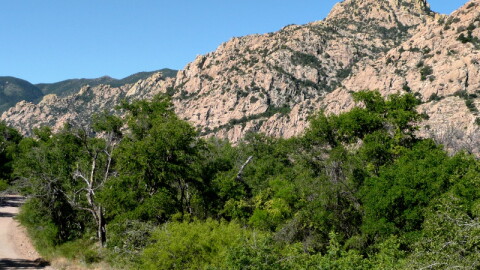 Charlie McDonald/U.S. Forest ServiceIt’s been more than 150 years, but a small piece of Arizona land has been returned to the Apache people. The Oklahoma-based Fort Sill Apache Tribe recently bought 55 acres of land in the Dragoon Mountains in Southeastern Arizona.
-
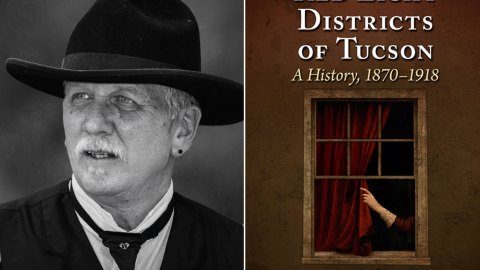 Karl Kjellstrom, McFarland/CourtesyRed light districts operated years after they were outlawed in Tucson. An Arizona historian explored in his recent book what these areas looked like and how women who worked there were treated.
-
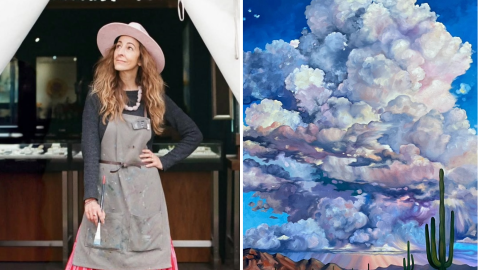 Alex Camacho, Tina Roy/CourtesyThe painter, whose artwork focuses on Arizona landscapes during its stormiest seasons, says her paintings are representative of life.
-
 Alan Curtis/CourtesyReality TV is designed to be outrageous, but writer Kim Tait thinks "The Secret Lives of Mormon Wives" has pushed past the boundaries.


Transcript
ANNOUNCER: KJZZ’s original production The Show is supported by Banner Health, Arizona’s largest nonprofit healthcare system. Last year, Banner reinvested more than $1.1 billion in community health and charity care. Banner Health, nonprofit for Arizona. bannerhealth.com/nonprofitforaz.
LAUREN GILGER: Hi, I’m Lauren Gilger, co-host of The Show, an original production from KJZZ. Every weekday, we bring you the latest news and culture from across the state. You can find much more at theshow.kjzz.org. Here’s today’s episode.
LAUREN GILGER: Good morning and welcome to The Show here on KJZZ 91.5 in Phoenix. I’m Lauren Gilger. Coming up, a group of Apache people are buying back a piece of their ancestral land here in Arizona. And there seem to be more misleading campaign signs on the side of the road this election season. Who’s behind them?
But first, Immigration and Customs Enforcement has poured billions into expanding detention capacity under the second Trump administration, but a new watchdog report shows tens of millions of it were wasted.
The report comes from within the government. The Government Accountability Office says under just one initiative, ICE spent over $1 billion purchasing 11 warehouses around the country to create more immigration detention holding facilities, including a controversial one here in Surprise.
But now the agency is moving to sell seven of those facilities, resulting in $20 million in non-recoverable costs. KJZZ’s Alisa Reznick has been covering it for our Fronteras Desk out of Tucson. She’s on the line now to tell us more. Good morning, Alisa.
ALISA REZNICK: Morning, Lauren.
LAUREN GILGER: OK, so I talked about one project there, just one that’s highlighted in this GAO report — these warehouses. That’s $20 million, they say, has been wasted. What else is in this report?
ALISA REZNICK: Right. Well, the report looks at six expansion initiatives ICE spent taxpayer funds on over the last year. So, there’s the warehouses, like you said, and then there’s some deals with the Department of Defense. The agency planned to detain immigrants on military sites around the U.S. and in Guantanamo Bay. Now, both those efforts either came to a halt or a major slowdown due to logistical issues — but not before the agency had already spent millions.
It also partnered with Florida to set up the tent facility known as “Alligator Alcatraz.” That shut down less than a year after opening because the agency had failed to secure environmental assessments and a contract before opening it. Now, as the GAO notes, Florida is being reimbursed through a FEMA fund for that site. So, that’s another avenue of wasted funds, as the report says.
Then there’s the initiatives the GAO says could result in waste, like ICE’s purchasing of existing holding facilities and a plan to use federal prisons to host or to house detainees, that is. Basically, the watchdog says these are shortsighted plans that could run into similar issues.
LAUREN GILGER: OK, so that’s just the latest of these kind of reports to come out though, Alisa. Just last week, you reported on a second internal government watchdog report that came out documenting some ICE misconduct. Tell us about that one.
ALISA REZNICK: Yeah, that’s right. This was a report that came out in August from the DHS Office of Inspector General. The office audits agency operations and makes recommendations for how to fix issues. Basically, they found that ICE’s Homeland Security Investigations, or HSI, is being pulled into immigration enforcement and away from anti-drug trafficking work.
This is a big deal because HSI is sort of this elite investigative unit within ICE. They’re usually tasked with doing these high-level, transnational criminal investigations into things like fentanyl trafficking, human trafficking and child exploitation. The result — the report found HSI offices across the country are spending just less time on all that. Specifically, they found fentanyl investigations decreased by 24% between 2024 and 2025. In fact, one HSI office reported approximately 99% of its work had shifted to immigration enforcement. So, obviously less capacity for fentanyl investigations.
Drug seizures by HSI were also down by almost 40% during the 2025 fiscal year. So, not to bog us down, Lauren, with too many numbers, but it’s important to note one more stat here. Despite the Trump administration’s assertion that it’s going after criminals, DHS’s own figures consistently show the majority of people — about 70% or more, in immigration detention — now have no criminal convictions.
LAUREN GILGER: What does all this have to do with Arizona, Alisa?
ALISA REZNICK: Well, we’re a border state and a lot of the fentanyl coming in from Mexico is coming in through here. Attorney General Kris Mayes’ office estimates more than half of all fentanyl seized borderwide is seized here, and federal data has also shown that those drugs are being found at official ports of entry, or border crossings, and often being smuggled by U.S. citizens rather than, you know, migrants in the middle of the desert. ...
So, Mayes argues the lack of attention to fentanyl interdiction impacts Arizona pretty heavily and the rest of the country in terms of allowing this dangerous drug to continue circulating. She wrote to DHS after this report came out basically asking for those HSI investigators to be put back into their drug interdiction and trafficking investigation roles.
LAUREN GILGER: This kind of narrative sounds familiar at this point, Alisa, like the idea that DHS has been reallocating resources, including staff, to kind of root out fraud instead of, you know, having them do the work that they’re normally tasked with doing. ProPublica reported earlier this summer that Homeland Security Investigations was part of a nationwide campaign to identify noncitizen voters, and that’s a force we just talked about — that’s normally tasked with combating drug cartels.
ALISA REZNICK: Right. So, just like we talked about with this dip in fentanyl interdiction efforts, this is another reshuffling of HSI staff to do stuff they’re just not normally involved in. The Trump administration has long maintained this assertion that noncitizens are voting in large numbers in U.S. elections, but we just haven’t seen a lot of proof on that front.
Like in July, DHS Secretary Markwayne Mullin said 250,000 noncitizens were found to have registered to vote in four states. But as Sen. Mark Kelly and other Democrats wrote in a letter to the agency this month, Mullin hasn’t provided evidence to that claim. In fact, another watchdog just sued DHS for that evidence.
And as you reported earlier this year, some FEMA staff who are normally in charge of setting up, you know, natural disaster response have been directed to plan immigration enforcement efforts instead.
And then there’s Citizenship and Immigration Services. You know, that’s the agency that handles all different kinds of applications, whether it’s citizenship, green cards, asylum applications, refugee applications. But some of those employees have had their work shift to examining and re-vetting old cases and looking for fraud. So, this has been really a trend across DHS agencies.
LAUREN GILGER: What’s the result of all of this, Alisa, on the work that DHS is kind of supposed to be doing?
ALISA REZNICK: Well, at USCIS, everything there is just taking longer. And we have to keep in mind that’s coming from an agency that has already dealt with a lengthy backlog, really, for years. In terms of FEMA and HSI, it just begs the question of whether the duties they normally perform are falling to the wayside. You know, and at least with regard to HSI’s fentanyl investigations, we already have some proof that it has.
LAUREN GILGER: Yeah. Last 30 seconds or so here, Alisa. What has the federal government had to say about any of this?
ALISA REZNICK: Well, not too much. The agency didn’t respond to my questions about the fentanyl investigations report, but DHS has repeatedly said it’s going after, you know, “the worst of the worst.” And an ICE spokesperson told me the same in response to the GAO spending report. He said the warehouse costs the report cited were appropriate and necessary for property transactions and said ICE is using existing detention space with state and county partners.
But it’s worth noting inside the report itself, ICE did agree with the GAO’s recommendations. They said they’d create a spending plan, but not till August of next year, which the GAO says will result in likely more waste during that time.
LAUREN GILGER: All right, we’ll leave it there for now. KJZZ’s Alisa Reznick, joining us from our Fronteras Desk in Tucson. Alisa, thanks for your reporting here. Appreciate it.
ALISA REZNICK: Thank you, Lauren.
LAUREN GILGER: There’s been a lot of hubbub this election cycle about the Democrats for Biggs campaign signs being posted around the Valley in the lead-up to November’s midterm elections. Andy Biggs is challenging Democrat Katie Hobbs for governor, of course. But no, there doesn’t seem to be any organized group of Democrats who are supporting the Republican congressman. The signs are, in fact, funded by Turning Point PAC, The Arizona Republic reports, the political arm of the conservative advocacy organization Turning Point USA. The organization has gone so far as to post deepfake images of Democratic state Rep. Lorena Austin putting up the signs. Austin did no such thing, they assured us. But our next guest this morning reports the Democrats for Biggs signs are just the tip of the iceberg this campaign season. TJ L’Heureux has the story for the Arizona Agenda and he’s here in studio now to tell us more. Good morning, TJ. Thanks for coming in.
TJ L’HEUREUX: Good morning. Thanks for having me.
LAUREN GILGER: OK, so you start this piece with an example of these kind of misleading campaign signs that seems to have maybe worked, right? This was when former Democratic state Sen. Christine Marsh was running for re-election just two years ago. What did those signs attacking her say?
TJ L’HEUREUX: Yeah, those signs had pictures of Jeffrey Epstein on them and said that Marsh had basically voted to protect pedophiles. I did some reporting on that one two years ago, and the sign didn’t have any mention of particular legislation that was being referenced. So, I asked the actual teenager who created the PAC, Nico Delgado, who’s involved in kind of the MAGA movement.
LAUREN GILGER: Right.
TJ L’HEUREUX: And he gave me a particular piece of legislation, and I looked it up, and she actually hadn’t voted for that. And so, you know, that seemed more like an aberration back in 2024 —
LAUREN GILGER: Just a few years ago, yeah.
TJ L’HEUREUX: Yeah, just two years ago. And this year, what I noticed was there are a lot of signs that play on more, you know, misleading tactics, whether it’s the Democrats for Biggs sign or some we’re seeing in Congressional District 1 with Amish Shah and Jay Feely.
LAUREN GILGER: Yeah. So, let’s talk about some of those, right? We should say Sen. Christine Marsh at the time — she was a senator — she lost that re-election campaign. Who knows why, but those signs were up.
TJ L’HEUREUX: Right. It’s a swing district, too. It was a pretty close race.
LAUREN GILGER: Yeah, it is. Yeah. Let me ask you about these Democrats for Biggs signs, which were also being printed in Spanish, we should say. Turning Point PAC is behind them. And we know that, right, because state law requires signs to have language at the bottom saying who’s paying for them, right? Like, it even has to be a certain size. That’s written into the statute.
Jean Clare Sarmiento
A campaign sign for Andy Biggs in Tempe paid for by Turning Point PAC.
TJ L’HEUREUX: Indeed. Yeah, it has to be 10% of the sign. And while actually there’s no problem legally with Turning Point doing that kind of thing, there has been a complaint filed against them for not making those disclosures at the bottom of the campaign signs large enough. And that’s pending, so it could be that the technicality gets them in that regard.
LAUREN GILGER: That’s interesting, right? Because the complaint that’s being filed here is not about the fact that the sign is misleading or wrong, it’s about the fact that, you know, this technicality about the size of the font that says who paid for it.
TJ L’HEUREUX: Yeah, yeah.
LAUREN GILGER: Because it’s a First Amendment issue essentially, you found.
TJ L’HEUREUX: Indeed, yeah. There are strong protections in the First Amendment when it comes to political speech. And what experts in the legal field, especially when it comes to the First Amendment, will say is you don’t want the government getting in the business of regulating political speech. And that’s — I think, you know, we have different times throughout our political history where people are saying or printing or making signs or whatever when it comes to political campaigns things that are less than true or misleading. And that’s a part of the system that we’re in.
But it certainly does feel like — and I think there may be a number of reasons that those kind of tactics have bubbled up again here as we run into the 2026 elections.
LAUREN GILGER: You called it, I think, a post-truth era. Let’s talk about CD1, a highly competitive district, right? We have Democrat Dr. Amish Shah, a former Democratic state lawmaker, running against former NFL kicker Jay Feely, who’s backed by the president. What signs are we seeing there?
Jean Clare Sarmiento
A campaign sign in Scottsdale about Amish Shah paid for by Jay Feely for Congress.
TJ L’HEUREUX: Yeah, so one of them that the Feely campaign, based on the disclosure at the bottom, is putting out is one that looks as though it were a sign that the Shah campaign was making, but it closely mimics the color and text scheme of the Zohran Mamdani campaign last year in New York City, which, as a self-proclaimed Democratic socialist, he ran a very successful campaign in New York City. The signs say, “Support your local socialist, Amish Shah.” And so that whole tactic also takes us to another angle where it actually gives the appearance that it’s like a Shah-funded campaign sign.
LAUREN GILGER: Right. You might assume that looking at this, but Shah is pretty far from Zohran Mamdani, right?
TJ L’HEUREUX: Yeah, I think the Feely campaign has tried to pounce on this idea of Amish Shah being kind of a far-left radical. And pretty much the only thing to point to like a leftward lean with Amish Shah is he did support kind of a Medicare for All system back some time ago based on his experience as an emergency physician. But when he was at the Legislature, he had a reputation as a kind of center-of-the-aisle, happy to work with Republicans type of lawmaker. And so actually in the primary, his Democratic opponents in the district were saying he was way too far right. Now we’re seeing the opposite.
LAUREN GILGER: Now we’re seeing the opposite. All right. So, lots of these signs to watch out for now. That is TJ L’Heureux with the Arizona Agenda joining us. TJ, thanks so much for coming in. Appreciate it very much.
TJ L’HEUREUX: Thank you. It’s a pleasure.
LAUREN GILGER: Good morning. It’s The Show on KJZZ 91.5. I’m Lauren Gilger. Coming up, when artist Tina Roy paints an Arizona monsoon, she’s not trying to create an exact replica of the sky.
TINA ROY: I want people to feel the sky, not just recognize it. And so that’s I think why I heighten the color, play with the forms of the clouds. It’s to create that emotion. And I just love to play. For me, painting is such a joyous experience. I do like to walk the line between representation and abstraction.
LAUREN GILGER: We’ll hear about Roy’s artistic process and her massive monsoon paintings. But first, it’s been more than 150 years, but a small piece of Arizona land has been returned to the Apache people. The Oklahoma-based Fort Sill Apache Tribe recently bought 55 acres of land in the Dragoon Mountains in southeastern Arizona. It is land that was taken away from them by President Ulysses S. Grant in the late 1800s, just years after they exchanged it for peace. The Arizona Daily Star’s Henry Brean has the story, and he’s on the line now to tell us more. Good morning, Henry.
HENRY BREAN: Good morning.
LAUREN GILGER: So, let’s start with a little history here, because this is a story I think a lot of Arizonans probably don’t remember from their history classes. This is 1872. The Chiricahua Apaches made a peace deal with the U.S. government. They were promised millions of acres, like 2.7 million acres of land in southeastern Arizona. What happened after that?
HENRY BREAN: Yeah, so Chief Cochise, the leader of the Chiricahua Apaches, had a fairly famous meeting in the Dragoon Mountains in a place called Cochise Stronghold with a U.S. Army general where they hashed out a peace agreement. And then Ulysses S. Grant issued an executive order that established this reservation. And these people moved into this huge swath of southeastern Arizona. But then four short years later, Grant rescinded the executive order and dissolved the reservation, and these people were moved elsewhere.
LAUREN GILGER: Right. So, how did they end up in Oklahoma? Like, descendants of the Chiricahua and Warm Springs Apaches were part of the story, right, prisoners of war essentially?
HENRY BREAN: Yeah, so the tribe was essentially moved to the San Carlos Apache Indian Reservation, but some of the members of the tribe, including Geronimo, famously didn’t want to be there and continually left the reservation to go back to where they felt they belonged, their ancestral homelands, and were chased by soldiers from the U.S. and Mexico. And eventually Geronimo surrenders in, I think it’s 1886. And then they’re rounded up as prisoners of war, and they’re taken to the Deep South, first to Florida and I think Alabama. Eventually they end up in Oklahoma where they’re held as prisoners of war for almost 30 years at Fort Sill before finally winning their freedom.
LAUREN GILGER: Right. Now the tribe called the Fort Sill Apaches has bought back a small piece of that land that was taken away so long ago. How did this deal come about?
HENRY BREAN: So, there’s this nonprofit group called the Trust for Public Land. They’re based in San Francisco, and a lot of what they do is they find private inholdings of land near national parks and other treasured spots. And when they become available for sale, they’ll move in and buy them, and then sell them to either the Park Service or the Forest Service. But they also have a tribal lands program they’ve had for decades where they find pieces of land that are significant to various tribes and purchase them and then sell them to the tribes so the tribes can have this land back. And that’s what happened in this case. It was 55 acres that came up for sale, and the trust grabbed it up and sold it to the tribe.
LAUREN GILGER: This is something that this, as you say, this Trust for Public Land does, first time doing it here, though. Is there a question, Henry, about like why tribes have to pay for this land that was taken from them?
HENRY BREAN: Yeah, that’s a good question. That didn’t really come up in my reporting, but there’s obviously this large LandBack movement that is sort of building momentum in recent decades. But that’s just how this particular deal was structured, and I’m not really sure why there was a purchase in this case.
LAUREN GILGER: Yeah, the LandBack movement is definitely kind of the broader context here as well. But this specific piece of land is interesting, too, because it was owned by, you report, a couple from Green Valley, a widower in Phoenix, who kind of went in on it together. They camped on it. They never built a house there. It sounds like they were happy to sell it to the tribe.
HENRY BREAN: Yeah, it sounds like it was just two couples that staked out this what sounds to be a beautiful piece of land in the mountains overlooking this Sulphur Springs Valley, and I think their plan was to eventually build maybe escape cabins or retirement home there or something for them to settle on. And time went on, they didn’t build on it, and then they decided to sell it. Once they found out that it might be sold for conservation, they apparently were in favor of that idea, and then when they found out the tribe was involved, they were excited about that, too.
LAUREN GILGER: Tell us about this piece of land in the Dragoon Mountains. What’s it like there?
HENRY BREAN: I haven’t actually been to the site myself, but the photos are beautiful, and the description for me was sort of a varied piece of land. There’s some flat country there, some grasslands, and then there’s these striking cliffs that rise up behind it. Apparently, there’s an arroyo that runs through it for part of the year. When conditions are right, there’s a huge waterfall that comes down from the cliffs and into this arroyo. It sounds like a beautiful piece of property.
LAUREN GILGER: Do you know what the tribe will use it for?
HENRY BREAN: The tribe has said that they’re going to kind of use it as a gathering place. I guess a lot of the members of the tribe — I think there’s around 800 enrolled members of the tribe, but a lot of them don’t live in Oklahoma. They’re sort of scattered. And I think it’s seen as a place where they can gather and reconnect with their ancestral homelands and with their history and with their traditions and maybe pass that stuff along to younger generations.
LAUREN GILGER: What did tribal leaders have to say about this return, this deal? Is it symbolic for them as well?
HENRY BREAN: Yeah, I certainly think so. Yeah, it’s definitely part of their ancestral homelands. It’s a significant piece of their recent history as being a place called Cochise Stronghold. It was a place that Cochise and the Chiricahua people actually sort of hid out when they were being pursued. It was about 5 miles away from where this historic peace agreement was negotiated, even though it was eventually violated. But so there’s just a lot of history there, and there’s obviously deep ancestral ties to these mountains.
LAUREN GILGER: Yeah. All right, well, we’ll leave it there. The Arizona Daily Star’s Henry Brean, joining us from Tucson. Henry, thank you for coming on The Show. Thanks for telling us this story. Appreciate it very much.
HENRY BREAN: Yeah, my pleasure.
LAUREN GILGER: Good morning. It is The Show on KJZZ 91.5. I’m Lauren Gilger.
Red light districts in Tucson stayed in operation for years after they’d been outlawed in other Arizona cities and towns. But as our next guest explains, the women who worked there were still largely marginalized.
David Grassé is an Arizona historian and author of the book “Red Light Districts of Tucson: A History, 1870-1918,” which came out earlier this year.
He spoke with my co-host Mark Brodie, and they started with what we know about what these areas looked like, or as we might talk about now, what the vibes were like there.
DAVID GRASSÉ: Well, there was actually two of them. The first one was on Maiden Lane, and it was really just a series of small adobe rooms that lined the boulevard. Maiden Lane no longer exists. When they widened Congress Street, they demolished all of those buildings.
The second one was actually a more formal area, also predominantly with little crib rooms all along both sides, but at one end was a full-fledged brothel, two stories tall. And eventually they fenced the entire area off to keep women and children who might be influenced from seeing what went on there.
MARK BRODIE: Do we have a sense of how popular these areas were, like how much business they got, I guess, for lack of a better word?
DAVID GRASSÉ: They were pretty popular. Should be remembered that prostitution was actually legal at the time in the Arizona Territory, and so they were pretty, pretty busy.
Also depended on the class of the girl. The so-called — there’s a hierarchy in prostitution, the top being the girls who worked in the high-end brothels like that of Eva Blanchard, who owned the brothel in the red light district of Gay Alley, which was the official red light district. So, those girls were made their customers a lot more money.
And then it goes down to, you know, the lower-end brothel girls, the crib girls or the cottage girls, and then all the way down to streetwalkers — streetwalkers being very low, the lowest on the totem pole.
MARK BRODIE: What was the dynamic like between the people who maybe worked in the red light districts, the women who worked there, the men who frequented there? And I imagine at that time, even though it was legal, there were still people who were trying to shut them down, right?
DAVID GRASSÉ: Yes. In fact, the entire time, they were trying to be closed down. The progressive movement was starting to take effect as early as 1890s. And so that’s why they closed Maiden Lane originally is because it was too close to the business district and there were people who were like, “OK, we can’t have this here. It needs to move.”
And ironically, what they did is they went in and closed Maiden Lane, shut it down, kicked the girls out. And the result was they scattered all over town. They ended up in the really nice neighborhoods, the really nice hotels, and that was just, yeah, that was unacceptable. So they decided to make a restricted district in which prostitution would be legal.
MARK BRODIE: It’s interesting what you say about how some of the women could make a pretty good living because it strikes me that that’s probably pretty dissimilar to women at the time who were working in jobs that were not sex workers.
DAVID GRASSÉ: That is actually very true, especially in the Arizona Territory. And a lot of that is economics. The Arizona Territory, most of the industry here was extractive. And so there were no factories, there was nothing like that for these girls to work in as there were back East. So really, good girls could become schoolteachers. Middle-class and lower-middle-class women were laundresses, maybe worked in a shop as sewing or something like that, but there just was not a lot of opportunity for these women.
So yeah, the girls in the red light district actually made comparatively good money, even compared to some of the men who worked in the labors and the trades.
MARK BRODIE: Did the women have any legal protections? Although what they were doing was legal, like did they have any protections?
DAVID GRASSÉ: Very little. In fact, a good portion of the book I pulled from police files of these women getting arrested, and assault and battery was actually fairly common. The girls beat each other up quite often, and of course their customers sometimes would often beat them up, too.
When that happened, it was not considered assault and battery. They did not press felony charges against the men who beat them. It was usually just simple battery, and the men who did it were fined somewhere around $10 or 10 days in jail, and that was pretty much all the punishment for it. The girls had very little legal protection.
MARK BRODIE: OK, so you mention, you know, using police records, other sort of primary sources like that. How did you go about trying to piece these stories together because, as you write, a lot of the women who worked in the red light districts — they didn’t keep journals or diaries or anything — you didn’t really have necessarily a lot to go on?
DAVID GRASSÉ: There really isn’t. I was lucky, I was actually very lucky. I found one oral history, and that was really all I had for primary source documents outside of the police records. And police records actually kind of aren’t really helpful either because, of course, the whole system was really geared against these poor girls.
And also the girls, almost all of them used an alias, and they were all very transient, always moving from one boomtown to another. They’d be lucky if they stayed six months in a place. And once they got arrested, they vacated very quickly to go somewhere else.
MARK BRODIE: Why is it that prostitution was legal for so much longer here than it was in so many other places?
DAVID GRASSÉ: It was kind of an accident, really. They really started shutting it down all across — I think 1903 Bisbee closes its red light district, and Phoenix does the same. They really all start closing in the early 1900s.
Tucson had this restricted district, and there was a big fight to have it closed, but the board of supervisors in Pima County were like, “No, let’s not bother. It’s too much of a hassle.” And they wanted to move it at one point, put it further outside of city limits. And they were like, “Well, where would we put it?” And so they hemmed and hawed for many, many years.
They finally do technically get it shut down about 1918, right after World War I. They’re like, “OK, it’s closed.” But that doesn’t work so well either because the girls really just move around the block. They don’t leave the area.
And it’s until like about 1919 they finally do a big police raid, but the girls obviously knew about it beforehand. Nobody gets arrested; they’ve just disappeared.
MARK BRODIE: All right. That is David Grassé, an Arizona author and historian. He’s the author of “Red Light Districts of Tucson: A History, 1870-1918.” David, thanks so much. I appreciate it.
DAVID GRASSÉ: Well, thank you, Mark. Thanks for having me.
LAUREN GILGER: Good morning. It is The Show here on KJZZ 91.5. I’m Lauren Gilger.
Today is the final day of the monsoon season, an iconic Arizona phenomenon that our next guest this morning loves to paint.
Tina Roy’s monsoon paintings are big — often really big. She thinks the scale of the sky and the power of storms is important to illustrate.
Roy grew up in the Valley but spent much of her life travelling the world before deciding to raise her kids here. Now, she is a full time artist. Her latest show opens this weekend in Palm Springs.
She came into our studios recently to tell me more about her work — and how growing up in Arizona shaped it.
TINA ROY: One of my favorite childhood memories is when the monsoons would come, my parents would call my brother and I out, and we would all sit on the porch watching the storms. And it was this really nice thing that we did as a family.
And it’s so cool because now I do that with my children. So when there’s big storms and we’re all home, it’s like, “Come on, let’s go watch it.” And we sit out and watch the lightning, wait for the thunder to come, listen to the rain. It’s always so exciting.
LAUREN GILGER: Yeah, yeah, I agree. It’s the best time of year here. So, let’s talk about your journey outside of Arizona though, because it sounds like you have traveled extensively. You lived many years in other countries, in many other countries. You come at this work about Arizona with a very global perspective, it sounds like.
TINA ROY: I do. I definitely spent many years traveling around the world and absorbing different cultures, different lands, different peoples, different art forms. And so I’d like to think that that all contributes to what I do now.
LAUREN GILGER: Where have you lived?
TINA ROY: Well, when I turned 16, I moved to Argentina for a year as an exchange student. And then I went to school in Paris. I did all four years of college in Paris studying art and art history. And then I took a backpack and bought a round-the-world trip ticket — I don’t know if they still exist — and I lived with a tribe in Africa, and I had a house on the beach in India, and I spent time in Australia. And I love New Zealand. So, a couple years later, I went back and lived in New Zealand for a year. So that was exciting. I lived in London for a year, and then I married a Frenchman, so we go back to France pretty often.
LAUREN GILGER: Wow. OK, so definitely have lived all over the world. What did that teach you about not just, you know, yourself, but about your art and and what art means?
TINA ROY: Oh, it’s so incredible to see how it’s such a universal thing to have art and decoration, whether it comes out in beautiful bright clothing or jewelry or murals or the pottery. I mean, every culture has a different way of expressing that creativity, but what is universal is that it is always expressed. It always is an important part of culture is the the art.
LAUREN GILGER: So, what brought you back to Arizona of all places? I mean, I know you grew up here, but you left at a very young age, it sounds like.
TINA ROY: I left at a young age, but my parents and my brother are still here, and we stayed here. And I was just coming back to visit, and I happened to meet my husband, who was also visiting, and he’s French. And because I lived in France when we met, I said like, “Oh, of course we’re going to go live in France.” And we did.
And then somehow we both decided that we preferred being here. We’re both — we both love the outdoors. We like that it has all the opportunities of a big city with the access to nature.
LAUREN GILGER: Yeah, yeah. I mean, that’s a I think a surprising decision. I think if people hear you say we chose Arizona over France.
TINA ROY: Yes, yes, it was surprising.
LAUREN GILGER: So, the outdoors are one draw. But what about the outdoors here? Like it sounds like you spend a lot of time in the outdoors hiking, walking in the desert, things like that.
TINA ROY: Yes, I love it. I have always loved it. Before I had kids, I would try to be outside for sunset every night. I love sunset. Now that’s like when I’m making dinner and helping with homework, so I see more sunrises now. But I just think it’s so magical.
LAUREN GILGER: So, how does that manifest in your art? The love of Arizona, the return here, that kind of full-circle journey that you’ve been on?
TINA ROY: Right. Well, I think I try to capture that magic in my paintings. Especially now, people don’t — we’re so consumed with our jobs and work and our phones and screens that I really want to bring that feeling into people’s homes and workspaces or wherever my paintings end up. You know, I work quite large, so I think the scale is important.
LAUREN GILGER: How big is one of your paintings? I can’t tell online.
TINA ROY: Well, the biggest one I just just did, just finished is 7 by 8 feet.
LAUREN GILGER: My goodness, that’s not just big, that’s really big.
TINA ROY: That’s really big, yeah. I do really enjoy 3-by-6, 3 feet by 6 feet horizontal, so you really have this feeling of the vastness of the sky. And I just try to convey emotion in my painting, the emotion of being out in the desert.
I remember this one time I was out hiking, and it was at sunset, and I thought that there might be, you know, it was monsoon season, but it didn’t seem too crazy. And over the mountains, I could see this storm coming. And I’m watching it going, “OK, I have this much time, and it’ll take me this much time to get back to my car, and it looks pretty far away.”
And then it just came so fast, and you watch like the mountains disappear behind this wall of rain as it gets closer. And I’ll never forget just hauling back — I mean, I’ve never run so fast to my car. And right as I got to my car, it hit, and it’s like so powerful and it’s really exciting. It’s really exciting.
And so I love capturing that in my paintings, you know, the big storms. You’ll usually see some rain coming down. There’s also usually like some light, you’ll see some light. I think that it’s it’s very representative of of life, you know? It can be scary, the monsoons can be scary, they can be hard, but then they also bring life and they bring rain, and that is such a relief and is very needed. It’s always needed here.
And that’s a good lesson I think for life is we need those challenges. We need the hard times because they — that’s what helps us grow.
LAUREN GILGER: There’s beauty in the harshness of these storms.
TINA ROY: Yeah, yeah.
LAUREN GILGER: So, let’s talk about the style that you paint in itself because it’s — I mean, it’s very effective, but it’s it’s not photorealistic, but it is realistic. You call it stylized realism?
TINA ROY: Yeah, it’s interpretive. I’m not trying to portray it exactly. I want people to feel the sky, not just recognize it. And so that’s I think why I heighten the color, play with the forms of the clouds. It’s to create that emotion.
LAUREN GILGER: Right. It’s almost like chopped up or pixelated. It reminds me a little bit of like a Cubist painting, but not in cubes necessarily.
TINA ROY: Right, yeah. Yes, exactly. And I I just love to play. For me, painting is such a joyous experience. I do like to walk the line between representation and abstraction.
LAUREN GILGER: So, this has not always been your full-time job though, do I understand? You’ve done a lot of things, lived all over the world. But it was not that long ago, it sounds like, you sort of quit your day job and said, “I will dedicate myself full time to art.” That’s a big leap to make.
TINA ROY: It was such an amazing moment, and I do really believe that once you make the decision to follow your dreams, that the universe will conspire in your favor, you know, that old Paulo Coelho idea. So, I kind of did everything else until I just realized this is literally the only thing I can do and want to do.
And then yeah, once I made that — and it was like a very definitive decision of, “Now I’m going to do this or spend every penny of my savings trying to do it.” You know, like I’m not going to stop until like it’s this, this or bust.
LAUREN GILGER: But that’s an amazing moment in life to do it, right? Like you’ve lived this whole international life. You’re married, you have kids, it sounds like young kids. To do this at this moment must have been a little scary, too.
TINA ROY: Yes, but I don’t like to give too much attention to fear.
LAUREN GILGER: What do you think that teaches your kids?
TINA ROY: Yeah, to follow your dreams. I mean, that’s hopefully what they get from it, and to do what you love and to find the thing that you love, and then do that to your best and devote yourself to it.
LAUREN GILGER: Quite a lesson.
TINA ROY: Yeah.
LAUREN GILGER: Tina Roy, thank you so much for coming in. I really appreciate it.
TINA ROY: Thank you so much.
LAUREN GILGER: Reality TV continues to be all the rage these days, and it feels like each episode is more outrageous than the one before. For Valley writer Kimberly Tait, one show has gone too far.
KIMBERLY TAIT: In a world that feels uniquely designed to infuriate me daily, few things bother me more than the current fascination with “The Secret Lives of Mormon Wives.” Because I am, in fact, a Mormon wife, and the secret is this: You are being lied to.
I should know. I was born into a devout Mormon family that traces our ancestry back to the pioneers crossing the plains. I’ve been married for over two decades and raised four kids in the church, two of whom attend, you guessed it, Brigham Young University. Nearly every friend, family member and neighbor I know has some connection with the church. It’s the foundation I’ve built my life on.
Now imagine having your Christ-centered, family-focused faith represented to the world by the dregs of humanity, summed up by a handful of brainless, soulless, swinging pseudo-feminists from MomTok — an entire world religion desecrated by slimy social media influencers hell-bent on their own personal profit, exploiting dated stereotypes about your religion as clickbait. Sounds infuriating, yes?
Most cast members on the show have profited nicely from airing their scripted grievances with the church. A vague sense of religious trauma is inferred in every episode, often serving as justification for debauchery, as if making provocative dances on TikTok is somehow fighting the patriarchy. In a world where my church is often misunderstood under the best circumstances, this phenomenon has ushered in a new era of malignment, shifting public opinion to the point that upon finding out I was a member of the church, one woman recently leaned in, eyebrow raised, and jokingly whispered, “So, are you a swinger?”
If religious trauma is the claim being made on “Secret Lives of Mormon Wives,” I’d simply like to offer another perspective. I learned all the same lessons in Sunday school as Taylor Frankie Paul and Whitney Leavitt. I got the same lectures about chastity and modesty and living a virtuous life as most churchgoing kids do, and I didn’t feel particularly traumatized by it. Is the church perfect? No. Are there cultural aspects that promote a conservative lifestyle? Sure. Elements of church culture that can be taken too far by individual zealots? Absolutely. Most religions suffer from that. But explosive claims about things like oppressive leadership and toxic perfectionism are far-fetched at best. The lessons I heard taught me that God loves you no matter what, that no one is perfect, and that morality is meant to protect you, not hurt you. So, the trauma these women have built their show on feels less to me like someone speaking their truth and more like a blatant attempt at a money grab.
The truth is there are no secrets in the lives of most Mormon wives. We are actually rather normal. We are your God-loving friends and neighbors, usually the ones volunteering in the PTA or dropping by with a homemade meal if you’re sick. And for the record, swinging is out of the question.
LAUREN GILGER: That was Valley writer Kimberly Tait.
LAUREN GILGER: Thanks for listening to The Show’s podcast. The Show is produced by Sativa Peterson, Nick Sanchez, Amber Victoria Singer, Athena Ankrah and Ayana Hamilton. The Show was created by Jon Hoban, and our executive producer is Amy Silverman. You can find more of The Show and sign up for our newsletter at theshow.kjzz.org. You can also find us on Instagram @kjzztheshow.