


HIV is no longer a death sentence today, but hundreds of new cases are diagnosed in Arizona every year. We’ll hear why Latino men are particularly at risk. Plus, a new incentive to get drivers in one city to slow down.
Ways To Subscribe


-
 Sky Schaudt/KJZZThis fall, Arizona voters will have their say on the issue in the form of Proposition 319. If passed, the measure would ban new photo enforcement systems. Those that are already in place would have to be approved by voters in that city or town to stay up and running.
-
 Angel Algarin/CourtesyThe number of Latinos who are diagnosed with HIV is on the rise in Arizona. But getting this population the education, care and treatment they need can be tough due to stigma. One ASU researcher aims to change that.
-
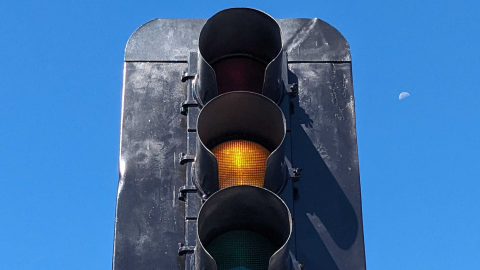 Sky Schaudt/KJZZAlbuquerque, New Mexico, tried a few other things to try to get drivers to obey the speed limit, but they didn't really work. So now officials are incentivizing drivers with time.
-
 Getty Images/FileArizona’s history is well documented through its newspapers, and ASU English professor Vanessa Fonseca-Chavez dove deep into the long Spanish-language newspaper history here.
-
 Viaframe/Getty ImagesWhile many areas of the brain slow as we grow older, some research suggests that language and processing skills remain about the same.
-
 Mike Alfaro/CourtesyMike Alfaro is the creative director and writer behind the popular game. Now he’s out today with a new children’s book called "The Unbreakable Piñata", book 10 of 12 books in a series of bilingual kids books he’s writing called Si Sabo Kids.


Transcript
ANNOUNCER: KJZZ's original production The Show is supported by Banner Health, Arizona's largest nonprofit healthcare system. Last year, Banner reinvested more than $1.1 billion in community health and charity care. Banner Health, nonprofit for Arizona. bannerhealth.com/nonprofitforaz.
LAUREN GILGER: Hi, I'm Lauren Gilger, co-host of The Show, an original production from KJZZ. Every weekday, we bring you the latest news and culture from across the state. You can find much more at theshow.kjzz.org. Here's today's episode.
LAUREN GILGER: Good morning and welcome to The Show here on KJZZ 91.5. In Phoenix, I'm Lauren Gilger.
MARK BRODIE: And I'm Mark Brodie. Coming up, more Latino men are being diagnosed with HIV in Arizona.
LAUREN GILGER: And why some brain functions may not decline as we age.
MARK BRODIE: ... If you've spent any time at the state Capitol over the last decade plus, you've most likely heard debate over photo radar, the cameras that catch drivers speeding on Arizona roadways.
This fall, Arizona voters will have their say on the issue in the form of Proposition 319. If passed, the measure would ban new photo enforcement systems. Those that are already in place would have to be approved by voters in that city or town to stay up and running.
KJZZ's Wayne Schutsky from the Politics Desk is with me now to talk more about this. Good morning, Wayne.
WAYNE SCHUTSKY: Good morning.
MARK BRODIE: So basically, that's kind of what it would do, right? If you vote for this, it would say no city or town can put up a new photo radar system, and those that are there would have to be approved by voters.
WAYNE SCHUTSKY: That's right. So, yeah, any state agency or local government, city, town, what have you, that already has a contract in place by the end of this year would be allowed to keep it, assuming voters approve it next year in an election in 2027. So, it would go to voters to say, “Yes, we want to keep this around.” If they vote yes, then they get to keep it for 10 years before it has to go back to voters again.
MARK BRODIE: This has been something that — I remember when I was based at the Capitol, which is many years ago now, this was a debate and an argument back then. It feels like this conversation has been going on forever.
WAYNE SCHUTSKY: Yeah, because it was newish technology then. I'm thinking like the early [2000s,] and it was kind of becoming popular, especially coming out of the recession. It was seen as a new revenue generator for cities and towns, essentially. They could put these things up. I mean, longtime Arizona residents will remember they were ubiquitous on freeways for a while. They're no longer there, but we still, we saw them disappear from just about everywhere but Paradise Valley and Scottsdale for a while. But now they're starting to pop up in cities like Phoenix and Tempe again.
MARK BRODIE: OK. So, cities and specifically cities' police departments have long argued that ... you shouldn't tell us we can't use these because they make the roads safer. Is that true?
WAYNE SCHUTSKY: Studies would suggest that they do. Again, back when they were first introduced, there wasn't anything to go on to base that on. But now they've been around for 20-plus years all across the country. There's been a lot of studies, and they do seem to show that when you put these things out there, over time, there's a reduction in speeding incidents, there's a reduction in traffic accidents, that kind of thing. And again, that's what a lot of the police departments who showed up at the Legislature to oppose it this time around told lawmakers.
MARK BRODIE: It should be worth noting, though, you mentioned revenue generation. This can bring in a good amount of money for the cities.
WAYNE SCHUTSKY: It can. And that's one of kind of the arguments against it is that, I think Sen. Wendy Rogers, who sponsored this piece of legislation, called it a scam. Because No. 1, there's also the civil liberty kind of part of it, that you're getting basically you don't have an actual officer who's observing this, you don't have a chance to speak with them as you would if you had a —
MARK BRODIE: To confront your accuser, right?
WAYNE SCHUTSKY: If you had a regular speeding ticket. So, there's all that, but then also, yeah, there's this contract in place with this private company that's running these, and it's generating revenue for both sides, and all of that.
And I will say that there seems to have been a little bit of a change in that, at least as far as some of the new cities that are coming back with it like Phoenix, like they're telling you where they are, and they're saying that they want the program to be revenue-neutral. So, it's more ... of they're pitching it now more as like a deterrent factor, changing behaviors versus trying to drive revenues.
MARK BRODIE: How prevalent are photo radar systems now? I mean, you mentioned Paradise Valley has it, Phoenix — not that long ago — started it up again.
WAYNE SCHUTSKY: Yeah, again, I think they're starting to make a comeback ... prompted maybe by this legislation a little bit because it has that 2026 deadline. So Tempe has them as well, and I mean, and there's not a ton of them as far as how large the city of Phoenix is, for instance. I think there's like 19 or 20 out there, but they're mobile now. They can move them around as they see the need.
And I mean, they are catching a lot of people. I think I read in the Arizona Republic that the Phoenix ones caught around 60-plus-thousand people since March when they set them out into August, and Tempe, I know, saw ... quite a few immediately right after they put theirs out.
MARK BRODIE: I think I know the answer to this, but I'll ask you anyway, has there been polling on this? Do we have a sense of where voters are on this?
WAYNE SCHUTSKY: I haven't seen much polling, but if you're looking at it more generally and how voters tend to behave, voters like, for instance, when there's tax cuts, voters tend to vote for those things. Well, this isn't a tax, but it is kind of a punitive type of thing. If voters see — most people don't like photo radar tickets, I guess is what I'm trying to say —
MARK BRODIE: You think people don't like getting traffic tickets?
WAYNE SCHUTSKY: And this is just based on conversations, what you see on posts about these type of stories, what you hear down at the Legislature. So, I would imagine that this could prove somewhat popular with voters on the ballot.
MARK BRODIE: All right. Well, we'll have to see how voters look at this. Again, Proposition 319 dealing with photo enforcement systems. That is KJZZ's Wayne Schutsky from the Politics Desk. Thanks, Wayne.
WAYNE SCHUTSKY: Yeah. Thank you.
LAUREN GILGER: More Latinos are being diagnosed with HIV in Arizona. Even though an HIV diagnosis is no longer a death sentence today, there's stigma and barriers to care for many in our state — specifically Latino men and other men of color.
Well, our next guest is out there working to get more of them tested. Angel Algarin is an assistant professor in ASU’s Edson College of Nursing and Health Innovation, and he serves on the city of Phoenix's Fast-Track Cities Ad Hoc Committee that works to strengthen the city's efforts to combat the spread of HIV and end AIDS.
But he told me with recent funding cuts and fear within the Latino community, they have a long way to go.
ANGEL ALGARIN: I identify as a gay Latino scholar, grew up in Ohio in a very small conservative town. And so during that time in my life, really saw the homophobia in that area. And because of that homophobia, didn't really have a lot of sexual health education to prepare me. So there was this sort of constant fear of how people acquire HIV, because you had no awareness or education on the topic. And so because of that stigma and because of that fear growing up, I said, well, I want to do something about that. And so that's kind of what I got into public health. It's kind of like me-search in a way.
LAUREN GILGER: I like that, me-search. OK. So definitely up your alley and a personal topic to you. But let's talk a little bit about the landscape that you're doing this work in right now, right? Because HIV is not a death sentence anymore. It's a disease that you're going to live with, though, for the rest of your life. So it sounds like prevention in terms of spreading it is what's key in the work that you do, right?
ANGEL ALGARIN: Yes, 100%. So right now, with the advances that we've had, we have something called pre-exposure prophylaxis or as people colloquially say it, PrEP. ... At first, when it came out, it was a pill taken once a day to prevent the acquisition of HIV by over 90%, and actually some studies say up to 99%. So very effective. ...
Now we have — they advanced to long-acting injectable PrEP. So that was once every two months was the initial long-acting injectable. And now they have one that's once every six months. ... So you can see that they're rapidly improving.
LAUREN GILGER: So the technology here, the treatment has improved dramatically, but you're still seeing people be diagnosed with HIV every year. Give us a sense of how prevalent it is today.
ANGEL ALGARIN: Yeah. So in Arizona in 2023, we had 967 reported cases of new HIV infections. ... And then in Maricopa County in particular, we had 636 reported cases. ... We're seeing this largely driven by men in the age range of around 25 to 34 years of age.
LAUREN GILGER: So younger men, that's interesting.
ANGEL ALGARIN: Yes, yes. So younger men. And then we're also seeing disparities really around Hispanic, Latino and Black men who have sex with men. So in comparison to their white counterparts, they make up a disproportionate amount of new HIV incidences in comparison to their white counterparts.
LAUREN GILGER: OK. So the share of cases in those populations is growing, and that's kind of what you do your work on in general in terms of Latino men, right?
ANGEL ALGARIN: Correct.
LAUREN GILGER: Let's talk about why that might be. Like, I know stigma is still a word that's talked about a lot in the HIV world. Is it more prevalent? Is that a bigger problem among Latino men in particular?
ANGEL ALGARIN: Yeah. So I wouldn't necessarily say that HIV stigma is more prevalent among Latinos versus whites versus those who identify as Black.
LAUREN GILGER: It's everywhere.
ANGEL ALGARIN: It's everywhere. But what I can say is we talk about it's called intersectional stigma, right? So how different types of stigma based off of health condition and/or your identity, so whether that's being Latino, whether that's being gay, whether that's expressing your masculinity in a different way, that those stigmas can compound and create a more deleterious environment for health and health seeking. Because sometimes it's not about HIV, but, "Hey, I'm afraid to ask my doctor about PrEP because I'm afraid that they will assume that I'm that I'm gay." You may have stigma of HIV, but you have other stigmas that are also creating this environment.
LAUREN GILGER: Right. This idea of traditional gender norms is going to be challenging in that world. So what does that result in? Like Latino men being not tested? Like how do you reach them?
ANGEL ALGARIN: Yeah, no. So this definitely results in folks not wanting to go get an HIV test, because they're afraid of what happens after that test comes back and if it says that they're HIV positive. ... And then it also is, you know, how do I tell my family? Who do I need to tell about my HIV diagnosis? How do I tell my sexual partners? It's the fear, it's that anticipation of what might happen after that HIV diagnosis.
LAUREN GILGER: I know I see because I live right in the Melrose District there, and I know I see because there's a couple of clinics there that do this kind of work in particular, but they'll have like buses out sometimes at the bars, and like you go to the people where they are, right? Sometimes that's what the work looks like.
ANGEL ALGARIN: Out in the Melrose District is a great example. They do a lot of mobile units, so you'll see them going out to different bars within the community — and not only just the ones in the Melrose District, but, you know, you have Karamba, which is closer to downtown, which is a lot of Latino influence that happens there. It's great. I have fun there sometimes, too. That's a great strategy.
I will say that due to our political climate, there is a fear of accessing healthcare services. Anecdotally, people are afraid to go get tested — seek any medical treatment, really, because of just like the state of affairs. And so just adds on to the even previous barriers that we've had surrounding lack of language access in our healthcare system. So even though clinics are required to have translation services, often those translation services are not like culturally translated. So like you can match language, but you're not necessarily matching culture or understanding.
LAUREN GILGER: You're not saying the same thing.
ANGEL ALGARIN: ... Yeah, you're able to communicate, but you're not saying the same thing, sort of thing. ... So these are some of the things that are serving as barriers. But our community partners are really doing a lot. They recognize the growing epidemic among Latinos and Black men who have sex with men in particular, and they're flexible.
LAUREN GILGER: Is cost, access to care part of the problem here?
ANGEL ALGARIN: Yeah, you know — and this is actually a large problem. You know, we often talk about the cost of the medication. Well, you know, insurance largely covers the medication. The makers of PrEP, Gilead, offer copay cards, which help cover the extra costs that might not be covered by your insurance. So largely the medicine is fairly accessible.
It's all those hidden costs that you don't really see, right? It's the transportation and how we get to the clinic. It's the time that it takes and whether you're able to take off work and sacrifice those extra hours of pay. It's the hidden copays for the tests that you have to get to receive PrEP that you weren't expecting, but then you get the $20 to $50 bill in the mail, and you're like, "Where'd this come from?"
LAUREN GILGER: Yeah. So I know under the Biden administration requirements were passed that that PrEP be covered, as you're saying, by Medicaid, by insurance companies in general. Are you seeing though the kind of organizations, the nonprofits that are out there kind of doing this work on the street level seeing cuts under the Trump administration?
ANGEL ALGARIN: Oh, yes. Yeah. I mean with the clinics that I do work with, after the initial slash to CDC funding, we saw our partners that I've been working with and in conversations with and how we, you know, advance research, they're not even able to talk about research. They're scrambling to sort of figure out who they can keep on board at their clinics and who's going to be left after the CDC cuts, you know, take their full effect.
And so these cuts affect far more than just the practice that's happening within the clinics. It's also affecting the research that is going to move us forward into continuing to address the HIV epidemic in this century. So the cuts had far-reaching effects.
LAUREN GILGER: Angel Algarin, joining us, assistant professor in ASU's Edson College of Nursing and Health Innovation. Angel, thank you very much for coming in. Appreciate it.
ANGEL ALGARIN: Thank you for having me.
MARK BRODIE: Good morning. It's The Show on KJZZ 91.5. I'm Mark Brodie.
LAUREN GILGER: And I'm Lauren Gilger. Coming up, as the rest of our cognitive functions decline with age, why do our language skills tend to stay the same?
MARK BRODIE: But first, a New Mexico city is taking a unique approach to trying to get drivers to slow down. Albuquerque has instituted what are called rest-on-red traffic lights at three intersections on a pair of east-west one-way streets. The speed limit on these roadways is 30 mph. The roads have houses on them, as well as a lot of pedestrian and bicycle traffic. My next guest says the city tried a few other things to try to get drivers to obey the speed limit, but they didn't really work. So now officials are incentivizing drivers with time. Jennifer Turner is director of the Department of Municipal Development in Albuquerque. She joins me now. And Jennifer, it sounds like this is a speed limit that a lot of drivers just weren't observing, is that right?
JENNIFER TURNER: Yeah, these corridors have a long history of speeding and street racing, and given that there's homeowners and a lot of pedestrian traffic, we were seeing a lot of crashes, crashes with injuries, a lot of neighborhood concerns. Our speed studies that we did about a decade ago were showing really a lot of speeding and dangerous driver behavior. And so we knew we had to do something about that, and so that led us to where we are today.
MARK BRODIE: All right. So let's talk about where you are today. You have something called rest-on-red traffic lights. What does that mean?
JENNIFER TURNER: Yeah. So they are smart traffic lights and technology that we've implemented at key intersections on this corridor that reward drivers who are driving safely at or below the speed limit with a green light. And for those drivers who are speeding, they actually are stuck and stopped at a red light.
MARK BRODIE: So assuming that if I'm driving on that road and I'm going 30 mph or slower, I'm going to hit all the green lights?
JENNIFER TURNER: Yes, you will, assuming there's not some speeding driver or something else going on on one of the side streets that hits the road. And so I mention that because folks are like, “Where else can we implement this technology?” And it doesn't work for every type of road and every intersection. We've found that it here, because it is one-way roads with the 30 mph speed limit, it is working well in — it's working very well — in fact, in these situations.
MARK BRODIE: So is that to say then that maybe on a two-way road where traffic is going opposite each other or where the speed limits are higher, maybe this kind of technology wouldn't be as effective?
JENNIFER TURNER: Yeah, it would depend. We actually have it at another location about a five-minute drive away, which is two-way, and it's working there as well. So it kind of depends. Traffic engineers, they follow their data, and they take each intersection and they look at what's going on. And so it really depends. But in this case, as I mentioned, it's working, and we're seeing that drivers are learning and following the speed limit.
MARK BRODIE: And do drivers know that if they follow the speed limit, they won't get stuck at a red light?
JENNIFER TURNER: So we do have signage showing that the signals are set for 30 mph, and we actually have found like instant results from drivers learning and going the speed limits. We've seen a drastic reductions in speeding, as well as in crashes and injury crashes. And the neighbors tell us they see drivers behaving much more safely.
And so I think drivers know because it works. They either go or get the red light, and we have had we've also done communications about it. We've had surveys and neighborhood meetings. So they're kind of learning by doing and also from the city's conversations about it.
MARK BRODIE: What do you think this says about what actually incentivizes drivers to follow traffic laws?
JENNIFER TURNER: I think we all like rewards, right? I got two kids. Certainly rewards definitely work. They have their place at times. And so, I like to say like this is another tool in our toolbox, and if you can find a way to use technology to reward safe driving, then go all in. Obviously, law enforcement has a big role to play, too, but but here, this is focusing on the reward.
MARK BRODIE: Well, it's interesting because it seems as though this would sort of be a gold mark for the carrot as opposed to the stick in terms of of traffic enforcement, because, you know, you could very easily make that a speed enforcement zone and have more officers or, you know, other ways to catch people who are speeding. But instead, you're choosing to reward people who are not.
JENNIFER TURNER: Yes, we are focusing on the reward and seeing how that impacts driver, driving behavior. I know other cities are looking at our carrots and asking us questions about that. And so, yes, I do want to underscore, though, that enforcement has its place, too. And so again, going back to the kind of tool in the toolkit approach, we like having a lot of options to make our street safer.
MARK BRODIE: So can you describe like how exactly the technology works? Like how does it see if somebody is driving a particular speed and then it's able to sort of manipulate the light to either have it be red or green?
JENNIFER TURNER: Yeah. So we have on our signalized intersections where we have this, we have a detector for emergency vehicles, so I want to emphasize that, that emergency vehicles do override this. And then we have radar on the intersections that goes about 350 feet upstream to see what car what speed the cars are going. And then we have a controller that's obviously kind of the computer that's overseeing all of that.
And so if the that radar, it basically only sees cars that are going at or below the speed limit and rewards them with a green light. If you're speeding, it doesn't trigger that sort of computer, if you will, that will turn it to a green light. So it's really again, like I like to say, smart technology with that detection of just the speed that vehicles are going. It doesn't look at the driver, it doesn't look like, “Oh, you've got a nice new car.” It literally is just monitoring your speed.
MARK BRODIE: Are you looking to incorporate this on other roads in Albuquerque or maybe anywhere else in New Mexico?
JENNIFER TURNER: Yes. So based on the success of the program, we're actually expanding it in within the next few months to additional intersections along this corridor. And as we look to upgrade intersections around the city, this is again one of our tools in our toolbox.
MARK BRODIE: I mean, do you think this is the kind of thing that would work in like in a larger city? Like would this would this technology work, do you think, in a place like Phoenix or or some of the suburban cities around here?
JENNIFER TURNER: I think it could if you got the right corridor. One of the things if you throw in like left like green arrows, for example, then it gets much more complicated the more turning movements and potential conflicts that you have. And I realize I'm getting into like traffic engineer speak. But the more complicated the intersection is and all the different movements you're seeing, I think the less likely it is to work. So yeah, I think you got to get the right corridor and the right amount of traffic.
MARK BRODIE: All right. That is Jennifer Turner, director of the Department of Municipal Development in Albuquerque, New Mexico. Jennifer, thanks so much.
JENNIFER TURNER: Thank you.
LAUREN GILGER: Arizona's history is well documented through its newspapers, and our next guest dove deep into the long Spanish language newspaper history here. ASU English Professor Vanessa Fonseca-Chavez is out with a new article in the Journal of Arizona History about Spanish language newspaper editor Lázaro Acosta, a Mexican-born teacher, writer, community leader and newspaper editor in Arizona and New Mexico during the territorial period. I spoke with Fonseca-Chavez more about it and how she came across his story.
VANESSA FONSECA-CHAVEZ: You know, I was looking at historical newspapers in Apache County during the ’60s, ’70s, ’80s. I’ve been working on a book about Concho, New Mexico, and I ran across this column in the newspaper called Concho Chatter, and it was written by an individual named E.M. DeGlane, who wrote the very first book about Concho’s history, and that was written in the 1980s. And I went a little bit further back in the newspapers before the ’80s, before the ’70s, and I wanted to know what else was being written about Concho during that time period.
And so I then started looking at Lázaro Acosta and noticing that he was showing up more in the newspaper archives. And so I started wondering, well, who is this person who was writing for the Snips and St. Johns Herald, that was the name at the time. So I started to just learn more about this Acosta family and just looking on public blogs. And then I ran into a person whose ancestor was Lázaro, and he lives in the West Valley.
And I’ve never met this person, but I’ve been sharing the story about his, you know, great-great-grandfather over the past few years, you know, just little snippets of information that I’ve been learning about him. And so that has been really fun to kind of look into someone’s history and share it with somebody where it matters.
LAUREN GILGER: Yeah. I mean, that’s kind of amazing. I mean, so you’re just able to, what, send him a note every once in a while and be like, “Hey, I found this cool thing about your great-great-grandfather,” right?
VANESSA FONSECA-CHAVEZ: And it’s been a fun journey. I’ve sent him, you know, newspaper articles I found years ago, and I hadn’t realized it until the other day and after this article was published, the only issue that I know of that exists of Las Nuevas de Magdalena, and it happened to be this person’s birthday who is living in the West Valley.
So I said, “Happy birthday. Here is the only newspaper from Las Nuevas that I’m aware of that I’m sharing with you today.” And so he was really excited, and he’s sharing this with his family members, and it’s created this really cool effect of, you know, why do we do this work? We do it for community engagement.
We believe that it has an impact on the lives of people today, and it’s really filling in a lot of gaps for his family about the lives of these people that they, of course, never met, but they’re able to learn about through the research that I’m doing. I think that’s the other really interesting part about it is how much of Lázaro’s life is available through these archives.
LAUREN GILGER: Yeah.
VANESSA FONSECA-CHAVEZ: There’s so much of it.
LAUREN GILGER: Right. So tell us about the process, right? Like you studied a decade, essentially, of newspaper archives from the state to kind of piece together Acosta’s story. And that’s a painstaking process, I know, although many of these papers, I know, have been digitized as well. Talk a little bit about just how this worked, how you did it.
VANESSA FONSECA-CHAVEZ: So the first step was really to figure out what years was he working for these newspapers and what portion of his life was able to be accessed through newspapers, and that ended up being about 1901 to 1911. He did pass away in 1911, and so part of the part of the thing I talk about in the article is he died just before statehood, and that’s a really interesting period in sort of the the last years of transition for both Arizona and New Mexico in becoming states.
But the Library of Congress has these newspapers digitized, as does the Arizona Memory Project. So there was a lot of weekends and nights just looking through the newspapers. And that was really fun, because I think when you’re first looking through them, you’re not really sure what you’re looking for, but I was looking for any kind of knowledge that I could obtain about the life of Lázaro as a person, as a community member, as a family member, as a teacher, and what was his sort of approach to being a newspaper editor in line with other major newspaper editors during that time period, of which there were many in New Mexico, but a lot fewer in Arizona.
So this is really a different area of the state that I think a lot of people are not aware that possesses a lot of kind of Spanish-language community, knowledge, archiving, newspaper history, and I think that’s a real contribution to just what we know about Apache County.
LAUREN GILGER: Yeah, 100%, a different part of the state. Tell us more about the context, like the historic context in which this was all happening, in which Acosta was working. Like, this was kind of a pivotal era in the history of this region.
VANESSA FONSECA-CHAVEZ: Yeah. And, you know, New Mexico and Arizona developed very differently politically in the sort of rush to statehood, and that’s well documented, of course. But what Acosta was writing about during that period surprisingly didn’t reflect the push toward statehood, and I was surprised to know that, because so many Spanish-language newspaper editors in New Mexico were really advocating for the inclusion of Spanish within this new kind of configuration, how to protect the literature, language and culture of local communities in this sort of quest for statehood.
And surprisingly, Acosta doesn’t touch a lot on those topics. And so I think it’s a deviation from what other periódicos or newspaper editors were doing at that time.
LAUREN GILGER: Hmm. So what was he writing about? I mean, was it just hyper-local, what’s going on around town kind of stuff?
VANESSA FONSECA-CHAVEZ: Yes and no. So there is a section within that two-page spread that’s called local and personal, or local y personal. And that section was specifically dedicated to people who subscribe to the newspaper. So he wrote about them because they were subscribing to the newspaper, and that’s an interesting community engagement strategy. Pay to play, right, is what it sounded like to me.
And that’s OK, you know, there’s a lot of humor in there also about him saying like, “Hey, make sure you pay your newspaper editor and make sure,” you know, he was making a lot of pitches for please be involved with this. Of course, the research shows that having Spanish-speaking newspapers was a really important strategy because a lot of the folks who were living in Concho, Springerville, St. Johns were Spanish-speaking communities who had migrated from New Mexico specifically to become sheepherders.
So the economy, the configuration of the community was such that a Spanish-language spread was really necessary. In the research, it says, you know, Anglo editors would be well advised to create Spanish sections for these communities. You see this really big shift after Acosta leaves the Snips and St. Johns Herald where everything is almost exclusively English, and there is a really big cultural shift that happens in the newspaper, and I thought that was really interesting as well.
LAUREN GILGER: So, I mean, obviously, he wasn’t writing about the big political issue at the moment, but he was writing about his own community, and he’s doing it in Spanish. What do you think the impact of that was, maybe at the time, but maybe also kind of in the evolution, development of of the Spanish-language press in our state?
VANESSA FONSECA-CHAVEZ: I think people really just want to see themselves represented, and that was a really good moment of belonging and representation for that particular community. Of course, we know that some portion of that community was not able to read, and that a lot of the individuals who were represented were likely of a higher socioeconomic class.
And so that’s part of the conversation that I don’t really tease out in this article, but it is, you know, well known that there was a newspaper-reading public and then there was not a newspaper-reading public, and the people who were included in that were a certain demographic of the larger population.
LAUREN GILGER: Hmm, interesting. All right, we’ll leave it there. Vanessa Fonseca-Chavez, joining us, associate professor of English and assistant vice provost of the ASU Polytechnic campus. Vanessa, thanks for coming on The Show. I appreciate it.
VANESSA FONSECA-CHAVEZ: My pleasure.
MARK BRODIE: Good morning. It's The Show on KJZZ 91.5. I'm Mark Brodie.
LAUREN GILGER: And I'm Lauren Gilger.
MARK BRODIE: Lots of our brain functions can slow down as we get older, but new research finds one skill may be exempt from that.
Anne Billot is a postdoctoral researcher at Harvard and Massachusetts General Hospital. Her data suggests that language skills stay about the same as we age, while other skills decline.
When I spoke with Billot, she told me her findings contradict some of the previous literature on brain aging, specifically in the area of language skills and processing.
ANNE BILLOT: So what we investigated was trying to look at two main functions, cognitive functions. So language on one side and what we call executive functions on the other side. So it kind of includes like working memory, attention, cognitive control — all those functions that help us do very complex tasks in our daily life.
And we looked at how these different functions evolve with age, but more particularly, how the brain that supports these functions, how does it change also with age? Because we know that these two different functions change differently, like language is particularly preserved as we get older. Like people typically have very good language even in older age.
But we know that it’s harder to remember things, and it’s harder to do very complex tasks in our daily life as we get older. So we wanted to see what’s going on in the brain related to each of these functions.
MARK BRODIE: So what is going on in the brain? I mean, what is it about the brain that allows us to maybe keep some of those language skills later into life, but not things like memory?
ANNE BILLOT: Yeah, so what what people typically have found in the past about the brain of older adults and what what are the effects of aging on the brain is that people typically found that the brain is getting more kind of mashed together, so different regions more connecting to each other in a way that is less specialized.
So typically in young brains, we would find each function very segregated in the brain. And in older brains, researchers have found that these functions would kind of get synchronized to each other, so less specialization. And we actually use a slightly different approach from what has been used in the past. So instead of looking at the group level, we looked at the individual level. So we try to identify where those regions were related to the language functions or related to these executive functions at the individual level, and then we looked at how these regions behaved in the brain.
And what we found is that the language regions, when we identify them within individuals, they actually show very, very similar patterns as in young adult younger adults. So like the extent of activation, the strength of activation, how well they are synchronized is remarkably preserved in healthy aging. Where on the other side, what we call the executive regions, the ones that are again responsible for like hard cognitive tasks, these ones show a similar decline as what we observe at the behavioral level.
So we found really this contrast between the two different networks that support these two different functions, which hasn’t been really described in in the previous literature, because typically we saw healthy aging in the brain as a general pattern of decline, and not that many studies really looked at each network separately and also at the individual level. That’s kind of the new approach of this study.
MARK BRODIE: Would it stand to reason then that it’s conceivable at least that there are other aspects of our lives that might behave in the way that language does in the brain as we age, and maybe doesn’t deteriorate with age as it seems language does not?
ANNE BILLOT: It’s possible, yes. There are definitely more functions to investigate. Here we really focused on two on these two functions, because what we found in previous studies is that these two functions lie right next to each other in the brain. And so when we average brains across individuals — so when we average multiple brains together — the boundaries between each network kind of gets blurred together, and so in previous studies it was harder to dissociate how these different networks would evolve with age, because we would just blur the their responses together.
But there are other functions like social cognition, for example, that would be very interested interesting to investigate further, because that’s related to what we often call the default network, which is often involved in like Alzheimer’s disease and other neurodegenerative disorders, and so it would be interesting to also investigate how these specific networks for other functions might evolve also with age differently.
MARK BRODIE: We hear so much, especially with newborns and and really young kids, that it’s really important for their language development skills to hear a lot of words and to be exposed to a lot of language. Is there anything to be said about the fact that by the time we’re a little bit older, we’ve been just exposed to that much more language, and maybe that is part of what’s going on in terms of us keeping that function as we get older?
ANNE BILLOT: Definitely. That’s that’s a great interpretation, and that’s actually what what we see like typically when we look at the behavioral level, if we ask people to do different tasks, either language tasks or executive tasks, we definitely see that vocabulary, for example, increases with age.
And so that’s definitely one interpretation of our of our work is what we call the brain maintenance hypothesis. So the functions that are well preserved behaviorally — so what we observe at the behavioral level — are actually supported by networks that are very well preserved in the brain, versus some other functions like memory that is declining more would be supported by networks that are actually also declining in the brain.
MARK BRODIE: Is there anything to be learned from what you have found about the language part of the brain that might be able to help us preserve other parts of the brain that, like memory or executive function as you mentioned, that do kind of deteriorate with age? Like, is there any way to use this to help other parts of the brain that maybe could use it as we get older?
ANNE BILLOT: Yeah, so I think what what is interesting in this work is is to see that these different functions have different patterns, and so I think it will help us develop new studies to to investigate what causes these differences, right? Like we we don’t know yet why this this language network doesn’t decline as fast as this executive network.
But I think overall to really try to preserve our our cognitive functions in general, it’s really important to just keep using our brain, right? It’s a very basic thing to say, but it’s really trying to to use it in in as various contexts as possible. So I think really like trying to to use our brains in all possible ways we can and being active.
And of course language is a big part of that, right? Like talking to people and interacting with people is such a complex task, so it requires just not just our language network, it actually recruits many parts of our brain. As well as young kids have a very plastic brain. As we get older, there’s a thing that if we don’t use a function, we kind of lose it. And so it’s also important to keep doing things that are like recruiting different parts of our brain and asking us sometimes more difficult tasks, because that’s going to preserve our brain and maintain these connections between our different brain regions.
MARK BRODIE: Anne Billot is a postdoctoral researcher at Harvard and Mass General Hospital.
LAUREN GILGER: Good morning. It's The Show on KJZZ 91.5. I'm Lauren Gilger.
MARK BRODIE: And I'm Mark Brodie.
LAUREN GILGER: The traditional Mexican lotería game features iconic cards like La Sirena, or the mermaid, El Sol, the sun, La Dama, the lady. But our next guest made a name for himself with a version that went viral a few years ago, Millennial Lotería. In his version, La Sirena is La Selfie, La Dama is La Feminist, El Sol is El Global Warming. Mike Alfaro is the creative director and writer behind the popular game, and earlier this year, he released a new children's book called The Unbreakable Piñata, book 10 of 12 in a series of bilingual kids books he's writing called ¡Saber! Kids. I spoke with Alfaro about writing children's books, Millennial Lotería, and the importance of bilingual education.
MIKE ALFARO: I grew up in a household that spoke Spanish growing up in Guatemala, because I'm not from the United States. So, I learned English from books and TV shows and school. My parents really wanted me to have that bilingual education, but they did not have that.
And so for me, now that I'm here in the United States, it's about maybe mirroring that process again but with Spanish instead of English, which in our household, we do speak English because my wife only speaks English. She has learned a little bit of Spanish with dating me for so long. She can carry a little conversation, but it's not something that's like fluent.
And so I think creating these books were also a way of me of uh reminding me that I need to be speaking Spanish with her and also giving my wife tools so that she can also help my daughter learn Spanish as she's growing up. And I know a lot of families are in the same situation that we are.
LAUREN GILGER: Yeah, yeah, like this sort of bilingual divide in the household but you're trying to bridge that gap, which is so important. What was the inspiration going from something like the success of “Millennial Loteria” and switching to kids' books? Like, this was because you became a dad?
MIKE ALFARO: Yeah, I mean, it was because of — I think so many parents, you know, want to write children's books is that one thing when you become a parent and you have these ideas and you start telling your kids stories, and all of a sudden, you find yourself telling stories that you were like, "Wow, this might could actually be a good book." Or finding ways to teach Spanish.
And I think that's kind of how this whole process evolved. I also have to say my publisher who I work with, Blue Star Press, and they are huge with children's books. That's their bread and butter. So, we did “Millennial Loteria” together, and then they were like, "You know, we do children's books. You got any ideas?"
And I was like, "Do I?" Here's all these different things that I've been I've been doing with my daughter, and uh they saw the vision and uh, you know, there's there's a big market opportunity right now to teach kids Spanish because it's a — it's a language that is just huge in the United States and continues to grow.
LAUREN GILGER: Yeah, and it's so useful for kids to be able to speak it, exactly. How hard is it, Mike, to write a children's book? Like, I have had that exact experience you described with my kids where I'm like, "Oh, this would make a great kids' book." But also, I can imagine it would be way harder to put together and actually make interactive and interesting and sort of visually dynamic for kids once you start doing it.
MIKE ALFARO: I think for me, I worked in advertising for a long time. I worked as an advertising creative, I was a copywriter. My art director who I work with at agencies, he also illustrates our books as well. So, we kind of have this partnership going on, and he also has children and also wants to raise them bilingual.
And so for us it was a little bit of a team effort in how we did it. So I got to really focus on the words and obviously him the images.
And we collaborate, go back and forth obviously, in everything that we do. Like, I'll say something about images, he'll say something about copy. And I think because it was a team effort in how we did it, it felt fun and easy.
And I also have trained my brain to write very short when I'm creating something because if I works in social media, I usually, you know, everything's around like, for me, 7-15 seconds to get that information. Same with commercials, when I worked, I had to get so much information into like 30 seconds, 15 seconds, or even those 5-second tag spots.
And so, I think that also helped train my brain in a format like a children's book which is getting the information out, having a message and having something entertaining that is an entertaining story that also educates you along the way was something that I pulled from advertising as well, where you have to be entertaining first, and then you hit them with a message. And I think trying to make sure that message sticks, and I applied that same idea to my children's books.
LAUREN GILGER: That's a great use of advertising knowledge. I love that. OK, so we have to talk about “Millennial Loteria” before I let you go because this sort of began all of this for you. It became such a hit. It hit such a cultural nerve. Tell us about where this idea came from for you. It seems sort of like organic, almost an accident.
MIKE ALFARO: It was. Like I said, I worked in advertising, and I had quit my job uh when I got my green card because I'm like, "I'm free! I can do whatever I want right now."
And so I just I wanted to update my portfolio, and I wanted to create a project or something that represented Latino identity or how what I was feeling at the time about latinidad being so modern, but also being represented in ways that are outdated, I think, in a lot of media.
And so, I wanted to represent our generation as modern and cool and funny and technologically savvy. That's why La Sirena became La Selfie, El Catrín became El Hipster, El Sol became El Global Warming.
We talked about issues that were affecting our communities, millennials, and it was just an art project that I put on on Instagram, but it connected instantly with so many people who were feeling the same way and hadn't seen that representation. And it was funny that it took a Loteria game for people to see themselves represented, and it had a huge impact on people.
And I think that's why I know that there's a big market out there for people, Latinos here living in the United States that want products made by us, for us, but that also help other people from the community, like for my wife or for other people who don't speak Spanish that want to teach it to their kids, I want to make sure that these products connect with that large audience out there that I think sometimes goes underappreciated by businesses.
LAUREN GILGER: And it really did hit this cultural nerve, I think partly because like you said, it was bilingual. It was hitting this Latino community that's not spoken to that often. But also because Loteria has this really long history and has been sort of relevant for generations, right?
MIKE ALFARO: I mean, it started in the 17th century in Italy actually, that's where the first Loteria game came about. And some of the images, too, like the mermaid and the world and the star that people really recognize from from when you think about a Loteria game, you see them in those old games because a lot of it comes from inspiration of tarot.
And it's a huge, huge history of what Loteria has been through. I mean, people here in the United States, you guys play bingo, and people usually call bingo, it's like Mexican bingo.
But in reality bingo is like American Loteria. It's like that's where it sort of comes from. And um, you realize that there's a huge connection between the story of how this game began and how it came to America and how it became part of a a richer texture of Latinos trying to tell their own story. And I think I've just done the same thing that's been done for generations and generations. It was just my turn this time to do it.
LAUREN GILGER: Yeah. Mike Alfaro, writer and creative director, content creator on social media as well, obviously, and author of the new kids' book, “The Unbreakable Piñata,” joining us. Mike, thank you so much for coming on The Show. I really appreciate it.
MIKE ALFARO: Thank you.
MARK BRODIE: Thanks for listening to The Show's podcast. The Show is produced by Sativa Peterson, Nick Sanchez, Amber Victoria Singer and Alana Hamilton. The Show was created by John Hoban. Our executive producer is Amy Silverman. You can find more of The Show and sign up for our newsletter at theshow.kjzz.org. You can also find us on Instagram @kjzztheshow.