


Christa Pike is in critical condition after a botched attempted execution in Tennessee. How her story collides with Arizona’s own complicated history with lethal injection. And the impact of Arizona getting less federal money for rural health care than expected. That and more on The Show.
Ways To Subscribe


-
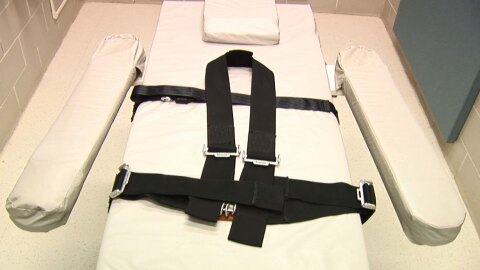 Arizona Department of Corrections/FileTennessee's top prisons official resigned after the botched attempted execution of Christa Pike. But this wasn’t the first time he oversaw executions that ran into problems — including here in Arizona.
-
 Sky Schaudt/KJZZAs the majority of voters believe the economy and their own financial situation is getting worse, their candidate preferences reflect that.
-
 Getty Images/iStockphotoAhmed Soliman has no ties to Equatorial Guinea. The 30-year-old man was born in Egypt and brought to the United States. when he was just 4 years old. He grew up in Phoenix. Now he’s believed to be in a hospital in the African nation.
-
 For years, mixed-media/ceramic artist Heidi Dauphin and painter/muralist Laura Spalding Best were casual acquaintances and fans of each other’s work. In 2024, they were paired up for an installation for a gala benefiting the nonprofit Artlink. When they got together to brainstorm for their project, they made a list of things they had in common — including multiples, found objects, collections and numbers.
-
 Getty Images/FileArizona applied for around $200 million from the Rural Health Transformation Program, part of the One Big Beautiful Bill Act. The state will be getting $30 million less than expected.


NARRATOR: KJZZ’s original production The Show is supported by Banner Health, Arizona’s largest nonprofit healthcare system. Last year, Banner reinvested more than $1.1 billion in community health and charity care. Banner Health, nonprofit for Arizona.BannerHealth.com/nonprofitforaz.
LAUREN GILGER: Hi, I’m Lauren Gilger, co-host of The Show, an original production from KJZZ. Every weekday, we bring you the latest news and culture from across the state. You can find much more at theshow.kjzz.org. Here’s today’s episode.
MARK BRODIE: Good morning. It’s The Show on KJZZ 91.5 in Phoenix. I’m Mark Brodie.
LAUREN GILGER: And I’m Lauren Gilger. Coming up, what issues will voters take with them when they cast their ballots over the next month?
MARK BRODIE: And an Arizona man who was deported to Equatorial Guinea has faced threats and beating.
LAUREN GILGER: But first, Christa Pike is in critical condition after the state of Tennessee attempted to execute her last week. The convicted murderer survived two doses of pentobarbital, but did not die before she was taken to a local hospital. Now, that state’s top prison official has resigned. But just a few years ago, Frank Strada was deputy director of the Arizona Department of Corrections, where he was responsible for overseeing executions. And that’s not the only connection between what happened in Tennessee and Arizona’s own complicated history with carrying out lethal injections. In 2014, the execution of Joseph Wood became the longest in U.S. history after it took two hours for him to die while he struggled and gasped for air. In recent years, Republican lawmakers in Arizona have proposed bringing back firing squads and gas chambers as an alternative to lethal injection. Our first guest this morning testified against those bills at the state Legislature. Dale Baich is the former head of the Capital Habeas Unit at the Federal Public Defender’s Office in Arizona. He has exonerated people on death row and witnessed 15 executions, including Joseph Wood’s. Today, he’s an adjunct professor at ASU’s Sandra Day O’Connor College of Law. I spoke with him more about his reaction to Christa Pike’s case and its connection to what we’ve seen happen here in Arizona.
DALE BAICH: I was horrified when when I heard the news. It was really predictable. Her lawyers brought to the court’s attention that she had compromised veins and that she had a blood disease. But the court allowed the execution to go forward. And as I said, the outcome was predictable.
LAUREN GILGER: So let me talk a little bit about public opinion on the death penalty these days with you up front here, Dale, because I think it has shifted over the years, but we don’t really hear this kind of come up in the political debate, right, until something pretty tragic happens like what happened in Tennessee?
DALE BAICH: What we know from the polling is that support for the death penalty has decreased over time. If the question is asked, “Do you support the death penalty or life without parole as an option?,” support dips below 50%. And in what we have seen recently in Arizona and other states, there are fewer death sentences being handed down by by juries. So I think that’s evidence that the support is is dwindling.
LAUREN GILGER: It’s interesting. So let’s talk about Arizona’s own complicated history with the death penalty and with executions. The one that stands out I think in in recent memory, right, was the 2014 execution of Joseph Wood, which you witnessed. It was supposed to take 10 minutes. It took almost two hours, the longest execution in history. And it came, you know, after the state of Arizona couldn’t get access to the kinds of lethal drugs it had used in capital punishment for a long time. They tried new drugs, it didn’t work in the same way. What was it like to watch that?
DALE BAICH: It it was, it was hard to watch. Like the Christa Pike situation, it was predictable. We knew that Ohio had tried to use the same drug combination a few months before Joseph Wood was scheduled to be executed, and it took 25 minutes for that person to die. And again, our concerns were dismissed. You know, the witnesses sat there and watched Joe gasp, gulp and struggle to breathe for over an hour and 40 minutes.
And what we didn’t know was that the director ordered that additional doses of drugs be administered. In all, there were 15 doses of drugs that were administered during that execution. Again, that wasn’t allowed under the protocol.
LAUREN GILGER: So the state of Tennessee says that it followed its own protocols in this attempted execution, but things went wrong, obviously. And it comes after the state of Tennessee had, like Arizona, put a hold on executions for some time after sort of an independent review was done and and raised questions about what drugs were being used, how they were being used, how they were being tested. Is this a systemic problem not just in Tennessee, not just in Arizona, but across the country, Dale?
DALE BAICH: It it is. We know that there were similar concerns in Oklahoma after the botched execution of Clayton Lockett in 2014 and and Oklahoma using the wrong drug in an execution in 2015. What happens is a study is completed, the report is turned over, and the directors of the departments of corrections go on with their business. They don’t always follow the recommendations of the experts.
LAUREN GILGER: And in fact, there is another similarity between what happened in Tennessee and kind of the history of executions in Arizona. The commissioner of the Tennessee Department of Corrections, right, used to be here in the state.
DALE BAICH: Yes. Frank Strada was the deputy director of the Arizona Department of Corrections from 2020 through 2022, and he was responsible for overseeing executions and putting together the execution teams. And we know that in 2022, there were three executions that were carried out, and two of them had significant IV access problems that occurred in the lead-up to the execution. And the same thing happened in in Tennessee.
And this isn’t the first instance where where there was a problem in Tennessee. A few months back, there was a scheduled execution and the team that Frank Strada assembled was unable to get IV access for that person. So there’s a a history of incompetence.
LAUREN GILGER: Let me ask you about one of the ideas that’s been floated in our state, but has been actually implemented in other parts of the country in recent years, a firing squad execution, right? Like, this came up in Arizona not too long ago, but hasn’t happened here, but South Carolina executed a man by firing squad last year, the first time in some time that had happened.
DALE BAICH: Well, we know that firing squad executions are not foolproof. In one of the South Carolina cases, two of the shooters missed the target, and it took the person a minute or two to die. And during that period, he was suffering. So so there’s not a foolproof way to carry out executions. In my view, the most humane way to carry out a death sentence is old age. Life without parole is a death sentence.
LAUREN GILGER: You’ve kind of talked about this and written about this since, you know, having witnessed so many executions by the state, right? Lethal injections are seemingly a kind of sanitized way to put someone to death. The law, though, requires that if the state is going to do this, it has to do this in a a way that’s not cruel and unusual punishment, right?
DALE BAICH: Yes, but but the problem comes up when a challenge is made, when a legal challenge is made. It’s not enough for a prisoner to prove, even with strong medical evidence, that the state’s method of execution is likely to cause severe or excruciating pain. The prisoner must also identify a feasible alternative method and show that that alternative method would reduce risk.
And in practice, this is an extraordinarily difficult, almost impossible standard for a prisoner to meet. So in the case of of Joe Wood, in the case of Christa Pike, the lawyers are putting on evidence, strong medical evidence, that there’s going to be pain, but that’s not enough.
LAUREN GILGER: OK, we’ll leave it there. Dale Baich is an adjunct professor at ASU’s Sandra Day O’Connor College of Law, former federal public defender here, expert on the death penalty. Dale, thank you for coming back on The Show. I really appreciate it.
DALE BAICH: Thank you for inviting me.
KJZZ's The Show transcripts are created for audience accessibilit
MARK BRODIE: As early voting starts in Arizona this week, voters here say economic issues are top of mind. In a new survey done by the Citizens Clean Elections Commission, voters said they wanted to know about a candidate’s stance on inflation and affordable housing when deciding how to vote.
A majority of voters also say the national and state economies, as well as their own financial situations, are getting worse. With me now to talk more about these findings is Gina Roberts, Clean Elections’ voter education director. Gina, good morning.
GINA ROBERTS: Good morning, Mark. Thanks for having me.
MARK BRODIE: Thanks for being here. So what do you make of the fact that voters — I mean, I guess maybe it’s not terribly surprising because we’ve seen around the country that, you know, the economy and and financial concerns are are top of mind for voters, but it’s interesting to see it maybe so in black and white here.
GINA ROBERTS: Yeah, I think the survey really paints a picture here on how Arizonans are feeling about the state and and nationally and their own pocketbooks, right? I think, you know, as we are in election season right now, voters really want to hear very specifically from candidates about what actions will you take to help improve the economy.
And I think, you know, the story here is that it kind of feels like Arizona is in a survival mode, if you will. It really comes down to four points with what this survey is telling us that, you know, voters are concerned about how do I have a roof over my head? How can I afford my home? How can I afford to put groceries in my kitchen, in my pantry? Um when I turn on my tap, is water going to come out? And the foundation for all of that is really what’s in my pocketbook? Can I afford all of this?
And all of that contributes to, you know, the state of the economy. And and, you know, as you mentioned, our voters in this survey, the respondents, across the board, across political party, Right. we are seeing they absolutely care about economy as their Number 1 issue.
MARK BRODIE: So I have to ask, because your organization has been putting on a number of debates, like are you hearing specific proposals from candidates to deal with these issues?
GINA ROBERTS: Oh, absolutely. And if you’re a candidate running for office in Arizona, that is absolutely what voters want to hear right now. Just last night, we had our our first-ever lieutenant governor debate. It was quite historic. And you could hear very distinct differences between the two candidates.
One candidate was discussing about eventual elimination of the state income tax. And another candidate was talking about, “OK, how do we look at our existing spending and be more efficient with those dollars?”
And so I think at the end of the day, you know, when we’re talking to voters, and what they’ve indicated in this survey, is they do care about how their taxpayer dollars are being funded, but also what does it mean for their own pocketbook?
MARK BRODIE: Do you get the sense that voters are sort of of one mind on what they would like to see happen? Like, obviously, there’s consensus here that something needs to change, that costs need to come down, that people are concerned about their own financial situations, but like are you hearing sort of a wide swath of potential options to deal with that?
GINA ROBERTS: You know, I think not too much. I think at the end of the day, everybody is focused on affordability, right? Gas prices, they want to see those come down. They want to see the cost of groceries come down. They are concerned about affordable housing for our middle- and lower-income folks, especially if you have young adults, you know, your children, are they ever going to be able to afford a home on their own?
And so this mostly remains, I think, that as the top issue, right, it’s nonpartisan, it’s really across the political spectrum here. But I think where you really get into seeing those differences are, you know, when we talk about again maybe taxes. You know, we do have a ballot measure that impacts grocery taxes. And so what is that going to mean for our local economy and for our pocketbook? You know, because people, again, are thinking, “OK, nationally, the economy, they think it’s getting worse. The state, they think it’s getting worse. Their local community, they feel like the economy is getting worse there, and their own personal finances are getting worse.”
And so the survey also tells us, too, which I think is very closely tied to this discussion of the economy, but also government waste and fraud. That popped up high in the survey that voters care about as a top issue. It’s actually in the top three.
MARK BRODIE: Yeah.
GINA ROBERTS: And so when we talk to voters about, well, what does that mean, fraud, right? Their responses were coming in about, is the government spending my tax dollars effectively, efficiently and appropriately?
So I think that’s kind of maybe where we see what voters really care about is, what are we doing with the money that we have now, and how can we make things better? And, again, with our candidates, whether it’s that proposition with that 2% cap on groceries or whether it’s, you know, eventually phasing out income taxes or looking at our existing spending and finding waste, they are trying to address economy in their conversations with voters.
MARK BRODIE: Another issue that came up, which is perhaps not surprising because it’s been getting a lot of attention sort of in the conversation here and nationally, is data centers. What what are voters thinking about that as they are getting their ballots in their mailboxes?
GINA ROBERTS: You know, so, Mark, we actually, this is our pre-general survey that we did. We did one before the primary election as well, and we asked voters about data centers. And what was really surprising is that — well, maybe it’s not surprising, actually, but the the number doubled since the primary survey to general about the number of voters who think that data centers are very bad for the state.
MARK BRODIE: Wow, just over a couple of months.
GINA ROBERTS: Just a couple of months, yeah. And so the concerns about that are the demands on water and just the electrical grid overall. And so, you know, voters have big concerns about what data centers are doing to impact Arizona specifically and their and their communities.
MARK BRODIE: Do you see that as sort of a proxy in some ways for voters’ concerns about AI?
GINA ROBERTS: You know, it’s perhaps, right? So we know nationally, there’s been a lot of discussion about AI, right? Our our tech leaders coming together and talking about, “Do we need to perhaps rein in AI?” But in our survey specifically, voters actually cared about AI as it relates to their workforce.
So I think, and again, this perhaps drives back to the economy, right? Making sure that we aren’t losing jobs to AI. That’s what voters cared about in this survey, what our respondents told us. So I again, I think at the end of the day, it’s all driving back to, “Can I afford to live, to survive right now? And how’s that going to impact my job?”
MARK BRODIE: You mentioned water just a moment ago, and I want to ask you quickly about that. In the sense that, you know, it seems like every every election cycle, we hear, “Oh, you know, water’s going to be a big issue this year. We’re going to hear candidates talking about it.”
And this cycle seems to be like this is one where candidates really do seem to be talking about water, and based on on the results of your survey, it sounds like that’s a good call for candidates, because it really is top of mind for voters.
GINA ROBERTS: Absolutely. Two out of three voters want to know, does a candidate have a plan to ensure water security? And in our debates, we are hearing everything from candidates discussing, you know, desalination efforts to conservation to, you know, ensuring that Arizona as a lower-basin state is is getting a better a better deal here in our negotiations.
And so lots of talk about the Colorado River shortages has been brought up by the candidates. And and I think it’s necessary. Again, if if you’re going to be running for office in Arizona, it doesn’t matter if you’re, you know, in an urban district or rural, water matters right now. And Arizonans know that, and they’re concerned about that. And again, they want to make sure that candidates have a plan to ensure water security.
MARK BRODIE: Sure. All right. That is Gina Roberts, Clean Elections’ voter education director. Gina, thanks so much.
GINA ROBERTS: Thank you.
LAUREN GILGER: Good morning. It is The Show here on KJZZ 91.5. I’m Lauren Gilger.
MARK BRODIE: And I’m Mark Brodie. Coming up, we continue our conversations about collecting with two local artists whose work include personal everyday items and found objects.
HEIDI DAUPHIN: I just installed 1,653 pennies on the wall, organized by date, and they represent my life from 1970 to 2026.
MARK BRODIE: A new exhibition highlights a shared impulse to collect.
LAUREN GILGER: Ahmed Soliman has no ties to Equatorial Guinea. The 30-year-old man was born in Egypt and brought to the U.S. when he was just 4 years old. He grew up in Phoenix. Now he’s believed to be in a hospital in the African nation after being held in custody at a decommissioned hotel there, subject to threats and beating with no phone or access to legal counsel.
So how did he end up in this Central African country with a questionable human rights record? He was deported there earlier this summer by the Trump administration, one of many immigrants who has been to been sent to so-called third countries as part of the administration’s controversial practice.
Now the U.S. Supreme Court says it will continue to allow the Trump administration to quickly deport people to third countries where they have no ties — for now. The practice will continue while the high court considers whether it’s legal. Emily Bregel has been reporting on Soliman’s story for the Arizona Daily Star for months now, and she’s on the line now to tell us more. Good morning, Emily.
EMILY BREGEL: Good morning, Lauren.
LAUREN GILGER: OK, so tell us about Ahmed Soliman. Like he grew up in Phoenix, as I said. His family’s from Egypt. You’ve been talking to him for a long time here. Tell us about him.
EMILY BREGEL: Absolutely. Yes, Ahmed’s family came to the U.S. legally when he was 4 years old. They actually came on a religious visa. His father was a scholar in Egypt and was outspoken in his criticism of the government there, so they fled to the U.S.
Ahmed had DACA for many years and became a legal resident in 2021. He did lose his legal status at that time. He was dealing with drug addiction and caused a car accident, so he did do time in prison, during which he both got protection against being returned to Egypt, because he would face torture or or abuses there, an immigration judge agreed.
So often in these cases where someone doesn’t pose a danger to the public, usually in the U.S., those people have a basis to stay once once they basically win their case, when a judge agrees they’d face danger at home. The Trump administration has been focused on finding any place to deport people who do have an order of deportation on their record, even if they’ve been, like some of the people I talked to at this hotel, even if they’ve been living for years in the U.S. checking in with ICE regularly. So Ahmed kind of got caught up in this push for third-country deportations when normally he would have just been released after serving a time in prison and been able to live his life.
LAUREN GILGER: Any idea, Emily, as to why this particular country, Equatorial Guinea, this, you know, Central African country, why are people being sent there?
EMILY BREGEL: So this is one of about 14 countries in Africa and about 35 throughout the world that have signed these third-country deportation agreements with the U.S. State Department. For some of these countries — and one analyst I talked to said, they might not really realize the bureaucratic challenges they’re getting into in agreeing to receive people who have, by and large, all received, most of them received protection against being sent back to their home countries.
So it’s kind of a bureaucratic challenge that the U.S. is trying to get around. But, and some of these countries, it sounds like, are kind of struggling to figure out how to deal with people who often don’t have travel documents, can’t be returned home.
And in this case in Equatorial Guinea, the country, the people guarding this armed — this hotel, these armed men guarding them, have been threatening the people imprisoned there really for no reason. None of them have committed crimes in Equatorial Guinea, but they’ve been facing a lot of pressure to return voluntarily to their home countries, even though they potentially face death there.
But from Equatorial Guinea’s perspective, they received $7.5 million from the U.S. State Department. It could be the money, although someone’s pointed out in this country with oil resources, that’s not that much money. In some cases, countries might agree to this because they get humanitarian assistance, restrictions on — or lifting of visa restrictions for maybe leaders of those countries. It’s not really clear their motivations, and these agreements are often quite secretive. The State Department would not share the agreement with Equatorial Guinea, which allegedly includes promises to treat people humanely who are deported there, but there’s been clear violations of that alleged promise that no one has seen.
LAUREN GILGER: But what has life been like for him there? As you’re getting at ... there’s more than one of them at this hotel or have been for some time. How many people are there? What’s life been like in this kind of decommissioned hotel with these armed guards, as you’re describing?
EMILY BREGEL: It has been terrifying for the people staying there. I’ve talked to four people who either are or were held at this hotel. And all of them insisted on using their names, even though it poses a great risk to their personal safety to speak out about the inhumane conditions.
They’re saying they’re often pulled from their rooms, held at gunpoint and threatened where if they don’t agree to return to their home countries, these armed guards have told them, “We will shoot you and bury your body outside the hotel, and no one will ever find you.” So they’re facing intense pressure to return home.
There’s not adequate food, not adequate medical care, and it’s — that has been worsening, as well, people are telling me. They’re not even getting toilet paper anymore or hygiene products. And Ahmed actually, in his lawyers say in retaliation for him being so outspoken, he was arrested on Sept. 11. This was after he shared video both with me, with Reuters, and later with the New York Times of a really terrifying scene where there are big guns pointed at him, his arms are in the air, and people screaming as the armed guards demand his telephone, which he had already turned over.
So when he shared that video, that got a lot more media attention, and it was soon after that that he and another person there were arrested. They’ve been held incommunicado ... at a jail, really a police station jail, which is kind of an unofficial jail there. Conditions there are very dangerous, and his lawyers have not been able to talk to him.
LAUREN GILGER: You’re reporting he may have been hospitalized at some point here. What happened?
EMILY BREGEL: That’s right. This was earlier, well ... in mid-September, he was hospitalized. We don’t know why, but we do know that malaria and typhoid are very common in the jails there in Equatorial Guinea. His lawyers only learned that from guards at the jail. They have not been able to talk to Ahmed directly.
And he has since been returned to the jail, they understand, but, again, they’re still very concerned about his health, as well as the risk, physical risk to his safety there. In jails, people who are LGBT have been reported by our own U.S. State Department, they’re extremely vulnerable in jail. Homosexuality is de facto criminalized in that Central African nation. And so they’re very concerned about these risks to his safety.
LAUREN GILGER: Last minute here, Emily. What has the Trump administration told you about his case and about what could happen to him next?
EMILY BREGEL: The Trump administration has been very tight-lipped about these — the conditions that I and now others are reporting in Equatorial Guinea. They have not responded at all to my specific questions on these allegations. In fact, they they just kind of point to, “Oh, well, in the past, this person had a criminal record,” kind of almost using that, for which, you know, that’s not really relevant to these cases. Those people may, if they did, already served their time. That has nothing to do with the U.S. allegedly committing its own unlawful activity, and they have not responded to that.
In court cases, DHS has argued, “Well, in these agreements with the third countries, they’ve given us ‘diplomatic assurances’ that they’ll treat people humanely, that those people won’t be tortured in the countries we send them to.” But the the federal appeals court, right before this was appealed to the Supreme Court, a federal appeals court agreed that those diplomatic assurances — which also DHS is not sharing publicly, those are insufficient to prove that people are safe. And in order to comply with U.S. law, DHS should be providing meaningful notice of these deportations and an opportunity for people to say if they if they have fear of going there, fear for their lives if deported to these countries.
LAUREN GILGER: All right, we’ll leave it there. Emily Bregel with the Arizona Daily Star joining us with this story. Emily, thank you for your reporting here. Thanks for coming on.
EMILY BREGEL: Thanks, Lauren.
LAUREN GILGER: Good morning. It is The Show here on KJZZ 91.5. I’m Lauren Gilger.
MARK BRODIE: And I’m Mark Brodie. Arizona will be getting more than $30 million less from a federal program for rural health than state officials expected. The state applied for around $200 million from the Rural Health Transformation Program. That was part of the "One Big Beautiful Bill Act" and will allocate $50 billion nationwide over five years.
The new law and cuts to Medicaid in it is expected to cost Arizona up to $34 billion, according to the Congressional Budget Office. Dan Derksen is director of the Center for Rural Health at the University of Arizona. He joins me to talk more about this. And, Dan, how big of a deal is it that Arizona will be getting less money from the feds for rural healthcare?
DAN DERKSEN: I was hopeful that Arizona would receive a better allocation of funding from the Rural Health Transformation Program and approval by the Centers for Medicare & Medicaid Services.
MARK BRODIE: What is the state of rural healthcare in Arizona right now? Like, how badly do those facilities and those providers need that money?
DAN DERKSEN: Well, with the looming changes in how we do Medicaid eligibility enrollment and redetermination coming in January, I think it’s crucially important that Arizona receive funding to help prepare our rural health safety net for the changes coming. These are not minor changes. We go from once a year redetermination processes for Medicaid eligibility to twice per year for the expansion population. And also for that group work requirements, both of which will make it much more difficult and much more onerous for Arizonans who are eligible based on income to be enrolled in Medicaid. But these new requirements will make it much more difficult for those individuals both to enroll, but also to stay enrolled.
MARK BRODIE: Do you have a sense of how providers and hospitals might be using the money that is coming from the feds?
DAN DERKSEN: I do. Arizona was awarded, oh, I think back in January by the Centers for Medicare & Medicaid Services, $167 million a year for five years for their Rural Health Transformation Program. So CMS approved it. The state has been putting out requests for proposals over the last few months. That process is is largely closed for this first year of the RHTP program. So we’re expecting to start seeing the posting of those awards within the coming weeks.
MARK BRODIE: OK. Now, it seems like there’s some consternation among folks sort of in the rural healthcare world that this money coming from Washington is going to pay for things that maybe are great, but that these hospitals and these providers feel like they are not going to be able to continue to pay for once that money goes away. Is that a valid concern, do you think?
DAN DERKSEN: I think the concerns are valid, that this Rural Health Transformation Program is probably the largest investment in rural health, perhaps in history. What I would really like to see is a commitment that this goes beyond five years, and I think that would allay some of the concerns. Now, you know, it’s not just the hospitals that provide healthcare services to a Medicaid population. You also have the Federally Qualified Health Centers, the Indian Health Service clinics and hospitals, and the tribal-run hospitals and clinics.
You know, the main on the hospital side, especially for rural, it’s the 17 critical access hospitals in Arizona. And they operate a number of outpatient clinics. This is a federal designation, the rural health clinics. So these are the sites that tend to take care disproportionately of individuals on Medicaid, but they’re also, by their intent, they also take care of people regardless of ability to pay. So if people get bumped off of Medicaid, you’re asking these safety net systems that operate on very thin fiscal margins, 1 to 2% often, to absorb a much larger share of charity care, uncompensated care, when people lose Medicaid coverage — not because they’re not eligible based on income, but because they haven’t kept up with these onerous new eligibility enrollment requirements that start in January.
MARK BRODIE: So is it fair to say that what folks are saying — and maybe you’re saying this as well — that it’s great to have this huge infusion of federal money into the system, but maybe it would be better to use that money to shore up the system as opposed to maybe new initiatives, maybe, you know, new uses of technology, new programs — the kinds of things that at least in some cases this money is going to be paying for?
DAN DERKSEN: Well, I’m not sure I entirely agree with that assessment. First of all, you know, you have to kind of take a step back and see where we are as a developed country. We pay more than twice per capita of any other developed country, and yet our health outcomes aren’t as good as, you know, 37 other developed countries.
So to continue to pile on resource to a system that’s not working well for a significant portion of the population — and I’m talking about the population that’s low-income that depend on Medicaid and Medicare for their health insurance coverage, but also those individuals have no source of payment, the self-pay or the uninsured.
So I think it’s actually the idea — this was only five pages of the "One Big Beautiful Bill Act" of the 331 pages total, but it was the best portion, in my opinion, of the provisions in there. The rest of them are pretty concerning, because you’re going to be basically cutting by $911 billion over the next 10 years of federal support for state Medicaid programs.
For Arizona, that’s $34 billion over the next 10 years, it’s estimated by KFF. So, you know, it’s hard to say $167 million a year for the Rural Health Transformation Program in Arizona comes anywhere close to $3.4 billion per year loss in Medicaid funding from the federal government. And that to me is the primary concern. You don’t save money by throwing people off of coverage and hoping they don’t get sick.
MARK BRODIE: Well, so given as you say that we are paying a lot of money for a system that doesn’t necessarily provide outcomes that are as good as they could be, do you think that this transformation fund could be just that, could be transformative, and maybe make it so that the system doesn’t cost so much and has better outcomes?
DAN DERKSEN: I hope so. And I think that’s really the unprecedented opportunity of this. But the Rural Health Transformation Program is a very good provision. You know, a lot of this was some of the rural legislators like Lisa Murkowski from Alaska, which has huge areas of rural and frontier areas in their state, and there were concerns.
So one of the ways to help systems prepare for these changes is the Rural Health Transformation. So there’s some very promising parts. No matter how it’s divided up in our state or other states, there’s going to be people who feel like it’s not nearly enough to take care of what they’re responsible for, and I think that’s a legitimate concern.
But I also think investing in some of the new technology that’s coming and helping reduce the administrative burden to these health systems, helping improve access, expanding the reach to the hardest-to-reach populations in rural areas — this is a real, unprecedented opportunity, and I hope we take full advantage.
MARK BRODIE: All right. That is Dan Derksen, director of the Center for Rural Health at the University of Arizona. Dan, thanks so much.
DAN DERKSEN: Thank you, Mark.
MARK BRODIE: Good morning. It’s The Show on KJZZ 91.5. I’m Mark Brodie.
LAUREN GILGER: And I’m Lauren Gilger. This week on The Show, we’re hearing from people who think a lot about collections.
For years, mixed-media/ceramic artist Heidi Doffin and painter/muralist Laura Spalding Best were casual acquaintances and fans of each other’s work. In 2024, they were paired up for an installation for a gala benefiting the nonprofit Artlink. When they got together to brainstorm for their project, they made a list of things they had in common — including multiples, found objects, collections and numbers.
In the resulting project, the Curiosity Chapel, Doffin and Best’s artwork was displayed alongside their odd collections. From pennies to bowling pins to shoes that no longer fit, the cabinets and drawers were practically overflowing with unconventional art supplies.
Now, two years later, the Curiosity Chapel has evolved into an installation that fills the entire 1,800-square-foot space of the Chandler Vision Gallery. Best and Doffin’s newest collaboration is called "The Collectionists," and the show’s Amber Victoria Singer recently spent an afternoon at the gallery with the artists.
AMBER VICTORIA SINGER: When you step into the Vision Gallery in downtown Chandler, the first thing you see is two large white canvases on a dark blue wall. The square canvas on the right holds 100 smaller, colorful square canvases in a perfect grid pattern. Each colorful square has 10 tiny found objects arranged in neat rows and columns — odds and ends like bread tabs, buttons, match tips and pencil shavings.
HEIDI DAUPHIN: It is not a new piece. It is from 2019, but I think Laura found it at a gallery and that’s what made Laura interested in me.
LAURA SPALDING BEST: Yeah, this is when you could say I fell in love with Heidi with this piece, ’cause if you look closely at this piece, there’s just so much happening, and there’s so much like rewarding um to explore as a viewer.
AMBER VICTORIA SINGER: On the left is a piece Best made in response to Doffin’s “10x10x10=1000.” There are 50 paintings on 50 metal objects, which Best calls “paintings in waiting” before she uses them as vessels for her work. There’s a row of vintage coasters, a row of pastry molds, a row of small hardware vents, a row of jelly jar lids and more.
LAURA SPALDING BEST: You start with a sunrise and then the rows lead you up to like the middle of the day in blue sky, and then they shift up to the evening and sunset. So each row of five represents the same subject. So you start at the top, and it’s like a a nighttime skyscrape and it’s featuring clouds. Then we go to airplanes and then birds, and it’s all things that I include in my landscape paintings.
AMBER VICTORIA SINGER: Doffin and Best had one big rule for the show: Everything had to be made from objects that had been included in the Curiosity Chapel, collections each artist gathered to one day use in their work. Back in 2024, they told me they discovered that they share a philosophy about collecting.
HEIDI DAUPHIN: The products that we generate as artists are very different, but they are — they do have an obsessive nature at times, and they are definitely derived from collections.
AMBER VICTORIA SINGER: Best first started using found objects when she ran out of canvas on a painting trip.
LAURA SPALDING BEST: And that set me on this path where I now really carefully choose them, became a way to not have to frame my paintings, became a way to not waste materials.
AMBER VICTORIA SINGER: The makeshift room of the Curiosity Chapel was mostly made up of old furniture.
HEIDI DAUPHIN: There were a lot of printer’s drawers in the Curiosity Chapel, but they were kind of more background.
AMBER VICTORIA SINGER: Back at the Vision Gallery, to the left of the entrance, two printer’s drawers hang on a white wall. The brown wooden drawers have lost their small rectangular slots, and when hung up on a wall, they look like odd shelves. Again, Best’s interpretation is to the left of Doffin’s; 89 tiny landscape paintings are divided up in three sections: sunrise, midday and sunset.
LAURA SPALDING BEST: The object is what kind of makes the paintings feel more precious, the way that they’re like divided and held.
AMBER VICTORIA SINGER: In Doffin’s printer’s drawer, two rows and two columns of No. 2 pencils are perfectly sharpened to fit into the skinny slots. One hole holds just a tiny, sharpened graphite tip. Three have only a green metal sleeve and small pink eraser.
LAURA SPALDING BEST: Of all of Heidi’s pieces, this is among my my top favorites um ’cause I love the attention to detail to make them fit to this existing piece, which is kind of really interesting dimensions.
AMBER VICTORIA SINGER: On the other side of the wall, most of the floor is taken up by a spiral maze of shoes on a white platform. It’s a piece by Doffin called “18 Years.”
HEIDI DAUPHIN: The shoes are all from my daughter. I saved every pair of shoes that she ever wore from birth till 18 when she left home. And I know that sounds crazy, but I did it.
AMBER VICTORIA SINGER: The shoes are organized chronologically, starting with tiny red velvet booties and ending with black Converse high-tops with paint stains. In between, there are flip-flops, tap shoes, high heels, slippers, rain boots.
HEIDI DAUPHIN: This is the first time they have ever been displayed. I’ve had this idea for a while.
AMBER VICTORIA SINGER: Time is a recurring theme in Doffin’s work. On the wall to the right of the shoes, 56 rows of pennies make a huge triangle.
HEIDI DAUPHIN: I just installed um 1,653 pennies on the wall, organized by date, and they represent my life from 1970 to 2026.
AMBER VICTORIA SINGER: The top row is just one penny from 1970. The next row has two pennies: one from 1970 and one from 1971. And it goes on and on until 2026.
HEIDI DAUPHIN: The last penny is not a penny, it’s a nickel, because there are no more pennies in made in 2026.
AMBER VICTORIA SINGER: Next to each row, Doffin hand wrote something that happened to her in the year that it represents. 1970: Born. Earth Day started one day later. 1985: Saw Madonna for the first time. 2007: Hiked Grand Canyon. 2024: Curiosity Chapel. 2026: "The Collectionists."
Visitors are encouraged to add their own memories to the timeline. Next to the wall of pennies is a small table with strips of paper, pencils, magnifying glasses and poster putty next to a large glass jar and wooden box full of pennies. A sign on the wall instructs people to pick a penny at random and write down the first thing that comes to mind about that year.
HEIDI DAUPHIN: I’m looking at one that says, “My daughter was born in 1982.” And then I’ve got some little kid writing, and it’s just their name down at 2022. And so I think that’s just that person was here. And that’s OK. That’s that — I love the variety, and I’m really excited to see how it continues.
AMBER VICTORIA SINGER: Best has an interactive piece, too. It’s called “Trading Post,” and it invites participants to trade an item for one of her small found-object paintings — picture tiny pink and purple sunsets, cacti and power lines on little metal tags, bottle caps and jam jar lids.
LAURA SPALDING BEST: There are no rules to the trades. Every single thing that you would offer as a trade is completely acceptable. I wouldn’t put it out here otherwise. The only thing that I won’t accept is currency.
AMBER VICTORIA SINGER: On the same wall as the "Trading Post," on the other side of the doorway, Best’s paintings take a larger, more out-of-the-ordinary form on 30 bowling pins.
LAURA SPALDING BEST: This piece is called “Turkey,” which is if you get three strikes in a row in bowling, you get a turkey.
AMBER VICTORIA SINGER: Each pin has a vibrant purple, pink, orange, blue, or yellow sky painted on it. The bottom row is trees, mountains, and cacti. The middle row is mainly power lines and streetlights. The top row is mostly airplanes and clouds.
LAURA SPALDING BEST: The bowling pin is an incredible symbol, right? Because it’s meant to be knocked down. It’s vulnerable. You want to knock them down when you see them. There’s a lot of tension in this piece, even though it’s this very candy-colored, satisfying piece.
AMBER VICTORIA SINGER: The final two pieces in the exhibit, “License Plate Quilt” and “License Plate List Quilt,” merge into each other. Best’s piece has 39 license plates painted over with power lines, palm trees and cacti against colorful skies. They’re arranged in a square, quilt-like pattern.
Doffin’s side of the wall is painted blue, and her quilt is arranged in the same pattern. The blocks are made of handwritten notes and lists that have been sewn together in the shape of license plates, including small metal rivets to complete the illusion.
HEIDI DAUPHIN: I have a my dad’s writing, and it’s one whole quilt square. And I have my mom’s writing. And then I just integrated a lot of my daughter’s and my husband’s. And then I was like, “Laura, I want your writing. I want your lists.” And so she gave me a lot, and I made two square squares of hers.
AMBER VICTORIA SINGER: The wall fades in the middle from blue to white, and detached pieces make the quilts appear to be reaching toward each other.
HEIDI DAUPHIN: Each quilt has 11 extra pieces that are floating in the middle that kind of start to talk to each other and move back and forth. And each quilt contains 39 pieces. There are 100 license plate pieces on the wall. That was important to us.
AMBER VICTORIA SINGER: If you look closely at Doffin’s side, you can see the original list she wrote when their collaboration first began.
HEIDI DAUPHIN: I was writing it the night that Laura and I met at the Phoenix Art Museum to plan out our space for the Curiosity Chapel. I made a copy of it, and it’s hanging in my studio ’cause I just like that list. But but it is the original.
AMBER VICTORIA SINGER: On the list: curiosity cabinets, multiples, found objects, domestic, personal history, objects with history, documenting, collections and numbers.
LAURA SPALDING BEST: With Heidi, like that, it’s very different. It really is not like anyone I’ve ever worked with before, because there’s like a feedback energy.
HEIDI DAUPHIN: It can be challenging to work with a a partner or a collaborator. But there’s something different about our collaboration. Working with Laura and talking through ideas, it it pushes me to new places.
AMBER VICTORIA SINGER: "The Collectionists" by Laura Spalding Best and Heidi Dauphin is on view at Vision Gallery through Nov. 7. For KJZZ’s The Show, I’m Amber Victoria Singer.
LAUREN GILGER: Thanks for listening to The Show’s podcast. The Show is produced by Sativa Peterson, Nick Sanchez, Amber Victoria Singer, and Ayana Hamilton. The Show was created by Jon Hoban, and our executive producer is Amy Silverman. You can find more of The Show and sign up for our newsletter at theshow.kjzz.org. You can also find us on Instagram @kjzztheshow.