


Border wall crews bulldozed through an ancient intaglio in Southern Arizona. New research shows it's older than Stonehenge. And Phoenix’s plan to add more electric vehicle charging stations citywide. That and more on The Show,
Ways To Subscribe


-
 Alisa Reznick/KJZZProtesters have been camped out in a plot of private ranch land in Lochiel for over two months now, trying to block wall construction as it neared a towering cottonwood tree that was the last of a grove slated for destruction to make way for two, parallel steel bollard walls.
-
 Russ McSpadden/Center for Biological DiversityNew research shows the ancient site is much older than previously thought. In fact, it’s now confirmed to be the oldest known scientifically dated geoglyph in the Americas, 2,000 years older than the first Pyramids built in Egypt.
-
 Kinella Capital/HandoutThe building, located at Central and Camelback, has been under construction for several years. But now, One Camelback is ready to serve as housing.
-
 Getty ImagesPhoenix is asking for input on a plan to add more electric vehicle charging stations around the city. The Charging Infrastructure Action Plan finds the city has more than 900 charging station locations and more than 2,700 charging ports, but wants to add up to 1,900 more ports by 2030.
-
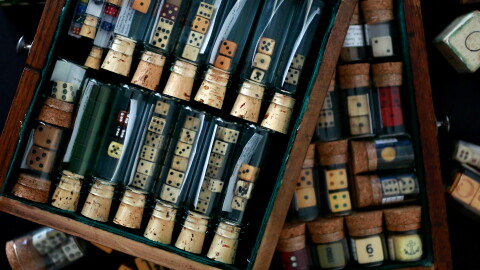 Jessica Oreck/CourtesyFor the next several days, you can tour a huge RV trailer packed with drawers of dice, erasers and just about anything you can imagine that’s both tiny and collectible. The Show’s Amber Victoria Singer got a virtual preview from its founder and curator.
-
 Axios/HandoutThe murder of Arizona Republic reporter Don Bolles in 1976 is still one of the most notable events in Phoenix history. But despite that, nobody’s written a comprehensive historical book about the case — until now.


MARK BRODIE: KJZZ’s original production, “The Show,” is supported by Banner Health, Arizona’s largest nonprofit healthcare system. Last year, Banner reinvested more than $1.1 billion in community health and charity care. Banner Health, nonprofit for Arizona,bannerhealth.com/nonprofitforaz.
Hi, I’m Mark Brodie, co-host of “The Show,” an original production from KJZZ. Every weekday, we bring you the latest news and culture from across the state. You can find much more at theshow.kjzz.org. Here’s today’s episode.
MARK BRODIE: Good morning. It’s “The Show” here on KJZZ 91.5 in Phoenix. I’m Mark Brodie.
LAUREN GILGER: And I’m Lauren Gilger. Coming up, a former office building is finally open to residential tenants.
MARK BRODIE: And our spotlight on collections continues with an RV trailer you can tour that’s packed with every tiny collectible you can imagine.
LAUREN GILGER: But first, for the last 70 days, activists have been camped in and around the so-called Grandmother Cottonwood tree along the border in southern Arizona. The immense tree towered over the horizon there until this week when dozens of Border Patrol agents swarmed the camp, arrested at least a dozen people, forcibly removed those camped in the tree and took down the estimated 250-year-old tree in one fell swoop.
[SOUND OF TREE FALLING AND PEOPLE SCREAMING]
There were more arrests at the camp yesterday, and KJZZ’s Alisa Reznick is there now this morning to tell us what’s going on. Good morning, Alisa.
ALISA REZNICK: Good morning, Lauren.
LAUREN GILGER: OK, so just describe the scene for us. I know you’re not right where the tree is. There’s a lot of Border Patrol around, but what are you watching?
ALISA REZNICK: Right. So, you might be able to hear some construction work behind me. I’m right next to the border wall road, maybe 100 yards away. There is a barbed wire fence that’s blocking off access to this road and these big yellow earth movers that are driving up and down the road. You can also see these parked Border Patrol vehicles, Border Patrol agents walking up and down the road alongside contractors, and, of course, the big steel bollard wall. This huge black steel wall you can see snaking its way up the horizon, very close to where the old cottonwood that was chopped down earlier this week used to stand.
LAUREN GILGER: Right. OK, so you’re near this kind of tiny town of Lochiel. Tell us more about what happened there. These protesters, as we said, have been camped out for a long time, some in the tree at times, and they were on private land technically, right?
ALISA REZNICK: That’s right. Lochiel is this old border town. In fact, there’s an old Customs and Border Protection building here, used to be a border crossing, and it’s a lot of ranches. So, they are on a segment of private land inside the town of Lochiel that is owned by a local rancher who has given them permission to camp there. And the tree itself is right along the line of what’s called the Roosevelt Reservation. That’s the 60-foot stretch of land that’s owned by the federal government. That’s where the wall building is going on.
LAUREN GILGER: OK. There were more arrests yesterday after there were initial kind of the swarming of the camp that the Border Patrol did earlier this week.
ALISA REZNICK: That’s right. There were more arrests. We know that a few people were detained yesterday after starting another tree sit inside of a cottonwood tree ... right across the border in Mexico. There were a few clashes with Border Patrol, and there’s a heavy presence today. We know that at least — protesters say that about five people were arrested. Others were detained and released with a violation of a closure order citation. But CBP has not confirmed any of these arrests. In fact, the only thing they’ve said most recently is that those four trees were slated for removal, and they have been conducting operations here alongside construction workers.
LAUREN GILGER: Has Border Patrol answered questions, Alisa, about their decision to enter private property to make these alleged arrests?
ALISA REZNICK: They have not. So, the protesters say they asked Border Patrol to produce a warrant showing their legal authority to be on this land where they were camped, and they were not — they didn’t respond to that request. We have also, KJZZ, has reached out as well asking if they had a warrant, how many arrests took place, what were their charges, and we haven’t heard anything on that front from the Border Patrol. So, it’s kind of an open question.
LAUREN GILGER: Yeah. I know you’ve spoken with protesters there. Tell us more about what we know about what happened the day the tree was taken down. It was sort of a swarm at the camp. Was someone in the tree at the time, it sounds like?
ALISA REZNICK: That’s correct. Someone was in the tree just before it was taken down. That person was also forcibly removed, according to protesters, using a cherry picker crane. There’s some footage that protesters shared with journalists that is actually taken from whoever was in that tree. It’s this wooden platform high in the tree, about 50 feet high. And you can see just this big crane coming down. You can sort of hear those screams like we heard before as people are getting arrested. Others say they were shoved into barbed wire and tackled to the ground as they attempted to get closer to the tree before it was taken down.
LAUREN GILGER: Tell us more about why this particular cottonwood tree has become so important in this fight, right? Like it’s almost a symbol, it sounds like, for what’s happening on the border right now.
ALISA REZNICK: Yeah, it has become certainly very symbolic. This was a grove of four old cottonwood trees that CBP said were slated for removal, that could not remain. Environmental groups and activists tried to write letters to DHS requesting that they reconsider or have environmental monitors present, and pointed out that these are trees that are used by migratory birds for nests.
But in the end, they were still slated for removal. So, even though it is a grove of just these four, it really has become very symbolic of, I think, what a lot of activists here in Arizona and border-wide feel is just this sort of unstoppable border wall effort despite public opposition to it. It should also be noted that CBP right now is asking for public comment in the Tucson sector, which includes this area, about border wall construction that they’ve already started to build.
LAUREN GILGER: ... Last minute here for you, Alisa. You mentioned that they asked for environmental monitors to be a part of this. Has that happened? Has Border Patrol said at some point that there have been environmental monitors involved in this process?
ALISA REZNICK: They have said that they have been present. Protesters have said otherwise. They say that the monitors that they had were not specialists to what they were supposed to be monitoring. You know, this also comes on the heels of other issues with the border wall construction. Earlier this year, an intaglio that was recently found to be older than Stonehenge or the Pyramids was damaged by border wall construction when contractors drove on top of this earth etching.
LAUREN GILGER: Yeah, we’re going to talk about that in just a moment. That’s KJZZ’s Alisa Reznick joining us from Lochiel on the border. Alisa, thank you for your reporting. Thanks for coming on.
ALISA REZNICK: Thank you, Lauren.
LAUREN GILGER: And now let’s turn to that other part of the border where President Trump’s promised border wall is also being built, this time within the Cabeza Prieta National Wildlife Refuge west of the town of Ajo. Here, border wall crews did not down a 250-year-old cottonwood tree, but they, as Alisa mentioned, bulldozed through an ancient Indigenous geoglyph called the Las Playas Intaglio.
Drone video from the Center for Biological Diversity shows border wall crews drove right through the 272-foot depiction of a fish that’s etched into an ancient lava field on the desert floor. And now, new research shows the ancient site is much older than previously thought. In fact, it’s now confirmed to be the oldest known scientifically dated geoglyph in the Americas, 2,000 years older than the first Pyramids built in Egypt.
The revelations are sparking outrage among environmentalists and scientists across the globe. David Whitley is one of the archaeologists behind that new research, which was published in the Society for American Archaeology’s Archaeological Record, and I spoke with him more about it.
DAVID WHITLEY: Little known to most people, I believe, is the fact that there are series of large earth figures, what we call technically intaglios, in southern Arizona and eastern, southeastern California found on desert pavements, which are surfaces covered with with gravel, basically. I think everyone has probably heard of the Nazca Lines, and those, of course, down in Peru are famous because people argued that they had been made to to communicate with with aliens, which is nonsense.
But what we have in this region is very similar. It’s just much less known. And these are created on these desert pavements by scraping a design into that surface, so it creates a a negative design, if you will. The use of these sites continues to be an ongoing Native American tradition, which makes it, in my mind, all the more important. This is not something that’s just ancient. These were religious symbols. They were located at places commonly where mythic events occurred, and people went to these locations on pilgrimages. To use a Catholic analogy, you could think of these as like the Stations of the Cross on a landscape scale.
LAUREN GILGER: And they’re huge, right?
DAVID WHITLEY: The motifs themselves are quite big, up to around 60 yards in length, almost a football field.
LAUREN GILGER: Right. So, you have research out that is making a lot of headlines right now because it shows that what we thought were, you know, maybe 1,000-year-old intaglios, this one in particular along the border region here, are, in fact, much older than we might have thought. How much older?
DAVID WHITLEY: Well, it surprised us, too. The date I got with my colleague, Ron Dorn at ASU, places this particular intaglio, known as the Las Playas Intaglio that was damaged by border construction, between 6,500 and 7,300 years before present. Six months ago, I never would have guessed that any of these were that ancient. We had just completed a study of some sites just over the border in California on the other side of the Colorado River, and we had one that was about 5,900, 6,000 years ago. So, then it became evident that this tradition was really, really quite ancient.
LAUREN GILGER: Right. You’re talking like the oldest known scientifically dated intaglio geoglyph of its time in the Americas, right?
DAVID WHITLEY: That is correct. And even more, I mean, contextually, Stonehenge was built about 5,000 years ago. The Egyptian pyramids were, the earliest ones, about 4,500 years ago. And the Nazca Lines are at most 1,500 years old. So, this is substantially older than all of these things. I mean, if we think about it, it’s potentially 2,000 or more years older than Stonehenge.
And actually, I should mention a scientific minor scientific point here, which is the dates we obtain on these are what we call minimum ages. What we’ve gotten has to be the youngest age it could be. It could be older, but I suspect that our date is probably pretty close to right on. But there’s the potential that it could be 10,000 years old, and, you know, some disturbance occurred then.
LAUREN GILGER: My goodness, yeah. So, I mean, you’re comparing it to Stonehenge. This is much older than the first pyramids in Egypt, these kind of world-renowned sites of history where people go and visit and learn and, you know, reflect on human history, right? Like, it strikes me that the opposite is happening with this particular intaglio.
DAVID WHITLEY: Yes, and I mean, as I say, this is as an archaeologist, I can say that this is very, very ancient, and that makes it very important. But also, we have to step back and say, this is still part of the active religious tradition and ritual practices of the Native Americans, in this case, Tohono O'odham. And that breaks that barrier in a sense. It humanizes. It’s not simply important for some kind of sterile historical analysis. It’s also part of a very, very ancient, but continuing, ongoing religious tradition. And it deserves all the more respect and care for that that reason.
LAUREN GILGER: So, I mean, what does this say to you about the way that we think about this particular region, the importance of something like a border wall to our political system right now, to our government? And, you know, potentially, what does it say to you about the way we value Indigenous history in this country?
DAVID WHITLEY: Well, that that is easy to answer, that last question. At this point, our federal government is not appreciating it, caring for it, concerned about it at all. I think that the average American person actually does value it quite highly. Without getting into the politics of do we need a border wall or don’t we, the the point is that if the American public decided we needed a border wall, it could be constructed without damaging these irreplaceable, remarkable remnants of the past.
I mean, this has lasted for effectively 7,000 years. It was seriously damaged in moments. And that’s the part of the fragility of these sorts of things, and why I think we need to even respect them even more, recognize their rarity, value them, appreciate them. And I just I don’t understand the rush to get this job done without regard for the impacts that are going to last forever.
LAUREN GILGER: All right. We’ll leave it there. David Whitley is an archaeologist. The new research was published in the Society for American Archaeology’s Archaeological Record. David, thank you very much. I appreciate you coming on.
DAVID WHITLEY: You’re very welcome.
MARK BRODIE: Good morning. It’s “The Show” on KJZZ 91.5. I’m Mark Brodie.
LAUREN GILGER: And I’m Lauren Gilger. Coming up, how a filmmaker turned her collection of collections into a full-time job.
MARK BRODIE: But first, a high-profile office-building-to-residential-conversion project is set to welcome its first residents. The building, located at Central and Camelback, has been under construction for several years. But now, One Camelback is ready to serve as housing.
Corina Vanek covers growth and development for The Arizona Republic, and she joins me now to talk more about this project. Corina, good morning.
CORINA VANEK: Hi. Good morning. Thanks for having me.
MARK BRODIE: Thanks for being here. So, this has been under construction for what seems like — I know it’s not actually forever, but it seems like forever.
CORINA VANEK: It has. It started construction in 2019, so actually before kind of the reckoning that came with COVID-19 for office buildings. So, it was kind of a trendsetter in that way. But yeah, under construction from 2019 to just last week it finished.
MARK BRODIE: And what took so long? This is obviously a big building, but that’s a long time.
CORINA VANEK: Big building and it was a long time, but there wasn’t construction for a lot of that. So, it kind of went in stops and starts. It happened — if you’re familiar, it was kind of gutted. It looked like what I would call like lasagna for a while, kind of in layers that were empty. And that went on for a few years of kind of that conversion process. And then it really stalled. So, it stalled almost finished with construction, and the original developers went into foreclosure.
The lender then in 2023 bought the building back in the foreclosure auction, and it sat kind of still dormant for another two years before it was bought by a Mesa-based developer who did come in and finish the project.
MARK BRODIE: Was there a thought at any point during that period where it was in foreclosure and the lender owned it that maybe it just wasn’t ever going to get finished?
CORINA VANEK: I think a lot of people thought that, that it was, you know, stalled. And one thing that I learned throughout covering this process is that it’s very hard to get insurance on a project like that that’s been sitting for so long that, you know, you kind of don’t know who did the work or how long ago some of that work was done. So, there’s a lot of hurdles there that maybe people don’t think about that can make it very difficult to get something like this done.
MARK BRODIE: OK, so you’ve been in this building since it’s been completed. What does it look like?
CORINA VANEK: I have been in. I was actually surprised I went in pretty soon after the new owner bought it. And I was surprised to see it was like 90% done. Like a lot of the apartments were already basically what you would call livable. The rooftop pool was finished, like you could have gone swimming if you wanted to.
But since then, I went in last week when it was nearing opening, and everything else has been finished. The main lobby is open. Kind of the fun, weird quirk of this building is that, obviously, as an office building that was built in the ’80s, it looks a little odd. But there’s an atrium that’s 11 stories tall in the middle.
MARK BRODIE: Wow.
CORINA VANEK: So, you kind of have balconies, but they’re internal. They’re not from the units, but when you walk out of your unit, you can see down 11 stories. So, kind of does look like a maybe an Embassy Suites type look from the inside. But they’ve actually made it really beautiful. It looks, you know, inviting and high-end, like what they were aiming for.
MARK BRODIE: Yeah. So, these are I assume like high-end luxury-type apartments. What what do they look like? What what’s the layout of those?
CORINA VANEK: Yeah. So, the layout of each is kind of funky, for lack of a better word, because of the way that the building is shaped. It’s kind of a triangle.
MARK BRODIE: Yeah.
CORINA VANEK: So, they range in size from studios to three bedrooms. And the three bedrooms, they call them penthouses, they have a bedroom that has the full 360-degree view of the Valley, which is really cool. But so, some of them have, you know, bedrooms that face to the outside, and some are internal. The exposed ceiling is kind of an interesting industrial-looking choice. So, they are look — they look modern despite kind of the building being a lot older.
MARK BRODIE: OK. So, a couple years back, state lawmakers and the governor decided to basically require cities to allow this kind of office-building-to-residential conversion. Obviously, the Valley needs a lot more housing. Could this potentially serve as a template for — we haven’t seen a whole ton of these kinds of projects. Might there be more?
CORINA VANEK: There are a handful that are kind of working their way through the process. But I think more than a model, this might serve a little bit as a cautionary tale that these are very difficult to do. When you think of an office building, you think of maybe the bathroom is one shared bathroom per floor. But in an apartment, obviously, everybody needs their own. Everybody needs a kitchen.
Fire safety is different in apartments. There’s all sorts of changes that would need to be made to an office building to make it suitable for apartments. So, not to say that it’s impossible, obviously, it can be done. But I think that something like this that was under construction for a long time, that now is, you know, finished and ready to go, kind of shows that even when you are prepared and you have construction going on, this can be quite difficult to do.
MARK BRODIE: Have you heard from developers or other people in that world that maybe they’ve learned any lessons from this one that they can apply to maybe not make some of the same — to the extent mistakes were made, not make some of those same mistakes again?
CORINA VANEK: Yeah, I think that some of this was a little bit of like bad luck. The pandemic happened kind of during the middle. So, there’s some things that probably couldn’t have been avoided. But, yeah, I think that, you know, developers can look at this and say, now we do have a little bit of a template that this might work, and we can look at it and say, these are the changes that need to be made right away. These are the things that, you know, are most important for these projects. And we do have a handful of other conversions in different stages in the Valley that hopefully will will come to fruition, too.
MARK BRODIE: OK. And in terms of how many do we know how many units are in this building? It’s a fairly large building.
CORINA VANEK: Yeah, this building is 163 units. So, you know, by apartment standards, it’s not a ton of units for something that’s 11 stories tall, mostly because of the shape and because the interior is hollow. So, kind of some limitations there, but, yeah, 163 units here.
MARK BRODIE: And some number of them have already been rented, people are going to start moving in soon, right?
CORINA VANEK: Yeah, people actually started moving in on Thursday of last week. So, that was the first day that it was open. They said that about 20% were leased at the time. I guess we’ll see kind of as it opens if more people get on board there.
MARK BRODIE: Sure. All right, that is Corina Vanek. She covers growth and development for the Arizona Republic. Corina, thanks.
CORINA VANEK: Yeah, thank you.
MARK BRODIE: Phoenix is asking for input on a plan to add more electric vehicle charging stations around the city. The Charging Infrastructure Action Plan finds the city has more than 900 charging station locations and more than 2,700 charging ports, but wants to add up to 1,900 more ports by 2030.
And city officials are focusing on high-mileage drivers and delivery vehicles that need places to plug in and charge.Residents can comment on the draft plan through October 14. A final version could be done by the end of the year.
Carla De La Chapa joins me to talk more about this. She’s Phoenix’s chief sustainability officer. And, Carla, what is the goal in your mind of this plan? What are you hoping to achieve with it?
CARLA DE LA CHAPA: So, what we’re looking for is really to focus on expanding what we consider reliable and driver-centered charging for people who live and work around the city. We have noticed that the charging infrastructure that is going up right now tends to be focused on certain corridors and not focusing on the high-mileage drivers or delivery drivers. So, we want to ensure that we are focusing on driver-centered charging infrastructure.
MARK BRODIE: What are some of the parts of town that you think maybe are not getting served as well as they should be?
CARLA DE LA CHAPA: Sure. So, first of all, the primary growth has been either in Central Phoenix and/or some of the northern areas around Phoenix, and and even outside city of Phoenix in the I’d say the northern Maricopa County area. So, you see some major gaps in south Phoenix and the West Valley. There’s also some areas that are north, but they’re sort of outer fringes outside of city of Phoenix, but still important for us to contribute to near Cave Creek and Queen Creek areas.
MARK BRODIE: So, when you talk about like high-mileage drivers, delivery drivers, it sounds like you’re not necessarily looking to cater just to people who own EVs, right? Like you’re looking to help folks who maybe drive Uber or, you know, have electric delivery vehicles, things like that? Is that a fair assessment?
CARLA DE LA CHAPA: That’s absolutely right. We really want to ensure that we’re supporting those ride-hail drivers, and, you know, small businesses now are really looking to convert their delivery service vehicles to electric, and this helps support local small businesses with delivery drivers and making sure that they have the benefits for all of this charging opportunity that’s out there, and they can electrify as well.
MARK BRODIE: Is that a different need or maybe is there a different thinking that goes into putting charging infrastructure in in particular places when you are looking at delivery drivers, high-mileage vehicles, as opposed to people who own EVs, who are maybe driving them to, you know, charging them at home, maybe charging them at work, things like that?
CARLA DE LA CHAPA: Yes. So, our our consultant really helped us look at where the current high-mileage drivers are located, or we sort of called them nodes, and this is just where they gather or tend to do their work. And that’s how we noticed where many local small businesses or those, you know, Uber or Lyft drivers are having trouble finding chargers because they they deliver all over town and specific portions of towns.
You know, we have local small businesses all over Phoenix. And we were really able, from their input, to see where these gaps were, and we overlaid that with all of the existing EV infrastructure as well. So, it all became very clear once we put these sets of information together, but particularly gathering feedback from those high-mileage drivers and small-business delivery drivers.
MARK BRODIE: It looks like one of the things that maybe they told you was that having some chargers around Sky Harbor would be helpful?
CARLA DE LA CHAPA: Absolutely. So, that is a wonderful opportunity for city of Phoenix to expand on. Sky Harbor is a gem for city of Phoenix. So, we are already working on expansion, and there’s a lot of work going on at Sky Harbor. So, it is definitely in the future plans, and we know that in and around Sky Harbor is really vital for those high-mileage drivers, especially doing rideshare work.
MARK BRODIE: Are there certain types of places where these drivers say that that they would like to have charging stations? And I ask because, you know, for example, we’ve been hearing about how some businesses are are putting chargers, you know, in their parking lots with the hope that drivers will, you know, park their cars, charge them up and go shopping while they are while their cars are charging, while their vehicles are charging.
I wonder if there’s anything different that goes into the thought process for where you actually place the charging infrastructure if it is for people who are doing, you know, lots of driving, delivery, that kind of thing?
CARLA DE LA CHAPA: Absolutely. Public and easy access is the absolute goal. That’s our North Star for any infrastructure that city of Phoenix puts in. So, really focusing on properties and locations that are highly accessible to the public, and also easy to access, so in corridors that make sense for them where they’re driving. And where they’re really driving around town makes the most sense for us.
MARK BRODIE: Could that include city-owned properties, things like parks or places like that?
CARLA DE LA CHAPA: Absolutely. So, Phoenix has already done a great deal of electrification. We’ve really been committed to this transition. You know, in 2022, we passed a Transportation Electrification Action Plan. In that action plan, we particularly wanted to increase the number of EV chargers, and you’re exactly right, we installed them at parks, at our libraries, some in the city garages downtown and parking lots. So, we absolutely know that having our properties that are publicly accessible are a big key to helping augment all of the chargers we want to see in Phoenix.
MARK BRODIE: Where is the money coming from to to put in additional chargers around the city?
CARLA DE LA CHAPA: So, I see this as a a public-private partnership. There can definitely be private funding and EV charging put in by larger businesses that can do that. But the city of Phoenix also is very focused on ensuring that we receive federal grant dollars. The city of Phoenix was awarded a $15 million Charging and Fueling Infrastructure grant in late November 2024, but that’s currently on hold right now due to the administration’s hold on grants and review. So, we are very hopeful that we’ll see that $15 million come through and help us increase and and meet our goal of adding far more EV charging infrastructure.
MARK BRODIE: If that money though doesn’t come through, are there other places the city can look to make up at least some of it?
CARLA DE LA CHAPA: The city does have several ways to fund projects. We do have a bond process that we can look at, and we also can do, you know, small projects a little bit at a time. Each department can focus on areas to add EV charging. So, we do know we can always make small incremental improvements to the chargers out there, but we would like to see, you know, the grant funds come through and have us really install some very helpful and broad-range EV chargers all over Phoenix.
MARK BRODIE: All right, that is Carla De La Chapa, chief sustainability officer with the city of Phoenix. Carla, thanks so much.
CARLA DE LA CHAPA: Thank you, Mark.
MARK BRODIE: Good morning. It’s “The Show” on KJZZ 91.5. I’m Mark Brodie.
LAUREN GILGER: And I’m Lauren Gilger. We continue our collection of conversations about collecting today with the arrival of the Office of Collecting and Design. For the next several days, you can tour a huge RV trailer packed with drawers of dice, erasers and just about anything you can imagine that’s both tiny and collectible. “The Show’s” Amber Victoria Singer got a virtual preview from its founder and curator.
AMBER VICTORIA SINGER: Jessica Oreck has been collecting for her entire life.
JESSICA ORECK: My parents say that before I could talk that I was collecting, collating little bits of dust and insect eggs and all sorts of weird stuff. I’ve always been drawn to the things that people don’t necessarily look at, but then when you put them together in bulk, they have their own charm. They have their own magic.
AMBER VICTORIA SINGER: The inside of the 42-foot trailer for the Office of Collecting and Design has a cozy, magical feel to it. The wood-paneled floor peeks out from underneath colorful floral rugs. An ornate lamp hangs from a dark blue ceiling with gold stars. The sage green walls are lined with over 300 drawers of all shapes and sizes, from toolboxes to printers’ drawers to flat file cabinets. There’s even a collection of miniature sets of drawers lined up on a flat archway.
Oreck is an artist and filmmaker, and the Office of Collecting and Design first started as a studio space to keep her stop-motion animation props organized in one place.
JESSICA ORECK: Because I am who I am, I built it out very thoroughly and aesthetically. And my friends and family were like, “You know, you should really open this to the public.”
AMBER VICTORIA SINGER: And so, Oreck opened the space for anyone who wanted to look through her collections for limited hours in an ordinary Las Vegas strip mall. And it was a huge hit.
JESSICA ORECK: Now I no longer have time to animate. I only do the museum.
AMBER VICTORIA SINGER: A couple years into this, Oreck started dreaming of taking her project on the road. So, she bought an old RV and completely transformed it into a mobile Office of Collecting and Design.
JESSICA ORECK: When I was little, I wanted to be a long-haul trucker. And so this felt like the perfect combination of things. I get to be, um, you know, spreading this museum, doing this thing that I love, and also get to be on the road all the time.
AMBER VICTORIA SINGER: One of Oreck’s oldest collections is one she started when she was 11 years old: unplayable dice.
JESSICA ORECK: I call them unplayable dice because, um, they’re dice that are are imperfect. So the pips are off, or the corners are chipped, or they’re handmade, like these are cow bone from the late 1800s.
AMBER VICTORIA SINGER: Oreck says she has somewhere between 15 and 25 drawers of unplayable dice.
JESSICA ORECK: If the place was on fire and I could save one collection, I’m probably save the dice.
AMBER VICTORIA SINGER: Visitors of the Office of Collecting and Design are encouraged to open every drawer and touch the collections.
JESSICA ORECK: This is a collection of used pink erasers. This is a drawer of miniature food. So we’ve got like tiny, tiny candy canes, hot dogs, all sorts of different fruit on this side. This is a drawer of eyeballs, so like teddy bear eyeballs, doll eyeballs. We have one glass eye, you know, plastic bouncy ball eyeballs. We have a collection of tiny chairs. There’s a residue of attention, like some of these things were very well-loved, and you can feel that when you hold an object. And that’s that’s a pretty critical part of it to me.
AMBER VICTORIA SINGER: Several large glass jars sit on an island in the middle of the room.
JESSICA ORECK: Our collection of lost buttons. Every single one of these buttons was part of a garment at some point and had a life. We’ve got handmade paper confetti from a piñata shop in Mexico. We’ve got marbles. We’ve got giant pencils, um, hand-carved letters, alphabet letters, some very old dice, of course. Individual matches are every single one is a slightly different color, and I’m fascinated by that. So we have a whole rainbow of matches.
AMBER VICTORIA SINGER: Some of Oreck’s collections have a story behind them, like the small faces carved out of tagua nut. They’re small enough to fit in the palm of your hand and look similar to the edible part of a walnut. About a dozen of them sit in their own wooden case with a few black-and-white photos.
JESSICA ORECK: I found them at a at an antique shop in upstate New York. I rang the bell, and these two ancient humans came out from behind the the antique shop in the little house there, and they both had their napkins tucked into their shirts. And they they were like, “Oh, we’re just having some supper, but come on in.” Like 4 o'clock in the afternoon. So we go into the antique shop, and I picked these out, and Iris, the woman that ran the antique shop, said, “Oh my gosh, our friend Art Koch carved those. He was film-star handsome. Let me see if I can dig up some pictures.”
So she found these pictures of Art Koch, who was the guy that carved them for me. He fought in World War II and came home safely and lived a long life and carved these things in his older age. And he died, but now I have them here in the museum, and I love that I get to sort of carry on his legacy.
AMBER VICTORIA SINGER: There’s also a story to go along with Oreck’s collection of foreign chewing gum that fills up several drawers.
JESSICA ORECK: I dated a a rodeo star who was addicted to chewing gum, like would put in a piece of gum very first thing in the morning before he turned on the light. We stayed friends for a long time, and so for years, I would send him chewing gum from everywhere I visited in the world. And, um, yeah, at some point he got married, and his wife was like, “Who is this woman that’s sending you chewing gum?” And so he sent me all the chewing gum back.
AMBER VICTORIA SINGER: The Office of Collecting and Design is currently on its fall tour throughout the Southwest. For “The Show’s” podcast, I’m Amber Victoria Singer.
LAUREN GILGER: You can find out how to visit the Office of Collecting and Design in Chandler or Tucson at our website, theshow.kjzz.org.
LAUREN GILGER: Good morning. It is “The Show” on KJZZ 91.5. I’m Lauren Gilger.
MARK BRODIE: And I’m Mark Brodie. The murder of Arizona Republic reporter Don Bolles in 1976 is still one of the most notable events in Phoenix history. In April, Axios Phoenix reporter Jeremy Duda published a comprehensive historical book about the case. He’ll be hosting an event at Changing Hands Bookstore in Phoenix tonight for the book, “Murder in the Fourth Estate: The Assassination of Investigative Journalist Don Bolles.” I spoke with Duda earlier this year about the case and his book, and we started with what Duda’s research process for this project was like.
JEREMY DUDA: Extraordinarily intensive, probably a lot more so than I probably realized when I started out, because, you know, you have to remember this case spanned nearly 20 years from, you know, the day of the bombing in 1976 until the last round of trials in 1993. So, almost two decades. There were a lot of there were many associated cases that branched off. The investigations branched off in a lot of different directions.
And so the Attorney General, which Attorney General’s Office which led the investigation, their case file, which is at the State Archives now, it makes up something like 150 Bankers boxes full of documents. And that’s not including some I think a couple dozen I think that are still under, I think, court-ordered seal. And so this was a many-years-long process of going to the State Archives, making copies of these documents, trying to figure out which ones you’ve seen, which ones you haven’t, because a lot of doubles, lots of 300-page court transcripts, police reports, investigative reports, all kinds of stuff, you know, copying these, taking them home, making notes, figuring out kind of a cohesive narrative out of all that. And then on top of that, there’s ongoing coverage with interviews with some of the folks who were involved in the case who were still around, folks who knew Bolles, folks who were involved in the investigation and the trials. So, this was an extremely intensive research process. And from start to finish, this took me about a decade.
MARK BRODIE: Wow. So, during the course of the research, did you change your opinion about the case? Like, did you start to see it differently based on what you had known before you started doing all the research?
JEREMY DUDA: In some ways. There are, I think a lot of folks probably don’t realize there are this was it was extremely controversial in terms of there are people who still today feel like the, you know, the Phoenix Police Department and the Attorney General’s Office got it wrong. I am not really I’m not in that camp. You know, I started off with an open mind. Didn’t want to state well, these people these are the people who definitely did it, and I’m not going to budge from that. Started off with an open mind. And I there are areas where you can see why people have questions, why people take issue with, you know, different aspects of investigation. Ultimately, I feel like they probably got the right people. I don't know if they necessarily got all of them. I’m very skeptical that Kemper Marley was involved, which is kind of what most people assume today and which was, you know, the theory that was presented in court for many years. But, ultimately, I still feel like they probably they most likely convicted charged and convicted the right people.
MARK BRODIE: Well, so what do you think it says that even to this day, there is debate and some questions about who is actually behind this, who did it?
JEREMY DUDA: So, a lot of the I think it says a lot of the motivations and a lot of the details are a little bit unclear. And you have to kind of start with the lead suspect in the case, you know, John Harvey Adamson, who is not the most reliable person in really any walk of life. And so much of the investigation, so much of the official theory of the case kind of relies on him and what he told investigators when he took his plea deal. And so you have to there’s a lot of things where you kind of have to take him at his word, and not everything and some things can be corroborated, some things can’t. There are other sources of information, people who write a very critical leads in that case besides him.
And you have to remember that Don Bolles, he was an investigative reporter for, you know, here for many years. You make a lot of enemies doing the kind of reporting that he did. By the end of, you know, by the time he died, he was at the Legislature. He was doing, you know, more traditional, you know, political reporting. But for many years before that, he was investigating the mob. He was investigating the local dog racing circuit. You know, digging into the business of a lot of people who don’t like people knowing their business. And you make a lot of enemies. For years, he would put, you know, a piece of Scotch tape on the hood of his car so he could see if someone tampered with it. It wasn’t uncommon to get, you know, threatening phone calls or letters at his house. Took a lot of precautions to kind of make sure.
And a lot of that had kind of fallen by the wayside by the time he was, you know, by the time he died, because, you know, again, he was at the State Capitol. He wasn’t wasn’t digging into mobsters and what not, so he wasn’t dealing with the same kind of level of danger he’d been used to. And, obviously, that kind of he was dealing with a lot more danger than he probably realized at the time.
MARK BRODIE: Yeah. What surprised you during the course of doing this research and writing the book, like surprised you either about the case or about the people with whom you spoke or stuff you found?
JEREMY DUDA: I think probably the most surprising is how little, for as famous as this case is in the Phoenix area, for as well-known, you know, such a landmark event in Phoenix history, how little most people actually know about the case. What most people know is, you know, Don Bolles went to the Clarendon Hotel in, you know, June 1976 to meet a source, his car got blown up in the parking lot. You know, John Harvey Adamson said, you know, Max Dunlap hired me to kill Bolles at the behest of Kemper Marley because he was mad about a Racing Commission appointment, and that’s pretty much kind of what most folks know.
And they don’t realize that, you know, competing theories about who might have been involved, about how many other cases were involved. There was a trials about, you know, the beating of a talent agent, about the attempted bombing of an Indian Health Services building, so many different kind of winding paths this case went down. You know, the original murder convictions were overturned. You know, Adamson, you know, initially refused to testify, so the Attorney General’s Office said, “Fine, we’re just going to try put you on trial and sentence you to death.” And the case was in limbo for years. There’s, you know, people turning over rocks and, you know, sticking their noses into as many corners as they can.
But there was so much information out there, so many details, so many kind of random different, you know, kind of random points. And most people just have no idea. All they all most people know is just those most kind of basic details of, you know, the bombing and like the the nutshell version of, you know, the law enforcement theory of what happened.
MARK BRODIE: So, especially given that that so many people don’t know, you know, too much about the case other than sort of the the basic details of it, what about this this case and about what you learned about still resonates all these years later now?
JEREMY DUDA: In large part, I think it’s that, you know, the press, reporters are gen- were generally not folks who you would expect to be in this country, are not generally subjects to that type of violence. You know, Bruce Babbitt, who was attorney general at the time, said there’s an unwritten rule, you know, with the mob that, you know, reporters and judges and cops are off limits. And, you know, that rule was violated. So, I think, you know, in large part it kind of resonates because that’s such an unusual event to happen in this country. Other countries, unfortunately, you see, you know, that type of violence, but here, you know, so a reporter shows up for a meeting with a source, you know, gets into his car in a hotel parking lot, turns the key, and, you know, you know, a bomb explodes under him, that’s that just does not happen in this country. You know, back didn’t happen back then, doesn’t really happen now, and so I think it still kind of grabs folks’ attention.
MARK BRODIE: So, do you feel more confident in your feeling about what happened now than you did before you started this?
JEREMY DUDA: Not necessarily. I think, you know, I’ve looked, you know, I think I’ve spent enough time looking at some of the alternate theories and alternate suspects to say, like, here’s why I feel like I can rule them out. Here’s why I don’t believe this person was involved or that person was involved. At the same time, I’ve learned enough to understand kind of why people have questions about, well, did the police look into, you know, these suspects well enough? We still don’t know. We still don’t know what happened in this aspect. This wasn’t there’s still a lot of questions about this.
Like, for example, I think one of the most fascinating things that I’ve learned in the case that I think very few people know is that in the early to mid-1980s, there was a mafia hitman from Chicago who became a federal witness who told investigators that he and his partner had been offered the contract to kill Bolles, and ultimately turned it down. One of the reasons they said they turned it down was that the people who were giving them the job insisted that it had to be done with a bomb, and they’re like, “We don’t do bombs. That’s not kind of how we do our business.” So, and plus they felt like, ah, whoever does this job is going to be they’re going to be kind of set up to take the fall, and we don’t want to be in that position. So, this went back Chicago and, you know, apparently it went the job went to someone else. But we don’t know who offered that to him. We don’t really know why. And that was that’s a, you know, fascinating thing that never that probably never got, you know, completely, you know, run down.
MARK BRODIE: All right. That is Jeremy Duda with Axios Phoenix. His newest book is called “Murder in the Fourth Estate: The Assassination of Investigative Journalist Don Bolles.” Jeremy, congrats on the book. Thanks a lot.
JEREMY DUDA: Thank you.
LAUREN GILGER: Thanks for listening to “The Show” podcast. “The Show” is produced by Sativa Peterson, Nick Sanchez, Amber Victoria Singer, and Kaely Hamilton. “The Show” was created by John Hobin, and our executive producer is Amy Silverman. You can find more of “The Show” and sign up for our newsletter at theshow.kjzz.org. You can also find us on Instagram @kjzztheshow.