


We’ll take a deep dive into two propositions on your ballot that aim to restrict taxes. And how design and architecture can mitigate the impact of extreme heat. That and more on The Show.
Ways To Subscribe


-
 Megan Mendoza/Arizona RepublicThe Forest Service is closing off a long stretch of the border to protesters and the public alike, raising issues of transparency as they claim its unrelated to confrontations.
-
 Democratic state Sen. Brian Fernandez was appointed to fill his mother’s seat in the state Legislature in 2021. And since, he’s faced two allegations of conflict of interest in his work as a lawmaker.
-
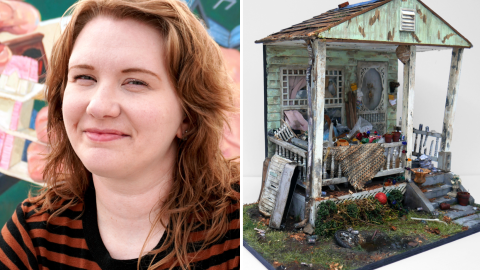 Briana Sepúlveda Kelly, Amanda Kelly/CourtesyAmanda Kelly is an artist based in New York City. She has a new exhibition at The Mini Time Machine Museum of Miniatures in Tucson called “The Need to Keep.” In it, she shows scenes that have a lot of stuff in them, from bathrooms to kitchens to end tables, all in miniature form.
-
 Tim Agne/KJZZhe event, called PhiusCon, is being put on by a nonprofit called Phius, which certifies professionals in its passive building standard. This is the first time in the conference’s more than two-decade history that it’s taking place in the Southwest.
-
 Getty Images/iStockphotoArizona voters will decide the fate of two propositions aimed at restricting taxes. But where will funding for city services and state roads come from without them?


KJZZ’s original production, “The Show,” is supported by Banner Health, Arizona’s largest nonprofit healthcare system. Last year, Banner reinvested more than $1.1 billion in community health and charity care. Banner Health: Nonprofit for Arizona.bannerhealth.com/nonprofitforaz.
LAUREN GILGER: Hi, I’m Lauren Gilger, co-host of “The Show,” an original production from KJZZ. Every weekday, we bring you the latest news and culture from across the state. You can find much more at theshow.kjzz.org. Here’s today’s episode.
LAUREN GILGER: Good morning and welcome to “The Show” here on KJZZ 91.5 in Phoenix. I’m Lauren Gilger.
Coming up, we’ll take a deep dive into two propositions on your ballot that aim to restrict taxes and how design and architecture can mitigate the impact of extreme heat.
LAUREN GILGER: But first, the Forest Service is closing much of the U.S.-Mexico border in Arizona to the public until the day President Trump leaves office. In an alert posted late last month, the Coronado National Forest said it is closing a 55-mile stretch of land along the border until Jan. 20, 2029. But the closures are not just along the border. Parts of them reach well into the interior.
The move came just days after Border Patrol agents raided a protest camp set up in and around the so-called “grandmother cottonwood” tree near the small town of Lochiel, Arizona, earlier this week. Protesters were arrested and forcibly removed by crane from the tree itself before it was pulled down.
A Forest Service representative told the Arizona Daily Star that construction activity along the border creates an “inherent danger” and said the closures were unrelated to confrontations between border wall crews and protesters.
But southern Arizona Congresswoman Adelita Grijalva doesn’t that's what's driving this closure. She told me it’s all about transparency. Here’s our conversation.
ADELITA GRIJALVA: It literally is the militarization of our border, and this is what happens as a consequence of a really out-of-control rogue agency, in my opinion.
LAUREN GILGER: So the Forest Service closing this area, it's not just along the border line, right? ... We're talking about pieces of the Coronado National Forest, Buenos Aires National Refuge, parts of the San Rafael Valley as well. What do you make of the scale of this?
ADELITA GRIJALVA: Well, they're trying to limit access, because they don't want anyone to be paying attention to what they're actually doing. So they don't want the documentation, and they're trying to discourage people. They're pushing people out and then discouraging people from coming in. And so it's literally all of these little areas. They want to be able to do really whatever they want, whenever they want. And without public oversight and people paying attention to what's happening, the likelihood of them destroying even more of our beautiful desert is higher.
LAUREN GILGER: So to you, this is about transparency, lack of access. A lot of what's been published in the media and I think on social media and come to the attention of elected representatives like yourself, right, has been because people are down there watching, and they might not have known otherwise. A lot of this is very remote.
ADELITA GRIJALVA: Right. And using the border wall construction to justify the closing of dozens of acres of public lands at a moment's notice — people found out because they posted something on the website through January of 2029, that is unnecessary and deeply troubling.
And that's what we really should be very concerned about: What are they doing? Because the only people that are going to know are small owners that might be adjacent to where they're blowing up different areas. And we've seen the devastating consequences when DHS and its contractors operate without oversight along the border, including the destruction of Las Playas and Taglio. And so this is DHS following that same playbook: shut out the public, evade scrutiny, and recklessly bulldoze our lands and do really whatever they want.
LAUREN GILGER: Do you think this is in response to what happened in Lochiel where this grandmother cottonwood tree was just toppled this week and protesters were taken off even what was private land where they were camped out?
ADELITA GRIJALVA: Yes, I do. I do. And we, as Arizonans — and the nation, respectfully — deserve transparency about what's happening on our public lands. These are our public lands. And we should not be shut out from documenting the impacts of the border wall construction and all that goes into that.
LAUREN GILGER: What do you make of the Forest Service and the administration's argument, right, that this is because it's dangerous for folks, that these are active construction zones, there are equipment and trucks going through these areas, they want to keep people safe?
ADELITA GRIJALVA: I don't believe it. I don't believe very much of what we're hearing from this administration. I've also heard that they went through the proper channels to get the permits and that there were studies done. Literally, there's no way that that happened. And all this is about is the incredible waste of our tax dollars in building not the first wall, but a second useless, unnecessary border wall.
LAUREN GILGER: There are two in many of these areas, yeah. What are you hearing from your constituents about this particular move, but about in general concerns about what's happening in the borderlands, which have been the subject of so many lawsuits, so many protests?
ADELITA GRIJALVA: I think that for the longest time, our U.S. government would at least take into account what the impact is to the community around it, would at least talk in a nation-to-nation conversation with the Tohono O'odham Nation, for example. They would have conversations.
But right now, they're claiming this sort of eminent domain right that they can just do whatever they want, whenever they want. And some of what I believe is happening is that they have such an obscene amount of money to waste, really. So just $46 billion was allocated for border wall construction under the big ugly bill. And that's just scratching the surface of the $260 billion Congress has approved for immigration enforcement under Trump.
What we could be doing with those funds is what really frustrates me. In addition to the environmental impact and the impact to the communities of this second border wall, we could be reversing 10 years of cuts to SNAP. We could be enhancing Affordable Care Act assistance for more than seven years to lower the costs for people. We could offset more than two years' worth of Republican cuts to Medicaid. There's so much that we could be doing.
LAUREN GILGER: So you mentioned the "One Big, Beautiful Bill" there, the official name of it, I know you called it something else. And you mentioned some of the cuts that came with it, right, what could be done with these funds. The SNAP cuts are a big part of what came down with the "One Big, Beautiful Bill" with HR 1, right? I wonder, what's the impact of that looked like in southern Arizona in particular? Is this a big concern for folks there?
ADELITA GRIJALVA: Oh, absolutely. We saw 400,000 people lose their SNAP benefits, and that includes a lot of seniors. 200,000 children lost access to food. So when Trump promised getting rid of waste, fraud and abuse, I don't believe that what he was talking about is taking food out of the mouths of babies and their grandmothers and their grandparents. But a lot of these SNAP cuts are impacting senior programs that are really critical to so many people, especially in southern Arizona, in our community.
LAUREN GILGER: Let me ask you lastly a broader picture question about what's been going on with this border wall construction along the border, right? Because I wonder if you hear this from folks: This border wall has been built and is being built despite a lot of things. Despite lawsuits, protests, media reporting, environmental damage, now archaeological damage as you mentioned with this Las Playas and Taglio, which is now believed to be older than Stonehenge. Do folks ask you though, where is Congress on this? Why is this being allowed to happen anyway?
ADELITA GRIJALVA: Oh, we've tried to pass legislation. We've actually passed legislation, and Trump literally says, "I don't care." He goes around us anyway. That's why we have so many lawsuits, because he decides by executive order to do things that only Congress can decide.
Look at the situation we're in in Iran. That is a war that was not declared by Congress, even though we're spending a billion dollars a day. And unfortunately, in my case, for Democrats, we don't have a majority in Congress. But when we do, there will be hearings and consequences.
LAUREN GILGER: Right. Let me ask you that then. So you're talking about the attempts that you as a Democrat in the minority in Congress have tried to make to put a check on the Trump administration unsuccessfully. If after the midterm elections here, which are coming up rapidly, that changes, what will this look like?
ADELITA GRIJALVA: My hope is that one, we'll be able to have congressional hearings. Right now, we're having a lot of shadow hearings. And so I'll be able to take members of Congress down to the border to see firsthand the impact — and also advocate for fully staffing and modernizing our ports of entry.
So let's fix our broken immigration system. Let's become true partners with those who have historically been allies of Mexico and Canada, work to make things more affordable for all of our community members, but hold people accountable who have broken the law.
LAUREN GILGER: Congresswoman Adelita Grijalva joining us. Thank you so much for coming on the show. Appreciate it.
ADELITA GRIJALVA: Thank you.
LAUREN GILGER: Next up this morning, let’s talk propositions. Early ballots officially went out yesterday. There are two propositions on them that have to do with taxes — restricting them to be more exact.
Proposition 316 is asking voters to tell cities they can’t increase grocery taxes. And Prop. 141 wants you to ban taxes on vehicles based on miles traveled.
Both measures have opposition, though, mostly about where those uncollected tax dollars wouldn’t be going if these propositions passed.
Here to break it all down for us are both members of our acclaimed Politics Desk here at KJZZ, Camryn Sanchez and Wayne Schutsky. Good morning to you both.
WAYNE SCHUTSKY: Morning.
CAMRYN SANCHEZ: Morning.
LAUREN GILGER: Acclaimed. So let’s start with Proposition 316 and grocery taxes. Camryn, what exactly would this one do?
CAMRYN SANCHEZ: So this is actually a sort of compromise bipartisan effort to cap grocery taxes and also allows municipalities to have them if the voters vote on them — but only in that instance. And so this is sort of watered down from an initial like total ban proposal from Republican lawmakers, which had some concerns from municipalities and Democrats.
LAUREN GILGER: Right, let’s talk about those concerns, right? Because cities basically are saying, we need the revenue here, right?
CAMRYN SANCHEZ: Right. So this is not the first effort to eliminate some of the tax revenue that municipalities kind of rely on. And lawmakers got rid of the rental tax a few years ago, which had similar pushback from municipalities. And so this is another one where like the League of Arizona Cities and Towns initially was saying, “How are we going to survive without the taxes that we need? We’re going to have to raise taxes elsewhere,” is a common argument, “or we’re going to have to cut services.” That’s what we hear every time one of these comes up. Although with the compromise effort, actually Chandler Mayor Kevin Hartke was amongst those who said he actually approves of it.
LAUREN GILGER: OK. OK.
WAYNE SCHUTSKY: But it’s really interesting to look at the cities that and towns that might be most impacted by this. You know, not every city and town in Arizona has these taxes. Phoenix, Mesa, Tucson — the largest cities — don’t. But some of the highest taxes are in very rural, small communities — 3%, 4%, we’re talking. And they are generating 19%, 20% of their revenue from this.
Their budgets are relatively small overall, but this makes up a sizable chunk. And what it would do is basically it would freeze whatever they have in place. It would ban cities who want to come and make a new tax from going above 2%, but these towns that already have a 3% or 4% would basically be banned from ever seeking anything above that.
LAUREN GILGER: So it’s rural Arizona that’s saying, “We’re going to get hit hard here.”
WAYNE SCHUTSKY: Yeah. I mean, just by looking at the numbers, yeah, you can see that.
LAUREN GILGER: What kinds of services do cities say they won’t be able to fund?
CAMRYN SANCHEZ: I mean, usually they jump to saying, “Police and fire! We’re not going to have —it’s going to be chaos in the streets! We’re not going to be able to protect you! Everyone’s going to die!”
In reality, it’s really not that. It’s usually, you know, you start with like less essential services, and I’ve never seen police and fire actually get slashed. But the idea is, you know, if you have less revenue, you’re going to have to make cuts somewhere. You’re going to have to cut corners somewhere. And that depends on the city, really. But, you know, to that point, I think part of the reason that this got some bipartisan support is people see groceries as an essential service, right? Like we’re taxing things like eggs, milk — things that people kind of need to basically get by.
LAUREN GILGER: Yeah. And groceries are really expensive right now. Like I can imagine this being a pretty easy sell with voters in that way, right? Like people go, “Yeah, don’t add more money to my grocery bill. It’s already really high.”
WAYNE SCHUTSKY: Yeah, and voters tend to be sympathetic to tax cuts. You know, they tend to like to vote for them, not looking so much, as you mentioned, at what they’re going to lose in terms of city services from this.
But, yeah, like you said, grocery prices are high. If I can knock 2%, 3% off the top of that, then fantastic. As Camryn mentioned, that’s why it got some bipartisan support. You know, there’s a lot of progressive Democrats who do not like regressive taxes — taxes that take a disproportionate impact on low- and middle-income people, working families. And grocery taxes are seen as one of those.
LAUREN GILGER: Right. Tell us more about that bipartisan kind of compromise that happened in the Legislature. It was enough to satisfy maybe a couple of mayors here and there, but not everybody. What did they do? What did they change?
CAMRYN SANCHEZ: I mean, again, not a total ban, but this 2% idea and giving voters the option going forward to decide how much, you know, if they want to have grocery taxes. And I think that this is kind of similar to the rental tax idea in that it’s penalizing certain folks. Like if you’re more wealthy, you’re more likely to be maybe like a homeowner or go out to eat more often, stuff like that, than maybe you’re not at the grocery store or you’re not renting in an apartment complex. And so those are taxes that disproportionately affect certain populations.
LAUREN GILGER: So who did we see on the Democratic side, you know, sympathetic to this?
WAYNE SCHUTSKY: I think it was more the progressives. Those are the ones, again, who are sympathetic to this idea that regressive taxes are harmful to the very people that they represent. A lot of them represent districts that have large low-income and working-class residents. So they see this as, "OK, that’s fair. Let’s get rid of this thing or at least let’s limit that."
And then on the other side of it, you kind of have — you know, we often talk about Chamber of Commerce Republicans, well, I’m talking about League of Arizona Cities and Towns Democrats. ... They often — you know, the League of Cities and Towns, the lobbying group that represents all the cities and towns throughout the state, very powerful, influential group on both sides of the aisle, but especially with Democrats. We saw that when Gov. Katie Hobbs vetoed an attempt to fully get rid of this tax in the past.
So I think those are the Democrats you saw vote against it, are the ones who are more kind of sympathetic to the arguments made by that group, made by the mayors. But, yeah, those progressives, they’re fine. Sometimes you see politics come full circle and you’ll see, you know, kind of the furthest-right folks and the furthest-left folks come together.
LAUREN GILGER: The political horseshoe.
WAYNE SCHUTSKY: Yes. And the regressive taxes are something where we’ve seen that.
LAUREN GILGER: That’s very interesting. OK, last minute here, Camryn, you think this one will fly with voters?
CAMRYN SANCHEZ: I think it has a pretty good chance, yeah. I mean, like Wayne mentioned, if people are looking at a chance to get rid of some of their costs, especially when costs are really high right now — gas prices, groceries prices — that’s really appealing. And I don’t know if all voters are aware of how much they’re paying in grocery tax currently, but if you see that on the ballot, you’d be like, “Oh yeah,” without thinking about the abstract consequences of what taxes pay for, because who’s really thinking about that?
LAUREN GILGER: Who’s really thinking about that?
CAMRYN SANCHEZ: Not me!
LAUREN GILGER: ... So we just talked about Proposition 316, which would ban cities from putting in higher grocery taxes. Now let’s turn to another measure that’s been sent by the Legislature to the voters. This one, Proposition 141, and this is to do with so-called vehicle miles traveled taxes. Wayne, what’s that mean?
WAYNE SCHUTSKY: So it essentially means these are taxes that would be based on the amount of miles you travel in your vehicle. Rather than how we do it today, where there’s a gas tax, so you go to the gas station, you buy your gas, they tax you based on that, now there — some mechanism that they will use to track how far you’re traveling and the tax or fee would be based on that. But now this proposition, if passed, would say no-go, that is not an avenue the state is allowed to go down.
LAUREN GILGER: OK, so this is preventing local governments from ever implementing a tax on this miles-driven idea. Does anyone do this now?
WAYNE SCHUTSKY: Do they, Camryn? I’m not —
CAMRYN SANCHEZ: Yeah. There’s a couple states, but I think it’s only like four states, and three of them have a voluntary program.
LAUREN GILGER: Right. And this is because, essentially, the way that we pay for roads is in trouble, right?
WAYNE SCHUTSKY: Yeah, that’s right, yeah. So as I mentioned, we use a gas tax-based system right now. All of that revenue goes into a big fund at the state level, and then a lot of that stays with the state for highway repair, that kind of thing. And then a lot of it also gets distributed down to cities, towns, counties for street repair. So there’s a lot of different revenue sources that go into taking care of our roads, but this is, I would say, kind of like a backbone of that system.
LAUREN GILGER: Right, the gas tax. And are electric cars changing that picture?
CAMRYN SANCHEZ: Yeah, definitely, very much so. And this isn’t just an Arizona thing. I mean, we’ve seen this across the country as electric vehicles and hybrid vehicles have become more popular. And it kind of leaves the question, well, what are we going to do if everybody keeps making this change and we run out of revenue for our roads? Because transportation is really expensive. Forget a fancy bullet train, like it’s expensive to keep potholes from falling into disrepair and to deal with bridges and all the, you know, kind of unsexy stuff. So this is sort of like a forward-thinking concern from Republicans, largely.
LAUREN GILGER: Right. OK, so talk about what the conversation was like at the Legislature. This was in 2025, right, when Republicans referred this to the ballot? What was their argument?
WAYNE SCHUTSKY: Yeah, it’s kind of not just on this idea of mileage-based taxes versus gas-based taxes. It was also this idea of the government tracking you, because if you’re going to be taxing someone based on their mileage, well, you have to figure that out somehow. ...
LAUREN GILGER: GPS trackers in your car, potentially, yeah.
WAYNE SCHUTSKY: Yeah, something — something of that nature, or self-reporting. And if you’re self-reporting, then what’s the accuracy going to be there? So this idea of personal freedom and tracking, Republicans, obviously, not a big fan of databases at the government tracking where you’re going, how long you’re doing it.
And there’s been some tangential arguments connected to that that it’s part of this whole 15-minute cities idea, Green New Deal idea that’s trying to disincentivize vehicle travel. And they think that’s like an anti-liberties thing, trying to force people not to drive.
LAUREN GILGER: Right, anti-liberties. But also they are arguing, right, that it penalizes people who live in the outskirts of town because they’re going to inevitably drive a lot more, right?
WAYNE SCHUTSKY: Sure. But then again, you could say the same thing about the existing gas tax, right? Because if you’re driving that far, then you’re buying more gas. And that brings another interesting wrinkle into this. As Camryn mentioned, it’s expensive to drive around. And so in addition to electric vehicles, we’re also seeing the gas tax take a hit anytime we see fluctuations in gas prices ... like we have over the past year. You see people just driving less, and so that also hurts that. So that’s an argument in favor of the mileage-based versus the gas tax there.
LAUREN GILGER: What about just in the argument that people choose different types of cars to drive that have different levels of mileage? Like someone with a really large truck is going to pay more on that gas tax, right?
WAYNE SCHUTSKY: That’s right. And I think a valid argument in some cases. I’ve also heard the argument on the other side that typically the cars that get less gas mileage are the larger vehicles, like you mentioned, a big old truck, a semitruck, that kind of thing, which are doing more wear and tear to the roadway. So, you know, for every argument, there’s a counter-argument in this debate, but it definitely is a contentious issue.
LAUREN GILGER: OK. How might this play with voters? Do we have any idea what people think about this, other than, like we said before, they don’t love taxes?
CAMRYN SANCHEZ: I think that it has a chance. I think that sometimes when voters are confused, they tend to vote no. So I think maybe it comes down to whether voters understand the issue that’s being presented to them. Not to say that voters are dumb, but just like off the top of my head, I’m not talking about this issue very much. And full disclosure, I have a hand-me-down hybrid, so I’ve got a foot in both camps here. ...
But I think that there is something to be said for like the concerns if the Republican talking points are coming through to voters, something to be said about the concerns of how would that even work, you know? Would you be required to report where you’ve been going? And that sounds a little sus. I could see Arizonans bucking that idea.
LAUREN GILGER: And people don’t like that, especially in light of the conversation we’re seeing right now around Flock, right? These cameras all over the place that are essentially can track where you are.
CAMRYN SANCHEZ: Yeah, it’s timely.
WAYNE SCHUTSKY: Yeah. And notably, the sponsor of this legislation was Republican Sen. Jake Hoffman, who also was like one of the lone holdouts on the Republican Senate this year on Flock legislation because he thought it didn’t go far enough to restrict Flock, so.
LAUREN GILGER: Some Democrats, a lot of Democrats didn’t like this idea. What were their arguments? Like did they have ideas about how we would report mileage other than a GPS tracker in your car?
WAYNE SCHUTSKY: I don’t know we ever got that far down the road in terms of what the specific technology would be. But I think the major argument was what we’ve been talking about here, which is that we’re already seeing our roads like in desperate need of repair. And that’s with the current funding. And so to just out-of-hand eliminate an option that might be better, they’re saying is irresponsible for future planning purposes.
LAUREN GILGER: Let me ask you lastly then about the broader picture here, right? Like this is about how to fund our roads in the future and as kind of the revenues for that change. If we don’t tax vehicles based on how much they drive and the gas tax isn’t going to bring in as much money as it used to in the future, are there other ideas out there about how we might fund this like you said, incredibly expensive thing that we have to do here?
WAYNE SCHUTSKY: Well, I would say that — like I mentioned earlier, we do have a diverse array of funds that bring money in for roads. Like in Maricopa County, we approved an additional tax. And that’s like, for instance, anyone who’s driven State Route 51 lately knows that there’s a lot of construction going on in there. ... That’s been paid for by that tax. So that’s a different fund.
But as I said, this is kind of the backbone of that funding mechanism. So if you cut out the backbone and you still have the legs, what are they good for? So I would argue that no one’s come up with an idea that I’ve seen to replace the main structural funding that ... we have all these ancillary to fill in the gaps in that structural funding, but without it, I don’t know what the idea is to keep funding and keeping the roads paved.
LAUREN GILGER: Certainly part of that conversation going forward. All right. That is our Politics Desk here at KJZZ, Wayne Schutsky, Camryn Sanchez. Thank you both so much, as always.
CAMRYN SANCHEZ: Thank you.
WAYNE SCHUTSKY: Thank you.
LAUREN GILGER: Good morning. It’s “The Show” here on KJZZ 91.5 in Phoenix. I’m Lauren Gilger.
LAUREN GILGER: Democratic state Senator Brian Fernandez was appointed to fill his mother’s seat in the state Legislature in 2021. And since, he’s faced two allegations of conflict of interest in his work as a lawmaker. The latest has to do with his residence, a Yuma home owned by an executive of Arizona Western College, a college he’s helped get quote, “historic levels of state funding.”
The Arizona Republic’s Laura Gersony has the story and joins us now in studio to tell us more. Good morning, Laura. Thanks for coming in.
LAURA GERSONY: Thanks for having me on.
LAUREN GILGER: OK, so tell us about this latest conflict of interest question that’s being raised about state Senator Brian Fernandez. Who’s this college executive who owns the house essentially that he reports to be living in?
LAURA GERSONY: Absolutely. So I actually want to start by saying that, first of all, it is not surprising that a Yuma representative would have a relationship with a local school, Arizona Western College, like you mentioned. They’re a community college, they’re a centerpiece of economic and workforce development. They have partnerships with local hospitals. So totally not surprising that he would have a relationship with them.
What’s unusual is the fact that he is living with one of their senior-most executives. Meanwhile, they’re thanking him for, like you said, a historic amount of funding. That raises questions, things like: Does he pay rent to this executive? Has he signed a lease with this executive? There are photos showing them posing together for pictures on the floor of the Arizona Senate. Did he take steps to manage that conflict of interest, or at least the appearance of it? These are all questions that Brian Fernandez has refused so far to answer.
LAUREN GILGER: Right, he is not answering questions right now. So talk about this, as we said, historic level of funding that he helped secure for this community college. How much?
LAURA GERSONY: Yeah, so the school has outperformed the average Arizona community college over the last couple years based on how much money they’ve gotten from the state general fund. And a lot of that comes from this funding spike that they received in 2024 for workforce development. And they thanked Brian Fernandez for helping them secure that money.
They received a total of about $23 million in fiscal year 2024. That’s triple the amount of money they received the prior year, at a time when across the board community college funding only went up about 18%. So they got a pretty sweet deal, and Fernandez has delivered for them. In the same year, named a technology facility at the school after him, the Fernandez Family Lab. So he has definitely treated them well during his time in office.
LAUREN GILGER: The Fernandez Family Cyber Security Lab, yeah. Tell us about Arizona Western College. Like as you mentioned, not surprising that a local lawmaker would have a relationship with an institution like this, but this is kind of a big player, in particular it sounds like this part of the state, right, where it’s not as wealthy, there’s not like a big university there, this is a community college.
LAURA GERSONY: Yeah, absolutely. They, I think, play many roles in the region. You know, it’s a rural area that does not have the political connections, a lot of the investment like the state’s more urban centers.
I want to return to your question about this college executive. Her name is Lori Stofft. She’s a vice president at the college. I just want to emphasize she has a senior role within the school. She sits on a six-member board that advises the president. She helps write the school’s strategic plans every year. She helps manage their charitable foundation. And so she is a person who plays this leadership role in steering the school and at the same time, you know, we have a state senator claiming to live at her residence.
LAUREN GILGER: Right, they’re both in fact registered to vote at that address, right? OK. This sounds like it’s not entirely out of the ordinary, though. Tell us about that.
LAURA GERSONY: Yeah, that’s a great point. So Brian Fernandez is not the only Arizona state lawmaker who claims to live at a home owned by a campaign donor. There are several other lawmakers in this category, I want to say Democrat and Republican.
One who comes to mind, Republican Janae Shamp, has faced a formal complaint through the Arizona Attorney General’s Office of somebody essentially claiming that a donor was giving her cover, letting her claim to live in a property that they owned inside the district, when in fact this complaint alleges she was living outside the district.
Another Democratic candidate, Tammy Caputi, claims to live in a condo owned by a campaign donor, but photos that our newsroom obtained shows it’s mostly empty, mostly bare. So Fernandez is definitely not the only one in this category.
LAUREN GILGER: Right, so there are often questions about whether local representatives actually live in the districts, right? And this is definitely raising questions about that. Senator Fernandez, though, has faced questions about conflict of interest in the past. Tell us about that.
LAURA GERSONY: Totally. So like you mentioned, he faced similar questions last year. He helped send some funding towards his employer, a rural hospital system actually that has a partnership with Arizona Western College. So this is not the first time he’s faced allegations.
The other thing is, we as our newsroom put all of these questions in front of him asking for an explanation, asking what is the arrangement that he has exactly with Lori Stofft, how this fits into the prior allegations, giving him an opportunity to clear these things up. What he did is requested questions be sent in writing and then stopped returning our phone calls, voicemails and emails. So did Arizona Western College, so did a lobbyist, and so did Lori Stofft.
LAUREN GILGER: OK. Is there anything illegal, though, here, Laura? Like the state does have conflict-of-interest laws, right?
LAURA GERSONY: Yeah, they do. Although, so first, on the one hand, there’s conflict of interest laws, and then on the other hand, there’s a law requiring Arizona state lawmakers to actually live in the district that they represent. Both of those laws are quite permissive. Arizona’s conflict of interest laws are rarely enforced, and they’re so lax that they often let lawmakers, for example, shape policymaking on issues that influence a business they may own.
And likewise, the residency requirements are also rarely enforced. Judges have essentially said if somebody claims to live in the district, if they claim to even if they haven’t yet moved into a home, but they say they’re planning on it, judges have been just satisfied with with pretty permissive explanations.
LAUREN GILGER: All right. Last 30 seconds for you. What’s next here? What are you watching for?
LAURA GERSONY: Well, you know, I think it’s it’s just the same questions that that Senator Fernandez has so far refused to address. I would like more information about this possible overlap between what seems like a personal connection and his professional duties, especially more information about what was Lori Stofft's role exactly in helping to secure this funding for Arizona Western College.
And again, what steps did he take? We know for a fact that Brian Fernandez did not disclose any conflict of interest with the school or with Ms. Stoff to the Senate’s Republican leadership. And and I’m looking for more information on on what exactly went down there.
LAUREN GILGER: Okay, we’ll leave it there. The Arizona Republic’s Laura Gersony joining us. Laura, thank you for coming in. Appreciate your reporting here.
LAURA GERSONY: Thanks so much.
LAUREN GILGER: This week on “The Show,” we’ve been talking about collections and collections of collections. Today we’ll talk about the line between collecting and hoarding.
Amanda Kelly is an artist based in New York City. She has a new exhibition at The Mini Time Machine Museum of Miniatures in Tucson called “The Need to Keep.” In it, she shows scenes that have a lot of stuff in them, from bathrooms to kitchens to end tables, all in miniature form.
My co-host Mark Brodie spoke with Kelly about her work, and they started with how she described the exhibit.
AMANDA KELLY: I would describe this exhibition as a lot of my recent body of work having to do with hoarding disorder. And a lot of these works have to do with the accumulation of objects, what are the meanings of objects, and the effects of hoarding disorder as a mental illness.
MARK BRODIE: How do you look at that in an artistic format? Because in a sense, you’re looking at the accumulation of things as you are creating new and more things, right?
AMANDA KELLY: Right, yeah, it’s sort of a bit meta to make these scenes of all of these objects, and then the process of making all the objects as I put them in the tiny scene. It’s sort of like this really great healing journey for me because I have a lot of personal connections with people who have hoarding disorder in my family and then friends of friends. So it was really great to make these works, not just as art therapy, but also to show the viewer that it’s relatable. They might see themselves in the works.
MARK BRODIE: It’s interesting because in some of the scenes, it looks just like what I imagine a lot of people have at their homes, like piles of things on a table or another surface. It’s not, you know, it’s not like kind of what we’re led to believe watching TV, like you have a garage that is overflowing full of stuff. It could be something more simple and maybe more relatable than that.
AMANDA KELLY: Yeah, definitely. I mean, there is a scale of hoarding disorder, so, you know, not everyone’s hoarding situation might look like something on the TV show “Hoarders,” for example. But there’s a lot more tied to it than just a messy room or piles of things. It’s more about the person behind that mess and why they’ve created that mess, or they can’t take care of their environment.
MARK BRODIE: What appeals to you about doing this in miniature? Because it seems like there’s an interesting sort of juxtaposition of scale there.
AMANDA KELLY: Yeah, I think the fascination of miniatures captures a lot of people. I think a lot of people, when they think about miniatures, they think about dollhouses, you know, the traditional dollhouse and clean, maybe Victorian era. Sometimes, you know, they think of it as a child’s toy.
But for me, I think miniatures places a lot in my own hands. I get a lot of control from creating these tiny scenes and rooms. And I like that sense of control when I’m creating a sculpture. Sculpting things with my hands and creating miniatures by hand just is a different type of way of making that I really enjoy.
And I think it works well for this type of subject matter because then people can kind of look at it as a whole instead of being surrounded by the mess and everything, you can kind of look over it like from a bird’s-eye view.
MARK BRODIE: Oh, that’s interesting. Because I was thinking that it would be easy to sort of maybe minimize the clutter, the mess, you know, the amount of things that are around in these scenes because it’s miniaturized. But it sounds like you kind of have the opposite take on it, where you can really take it all in as opposed to having to do like maybe a 360-degree view of it where maybe you can’t take it all in.
AMANDA KELLY: Yeah, absolutely. And some of my works in the show are 360, so you can look at them all the way around. Specifically, the two works that are in the center of the gallery, those works you can actually walk around and really get the sense of the whole piece. Other works that I have, you can only see them from the front or the side. But I put so much detail and, you know, little things in my work that no one else would ever notice except me.
MARK BRODIE: Well, did you find that you learned something as you were doing this work, as you were putting these little scenes together?
AMANDA KELLY: Yeah, I learned a lot just from researching compulsive hoarding disorder. And I mostly learned that I definitely don’t have hoarding disorder. I think a lot of people joke about having, you know, that they hoard things. But when you truly have the condition, it affects your life in every single way. And, you know, having some clutter or having a collection is not hoarding, so that was interesting for me to learn.
MARK BRODIE: How do you think that the things that we surround ourselves with define us, either in terms of if we are collectors of things, or if we have hoarding disorder?
AMANDA KELLY: Yeah, I think the objects around us tell a lot about who we are, especially if you collect like tchotchkes, or people collect figurines, things like that, that they put on display, and they want other people to look at, and they have this set collection that they’re keeping track of, that they want the next one in the collection, or they’re looking for a specific one for this collection.
I think the difference between that and hoarding disorder is that you may just be compulsively buying to kind of self-soothe in a way. Some people do that. Some people call it shopping therapy, but it’s a little more like a defense mechanism people use. And I think if it’s affecting your life where you can’t move through your house, or if your house is falling apart to the point where you could get evicted, things like that where it’s a lot more serious, there’s definitely a stark difference between those two things.
MARK BRODIE: What do you hope that people who come to see this exhibition take away from it?
AMANDA KELLY: Yeah, I mean, like I made these works so people could relate to them. I think before I made these works, I struggled a lot thinking that I was the only person in the world to have this experience growing up, and that’s just not the case. So I really wanted to kind of bring awareness to it. You know, I think art is meant to make you uncomfortable and make you kind of reflect on yourself and your life and your environment.
So I’m hoping that people reflect on maybe some of the objects in their life. If they know somebody who suffers from hoarding disorder, I hope that maybe they can try and get them help, or understand them a little bit better, rather than just dismissing them and just saying, “Well, everybody collects things,” and that’s not really the case.
MARK BRODIE: It kind of sounds like you’re hoping this exhibit does for other people sort of what has been done for you through your life experiences.
AMANDA KELLY: Yeah, absolutely. As the artist, making this work was once it was finished, it was like this huge weight off of my shoulders. I felt relieved after it was done. I think it helped me work through a lot of things, so I hope that people can relate to it as well.
MARK BRODIE: All right, that is Amanda Kelly, an artist based in New York City. Amanda, thanks so much for the conversation.
AMANDA KELLY: Thank you so much, Mark.
LAUREN GILGER: Good morning. It’s “The Show” on KJZZ 91.5 in Phoenix. I’m Lauren Gilger. This has been the second-hottest summer on record in Phoenix. It came on the heels of the region’s hottest spring and winter on record.
A conference being held in the Valley will explore ways that design and architecture can help mitigate some of the effects of extreme heat through something called passive building. Supporters of the practice say it can better insulate homes from both heat and cold, as well as use less energy and reduce utility bills.
The event, called PhiusCon, is being put on by a nonprofit called Phius, which certifies professionals in its passive building standard. This is the first time in the conference’s more than two-decade history that it’s taking place in the Southwest.
Zack Semke is co-founder and director of Passive House Accelerator and will be one of the keynote speakers at the event. He spoke with my co-host Mark Brodie, and they started with what passive building refers to.
ZACK SEMKE: What Passive House does is it creates buildings that are healthy inside because there is a constant flow of filtered fresh air into the inside. They’re much more comfortable than a standard house because they have better, more robust building envelopes, so walls and roofs and floors that protect the inside from the outside. They’re very quiet because of those more robust envelopes.
They are based on really a rigorous building science, so you don’t have mold or unwanted moisture in these buildings. And they’re really resilient, which I think is probably one of the most important things as we discuss their relevance in Arizona and places that are hot and can get a lot hotter.
MARK BRODIE: Yeah. So what are some of the ways that places like Phoenix that are experiencing extreme heat and more extreme heat, like how might this method and maybe the materials used benefit folks living in a climate like this?
ZACK SEMKE: So what Passive House does is revolutionize essentially the energy performance of buildings and particularly shield them from heat extremes and also cold extremes. So we’re talking about a reduction in energy use of 50% or more. But even more important than that is their what we call passive survivability.
And passive survivability is all about how long does it take — if you imagine a really extreme heat wave and the power goes out, how long can the inside of that building remain livable without active air conditioning? And this is a scenario that is becoming more possible as the climate warms.
What Passive House does is it dramatically increases the time that our buildings can weather those events. Rigorous research is backing up this notion that better buildings can protect us, and kind of we can be expanding our notion of what shelter means in this time of more and more extreme weather events.
MARK BRODIE: Well, so how prevalent is this method in a place like Phoenix? Like, are there a lot of builders and architects and designers doing this here?
ZACK SEMKE: Not yet. No. I mean, there is a rich tradition, I think, of thinking about the sun and doing passive solar measures. But the full suite of passive building measures is not something that is yet widely adopted.
For context, we’re seeing a doubling of the certified square footage of passive building happen every two years. While the numbers are very small right now in Phoenix, I’m confident that we can see a similar kind of growth pattern because these buildings are solving a really critical problem for people in hot climates.
MARK BRODIE: Are these homes more expensive to build than a home that’s not built passively?
ZACK SEMKE: They are a little bit more expensive. And the range is, you know, from maybe 2% to 6%, and that depends on whether it’s a multifamily house or a single-family house. Single-family houses are a little bit more expensive. And that’s because, you know, it’s a higher-quality construction.
That said, you know, the cost delta between — a code-minimum, so I’m making the analogy here is comparing a code-minimum house to a passive building house, if we’re talking about single-digit percentage upfront cost, we’re seeing a transformational change in the quality of that building and the experience of that building and its passive survivability and its foundation potentially to be, you know, to add some solar panels and some batteries and to be really fairly self-sufficient on the grid.
Well, it’s kind of analogous to moving from a Hyundai Elantra to an Audi e-tron. But the cost delta in cars or for a better watch or better clothes, like that’s a 3x-times difference, right? So while there is an upfront cost, what that the value that that brings is very high.
The other dynamic that we’re seeing happen more and more also is that as a region begins to adopt Passive House, and you see it scale more and more, that cost delta, that upfront cost premium for doing a better building gets smaller and smaller due to the learning that happens through that.
So I just got back from Ireland, where the largest homebuilder in Ireland has adopted the German version of Passive House as its go-to standard. It’s now doing all Passive House. So if you could imagine like a production builder like D.R. Horton deciding, “Hey, we’re going to do all Phius passive building,” that’s the analogy there.
MARK BRODIE: Well, so you bring up a company like D.R. Horton. And in a place like the Phoenix metro area where there are a lot of, you know, big homebuilders, do you have to get folks like that on board to really make an appreciable difference in a place like this?
ZACK SEMKE: I think eventually that’s where we want to go. And that’s not where it starts, though. I’ve seen kind of the market maturation happen in many different places, in the Pacific Northwest, in Pennsylvania, in Massachusetts — and that’s an ongoing process, of course.
But what we see is that there is the impact of kind of lighthouse projects, like the first few projects that get built to show proof of concept, to demonstrate that none of this is, you know, wackadoodle. Like we’re talking about still fairly conventional approaches, essentially just bringing more attention to detail, bringing some higher-quality components to the table, and then cost-optimizing how those pieces come together. That’s I think kind of the secret sauce of passive building, is that we have this foundation of experience and building science and digital tools to help designers dial in the best combination of parameters, essentially, or the suite of design principles, to really deliver great buildings at low cost.
So I’ve seen it time and time again where there are a few single-family houses that crop up. Often then the next movers in a community in the U.S. will be affordable housing developers, because they see the great benefit to the occupants of their buildings. Then I do think that the next step is to make this common practice with production builders.
MARK BRODIE: Well, and one of the other things that supporters like to talk about is, yes, these buildings might be a little bit more expensive upfront, but based on the materials that are used and the techniques that are used, it is less expensive to heat or cool the homes over time. So, you know, once you get into the house, it’ll actually save you a little bit money, kind of like the argument we hear often for people who buy solar panels, right? Like it’s a big upfront capital cost, but it’ll eventually save you money over time. It sounds like that’s also one of the arguments, especially in a place like Phoenix where affordable housing is so hard to come by.
ZACK SEMKE: Yes, absolutely. And that’s I think one of the reasons that affordable housing providers are so keen on it, is that the utility bills for the tenants go way down. And absolutely that the ongoing savings on utility bills offset the upfront cost of building these buildings.
MARK BRODIE: All right. That is Zack Semke, co-founder and director of Passive House Accelerator. Zack, thanks so much. Appreciate it.
ZACK SEMKE: Yeah, thanks, Mark.
LAUREN GILGER: Thanks for listening to “The Show” podcast. “The Show” is produced by Sativa Peterson, Nick Sanchez, Amber Victoria Singer and Akeyana Hamilton. “The Show” was created by John Hoban, and our executive producer is Amy Silverman. You can find more of “The Show” and sign up for our newsletter at theshow.kjzz.org. You can also find us on Instagram @kjzztheshow.