


Desert design week is digging into stories from the region. And music may not have ruined a documentary filmmaker’s life, but he thinks it makes for a great story. That and more on The Show.
Ways To Subscribe


-
 Amber Victoria Singer/KJZZThe Show spoke with Paul Bentz of Highground and Sam Richard of Consilium Consulting to talk about mail ballots sent out too early in Maricopa County, the state of Arizona’s governor’s race, the election in the 1st Congressional District and more.
-
 Ambar Favela/KJZZDesert Design kicks off this week with a variety of speaking events, exhibits, and gatherings. This year, its theme is "Collected in Dialog."
-
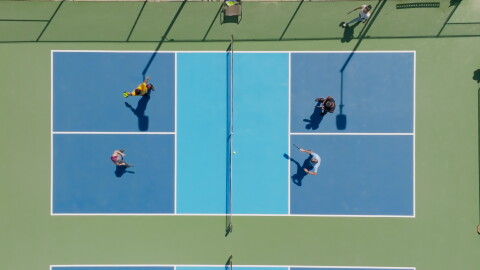 Getty ImagesTerry Greene Sterling has lived in the same peaceful neighborhood for most of her life. But recently, a sport that's allegedly grown popular has been disrupting that space.
-
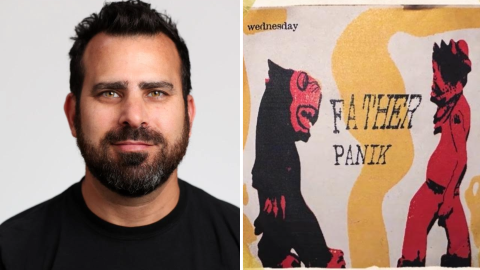 Andrew Kirschenbaum, David Dominguez/CourtesyFather Panik may not be a widely recognized name in the music industry, but decades later, the band's Matt Goldman is sharing their unique sound and story at the Tucson Film Festival.


Transcript
NARRATOR: KJZZ’s original production The Show is supported by Banner Health, Arizona’s largest nonprofit healthcare system. Last year, Banner reinvested more than $1.1 billion in community health and charity care. Banner Health, nonprofit for Arizona.bannerhealth.com/nonprofitforaz.
MARK BRODIE: Hi, I’m Mark Brodie, co-host of The Show, an original production from KJZZ. Every weekday, we bring you the latest news and culture from across the state. You can find much more at theshow.kjzz.org. Here’s today’s episode.
JAY FEELY: Right now, in the state of Arizona, data centers bring in $27 billion to our GDP. They add about $1 billion in revenue to the state of Arizona. That’s giving you the opportunity to increase teachers’ pay. It’s giving you the opportunity to do programs to actually help people.
AMISH SHAH: Congress was meant to be a check on the executive. That’s not happening right now. Their entire party is like a cult of personality around one person. When he says jump, these guys have to say how high.
ANDY BIGGS: We’re trying to meet people and find out where they are, so we can we can respond to their needs. Katie Hobbs, on the other hand, refuses to actually come out of her basement and debate with us.
TERI ANN HOURIHAN: I will tell you that you’re the person that I would least trust to protect our borders, seeing how in 2013 HB 2648, you failed women and children who were likely being abused.
DONALD TRUMP: So, Maricopa, which sent out thousands of ballots in error — Maricopa County in Arizona — and they have to be ashamed of themselves, by the way. There were no errors, you know that, right?
MARK KELLY: I think anybody would deny that, but it’s pretty obvious when you have a list of seven people who don’t promote from one star to two star, and five of them are either Black or women, it’s pretty obvious.
[Music]
MARK BRODIE: And with me to talk about the start of early voting, a series of high-profile debates, and more, are Paul Bentz of HighGround — Paul, good morning.
PAUL BENTZ: Good morning.
MARK BRODIE: And Sam Richard of Concilium Consulting. Sam, good morning to you.
SAM RICHARD: Great to be here.
MARK BRODIE: So guys, early voting is underway in Arizona. Ballots will start arriving in mailboxes, except, Sam, for about 3,000 Maricopa County residents who have already gotten their ballots. And this became kind of a big national story. The Maricopa County recorder said it was the vendor’s fault, that something with them sending it off to the Post Office too long. We heard President Trump getting involved, saying this was not done by error. What do you make of all this?
SAM RICHARD: Mean, I think just generally, it’s wonderfully comical, in a way, how good Recorder Heap has been about making a half-day story last a week across his entire administration. This, of course, was a mistake. Runbeck [Election Services] had put out the statement, and I just love the sound bite from the president saying that Maricopa County Recorder is dishonest, and Kari Lake jumped in and also tried to pile on a person that she had endorsed for this office. So, it was just a mess up and down that really was unnecessary from soup to nuts.
MARK BRODIE: Paul, the recorder said that he spoke with the county attorney, that these ballots — the right ballots went to the right people, I think is the phrase that he used. And basically saying, yes, they got there a little bit before they should have, but the people got them, they should use them, there’s no problem returning them, filling them out, sending them in. Does this, like — what does this do to you think to the way sort of the dialogue that we’ve been having recently about early voting, mail-in voting?
PAUL BENTZ: Well, it’s just another example of a little mistake that’s getting blown out of proportion. And at the end of the day, these folks are eligible to receive these ballots, they got their ballots a little bit early, a couple of days early. But what I still don't understand — look, I worked at Best Buy when I was in college, and when one of the Harry Potter books came out, and those books showed up early, they were wrapped in plastic, they had giant signs that said do not open, they were locked behind a cage. Literally, every employee was like, if you touch these books before the release date, you will be fired. I don’t understand how we’re still in a spot where we’ve got ballots that are not in a spot where they’re prevented from being sent out. So, that aside, though, this is not a big story. These are folks that are eligible to vote, and Maricopa County and Arizona has had early voting since 1992. We run into this national dialogue about early voting and how other places haven’t done it a long time and maybe have some questionable behaviors. We are the best in the country when it comes to early voting. Vote-by-mail is used by 75% to 80% of all folks. This is not new for us, and it just brings back some questions that aren’t necessarily there, and it feeds that Republican narrative that there’s somehow fraud going on that there really isn’t. These were all folks that were supposed to receive these ballots.
MARK BRODIE: Well, and even recently, President Trump, who has been leading the charge on a lot of the fraud claims, this week was telling his voters, “OK, look, I’d rather you show up in person, but if you’re not, vote by mail. There’s a lot of fraud there, but still vote by mail.”
PAUL BENTZ: Well, the president himself votes by mail from Florida, let’s be honest. So, this is sort of one of those things, do as I say, not as I do. Early voting is secure. It is used by lots of folks. It’s convenient. It’s incredibly popular. Poll after poll that we’ve done demonstrates that folks want early voting, they want to continue early voting. That’s why Prop 144 is so dangerous, is because it actually — the truth of the matter is, Kolodin said basically, it is a way to eliminate early voting. And so, this is just one of those things that you point to maybe Georgia or somewhere else in the 2020 election where there was questions about it. We’ve never had questions about early voting here. We have a very secure election system, but this is just a terrible example. And time and time again, we have these little, tiny examples of the wrong ballot being sent or folks being missed that seems to come up, and these little mistakes add up and make the system seem not as secure as it is.
MARK BRODIE: So, Sam, this is, of course, the time of year when people love reading tea leaves about like who’s returning ballots and, you know, when they’re coming in and that sort of thing. I’m curious, what will you be looking for, you know, as ballots go out, they start to get filled out and start getting mailed back?
SAM RICHARD: Yeah, so some of that is going to start to take shape early, middle of next week once this kind of first weekend of early voting and returns starts to filter through the system. I’m going to be looking for some of these folks who have been Trump loyal voters, right, the what we call the three of four or the four of four voters who have voted in every recent election.
MARK BRODIE: For him.
SAM RICHARD: Yeah, for him, and to see what that turnout looks like, because there’s some expectation that that number is going to be significantly depressed, not only because President Trump isn’t on the ballot himself, but also, I think people are just over it. This has been an experiment in democracy for more than 10 years now since he traipsed down the golden elevator in 2015.
MARK BRODIE: Escalator.
SAM RICHARD: Escalator, sorry, escalator. So, I think that folks are really ready to move on. They’re ready to wipe their hands and move forward. So, thank God for early voting, so we can get over it. Still, when you’re watching football on Sunday, you might still have to see the 30-second ads, but your vote can be done by the end of this weekend for a large majority of voters across Arizona.
MARK BRODIE: Paul, what will you be looking for in the data?
PAUL BENTZ: So, one thing for all the voters out there, we know if you voted, we don’t know how you voted, but we do know if you voted. And so, if you turn your ballot in, here’s a little secret, if you want those phone calls to stop, those texts to stop, that mail to stop, mail your ballot in. Any campaign worth its salt will take you off the list once they know you voted, they’ll leave you alone. So, if you want to be left alone, vote. But we’ll also look at the behavior, we’ll look at the people who are voting. I’m anticipating — typically older voters vote early. They don’t buy green bananas, right? They take their ballot, they send it in, they do it right away. And then the other thing we see is typically early voting tended to trend Republican way. If we start seeing increased Democratic participation, a reduction as Sam mentioned in that four of four, those Republican voters who maybe if they’re not showing up at the same clip as usual, if we’re seeing this heightened enthusiasm among Democratic respondents, that’ll tell us a lot of what’s going on and demonstrate sort of where things are in the process. We’re expecting lower than usual turnout. We saw in the primary, we expect a 31% turnout.
MARK BRODIE: Lower than usual for a midterm?
PAUL BENTZ: Well, just in general. So, midterms are always lower than the presidential election. Presidential elections, 78%, 79%, high 70% turnout. Midterms are generally in the 60% range. Our primaries, though, are typically pretty across the board between like 30% and 32%. We had 27% turnout, 200,000 fewer voters than usual showed up in our primary. So, if that trend continues, we will see lower than usual midterm turnout, and then it’s who doesn’t show up. And at this point, what we’re seeing is the Democrat versus Republican participation in the primary was much closer than usual. Republicans still were the dominant party, they always are, but the Democrats got a lot closer because fewer Republicans showed up. If we see that in the general, that’s going to be very difficult for the statewide Republican candidates.
SAM RICHARD: And those independents are breaking for Democratic candidates at a clip of about two and a half to one, maybe even approaching three to one. So, we’ll see that kind of express itself as well. But the other piece, and I know that we’ve talked about this on the show ad nauseam, but this is also in addition to just midterm being a lower turnout, the first year in 10 years that we haven’t had a U.S. Senate race on the ballot. So, there is just a lot of less federal attention, less national attention on this election.
MARK BRODIE: Never fear, we’ll have one in two years. So, the commercials will be back. Well, Sam, let me stick with you on this, because going back to Maricopa County Recorder Justin Heap, he told the supervisors that he thought that early voting, the ballots would be delayed getting back to to the recorder’s office because of a closed postal service facility in Phoenix. He said the ballots are getting routed to San Diego and then back here. USPS comes out and says, “No, we haven’t closed anything.” Does that affect voter behavior, do you think?
SAM RICHARD: I think to the extent that that voters pay attention to what Recorder Heap has to say, it might add some confusion to the mix. But, I’m a big believer in a strong, trusted institution like the United States Postal Service. So, I think that they’re going to be able to deliver my ballot and my wife’s ballot and our neighbors’ ballots just fine, and I’m confident in their ability to do so.
MARK BRODIE: Does this affect anything, Paul? The recorder, the chief election officer in the county, saying it’s going to take longer, even though the agency that’s responsible for it saying, “No, it’s not.”
PAUL BENTZ: Right. Hats off to USPS for standing up for themselves. There was some initial concerns from folks that the USPS was going to be complicit in trying to make early voting more difficult to try to feed the narrative of Trump banning early voting.
MARK BRODIE: As part of that executive order, yeah.
PAUL BENTZ: Right. The biggest thing that’s ever happened here in Arizona about mail in general is actually when the Tucson Post Office stopped. All of Tucson’s mail, most folks don’t know this, actually comes up here to be sorted and routed. So, if you mail something to another neighbor in Tucson, it comes up to Phoenix, gets sorted and sent back down to Tucson. That actually did definitely delay postage and mail in the rest of the count — in the rest of the state. But the USPS office in Phoenix is open and running. This is just another one of those bogus things just to add doubt. It’s a way that you can try to pass the buck, put the blame on somebody else. But from what I’m hearing, I’ve actually talked to folks that literally received their ballot already. They do go out in batches. I just do want to warn the public, you may get one today and your spouse may get one tomorrow. That’s just because of their batch. It doesn’t mean something nefarious was happening. They have 2 million ballots in Maricopa County to send out. It takes a while. But you should receive them. If you don’t receive them by early next week, you should call someone.
MARK BRODIE: Why though? Like, I don’t want to ask anybody to go inside the head of somebody else, but like whether or not a facility is closed would seem to be easily verifiable information. Like, why would someone like Heap say something that the Post Office could very easily say, “That’s not true. Look, I’m standing here. It’s open. We’re good.”
SAM RICHARD: The inside of my head is messy enough, so I appreciate — I appreciate the excuse to not spend a lot of time in Mr. Heap’s, but what I’ll say is I think that there has been a lot of attention and reporting on the United States Postal Service, some of it thanks to President Trump and the EO. And just generally, the federal government has been reorganizing a lot. So, I am aware that there are some shifts in just the general practice of mail delivery and some of the the regional stations that USPS relies on has shifted some responsibility, but it has zero effect on the integrity or the ability for them to deliver on early ballot mailings.
MARK BRODIE: OK. Possible maybe just confusion that’s giving the benefit of the doubt. All right. Paul, I’m sure you were glued to the television watching watching debates this week. They were actually pretty interesting debates. There were a few of them, the governor’s debate, lieutenant governor, and the 1st Congressional District. Let me start with CD1, which was the most recent one. And this comes as there’s a poll from First Strategic which finds the Democrat Amish Shah leading the Republican Jay Feely within the margin of error, 44 — basically 44 to 41 with some percentages thrown in there. What are you seeing from this campaign? What are you seeing from these candidates, both at the debate and elsewhere?
PAUL BENTZ: So, Democrats, when we look at redistricting, Democrats made CD1 a priority. In fact, they gave up some of CD2 and made that more conservative for long-term goal of winning CD1, and it’s starting — to this point Schweikert’s been able to hold them off, but it’s starting to bear fruit. I think that area in general, the way they’ve constructed it, is meant to eventually elect a Democrat. I also think Trump’s lack of popularity is a big deal, and it’s certainly playing its role there. I mean, it’s not a secret that Jay Feely took Trump’s endorsement off the front page of his website. This debate was interesting because it’s a little bit of a stand-in. You know, he’s not necessarily debating Shah and talking about Shah’s record, he’s trying to throw — Feely was trying to attack Democrats and what would happen if Democrats were to take control and be in charge. Similarly, Shah said, “Look, this is — there’s no check on the executive. He says jump, they say how high.” He’s trying to tie Feely directly to Trump. So, it became sort of a microcosm of the national debate. It is probably the most competitive district in the country. And so, it’s interesting, as the country looks at it, it’s really a bit of a stand-in for the national discussion of what it means for the Democrats to be in charge versus what it means to have no check on Trump.
MARK BRODIE: So then, Sam, does that mean that for a race like that, do we look at maybe the generic ballot, how Democrats and Republicans are doing to sort of see, like if it’s maybe less about the actual candidates and more as Paul was suggesting, a stand-in for national Democrats versus national Republicans?
SAM RICHARD: Yeah, I think that. It shifts the starting line, it shifts the baseline perhaps, but I still do think that candidate quality matters. And I think that voters in CD1 were well-served by having, you know, a debate that actually was what folks tune in to debates to watch and on policy. I think that there was a clear choice that voters can make, and I think you see that in the First Strategic poll, because don’t forget, the margin of error can also go the other direction as well. So, I think that this is absolutely Dr. Shah’s race to lose at this stage. He put together a very strong campaign, he was on the ballot two years ago, and I think that candidate Feely’s closeness to President Trump is going to be the end of his chances here.
MARK BRODIE: Paul, do you at this point say that Shah’s in the driver’s seat?
PAUL BENTZ: I do. I think Shah’s the frontrunner in that area. I think it’s a competitive area. We saw, when we talk about independent voters, there’s a wide variety of high wage, high education attainment voters. A lot of them are in that general area, and they went for Trump in ’16, they went for Biden in ’20, they kind of went back to Trump in ’24. Schweikert tripled his advantage that year, but they’re sick of Trump. The affordability, gas prices, the things that we’re seeing, and the wars, international conflicts. I do think Shah is the frontrunner there, and I don’t think Feely did enough in that debate and otherwise to try to separate himself. They found a good candidate in that he’s a celebrity in his own right, he has a personality and, you know, did other things. That being said, it’d be very difficult for almost any Republican in that race right now.
MARK BRODIE: OK. So, let’s talk about the governor’s race, because the debate featured two of the candidates, the No Labels candidate and, of course, Republican Andy Biggs. Governor Hobbs notably was not there. She had said she wasn’t going to debate. Her lieutenant governor candidate also didn’t participate in the lieutenant governor debate. But, Paul, this was also another one where, like, yes, the two candidates talked some policy, but some of the Hobbs talking points still found their way onto that debate stage.
PAUL BENTZ: That’s right. I was interested that Hourihan didn’t even — the No Labels candidate — literally attacked Biggs out of the gate. And then Biggs spent his opening statement — Hobbs is not on the stage. He had all the time in the world to go after Hobbs, and he didn’t even set down like a predicate of what he’s for. Instead, he immediately attacked Hobbs. It’s just, and they both said that she is in her basement. I want to know if Katie Hobbs has a basement. I’m sort of fascinated by it.
MARK BRODIE: A lot of houses in Arizona don’t. I think it’s so fascinating that people keep talking about in the basement when so many homes here don’t have them.
PAUL BENTZ: Very few. When I was a kid when I’d go to the Midwest, I was always blown away by basements. They were so fascinating because we don’t have them here.
SAM RICHARD: Hard to dig in that caliche.
PAUL BENTZ: Right, exactly. But the, you know, Hourihan went right after Biggs right out of the gate, and I don’t think Biggs was expecting that he was going to have to talk about the Epstein files out of the gate, and I don’t think he expected that sharing a debate stage without Hobbs, he was going to have to defend some of his record about child safety and what not. So, yeah, those Hobbs talking points definitely did make it out in the course of the debate.
MARK BRODIE: I mean, Sam, does that kind of validate to you the Hobbs decision not to debate?
SAM RICHARD: Oh, without question. And I think if you put yourself in the shoe of an — shoes of an independent voter who was watching that debate, maybe they’re on the fence of where they’re going to go, it was fascinating to see that Congressman Biggs still struggled to break through against someone who is not even breaking polling of 3% and really didn’t ever, to Paul’s point, make a case for his own candidacy. And if you’re an independent voter watching either the lieutenant governor’s debate or the gubernatorial debate, I’m not sure that you’re more encouraged for checking the box for Congressman Biggs.
MARK BRODIE: So, Paul, let me ask you, the Hobbs campaign released an internal poll this week that showed a tighter race than what a lot of the external polls had shown. I think it was four points or so. Hobbs was still up, but I think it was 49 to maybe 45, something like that. And a lot of Republicans were sort of seizing on that to say, “Look, the race is tightening. It’s coming back to where we thought it would be, and now Turning Point is spending a lot of money on Biggs and putting commercials up and everything. This race is tightening, and we still have a month to go.” I’m curious, as the resident pollster, what do you make of that?
PAUL BENTZ: Well, let’s be clear, they didn’t release an internal poll. They released an internal fundraising memo, and a fundraising memo is a little bit different than a poll. It certainly demonstrated — they said that they believe the race was tighter than folks have thought and that what we’ve seen to this point where she’s got a more sizable lead. I think this comes down to trying to keep money in the state of Arizona. I think looking at the Democratic Governors Association, other outside funding sources, they’re starting to look at places like Texas that might be winnable and other competitive races throughout the country and maybe saying, “Oh, Hobbs is a done deal. We don’t need to keep spending here. We need to move it elsewhere.” With Turning Point coming in, spending more money — this is their home state, they want to have a good showing, not get walloped. You know, I think that they’re trying to just keep as much money here in the state. I don’t think it’s that close. I think we look at what we’re seeing, a lack of Republican enthusiasm. To this point, she’s won the spending — she has been ahead in spending. She came out early attacking him. You know, the debate looked a little bit like the kids’ table. With her not showing up to that, 94% of voters want to hear directly from the candidates, that’s what the Center for the Future of Arizona survey demonstrates, but that doesn’t necessarily mean a debate, and she’s been able to put herself out there talking about water and other items. But, you know, they’re just trying to keep money in the state, making sure that they don’t walk away and don’t celebrate too early, try to keep it across the finish line.
MARK BRODIE: I mean, Sam, I’m kind of reminded of the line that Senator John McCain, and I’m sure others have used, which is, you know, you’ve got to run like you’re two points down or some number of points down as opposed to up. Do you see this as kind of an example of that? I mean, obviously, the polls still show that she’s up, but maybe not by as much as people think she is.
SAM RICHARD: Exactly, yeah. And another person who said something like that was President Josiah Bartlet from "The West Wing." Always got to run like you’re five points down. But I do think that, what’s also interesting about this is is at this stage, obviously, Governor Hobbs is in the catbird seat, she’s done very, very well. But the race isn’t over, and I think as you look ahead, we don’t want to barely win across the finish line, because it would be really great for Governor Hobbs in a second term to have a governing partner with at least one of the chambers in the state Legislature to flip, and that is not going to happen if she quote, unquote, “only wins” by two and a half or four points, right? Really, I think the conversation about flipping the State House or shrinking the majority in the State Senate really starts to get exciting if she wins by seven points, maybe even approaches that 8% or 9%. So, I think we want to make sure that that attention still remains here on Arizona.
MARK BRODIE: Is that a realistic possibility? I mean, she won her race four years ago by considerably less than that.
SAM RICHARD: I think that it is absolutely not statistically consistent, but I think that ’26 feels a lot different than ’22, which feels a lot different than 2018. The economy is a very, very different place today than it was in 2018 when voters first had that opportunity to kind of respond to a President Trump. And I think the voice of Paul Begala is ringing in my ears right now, right? It’s the economy, stupid, right? Like, everything is bad. I just drove by three gas stations on the way here. All of them had gas at $4.95 or $5.05, and that is what people are going to bring to their kitchen tables when they’re circling the bubbles on their ballot.
MARK BRODIE: Paul, very quickly, do you think it’s realistic to think that Hobbs could win by approaching double digits?
PAUL BENTZ: Absolutely. We all forget that Governor Napolitano absolutely walloped Len Munsil. Democrats have won by large margins, especially when the Republican is not popular. So, it’s doable. I think, you know, we’re looking at that, it comes down to turnout. Democratic turnout is not necessarily like super high as people talk about all this enthusiasm that they’re seeing in the nation. In Arizona, the registration was down, so the enthusiasm isn’t as high as we expect, but the difference is that Republican enthusiasm is way down. 2024 was sort of a high-water mark of Republican enthusiasm, we’re not going to see that again. So, yeah, I think it’s doable. One of my favorite mayors always said this, you either run scared or you run unopposed, those are the only two ways to run. And I think this memo and some of the stuff that we’re seeing is talking about running scared to make sure that they cross the finish line appropriately.
MARK BRODIE: All right. Paul Bentz, Sam Richard, thanks to you both for the conversation. I really appreciate it.
SAM RICHARD: Thank you.
MARK BRODIE: Good morning, it’s The Show on KJZZ 91.5, I’m Mark Brodie. Coming up, Desert Design Week began earlier this week. We’ll hear from its founder about this year’s edition and building community through an interest in the desert aesthetic. But first, you’d be forgiven if you’ve never heard of the band Father Panik. In fact, there probably aren’t that many people who have.
[MUSIC PLAYING]
MATT GOLDMAN: This is Father Panik, and once upon a time, we were at the forefront of a musical revolution.
MARK BRODIE: Well, that was the plan anyway for the Valley native and University of Arizona grad who had a vision for the band during his time in Tucson. Matt Goldman is the director of the new documentary about Father Panik and the decades since the band members went their separate ways.
It’s called "Music Ruined My Life" and will be screening tomorrow [Saturday] night at the Tucson Film Festival. Goldman joins me to talk about the band and the stories behind it. And Matt, it seems as though Father Panik was going for kind of a unique sound, huh?
MATT GOLDMAN: Very niche, very unique, yes. We we called it punk jazz. Also, another another concept was psychedelic big band, jazzcore. These types of things, these are these are imaginary genres that don’t actually exist.
MARK BRODIE: You were trying to will them into existence, right, yeah?
MATT GOLDMAN: Yes, exactly.
MARK BRODIE: And this was at the U of A. Why like ,you are somebody I think who really enjoys music, but prior to that, like had you taken lessons as a kid? Like were you a musician?
MATT GOLDMAN: Uh, I was musical, but not a musician, I would say. ... But I I did. I loved music, um, you know, obsessed with music over I obsessed over music, but it wasn’t until college where, um, I was kind of rapping on pots and pans in my neighbor’s house that, uh, they came over to my house with a drum set, and they were like, “You’re a drummer.” And I was like, “Oh, OK, you know, sure.”
And I remember, I’ll never forget, they gave me sticks, and on one stick, it said Mitch Mitchell in a Sharpie, and the other stick, it said, uh, Keith Moon. You know, Keith Moon from The Who and Mitch Mitchell’s Jimi Hendrix’s drummer. And I remember I was like 18, I was like, “Who are these guys?” You know, I didn’t even know. And, uh, but that set me on a course. They were like, “OK, yeah, I guess I’m a drummer.”
MARK BRODIE: OK, so you’re you have this band. You you find some other people to be in this band with you at U of A. Like how how far do you guys get? Like do you guys do gigs, do you record anything?
MATT GOLDMAN: So, we had a few gigs, but it only lasted like nine months, um, before I blew it up. I had this like grand vision, right, and it was going to be a huge spectacle, there’s going to be visuals, and it was going to be this wild thing. But yeah, it it lasted about nine months. We played a lot of kitchens, living rooms and a couple of bars downtown.
Um, and then in the summer of ’96, basically, we cracked the sound like wide open. Before it was like this cute, “Oh yeah, this is cute, I get it, punk jazz.” And then suddenly, July of ’96, it was like boom, OK.
MARK BRODIE: Like you figured it out.
MATT GOLDMAN: We found the sound. And it was around then that I stupidly pulled the plug, uh, but yeah.
MARK BRODIE: OK, so how how exactly did you pull the plug? Because that’s kind of what this film is about, like you pulling the plug and sort of what has happened since.
MATT GOLDMAN: Yeah, I mean, that the the reason why this film is, uh, different than a typical music documentary is because it’s about a sound that never was, and it’s about, uh, a scene that almost happened, and it’s almost like it almost just happened in my imagination. It’s like a hallucination.
And that’s I think what separates it from other music docs where, you know, there’s a huge rise and fall, and someone gets addicted to heroin, and somebody else dies, and all this drama. None of that happens in this movie.
This is this is, uh, about loss. Um, it’s about memory, it’s about aging, it’s about regret, and ultimately, like I said, and and it’s about this sort of the tenacity of unrealized dreams, um, because what happened is after I kind of killed Father Panik thinking that I could just take that lightning in a bottle with me and make this magic happen anywhere in life, anywhere without my crew, I, you know, quickly realized that I lost it, and I think being young and, uh, having my voice and identity connected to this sound that I found, uh, it was incredibly, uh, difficult to deal with the loss of it, and I think that’s why I buried it for 30 years and moved on.
MARK BRODIE: Is this a loss that you still feel today?
MATT GOLDMAN: Oh, 100%. I, uh, still to this day believe, uh, as deluded as it might sound, I still to this day believe that, uh, that we were onto something incredibly unique and that could have actually changed the course of music. I really do, yeah. Uh, but but it I only have kernels to to it’s like I don’t I barely even have the proof of concept for it.
MARK BRODIE: What was it like for you opening some of those boxes and seeing the the things that you hadn’t seen for a few decades?
MATT GOLDMAN: Well, I mean, it was really just something that was in the back of my mind for so long, and I, to be honest with you, I was always like, “Ah, someday I’ll crack those open, there’s something there.” Uh, and so in the back of my mind, I was like, “Hmm, is now the time to break out the Father Panik stuff?” And it was always like, “Nah, you know, it’s not I what am I going to do with that? What, is it going to be a 20-minute short film? Who cares?”
You know, it was just sort of like that’s not going to pay the bills, and so I was just busy trying to carve out a career for myself in this ridiculous media landscape, right? And so it just never felt practical, and it’s also just daunting, right, to go through all this.
MARK BRODIE: Right, both physically and emotionally, right?
MATT GOLDMAN: Physically and emotionally, yeah. It was I was never I never felt ready, and what I realized when I started going through it is A, damn, I was right. I hate to say that, but I felt vindicated. When I started listening to the tapes and I started looking at the footage, I was like, “This is why I deluded myself so. This is strong. This is This is real, something is here.”
But also, aside from feeling vindicated and, uh, validated by the original young person’s vision that I had, I realized that there was a real sense of of loss, and and there was actually some pain, uh, some adult pain there that I think was a bit embarrassing to to admit.
MARK BRODIE: Hmm.
MATT GOLDMAN: You know, because I’m I’m a grown adult, I have a kid, you know, um, why should I feel a wound from such a ridiculous failure? I mean, a musical failure like who doesn’t who who doesn’t feel like a musical failure, right? I mean, we all fail something, so to fail at music, well, welcome to the 99.9% club, right? I mean, come on, like how can you really let this wound you?
But it really did wound me, and as I started to put it together, and this is where the story started to take shape, as I started to put the shape, uh, the story together, I realized the reason why this was so difficult for me was because it was actually my right of passage into manhood, Father Panik.
It was, it was the moment in my life where I found my voice, and I found my identity completely, and I kind of gave myself to it religiously and went for it 100%, and it went absolutely nowhere.
MARK BRODIE: But I wonder though if some of the pain might be that it’s not like you went into the world with Father Panik and were rejected, right? You preemptively said, “OK, we’re going to do it not this way, we’re going to do it somewhere else,” and as you say, you kind of blew it up. Like I wonder if that’s maybe part of of this loss that that you keep talking about.
MATT GOLDMAN: Yeah, it’s a self-inflicted wound, right?
MARK BRODIE: Have you found the process of of doing the documentary, was that healing in any way, did that help you feel better about it?
MATT GOLDMAN: Absolutely. Um, it’s it’s been extremely cathartic and healing. You know, this is why I started to tell stories. It was This is the first story I had to tell, and I have I kind of forgot to tell it.
MARK BRODIE: So, I’ve got to ask, the documentary’s called "Music Ruined My Life," and, you know, I’ve known you now for like 20 minutes, but it seems like you’re doing all right for yourself.
MATT GOLDMAN: OK, yes. All right, you got me. I I turned out all right. You know, the the reason why I called it that is there there’s there’s two reasons really. The first reason is, uh, when I thought of putting all this Father Panik stuff together, that just popped into my head, like about about 20 years ago, because I guess subconsciously I knew that I had a wound about my musical trajectory, and so in a way, it did I did feel ruined at the time. But it’s more of a question than a statement.
MARK BRODIE: OK.
MATT GOLDMAN: And, uh, what I’ve taken away from all this is that it has the potential to ruin you, and a lot of people, uh, can relate to loving something so much that it can be your undoing, and I feel like had I not walked away when I did, had I not buried these things in the boxes, it very well could have ruined me.
MARK BRODIE: Yeah, I wonder if in some way music maybe saved your life or or contributed to to the goodness that you have had in your life.
MATT GOLDMAN: Yeah, I mean, well, I mean, it certainly contributed to this film, so I think I think the the fact that I have this story to tell, you know, music my musical failure makes a a really great story, and that really is, um, what we call in the movie, we call the ache. Um, and the ache is this, uh, sort of desire to create despite the weight of the world.
So, the the ache has been there, you know, my whole life, and I feel like I get to find the express the ache of it all, as I call it, um, with this movie, and so it’s actually a huge burden that’s lifted off my shoulders to finally kind of put the ache out there, so to speak.
MARK BRODIE: Yeah, all right. That is Matt Goldman. His new documentary is called "Music Ruined My Life." Matt, thank you so much for the conversation. I appreciate it.
MATT GOLDMAN: Thank you. It’s been a pleasure.
MARK BRODIE: Desert Design Week kicks off this week. The celebration of design, art, architecture, food, and creative culture includes a long list of mostly sold-out events featuring speakers, exhibitions, design talks, and gatherings, all with the goal of building community around design. This year’s theme is Collected in Dialogue, which explores design through stories. And the woman behind it all is Ruth Price, who told my co-host Lauren Gilger she’s pretty new to the Valley. She came here just before the pandemic started and launched Desert Design Week in part to find her people.
RUTH PRICE: It’s definitely something that I’ve been kind of noodling on for a long time even before I moved to the Valley. Just I’ve always loved connecting people, and I’ve always supported the creative community, the artists. I’m primarily like been in real estate most of my adult life, and so just by nature, I’m a connector and networker.
And when I moved to the Valley, it was like right before the pandemic, and then the pandemic happened, and I was just really looking for a way to just connect and meet people and try to figure out where, you know, where the creative people are, where are where’s the art events, where’s where’s everything happening. And I just wasn’t really finding like something that connected us all together.
And so, a couple years in, I felt like I was finally ready to just try this out, and that’s how it all happened, it just kind of organically unfolded.
LAUREN GILGER: Yeah, I mean, so this is that’s interesting you come at it from a real estate perspective. Let’s talk about that. Like when you think about design in the desert and specifically real estate, right, like what does that mean to you?
RUTH PRICE: It is something that I feel like I have a point of view on, and from a real estate perspective, I’ve always just tried to work with clients that are design focused or want an architectural home or have the ability to turn something into a design home.
So, I think Desert Design Week is just kind of a way to sort of magnify like just kind of my eye and point of view. I would I love homes that have character or even if they’re new that there’s something special and very thoughtful, and just really well designed. Like I I think that’s sort of what I want to emphasize in Desert Design Week is sort of an edited version of like what I want to see more of in real estate and design and architecture in the community.
LAUREN GILGER: Right, like manifesting it yourself, right?
RUTH PRICE: Yes.
LAUREN GILGER: So, this goes as you said though beyond architecture and and real estate for sure. I mean, you’re looking at design in art here in the Valley and food, creative culture in general. Give us a sense of the sort of breadth of this in terms of the topics that you address in Desert Design Week.
RUTH PRICE: Yeah, so the pillars of Desert Design Week are art, design, architecture and the community, and that includes both people that are working in creative fields, but really the public that is interested in these things, so really the design-minded public, the people that really appreciate aesthetics.
So, I really try to curate Desert Design Week with those pillars in mind, and focus on getting sort of a a wide variety of creative. Everything from established voices to people that you’ve never heard of to people that are up-and-coming. It’s It’s really sort of all over the board if if it’s at all interesting to me, chance.
LAUREN GILGER: I think if you’re trying to, you know, facilitate community, that makes a lot of sense. So, what do you think like if you’re trying to encapsulate the the breadth of design in the desert in the Valley today, in this kind of desert metropolis, right? Like how would you describe it? Is there a common thread to design here and aesthetic that kind of encompasses everything, or is it very diverse?
RUTH PRICE: It feels like it’s really diverse. I think the one common thread that I have noticed is that people want community, and they want community around anything that’s aesthetic, and and that means like in-person events, not just an online community, and that’s the that’s the kind of the magic of Desert Design Week. The common thread is people really want this, and they’re they’re really attracted to anything that’s experiential and aesthetically driven.
LAUREN GILGER: Yeah, yeah, so much of this is sold out for this year already. I mean, it it’s a very Phoenix story in a way to me, right, because there it is the kind of place that’s very new and undefined in a lot of ways, and so, you know, you can come here, you know, not that long ago, five, six years ago during the pandemic, and start something like this and really feel the reaction, it sounds like. I mean, when you say people really want this, like do you think that’s unique to this area, like no one else is doing this?
RUTH PRICE: I think that’s the beauty of Phoenix is that everyone’s sort of from somewhere in for the most part, though I know there’s locals, but there’s so many new faces, and they’re all, you know, they’re all kind of craving something, something that reminds them of where they came from if they came from a big city and that had more of a an art and design culture, or they’ve come from other places and they’re just trying to meet people and connect with other creatives.
It feels like Phoenix is the right place to to do this in, where people are very open and very willing to try new things.
LAUREN GILGER: Yeah. So, what can we expect this time around, right? As we said, a lot of this is is already sold out, a lot of demand for this kind of conversation, this kind of community building, it sounds like. The theme this year is Collected in Dialogue. What do you mean by that?
RUTH PRICE: So, the idea of that is is really gathering and editing a group of creatives that are diverse, but together, we’re sort of speaking one language, and that’s the language of love for design and art and architecture.
LAUREN GILGER: Any standouts that you’re especially excited about this time around?
RUTH PRICE: Well, all of the events are really good, um, but, uh, there are a lot of free events, which I think are really amazing and great for the community. I have a partnership with SMoCA, the Scottsdale Museum of Contemporary Art, for free admission days.
There is an art exhibition at Costello Gallery, as well as Red Modern Furniture. There’s, um, quite a few other free events that I feel people would really enjoy without having to buy a ticket, which is amazing.
LAUREN GILGER: Yeah, definitely. All right, that is Ruth Price, founder and creative director of Desert Design Week, joining us. It kicks off this weekend. Ruth, thanks so much for coming on the show. Appreciate it very much.
RUTH PRICE: Thank you so much.
MARK BRODIE: Well, fall is in the air. OK, not really, but we can wish, right? It’ll happen eventually. And in honor of the season, over the next few weeks, we’ll be bringing you stories of autumn activities and memories from local listeners. It’s part of our next Soapbox series. First up, Valley journalist Terry Greene Sterling is in a bit of a pickle.
TERRY GREENE STERLING: I have lived in the same house in the same quiet patch of desert in the middle of the Valley for most of my life. For years, it was my own peaceful little biome, sheltered by mesquite and paloverde trees, prickly pear cactus and purple sage.
And for most of the years, I couldn’t wait for the fall.
Even though temperatures could spike to triple digits in September and October, the cool mornings and evenings energized me.
I’d sit on my backyard patio, sipping coffee. I’d make lists. Listen to birds. Work on writing projects.
Sometimes, I’d look up and take in my desert garden coming alive after yet another brutal summer.
**
But a few years ago, after several pickleball courts sprouted up in my once peaceful neighborhood, everything changed.
Just as the hellishly hot weather cools down, I am driven inside my home by pickleball noise.
Imagine a high-pitched jackhammer going on and off more than 1,000 times an hour.
Imagine a neighborhood party that goes on and on, with people guffawing, shrieking and moaning at the top of their lungs.
Fuse the party and jackhammer sounds together and that’s pickleball noise.
It goes on for hours.
“How can you stand it?” visiting friends ask me.
Truth is, I can’t. It’s hard to explain, but I feel spiritually invaded and assaulted. I literally brace myself when I have to go outside.
And it’s confining.
I can’t enjoy the cool fall days that I love so much. Or the winter, for that matter. Or the early spring.
One unintended benefit of my confinement, though, is that I’ve joined a new American resistance. Its hub is Pickleball Noise Relief, a Facebook site.
Following the example of other pickleball resisters, I’m a member of a tight neighborhood activist group. We speak up at town meetings. We file nuisance complaints and obtain police reports. It’s a property rights issue — Americans are entitled to quiet and peaceful enjoyment of their property.
Others across the nation have filed lawsuits and administrative actions.
Thanks to neighborhood resistance, cities and towns are starting to change laws in order to protect residents from pickleball noise. Places like Park City Utah and Centennial Park, Colorado are now largely shielded from pickleball noise, thanks to new laws.
***
Pickleball is billed as one of the fastest growing sports in the nation.
But is it?
When you break down the numbers, it’s not that impressive.
Only about 8 million Americans play pickleball more than eight times a year. They’re called “core players.” Compare this to tennis, which has almost twice as many core players. Yet tennis players are fighting to keep existing tennis courts from being converted into pickleball courts.
Why should 2% of Americans who are pickleball core players subject the other 98% of us to possible noise hell?
Chronic noise has been associated with heart disease, metabolic disturbances, depression, brain fog and even premature death. It’s also been associated with lower real estate prices. Who wants to buy a home near a pickleball court?
But the game goes on in many neighborhood courts. Those who voice opposition are cast as pearl-clutching contrarians.
Which is not surprising.
Sports are reflective of the culture, right?
We’re living in an age of incivility and I see pickleball as America’s sport of incivility.
It projects self-entitlement, bluster and bullying. Even pickleball players themselves get bullied by other pickleball players.
Me, I’ll keep resisting the bullies with their cacophonous plastic balls and paddles.
Because some day, I want to enjoy the fall again.
MARK BRODIE: That was Valley journalist Terry Greene Sterling. You can hear more Soapbox essays and learn how you can tell your own true story on the show at theshow.kjzz.org.
[MUSIC PLAYING]
Thanks for listening to The Show’s podcast. The Show is produced by Sativa Peterson, Nick Sanchez, Amber Victoria Singer, and Ayana Hamilton. The Show was created by Jon Hoban. Our executive producer is Amy Silverman. You can find more of The Show and sign up for our newsletter at theshow.kjzz.org. You can also find us on Instagram @kjzztheshow.