


New data suggests a blood test may be able to detect several forms of cancer — including some that can’t currently be screened for. What this might mean for cancer care. Plus, capturing a different side of Sun City through photography.
Ways To Subscribe


-
 KJZZ NewsAttorney General Kris Mayes filed a lawsuit, accusing TikTok of violating the state’s consumer protection laws.
-
 Getty Images/StockNew data show a blood test was able to screen for several types of cancer, including some that currently don’t have any other screening tools. The study was published in the journal Nature Medicine and found the test was able to detect cancers including breast, lung, ovarian and more.
-
 Amber Victoria Singer/KJZZLeslie Tyger has a thing for keeping stuff. Receipts, ticket stubs, wrappers, junk mail — you know, stuff. But, she never knew what to do with all of these little pieces of life. Until the artist, who goes by the name Tyger Teeth, started junk journaling.
-
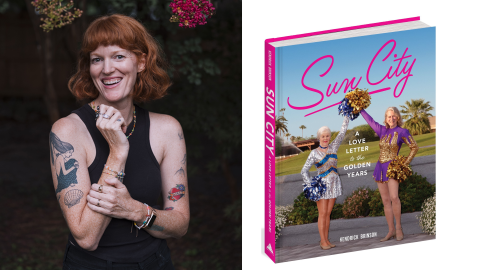 David Walter Banks, Artisan Books/CourtesyPhotographer Kendrick Brinson's new book takes a different look at Sun City and the people who live there. "Sun City: A Love Letter to the Golden Years" is full of photos of the community and its residents.
-
 Tim Agne/KJZZTwo Democrats and two Republicans along with a Green Party candidate are contending for two open seats in the upcoming election.
-
 Shi Bradley/KJZZAn ASU professor and a Mayo Clinic neurologist have joined forces to light to sell "neuro-optimized" green light to help people suffering from migraines.


ANNOUNCER: KJZZ’s original production The Show is supported by Banner Health, Arizona’s largest nonprofit healthcare system. Last year, Banner reinvested more than $1.1 billion in community health and charity care. Banner Health, nonprofit for Arizona, bannerhealth.com/nonprofitforaz.
MARK BRODIE: Hi, I’m Mark Brodie, co-host of The Show, an original production from KJZZ. Every weekday, we bring you the latest news and culture from across the state. You can find much more at theshow.kjzz.org. Here’s today’s episode.
MARK BRODIE: Good morning, it’s The Show on KJZZ 91.5 in Phoenix. I’m Mark Brodie. Coming up, energy rates are becoming an issue in this year’s election. We’ll talk about the race for the panel that regulates public utilities. And a new book of photography aims to show Sun City in a different light.
But first, Arizona is suing the popular platform TikTok. The lawsuit, filed by Attorney General Kris Mayes, accuses TikTok of violating the state’s consumer protection laws. It comes two years after several other states also sued the company, alleging it’s intentionally designed to keep teens scrolling.
The suit also follows a more than $17 billion settlement between a number of states — including Arizona — and Meta, the parent company of Facebook and Instagram.
With me now to talk more about this is Howie Fischer of Capitol Media Services. Good morning, Howie.
HOWIE FISCHER: Good morning. I finally got off my phone and stopped doomscrolling so I could call you.
MARK BRODIE: Well, thank you. We’ll only have you for a few minutes here, so I’ll get you back to it. So, what exactly is Arizona’s lawsuit alleging TikTok is doing?
HOWIE FISCHER: Well, they have a lot of data in terms of the number of children who have tuned in — for lack of a better word — to data in a particular period that the attorney general’s mentioned: an average of more than 543,000 Arizona minors on the platform per month between ’22 and ’23. So a lot of kids on there.
The issue in terms of consumer fraud is there is no Arizona law that says you can’t make your platform more attractive. The question becomes: What have you told parents about the platform? What have you told children about the platform in terms of its safety, in terms of its reliability, in terms of being looking out for the best interest? And what in fact is the platform doing? And it’s there where it falls short, and it’s there where Mayes thinks that she can use the consumer fraud laws.
MARK BRODIE: So, what is TikTok saying in response to that?
HOWIE FISCHER: Well, TikTok’s standard response has been, “We have built-in safety features, we try to protect, we try to make sure that we age-verify.” But to a certain extent, they really haven’t denied the basics, which is the way not just TikTok, but Meta — which recently settled — to a certain extent, almost everything is built on: You want viewers. Viewers give you money from advertisers.
Because remember, you don’t pay for TikTok, you don’t pay for Google, you don’t pay when you go to Fry’s and you’ve got one of their affinity cards. But you’re making a trade-off saying, “I’m going to get something in return.”
And so in this case, what they’re saying is that TikTok has been deceitful in terms of what they do, and more to the point, that they have designed it to be addictive. You know, for example, there’s something called an infinite scroll. So you’re looking through TikTok and you see things that you want, and OK, then maybe something you don’t want. But then you figure, “OK, well maybe the next item on the infinite scroll will be something I want.” And so it builds in sort of an addiction to say, “Well, what’s next? What’s next? What’s next?”
And then the other thing they do is they only put certain things up at certain periods of time. So if you miss it — God forbid you’re in class — there’s no other way of doing it. It’s the whole FOMO, fear of missing out. And they say all that is designed to be unhealthy for children whose brains are not fully formed yet.
MARK BRODIE: So, Howie, do we know why Arizona didn’t join the lawsuit that these other states filed against TikTok a couple of years ago?
HOWIE FISCHER: Well, here’s the deal. The official answer is, “We just weren’t in a position to do that.” Now, whether that means that they were busy with other lawsuits — you notice that Ms. Mayes has been very busy suing a lot of people since she’s taken office.
Now, if I were a cynic — which you know I’m not — I would suggest, “Oh, let’s see. What are we, 21 days from an election now?” Does this have anything to do with getting publicity? Look, everybody’s trying in these last few days to get their name on the air, in the paper, or wherever. And I can’t help but believe that somewhere in the timing of this, there’s an issue here of, “Look, I’m Kris Mayes, I’m defending your children, vote for me.”
MARK BRODIE: So Howie, I mentioned the $17-plus billion settlement — you referenced it as well — between Arizona and a number of other states and Meta. Is there an expectation that this lawsuit could lead to something like that? Some — obviously not $17 billion just for Arizona — but some amount of money coming into the state in terms of a settlement with TikTok?
HOWIE FISCHER: I think that’s what they’re counting on. Out of that $17.1 billion — and that’s one of those flexible figures depending on what else happens — Arizona’s share is about $223 million. I think the belief is at some point TikTok will reach some sort of national settlement. They will say, “We didn’t do it wrong, we haven’t done anything wrong, and we won’t do it again. But we will put in some additional checks and safeguards there to protect children.”
Now, is that adequate? I think there’s a lot of pressure on TikTok and some other platforms ever since Meta settled, because, you know, which runs, you know, Facebook and Instagram. And when those big giants settle, I think there’s a lot of pressure on everyone else to say, “Yeah, we really need to do this, because otherwise if we go to court ...”
You saw some of the testimony that came out in the Facebook trial where they had the engineers saying, “Yes, we have deliberately designed our platform to make it addictive to teens.” That’s not the kind of publicity you want.
MARK BRODIE: So, that of course, though, would take some time, right? And you referenced the election. Is there a possibility that depending on the outcome of November’s election, that this lawsuit maybe goes away at some point?
HOWIE FISCHER: Oh, I certainly think that’s a possibility. I mean, there are a couple of dozen lawsuits that are hanging out there. We know, for example, that Warren Petersen said he will not continue or refile the lawsuit against the fake electors.
But I think it may be harder to drop some of the other things given that they are designed to protect children. And if suddenly Warren Petersen were to come in and say, “No, no, we’re not interested in pursuing this,” even though, you know, dozens of other states have filed the same claim, I think he’d have a hard time explaining that.
But again, it’s politics. Anything’s possible.
MARK BRODIE: Sure. All right, that is Howie Fischer of Capitol Media Services. Howie, thanks as always.
HOWIE FISCHER: Have a great morning.
MARK BRODIE: Energy prices have become an issue in this year’s election, and voters will get to choose two of the members of a panel that sets utility rates. The Arizona Corporation Commission regulates public utilities, among other responsibilities, and two Democrats and two Republicans are vying for the seats along with a Green Party candidate.
KJZZ’s Wayne Schutsky from the Politics Desk is with me now to talk more about this race. Good morning, Wayne.
WAYNE SCHUTSKY: Good morning.
MARK BRODIE: So, I feel like every two years we ask this question, and I’ll ask it again: What exactly does the Corp Comm do?
WAYNE SCHUTSKY: So, as you mentioned, their biggest job, or I guess the most forward-facing job, is they regulate most of the state’s utilities — so technically APS, Tucson Electric Power, but also a lot of water utilities, gas utilities, smaller electric utilities around the state. So, they’re basically the ones responsible for seeing these rate cases and determining whether these utilities can raise your rates to the extent that they want to, or to maybe a lesser extent, or whether they should cut them. They also do some railroad safety, they do some securities regulation, so it’s kind of a broad thing, but the utilities is the top line.
MARK BRODIE: And utility rate cases have been a pretty big part of what they’ve been doing the last few years, right?
WAYNE SCHUTSKY: Yeah, well, yeah. I mean, APS and Tucson Electric specifically have come for two or three rate cases in the past like six years, and these rate cases are very extensive, they take a long time. Now, the current Commission has taken some steps to maybe make them happen every year, which they say will stop them from being so extreme every year. But yeah, those have been the headlines that people have probably seen about the Corporation Commission. Now there’s a joke that getting elected to the Commission is just getting elected to raise rates, because state law does allow these utilities to recoup their costs. So it’s more about the extent to which they’re recouping and what they’re recouping versus whether your rates are going to go up.
MARK BRODIE: OK, so the current Commission, it’s a five-member Commission, and they’re all Republicans right now. Two seats are up for election, and there are, as I mentioned, two Republicans, two Democrats. But the two Republicans who are running, one is an incumbent, and one is not an incumbent because he defeated the incumbent in the primary.
WAYNE SCHUTSKY: Yeah, like you said, we have a five-member, all-Republican Commission right now. They are all mostly on the same page. Like, we rarely see split votes from them. It happens, but they’re typically, you know, kind of governing from the same point of view. But Commissioners Kevin Thompson and Nick Myers were up for reelection this year, and Nick Myers actually got taken out by Ralph Heap, a state lawmaker, in the primary. So now you have Kevin Thompson, the incumbent, and Ralph Heap as the two Republican nominees. Heap kind of came at this from a further-right side, touting President Trump’s kind of call for more coal power in Arizona, which we don’t really use much of here, and we’re seeing kind of the few vestiges of that in Northern Arizona kind of be slowly phased out. So, and that resonated with kind of the MAGA base, which turns out in Republican primaries, so he was able to defeat Myers.
MARK BRODIE: Now, Heap has also been involved in some controversies with the Clean Elections Commission. Does that seem to be impacting his race at all?
WAYNE SCHUTSKY: I would say it does. You know, Republicans are favored in these races. For, you know, Arizona is still a, you know, Republicans have the largest voting block in the state. And so especially as you get down ballot into these races, people tend to just siphon off into their political parties, which is why we’ve only had, Arizona’s elected four Democrats, I think, over the past 30 years to this Commission, and we have an all-Republican Commission now. But this might be one of the best chances Democrats have to pick up at least one seat in a long time, because Heap basically hasn’t been campaigning. As you mentioned, he’s had a lot of problems with the Clean Elections Commission. He’s a Clean Elections candidate, and it’s basically frozen his campaign funding as he’s kind of fighting this investigation that Clean Elections is doing into him. So, yeah, he hasn’t been on the campaign trail outside of going to some very like insidery type of political party meetings, but he hasn’t been out on TV, he hasn’t shown up to debates, anything like that.
MARK BRODIE: All right, so let's talk about the two Democratic candidates, and they are running as a slate. Who are they?
WAYNE SCHUTSKY: That’s Clara Pratte and Jonathan Hill. Pratte, she grew up on the Navajo Nation, she worked in Washington, D.C. with the Nation and some other groups in various capacities, and she helped start a company out here that works with tribes to invest in clean energy. And Hill is an engineer and scientist at ASU who works with NASA on a lot of their missions and stuff. So two people who come from very different backgrounds, but both, you know, the science background, the utilities background, and they make the argument that they really complement each other and bring a lot of expertise — would bring a lot of expertise to the Commission. Their big thing is, you know, they think the Commission isn’t being strong enough on adopting renewables, both because they are shown to be the cheapest form of energy right now, but also because obviously with climate change and things like that, that they’re also beneficial for the state.
MARK BRODIE: Now, let’s assume just for argument’s sake that both the Democrats win this race. It’s still a Republican-led Commission, right?
WAYNE SCHUTSKY: Yeah, it would still be a 3-2 at best for Democrat point of view Commission. That doesn’t mean they’re completely powerless. I mean, on these rate cases and things, yeah, they’re not going to be able to swing a vote necessarily. But Jonathan Hill told me that they will have subpoena power, you know, every commissioner has subpoena power. So they could force APS, the other utilities, to really come to the table with all this documentation to justify their costs.
Another thing is that when we did have two Democrats a few years ago, occasionally you would see one Republican vote on different votes flip, and then, you know, not everything happens on partisan lines. So, you know, they have the ability to negotiate, work with their Republican colleagues, and sometimes flip a vote every once in a while. And then if they did win, it would put them in good position coming next election cycle if they do want to take control of the Commission. You know, you have to take baby steps at a time. This would be two seats, they could eventually maybe take three.
MARK BRODIE: So, Wayne, we’ve talked about utility rates, which have been an issue not just in the Corporation Commission race. Obviously, data centers, water, things like that — are these the kinds of issues that we’re seeing the candidates address on the campaign trail?
WAYNE SCHUTSKY: Yeah, I mean, during the debate, data centers came up a lot, as they have with almost every candidate in every — but the Commission actually has a very unique position here because they do say they’re working on rules to ensure that data centers carry their fair share. We’ve seen some recent reports from critics lately come out saying that at least as it pertains to APS, that the data centers actually are being subsidized by regular ratepayers. Now, APS and the Commission both deny this, but, you know, there is an argument being made, and they say they’re working on these rules, but they’re not in place yet. So how they’re going to create those rules, to what effect they’re going to force, you know, these utilities to really prove that these data centers are carrying their fair share, that’s all kind of up in the air until we see what the new Commission looks like.
MARK BRODIE: All right. Wayne, before I let you go, a non-election, non-campaign related question, but involving the Corporation Commission: They’re involved in an allegation of violating the open meeting law. What is going on here?
WAYNE SCHUTSKY: Yeah, just to be brief, they had a meeting where they were discussing a policy advisor who was fired. A policy advisor is kind of like the top staffer for each commissioner. They report directly to the commissioner, provide them advice on all these different things. Republican Commissioner Lea Márquez Peterson’s advisor was fired by the executive director. All they’ve said is that it had something to do with insubordination. Márquez Peterson said, “You don’t have the power to do that.” So they hashed kind of all this out in a meeting, ultimately hiring an attorney to look at the law and see whether the director has the power.
But at the end of the meeting, they voted to actually redact the record. So they modified the video of the meeting...
MARK BRODIE: At the end of a public meeting?
WAYNE SCHUTSKY: At the end of a public meeting. And so the video that’s up now has references to the policy advisor’s name removed, because they said it was a personnel decision, which is supposed to be private. Now, they can go into executive session, which they said they could in the meeting and chose not to. And some other discussions of potential workplace violations and things like that. And so all of this, you know, they’re redacting from the record. So they’re facing an open meeting law complaint, basically arguing that, no, like, you said this in a public meeting, it needs to be in the record, and you do not have the power to just decide what the public gets to know after the fact.
MARK BRODIE: Interesting. All right, we’ll see what happens there. KJZZ’s Wayne Schutsky from the Politics Desk. Thanks, Wayne.
WAYNE SCHUTSKY: Thank you.
MARK BRODIE: Good morning, it’s The Show on KJZZ 91.5. I’m Mark Brodie. Coming up, a new book celebrates Sun City with photographs of the community and some of its colorful residents.
MARK BRODIE: But first, new data show a blood test was able to screen for several types of cancer, including some that currently don’t have any other screening tools. The study was published in the journal Nature Medicine and found the test was able to detect cancers including breast, lung, ovarian and more.
Dr. Karthik Giridhar is a breast oncologist and translational researcher at Mayo Clinic and worked on the study. When I spoke with him earlier, I asked how he’d describe this test that he’s been working on.
KARTHIK GIRIDHAR: I describe it as a blood test that’s trying to add on to the existing screening paradigm and shifting how we normally think of cancer screening from one cancer at a time to looking in the blood for patterns of abnormal DNA fragments that can screen for multiple cancers at once.
MARK BRODIE: What are the advantages of that? Like, is it possible that somebody, for example, who has one form of cancer might also have another?
KARTHIK GIRIDHAR: So, I think the main advantage is that most cancers we don’t actually have a screening test for. We have screenings for breast, cervical, prostate, lung, but most cancer deaths come from, in the United States, cancer types that we don’t have a screen.
So, I think that’s the primary value-add that I see in this type of testing. But I certainly see individuals who have had breast cancer and go on to develop a second type of cancer as well, and so the ability to understand what’s happening is very informative.
MARK BRODIE: So, of the types of cancers that this new test can screen for, are some number of those ones that previously did not have a screening tool?
KARTHIK GIRIDHAR: Yeah. Yep. If we look at the main study that I was involved with, which was PATHFINDER 2, two-thirds of the cancers that we found on that study did not have a current cancer screening test.
MARK BRODIE: So for those, would you envision that this could potentially be the main screening tool? And for cancers that do have other screens, maybe this would be an add-on to that?
KARTHIK GIRIDHAR: I’ll start with the latter, because I think that’s very critical to make sure that we’re communicating clearly and appropriately about, is that it’s clearly something designed to add to existing testing, not to replace the current screening.
The test performs particularly well in the cancer types that we don’t have screenings for, such as some of the head and neck cancers, the hepatobiliary cancers. The test did not perform as well even in what I see, which are breast cancers. But as a breast oncologist, I would argue that’s OK, because we have an existing screening test already.
MARK BRODIE: So in your perfect world, then, would patients get a mammogram first and then this could confirm, or maybe you do the other way around?
KARTHIK GIRIDHAR: I think of them happening more synchronously. I don’t know if we necessarily know if there’s a perfect sequence one way or another. I think, Mark, the existing screening tests that exist, the level of evidence is higher in terms of long-term benefit. And so those should be the priority, with this being a conversation that can be had with the clinicians and patients to decide if it makes sense to do this type of testing.
MARK BRODIE: So for certain types of cancers, obviously right now the screening tool is also a blood test. Does this work differently than those in some way?
KARTHIK GIRIDHAR: So, each test can have different characteristics. So what you’re looking for in PSA and what you’re measuring is different than some of the testing like this, and even what’s evolving in the colon cancer space, which is looking for those DNA pattern changes that are there.
This test in particular, when we’re thinking about multi-cancer detection, the one thing we want to be very mindful about is having a very high specificity to make sure we don’t cause a lot of false positives. I think it’s really important to minimize the false positives, and so each test might have different roles depending on how we’re looking at them.
MARK BRODIE: So is this test able to sort of differentiate, I guess, how does it differentiate between the different types of cancer that it’s screening for?
KARTHIK GIRIDHAR: Yeah, the test is looking at methylation patterns in the DNA. And it looks to tell us two things: one, based on the methylation pattern that can be detected, is there concern for cancer now; and two, based on that methylation pattern, where do we think the cancer is coming from? That helps doctors know where to look. And both pieces of that signal is different, because the methylation patterns are different by cancer types.
MARK BRODIE: OK, so then in terms of helping physicians know where to look, I would imagine that’s super important, because even if you have, for example, I would imagine if you have breast cancer or if you have prostate cancer, you need to target exactly where that cancer is, right?
KARTHIK GIRIDHAR: Yes. The signal, cancer signal origin was accurate 91% of the time for that top line, where did we think the cancer was coming from, which I think is very helpful for the clinical teams that are doing these evaluations. And on the PATHFINDER 2 study, on the study itself, we had a very specific workup that we followed based on where we thought the cancer was coming from.
MARK BRODIE: And is there a hope that you might be able to add more types of cancer to the screening? Like, is it possible that PATHFINDER 2 could ultimately screen for more forms of cancer?
KARTHIK GIRIDHAR: So, already, Mark, we found 17 broad cancer types, 81 different histologies that were there. I think that there’s going to keep being work on trying to figure out how to better capture — like, the technology keeps evolving in this space.
There’s many tests getting developed, combination of looking at those fragments of DNA, some are incorporating protein, some are looking at different ways to test the DNA. So there’s a lot of evolution in this field that’s going to happen, and we’re just at the start, and it’s an incredibly exciting time.
MARK BRODIE: Well, you mentioned not wanting to have a lot of false positives that obviously stresses people out if they think they have cancer when they actually don’t. I would think, though, that you also want to make sure that there aren’t a lot of, if any, false negatives, people actually do have cancer, but a test comes back and says, “No, no, you’re clean.”
KARTHIK GIRIDHAR: True. I think both of those statements are true at the same time. Mark, how I look at that as an oncologist is making sure I’m understanding what cancers are being detected and which cancers are being missed.
And we are preferentially capturing the more aggressive disease biologies. What I don’t want to see happen is an overdiagnosis of the very slow-growing, the cancers you just observe and don’t treat anyways, because I don’t think we’re helping in that situation.
MARK BRODIE: Oh, that’s interesting. So you really want to focus both the screening, it sounds like, and the treatment on cases where there is some kind of intervention, some kind of treatment that will benefit patients.
KARTHIK GIRIDHAR: Yep. Yep. Like, I think I care much more about making sure we minimize the false positives than trying to capture the types of cancers — and Mark, sometimes we describe it like the type of cancer somebody might die with rather than from. We don’t want to overdiagnose indolent disease, and this test is not doing that.
MARK BRODIE: Dr. Karthik Giridhar is a breast oncologist and translational researcher at Mayo Clinic.
MARK BRODIE: Leslie Tyger has a thing for keeping stuff: receipts, ticket stubs, wrappers, junk mail, you know, stuff. But she never knew what to do with all these little pieces of life until the artist, who goes by the name Tiger Teeth, started junk journaling.
LESLIE TYGER: Junk journaling is already a thing, and I think in some senses it’s been a thing for a very long time, but people haven’t given it a name. Scrapbooking is, you know, kind of the mother, I think, of junk journaling. So of course, we all know there’s been scrapbooking for a long time. And it was kind of people who did it more casually and with things that you wouldn’t usually use whenever you’re doing a scrapbook. People get scared of doing scrapbooking because it feels very intense. For example, not to drag my mom, but she always talks about how she still has not finished my baby book, because she’s stressed to do it. She’s like, “I have all this stuff, but it’s just so hard to put it together.” So I think that it takes that stress out of it, and people are just like, “Oh, these are some pretty napkins, these are some, you know, beautiful things that I have, and I’m just going to sort of start putting them into a page.” Some people like to journal along with it, put photos. People have all these different styles, some of them are very messy, and some of those are the most interesting ones.
MARK BRODIE: Tiger has hosted Junk Journal Club meetups across Phoenix. She’s also made scrap packs and printable collage sets for the junk journal curious. But as she told my co-host, Lauren Gilger, last year, it all started as sort of a happy accident.
LESLIE TYGER: So I am an artist, so I started out, you know, vending sort of my art. I had, you know, prints and totes and, you know, postcards and all of those little things. And I just had like some scraps because I was making stickers. And I was like, “Well, these are so, they’re so pretty. They’re just like pretty colors. I don’t know what to do with them. So I’m going to put them in a container, I’ll bring them to a market, and I’ll put ‘Free Scraps.’” I put an envelope next to it and was like, “Whatever, if people want them, they can.” If it gets people closer to my booth to chat with me and look at my stuff, that’s a bonus. And it was kind of a hit. Like everybody who came over — not everybody, but the girls who get it, get it. So the ones who get it came over and were like, “Oh my gosh, scraps!” And they would be packing these little pretty pieces of paper into their own envelopes. And all of them would say, “Oh my gosh, I really want to get into junk journaling,” or, “Oh, I do junk journaling,” or, “I’m going to go do this with my friend soon.” And I just saw like a spark and an interest and an excitement that I didn’t know other people had in this kind of thing.
LAUREN GILGER: So, so you’ve got a book here of of some of the examples of how you have junk journaled, and you brought a bunch of stuff to show us how this comes together.
LESLIE TYGER: I did.
LAUREN GILGER: OK, and we have our producer here as well, Amber Victoria Singer, who is into this and wants to try it, brought her own pile of junk, for lack of a better phrase.
LESLIE TYGER: I love what she’s doing over there.
LAUREN GILGER: OK, so what kinds of things first of all do you both have? Describe this for us.
AMBER VICTORIA SINGER: I’ve brought with me some scraps from a date I went on last week. I have the receipt from where we ate, Chibo, and then I have an Joe’s Italian Ice receipt. I have a ticket to Shrek at Pollock Cinemas. I plan good dates. And a ginger candy wrapper from a ginger candy I was eating at their house after. I’ve stolen from Leslie a jack and a 10 of hearts, this was on July 10th.
LAUREN GILGER: OK, oh yeah, man! So it’s a memory keeper in a way, but it’s also just super random, right?
LESLIE TYGER: A little bit, a little bit. Like it can be random. I have a ton of pages that are really random, and I encourage people to do random unless something really specifically calls to you. Like I have here, this one that I’m looking at is a, I have a couple of spreads from a trip that I recently took to Moab with my boyfriend. And here are some of the things that I have here. I have Pepto Bismol, because I ended up getting food poisoning halfway to Utah. That’s awesome. So I have, you know, my Pepto Bismol there to remember it. I have some printed-out photos from the trip, you know, I have a postcard, a little label of a beer, picture of our campsite. We had like some dice that we opened, so I have the packaging from the dice, like a hot dog tray, I guess not used. I asked them if they had two, and they’re like, “Yeah, you can have two, you crazy lady. I don’t know what you want it for, but OK.” From our champagne, I have, you know, the, this is one of my favorite things to junk journal with, is the foil from champagne bottles. Here’s the netting and a photo of it. Yeah, just all kinds of stuff like that.
LAUREN GILGER: So you mix in photos, but it’s very textured, right? Like, I don’t know, does this feel tangible to you in a way that that maybe like a digital version of this would not?
LESLIE TYGER: Oh, absolutely. And don’t get me started. I think that I, I am a big fan of the digital world, but I’m also a big, big fan of analog crafting. And I think that making things with your hand is really the antidote to doomscrolling, which we’re all doing right now. People need to be touching things with their hands, they need to be doing things, and whenever you’re doing it with a group of people and you’re getting people together, it’s really an act of resistance against anybody who’s seeking to control us, because there are a number of people who benefit from stealing our attention, and I’ll tell you it’s not us.
LAUREN GILGER: Yeah, that’s really interesting. So it sounds like you got a lot of very intense reactions from people when you started doing this on an organized basis.
LESLIE TYGER: Shocking. I couldn’t have imagined it. Whenever I started doing it, because whenever I did the free scraps, I saw that people were interested. And so after that, I was like, “Oh, well, it would be cool if people made a little page, you know, at the, at my booth.” I set up one table, it was four feet. And the very first people who came, it was these two girls who actually still come to Junk Journal Club today. Shout out Nina and Joy! They were the first ones, and they had kind of said, they were like, “I didn’t know how much I needed this.” And I remember that sort of struck something in me, because then all day, people would come, and it’s another one of those things, if you get it, you get it. A lot of people look and they just weren’t interested, but if they got it, they got it. And people would say, “This is the most creative thing I’ve ever done.” There were people who got emotional. And then I have different people who come to Junk Journal Club, and I think that they really see it as this very, this very safe place where they can come and they, they get to like unwind and do things with their hand with other creative people. And sometimes people do get emotional, and they do, there’s a release that they didn’t know that they needed. It’s a way for them to be more present with the things in their lives that they collect, the things that they hold on to, and to even kind of think about why.
LAUREN GILGER: Yeah. So Amber, you’re over here doing your first page of a junk journal. What does this feel like? What do you, what do you like about it?
AMBER VICTORIA SINGER: I feel like I’m a paper hoarder. I have like a pile of wristbands from shows that I go to.
LESLIE TYGER: Make a whole page!
AMBER VICTORIA SINGER: I just like, I always, I hold on to receipts. And I, cause I like journal, and I always say that I’m, sometimes I glue things into my journal, and I just write around them, but I do end up just having a pile of trash cause I’m sentimental and a bit of a hoarder and I can’t throw away receipts from special days.
LAUREN GILGER: Yes, so it sounds like it’s a good way to keep a record, and there’s a nostalgia factor and a memory factor, but it also sounds like this is sort of therapeutic to people.
LESLIE TYGER: I, I think that it is, and I think it’s a way for people to hold on to these things and get this release. Yeah, I think it’s just really good for people.
LAUREN GILGER: Yeah, well, getting the word out. That is Leslie Tyger, AKA Tiger Teeth, artist and founder and host of the Junk Journal Club, along with our producer, Amber Victoria Singer. Thank you both.
LESLIE TYGER: Thank you so much.
MARK BRODIE: Good morning, it’s The Show on KJZZ 91.5. I’m Mark Brodie. You probably know if you’ve ever had a migraine that the best thing to do is turn off the lights, retreat to a dark room, and just kind of wait it out. Well, our next guest says it’s not just no lights that make migraines more manageable for folks, it’s green light.
Nina Sharp is an associate professor at ASU’s Design School. She’s an architect and lighting designer, and she’s suffered from migraines since she was a little kid. She’s partnered with Mayo Clinic neurologist Todd Schwedt to prove that enriched green light, indistinguishable from white lights, helps migraine sufferers. Now they’re launching a startup to sell the so-called neuro-optimized lights to folks whose migraines hinder their lives all the time.
Sharp came into our studios recently to tell my co-host, Lauren Gilger, more about it. But first, they had to turn out the lights.
LAUREN GILGER: OK, so I’m going to hit record. By the way, do you want to turn off either of these lights?
NINA SHARP: Yeah, if you can turn them off, that would be great.
LAUREN GILGER: Is that better?
NINA SHARP: Yeah, that’s...
LAUREN GILGER: Very relevant to this conversation, right? OK, so begin with a little bit of your own story. I mean, being a migraine patient from the age of 5, like, has shaped your entire life, basically. What does it feel like for you? How often do you get migraines?
NINA SHARP: So, it depends, actually. It varies, you know, as, you know, I get older, gets worse for me, but it’s very subjective, migraine. It’s different for each person. So the first time that I experienced that I was 5 years old playing outside, you know, under the sunlight, and I felt like a very sharp pain in my head, and then, you know, I felt nausea, and I told my mom that, you know, my head is about to explode, and my mom, you know, immediately my mom knew that it’s migraine because, you know, she saw that in my aunts. And she gave me a very small, you know, painkiller. I remember that she actually divided it in half, and she took me to a darkness. So that was the very first time that I experienced migraine, and after that I experienced that very frequently, usually when I went to school. It was difficult, you know, it’s really difficult. Migraine is not just a headache, you know, it’s a battle that we have to fight every day.
LAUREN GILGER: Yeah, it’s like a chronic illness in that way.
NINA SHARP: It is, yeah.
LAUREN GILGER: So there’s some known about, like, research out there about light and migraines and the way light affects the brain, but let me just have you kind of lay that groundwork for us, because I think, like, what your mother did, right, like putting you in a dark room, that is something I think most people would think about when they think about treating a migraine. But this goes beyond that. What is the connection between light and what happens in your brain?
NINA SHARP: So it’s a neurological disease, and hypersensitivity is one of its main symptoms, and light is the most important one. So what happens is that a migraine brain has some overactivation, it gets overactivations towards some environmental stimuli that it gets from the environment.
LAUREN GILGER: Whether it be light or something else.
NINA SHARP: Yeah. And in terms of the light, some wavelengths of the light in all people create a stimulation of the brain, and the pathway in the brain that is active in stimulating the brain by light is actually very active in migraine. And that’s why some lights actually impact the level of pain or sensitivity in migraine people. Some other colors of the light, they produce less response in the brain, like green color.
LAUREN GILGER: It has to do with that wavelength. Yeah, that’s really interesting. So, I mean, this must be difficult, right, because you can’t live life in the dark, and there’s probably adverse impacts of that as well on your health in various other ways. Is that kind of what drove you to start researching this a little more and try to figure out there’s got to be a way I can live in the world and in a lighted environment that’s like migraine-friendly?
NINA SHARP: That’s a very good question. So the effect of light on us is beyond, you know, the visual effect. Light has a very vast amount of non-visual impact on us, on our health, well-being, sleep quality, mood, cognitive performance, you name it. So I always tell, you know, people that the way that you care about your food, you know, to have like healthy food, you need to care about your light to expose yourself to healthy lighting, because, you know, you are consuming the light that you are exposed to at every moment of your life. And you’re right, spending a lot of time in darkness is not helpful. It actually has some adverse impact on your mood, on your sleep quality.
So how I came up with this, so I was, honestly, I was tired of living and working in darkness. So I was teaching lighting to students at ASU in darkness, because I couldn’t tolerate the light in the classrooms. I still cannot. And one night when I was sitting in total darkness looking at my bright screen, I asked myself this question that, is there any migraine-friendly lights that I can buy and put put here?
LAUREN GILGER: Yeah, in my own house, yeah.
NINA SHARP: There was none. There is only these green lamp devices that are developed for patients with migraine, and they are like light therapy devices. But you cannot live and work under green light.
LAUREN GILGER: Right, like you can’t put green light in your house for everyone around you all the time.
NINA SHARP: You can’t, yeah. And even if it’s good for me, what about, you know, my my husband, right? So that was the moment that I decided to develop something practical for patients with migraine.
LAUREN GILGER: You’re just going to make it, yeah.
NINA SHARP: Yeah, exactly. And also something that others can also use, yeah.
LAUREN GILGER: So you work with this researcher at the Mayo Clinic, and you want to test it first, right, like figure out what kinds of colored or color-enriched lights work best. What’d you find?
NINA SHARP: There had been a lot of studies about the effect of colored lights on patients with migraine and light sensitivity, but there was none on the effect of white light spectrum. So we developed, you know, four different types of white light spectrum, each of them were enriched in one color, like blue, red, cyan, and green. And then we tested those on patients with migraine...
LAUREN GILGER: And that green-enriched light worked best.
NINA SHARP: Yes. Well, the most important thing that we found was that the blue-enriched and cyan-enriched white lights, they were the worst.
LAUREN GILGER: Blue lights are what’s on your phone, right, or on your computer screen.
NINA SHARP: Blue light is everywhere. When you look at the spectrum of all the conventional lights that we have everywhere, whether LEDs, you know, fluorescent or others, you see that we have a peak usually in the blue and we have a peak in the red, and both of these colors actually, previous studies showed that they can overstimulate the brain, especially in the path that are involved in the pain.
LAUREN GILGER: So then you launched a startup, basically, and said, “Let’s make this. Let’s make this green-enriched light that, you know, will not make my headaches worse, and maybe can help some other people along the way,” yeah.
NINA SHARP: Exactly. So when we saw the results of the first two clinical research, we used the data in order to engineer a balanced spectrum. So it took us, you know, two years to develop this balanced spectrum of white light that has more green in it, but also, you know, we found the right intensity for all the other colors within this full spectrum. And then we thought, “OK, maybe there is a demand for that, maybe there is a market for that,” because the participants who came to the lab asked for it.
LAUREN GILGER: So what are your hopes for this? I mean, can’t put these lights everywhere in the world since everything kind of operates on these blue-enriched lights already, but where would you like to see this go?
NINA SHARP: So the goal is to actually transform lighting from a source of pain to an element of the environment that can support your health and well-being. I believe that what we developed, although we are at the beginning of this path, but what we’ve developed is a better lighting for everyone. We are consuming the lights that we have in our environment at every moment, and this light impacts our body. I want for people to become aware of this as much as they are aware of the impact of food on their on their health and well-being.
LAUREN GILGER: All right. Nina Sharp, associate professor at ASU’s Design School, joining us to talk more about light and migraines. Nina, thank you very much for coming in, appreciate it very much.
NINA SHARP: Of course, thank you for having me.
MARK BRODIE: Sun City takes up a little less than 15 square miles in the West Valley, and as of the last census in 2020, had almost 40,000 residents. None of those residents are allowed to be younger than 19. At least one person in each household has to be at least 55 years old.
A new book takes a different look at Sun City and the people who live there. "Sun City: A Love Letter to the Golden Years" is full of photos of the community and its residents. Kendrick Brinson is an Atlanta-based photojournalist and the book’s author. She joins me to talk more about it, and Kendrick, you visited Sun City for more than a decade. How did you first start going there and meeting residents?
KENDRICK BRINSON: Yes, it was kind of by accident. I had just left my last full-time staff newspaper job, and I knew that I wanted to start some kind of project that would be long-term that I could work on, you know, between other assignments for magazines and newspapers. And I was watching a movie, and the first like 10 minutes of the movie, there was a couple of scenes in Sun City.
And I’m from South Carolina, I live in Georgia. I’m used to lush green, I’m used to brick houses. There’s just like a certain look to the South. And I was so fascinated by the desert landscape, the houses from the 1960s, the bright blue sky. And so I just started Googling like, where was this shot? You know, and so I looked it up and I found out it was shot in Sun City. And then instead of watching the movie, I was just, you know, kind of scrolling on my phone, and I saw that there were cheerleaders, and then I saw it was about to be the 50th anniversary of Sun City opening.
And so I thought, “OK, well there’s a news hook.” And so I saved up some money, I reached out to some people, made some contacts, and I went in December 2009, and I went back the next month for the parade, for the 50th anniversary. And it just kind of, I kind of thought I would work on it for maybe a year off and on, and somehow it turned into 16 years.
MARK BRODIE: Yeah, what happened? What led you to keep going back?
KENDRICK BRINSON: You know, it was published multiple times, and so that was nice that I could, you know, be reimbursed by, I guess Time magazine, AARP has sent me there, I’ve gone for National Geographic.
And I think just having that like continuous interest from the people who pay me as well as from me — like I really like being there, I like the community, I feel so welcome there, it’s very inspiring to me. So it’s just kind of just been like a break from working on sad news stories. I’ll go once or twice a year and I’ll see the same people, but then try to meet new people every time.
MARK BRODIE: What inspires you about Sun City?
KENDRICK BRINSON: You know, I think a little bit at first it was, I’m a little bit of a perfectionist, and I think seeing people do things just for the sheer joy and pleasure of it, rather than, you know, having to be the best at it, the best swimmer that’s swimming there or the best tap dancer — there’s so many different clubs there. And I saw that like there was people of all skill levels.
So it was kind of just this rethinking of, you know, I can do things because I like to do them, or I’m curious, or I want to be in community, instead of just like, “This is something I can be successful at, this is something I can make money at, or I can be the best person.” And I think that really shifted something in me and kind of changed how I move through the world.
MARK BRODIE: I’m curious about some of the photos and sort of your approach to them, because I think it would be pretty easy to look at, you know, some of the residents of Sun City, you know, cheerleading or swim meets, and sort of do it in a like, “Oh, look, isn’t this cute” kind of thing, or even in like a less pleasant, like more of a mocking way.
But that’s not what your photos are. As you’ve written about, and as you’ve mentioned, like, they really show a sense of joy and curiosity and community. And I’m wondering what speaks to you about that, and how did you try to get that into your photos?
KENDRICK BRINSON: Yeah, from the start, I was very interested in showing what we don’t expect to see from the older population. I feel like we’ve seen mourning, we’ve seen, you know, the person in the rocking chair on the porch, we’ve seen sickness and wheelchairs, and of course that’s there, that’s everywhere. And so I really prioritized photographing all the living that’s happening there.
And so I think that was just always my focus. I’ve gone to the cemetery there many times and just admired all the names, and you know, a man had a heart attack while I was photographing one of the parades. That’s going to be there. There’s going to be ambulances going by, but I feel like I wanted to show like we can look forward to growing old. This is the time to play, this is the time to try the things that we never thought we had the time to because we were too busy working or raising children.
MARK BRODIE: Have you found that since you have started documenting this community, that you’ve tried to maybe try things that you haven’t done before, or, you know, take joy in maybe not being the best at something and just, you know, participation, that kind of thing?
KENDRICK BRINSON: Oh, absolutely. And every time I go there, I am against my will, like I’m photographing the ballroom dance club, I’m forced onto the dance floor. Like people there will not let me just, I’m like, “No, I’m here to take photos,” or they’re like, “Why don't you drive my golf cart?”
MARK BRODIE: Did you find at first that people were maybe reluctant to let you in to talk to you about their stories or let you photograph them?
KENDRICK BRINSON: I think that is one of the things that made me keep going back to Sun City is I’m obviously an outsider. You have to be 55 or older to own property there, and I started going there in my late 20s. So automatically I kind of stood out, and I have tattoos, and I have red hair, and I’m tall, and I’ve got two cameras swinging from me. So I’m automatically a person that people might be curious about and might stop to say hello to, just if I’m walking down the street there.
And so I think that kind of lets me in faster, because I get to tell people I’m interested in this place, and everyone who lives there chose it. Like nobody was born there. So I find that interesting that there’s people from Michigan, there’s people from all over the country who’ve decided that they want to spend the rest of their lives in this place. And my interest and their interest kind of connects us right away.
MARK BRODIE: Is there something visually that appeals to you about this community in addition to the people who live there?
KENDRICK BRINSON: Yeah, I think I honestly think one of the characters is the light in my book, because the light is so bright and everything is so saturated. And you can, like when I was going through all the photos from, you know, over 16 years for this book, I was looking through and I could see where I figured out how to use a flash much better, and I could show like really how vibrant it was, you know, I could kind of light the shadows, too.
So I think the landscape is something that seems kind of, the desert landscape is just different to me from what I grew up seeing, and the cacti, the palm trees, I can’t tell you how many palm tree photos that I looked through for my edit.
So, yeah, I think I think that’s part of it. I think the character, that’s part of the character in the photos to me is just like that saturated, hot light.
MARK BRODIE: Have you gotten feedback from some of the folks in Sun City about the photos that you’ve taken and published over the years?
KENDRICK BRINSON: I have. One of the women that I’ve become much, much closer to in the past five years, her name is Sharon Word, and she’s one of the Sun City Poms, she’s a senior beauty queen, she’s just like the light of the party everywhere she goes. And she was the one who really made me make the book, because I told people for over a decade, “I’m here working on a book.” You know, so sometimes I could say, “I’m here for National Geographic,” or whoever I was working for, but mostly it’d be like, “Oh, it’s a book,” but it would just be kind of like a dot-dot-dot, never going to happen.
And since I’ve become closer to Sharon, she’s like, “Kendrick, I am going to die, and I want to see the book while I’m still alive.” And I was like, “OK.” She’s in her late 80s, I need to do this now! Like it was, it was so true, and a handful of people that I did become close to there have died, and one of them was this year, and I was just, you know, I really cared about her, but also I think she would have been just so delighted to see how many photos of her were in a book.
MARK BRODIE: Yeah, I guess that’s — that’s a lot of pressure. I mean, somebody tells you, “I’m going to die, I want to see this while I’m still alive,” like that’s a real like get your butt off the couch kind of moment, huh?
KENDRICK BRINSON: It really is. I feel like there could have been 40 different versions of this book, but really the priority is always joy.
MARK BRODIE: Sure. All right, that is Kendrick Brinson, a photojournalist and author of the new book "Sun City: A Love Letter to the Golden Years." Kendrick, thanks so much, I appreciate it.
KENDRICK BRINSON: Thank you, it was a pleasure.
MARK BRODIE: Thanks for listening to The Show’s podcast. The Show is produced by Sativa Peterson, Nick Sanchez, Amber Victoria Singer, and Ayana Hamilton. The Show was created by Jon Hoban. Our executive producer is Amy Silverman. You can find more of The Show and sign up for our newsletter at theshow.kjzz.org. You can also find us on Instagram at @kjzztheshow.