


Hailey Nelson wants to be an astronaut. But first, the ASU student did the job on earth as an analog astronaut. We’ll hear why she wants to go into space and what she learned during her earth-bound mission. Plus, accusations of corruption in the race for Navajo Nation president.
Ways To Subscribe


-
 SolStock/Getty ImagesA lawsuit filed in 2017 against the state by four public school districts could be moving closer to a resolution.
-
 Indian Legal Program ASU/FacebookNavajo Technical University in Crownpoint, New Mexico, was the venue for the first debate in late September — while Arizona State University in downtown Phoenix is where the final debate will begin at 5:30 p.m. on Tuesday.
-
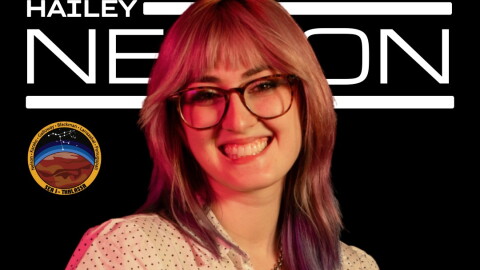 Southeast Analog/CourtesyHailey Nelson wants to go into space. But first, she completed an earth-bound mission as an analog astronaut.
-
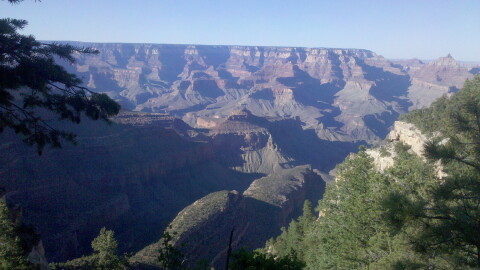 Peter O'Dowd/KJZZThis will block at least $25 million worth of projects in parks such as the Grand Canyon, Yellowstone, Joshua Tree and Yosemite.
-
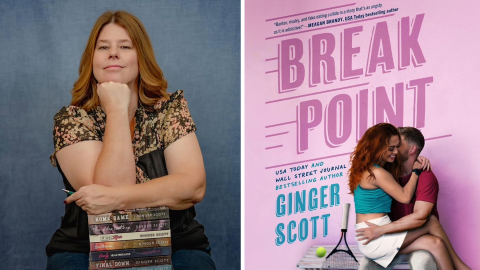 Amazon in-house publisher Skyscape/CourtesyA beloved Valley author whose done it all through self-publishing takes a more traditional route for her latest novel.


Transcript
ANNOUNCER: KJZZ’s original production The Show is supported by Banner Health, Arizona’s largest nonprofit healthcare system. Last year, Banner reinvested more than $1.1 billion in community health and charity care. Banner Health, nonprofit for Arizona. bannerhealth.com/nonprofitforaz.
MARK BRODIE: Hi, I’m Mark Brodie, co-host of The Show, an original production from KJZZ. Every weekday, we bring you the latest news and culture from across the state. You can find much more at theshow.kjzz.org. Here’s today’s episode.
MARK BRODIE: Good morning. It’s The Show here on KJZZ 91.5 in Phoenix. I’m Mark Brodie.
Coming up, the candidates for Navajo Nation president debated for the last time last night right here in the Valley. And the Trump administration has canceled millions of dollars worth of projects at national parks across the country.
MARK BRODIE: But first, the Arizona Court of Appeals is hearing arguments in a long-running lawsuit over school funding. The original case was filed in 2017 by four public school districts and others. It alleges the state isn’t upholding the Legislature’s constitutional obligation to provide a general and uniform public education system.
The case centers on the schools themselves and the need for money to pay for their upkeep and repairs, and the issue has been a contentious one for decades.
With me now to explain is Danny Adelman with the Arizona Center for Law in the Public Interest. He’s been the lead counsel in this case for the past several years. Danny, good morning. Thanks for being here.
DANNY ADELMAN: Good morning.
MARK BRODIE: So what are we talking about in terms of these needs that the schools have?
DANNY ADELMAN: So this case is about capital funding. Capital is facilities, buildings, air conditioners, roofs. But it’s also what’s called soft capital: transportation, curriculum, technology. Basically, the case is about the Legislature’s failure to provide sufficient capital funding for schools to meet their needs.
MARK BRODIE: I want to take us back in the Wayback Machine for just a bit because while this case has been going on now for almost a decade, the issue itself is much older than that, right?
DANNY ADELMAN: It is. What’s so troubling about this is the Supreme Court has already ruled on this. The Arizona Supreme Court in 1994 threw out the way Arizona funds the capital needs of public schools because it relied so heavily on local property wealth.
MARK BRODIE: Hence the general and uniform provision there, right?
DANNY ADELMAN: Right. What the Supreme Court said is general and uniform, there’s lots of ways the Legislature can address that, but what it can’t do is have a system that everybody knows must inevitably lead to these terrible disparities. So if you have to depend on your local voters and your property wealth, two things can happen. Voters might not support it. But you may have the most supportive voters in the world and you just don’t have enough property wealth to support enough money.
And so in ’94, the Supreme Court threw it out, said you can’t do this, and the Legislature was mad. They came up with a fix that didn’t really fix the problem. So we sued again. This is in the mid-’90s. And so the Supreme Court set a test. It said, “You, the Legislature, define what minimum standards every school should have, basic, decent stuff that every good school should have, and then provide funding to ensure that every school can meet those.”
And schools don’t have to be identical. If your voters want to support a really cool football stadium and they’re willing to tax themselves and pass bonds to do that, they should be allowed to do that. But the basics, that’s a state responsibility.
So that was the test, and the system itself couldn’t cause disparity. That was the test, and then they went and passed another law. And this time, after some little modifications, that law passed it. So in ’98, they came up with a system called Students First that actually gave schools enough money to take care of their hard capital needs, their buildings and stuff like that, and their soft capital needs: transportation, technology, curriculum.
The problem is, after they came up with that system and funded it for a very short time, they started undoing everything they had done.
MARK BRODIE: So what are you seeing now in schools around the state? What kinds of issues are they dealing with with their facilities?
DANNY ADELMAN: It’s really terrible. I’ve visited schools as part of my work in this case all over Arizona. There are schools with buildings that are literally leaning on each other. There are schools where the water was so toxic for over 10 years that not only could kids not drink it, they couldn’t wash their hands in it after going to the bathroom. They had to boil water and set up little Igloo coolers where kids would wash their hands outside.
But it’s everything. It’s failing air conditioners. It’s roofs that have been leaking for years, which causes mold in classrooms. It’s bad.
MARK BRODIE: Doesn’t sound great. Do you find that these problems are more acute in certain districts than others?
DANNY ADELMAN: We do. Overall, I think you could say smaller and rural areas are the ones that are worst hit, but they are not the only ones that are badly hit. There are many urban districts that are really suffering, too, because we’ve returned to a place where it was supposed to be the state would provide all the basic needs, those minimum requirements every school should have. But they have not funded the system that they created.
And so once again, we’re at a spot where if your voters are supportive and you have property wealth, both of those things, then you probably have decent schools. My kids went to public school. We live in a district like that. We supported bonds. Our kids’ schools got repairs and air conditioning systems. But if you don’t have both of those things, your schools are probably falling apart.
MARK BRODIE: Do you have an estimate in terms of how much money it would cost to do all of the repairs that are needed around the state right now?
DANNY ADELMAN: Not exactly. And part of the reason for that is the state cut off funding for the people who were supposed to go around and inspect schools all over the state. So part of what happened when they solved this the last time — and this is still a law on the books — is the state is supposed to inspect every school every five years. They’ve done a very small fraction, and really only because we sued them.
But in every case where they did inspect, they found problems, including with air quality. The CO2 levels in classrooms throughout Arizona are way in excess of standards. What that means — CO2, it isn’t carbon monoxide, it won’t kill you — but it makes it harder to pay attention, harder to learn, harder to focus.
MARK BRODIE: So very briefly, Danny, before we let you go, you’re in the Court of Appeals right now. The trial court ruled in your favor. You’re in the Court of Appeals. Is there a light at the end of this tunnel? One way or the other, is there a resolution coming anytime soon on this case?
DANNY ADELMAN: You know, for years, we were told by the people on the other side, which is really the legislative leaders, that we were going to lose. And so, after seven years, we made it to trial and we won. People should read the court’s opinion. It’s devastating as to the conditions.
Now they’re appealing. They’re trying to blame districts. Ironically right now in light of Prop. 320, they’re saying schools are paying their teachers too much, which is really terrible.
Anyway, is there light at the end of the tunnel? We think we’ll prevail on appeal. If they appeal again to the Supreme Court, we think we’ll prevail in the Supreme Court.
Unless this Legislature changes dramatically, it’s going to take a court forcing the Legislature to obey the constitution.
MARK BRODIE: All right. Well, we’ll have to leave it there. That is Danny Adelman with the Arizona Center for Law in the Public Interest. Danny, thanks so much.
DANNY ADELMAN: You bet.
MARK BRODIE: The candidates for Navajo Nation president met in a final debate here in the Valley last night. The race has featured issues that are familiar to other campaigns in Arizona like water and data centers, but there’s also been a lot of talk in this campaign about things like corruption and domestic violence.
KJZZ’s Gabriel Pietrorazio has been covering the race. He joins me now to talk more about it. Good morning, Gabe.
GABRIEL PIETRORAZIO: Good morning, Mark.
MARK BRODIE: So let’s talk about the fact that this is basically an open seat, right? The incumbent lost in the primary, so you have two whole new slates of candidates running.
GABRIEL PIETRORAZIO: That’s correct. No matter what, either way, new direction for the Navajo Nation come November after President Buu Nygren lost the primary. He placed third amongst all the candidates.
As we’ve talked in the past, there’s no partisanship when it comes to Navajo elections, whether that’s primary or general elections. There are no assigned Democrat or Republican party affiliations. So the candidates stand on their own as their record, and those two top vote-getters from the primary pick their vice presidential candidates, and those create the tickets that we’ll see come Election Day.
MARK BRODIE: Right. OK, so let’s talk about the issues of water and data centers, sort of the policy issues. Where, like how much agreement or disagreement between the candidates is there on these issues?
GABRIEL PIETRORAZIO: As we follow the Navajo Nation water settlement issue as a whole, we’re talking about protecting water, creating greater access to water, infrastructure for water. And these are everyday issues that Navajos living across the 27,000-square-mile reservation deal with on a daily basis. The candidates agree, investing more, lobbying Congress to pass the Upper-Lower Basin state agreement essentially to get the water physically running, not just paper water that they’re entitled to because of their treaties with the U.S. federal government. So there’s a lot of agreement there.
When it comes to the data center issue, they both agree that they’re against data centers, one side more specific than others. One candidate, the Justin Jones and Emily Ellison ticket, flat out say we’re against data centers of all sorts. Whereas the Crystalyne Curley and Chris Deschene ticket, she is the current sitting council speaker of the Navajo Nation, she specifies that they are against hyperscale data centers specifically. I think there’s a little wiggle room for interpretation there in some of the remarks they’ve told me when we interviewed them for The Show, to talk about potentially developing data centers and other sorts of projects like that for energy use.
MARK BRODIE: And energy seems like a pretty big issue in this race and on the Navajo Nation, right?
GABRIEL PIETRORAZIO: That’s correct. One of the big issues, at least last night that was brought back into focus, is mining. Extractive industry has always been an issue there with Navajo Nation, with outsider companies coming to access uranium.
Particularly coal has been a big issue. The Navajo Nation owns its own coal mine. Under the current outgoing president, they just extended a lease that could bring the coal mine in operation for another 110 years, and both candidates found common ground on that issue in particular.
JUSTIN JONES: I’m opposed to coal mining. I’m opposed to any form of mining that’s where a shovel will go, blast it, and get resources out.
CRYSTALYNE CURLEY: Coal is dying. It’s not coming back. So you do need an administration that will say, “This is the new plan to move forward.”
GABRIEL PIETRORAZIO: And I think the interesting takeaway there is the coal mine itself generates a lot of revenue for the coffers of the Nation, greatly depends upon it. That’s where APS has the Four Corners Power Plant. That mine is the sole supplier of coal to that facility that they expect to leave by no later than 2038, where we get power partly in Phoenix from.
MARK BRODIE: Right. So, Gabe, I also want to ask you about some of the allegations of corruption, domestic violence. These are maybe a little more unique to this particular race. What are the candidates accusing each other of here?
GABRIEL PIETRORAZIO: A big issue in this race is the vacuum of the outgoing Nygren administration that was mired in a lot of corruption allegations and scandals.
We’ve talked about ZenniHome before, which is the $24 million modular housing project that basically didn’t materialize. They had the money issued through ARPA, 160 homes, only 18 were built, and the money has been spent. The company has since been bankrupt and liquidated. There’s lawsuits that are mired in that, and that was something that these candidates are fighting over is, well, who has a better vision to root out corruption for the Navajo Nation in Window Rock?
Justin Jones and the Emily Ellison ticket never held public office, either of them. He’s a private attorney out of New Mexico, and he wants to go after the Window Rock establishment, as he calls them, whereas Speaker Curley and Chris Deschene, who was a former Navajo Nation presidential candidate who was essentially disqualified because of Justin Jones, the attorney —
MARK BRODIE: Over language, like not being fluent enough in the Diné language, right?
GABRIEL PIETRORAZIO: That’s correct. Yeah, he was deemed by the Navajo Nation Supreme Court not fluent enough at the time to run as president, which was a legal prerequisite to become the president. That’s since been repealed. But they are seen as more of the establishment and become the pseudo-establishment after Nygren had been removed from the primary race, essentially.
MARK BRODIE: So, Gabe, quickly before I let you go, Phoenix is obviously several hundred miles away from the Navajo Nation. Why were they having a debate here?
GABRIEL PIETRORAZIO: I think a big shift in how these races have been playing out in the last four years or so is the candidates are reaching into urban Navajo communities. Navajo, you go anywhere in the world, you may find a Navajo. That’s kind of one of the old sayings.
But we’re coming to a point now where about half of the total enrolled membership of the Navajo Nation lives off-reservation outside of the three states of Arizona, New Mexico, Utah where their reservation spans. So they’ve been appealing to those voters in Phoenix, in Albuquerque, in Santa Fe, in Salt Lake City, in Flagstaff, in these places where these urban hubs are, where a lot of voters are that they hope to turn out come November.
MARK BRODIE: So a way to maybe boost turnout overall in the election, not necessarily for a particular candidate or ticket, but overall for boosting turnout.
GABRIEL PIETRORAZIO: For sure. That’s a big trend I think that we’ve seen over the last four years covering presidential elections in Navajo from the previous time was a very concerted effort to reach these urban populations.
MARK BRODIE: Interesting. All right, that is KJZZ’s Gabriel Pietrorazio. Gabe, thank you so much.
GABRIEL PIETRORAZIO: Thanks for having me.
MARK BRODIE: Good morning. It’s The Show on KJZZ 91.5. I’m Mark Brodie.
Coming up, we’ll hear from a Valley author who’s been successfully self-publishing for years, but now her first traditionally published book is on the shelves.
But first, my next guest wants to be an astronaut and go into space, but first, she did maybe the next best thing. Hailey Nelson is a Ph.D. student in astrophysics at ASU. This summer, she spent more than a week living in isolation in Arkansas simulating a mission to Mars as an analog astronaut. She was one of six students who did this, as well as more than 30 others who worked at a mission control center at Georgia Tech.
Nelson stopped by the studio earlier to talk about her experience, and we started with what she learned about herself from it.
HAILEY NELSON: It was so cool, and as someone who wants to be a NASA astronaut, it was so amazing to really go through the motions of what that might be like. It really solidified my desire to become an astronaut, which was pretty solid before, so it was cool to really nail that into the coffin.
It was so cool because we know, obviously, that it’s a simulated mission, we’re on Earth, if something happens, it’ll be OK. But I learned a lot about the way that I interact with my crew, and when we would do EVAs, so those are extravehicular activities where two astronauts would go outside the habitat. So for us, that was going up five flights of stairs in the dark and getting upstairs. And during those times where they’re climbing the stairs, we have no communication. I was usually monitoring the EVAs, and I was like, “Oh my gosh, are you OK? Please get your comms working soon. I’m worried.” It really showed me how real it felt and how maybe I would react in an actual situation because even though I know it’s not particularly actually dangerous for them, I was still worried, and I was ready to drop everything at a moment’s notice to go help them and do anything our commander said to make sure that all of our astronauts were safe.
MARK BRODIE: It’s interesting because I think for a lot of folks, they think about astronauts and doing that kind of work, and they think about the work, right? They think about the science, the experiments, the observations. They think less maybe about the psychology of it, the interpersonal skills. Was any of that surprising to you when you were in that isolated habitat for as long as you were?
HAILEY NELSON: Yeah, I think I personally wasn’t as affected about the isolation as my crew members were. Just to put it into context, we were both physically isolated in the middle of nowhere Arkansas, locked into the habitat, but also during this time, all communications with ground control, which was based in Georgia Tech, were delayed by 20 minutes, which is about the time delay you would have between Earth and Mars when Mars was at its closest, so it can be even longer than that. For example, if I sent something to ground control, it would take 20 minutes to get there, and then their response would take another 20 minutes to get back to me. So we’re both physically and conversationally isolated.
If something happens, the crew needs to be able to figure it out themselves because we can’t wait 40 minutes. If there’s an oxygen leak in the habitat, you can’t wait 40 minutes to get time to have a response.
MARK BRODIE: Yeah, you’ve got to act.
HAILEY NELSON: Yeah, you have to act. A lot of my crew members were really feeling the isolation by Sol 4. We’re not talking to our families, we’re not talking to our friends, we’re literally only talking to each other, and then we have two people with time-delayed communications that we communicated with back at Georgia Tech. We’ve worked really hard on team bonding both before the mission and during the mission so that you don’t feel all the effects of the isolation. So we would take time, and we’d paint together, like I brought watercolors, or we would play card games. We would try and make sure that we were all eating lunch and dinner at the same time so that we can talk with each other instead of just being by ourselves.
MARK BRODIE: OK, so you mentioned that you would like to be an astronaut. What appeals to you about going into space?
HAILEY NELSON: Space is so cool. Obviously I’m biased, but space is so cool, and I think it would be amazing to get to be in space and look down at the Earth or be in Mars, the moon, whatever. But what I think is the most appealing about being an astronaut is what they do in society. An astronaut is such a pillar of inspiration for people across the world. When you think of yourself when you were 5, you probably wanted to be an astronaut at some point, right?
MARK BRODIE: Yeah.
HAILEY NELSON: Having the ability to be in a position where I can inspire people to follow a love for science and learn something new and follow their passions is something that is very valuable to me as a person and something that I hope to do regardless of if I’m an astronaut or not. I think it would be so cool to have the ability to get to share my love for space and change people’s lives, really.
MARK BRODIE: Do you feel like your experience as an analog astronaut gave you any insights into how you would do as an astronaut or the kinds of things maybe you would like to do if you get to go into space?
HAILEY NELSON: Definitely. I was the crew scientist, which means I was in charge of all science experiments that we did during the mission. So we had some rovers that we operated, including one that we teleoperated that was in Bolivia on the salt flats, which was really cool. Then we had some psychological experiments. On the ISS in an actual space mission, you do hundreds of experiments because there’s such a few number of people that are in those conditions, and obviously that’s the future of humanity right there. It was really cool getting to manage all of those. We had to log them properly. I had to teach the crew how to do EVA logs if I was busy during the time or if I was even on EVA and couldn’t do the log myself, and then I’d come back and check them. It was very reminiscent of how an actual mission would be, and it was so cool as someone who loves science to get to do that, and I hope one day I’ll get to do it on the ISS or on the moon or on Mars or whatever have you.
MARK BRODIE: OK, so what would you like to do in space? Is there a particular place you’d like to go? Do you want to go to the International Space Station? Do you want to go to the moon? Do you want to go to Mars? Somewhere else?
HAILEY NELSON: I would go anywhere they ask. I would literally go anywhere. It’s really cool with my age and where I’m at in my career that permanent human presence on the moon isn’t far-fetched. That could be me. I could be going there building a space station around the moon. It’s even not that far-fetched in my opinion, some people disagree, that Mars isn’t out of sight at this point. I could be going to Mars, which would be really cool. It’s a long mission, but I think it’s worth it. I care about human space exploration, I care about space exploration in general. My whole research is essentially boiled down to looking for aliens, so if I can go to Mars and study the surface samples, that could change a lot for us back here on Earth.
MARK BRODIE: It kind of sounds like if there were a real-life Project Hail Mary, you would volunteer for that.
HAILEY NELSON: 100%. 100%.
MARK BRODIE: Do you picture yourself on the launch pad there, in the uniform holding the helmet, getting ready to walk onto a space shuttle?
HAILEY NELSON: I definitely could, and especially now that I’ve done the analog mission, and I have my flight suit, and I’ve worn the helmets, all the gear, it seems like it’s possible, which is so cool because I’ve worked really hard for a really long time, and I’m going to continue to work hard, but this can be my future.
MARK BRODIE: That’s Hailey Nelson, an astrophysics Ph.D. student at ASU and analog astronaut. More of our conversation in just a moment.
MARK BRODIE: Good morning. It’s The Show on KJZZ 91.5. I’m Mark Brodie.
Let’s return now to my conversation with Hailey Nelson, a Ph.D. student in astrophysics at ASU. She spent more than a week this summer as an analog astronaut simulating a mission to Mars, and I asked if there was anything that surprised her during her time doing that.
HAILEY NELSON: It was interesting. Our commander, Amanda Galloway, put it really well, where she said astronauts are doing the most open exploration, right? They’re exploring things that we’ve never even heard of before, but at the same time, they also have less autonomy than the normal person. We don’t decide when we do anything during our day. We don’t decide what we eat. We don’t decide when we eat. We do two hours of exercise a day, we don’t decide what our exercise is. Even though we’re on this forefront of exploration, we’re also losing parts of what a lot of people consider to be humanity while we’re doing it, which I think is a really interesting perspective and was something that I think we all kind of struggled with because for the past, for me 23 years, I’ve fed myself, and I’ve said, “OK, I want to go draw right now. I’m going to go do that.”
MARK BRODIE: Yeah.
HAILEY NELSON: That was really interesting to just kind of experience. Along those same lines, we also all work together in different parts, and there was always unexpected things that were happening. During the time that we were in the habitat for those 10 days, mission control would inject mals or malfunctions. So they’d be like, “OK, it’s 4:00 a.m., your oxygen’s failing, everyone needs to get up, and you need to go do this.”
MARK BRODIE: Testing worst-case scenario kind of things.
HAILEY NELSON: Yeah. So we’re awake from 4:00 a.m. to 6:00 a.m. doing math trying to figure out how to fix this, and then we have to go back to sleep.
MARK BRODIE: I have to bring up the fact that being an astronaut comes with some dangers, right? Do you think about the possibilities of things that could go wrong if you’re in space?
HAILEY NELSON: Definitely. I personally find it worth it, so Mom, if you’re listening to this, don’t listen right now. Even if the chances right now of death in space exploration are actually very low, and NASA and other space agencies do everything they can to make these spacecraft as safe as possible. When you think about it’s a billion dollars for this, the materials themselves don’t actually cost that much money. They’re usually pretty similar to the materials we actually use here on Earth, but they’re double, triple, quadruple-checked to make sure that they’re OK for human spaceflight because the priority is always keeping the crew safe. So even if there was a higher chance of injury, I would still go because it is so important to me. But luckily there isn’t because there are so many people who are focused on making this safe.
MARK BRODIE: Do you have a goal in terms of by when you would like to be in space, or just whenever it happens is great?
HAILEY NELSON: Whenever it happens is great. I am eligible in 2029. They usually open up every few years for applications, so I’m just going to apply until I get it. I’d like to do it before I die, but if it’s when I’m 26 or if it’s when I’m 35, I’ll make it work.
MARK BRODIE: And you do have other aspirations, we should point out. Obviously going to space seems like a big, maybe the biggest one, but there are other things you’d like to do here on Earth, right?
HAILEY NELSON: Yes, definitely. I’m getting my Ph.D. right now. I’ll graduate around 2030 or 2031 with my doctorate degree, so then I will be Dr. Hailey Nelson, which is really exciting. After that, in this field, you typically will get two postdocs. After that, I’ll apply to be a professor. I really love teaching, and I want to do research. So I’m just going to keep continuing that path and sharing my love for science, doing cool science, and then hopefully one day I will be an astronaut, and I’ll go do that and come back and pick up where I left off.
MARK BRODIE: What do you think would be the coolest thing about being in space?
HAILEY NELSON: Ooh, I just think looking at the Earth or the planets and just, it’s so beautiful. I got into astronomy because of all the pretty pictures, and then I ended up in theory, so all I do is look at a black line on a white piece of paper, and I don’t look at any cool pictures.
MARK BRODIE: Yeah, you’re doing like calculations and stuff, right?
HAILEY NELSON: Yeah. But I just think it’s so beautiful. What is so amazing about space is, as we were saying earlier, a lot of people wanted to be an astronaut when they were 5. Almost everyone across the world has looked up at the sky at some point and wondered what is out there. It brings people together. I’ve met people from all over the world who have an interest in astronomy. Maybe they’re not doing it, but they’ve been interested in it before. It’s something that brings us together as a species, as humans. I think that getting to actually go there and look at the stuff that I’ve been dreaming of since I was little would be so cool.
MARK BRODIE: So you are somebody who from a very young age wanted to do this. When you went through your as a kid, “I want to be an astronaut” phase, that’s just stuck with you.
HAILEY NELSON: Yes and no, actually. I kind of, like most kids do, flopped around like what I wanted to do. My dad is very interested in astronomy, and so when I was growing up, we would look at the Astronomy Picture of the Day every single night before I went to bed. As I got older, I wanted to do forensics and forensic psychology, and then when I was in high school, I decided that wasn’t really for me. So I was like, “OK, what could I do?”
I thought about that, and I thought about what I wanted my future to look like because I believe at any point in your life, but especially in high school, there are so many doors available to you, and you can pick any of them you want. When you’re in high school, you haven’t committed to anything. If you want to be an astronaut, that’s totally possible. If you want to be a doctor, go do it.
So I was at that point where I hadn’t decided on anything on paper, so I was like, “OK, well, I’m going to do it. What needs to happen to make this my reality?” So I did it, and it’s been so amazing, and my parents and my family have been so supportive. It’s funny, my dad will text me questions. He’s like, “What do you think about this? I think that this model for the asteroid belt makes sense except it’s a little too densely populated in fact.” I was like, “Where are you learning this? These are really good questions.” So it’s so awesome to get to talk about it with people.
MARK BRODIE: That’s very cool. All right, that is Hailey Nelson, a Ph.D. student in astrophysics at ASU, potential future astronaut as well. Hailey, thanks so much for the conversation.
HAILEY NELSON: Thank you for having me.
MARK BRODIE: The Trump administration has blocked at least $25 million worth of projects in national parks across the country, according to the Washington Post. That accounts for more than 130 projects at parks, including the Grand Canyon, Yellowstone, Joshua Tree and Yosemite.
With me to talk about what this might mean for national parks and monuments, both here in Arizona and elsewhere, is Matt Nelson, executive director of the Arizona Trail Association. Matt, good morning.
MATT NELSON: Good morning. Thanks so much for having me.
MARK BRODIE: Thanks for being here. So what are the potential impacts at some of the parks? I mentioned the Grand Canyon, but there’s also Organ Pipe, Chiricahua, a bunch of parks and monuments in Arizona could be affected by this.
MATT NELSON: Indeed. I think one of the things we all agree on is that we love our national parks and our national monuments, and this is something that I think has attracted people to this state to live and work and visit here. Very little funding flows toward our park system, and now what we’ve seen is that over $25 million that was already approved and ready to go to partner organizations to support projects within these parks has suddenly been disapproved.
And the official explanation is because these organizations — these partner orgs similar to the one that I work for — their mission, vision does not align with the priorities of the current administration.
MARK BRODIE: Do you have a sense of what some of these projects are at Arizona parks that are not going to happen now?
MATT NELSON: Indeed. One of the ones that happened most recently is in Organ Pipe Cactus National Monument down near the border. They were in desperate need of cultural surveys because we all know that it’s a very important cultural landscape, but a lot of that monument had not been properly surveyed. And especially with border wall construction and things that are happening down there, a contract was awarded to be able to do a cultural resource survey. That has now been disapproved.
Same story in Lake Mead National Recreation Area. The list is quite long of the 130 projects that have been disapproved, and these are all things that were preapproved and ready to go. So we’re genuinely concerned that this is just yet another attack on public lands, and now it’s our national parks.
MARK BRODIE: Are any of these projects ones — like for example at the Grand Canyon, we’ve heard so much about the water pipe that needs fixing and work recovering from the Dragon Bravo Fire last year. Are there sort of bigger projects, more infrastructure type projects like that included in this as well?
MATT NELSON: Yeah. Of the list of this 130, Grand Canyon is not on it. Grand Canyon is my favorite national park in the entire system, but a lot of the money that’s been appropriated to support the Dragon Bravo recovery comes from disaster relief funding, so that’s separate.
However, Grand Canyon, like a lot of other national parks, if you were to add up the maintenance backlog, it’s over a billion dollars. And so Congress over time has been trying to chip away at that and address some of these priority maintenance issues.
But what we’re seeing is that the current administration is deprioritizing all of these projects within national parks so the secretary of the Interior can redirect the funding to other priorities in Washington, D.C. So while we’re hoping disaster relief funding benefits Grand Canyon, there’s a whole lot of other maintenance issues that all of our parks need that are now not being funded.
MARK BRODIE: You mentioned the partner organizations. Did your organization have any contracts canceled?
MATT NELSON: No, not at all, which I was very grateful for. We don’t receive much money from the National Park Service, actually. Some of our money comes from National Forest, but a lot of it’s private, state, foundations, grants, things like that. But as a partner organization that works in really close partnership with National Park Service as well as U.S. Forest Service, Bureau of Land Management, we’re genuinely concerned that this is setting that precedent for defunding partner organizations that bring a lot to the table: technical expertise, volunteerism, private funding. So when a dollar is not going to one of these partner orgs, it’s probably having three to four times the impact.
MARK BRODIE: When you talk about the maintenance backlog at places like the Grand Canyon, does this move potentially exacerbate that?
MATT NELSON: 100%. Yeah, I think right now, what we’ve seen over the past two years is that the National Park Service staff nationally has been reduced by 25%. So three of the four people that used to work for the Park Service are now having to do the jobs of everybody.
So they have to continually reprioritize what’s most important. And with fewer staff and less funding and now funding being redirected, it’s really putting our parks into a state of chaos. All of us, visitors and locals alike, are going to start to see those impacts.
MARK BRODIE: We have seen constitutionally approved money that the Trump administration has either tried to redirect or just not pay out. We’ve seen lawsuits and challenges to that, in some cases successful challenges to that. Are you anticipating that there will be some kind of legal challenge to this?
MATT NELSON: I do. I think that partner organizations are fearful that if they challenge the administration, they will never see funding again. But as we see funding reduced and redirected, I think some organizations that have a lot of capacity and have a lot of federal contracts that are already lined up are probably going to be willing to take the leap and seek litigation.
MARK BRODIE: And in terms of the projects that these parks and these organizations are doing at the parks, this pot of money from the federal government, how big of a component of those projects is this? How big of a hit is this to the park system?
MATT NELSON: Huge. One of the reasons that the National Park Service partners with organizations is because they just don’t have the capacity to do all the work. So by relying on partner orgs, they bring in so many other resources to infuse our parks. It’s beyond just friends groups that are helping with general maintenance and things like that. It’s really bringing technical expertise that the park staff doesn’t have.
So the hit is huge, and I think that it’s just the beginning, especially because over the past few days, we’ve learned that there are 1,500 projects nationwide that individual parks have said, “These are our priorities,” that the Department of the Interior, who governs National Park Service, has reprioritized all of those as low priority — all of them.
So think about the parks that we have in Arizona: Saguaro, Grand Canyon, and then soon to be hopefully Chiricahua National Park. Those parks have listed, “Here’s what our priorities are, here’s what it will cost,” and the level of priority at the Washington level has all been deprioritized to low priority so the funding can be redirected.
MARK BRODIE: Wow, that is interesting. All right, we’ll have to leave it there.
MATT NELSON: Yeah.
MARK BRODIE: I mean, from your perspective, I assume, as you’ve said, not great.
MATT NELSON: Not great, and really like, what to do? What to do about this? I think part of it is just getting the word out there that our parks are being defunded and they’re under attack. I think encouraging people to reach out to their members of Congress to say, “What are you going to do about this? We love our parks. Please help us protect them.”
MARK BRODIE: Fair. All right, that is Matt Nelson, executive director of the Arizona Trail Association. Matt, thanks so much.
MATT NELSON: Thank you, Mark. Have a great day.
MARK BRODIE: Ginger Scott has written somewhere around 60 books. The local author specializes in sports romance, and since she published her very first book in 2013, she’s been a powerhouse in the genre.
And she’s done it all through self-publishing, building up a loyal following one book at a time, until now.
Her newest book, a tennis romance called “Break Point,” went through the traditional publishing process via Amazon’s in-house publisher, Skyscape.
She came into our studios recently to talk about it with my co-host, Lauren Gilger, beginning with her pre-romance novel career as a journalist.
GINGER SCOTT: I was a journalist, but the whole reason I kind of fell into journalism is I just knew when I was a little kid that I wanted to do something in writing.
LAUREN GILGER: Yeah.
GINGER SCOTT: There were people with bylines in the newspaper that showed up at our house, and I thought, “That’s a job. That’s what I’m going to do.” I did love journalism, and I think it actually has helped my fiction writing a great deal because I bring a lot of realism into the stories that I write. I almost think that journalism is one of the best degrees that anyone can get for any job. It just trains you for so many different things.
LAUREN GILGER: That is so true. It’s applicable to so much. OK, so began as a journalist. When did you write your first novel? Was it kind of on the side?
GINGER SCOTT: Yes, it was definitely on the side. It was a project that I probably carried around half-done for about 15 years.
LAUREN GILGER: Wow. Wow.
GINGER SCOTT: Yeah. It was that thing that I would always tell my husband, “This is the year I’m going to finish my book.” Then finally one year, I had switched from journalism to more marketing and communications, and I was working at the city of Glendale at the time, and he just challenged me. He said, “How about you take two days off of work, and we don’t watch ‘The Today Show,’ and instead you just sit down and you try nothing but writing and working on your book and see how it feels.”
So I did that, and it felt great.
LAUREN GILGER: Wow.
GINGER SCOTT: Then it became these midnight to 3 a.m. sessions until I had it finished, and then when it was done, it was a situation of, “Oh, so now I have a book that I probably should show to someone. That’s terrifying.”
LAUREN GILGER: Right. I mean, a big deal, though. What was the first book about?
GINGER SCOTT: It was very much the book I always wanted. The whole reason that I fell in love with writing was Judy Blume. When I was 11, 12, 13, and I discovered she had chapter books, and I read “Forever.” “Forever” was kind of the book that changed everything for me.
LAUREN GILGER: Wow, yeah.
GINGER SCOTT: And I read these books about young adolescents kind of facing the same things me and my friends were in, and it felt so realistic, and I didn’t know books like that existed, and I just wanted to create something like that.
So my first book is very much an ode to that sort of coming of age. It is a girl’s four years of high school and just sort of the self-realization she goes through. Of course, there’s a quarterback, and of course, she’s the smart girl, and there’s the classic tropes in the love story. I set it in Coolidge, Arizona, so it’s small-town desert high school football, which is a little different than some of those Midwestern scenes.
And yeah, it was just the book I always wanted to read, and I put it out, and enough people picked it up that I wrote a sequel.
LAUREN GILGER: Right. Right. And I mean, you’ve published how many novels now?
GINGER SCOTT: Oh gosh. So it’s funny. I want to say I’m close to 60.
LAUREN GILGER: My goodness. OK, so like a whole lot of books.
GINGER SCOTT: A whole lot of books, yeah.
LAUREN GILGER: And you have, up until now, self-published them, right? Like just done this entirely on your own?
GINGER SCOTT: Yes. Yeah, I’m a one-woman business.
LAUREN GILGER: So, I mean, talk about the challenges in that. That’s an impressive number of books to write, first of all, but then to get out there on your own and to be very successful with, like you have this very loyal body of readers.
GINGER SCOTT: Yeah. I always like to tell people there’s always a little bit of luck in publishing, definitely, and I just happened to kind of take my leap at a time when self-publishing was, especially in romance, was really having a breakthrough moment. I put my first book out in 2013, and there was this little author people might know called Colleen Hoover who also happened to self-publish a book that landed on the New York Times list.
And so I think it helped open the doors for a lot of people to start paying attention to books that were not the traditional route. I thought, “Well, I’m just going to see if I can get 17 people to read this book, and if I can do that, then I’m going to call it a win.” And that first month, I had about a couple hundred, and then it was a couple thousand.
LAUREN GILGER: Seventeen was your goal, yeah. How many people in the end do you think have read that book, any guesses?
GINGER SCOTT: Oh my gosh. I don’t know. It has spawned into a six-book series that has a first and second generation. It has leather-bound special editions. I have people that read it as a teenager and now they’re grown adults, and they still look back at that book and see themselves, and are saving it to read with their daughter one day. I just think that is tremendous and special, so.
LAUREN GILGER: I mean, amazing, yeah.
GINGER SCOTT: It’s done pretty well.
LAUREN GILGER: It’s done pretty well is an understatement. So sports romance is sort of your niche.
GINGER SCOTT: Yeah.
LAUREN GILGER: Tell us what that is. I don’t know if I’m incredibly familiar with that as a genre.
GINGER SCOTT: You know, and I don’t, it certainly wasn’t really at least a genre that I knew of when I kind of stumbled into it. I just knew that I loved things like “Friday Night Lights,” and I loved stories like “This Is Us,” and that’s really what my first book, kind of when I pitch it to people, that’s what it is. It’s like those two worlds meet each other.
I’m a sports fanatic. I always joke that there’s probably not a sport that I can’t get behind. I have even watched pillow fighting on the Ocho, so.
LAUREN GILGER: [Laughter]
GINGER SCOTT: But yeah, there’s just so much natural drama in sports, and I kind of like the pressure that puts on young people. I mean, I don’t like it like, “Yay, great,” but as an author, I love it, and I love kind of exploring that. So it’s like any environment. People write billionaire romance, and they like that high pressure of being a CEO and sort of, or mafia. I just like baseball diamonds and football fields.
LAUREN GILGER: It’s just your thing, your setting.
GINGER SCOTT: Yeah, yeah.
LAUREN GILGER: OK, so your latest book is a little different, not in the sense that it’s not sports romance because it is, this one about tennis, right?
GINGER SCOTT: Yep.
LAUREN GILGER: But it went through the traditional publishing process. You did this for the first time?
GINGER SCOTT: I did, yeah.
LAUREN GILGER: How different was it?
GINGER SCOTT: It was very different. I mean, very different, but also some similarities. So I went through Skyscape, which is an Amazon in-house publisher, and they’re incredibly collaborative, which I think when you come from a self-publishing world where you’re used to sort of having your hands on anything, is a really great segue into traditional publishing.
LAUREN GILGER: Sure.
GINGER SCOTT: I turned that book in a year ago. I’m used to sort of churning and kind of working on my own schedule where I probably produce three books a year.
LAUREN GILGER: Wow, yeah.
GINGER SCOTT: And I’m constantly in a cycle of editing, creating, outlining, marketing, editing, creating, outlining, marketing. So that one just sort of went along in the background while I kept up my normal pace. So it was very interesting to kind of go through the different timeline.
LAUREN GILGER: What’s next for you? You going to keep this going? Are you going to try a new genre anytime?
GINGER SCOTT: Oh gosh, that’s a good loaded question. Yes, I’m definitely going to keep this going. My husband always jokes, he’s like, “You know you’re our retirement plan, right?” Yes, yes, I’m going to keep writing until I can’t, the fingers can’t touch the keyboard anymore or dictation falls apart.
I have so many stories in my head, and I’m constantly thinking of new ones. And it’s not always sports. It’s usually, we joke, me and my friends, that even if I wrote a werewolf romance, somehow he would also be a quarterback.
LAUREN GILGER: [Laughter]
GINGER SCOTT: That’s sort of my thing. But I’ve written rock star romances, and I’ve done some that are just contemporary adult romances before as well. It’s just sort of what story calls to me and kind of how it comes out.
LAUREN GILGER: What’s next?
GINGER SCOTT: Right now, I am in the middle of finishing a baseball series. It’s a six-book series. It’s called “The Boys of Sweetwater Springs,” and it is small-town, minor league baseball, and each book is a standalone, but they’re all connected. It’s different players in the team, and they’re all at different stages in their careers, and there’s the characters in the small town, and there’s the woman who owns her daddy’s bar that she’s keeping going, and just all sorts of havoc and crazy fun, and I have two books left to finish that will come out in 2027.
LAUREN GILGER: All right, well, lots to watch for. Ginger Scott, USA Today, Wall Street Journal bestselling author. The new book is “Break Point.” Ginger, thank you so much for coming in. I really appreciate it.
GINGER SCOTT: Oh, my pleasure.
MARK BRODIE: Thanks for listening to The Show’s podcast. The Show is produced by Sativa Peterson, Nick Sanchez, Amber Victoria Singer, and Ayana Hamilton. The Show was created by John Hoban. Our executive producer is Amy Silverman. You can find more of The Show and sign up for our newsletter at theshow.kjzz.org. You can also find us on Instagram @kjzztheshow.