


Republicans up and down the ticket are trailing Democrats in this heavily Republican state. An Arizona pollster breaks down the numbers. Plus, we’ll meet the president of the Arizona Accordion Club.
Ways To Subscribe


-
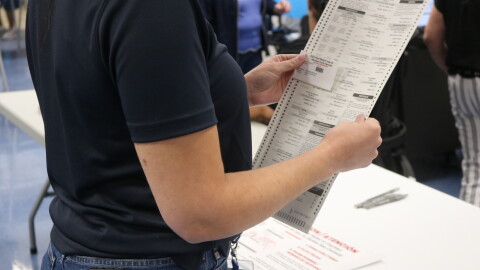 Camryn Sanchez/KJZZIt is exactly two weeks until Election Day, and Republicans up and down the ticket are trailing Democrats in this heavily Republican state.
-
 Jean Clare Sarmiento/KJZZThe Arizona Accordion Club formed about three decades ago. Today, the club is filled with 65 professionals and amateurs players who meet regularly at Edelweiss Biergarten.
-
 Getty ImagesStarting in January, certain people charged with low-level, nonviolent crimes in Coconino County can choose a different path — a peacemaking program.
-
 Getty Images/StockThere are some big changes that have come and are coming to Medicaid as a result of the "One Big Beautiful Bill Act." Ann-Marie Alameddin, president and CEO of the Arizona Hospital and Healthcare Association, joined The Show to talk about it.


Transcript
ANNOUNCER: KJZZ’s original production The Show is supported by Banner Health, Arizona’s largest nonprofit healthcare system. Last year, Banner reinvested more than $1.1 billion in community health and charity care. Banner Health, nonprofit for Arizona. bannerhealth.com/nonprofitforaz.
LAUREN GILGER: Hi, I’m Lauren Gilger, co-host of The Show, an original production from KJZZ. Every weekday, we bring you the latest news and culture from across the state. You can find much more at theshow.kjzz.org. Here’s today’s episode.
MARK BRODIE: Good morning. It’s The Show here on KJZZ 91.5 in Phoenix. I’m Mark Brodie.
LAUREN GILGER: And I’m Lauren Gilger. Coming up, a new program in Coconino County will offer offenders a new option instead of jail: Navajo peacemaking.
MARK BRODIE: And we’ll meet the president of the Arizona Accordion Club, who plays us a few songs.
LAUREN GILGER: But first, it is exactly two weeks until Election Day, and Republicans up and down the ticket are trailing Democrats in this heavily Republican state.
A new poll from HighGround shows Democratic Gov. Katie Hobbs leading Republican Congressman Andy Biggs by 17 points, Secretary of State Adrian Fontes ahead of GOP challenger Alexander Kolodin by 12 points, and Attorney General Kris Mayes leading State Senate President Warren Petersen by 15 points. This in a state where Republicans have a massive voter registration advantage to the tune of about 300,000 more voters.
Pollster Paul Bentz conducted the poll for HighGround, and he’s in studio now to tell us more about what he found and what early voting is already saying about what we can expect when it comes to turnout this November. Good morning, Paul. Thanks for coming in.
PAUL BENTZ: Good morning. I thought I was here to play my accordion.
LAUREN GILGER: I mean, if you want to or if you want to fundraise, all, you know, up to you. But I want to ask you about this most recent poll that you just came out with last week that shows really major leads for the top Dems at the top of the ticket here. Were you surprised by these numbers?
PAUL BENTZ: Absolutely. I mean, we did not expect it to be this large of a margin. We build in a Republican advantage in all of our survey research. Republicans overparticipate in our elections. They have a 300,000-vote registration advantage. They generally have at least an 8-point-plus participation advantage. We like to say Republicans show up, and it just comes down to who shows up around them.
So to have these types of numbers was pretty surprising. But the biggest thing that we see within that is that while in 2024 Trump had about 88% of the Republican vote, Kari Lake had about 84%, in that latest data that we had from last week, Andy Biggs was only getting 71%.
The highest watermark was in the superintendent of public instruction race, getting 75% of Republicans. There just was not that Republican enthusiasm. If those folks show up, we expect that those numbers will reduce at least some, but there are still pretty sizable margins for the Democrats.
LAUREN GILGER: Yeah. So Republicans peeling off is basically the story there, it looks like, and we’ll see what happens on Election Day. Is this trend, Paul, just for the top-ticket races, though? Like what about downballot races? This kind of reflects what’s happening in the country overall in terms of an anti-President Trump, anti-GOP trend that we’re seeing in lots of polls.
PAUL BENTZ: Yeah, across the country we’re seeing Democrats with sizable leads plus double digits in some spots where we’re just seeing the Republicans are not very popular right now.
Now, we just looked at their early ballot returns. There’s about 500,000 returns so far. Democrats are outpacing Republicans, about 40% of the vote compared to 38%. So Republicans are behind right now, but this is, in the last few years, we’ve seen a little bit more of that Democratic enthusiasm.
The big thing that we’re watching, though, is this independent vote. It’s only at about 22% right now. And independents are the biggest factor that are leaning more Democratically right now. In fact, by several, you know, by 5-to-1 in some of these races, we were seeing initial independent support. If they don’t show up, those races will get closer, but both independents, a small portion of Republicans, somewhere between 10 and 12 points, and then the vast majority of Democrats are anti-Republican right now.
LAUREN GILGER: Wow, even a big chunk of Republicans. So let me ask you about those independents, right? Always the swing vote, always the big factor in Arizona elections. If we’re looking at early voting and only 22% of them coming out, why might that be? Like what depresses voter turnout specifically for that group?
PAUL BENTZ: Well, negativity, in fact. So independents, they don’t generally vote in the primaries, right? The primaries are constructed in a way that basically is not fair to independents. A third of our registered electorate is not treated equally in our election system during the primary. So they don’t show up in the primary, so they don’t have much vested interest in the general.
Add into that that when the president’s not at the top of the ticket, independent participation is down slightly. And then we’ve had a really negative cycle. You don’t hear a lot of positive ads out there, why to vote for a candidate. “This person’s bad and here’s why. This person did this, here’s why.”
And that has a suppressive nature. When you attack your opponent, when you attack your opponent, it does not bring your number up. It just brings your opponent’s number commensurately down. You have to give people a reason to vote for you, not simply against your opponent. People don’t go, “Oh, that person’s bad. I’m going to vote for the other guy.” They go, “Oh, that person’s bad. I probably won’t vote.”
LAUREN GILGER: “I just won’t vote.” Wow. Can we separate other demographics out in polling, Paul? Like what about young voters, I’m wondering, because they really showed up last time around, right, and surprised a lot of people. Many voted for President Trump.
PAUL BENTZ: Yeah. So what we see is younger voters do tend to show up more in the presidential election. They’re the group that is most difficult to capture and to get to show up in these off-cycle or midterm elections. They’re just not as reliable as the 65 and older, the 50-64 categories. Over half our electorate will be over the age of 50. And in fact, over 30% of our electorate will be over the age of 65. And that’s pretty much guaranteed.
But this negativity tends to turn off younger voters. And so they haven’t built that habit of voting yet. Voting is a habit, and getting people to actually show up, it’s a thing that you have to build in over time. That’s why older voters are better at it.
So younger voters are trending more Democratically, they’re trending more independently. There are independents right now that are voting for Democrats, but they have to show up right now. And we’re not seeing as many younger voters as we had expected, but they tend to vote late. They’ve got other things going on.
LAUREN GILGER: Tends to be the case. There’s no big issue on the ballot either that strikes me this time around. Like there’s no abortion measure, school vouchers didn’t make it on the ballot. Does that depress turnout? Does that change the way people think about these things?
PAUL BENTZ: Well, there are eight statewide issues for a variety of topics that are — some of which the Republicans specifically put on to try to motivate their base. But you’re right, there’s not some massive issue on the ballot in general.
There are two that I think are motivating some audiences to show up. Prop 144, which is a massive change to our early voting system, which could eventually lead to the banning of early voting if they wanted to do that. And then Prop 320, which is the 60% in “direct instruction,” quote-unquote, which is a nebulous phrase that doesn’t include school nurses, special ed, and a lot of other things that would very be detrimental to a lot of classrooms.
So you see groups within those communities, people who are pro-democracy, pro-voting, pro-education folks that care a lot about how schools are funded, they’re motivated. But there’s not some big overarching debate like abortion, for example, that’s motivating folks to show up.
But I think the bigger thing that we’re seeing is there’s not a lot of positivity out there. It’s a lot of attack ads. I watched the end of the Cardinals game last week, and they didn’t go to the other game. In fact, they did like three straight minutes of political ads, and every single one of them was negative. And I was like, “Good for the station to make that money.” But at the same time, it was literally attack ad after attack ad after attack ad.
And so that generally, if people watch that — especially I was here for sports and now they’re going to try to give me politics — it generally tends to turn people off.
LAUREN GILGER: That makes sense. Makes sense. Let me ask you lastly about polling, right? I mean, you’re a longtime pollster here and you’ve seen the polling industry change a lot over the years. Do people trust polls anymore? Should they? I mean, people often lie to polls, right?
PAUL BENTZ: People should trust good polls. There’s good polls versus bad polls. The problem is, I mean, even Gallup has announced they’re not doing as much the public good tracking that they used to do because it costs too much money. Good polls cost money to conduct because you know who you’re talking to and you’re conducting it scientifically.
The other thing is we’ve seen this massive growth in bad polling where people do it for nefarious purposes: fundraising reasons, trying to make people think stuff that’s otherwise happening. Every time you saw a good poll come out in this cycle, we see some sort of partisan or outside-funded poll with sort of specious ways that they were conducted, texts or whatever, to try to push back and say, “Oh, no, the number’s a lot lower.”
Like when we put out numbers earlier that showed Hobbs was up by 15 points, we saw a lot of polls, “Oh, actually it’s half of that.” And, you know what, it may be, but you got to look at what the people are putting out the poll for, what they’re trying to accomplish.
Our data is to put out what we’re predicting the election to look like. There’s no other goal here besides sharing public information. But there’s a lot of folks, if they’re funded by a particular party, by a particular group, there’s generally something involved. Either they’re trying to raise money — you know, “Hey, we’re in trouble, we need money,” or, “Oh, no, our guy’s not getting their butts kicked that badly. It’s actually much closer.”
LAUREN GILGER: You get it from both sides.
PAUL BENTZ: Exactly.
LAUREN GILGER: All right. Well, we’ll have to leave it there. That is Paul Bentz with HighGround joining us. Paul, thanks so much as always.
PAUL BENTZ: Thank you.
LAUREN GILGER: Good morning. It is The Show on KJZZ 91.5. I’m Lauren Gilger.
MARK BRODIE: And I’m Mark Brodie. There are some big changes that have come and are coming to Medicaid as a result of the "One Big Beautiful Bill" Act. As of the beginning of this month, some legal immigrants, including refugees, lost their Medicaid coverage. Nationwide, it’s estimated that hundreds of thousands of people will be affected. In Arizona, that number is around 34,000.
Then on New Year’s Day, new work requirements for Medicaid recipients will take effect. Experts estimate that will remove millions of Americans from the rolls.
With me now to talk more about this is Ann-Marie Alameddin, president and CEO of the Arizona Hospital and Healthcare Association. Ann-Marie, good morning.
ANN-MARIE ALAMEDDIN: Good morning.
MARK BRODIE: What are you hearing from Arizona hospitals about these changes that have already taken effect, these 34,000-some-odd Arizonans who have lost Medicaid?
ANN-MARIE ALAMEDDIN: You know, I think across Arizona, I’m hearing from hospitals they’re really bracing for the changes that OBBA — the One Big Beautiful Bill — will provide to the healthcare system, most notably with access to care. AHCCCS, or Medicaid in Arizona, enrollment will likely go down with the work reporting requirements.
And I think for the refugees who have legal status, who are impacted with that Oct. 1 date, I mean, it’s very concerning. These are refugees who are here legally, who have a legal status, who have, if they don’t meet a certain residency requirement, lose their Medicaid eligibility. These are people with cancer, with chronic conditions that need to be managed. And so it’s a real issue with access to care for these patients.
MARK BRODIE: Is it kind of a, as you kind of alluded, like a two-pronged issue? You have people sort of going in for the regular care, like going, you know, seeing their primary care docs or getting preventive treatment, but also people who have existing conditions, if you have ongoing cancer treatment or diabetes treatment or treatment of whatever ailment you have, that suddenly either stops or is uncompensated.
ANN-MARIE ALAMEDDIN: Absolutely. I mean, and I think people who lose that coverage seek the emergency department. You know, they delay care, they get sicker, and then they go to the emergency department for that care. And quite frankly, you know, that’s not the right setting for so many conditions like diabetes or cancer, for that matter.
Nobody receives chemotherapy in an emergency department. And so you really have to think about that human, you know, patients who are facing that, who have cancer, and then their access to that treatment is taken away. It’s just a tremendous impact on people who face that every day.
MARK BRODIE: For this population, the legal immigrants, do we have a sense of where in the state they are? Like which — are we talking more urban hospitals, rural hospitals? Do we know that yet?
ANN-MARIE ALAMEDDIN: Yes, we do. It's 34,000 that the agency identified in terms of who might be impacted, primarily in Maricopa County and Pima County. And then there are sporadically in some rural counties, but predominantly in the urban centers.
MARK BRODIE: Is that in some ways helpful in the sense that we’ve heard so much about rural hospitals sort of being on the brink for quite a while? Is it maybe in some ways — I know it’s never helpful for hospitals to have to treat patients and not get paid for it. But is it maybe better for the system as a whole that it’s happening in a more urban center as opposed to rural?
ANN-MARIE ALAMEDDIN: I mean, perhaps that there can be more kind of — there tends to be immigration, like health clinics that really focus on refugees because they have very unique sort of health conditions, suffered a lot of trauma in getting to this country. And so there are sort of centers of healthcare that focus on those, that patient population.
And so to the extent that you can really provide more wrap-around services to help figure out, you know, how you can maintain access to care for this population, it probably is helpful. Because, as you mentioned, the rural areas of the state and rural hospitals generally, they are, have less of a net operating income. You know, they have less sort of financial resilience to really take on patients who don’t have healthcare coverage.
MARK BRODIE: How do hospitals try to prepare for something like this?
ANN-MARIE ALAMEDDIN: Yeah, in terms of Jan. 1 with the work reporting requirements, we know that there is going to be an increase in patients without health insurance. That will be an increase to uncompensated care for hospitals.
And so how you prepare is, you know, you look at your financials. You look at, I think, all healthcare services. Service lines will be evaluated. I’ve heard statewide, the two service lines that typically operate at a loss are behavioral health services and OB services. I think hospitals will look hard at those services, but I have heard from so many healthcare executives that those services are so instrumental and so important for communities to provide that access to care.
So I think that they are evaluating that, you know, staffing maybe freeze. But it’s so hard because we’ve been working so hard for a number of years on building that nursing workforce pipeline, and there are shortages in healthcare. So no hospital really wants to look at freezing or eliminating positions, but those are the hard decisions that I think some hospitals are going to have to make.
And then ... you have Medicaid eligibility that will likely go down, and then you have Medicaid financing that was cut. I mean, we have historic cuts to the Medicaid program since its inception that occurred with OBBA; $6 billion it will affect hospitals through 2032.
MARK BRODIE: Around the country?
ANN-MARIE ALAMEDDIN: $6 billion in Arizona.
MARK BRODIE: Oh, just in Arizona.
ANN-MARIE ALAMEDDIN: Just in Arizona. The cumulative cuts through 2032 is $6 billion. And so that is a massive hit. So it’s really like two headwinds. We have people losing AHCCCS eligibility, and then we have health, federal healthcare financing being cut.
So you’re eliminating the ability of hospitals to be able to weather that. And this was all a policy decision, you know? Unlike COVID where we had this sort of existential threat of a virus, this is a policy decision that was made to fund this and not that, and we have huge consequences of it, I think, in the healthcare ecosystem in Arizona.
MARK BRODIE: What are you hearing from hospitals about the uncertainty of all this? I mean, the reality is I think nobody really knows exactly how many people might lose their coverage. There are estimates, but nobody really knows exactly how many and where they live and what kind of care they might need. And to your point about hospitals have uncertainty with their staffing and the services they can provide, what are you hearing from them about the impact of all of that?
ANN-MARIE ALAMEDDIN: I think you’re absolutely correct. You know, we do know the healthcare financing cuts that we’ll be facing with the reduction in state-directed payments to hospitals, that’s like the ceiling — or the floor, rather. We don’t know what that ceiling is going to be in terms of, you know, with work reporting requirements, you know, how administratively burdensome, you know, will it be the six-month sort of renewal. eligibility renewal.
People will fail to qualify for AHCCCS not because they’re ineligible, but because they didn’t fill out the form right or they didn’t complete some sort of paperwork on time. And so we don’t know that. That’s a big, I think, question mark.
And so I think it’s, you know, what we’re doing is we’re gathering that data. We’re going to be tracking uncompensated care in Arizona across Arizona to be able to communicate to policymakers, you know, this was a choice a Congress made. But the new Congress who is elected may have a different choice to make based on the impacts, you know, in Arizona and across the country.
MARK BRODIE: Interesting. All right. That is Ann-Marie Alameddin, president and CEO of the Arizona Hospital and Healthcare Association. Ann-Marie, thanks as always. Appreciate it.
ANN-MARIE ALAMEDDIN: Thank you.
MARK BRODIE: Good morning. It’s The Show on KJZZ 91.5. I’m Mark Brodie.
LAUREN GILGER: And I’m Lauren Gilger. Starting in January, certain people charged with low-level, nonviolent crimes in Coconino County can choose a different path: a peacemaking program.
It’s a tradition in Navajo culture that the Navajo Nation’s Judicial Branch has been offering to offenders since 1982. And now, in a first-of-its-kind collaboration between the Navajo Nation and the Coconino County Attorney’s Office, it will be available to Native and non-Native folks alike.
The peacemaking diversion program will function as an alternative to prosecution in select cases, and our next guest this morning says she’s seen it change lives.
It won’t only be for Navajo people, though a disproportionate number of them end up in the county’s jails. Coconino County is about 26% Indigenous; the jail population is about 50% Indigenous.
Rosiene Charley is bi-cultural training manager for the Navajo Nation’s Peacemaking Program, though she began as a detention officer at the sheriff’s office there. I spoke with her more about the program, but first she asked if she could formally introduce herself in Navajo, as is tradition.
ROSIENE CHARLEY: [Speaking in Diné.] Yá’át’ééh. Shí éí Rosiene Charley yinishyé. Kinyaa’áanii nishłį́, Táchii’nii bashishchiin, Naasht’ézhí Tábąąhá dashicheii, dóó Tódích’íi’nii éí dashinalí.
LAUREN GILGER: Tell me what you said there.
ROSIENE CHARLEY: I said my name’s Rosiene Charley, and my clans are One Who Walks Around You. I'm born for the Red House clan, and my maternal grandparents are of the Zuni Edgewater, and my paternal grandparents are of the Bitter Water People.
LAUREN GILGER: That introduction, she said, is essential in Navajo culture because who you are and who you’re related to can translate into accountability in their clan system. Charley told me there’s no word in Navajo for “I’m sorry.” Instead, there’s a three-part process.
ROSIENE CHARLEY: The first one is k’é náhásdlį́į́’, which means that harmony was restored, that that kinship has been restored, maybe through a handshake or maybe just through acknowledging the agreement that was made by the family.
The second part is k’é násdlį́į́’, which means that you reestablish yourself and you continue to contribute to your roles and your responsibilities.
And then with the k’é dóó’né’ part of it, it’s like a long-term journey to realign their ethics and to rebuild their reputation, maybe within their family or within their community. Whatever wrong that was done could then become a teaching tool that they will, you know, stand by for the rest of their life, teaching younger generations and things like that to say, “These are the do’s and don’ts.”
LAUREN GILGER: It’s so interesting to me that it’s always, it seems, community-based, whether it’s with your family and the other participant’s family, or the broader community beyond that. Like is that, is that a part of Diné culture?
ROSIENE CHARLEY: Yes, it is, because we do have this clan system, and that’s very important. You know, that was why I was saying, “Is it OK if I can introduce myself in the Diné language to let people know who I am so they can say, ‘This is how I relate to this person.’”
But that’s a huge component is the k’é part of it, the clan system. When you go out there and you introduce yourself, most definitely you will be related to a group of people or maybe even every individual. So you can never say in Navajo culture that “I am nobody’s business,” because you are pretty much everybody’s business, as you are related to everybody.
LAUREN GILGER: Well, and it sounds like your community, your family, who you’re related to and how, has so much to do with how you would define your own identity in this culture.
ROSIENE CHARLEY: Yes.
LAUREN GILGER: Yeah. So let’s talk then about taking this idea of an official kind of judicial peacemaking process for someone who commits a crime and collaborating now with an outside not-Navajo entity, right? You’re collaborating with the Coconino County Attorney’s Office to apply this practice for them, for folks who are not necessarily Navajo, although I’m sure many people who go through this program will be. How will that work?
ROSIENE CHARLEY: I think it’s going to be interesting. A lot of the teachings will have to be shared like from a very basic, beginner type of teaching. A lot of the Indigenous people that are living in the county, like in Flagstaff, they probably might have heard the teachings or they might not have heard the teachings. So we have to start at a very basic level with them.
And way back when, maybe 40-50 years ago, traditional teachings that we share here within peacemaking was shared at Grandma and Grandpa’s fireplace or at Mom and Dad’s fireplace, but that has changed a lot.
LAUREN GILGER: So this is not for everyone, right? This is not for people who commit violent crimes. And I wonder what your goal in that is in terms of the problem that Coconino County sees in terms of people going in and out of the system; 50%, in fact, of the jail population in Coconino County is Indigenous. How do you think a program like this might help address that problem?
ROSIENE CHARLEY: So people who go through the revolving doors, so to speak, it could be on an individual base where we talk about self-identity and a lot of these traditional teachings to try to lead them back to maybe a time where they were raised, you know, at Grandma and Grandpa’s home or their parents’ home and say, “Hey, I remember those teachings.” And then go back to those teachings and grasp it so that they don’t go through the revolving doors anymore, and maybe they can remember where home is and to make that peace within themselves to heal from whatever traumas that they have and to be able to leave, you know, the social ills behind and go back onto the corn pollen path is our hopes and our goals in implementing this with the county.
LAUREN GILGER: So I know the program with Coconino County isn’t really underway yet, but what does it look like when this happens for someone in your program at the Navajo Judicial Branch? What’s the result? Do folks come out of this changed people?
ROSIENE CHARLEY: We have had repeated offenders come through our doors, you know, multiple times. But we have always been told, you know, through the traditional teaching, that we should always see them as a brand new case and not as a repeat offender. And then sometimes, yes, it does work to where it’s just a one-time thing, and they go through the program, and then they restart their life and things fall into place for them.
LAUREN GILGER: How much of this has to do with substance abuse and getting treatment for that? Is that a part of these plans?
ROSIENE CHARLEY: A lot of it has to do with substance abuse, whether it’s alcoholism or street drugs and things like that. And usually, on the order, it will say, you know, to talk to them about, you know, the substance abuse part of it. And then there might be an additional check-off box that says that this person will go to mental health or Department of Behavioral Mental Health Services for maybe an alcohol assessment or a drug assessment to receive services. So, you know, they all go back in together, and they all correlate in one way or another, and they work together to try to help this person out.
LAUREN GILGER: Yeah. So what does this do then, Rosiene, for the victims of crimes? Like they’re part of this process, right?
ROSIENE CHARLEY: Mhm. So it is interesting. Within the Navajo Nation Judicial Branch, let’s say, for example, domestic violence is one of the main things that we get referrals for as well from the courts on Navajo.
We do have a high rate of cases that are related to domestic violence. When somebody is seeking a petition for a temporary protection order or a domestic protection order, they are given that option when they’re filling out the application: Is this something that you want to go through peacemaking for?
So when they do come through here, and when they get assigned to me as maybe as a traditional program specialist, I usually educate them on what domestic violence is, what triggers it. And I believe that education is a huge thing.
LAUREN GILGER: OK, we’ll leave it there for now. Rosiene Charley, bi-cultural training manager for the Peacemaking Program with the Navajo Nation Judicial Branch, helping to oversee this new collaboration with Coconino County. Rosiene, thank you so much for coming on The Show. Thanks for explaining this to us. I appreciate it very much.
ROSIENE CHARLEY: Thank you.
LAUREN GILGER: Good morning. It’s The Show on KJZZ 91.5. I’m Lauren Gilger.
MARK BRODIE: And I’m Mark Brodie. Oktoberfest has ended in Germany, but if you find yourself at Edelweiss Biergarten in Phoenix, you can still find plenty of the music you’d probably associate with the festival.
That’s the meeting spot of the Arizona Accordion Club — although to be clear, it’s not just oompah music members are playing.
Phil Fox is the club’s president. He told me it formed about 30 years ago with around a dozen members. Today, that number is 65 and includes both professionals and amateurs.
Fox came by the studio recently with one of his accordions, and we started with the fact that there’s more to the instrument than drinking songs or the music you might associate with something like “Beauty and the Beast.”
PHIL FOX: The accordion in the worldwide is, is the most popular instrument. And if you go around the world, think about it: Italian music, French music, German music, Russian music, Mexican music, Latin flavors, show tunes.
In the United States, there’s Cajun, there’s Southern, there’s rock ’n’ roll, there’s country music. And we have members who love any of those flavors, and they’ll come to the meeting and play for us in their favorite genre of music.
MARK BRODIE: That must speak to the versatility of the instrument itself.
PHIL FOX: Yes. Well, as you, if you look at an accordion, frequently you see the piano keyboard on one side and a bunch of black buttons on the other side. The keyboard is intended to play the melody — or a harmony. The black buttons is a lower octave on the sound values, and it’s intended to play the rhythm and give you lower sounds with the music. And then, of course, the bellows going in and out, you have an opportunity to make it softer or louder.
So I’ve got three dimensions of things that I am playing when I play a song. And so the versatility allows me to play different rhythms, different, you know, Latin music is different than a show tune, and I can do that when I play the buttons.
MARK BRODIE: Can you give us a sense of what this sounds like, what this particular instrument sounds like? I know you have some music here. Can you pick one of the songs out and maybe play a little bit for us?
PHIL FOX: Sure. Let me give you a Elvis Presley song.
MARK BRODIE: All right.
PHIL FOX: OK.
[PHIL FOX PLAYS ELVIS PRESLEY’S “CAN’T HELP FALLING IN LOVE” ON ACCORDION]
MARK BRODIE: “Can’t Help Falling in Love with You,” a classic and maybe not one that you would think to be played on an accordion.
PHIL FOX: Right. And there are, there are polkas that you might play, certainly, that when I grew up, my mother is from a Polish family, and, “Philip,” when I brought out my accordion, “play us some polkas.”
MARK BRODIE: Ah.
PHIL FOX: And so today, 70 years later, that’s the last thing I would play by choice. I can play them very well, but by choice I will play what I like to play, the ballads and the softer music.
MARK BRODIE: OK, so let’s talk about how long you’ve been playing the accordion and what got you started, because I think you started in the when you were single-digit age, which I would imagine is not the instrument that most, you know, 7-, 8-, 9-year-olds want to be playing.
PHIL FOX: Correct. When I was 7 years old, my dad said to me, “Philip, what do you want for your birthday?” And I said, “I want to learn how to play the accordion.” Now this is 1955, and the accordion was the king. Everybody wanted to play the accordion. “No, you’re too young.” My eighth birthday, same thing. I said it. He took me in and got lessons. And, and I took lessons till I was about 15 years old.
And during that time when I was in school, once a year, the teachers had me do the assembly. We had an assembly every week. And once a year they had Phil come in and play his accordion for—for 15, 20 minutes for the students.
MARK BRODIE: Did that make you popular with your classmates?
PHIL FOX: Yes. Yes.
MARK BRODIE: Now, this was not your career. I mean, you were an electrical engineer.
PHIL FOX: Exactly. I have a doctorate in electrical engineering.
MARK BRODIE: How many other Ph.D.s in electrical engineering do you think play the accordion?
PHIL FOX: Some, maybe. You have to realize that music is highly related to mathematics.
MARK BRODIE: Yes, that is true.
PHIL FOX: All of the chords and all of the progressions and everything you do is mathematical. So someone who is in the math world like I am, music is like second nature. And as I was working, I would come home every day and relax after dinner, literally every day, and play for an hour.
MARK BRODIE: Really? Every day? This was your sort of your decompression from the day at work?
PHIL FOX: Absolutely. There’s no drugs that work to relax you as well as playing music. I don’t care what instrument you’re going to play. Your mind is going, but it has nothing to do with work, and it’s relaxing. And you know what? The family loved it. They love to listen to me play.
MARK BRODIE: Did they really? I was going to ask if it was relaxing for the other people living in your house. It sounds like it was.
PHIL FOX: Yes, they did not go into their room. I raised six kids, and they did not go into the room and close the door.
MARK BRODIE: Really? OK, so you teased a few moments ago rock ’n’ roll on the accordion. Can I get a sense of what that sounds like?
PHIL FOX: Sure. Let me, let me offer one of my favorites. I like to play a lot of the music from the ’50s and ’60s.
[PHIL FOX PLAYS “HEART AND SOUL” ON ACCORDION]
MARK BRODIE: What do you love about the accordion and about the sound of it and playing it?
PHIL FOX: Well, I have a lot of flexibility in the sound. Just a basic acoustic accordion has series of reed blocks with different octaves, and some of them are identical to each other, but they’re tuned just a little bit off, so you get that feeling of like Italian — you get that — so what you get, that’s three sets of reeds playing together tuned just a little bit off to give you that feeling.
And yet here’s the same reeds without the vibration, without the off-tuning. That’s just one set at that, at that octave playing. So I can select up to five sets of reeds at different, different frequencies in the different octaves and combine them to come up with a different sound.
MARK BRODIE: Which allows you to have music from France and Italy and Mexico and Russia and Eastern Europe and Louisiana and all these different places.
PHIL FOX: Right. And then the instrument that I have with you today adds another whole dimension to that. I have a synthesizer built into it, and it ties in directly into the keys, and I can select up to six more instruments to play with me. So I can — and I didn’t bring the electronics with me today, but I can sound like a piano, I can sound like a guitar, a mandolin, brass, and, you know, adds to the basic accordion acoustic accordion sound.
MARK BRODIE: Do you think the accordion has, I don't want to say an image problem, but do you think that like people really understand the versatility, understand sort of what you can do with it? Or do you think they kind of see it as something in an oompah band or something like that?
PHIL FOX: I unfortunately, I think you’re what you’re implying is true. And it has to do with the changing feeling of the youngsters in the country when — and I’m not bashing them, but The Beatles came along and introduced the electric guitar to the youngsters, and it immediately switched from the accordion to the electric guitar, 1964.
I’ll give you an example: “The Tonight Show with Johnny Carson,” when he took over from Steve Allen, he had to have a band. The band was led by Milton Delugg. Guess what? He played the accordion. So “The Tonight Show” lead was an accordion player in 1962.
MARK BRODIE: I mean, Lawrence Welk for a very long time was a very popular performer.
PHIL FOX: Right. Exactly. Exactly.
MARK BRODIE: As we got ready to wrap up our conversation, I asked Phil if there was one more song he wanted to play. He picked the one that he says sealed the deal for him when he first met his wife.
[PHIL FOX PLAYS “LA VIE EN ROSE” ON ACCORDION]
MARK BRODIE: Phil Fox, thank you so much. I really appreciate your time.
PHIL FOX: Thank you, Mark, and good luck.
[PHIL FOX CONTINUES PLAYING MUSIC ON ACCORDION]
LAUREN GILGER: Thanks for listening to The Show’s podcast. The Show is produced by Sativa Peterson, Nick Sanchez, Amber Victoria Singer, and Ayana Hamilton. The Show was created by Jon Hoban, and our executive producer is Amy Silverman. You can find more of The Show and sign up for our newsletter at theshow.kjzz.org. You can also find us on Instagram @kjzztheshow.