


The Arizona-Mexico border may be relatively quiet these days, but dozens of people are still dying in the desert. Now federal agencies are blocking an aid group from leaving water out for thirsty migrants. Plus, after a surprising run to the playoffs last year, we’ll preview the Suns’ upcoming season.
Ways To Subscribe


-
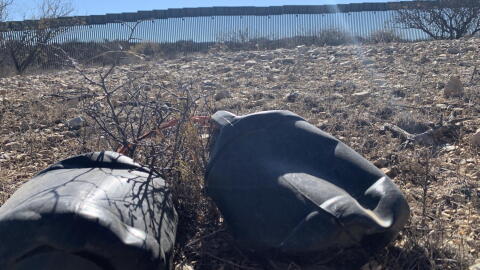 Michel Marizco/KJZZFor decades, humanitarian aid organization Humane Borders has been leaving water along the U.S.-Mexico border in areas where it’s not uncommon to find bodies of migrants who lost their way or ran out of supplies. But now, federal agencies are denying Humane Borders the permits they need to do this legally.
-
 Mark J. Terrill/Cronkite NewsThe Phoenix Suns ended last season at No. 8 in the Western Conference and got swept out of the playoffs by Oklahoma City. Despite the result, many observers considered the season a success. So how do they follow that up?
-
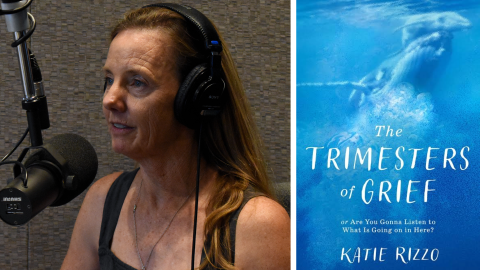 Amber Victoria Singer, Katie Rizzo/KJZZ, CourtesyIn her new book, Katie Rizzo reflects on the loss of her oldest son after he became addicted to painkillers and how she processed her grief through trimesters.
-
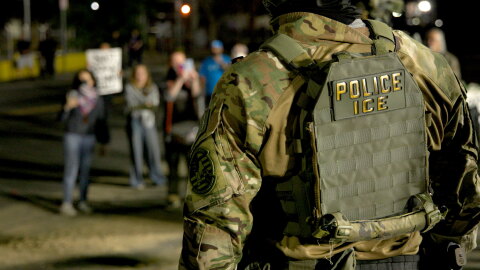 U.S. Immigration and Customs Enforcement/FlickrElection Day is inching ever closer, and election officials and advocacy organizations alike are preparing for a lot, including the possibility that the federal government could send armed National Guard soldiers or ICE agents to polling sites.
-
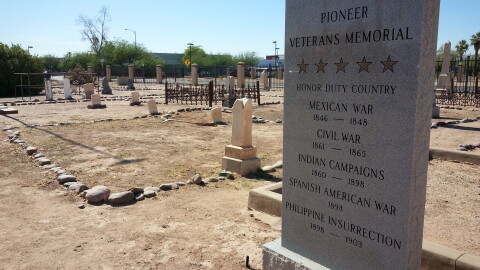 Nadine Arroyo Rodriguez/KJZZHalloween is around the corner, and many associate cemeteries and graveyards with the spooky holiday. But for Sisto Lizarraga, one of Phoenix's first gravediggers, it was just part of the job.


Transcript
ANNOUNCER: KJZZ’s original production, The Show, is supported by Banner Health, Arizona’s largest nonprofit healthcare system. Last year, Banner reinvested more than $1.1 billion in community health and charity care. Banner Health, nonprofit for Arizona. bannerhealth.com/nonprofitforaz.
LAUREN GILGER: Hi, I’m Lauren Gilger, co-host of The Show, an original production from KJZZ. Every weekday, we bring you the latest news and culture from across the state. You can find much more at theshow.kjzz.org. Here’s today’s episode.
LAUREN GILGER: Good morning and welcome to The Show here on KJZZ 91.5 in Phoenix. I’m Lauren Gilger. Coming up, a longtime humanitarian aid group on the border won’t be able to put out water for migrants anymore. And it is spooky season. We’ll hear about one of Phoenix’s earliest grave diggers.
But first, Election Day is inching ever closer, and election officials and advocacy organizations alike are preparing for a lot — including the possibility that the federal government could send armed National Guard soldiers or ICE agents to polling sites.
The president and his administration have been inconsistent in their messaging on this point, and earlier this year, some of our state’s most conservative lawmakers proposed legislation that would have forced counties into agreements with federal agents to monitor voting sites.
Votebeat’s Sasha Hupka has been covering all of this, and she is here in studio now to tell us more. Good morning, Sasha.
SASHA HUPKA: Good morning. Thanks for having me.
LAUREN GILGER: Thank you for coming in. So, is this a real concern? It seems pretty clear that this kind of thing ... would be illegal, right?
SASHA HUPKA: It’s a real concern, but I think that there is some nuance to it. First, to your point about this being illegal, both federal and state law very clearly prohibit the deployment of federal officers ... directly to a polling site.
LAUREN GILGER: Directly, but not indirectly, right?
SASHA HUPKA: And I think that’s where some of that nuance comes in. Because generally speaking, all of the experts and election officials I spoke with found it somewhat unlikely that the Trump administration would send these people right to the polls. That would be a really bold move. It would be really quickly slapped down by the courts, in their opinion. Arizona has voter intimidation statutes that would violate, in addition to federal law.
But I think what we have seen in the past is quite a bit of immigration enforcement activity happening across the Valley near community institutions like schools, churches and hospitals that serve as polling locations. A really clear example of this emerged during the primary when community organizations say, based on vetted reports, there were ICE agents circling the block in Maryvale, a heavily Latino community, literally just a few blocks up from where a school was serving as a voting center. And this was on Election Day during the state primary.
So you can understand why a lot of voting rights advocates are very concerned about this, and it is being viewed as a real possibility. I think here in Arizona, now the conversation becomes: How do you prepare for that?
LAUREN GILGER: Right, how do you prepare for that? So let's talk about that because election officials as well as advocacy organizations are actively preparing for that right now. Let’s start with election officials. What did they have to say? What are they doing? What are they preparing for?
SASHA HUPKA: So election officials are preparing for a really wide array of different federal interference scenarios that may or may not happen. If you look down in Pima County, for instance, I think they’re a really good example of what’s happening on the legal side of this, right. They’ve been very public about the fact that they have litigation literally pre-drafted, missing a few words that can be filled in the blank on Election Day if needed, and run over to the court very, very quickly to resolve a scenario where you see ICE show up at the polls or federal agents show up with warrants.
I think if you look sort of over to Pinal County, which is a conservative county — and I think it’s worth noting that ... it’s not just the bright blue counties that are preparing for this, or super purple Maricopa. If you look over at Pinal County, I was there just a few weeks ago as election officials talked through a hypothetical scenario in which the feds showed up with warrants at their election center in Florence. They had this whole new policy that was put into place earlier this year on how you handle this.
One of the things was you ask to see the warrant and then you send a copy of that warrant to your attorney so they can verify that it’s for real ... before letting people in. So I think that it’s very clear election officials are having these conversations. At the state level, I know Secretary of State Adrian Fontes and Attorney General Kris Mayes have had these conversations. So this is happening.
LAUREN GILGER: ... Let’s talk about the advocacy organization side of this, too, because you also went to a training with LUCHA, one of these groups that is preparing people, training, they said, hundreds of people to be poll observers and to know what to do should something like this happen. What would they do? How do they train folks?
SASHA HUPKA: Yeah, and that training was really interesting, because it was such a clear example of the ways in which the community clearly is also very aware of this threat. This is a question that clearly is really on people’s minds broadly across the metro.
And LUCHA does not train to be clear their observers to interfere with anything that the feds might be trying to do. That’s dangerous for their observers; that’s dangerous for everybody, you know. I think nobody wants chaos at the polls of there being some type of confrontation. What they do train them to do is to observe and to document the details: Where did this happen? Were you able to see any details about the agents in question, what they looked like, do they have a badge number? Things like that, what time did this happen at.
Then essentially they send that up the chain, and that creates the ability for other groups working with LUCHA, groups like the ACLU of Arizona, to go into court really quickly if this type of behavior happens to attempt to halt it.
LAUREN GILGER: Last minute or so here, Sasha. Does this all really come down to attempts at voter suppression, voter intimidation? Are people worried that even the possibility, even the idea that this could happen, is going to make people afraid to go out and vote?
SASHA HUPKA: That is definitely a concern. A lot of experts who have told me, "Hey, we think it’s really unlikely that ICE actually shows up at the polls" have said exactly that, that they think this mixed messaging from the Trump administration is a voter suppression tactic. Will that work? I don’t know that it will. Voter suppression tactics are generally, historically, kind of really easy to backfire.
But I also think that even if it is just ... a fear tactic, I think that’s still concerning. I think that’s still a problem. And I think that you can see clearly the concern in the way that LUCHA and election officials are preparing for this.
LAUREN GILGER: Votebeat’s Sasha Hupka joining us. Thank you so much for your reporting here. Thanks for coming in.
SASHA HUPKA: Thank you.
LAUREN GILGER: For decades, humanitarian aid organization Humane Borders has been leaving water along the U.S.-Mexico border in areas where it’s not uncommon to find bodies of migrants who lost their way or ran out of supplies. Already this year — even as border crossing numbers have plummeted — 89 people have died in our southern desert.
But now, federal agencies are denying Humane Borders the permits they need to do this legally. Those include the Bureau of Land Management, the National Park Service and U.S. Fish and Wildlife. Humane Borders says it affects about 30% of their water stations, the ones that are on federal land.
Octavio Fuentes is executive director of Humane Borders, and he told me even though they know the political mood around immigration has shifted under the Trump administration, they didn’t expect these federal agencies to make this move.
OCTAVIO FUENTES: We’ve had a longstanding relationship with all these federal agencies that we’ve partnered with over the last 20-plus years. And although we know the direction of the political winds that have been blowing, we really thought that because of the local land managers and because of the reputation that we’ve had with them, and also that we are the permitted humanitarian organization that always tries to play by the rules, that everything was just going to go as is.
Just before we heard from the National Park Service in September, I had been called by someone from the Bureau of Land Management letting us know that they were not going to renew the permits that we had on their land. So that was the canary in the coal mine of, “Oh, this is something that’s happening.”
The story that we heard from that person at BLM and then with the National Park Service was this common thread of they’re coordinating with other agencies in the country, both identifying the Department of Homeland Security, and in our written notification from the National Park Service, and there were people from D.C. copied on the email. So it seems like this was a top-down kind of notification that we got that is being coordinated throughout these agencies that we had partnered with, and that this was a coordinated effort.
LAUREN GILGER: So let me ask you how big will the impact of this be on the work that your organization does? As you said, you are the official humanitarian aid group on the border. You’ve been there a long time leaving out water in various forms over the years. It’s sometimes gotten contentious, right?
OCTAVIO FUENTES: It has. And I think us being the permitted humanitarian organization, we do operate in an ecosystem of other humanitarian organizations. Sister organizations like No More Deaths and Samaritans operate in the same areas that we do. We’ve had the privilege and also the responsibility of operating only permitted water stations, which in the 26-year history of Humane Borders has really worked because it’s been an almost permanent presence that we’ve had to provide water in the desert in these high-death areas. Where our sister humanitarian organizations are more wildcat, guerrilla operations where they do hikes, they do smaller water drops, and they operate the way that they do.
So that’s some of the contentiousness that happens in the ecosystem, where they operate probably in a higher state of contention with the forces of the government, whereas we have our run-ins and we certainly have had experiences where Border Patrol and sometimes militia groups have vandalized our water stations. But because we are permitted, we also have the ability to petition or drop a complaint to the specific agency that manages that ...
LAUREN GILGER: Let me ask you about who uses these water stations historically and today. Do you think you’ve saved a lot of lives having these things out there?
OCTAVIO FUENTES: We have to hope that it does. We don’t have technology or a tracker of the demographic of who’s consuming our water. What we say is that our water is for all. So whoever’s out there in the desert, as much as it is for migrants that are crossing in these high-risk areas, we also know and have been told by Border Patrol agents, “Thank you for the water that you have out there. I use it to refill my water bottle.”
Just last year, our board chair was told by a woman who was on a hike throughout the Sonoran Desert that she didn’t pack enough water for the day, and she found one of our water stations. She told our board chair that if it wasn’t for one of our water stations, she feels like she may have been in a situation, because she was in such a remote area, that she might not have made it out of the desert. So it really is for anybody that is out there. As much as migrants are out there, there are U.S. citizens that are out there.
LAUREN GILGER: And we’ve seen recently, Octavio, the numbers of migrants being apprehended — so presumably crossing the border in these regions — really go down a lot in the last couple of years. Are you still seeing them used right now?
OCTAVIO FUENTES: We do see use. And to your point, especially with the figures that the Border Patrol reported last year, that last year was a banner year for them in terms of crossings. The number of crossings seen last year was the same as 50 years ago. So a record drop in numbers, and we continue to see deaths in the desert.
So the number of people crossing really doesn’t affect the dangers and the risks of crossing through the areas that migrants are forced to cross through, because of the 30-year-old Prevention Through Deterrence policy that has been the policy of the federal government since 1994. And this is what drives people into the most remote places in the desert, the most dangerous places. So as long as people are being forced to go through these extremely dangerous parts of the desert, we’re going to continue to see the number of deaths persist.
So for example, last year we did see somewhat of a drop in deaths, but we also see that there are more deaths this year than there were last year around this time. At this time of the year, we’re 24% ahead of the 2025 deaths reported.
LAUREN GILGER: Already 89 this year in the desert. Let me ask you then lastly, Octavio, what do you make of this move from the federal government and various agencies to restrict your work like this, to not renew these permits so that you have to remove your water stations throughout the desert, even as we’re seeing deaths continue, and even as you’re seeing, like you said, U.S. citizens, sometimes even Border Patrol, benefit from them?
OCTAVIO FUENTES: Yeah, that’s at the core of it, that there’s a level of cruelty to it. We are very much a nonpartisan organization. I can point fingers to this administration as much as I could through any Democrat administration over the last 30-plus years since the beginning of Prevention Through Deterrence. But right now, when we see a sustained number of deaths even now, where 30 of the 89 deaths that we’ve seen in 2026 recorded are on federal land.
To remove water from that area is truly cruel. And the only thing that our work is doing is placing these water stations as a humanitarian act of last resort. If you can find our blue flag and our blue water barrel, this can be a matter of life and death for you.
If you’re caught by Border Patrol, that doesn’t matter. It’s about saving lives, not about making a judgment on whether you’re here for whatever reason. And knowing that you’re removing water stations in an area where there are sustained deaths, even this year, is another act of cruelty.
LAUREN GILGER: All right, we’ll leave it there. Octavio Fuentes, executive director of Humane Borders, joining us from Tucson. Octavio, thank you very much for coming on The Show. I appreciate it.
OCTAVIO FUENTES: Thank you, Lauren.
LAUREN GILGER: Good morning, it is The Show on KJZZ 91.5. I’m Lauren Gilger. Coming up, how a volunteer in Phoenix’s early days picked up a cryptic job.
STEVE SCHUMACHER: At this time, there was about 200 people that would die each year. And he did this for like 30 years. I don’t know what the math is, but 200 times 30 years is a lot of people that he put in the ground.
LAUREN GILGER: We’ll hear about one of the city’s earliest grave diggers. But first, Katie Rizzo lost her oldest son, Nicholas, in 2024 after he became addicted to painkillers as a result of a lifetime of playing soccer and the resulting sports injuries.
In the wake of his death, as she was reeling from the loss, Rizzo started journaling and found that her grief in losing her son mirrored her pregnancy and giving birth to him. For her, grieving his death was an identity-changing process of transformation.
She put it all together in her new book, “The Trimesters of Grief.” It’s part memoir, part guide, part poetry — and it’s deeply personal.
Rizzo was trained in biology and psychology and taught high school here in the Valley for 15 years. She came into our studios recently to tell me more about her book and her son who inspired it. And it’s today’s Deep Dive.
KATIE RIZZO: He’s my favorite topic, and I’ll try to keep it short. He was the oldest of three boys. He loved being in his body. This kid, we’re from Arizona, so he would spend all of his time outside during the summer. He was in the pool or playing a lot of soccer. Soccer was his thing. He seemed the most confident and the most comfortable in his skin when he was out on the pitch.
And I know he struggled a lot with anxiety. I think people who have addiction, I think that’s a very common thing. But Nicholas felt very safe out there. He was a kid who was voted prom king, and he came home and said, “Oh, it’s so embarrassing. It’s such a big joke. They don’t mean it.” So he was somebody who just didn’t see himself the way the world saw him.
LAUREN GILGER: And he became addicted at some point later in his life to prescription painkillers as a result of sports injuries from those years of soccer?
KATIE RIZZO: Yeah. He had lots of injuries in high school: knee injuries, shoulder injuries, broke his clavicle. Then he went to Colorado Mesa on a D2 soccer scholarship, and he had some big injuries there. One time he broke his elbow, and the doctor called and said, “Yeah, we just can’t touch the pain. He’s in such deep pain, and no matter how much OxyContin I give him, it’s like I haven’t given him anything.”
At that point, I should have understood. It was such a red flag that this kid has a very high tolerance. Where did it come from? But at the time I thought, “Well, this is a terrible doctor. He doesn’t know how to do pain pills.”
He ended up coming home, graduating, coming home and working at home with us, and it was obvious he was really struggling. Unbeknownst to us, he had found a doctor who was prescribing benzodiazepines and some OxyContin as well. I don’t mean to give you the impression that prescription pain pills make you a better drug addict than somebody who’s doing something else, because there was a while there where he tried fentanyl on purpose because it’s cheaper.
I have friends who have kids who ended up homeless on the street, and I know people will say, “Well, he was homeless.” But I feel like our culture is one where we blame the addict, and we’re like, “Oh, well, he’s addicted. It was a choice.”
I’m here to tell you that it wasn’t a choice. He didn’t want the life that he had, and he deserved a better life. What we’re giving kids is this weird belief that you can pull yourself out of it, or that somehow they’re different from the rest of us and the rest of us have self-will. But I think there’s a huge genetic component to it.
LAUREN GILGER: So I’m sure this was years of struggle, not just for him, but for you as his mother and for your family. Did you live in fear, essentially, at that time?
KATIE RIZZO: Sure. I know kids die, but at the time, I guess my biggest worry was that he would waste his life, like he would become somebody who didn’t, quote, “live up to their full potential.” And now I look at myself, and I’m just like, “What were you thinking?” You just want a happy kid. I really just wanted him to find a place in the world where he felt safe and supported and loved.
And this addiction was just way too big. He ended up in one of the Valley hospitals here in ICU for six days trying to come off of benzodiazepines with swelling on the brain. When he left, the doctors were like, “Well, we hope you go to rehab.” And that’s all, that's what we give our kids. Our society’s just not set up to be supportive of addiction.
LAUREN GILGER: Eventually, he did accidentally overdose, and you lost him. He was 25 years old. And this book is about how you processed that gigantic loss, but you do it in a really interesting way because you frame it in the same way that we frame pregnancy, which, you know, obviously were pregnant with Nicholas and gave birth to him, and you talk about in this book the trimesters of grief, of the opposite, of the end of his life. Outline that for us and how you came to that framing.
KATIE RIZZO: Well, I now look back, and it’s so obvious to me that being a mom, whether you are an adoptive mom or a biological mom, it’s almost like a spiritual contract with your kid, like: “I’m here for you, come hell or high water. I’m your person.”
And when he left, pretty much the second we realized what had happened, I looked at my husband, and we had to make a phone call to our other two kids. I was like, “This is life or death for me, for my husband and for my two kids.” We don’t know how to do this without him.
And one thing on the internet they’ll say, “Oh, journal.” So I started journaling as of Day 1, and I thought, “This is not going to help.” But it actually helped a lot. One way was I could go back and look at what really happened, because I was in such a fog at first. It felt exactly like the first trimester. I kept thinking, “This is a cruel joke that somebody’s playing on me,” because I am definitely past the point of being able to be pregnant. But I felt like I was in my first trimester. I had brain fog, I felt sick to my stomach, I couldn’t eat, I slept all the time. It was an exact carbon copy of the first trimester.
Then all of a sudden, there was a period where I felt a little bit better physically, like I could eat and things didn’t make me nauseous by smelling them. Everybody had kind of moved on. My husband had to go back to work, my other two sons went back to college, and I was just left alone to carry it. That felt like the second trimester to me, of this thing growing inside me, but nobody could see it, and you didn’t want to talk about it.
The third trimester is when you are showing. I obviously wasn’t showing physically, but psychologically, I wanted everyone to know. I had felt so much shame for the addiction, and I watched a lot of my friends who were in grief groups with me, some who had lost their kid two years ago and weren’t telling anyone that their child had died because they were in such a bad shame spiral.
All of a sudden, I just felt so much love for him, and embarrassment that I had been embarrassed by the addiction for so long. I was telling everyone. So I would tell people in the grocery store. Our workout instructors knew. My husband would look at me and be like, “It’s a conversation stopper. Are you sure you want to do this?” And it was really important to me.
LAUREN GILGER: So wait, you’d be at the grocery store checking out and you’d tell the person working there —
KATIE RIZZO: Well yeah, I mean, a lot of people want small talk, right? And at this point —
LAUREN GILGER: “How you doing?” And you’re like, “I’m not good.”
KATIE RIZZO: “I’m not good.”
LAUREN GILGER: Wow.
KATIE RIZZO: Yeah. And if they’d say, “Why aren’t you good?” I’d say, “I lost my son to addiction.” It’s weird how many people want to connect with you after that. Maybe that’s what we need in this world: a little bit more honesty and a little bit more humility and like, “Hey, I have no idea how I’m going to get through this, but this is where I am at.”
LAUREN GILGER: That’s Valley author Katie Rizzo. Her new book is called "The Trimesters of Grief.” More of our conversation after the break.
LAUREN GILGER: Let’s return now to my conversation with local author Katie Rizzo, who’s out this week with her new book, “The Trimesters of Grief.” Rizzo lost her oldest son at age 25 to opioid addiction after an accidental overdose. The new book compares that loss to the trimesters of pregnancy and offers a framework for walking alongside grief instead of living inside of it.
KATIE RIZZO: Nick Cave, who lost two sons to suicide and is an author and musician, wrote a piece on asking grief to leave his body. When I read that, it felt like a gift from Nicholas. So I sat down and I was like, “OK, I’m going to ask grief to leave my body.” It felt like all this time, when you’re pregnant, you make this placenta that you and your son make. It’s half cells from you, half cells from your kid.
Nicholas and I made this grief. It’s half from me and half from him, and I’ve carried it. I sat down and I was like, “OK, Nicholas, I’m never going to not be in grief, but this grief needs to sit next to me. It can’t just be bursting out of my cells, and I can’t be posting every day on Facebook and Instagram poems that are extremely sad and depressing.”
So I did. I pictured this little grief baby next to me, and I picture it like a baby orangutan. Some days that orangutan is doing great, and it can sit on my back, and the two of us can go about our day. Other times it’s crazy and feels like it’s going to demolish a room. But we have a pretty good relationship and can talk about it.
I know it sounds insane, except that Nicholas was a really important person, and that he was here. I don’t want that to go away. They have a saying, “Grief is love with nowhere to go.” And I don't know. My love has somewhere to go. It needs to go to Nicholas. And this other thing called grief, this baby orangutan, is going to be with me for the rest of my life.
LAUREN GILGER: I really love the framing of that, a baby orangutan. Why did you pick an orangutan?
KATIE RIZZO: So many times my husband and I have been in the car — and I don’t know why car rides are really — it feels like your grief is just right inside your skin and you’re going to burst. You just want to get out of the car. A lot of times it just came to me, this picture of an orangutan just destroying our car.
One time we were driving through Grand Junction, which is where Nicholas went to college, and both Nick and I, my husband and I were not doing well. We were driving through, and I was like, “My orangutan just wrecked this car. It just wants to take the chairs out and throw them.” And it’s true. As a mom, I’m mad. I am mad that he’s not here, and I’d love to have him back.
LAUREN GILGER: Yeah. That’s a good analogy in that way. So that’s the birth part of this metaphor.
KATIE RIZZO: Yeah.
LAUREN GILGER: So, I mean, the comparison with birth sounds like it’s not meant to say you can process grief in a certain amount of time or in this certain framework, but it’s a language of change, of transformation. You are a different person when you become pregnant than after you give birth. Are you a different person now than you were before you lost him?
KATIE RIZZO: 100%. I was somebody who was very proud. I didn’t want people to know that my son had an addiction. I liked who I looked like on Instagram. On Instagram, we looked like a really rockin’ family. I think now I’m not interested in that person anymore. I really want to be the person that my kids need to not be successful or live the fullest life, but to live a life that is full of love and where they feel safe. And that’s a totally different person.
LAUREN GILGER: Do you think that his death ended your relationship with him?
KATIE RIZZO: So no, and I’ve had lots of times where, or experiences where I feel like it’s a nudge, where it feels impossible that that thing could have happened and not been a nudge from Nicholas.
LAUREN GILGER: All right, so let’s end with a poem, which you scatter throughout this book. You write poetry and have been doing it as part of processing this grief. So read us one of those poems that you wrote in this process.
KATIE RIZZO: I’d love to. So this one’s called “The Pelt.”
"I carry my son with me because he can’t carry himself. The fatty deposits and muscles that once held him up at almost six foot are gone, and so he is little more than dried up skin and the air from inside his bones. Even so, this isn’t the future I wanted for him, laying over my shoulder as we sift through what is left of life, me listening to his body dry up. This pelt carried a good person."
LAUREN GILGER: OK, we’ll leave it there. Katie Rizzo, writer and poet, author of the new book, “The Trimesters of Grief.” Thank you so much for coming in.
KATIE RIZZO: Thank you.
LAUREN GILGER: Good morning, it is The Show here on KJZZ 91.5. I’m Lauren Gilger.
The Phoenix Suns start their 2026-27 season tonight in Portland against the Trail Blazers. The Suns ended last season with 45 wins, good for eighth in the Western Conference. And after making it through the play-in round, they got swept out of the playoffs by the defending NBA champion Oklahoma City Thunder.
But despite the result, many observers considered the Suns’ season a surprising success. So how do they follow that up this season?
My co-host Mark Brodie spoke with Duane Rankin about that. He covers the Suns for the Arizona Republic. And they started with the fact that the team management seemed generally happy with last season’s team and, by and large, decided to bring back many of those players.
DUANE RANKIN: They were happy in terms of how they played. They were big on identity, new identity, new culture, play hard, be physical, be aggressive. And so that all played into all the changes that they made. When you trade away Kevin Durant and then you bring in a Dylan Brooks who is a culture setter — he’s been that, that’s what he’s been his entire career—that was a huge change in the sense of last year’s team.
So for them to have 45 wins, new head coach, basically elevated Brian Gregory to the GM. When you do all these moves, OK you do all this, what’s going to be the result of it? And the result of it was getting to the playoffs, and even though they were swept by Oklahoma City, the defending NBA champs. Everything that they wanted to happen in terms of establishing an identity led by Matt Ishbia, that all came to fruition.
So now it’s how do you build off of that and keeping continuity, and resigning Collin Gillespie, Mark Williams, Jordan Goodwin; Dylan Brooks got a new deal. So you’re doing all those things to keep that continuity, but they made some subtle changes ... with the Miles Bridges, trade away two shooters and got a player that’s younger, more athletic. And then added Luke Kennard. So they made some changes here and there, but they were big changes.
MARK BRODIE: Let me ask you about the Miles Bridges trade, because that one obviously came with a lot of questions from off the court, in addition to what he would bring and how he would fit into the Suns’ style of play on the court. Does that seem to have been a distraction at all for this team, as it seems like it maybe could have been?
DUANE RANKIN: Within the team, no. But we’re not going to sugarcoat this and act like the issues with Miles Bridges coming to the team. There’s ... a certain segment of the fanbase that still isn’t happy with the trade. But on the flip side of that, in terms of his play, I think what the Suns tried to establish in trading for him is a younger, more athletic player who they can have for years to come to play along with Devin Booker.
So there’s a lot of talent that comes with him, but the idea of bringing in a player like this is still going to be something that’s going to be a topic of conversation because of his past. So that’s something that you’re going to have to determine throughout the season whether someone likes it or don't like it. But at the end of the day, as far as on the court, he’s a player that brings a high value. So I’m curious to see how they utilize him throughout the year, because he can do a lot of things.
MARK BRODIE: You mentioned the Suns won many more games last year than a lot of folks expected, they made the playoffs, they got swept by the defending champions. But a lot of people, as you referenced, still considered last season a success. What seems to be a reasonable expectation, or maybe what is the team’s expectation for itself going into this season?
DUANE RANKIN: I think the team believes that they can have a better year. In fact, I know they think they can have a better year. The problem is that the West is a monster.
MARK BRODIE: Yeah.
DUANE RANKIN: You can have a better team. I’ve been saying all summer, I think they can have a better team than they had, but not have a better record — or just have the same record they had last year. I think they could win between 45 and 49 games, but be better, a better team. But that doesn’t mean it’s going to translate into you winning the first round of a playoff series, because looking at this as steps, the next step is be a top six seed and win a playoff series. Well, if you are a six seed, you’re still going to be an underdog in the series.
So you’ve got to look at the West, and it’s San Antonio, it’s Oklahoma City, Denver, Houston, Minnesota, Lakers. Utah will be better. It’s a lot. You can go on and on with the teams in this conference.
One of the things that’s been brought up is that a lot of teams were tanking last year. Now with the new anti-tanking rules, you’re not going to get some of these wins that they may have gotten last year because teams were tanking. And so that’s going to change, the NBA hopes, significantly on competition. So we’ll see the competition and how they respond to it. But they believe they have a better team, they believe they have more continuity, and they believe they can go further than they did last year. Now, believing and doing is two different things.
MARK BRODIE: Right. OK, so obviously, Devin Booker’s performance, his health, would seem to be a key to the Suns’ season, as it seems to be every year. Beyond sort of the top guy or couple of guys, from your perspective, who are some guys where if the Suns are to have a better year this year, they are going to have to step up and maybe take their games to the next level?
DUANE RANKIN: I think you’ve got to start with Booker, because he has to shoot the ball better from three than he did last year. Now, part of that is creating shots for him and things of that nature, but you still have to start with Booker. Maybe it’s more assists, maybe it’s higher percentage from three, maybe it’s defending better.
Right now they have four guys on their team that’s averaged 20 points at one point in a season: that’s Jalen Green, Dylan Brooks, Miles Bridges and Devin Booker. You’ve got four guys that’s capable of giving you that every night. So how that’s dispersed will be interesting to see.
But if I’m looking at a couple players, one is Jalen Green, because they’re going to ask him to handle the ball more, facilitate more, get more guys involved. So he’s going to have to be able to do that without turning the ball over and be able to get guys shots. So that’s the first aspect I’m looking at.
Then the other part is at the big position. No Mark Williams for, I would dare to say, the first three months of the season for sure, if not the first four with the shoulder, with the torn labrum. So [Oso] Ighodaro and Khaman Maluach at that center position is huge. They’ve got to be able to hold their own at that spot. That doesn’t mean .... they don't have to be Nikola Jokić.
But they’ve got to hold their own. They can’t be a liability on the court. And if they do that, then this team could do some damage — particularly Maluach, because there’s going to be some games that, quite frankly, he’s going to have a tough out there. It’s going to be a rough night. But then there’s going to be some games he’s going to play well. So the fewer rough nights and the more good to possibly great nights, the better for the Suns.
MARK BRODIE: All right, it’ll be interesting to see, for sure. That is Duane Rankin. He covers the Phoenix Suns for the Arizona Republic. Duane, thanks so much. Enjoy the season.
DUANE RANKIN: No problem. Thank you, guys.
LAUREN GILGER: With Halloween right around the corner, lots of people are starting to think about things like cemeteries and graves.
And that’s something Sisto Lizarraga knew a lot about — although not in a creepy way. Lizarraga was the city’s gravedigger in Phoenix’s early days in the late 1800s and early 1900s.
Steve Schumacher spoke more about Sisto with my co-host Mark Brodie. Schumacher is the Phoenix Mayor’s Office official historian, and they began with what Steve could tell us about Sisto Lizarraga.
STEVE SCHUMACHER: ... Well, the one thing that jumps out at me with his history is he had 11 children, and I think, “Oh, my goodness,” just as a parent, how do you manage 11 kids in the heat of Arizona in the late 1800s?
But he was kind of a handyman. He was born in Mexico, fought in one of the wars with Maximilian down there. Decided to take his family and come up to Arizona in the early 1880s. And nobody was stepping up to bury people who had passed away. So he took it upon himself to become the official, unofficial gravedigger for the city of Phoenix.
MARK BRODIE: Was he an official, like, city employee, or he just kind of did this because he realized it needed to be done?
STEVE SCHUMACHER: Yeah, he just took it upon himself, as he did with a number of things. He just took it upon himself to do that. Again, he was kind of a jack of all trades, so digging a grave was just another thing that he knew how to do, so he took it upon himself to make that happen for the city.
But no, the city never gave him an official title, he never got paid for any of this. And so I figure, as I was reading some statistics, that at this time there was about 200 people that would die each year, and he did this for like 30 years. So I don’t know what the math is, but 200 times 30 years is a lot of people that he put in the ground.
MARK BRODIE: That’s a lot of graves to dig, for sure. Did he ever talk about why he felt compelled to do this?
STEVE SCHUMACHER: Not that I really know. He had a semi-full-time job as what was called a sexton, S-E-X-T-O-N, which is he was responsible for taking care of the grounds and maintenance at St. Mary’s Church. And so that kept him busy, but I don’t know that I ever read on what his main motivation was in doing it other than just being a guy who took responsibility for stuff, even though it wasn’t put upon him.
MARK BRODIE: Was it common at that time for sort of volunteer gravediggers? Like, was Phoenix in a unique position with this?
STEVE SCHUMACHER: Well, Phoenix hadn’t been that old yet when all this started. Phoenix was incorporated in 1881, and Sisto came on the scene in the mid-1880s. So, yeah, Phoenix was still scrambling for tax money and growth money and all that kind of thing.
So, yeah, there were other people that volunteered. I mean, there was a guy that volunteered to design the first City Hall. Because Phoenix was just a young town at that time, it had just been incorporated. So there were a number of people that would step up, yeah.
MARK BRODIE: So you mentioned that he had a full-time job in addition to digging graves. Like, do we have a sense of sort of his place in society, like what other kinds of things he liked to do, if what kind of circles he ran in?
STEVE SCHUMACHER: Well, he was one of these people that everybody knew, everybody liked. I mean, when the guy died — how many gravediggers do you know that get a front-page newspaper article when you pass away?
MARK BRODIE: Probably zero.
STEVE SCHUMACHER: Yeah, exactly, that’s what I’m saying. So being a gravedigger is not one of the elite jobs and so forth. But he was known by everybody, liked by everybody. He was as much an institution in Phoenix as, say, the first mayor or the first sheriff or marshal. Those were institutional jobs, and they were, I’m sure, pretty well paid. But yeah, I don’t know that he did much outside of digging graves and then his full-time job taking care of the church grounds, and then all those kids running around.
MARK BRODIE: Yeah. Well, so you mentioned that he got a front-page mention in the newspaper when he died. Do we have any sense of who dug his grave or what his funeral was like?
STEVE SCHUMACHER: That’s a great question. I was trying to think about the questions you would ask, I didn’t think of that one. Well, you know ... there were other people that knew how to dig graves. There was when the very first cemetery closed down, they moved all the bodies over to where the Pioneer Cemetery is now, and Sisto had a group of men helping him out, so I would imagine it was one of them.
But people stepped up and they donated money to get a casket for him and pay for his cemetery ... plot and all that kind of thing. So I’m sure out of that group that helped him keep the cemetery clean as well as move those bodies in the 1880s, there was probably — I would think, given as popular as he was, there were probably several people that helped bury him.
MARK BRODIE: So what do you think that Sisto’s story says about early Phoenix?
STEVE SCHUMACHER: Well, one thing it says is because the very first cemetery was right in the southwest corner of the townsite, and the main road of people coming into Phoenix went right past the cemetery. And even then, Phoenix was very, very adamant about the first impression that it left with visitors and people coming in on the train and that kind of thing.
And so that’s why they closed down the old cemetery and built the new one, so that visitors to Phoenix wouldn’t get their first impression of a cemetery. So that’s one thing. Phoenix has always been concerned and very aware of its impression, because the better your impression is, the more you’re going to get people here, the more people, the more they’ll invest, et cetera, et cetera.
What else does it say about Phoenix? Well, I think, from the good standpoint, is you have a citizenry that is willing to step up in need. ... When they closed down the one cemetery and moved all those graves, people volunteered to help. Once they got that cemetery up and going, there were all kinds of weeds and mesquite and all kinds of things, and Sisto was able to gather another group of volunteers and help clean that up and keep it clean.
So I think from a volunteer helping standpoint with what needed to be done, regardless of if it was a paying position or not, I think that spoke really well for the early pioneers in town.
MARK BRODIE: All right, that is Steve Schumacher, the Phoenix Mayor’s Office official historian. Steve, thanks so much. I appreciate it.
STEVE SCHUMACHER: You bet, Mark.
LAUREN GILGER: Thanks for listening to The Show’s podcast. The Show is produced by Sativa Peterson, Nick Sanchez, Amber Victoria Singer, and Ayana Hamilton. The Show was created by Jon Hoban, and our executive producer is Amy Silverman. You can find more of The Show and sign up for our newsletter at theshow.kjzz.org. You can also find us on Instagram @kjzztheshow.