


Maricopa County is still trying to end federal court-imposed oversight of its sheriff’s department. How a California police department achieved that after more than two decades. Plus, designer Christian Siriano on art, fashion and his new piece on display at the Phoenix Art Museum.
Ways To Subscribe


-
 Jimmy Jenkins/KJZZThe 9th U.S. Circuit Court of Appeals has agreed to hold off on having a monitor take complete control of Arizona's prison healthcare system.
-
 U.S. Immigration and Customs EnforcemenA new report out from the Urban Institute shows that the surge in immigration enforcement has had a dramatic impact on the emotional and financial wellbeing of mixed-status families.
-
 Ralph Navarro/Getty ImagesMaricopa County is appealing a judge’s decision to keep the Sheriff’s Office under federal court oversight, citing cost and claiming racial profiling behavior by the department has been fixed.
-
 Lauren Gilger/KJZZFashion designer Christian Siriano might be best known for his time on the hit show "Project Runway." Now, you can see one of Siriano's designs in person at the Phoenix Art Museum.
-
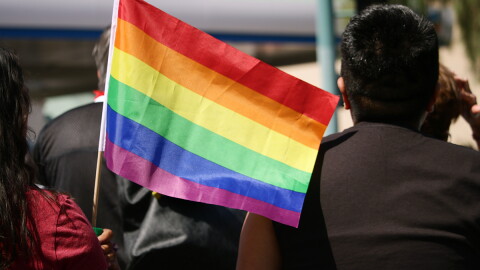 Jackie Hai/KJZZPhoenix Pride and other similar organizations have been holding events celebrating the LGBTQ community in October, including a parade earlier this month. As the month comes to an end, The Show wanted to check in on the state of advocacy for and within the LGBTQ community.
-
 Natalie Chitwood, Hillary Frank/CourtesyHillary Frank is probably best known as the host of the long-running parenting podcast The Longest Shortest Time. Her latest project is an original audiobook — a feminist thriller called "Wedlocked."


Transcript
ANNOUNCER: KJZZ’s original production, The Show, is supported by Banner Health, Arizona’s largest nonprofit healthcare system. Last year, Banner reinvested more than $1.1 billion in community health and charity care. Banner Health, nonprofit for Arizona. bannerhealth.com/nonprofitforaz.
MARK BRODIE: Hi, I am Mark Brodie, co-host of The Show, an original production from KJZZ. Every weekday, we bring you the latest news and culture from across the state. You can find much more at theshow.kjzz.org. Here is today’s episode.
LAUREN GILGER: Good morning and welcome to the show here on KJZZ 91.5 in Phoenix. I am Lauren Gilger.
MARK BRODIE: And I am Mark Brodie. Coming up, a look at the evolution of LGBTQ advocacy over the years both here and nationwide.
LAUREN GILGER: And we meet fashion designer Christian Siriano at the Phoenix Art Museum, where he unveiled a new gown.
MARK BRODIE: But first, a federal appeals court has given the Arizona Department of Corrections, Rehabilitation and Reentry a partial win in the state’s effort to avoid having its prison healthcare system taken over by a court-appointed monitor.
The monitor was set to take control on Monday, but late last week, the 9th U.S. Circuit Court of Appeals agreed to hold off on having her take complete control. Instead, Annette Chambers-Smith will start planning, but will not fully oversee healthcare in state prisons — at least not yet.
Reporter Kiera Riley joins me now to talk more about this. Good morning, Kiera.
KIERA RILEY: Good morning.
MARK BRODIE: So what exactly did the judges here say?
KIERA RILEY: I think the judges tried to split the difference. I think they said there was a legitimate interest in looking deeper into federal takeover of the state healthcare system. But in that way, they stalled the complete takeover. They left the director in charge of staffing and budgets, but they allowed Annette Chambers-Smith to start working on an operational plan and assessing what resources she will need to get this started.
MARK BRODIE: So does that mean that the judges are really considering the bigger question of whether or not an outside entity can in fact fully take over a state agency or part of a state agency like this?
KIERA RILEY: They are definitely approaching it with a lot more scrutiny. I think, yeah, there is the question of whether this was the right remedy. They have described it as the remedy of last resort. And the question is: Has the department done enough to deserve this complete takeover?
MARK BRODIE: So what arguments were the state lawyers making in terms of why the judges should take this action?
KIERA RILEY: I think it is a tremendous loss of power over things like budgets, over things like staff, over things like policy and some state laws that could be waived in this process. And so they are saying that is high stakes and there should be metered thought and time to consider the ramifications of this.
MARK BRODIE: It sounds like the timing was also a consideration in terms of this lawsuit has been going on for decades now, but the state is saying, “Don’t look at all the really far back stuff — you have to consider this from more recently”?
KIERA RILEY: Yes. The litigation has been going on for 14 years now. But the state is essentially saying, “Since the new director has taken the helm, we have only had three years to remedy these deficiencies, and this perspective receiver would have five years.” So they are pointing out the inconsistency.
MARK BRODIE: So what exactly — you alluded to this — will the monitor be doing while this plays out?
KIERA RILEY: Part of the court order empowers her to set up a plan for the receivership, an operational plan, and part of this takeover — I mean, it will not be her acting alone either. She will have an office and staff, and that will obviously take time and resources to set up. So it is laying the groundwork, so if the 9th Circuit allows the receivership to go forward, then she can hit the ground running.
MARK BRODIE: Is there reason to think that this is just a temporary reprieve for the state and that ultimately the monitor will be allowed to do what the lower court judge wanted her to do?
KIERA RILEY: I mean, so far, they have taken this argument even to stay the receivership up to the Supreme Court, and they have been unsuccessful. This is their first win. And so, I don't know.
Who knows what the 9th Circuit will do? I think the court's mind has obviously been on the inmates and the prisoners who are suffering harm because of inadequate healthcare. But, I don't know, stranger things. They are on an expedited schedule too, so this will get an answer sooner rather than later.
MARK BRODIE: What comes next? Are there going to be oral arguments here, for example? What is the next step?
KIERA RILEY: The state and the attorneys for the inmates are in the middle of briefing with the 9th Circuit and they will do oral argument on Dec. 7.
MARK BRODIE: Coming up pretty soon then.
KIERA RILEY: And then the court will obviously take it under consideration and issue a decision.
MARK BRODY: What are the lawyers for the inmates saying about this?
KIERA RILEY: ... Fourteen years is a long time to be without constitutionally adequate healthcare. And so I think they will continue to point back to the irreparable harm, in some cases death, that is occurring because of constitutionally deficient healthcare. So I think that’s their main point, and that they have waited long enough essentially.
MARK BRODIE: What are they saying to the state's arguments that things are actually getting better or have gotten better over the last two to three years at least?
KIERA RILEY: I think they have very different perspectives. ... The state thinks they are doing everything right or moving in the right direction. But the attorneys for the inmates say it is really not enough. And if you look at the quality indicators, they are still failing on the majority of them, and that is kind of like the levels of compliance with this injunction.
MARK BRODIE: Does it seem like the lawyers for the state have been — does this give them a boost? Does it make them think, “OK, look, maybe,” as you said, “we have not had a lot of wins. We have one now, even a partial one, maybe this helps us going forward”?
KIERA RILEY: Absolutely. Part of the order was saying that their interest in ensuring the state maintains control of the budget and the staff is a legitimate interest that needs to be considered, whereas they weren’t saying that before.
MARK BRODIE: Interesting. All right. That is reporter Kiera Riley. Thanks so much.
KIERA RILEY: Thank you.
LAUREN GILGER: The surge in federal immigration enforcement around the country may be a policy issue and a point of political debate in this country, but it is also a reality that has dramatically changed people’s lives.
Diana Guelespe is senior research associate behind the study. She is on the line now to tell us more. Good morning, Diana.
DIANA GUELESPE: Good morning.
LAUREN GILGER: So this study talked to parents in Chicago and Charlotte, North Carolina. But it obviously gives us a lens into how mixed-status families are being impacted all around the country. These parents essentially told you they are still staying inside all the time, right? Isolating.
DIANA GUELESPE: That is right. Across the interviews, the threat of an encounter with ICE that could separate an undocumented parent from their family dominated the daily lives of family members, including their U.S. citizen children. And we did find that families were still largely isolating themselves in their homes and avoiding nonessential activities even months after those targeted operations took place — Charlotte’s Web in Charlotte and Midway Blitz in Chicago.
LAUREN GILGER: So as we said, these are mixed-status families you talked to. That means at least one person or more in the family is undocumented. Are these folks who have come to the country recently or been in the U.S. for a long time?
DIANA GUELESPE: The majority of the people that we spoke to have been in the country for over 15 to 20 years, and many of them have U.S. citizen children. The vast majority of them had U.S. citizen children.
LAUREN GILGER: OK. So many of them are not, the people who talked to, are not necessarily the one who are undocumented. They have status, maybe some of them are citizens, but they often have U.S. citizen children. Some had partners, husbands, family members who had already been deported, right?
DIANA GUELESPE: That’s correct, yeah. A few of them did.
LAUREN GILGER: So let’s talk about what mothers in particular told you in these interviews. It sounds like this really hits their bottom line in a way that is unique to mothers. They work less, some left their jobs. What did the economic impact look like here?
DIANA GUELESPE: Sure, so mothers, as you know, they play key roles in these families. They are caretakers, economic contributors, and they told us how they were suffering both economic and health hardships as they work to protect their families.
They shared that they worked less or left their jobs due to the fear of ICE activity or an ICE encounter. They also described some of the mental health challenges their children were experiencing as a result of their fear of ICE in their communities, and how some of their children were also receiving therapy as a result of this fear.
LAUREN GILGER: That was an interesting point — that many of them, not just for the children, but for themselves, were open to therapy, already talking about mental health issues and getting help, right?
DIANA GUELESPE: That’s correct, yeah. Many women, for their physical health, talked about how they missed doctor’s appointments, appointments like regular checkups for chronic illnesses or mammograms. But then they were aware of how their own mental health was being negatively impacted and talked about it in a way that said, “I am bottling up a lot of emotions inside. I know it would be good to speak to someone.”
I even recall a mother saying, “I have been told that if you aren’t doing well, your children won’t be doing well either.” So they are aware of the negative impacts, and some had started to access counseling at community-based organizations. But a great number said that they wished that they had access to more mental health programs.
LAUREN GILGER: When you talk about folks leaving their jobs, working less because they cannot or don’t want to be out in public, how are they surviving financially? Did they talk about falling behind on bills? Can they keep up with expenses?
DIANA GUELESPE: They talked about certain programs that were really helpful to them, some financial assistance programs that helped them, perhaps helped them keep up on their rent or helped them pay a utility bill. One of the most common things that we heard was how they received food donations from community-based organizations or sometimes their children’s schools or churches to just help them keep up with those basic expenses. But yes, they were struggling. They were having financial hardships for sure.
LAUREN GILGER: I mentioned you looked at Chicago and Charlotte. And it sounds like also — I mean, the Urban Institute — it sounds like you’re also looking at the policies that these cities have and how cities can address heightened immigration enforcement and what cities are doing in particular. Was there anything interesting that stood out for you there?
DIANA GUELESPE: Well, we chose Chicago and Charlotte, as you said, because there is a bit of a contrast in their policy environments when it comes to immigrant protection and inclusion. Both cities had this high-visibility enforcement operation take place, but localities and states have responded in different ways.
For example, in Illinois and Chicago, they established policies limiting cooperation with federal immigration enforcement and passed legislation mandating protections at schools, universities, courtrooms, hospitals.
In Charlotte, Charlotte is known as a welcoming city. However, it is situated in a Dillon’s Rule state, where local governments are limited by the authority of the state General Assembly. And the General Assembly has moved in the opposite direction of the city, for example, and mandated sheriffs cooperate with ICE.
LAUREN GILGER: Did you see different trends in these responses from these families in these places with different policies?
DIANA GUELESPE: One of the main differences that we saw was when it came to families experiencing navigating schools, taking their kids to school or picking them up. And so the difference there was that parents in Chicago tended to mention lots of different supports that they received through the school. They talked about the schools providing know-your-rights information to them and alerting them to any kind of issue that may have happened around the school related to ICE, and even offering therapy sessions to some of their students. Whereas in Charlotte, we heard that it was less consistent and less comprehensive and a little bit more dependent on a particular teacher or a particular school.
LAUREN GILGER: Diana Guelespe, senior research associate with the Urban Institute, joining us to talk about this new report. Diana, thank you for coming on. Thanks for your research, I appreciate it.
DIANA GUELESPE: Thanks for having me.
LAUREN GILGER: Good morning. It is the show here on KJZZ 91.5. I am Lauren Gilger.
MARK BRODIE: And I am Mark Brodie. Phoenix Pride and other similar organizations have been holding events celebrating the LGBTQ community in October, including a parade earlier this month. Much of the rest of the country celebrates pride in June, but organizers here say they delay it to avoid extreme summer temperatures. As the month comes to an end, we wanted to check in on the state of advocacy for and within the LGBTQ community. And to do that, we got a hold of Neil Giuliano. He is currently the president and CEO of Greater Phoenix Leadership. He has also served as mayor of Tempe, and in leadership roles with groups including the San Francisco AIDS Foundation and the Gay and Lesbian Alliance Against Defamation. And when we spoke earlier, I asked Giuliano how he would describe the evolution of advocacy in this community.
NEIL GIULIANO: I would have to acknowledge from the get-go that the culture shift is what has led to the advancements for the LGBTQ community. We have seen the culture shift over the last 20 to 30 years in a number of ways. People have come out more, major employers and corporations started providing domestic partnership benefits, government entities started providing civil unions, and all of that took place in a relatively short period of time over 20 to 25 years, which brings us to the point we are at today. So the culture shift is what has brought about the most significant changes.
MARK BRODIE: In what ways do you think the culture has shifted to maybe allow for more advocacy and maybe more acceptance?
NEIL GIULIANO: We have seen over time, especially with the advent of social media in the mid-2000s range—2005, 2006—all the social media platforms starting to emerge, people got connected and people felt connected to their other folks who were LGBTQ. That allowed greater visibility and that allowed our major media networks and institutions to start covering the LGBTQ community much more than it had in the past, because they were simply reflecting what was going on in the broader society. So fair, accurate, inclusive representations of LGBTQ people in the media just exploded when social media exploded. And quite honestly, society and our friends and neighbors followed suit, and the overwhelming response was why were we so upset about all these issues for so long? The LGBTQ people are our neighbors, our friends, the people we sit next to at church, we work with them. And so that all led to the rapid ascent for greater LGBTQ equality, not that we have achieved it fully, but certainly much greater.
MARK BRODIE: So where do you think we are now in terms of getting equality and fairness and advocacy for this community?
NEIL GIULIANO: I kind of describe it this way, Mark. I think we are kind of in a holding pattern. I do not see a lot of our advancements and things that have been granted rapidly being taken away, but they are under siege. And they are being talked about as things that should be taken away by people with a lot of power in government at all levels. And these days, it is really focused more on the transgender members of the LGBTQ community than just lesbian and gay folks, because our transgender brothers and sisters are the people who are least known, least visible, and make up the least amount of the population within the LGBTQ community, and so they are the most marginalized members of the community right now.
MARK BRODIE: Do you see it as a good comparison looking at where lesbian and gay and to an extent bisexual people were, maybe a decade or two decades ago, to where transgender people are seen now?
NEIL GIULIANO: I would go back even further. I would say it is two or three decades ago, because there simply is not the same level of visibility of transgender people in the community, despite the ongoing attacks coming from more right-wing focused people in politics. They are just not as visible. So yes, it is like where the lesbian and gay community was, I would say, in the early to mid-1980s and early 1990s.
MARK BRODIE: Do you get the sense that visibility is key for transgender residents, like it has been, as you described, for others in this community?
NEIL GIULIANO: It is key. But there are so fewer members of the transgender community, it is harder for that visibility to become noticed as much as it probably needs to, and so that is part of the challenge that we have.
MARK BRODIE: You mentioned social media as being a catalyst to some extent for helping the LGBTQ community find each other and increase their visibility. I wonder about some of the negative impacts of social media, though, in terms of conspiracy theories and rumors and other hate being able to be spread much more quickly. What have you seen in that area?
NEIL GIULIANO: That is exactly right. For all of the positive aspects of being connected and sharing information and understanding and hearing people's stories, you have others who are using social media to tear people down, to make false accusations, false representations, disinformation, misinformation about the LGBTQ community more than ever as well. Now, that just does not go as far because our friends and neighbors are a lot more educated about who the LGBTQ community members are and there is nothing to fear, unlike what many people wanted to make us out to be. But yes, there are both sides to the social media coin.
MARK BRODIE: Do you envision a time when members of the LGBTQ community will achieve full equality in this country?
NEIL GIULIANO: I am aspirational and hopeful for that, but these are ongoing battles. They are in three camps. There are the very legal battles that must be fought and won in courts of law over time. There are the political battles that literally are on the ballot every time we are voting, and you research what folks running for office may think about equality for LGBTQ people. So that is constant. And then there is the ongoing cultural and human nature challenges of educating people and helping people understand what the LGBTQ community faces while we do not have yet full equality.
MARK BRODIE: Well, given all of those and given where we are and where we have been, what to you are the most important things to focus on in terms of advocacy at this point?
NEIL GIULIANO: Strengthening relationships with allies. Bottom line. The LGBTQ community will never be the majority population. We will not be even close to the majority part of the population. We need our allies, our friends, our neighbors, our family members, our coworkers to stand with us, and for those issues related to the LGBTQ community to rise on their level of importance so it does become a filter for them when they are choosing politicians and when issues that do come up regarding members of our community, they are dealt with according to the processes and procedures that are already in place and overwhelmingly dealt with to a very successful conclusion from all parties' perspectives. But yes, we still face these kinds of things and we have to speak out about them and we have to try to overcome them.
MARK BRODIE: Do you find that the situation in Arizona in terms of advocacy is roughly the same as it is in the country as a whole?
NEIL GIULIANO: I think we are lagging, to be honest. We are lagging because we do not have the same urban core of folks, we do not have the same representation of folks in a variety of fields all in one place where they can learn and congregate and get to know these issues closely. I would put us in the middle of the pack of states. We have a vibrant community, we have a strong community, we have wonderful people working in this space, and we stay vigilant and we stay focused.
MARK BRODIE: All right, Neil Giuliano, thanks so much for the conversation. I appreciate it.
NEIL GIULIANO: Thank you, Mark.
LAUREN GILGER: Good morning, it is the show on KJZZ 91.5. I am Lauren Gilger.
MARK BRODIE: And I am Mark Brodie.
Maricopa County is appealing a judge’s decision to keep the Sheriff’s Office under federal court oversight. That is tied to a racial profiling lawsuit filed during the tenure of then-Sheriff Joe Arpaio. The court-appointed monitor has been overseeing the department since 2013, when the judge found deputies racially profiled Latino drivers during traffic stops.
But more recently, many county supervisors and the sheriff have argued the department has fixed its problems with racial profiling and that the oversight is too expensive. The judge who ordered the monitor, though, disagreed. It is that decision the county will appeal.
Several hundred miles to the west, the Oakland Police Department has faced a similar situation. Earlier this year, the OPD got out from under federal oversight after 23 years.For some context, we got a hold of Roselyn Romero, who covers public safety for the Oaklandside.
And Roselyn, can you give us the thumbnail version of how the Oakland Police Department ended up under court oversight in the first place?
ROSELYN ROMERO: Yeah, sure. So back in the late ’90s and early 2000s, over 100 mostly Black men sued the city of Oakland and the Oakland Police Department, alleging that a squad of rogue OPD officers kidnapped, beat them and planted drugs and other evidence on them. And so as part of that civil rights lawsuit, the Oakland Police Department and the city of Oakland agreed that the Police Department was going to essentially complete a reform program, which was eventually known as the negotiated settlement agreement.
And as part of that NSA, the police department would have to complete 51 tasks and subtasks, and all of those tasks are reforms aimed at improving transparency within the department, reducing corruption and essentially reforming the internal affairs investigation processes. And so that negotiated settlement agreement officially started in 2003, and it wasn’t until this year that the reform program was officially over.
MARK BRODY: Does that mean that the 51 tasks were completed, that OPD finally made those reforms after 20-plus years?
ROSELYN ROMERO: So, yes and no. At the last court hearing where the judge had to rule whether to continue federal court oversight of the Oakland Police Department, end it or extend it, the court monitor — his name is Robert Warshaw and he is a retired police chief — his last report actually showed that the Oakland Police Department wasn’t in compliance with one of those 51 tasks.
However, that reform or that task, the Oakland Police Department had actually been found to be in compliance with that task before, it’s just that they backslid at the most recent quarterly check-in. And so that one task was related to the timeliness of internal affairs investigations.
MARK BRODY: OK, so they had achieved them, they just hadn’t achieved them at that exact moment, it sounds like.
ROSELYN ROMERO: Correct. Yes.
MARK BRODY: You mentioned Robert Warshaw, who was the monitor in Oakland, is also the monitor here in Maricopa County with the sheriff’s department. What can you tell us about what his methods are, how folks within the Oakland Police Department responded to him, how he worked with the department to try to get it into compliance?
ROSELYN ROMERO: That’s an interesting question because I feel like at least the anecdotal stories that I’ve heard from people within the Police Department and people who are more critical of the Oakland Police Department have said different things about Mr. Warshaw.
I want to say maybe 2022 or 2023, when the Oakland Police Department was getting really close to exiting federal oversight, there was this pushback from a lot of community members here in Oakland who were arguing that Mr. Warshaw was essentially prolonging federal monitoring for his own gain.
Of course, not everyone agrees. A lot of police accountability activists I’ve spoken with argued that, instead of blaming Mr. Warshaw, we should instead blame the Oakland Police Department. That’s essentially what critics have been saying.
MARK BRODY: Were there any objections to ending the oversight? Like the folks who filed the original lawsuit, are they satisfied now with where the Oakland Police Department is?
ROSELYN ROMERO: We haven’t heard specifically from the 119 plaintiffs. However, the two civil rights attorneys who sued on behalf of the plaintiffs — their names are John Burris and Jim Chanin — they agreed that ending federal oversight was probably a good call. However, they did say that we would prefer that the Oakland Police Department be under one more year of supervision, federal court supervision, not necessarily involving them, the two attorneys, but involving the monitor as well as the federal judge, just to make sure that the Oakland Police Department was actually complying with all of the reforms.
But eventually they did say that ending oversight is probably a good call. There were also a lot of activists that submitted a letter to the court prior to that last hearing arguing that the Oakland Police Department does not deserve to be out of federal court oversight because if they continue to be backsliding even in these relatively minor ways, who’s to say that they’re not going to backslide even more? And they also argued that the city of Oakland’s current civilian oversight structures are not funded enough and not staffed enough to take over the federal monitor and the federal court once that oversight ends.
MARK BRODY: At the end of the day, this took more than two decades to get from point A to point B. Do folks feel like the department is in a better place now than it was, that all of this was worth it in terms of having a better police department, a more accountable police department, that sort of thing?
ROSELYN ROMERO: I would say yes. It seems like overall, the civil rights attorneys who brought the lawsuit, the city of Oakland and the police department, as well as the federal judge, all had a pretty hopeful tone at the last court hearing. They all said that Oakland is ready to take on the torch and that the Oakland Police Department today is radically different, culturally and systemically, than it was when the scandal in 2000 broke out.
Of course, there are several activists and Oakland Police Department critics who argue that only time will tell if the reforms will sustain and will actually continue. But overall, I think that at the last court hearing, everyone who spoke emphasized that this end of oversight is not the end per se of holding the Oakland police accountable, it’s more so the beginning of a new formal process of the city, the police department, and the civilian oversight bodies making sure that the police department can sustain those reforms.
MARK BRODY: All right. That is Roselyn Romero, public safety reporter for the Oaklandside. Roselyn, thank you so much. I really appreciate it.
ROSELYN ROMERO: Thank you, Mark. Appreciate it.
LAUREN GILGER: Hillary Frank is probably best known as the host of the long-running parenting podcast The Longest Shortest Time. But she's also worked in all kinds of other mediums, from a fictional podcast about middle school to writing young adult novels and more.
Her latest project is new for her, though. It's a feminist thriller called "Wedlocked." It's an original audiobook out this week that deals with a fitness power couple, women's pain, and the difference between what's presented in public and behind closed doors. I spoke with Frank more about it.
HILLARY FRANK: For me, the theme of this thriller is about the pressure on women to smile through pain, both physical and emotional. So this isn't just a thriller ... where there's a mystery to be solved or someone's been murdered and you have to figure out who it is — those are really fun, and this has a mystery to be solved, but there's also a social message to it. Think "Get Out" — that had a social message. So in that sense, this is a thriller for the greater good, I guess.
LAUREN GILGER: I like that. A thriller for the greater good. We should coin that one here. Tell us about the basic plot a little bit so folks can understand a little bit about what you're getting at here. The book is centered around Zara, who is half of this power couple who are all over this fitness app. There's a mystery that begins to unfold pretty quickly. Tell us about where this begins and the people involved.
HILLARY FRANK: Zara is the star instructor on a fitness app called Uplift. And it's called Uplift because they teach you how to lift weights, and they also want to lift your mood. And Zara is married to this guy, Ezzy, who started the app — he's the boss. And she wasn't always married to him when she worked there; she started out as a regular instructor like all the other instructors.
But then when they got together, everyone sort of thought that she started to be treated differently. She may or may not be. But what is definitely true is that their relationship on camera — they do a lot of livestreaming talking to their audience — their persona on camera is very different than what's going on at home.
LAUREN GILGER: There's also this theme around as you mentioned women's pain, but that has to do with fertility for Zara, right?
HILLARY FRANK: It has to do with a lot of things. She gets injuries when she is teaching, she has things going on in her relationship that she is not free to talk about, and so she has to grit her teeth and smile through it.
And the thing that is going on in her relationship when we start the book is she's about to turn 40, she desperately wants to have a baby. Ezzy has told her he's on board with that in the past, but whenever she brings it up, he kicks the can down the road and is like, "I'm not ready."
And he eventually tells her that he's not ready because she is the star instructor and their income depends on her being likable. And in his mind, you know it's not fair, but she will be less popular if she's pregnant and postpartum.
LAUREN GILGER: I want to talk about the method of delivery here. You have written regular print books before. for a lack of a better phrase. This is an original audiobook. It's only an audiobook — there's no print version of this out there?
HILLARY FRANK: Right.
LAUREN GILGER: Tell us about that decision and the idea behind that.
HILLARY FRANK: I got the chance to work on an audiobook adaptation of a Tegan and Sara autobiographical graphic novel. And so I had the challenge of translating something visual into something for the ear, and it was really fun. I've also done audio drama — I had a podcast called Here Lies Me, which I think we talked about, that is a fiction podcast about middle school.
So I do sort of straddle this line between fiction and nonfiction, and I love audio. The people who I worked on the Tegan and Sara project with at Macmillan asked me if I had anything original I wanted to pitch. Initially, I had been thinking of this as another fiction podcast, but I thought the idea of turning it into a book made a lot of sense because it is this story with an arc, it's a thriller. Thrillers work so great as audiobooks, and so I wanted to give it a try.
LAUREN GILGER: First time you've ever done this. It's eight hours long. I can't imagine that as someone who produces eight-minute segments on the radio.
HILLARY FRANK: It was a challenge.
LAUREN GILGER: Talk about the process of doing this. How do you produce something like this? There's audio production involved, original music. You call it an immersive audio experience, not just a book, right?
HILLARY FRANK: That's right. You know the most time was spent on writing this — it was my first thriller, and it took me a minute to get the hang of that. But then once all of that was done, the fun part really started for me, which was I got to cast it. And there was someone I had worked with already on the Tegan and Sara project, and I really liked working with her, Helen Laser. She's a voice actor.
If people are big into audiobooks, they'll probably recognize her voice — she's fantastic. She's the main character. And then there are three other characters you hear in more minor roles, and so you'll hear them when, for example, their voices are coming through a phone. When Zara and Ezzy are livestreaming, you'll hear Ezzy's actual voice.
LAUREN GILGER: It's almost like — did you write it like a play, or a book mixed with a play, or almost like a screenplay?
HILLARY FRANK: It was mixed. It was mixed. ... It was written like a book, like a print book, maybe with a little bit of direction for the actor at times. And then interspersed, when there are these moments when you're hearing interaction between characters, it was formatted like a screenplay. And then there were notes for sound design, because we do have some minimal sound effects, and for the composer, because we did get original scoring music for this, and that was really fun to give direction on that.
LAUREN GILGER: Do you think the audience experiences it differently this way? What are you excited about in getting this out in the world to a lot of people to hear?
HILLARY FRANK: Yeah, I think that when things are in audio, it's very evocative, it feels very intimate when you're hearing voices in your ear. And I think that as opposed to TV or movies, which I also love, you create the images in your head. And so you do sort of feel like you're there with the characters, so that's something I hope people get out of it.
LAUREN GILGER: I'm sure it does feel that way. The book is described, and I have to ask you this before I let you go, as shocking. That's in the book jacket, or virtual book jacket. It's a thriller. You want to give us a little hint as to why that word's included?
HILLARY FRANK: I don't want to give too much away, Lauren.
LAUREN GILGER: Don't give it away, don't give it away.
HILLARY FRANK: I want you to actually be shocked. Well, there's a twist, and there's more than one twist. And so I think that when you put together what the twist is with the message of the book, I'm hoping you have at the very least an aha moment or maybe a mind-blown kind of moment.
LAUREN GILGER: Alright, alright. It's going to be good. Alright, Hillary Frank, author of the new original audiobook "Wedlocked" and podcast host of The Longest Shortest Time. Hillary, thank you so much for coming on the show. I appreciate it, and congratulations.
HILLARY FRANK: Thank you. Thanks so much for having me.
LAUREN GILGER: Good morning. It's the show here on KJZZ 91.5. I'm Lauren Gilger.
MARK BRODIE: And I'm Mark Brodie.
LAUREN GILGER: Fashion designer Christian Siriano might be best known for his time on the hit show "Project Runway," from becoming the show's youngest winner ever on season four when he was just 21 years old, to his role today as the show's mentor. Or he might be best known for becoming one of the first major designers to dress plus-sized women on the runway and the red carpet, or for dressing the first man to walk a major red carpet in a gown, ever, when he dressed Billy Porter in a velvet ball gown for the 91st Academy Awards.
Now, you can see one of Siriano's designs in person at the Phoenix Art Museum. It's a striking, massive, ruffled gown, so big the circumference of the skirt measures 56 feet. The commissioned piece features 16 ruffled layers of tulle in bright fuchsia and purple, an ombre effect that fades down the dress.
It's a celebration of color that will be featured on the cover of Phoenix Art's new original publication Colorwear, which features 150 pieces from the Arizona Costume Institute's fashion collection. Siriano came to the museum this week to unveil the dress and host a runway show in the gallery's black butterfly-dotted foyer. And I got the chance to sit down with him before the show began and ask him about this exuberant fuchsia dress.
CHRISTIAN SIRIANO: I made a similar dress in a beautiful green tone. And then but for me, I felt like doing this idea of a kaleidoscope or something that felt ombre or a dégradé of color, I thought was more interesting for a color exhibition really, because it is multiple colors really — it's this fuchsia into this deep purple. And I also felt like that in my world, bright pinks and purples and lavenders and those colors are very impactful. So I think when you walk in a room, red is always electric and powerful, and I think fuchsia is the same. So that's why I kinda chose that color I think.
LAUREN GILGER: The same, but maybe more fun?
CHRISTIAN SIRIANO: Yeah, and it is. And I think historically there aren't so many fuchsia dresses that come to mind, so I felt like that was also nice, that it felt different and exciting and new and maybe it wouldn't be something that maybe already exists.
LAUREN GILGER: Can you tell us a little bit about the detail in the layering of this, because as you said, it's not just one color, it is an ombre effect. But you did this in a very intricate way, it sounds like.
CHRISTIAN SIRIANO: It's literally thousands of yards of tulle that gets hand-pleated, and the whole idea of how you ombre each tier is that every single tier is a multitude of layers of another color. So no layer is all the same color except for the top maybe 10 rows, and then it starts to ombre and dégradé down. So it is kind of a pain because ... it's a lot of math, which I'm not great at, but once you have a system, it's easy for the sewing team to understand. And we make it in sections — the top, the middle and the bottom — and then kind of merge it together.
LAUREN GILGER: Very intricate indeed. I want to ask you about doing this at an art museum. I'm sure it's not the first time you've worked with an art museum. But I do think it's an interesting idea. You talk often about fashion being more than something that's frivolous — it should mean something more, whether it's an emotion that's evocative or it should send a message. Obviously you've been incredibly impactful in inclusivity and diversity in fashion. When When you think about fashion in the art world, how do you approach that?
CHRISTIAN SIRIANO: I have two answers to that question. One is diplomatic and one is not. Maybe I'll go with the one that's not diplomatic. I think fashion exhibitions and fashion in general, or clothes or iconic things that people have worn, in a way sometimes it's even greater than a painting that's hanging on a wall, because these people are living their life in a dress or a gown or a suit. They did something in this piece that was very memorable.
So that's sometimes why I think fashion exhibitions are way more interesting, because if you're going to see Marilyn Monroe's dress that she won an Oscar in, that to me is more interesting than a painting that an artist painted and just gets hung on a wall. Sometimes. Not always.
But I think it's more interesting for the younger generation. It's kind of why I think fashion exhibitions are very important because a lot of the younger generation doesn't fully understand how art or a painting or a sculpture can be emotional, but they really understand clothes because it's very visual, and you remember the person or the film that you saw it in or whatever it may be. It has a memory, where a lot of art doesn't have memories at all, and I think that's kind of the interesting thing why fashion is very powerful in a museum.
LAUREN GILGER: So you work with the younger generation often in many ways but I think specifically everyone will know on "Project Runway" these days. Lots of young designers coming up and you're mentoring them. When you're talking to them, is that where this idea comes from? Do they think of themselves as artists? Do you think of yourself as an artist?
CHRISTIAN SIRIANO: Yeah, we are artists in our own way, because we make a craft from a piece of flat, nothing fabrication, just like a canvas or a piece of clay or anything else. But again, it's so much more interesting because somebody's walking around in it.
LAUREN GILGER: When you approach that, do you approach it differently whether it's dressing a celebrity on a runway, or putting something in an art museum, or making something for fashion week for a show that's going to walk or someone in particular, right. It's probably a different thought process.
CHRISTIAN SIRIANO: All different, for sure. Especially the gown that we commissioned for this — doesn't have to do anything. It never has to move, it never has to walk, it doesn't have to go anywhere, it doesn't have to be a certain length. It can be anything. So to me, actually, it's much more a piece of sculpture than anything, because it probably won't ever get worn necessarily. It's very long, it's quite exuberant, it's big, so all the things. I mean maybe someone could.
LAUREN GILGER: Something with with very long legs.
CHRISTIAN SORIANO: Or it could be an incredible performance piece. ... But it wouldn't be a red carpet look necessarily, maybe at the Met because you could have the steps and the length. But yeah, there's specific things we always think about. And the same with a runway show — runway shows are really interesting because sometimes people don't think about it, but not all clothes walk well or have movement or interesting in a show, and those things get cut all the time when I do a collection.
LAUREN GILGER: So you were backstage just now prepping the show that's about to go here at the art museum. What goes into that? Take us backstage for a moment. Describe this crazy process.
CHRISTIAN SIRIANO: It's great. Again, this is a performance that you're putting on, like a Broadway show, but one time, we get 18 minutes as the show, which is hilarious, and it's a lot of prep. And I think you're also putting a lot of confidence in other people, so it's hair and makeup people and the models and the women who are wearing the dresses on the runway, it really comes down to them performing in a way. So that's always really the challenge of backstage — to make sure everybody is good in their shoes and comfortable in the walk and knows what they're wearing and what their changes are. It's that.
LAUREN GILGER: Let me ask you a question before I let you go about I think the thing you're best known for as kind of a pioneer in fashion, which is diversity of sizes, of gender roles in fashion, all these things that you really were groundbreaking in. And I was listening to an interview with you about this earlier and it doesn't sound like you thought about those things incredibly carefully — you thought, obviously, this is what it should be. Do you still think that way now that the rest of the fashion world maybe has caught up to you?
CHRISTIAN SIRIANO: Yeah, it wouldn't make sense not to, because you have to make sure you're celebrating all these different types of people because that's who is buying the clothes and that's the job — to sell clothes to fabulous people no matter where they come from.
So I think that's always been my thing, and I think it's important to put it on a runway or red carpet because then I think people's perception changes of like, "Oh wait, I can see myself in that dress." Or you're sitting at home watching your favorite award show, "Oh wow, she's an older woman and look how beautiful she looks, or she's young and curvy" or whatever it is you want to aspire to look like. So I think that is so important for the whole world to understand, because we really missed it for a long time.
LAUREN GILGER: Final question: Do you have a favorite runway moment or fashion moment in your recent history that you want to tell us about?
CHRISTIAN SIRIANO: Wait, a favorite fashion moment? Umm, oh my God. I don't know. There's always something new and exciting. Oh my God, we got to make Janelle Monae an animatronic creature at the Met, that was really cool. I just got to dress Julia Louis-Dreyfuss and Allison Janney literally last night, that was kind of fun. And iconic actresses who I love.
There's always great moments to remember. We dressed 12 people the night of the Tony Awards and four of them won best actress and actor, that was really cool. So they all have great memories, but it is hard because it goes really quickly and is over very quickly, which is why museums are very important because then the clothes live a life again, and that's what I love about them.
LAUREN GILGER: You brought that full circle right at the end there. Christian Siriano, thank you so much.
CHRISTIAN SIRIANO: Thank you.
MARK BRODIE: Thanks for listening to the show's podcast. The show was produced by Sativa Petersen, Nick Sanchez, Amber Victoria Singer, and Ayana Hamilton. The show was created by John Hoban Our executive producer is Amy Silverman. You can find more of the show and sign up for our newsletter at theshow.kjzz.org. You can also find us on Instagram at @kjzztheshow.