


The most prominent GOP donors in the Arizona governor’s race are not lining up behind Republican nominee Andy Biggs. Why some of them are switching sides. Plus, we’ll meet the Tucson poet who is a finalist for the National Book Award.
Ways To Subscribe


-
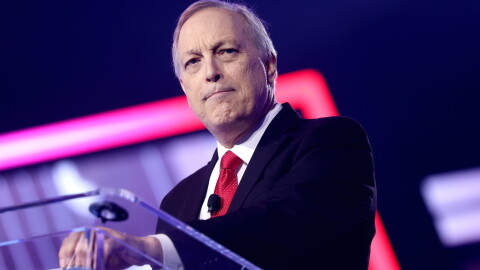 Despite Ducey endorsing Andy Biggs, he has not put his own money into the gubernatorial candidate's campaign. Meanwhile, other GOP members have actively backed away.
-
 The Arizona Supreme Court is weighing in on an ongoing battle between the Clean Elections Commission and a few long-shot candidates who are accused of committing fraud to qualify for millions of dollars in campaign funding.
-
 Voter Participation Center/CourtesyTom Lopach, CEO and president of the Voter Participation Center, has used an interesting tactic to encourage people from underrepresented communities to vote.
-
 Brett Hall Jones, Wesleyan University Press/HandoutAcclaimed poet Brenda Hillman’s newest collection, “Still House in the Desert,” brought her back to her childhood home in Tucson.
-
 Nathan Wood/CourtesyNathan Wood is a Valley resident and co-owner of the Roadside Strange App, which includes more than 10,000 cases in several countries around the world.


Transcript
ANNOUNCER: KJZZ’s original production The Show is supported by Banner Health, Arizona’s largest nonprofit health care system. Last year, Banner reinvested more than $1.1 billion in community health and charity care. Banner Health, nonprofit for Arizona: bannerhealth.com/nonprofitforaz.
LAUREN GILGER: Hi, I’m Lauren Gilger, co-host of The Show, an original production from KJZZ. Every weekday, we bring you the latest news and culture from across the state. You can find much more at theshow.kjzz.org. Here’s today’s episode.
LAUREN GILGER: Good morning and welcome to The Show here on KJZZ 91.5 in Phoenix. I’m Lauren Gilger.
Coming up, the state Supreme Court sided with two Green Party candidates in a dispute with the Clean Elections Commission. And there’s an app that will tell you where to find the strange this Halloween season.
But first, after the primary election, former Republican Gov. Doug Ducey dutifully endorsed the GOP nominee for governor, Andy Biggs. But he did not put any of his own money behind his campaign. And it turns out, he’s not the only one.
In fact, a pool of reliable GOP donors who backed Ducey to the tune of millions every time he ran for office are not stepping up to support the newest GOP gubernatorial nominee. And in some notable cases, they’re actually switching sides.
Hank Stephenson, co-founder of the Arizona Agenda, has the story and is on the line now to tell us more. Good morning, Hank.
HANK STEPHENSON: Good morning, Lauren.
LAUREN GILGER: OK, so instead of looking at who is donating to these campaigns this time around, you’re looking at who isn’t, it sounds like.
HANK STEPHENSON: Yeah, I kept looking for a handful of names that I’m used to seeing on these Republican gubernatorial campaign finance reports, and they just weren’t showing up. Or if they were, they were showing up in much smaller numbers than I’m used to.
LAUREN GILGER: OK, so you crunched the numbers here, kind of looking at, as you said, all of these campaign finance reports in the race. Found roughly 700 donors who gave Ducey’s campaign that max amount, $5,000 or more. But Biggs only has about 350 donors who have given that much, you found.
HANK STEPHENSON: Yeah, and to be fair to Biggs, his campaign kind of looks a little bit more like Kari Lake’s campaign, where it wasn’t necessarily backed by the business leaders in Arizona, but had a broader base of small-dollar donors. And that’s kind of how Biggs has been able to keep his campaign alive, that and a lot of help from a single organization here in Arizona.
LAUREN GILGER: Yeah. OK, we’ll talk about that single organization in a moment. But let’s talk about some of the big names that are kind of staying on the sidelines when it comes to Biggs this time around. You talk about folks like Bob and Renee Parsons, the GoDaddy founder; (Carvana CEO) Ernie Garcia; the Shoen family, the U-Haul kind of founders there; the folks behind the Barrett-Jackson auctions. Like some of the biggest names in the state in terms of money — they’re not giving to Biggs?
HANK STEPHENSON: Yeah, and some of these people have even switched sides and started donating to Katie Hobbs instead. There’s really two main reasons why a major GOP donor like that would not be donating to Andy Biggs. It’s either that they don’t align with him ideologically. These are business types who were in for Ducey’s kind of middle-of-the-road social policy and conservative economic policy, and Biggs just doesn’t fit that mold.
Or, reason two, they just don’t think he can win. They don’t think it’s a good investment of their money. And they’re reading kind of the writing on the wall via the polls this time of year and saying, eh, maybe I’ll sit this one out.
LAUREN GILGER: Is there a scenario, Hank, in which some of these folks might agree with Biggs on some of the issues, but in the case that they think Katie Hobbs is going to win, they don’t want to get on her bad side essentially?
HANK STEPHENSON: One hundred percent. If you’re making a decision about who to back and especially this late in the game when most of the politicos agree what’s going to happen next week, it just doesn’t make sense to go and donate to a losing candidate. Not only is that a bad investment, but it could kind of hurt your ability to work with the governor should she win reelection this time, which appears likely.
LAUREN GILGER: Yeah, the power of the polls. OK, then tell us more, Hank, about those folks who have switched sides, who have been kind of steady Ducey-type donors in the past who are now giving to Hobbs. Who are they?
HANK STEPHENSON: Yeah, that’s guys like Ernie Garcia. He’s basically the owner of Carvana, Arizona resident, who gave Ducey lots of money during Ducey’s runs for office. He put about $50,000 — or his company did — put about $50,000 into a PAC that was supporting Karrin Taylor Robson during the primary election. And then when she dropped out, he moved his money over to kind of supporting Hobbs rather than putting money in for (Biggs).
That’s people like Jerry Simms, the longtime owner of Turf Paradise racetrack, big Ducey donor. This year, he gave money to Katie Hobbs. And then like any good gambler, he also kicked $1,000 to Andy Biggs as well, just to kind of hedge his bet there. But it’s clear his heart isn’t in it.
And even the money that he gave to Katie Hobbs is just much smaller than he would have given to previous Republican nominees. It seems like a lot of these people are kind of picking between two bad options and making a business decision about where they want to actually put their money.
LAUREN GILGER: Yeah, interesting. The trend also extends to some normally reliable GOP PACs — including the Republican Governors Association, which you point out solely exists to elect Republican governors.
HANK STEPHENSON: Well, and that was kind of the genesis for this. Everyone’s waiting for, is RGA going to come in and save Andy Biggs this cycle? And they just haven’t put any money into Arizona. This is an organization that put $5 million for Ducey’s first run for office, $8 million for his last run, and notably, like $14 million backing Kari Lake.
So this isn’t an ideological decision that they’re making. Kari Lake was as far right as they come, arguably farther to the right of the spectrum than Andy Biggs is. This is a can-we-win calculus. They cover every state in the union, and they have to make decisions about which races are we defending governors, where do we think we can actually pick up seats. And the fact that they don’t think that they can actually pick up seats in Arizona is very, very telling.
And there’s a lot of other groups kind of making the same decision. These PACs that represent, for example, the CPAs or businesses like Honeywell, Salt River Project. All of these groups were good for $10,000 at least. And that starts to add up when you have dozens of them just not coming to the aid of Andy Biggs this year.
LAUREN GILGER: Yeah. So let’s talk then about the big donor that the Biggs campaign has almost kind of solely relied on, those smaller donations and Turning Point USA, right? Turning Point USA has, though, had a spotty history recently in supporting successful campaigns, you point out.
HANK STEPHENSON: Turning Point was the No. 1 booster of Kari Lake’s various runs for office here. Those were huge losses to them. Kari Lake came very close to being our governor, and I think that they took a lot of credit for her getting so close, but they haven’t had a real win. And they’ve been fundraising for years and have really made Andy Biggs their candidate this cycle.
So they are going in huge for Andy Biggs. They are basically making up that difference between the candidates. Without Turning Point’s many millions being kicked to Andy Biggs, he would be dead in the water right now.
But they have to win this. This is a big election for Turning Point. So, in for a penny, in for a pound. They are throwing as much money at Andy Biggs to try to change this tide as they possibly can. But just looking at the polls and the writing on the wall, it doesn’t seem to be working.
And also, I think a lot of Arizonans — Turning Point used to be a relatively obscure organization, and now just the name Turning Point comes with a lot of baggage. So it may not be helping his campaign with those middle-of-the-road, moderate, Republican-leaning voters to know that Turning Point is his No. 1 financial backer.
LAUREN GILGER: Right. Those voters you kind of need to win a statewide election here. All right. Hank Stephenson, co-founder of the Arizona Agenda, joining us with this one. Hank, thanks so much. Appreciate it.
HANK STEPHENSON: Thanks for your time, Lauren.
LAUREN GILGER: The Arizona Supreme Court is weighing in on an ongoing battle between the Clean Elections Commission and a few long-shot candidates who are accused of committing fraud to qualify for millions of dollars in campaign funding.
The trio of candidates — Green Party candidates Risa Lombardo and Duwayne Collier, and failed GOP gubernatorial candidate Scott Neely — they’re also being investigated by the Attorney General’s Office for allegedly falsifying documentation that they got enough $5 contributions from voters to qualify for Clean Elections funding, which added up to a collective $4.7 million in public campaign money.
Clean Elections informed the candidates it would investigate and potentially make them repay the money. Now the state Supreme Court is reining in Clean Elections here, but allowing its investigation to continue.
Jim Small is editor-in-chief of the Arizona Mirror, which broke the story back in August, and he’s on the line now to tell us more. Good morning, Jim.
JIM SMALL: Good morning.
LAUREN GILGER: All right, so remind us how this all began. Your paper broke the story that some of the folks listed as having made some of those $5 donations to these candidates basically said they never did it.
JIM SMALL: Yeah, absolutely. So we were intrigued when we saw two Green Party candidates and an obscure Republican candidate — it really was the Green Party candidates qualify for Clean Elections. It’s not easy to do, and you really need a lot of infrastructure behind you to be able to get it done because one of the rules about Clean Elections is you’re not allowed to pay people to gather those contributions.
The Green Party had disavowed both of these candidates, and that made it very puzzling as to how did they actually get on the ballot, or how did they actually qualify for these millions of dollars in public campaign funding.
So when we started looking at it, we noticed some real oddities. And chief among them was the fact that there were a lot of people that were donating to both these Green candidates — gave them their $5 contributions — and to Republican Scott Neely. That is unusual behavior. It does not typically happen that way. Very often, these are folks who give to one candidate because they support them.
And on top of that, these candidates all qualified without using the state’s electronic system to do it, which automatically verifies the voter and basically takes the payment right there, and so the money doesn’t even — this isn’t someone signing a form in a parking lot.
And as we looked into it, we saw these patterns. We started contacting voters. I think we reached out to more than 50 voters. We ended up talking to about a dozen of them. All of the ones we were able to speak with — we got six folks to go on the record with us — all of them said, “Not only did I not sign this form that you’re showing me, I signed something completely different. And on top of that, I didn’t give these people any money. So I don’t know why my name showed up here.”
We wrote a story about it. At the same time, the Clean Elections Commission was doing a preliminary investigation. They found many of the same things, and that really kicked off this entire investigation that, as you mentioned, last week landed at the Arizona Supreme Court for the first time.
LAUREN GILGER: Right. And that got there because the two candidates sued Clean Elections, right? Basically saying, you can’t do this, it’s not in your authority. Is that the argument?
JIM SMALL: Essentially, yeah. And so what they’re arguing is a couple of things: One, that if there is any fraud, which they deny has happened, but if there is fraud, the correct way to go after it is through the criminal system, is with the Attorney General’s Office, for example, not Clean Elections. And as well, they basically said, “Look, we qualified. The secretary of state reviewed the signatures. The county recorders reviewed these voters’ names and signatures and said that we qualified, so therefore, you can’t touch us, and there’s nothing you can do about it.”
LAUREN GILGER: So tell us more about what the Supreme Court ruled here. I mean, basically they sided with the Green Party candidates, though they’re letting this investigation continue?
JIM SMALL: Kind of, yes. I think, on the whole, the Green Party candidates came out of this one with a win, but not really. I think it’s a Pyrrhic victory at the end of the day.
Essentially, one of the things that happened in the letters to Risa Lombardo, who’s the gubernatorial candidate for the Green Party, the Clean Elections Commission’s executive director made a note in there that said, “Hey, we think that the secretary of state actually misapplied the math.” And they basically did some bad math, and that you actually never should have qualified based on the numbers we have.
And they ended up walking that back, and they said, “No, you know what, we were wrong. We were the ones that did the bad math.”
And the Supreme Court essentially looked at that and said, “OK, if the issue is no longer the Clean Elections Commission trying to decertify a candidate, then they don’t have the power to do that. But we’re not going to jump in, and we’re not going to block this investigation. It gets to go forward.”
And then at the point where Clean Elections finishes that investigation and then imposes any penalties they see fit, the court basically said at that point there’s going to be a bunch of litigation over what the Clean Elections Commission actually does in terms of trying to discipline these candidates if they feel that’s warranted.
LAUREN GILGER: Very interesting. So lots to come still. We’re not over by any means here. I want to ask you more, Jim, about the fact that you mentioned early on, the official Arizona Green Party had disavowed these candidates. They basically say they’re not actually Green Party candidates, they’re Republicans?
JIM SMALL: Yeah, that’s essentially it. Risa Lombardo, up until, I don’t know, two weeks before she registered to run as a Green Party candidate, was a not just a Republican voter but a Republican precinct committeeperson, which is essentially like the activist kind of pumping the heart and blood of a state party. She was an elected Republican precinct committeeperson. Duwayne Collier, the secretary of state candidate, I think similarly is tied to a lot of Republicans.
Both of the candidates have spent all of their money with a mystery company based out of Nevada that was created by two California GOP operatives. Some of the people they’ve been paying have been employees of the Arizona Republican Party. Everything about this has from the beginning kind of pointed to the fact that these are candidates who are intended to get on the ballot in order to kind of dilute the voting pool, and in a close race, maybe pull some votes away from Katie Hobbs and be able to help Andy Biggs’s campaign.
We don’t know for certain, but certainly there’s a lot of smoke that says that these folks aren’t necessarily genuine Green candidates.
LAUREN GILGER: A lot of smoke. All right, we’ll find out more to come. Jim Small, editor-in-chief of the Arizona Mirror, joining us. Jim, thanks so much. Appreciate it.
JIM SMALL: Thank you.
LAUREN GILGER: Good morning. It’s The Show on KJZZ 91.5. I am Lauren Gilger. Coming up, a new app that serves as a paranormal compendium.
NATHAN WOOD: You have your cryptid hunters, you have your alien hunters, you have your ghost hunters. We wanted to combine all three of those, plus the added strange histories as well.
LAUREN GILGER: We’ll hear from one of the co-founders of Roadside Strange.
But first, all of us are being inundated with election ads right now, from the television airwaves to every app we’re on, to a string of text messages I can’t seem to unsubscribe from.
And then there’s the election mail. We’re all getting tons of it, I’m sure, and one piece made our producer, Amber Victoria Singer, stop and ask some questions. And Amber’s here now to tell us more about it. Good morning, Amber.
AMBER VICTORIA SINGER: Morning.
LAUREN GILGER: OK, so there was one piece of election mail you got that kind of made you stop. Tell us about it.
AMBER VICTORIA SINGER: Yeah, our mailbox has been stuffed with election-related mail all month. And there was one piece of mail, it was this just folded white piece of paper, and it said “Award enclosed.” And as a former gifted child, it got me. I was like, “OK, let me open this. What is this?”
And I opened it, and it was a “Great Citizen Award” is what it said, and it was from Tom Lopach at the Voter Participation Center. And it said, “Thank you for voting in 2024. You can earn this Great Citizen Award by voting in this year’s election. Make sure you vote by Nov. 3.”
LAUREN GILGER: OK, so you’re a journalist, so you didn’t stop there. You tracked down the guy behind this, this Tom Lopach guy, right, who signed this award for you. Who is he?
AMBER VICTORIA SINGER: Yeah, so I was curious about what the Voter Participation Center was, so I looked into it. And I found Tom Lopach, who is the president and CEO of both the nonprofit organization Voter Participation Center and also the Center for Voter Information, which these two organizations have spent millions of dollars on mailers and other types of digital ads encouraging people to go out and vote.
And they seem very similar, but the Voter Participation Center specifically targets young people, people of color and unmarried women. And as a young, unmarried woman, I am definitely in that demographic that they’re targeting, which I’m assuming is why I got that piece of mail.
LAUREN GILGER: Why you got that piece of mail. OK, so you are obviously a producer here on The Show, so you had to ask him to come on The Show and talk about this.
So let’s hear it. This is my interview with Tom all about these mailers — they are sending out 4.5 million pieces of mail just here in Arizona — and why he thinks they will get people who don’t often vote to step up and head to the polls.
TOM LOPACH: In Arizona, we know that people of color, young people and unmarried women make up 59% of Arizona’s registered voters. But when we look at people who were registered and didn’t turn out in 2024, 81% of those people are people of color, young people and unmarried women.
So our work is to try and turn out to vote people from underrepresented communities who are overrepresented in the non-voting population.
LAUREN GILGER: OK, so people who aren’t voting every time around or maybe not voting at all. How do you figure out who fits those categories, first of all?
TOM LOPACH: So when we are sending our get-out-the-vote mail, we use the Arizona Voter File. And within the Voter File, often times age is indicated, so we can figure out who are young people. And then we will use modeling techniques to figure out: Who is likely a person of color? Who is likely an unmarried woman? And then we will send them our mailers.
LAUREN GILGER: OK. So this is nonpartisan, right? Like you are just trying to get folks to come out and vote who don’t normally vote, right? That’s the goal.
TOM LOPACH: That’s right. As an organization, we are set up as a 501(c)(3) nonpartisan nonprofit. So the work that we do is entirely nonpartisan. It’s about creating a representative and inclusive electorate. And frankly, isn’t our country better when the folks who turn out to vote fully represent the breadth and depth of our beautiful society?
LAUREN GILGER: So I mean, when you’re targeting those specific groups — like people of color, young voters in particular — isn’t that inherently political? Like those are voters who are more likely, polling and research would show, to vote Democratic.
TOM LOPACH: So there are a couple of ways to think about this. In recent years, we have seen very clearly that these communities are pretty good swing voters.
Secondly, many state legislatures are actively working to make it harder for young people to vote, harder for people of color to vote. You see a lot of times university identifications are not allowed to be used as voter ID, but a hunting license or a fishing license is. You can see often times tribal IDs in some states are not allowed to be used in voter ID, but again, hunting, fishing and driver’s licenses are.
Many of our voting laws in the United States and in many states make it easy for overrepresented populations to vote and harder for the communities we serve. So I think it is more about creating an environment where everybody gets to vote and less about partisanship. Let’s create a situation where all eligible Americans are empowered to vote, and then let the parties and the candidates try and win their votes.
LAUREN GILGER: So let’s talk about the way you go about this, right? Because this is not exactly the typical kind of thing you’ll get in the mail, this Great Citizen Award, for example. There are other kinds of mailers you send out, some are like voter report cards, things like that.
But there’s a line in here that I thought was very interesting. You write on each of these mailers something like, “Remember, who you vote for is private information, but whether or not you vote is public record.” And you basically kind of tell folks like, “We’ll be watching. I hope I can say thank you to you afterward.” Is this basically a pressure tactic?
TOM LOPACH: That is. That line comes from behavioral science, and it is called social pressure. The way I think of it, having grown up Catholic, is that it is like Catholic guilt or Jewish guilt in an envelope. It’s what mothers used on us, and it helps people want to be part of an in-crowd and want to do what other people are doing.
LAUREN GILGER: So this is like a researched tactic to try to change people’s behavior essentially, get them to do something you want them to do?
TOM LOPACH: It is a deeply researched tactic. And in fact, we use randomized controlled trials in everything we do for the 23 years we’ve been around. And what we have found is that the single best tactic at increasing voter turnout is not phone calls or door knocks or texting. It is our social pressure letters. These actually work.
In the private sector, you’ve seen power companies send out letters that say, “You know, 80% of our customers have moved to renewable energy. Why haven’t you?” Or, “Sixty percent of your neighbors have reduced their water usage, something important in Arizona. Why haven’t you?” And these are tactics that are used by the private sector to get people to take an action. And we use it in the effort to create a more broad and involved electorate.
LAUREN GILGER: Do you risk alienating folks here? Like just kind of making them mad or turning them off? Like so much about politics and and the whole system around it today is already making people angry. Do you think that’s a risk here?
TOM LOPACH: That is a concern many people have had over the years. And in the years following the 2020 election, together with partner organizations, we ran four different tests, and we found there is no backlash to using social pressure to increase voter turnout. In fact, our studies continually find, both in the mail and with digital advertisements, social pressure has the desired effect of increasing voter turnout.
LAUREN GILGER: Have you seen some of the Reddit threads on these as people get them in the mail?
TOM LOPACH: I have not seen Reddit as I’m a Luddite. I have received comments from people in my own social media feeds, and I know that some people have a reaction to it. But our randomized controlled trial proof for 23 years shows that this increases voter turnout by 1-2% in an election.
LAUREN GILGER: You say you think a lot about what makes people not vote, right? Like why these voters that you’re targeting often don’t participate in this process. Tell us more about that. Like why do they feel disengaged?
TOM LOPACH: It’s interesting. We spend a lot of time and energy studying folks who don’t vote. And what we learn is people think that their voice doesn’t matter, their vote doesn’t matter, or sometimes folks don’t feel like they know enough about government to make an informed decision.
One of the things I compare it to: I don’t follow football. I don’t know what team goes to which city, what their animal is, what their colors are or what their numbers are. It’s just not something that has ever interested me. And so to learn all of that is overwhelming to me.
There’s a whole group of Americans that don’t necessarily follow what’s a Democrat, what’s a Republican, or a Libertarian or an independent? And it’s hard to remember what is the difference between a senator, a governor, a House member, a state legislator. And it’s a jumble.
And so what we try and do is give people confidence that their vote does matter, their voice does matter, that often times elections are decided by small numbers, and their vote can make the difference.
LAUREN GILGER: OK, we’ll leave it there for now. Tom Lopach, president and CEO of the Voter Participation Center, the Center for Voter Information as well, joining us to talk about these mailers you may be getting. Tom Lopach, thank you so much for coming on. I appreciate it very much.
TOM LOPACH: Thank you, Lauren.
LAUREN GILGER: Good morning, it is The Show here on KJZZ 91.5. I’m Lauren Gilger.
Acclaimed poet Brenda Hillman’s newest collection, “Still House in the Desert,” brought her back to her childhood home in Tucson. Her mother needed to be moved out of the home and she found herself, like many people of her generation, ready to clean it out.
She found herself methodically going through each room, reflecting on each part of it. She told me, it became something of a 20th century time capsule for her.
Now, the book is a finalist for the National Book Award for Poetry. I spoke with her more about it — and her memories of her childhood in Tucson.
BRENDA HILLMAN: Well, it was the ’50s when I was born. I was born in ’51. And then, the ’50s were such a strangely mixed bag everywhere, but in Arizona, there was still the feeling of, you know, the Wild West, but also possibility, capability, and yet at the same time, environmental degradation and things that we’re now very conscious of.
I absolutely loved my childhood in Tucson. It was very much a sort of magical childhood. And the thing about Tucson in the ’50s, ’60s and ’70s was that it moved from the mid-century consciousness to a very great sense of counterculture and very edgy. I was a little hippie flower child with my long, flowing robes and hair and all of that. And like many of my generation, I loved being on the cusp of great change that seemed like a cultural moment that was profound, really. And Tucson was a great setting for it.
LAUREN GILGER: Yeah, it sounds like it. So you write here about, and you often write about, like domestic space, right? Like physical spaces. You’ll meditate on the time, the space, the objects, right, things like that. Tell us a little bit about why you approach poetry in that way, and how did it feel doing that kind of analysis almost of your childhood home when it was this very kind of personal place?
BRENDA HILLMAN: Yeah, that’s a great question. You know, it kind of brings together thinking about it that way, thinking about — I’m going to use a big word here — the phenomenology of space, just how phenomena occur and how one’s inner life and outer life kind of come together.
And for me, the magic of sort of the desert and the desert spaces and this adobe home and the magic of childhood kind of came together in this odd way. And the occasion of being in the house helped me think about how objects also capture childlike-ness.
So, you know, I write about a stapler, and my mother’s laundry cart, and her earrings, and the sandstone fireplace. And I was raised Protestant, but I kind of crafted it to my own, my own holy needs and have a strong sense of kind of animist presence in things and in rooms. And so objects have always kind of spoken to me and as having extra power or feeling.
LAUREN GILGER: Your dedication for this book is really striking. I want to read it because it’s brief here, but you write:
"For childhood houses,
for those who work in houses,
for those whose work goes unnoticed,
for children in childhood houses,
for lives in the 20th century,
for time, its awe and burden,
for matter, its awe and burden,
for people who miss their mothers,
for people who miss our mothers,
for our mothers"
And then you say:
"For Helen Frances Hillman"
That was your mother, right?
BRENDA HILLMAN: Yes, uh-huh.
LAUREN GILGER: Do you feel like her work went unnoticed?
BRENDA HILLMAN: Well, in a specific sense in the family, not unnoticed at all, but in the general sense in the world, I do feel as if the sense of mostly women as domestic workers in homes was taken for granted, at least. And we’ve lost some of the sense of trying to acknowledge that. I was part of feminist movements from the time I was adolescent, but I do feel like women’s work is still a bit taken for granted. And the way that laborers — and so in a kind of lighthearted and also maybe somewhat serious way, I put women’s labor and the labor of dust mites.
Because I think animals, some animals that are laboring away to make a universe are also unnoticed. And so, you know, we have tortoises, and we have moths, and we have dust mites and plants and so on doing their labor in this book, so yeah.
LAUREN GILGER: All of those levels of labor, yeah. You write, and this book obviously is a lot about Arizona, about the desert. You have a poem called “Creosote Bush,” you have poetry here about the landscape, the history of the desert, where it began as a sea, as an ocean, right? Animals here. It’s not an easy place to live. I wonder, as you were writing about it, what did it make you think about this place? Because you still have a home there.
BRENDA HILLMAN: There’s an odd sense that — I don’t know how to put this for your listeners, but I, that being in the desert is almost to be extremely human, because, of course, I’m partly from a settler culture and I recognize that my people did not settle the desert first. But I felt very deeply spiritually at home there, connected with the creatures, connected with the spirits, the spirit world, the spirits of saguaros.
Because, in part, the very struggle to be human and the very struggle to be a child, to be a woman, to be in the 20th century seemed really to be encapsulated by desert culture. So you go outside, you sense all these things are thirsting and struggling, and yet they’re so beautiful. And so it’s such a strange beauty. You have to be really smart and a lovely soul to appreciate how incredible the desert is.
I’ve had friends come there and just say like, “How can you stand it? It’s so barren.”
And I go, “Like, what the heck are you talking about?” Everything about it seemed magical to me.
And so the struggle and the striving to be a human being in the desert seemed important and natural. And it’s just, the desert is just, it haunts me. It haunts my dreams. I love cacti, just the way that they put you off and take you in at the same time, and that they’re juicy. They have these souls that are so juicy. And anyway, I love it.
LAUREN GILGER: That’s a beautiful description that’ll stick with me, the juicy souls of cacti. I love that. So, Brenda, can you take us out here on one of those poems that kind of meditates on the desert and some of the things that you find here?
BRENDA HILLMAN: Sure. I will read “Thucydides.” This describes our family land tortoise who made his escape.
“Thucydides”
Why are you hurrying? You even hurry while you’re sitting here. Did last night’s dream teach you nothing? (The guests sat around the table mildly happy; they could each make a statement but were supposed to hurry.)
The family tortoise, Thucydides, (which rhymes with “to the cities”) named by a child for whom childhood was a burden, for whom books were the way out,
moved slowly toward the gate for weeks,
carrying its geometry on its back,
until escape was the new minimum.
Years later, you thought you saw it in the desert
under the cholla: quartz, granite, calcite.
Different creature, of course, but it seemed fine.
There are words you would long for if you could remember them.
There are words you could cling to if they would stay.
The infinite is your pet,
heading away,
inside the outside it’s made of.
LAUREN GILGER: Brenda Hillman, poet and translator, joining us. The new book is “Still House in the Desert: An Eco-Contemplation,” finalist for the National Book Award. Thank you so much, Brenda, for coming on The Show. I really appreciate you.
BRENDA HILLMAN: Thank you, Lauren. I appreciate you, too.
LAUREN GILGER: Good morning. It is The Show on KJZZ 91.5. I’m Lauren Gilger.
As we’re getting closer to Halloween, maybe you’re looking for a spooky road trip, or maybe you just like checking out sites where people say there have been paranormal activities over the years. If so, there is an app for that.
Nathan Wood is a Valley resident and co-owner of the Roadside Strange app, which includes more than 10,000 cases in several countries around the world. And there are some from Arizona in there as well.
Wood spoke with my co-host, Mark Brodie, about this, and they began with the thought process behind this app.
NATHAN WOOD: A lot of it comes down to the fact that my wife and I have been paranormal investigators for about 15 years. And one of our biggest challenges we always found was when we were doing the research on places that we wanted to go and visit because we heard that they were haunted or spooky or, whatever, we always found that the researching everything was the hardest part about the entire process.
Once we got to the location and actually did an investigation, that was all the fun stuff, but the research was just very time-consuming for us. And in a lot of cases, we find that with a lot of other people, too. They spend weeks and weeks and weeks trying to figure out if they can even visit these locations.
So it was just one of those things that we wanted to make sure that we made something that the whole community could use that takes a lot of the extra research out of it, or at least takes some of the stress out of it when people actually want to visit some of these known places.
MARK BRODIE: I mean, it kind of sounds like you’ve created like a AAA for paranormal activity.
NATHAN WOOD: Yeah, in a way. The way that we look at it is it’s a giant library of different encounters that have been documented over the years, stuff that has multiple sources, stuff that has folklore and folktales for generations.
And a lot of it, too, is everything that we have is based on public access, so it’s in public lands. We don’t do anything through private property or private homes. Everything is a public area that people have every right to go to, as long as they follow the rules and stay safe and everything else.
MARK BRODIE: So when you say that you and your wife are paranormal investigators, is that to say that you’re not just looking to go somewhere and see it, like you want to be able to get out of the car and walk around and really check things out for yourselves?
NATHAN WOOD: Yes, absolutely. We had the vision with Roadside Strange that it needed to be something that you can either do from the comforts of your own vehicle, or you can drive to the locations, you can get out, you can walk around, you can stretch your legs, and look for yourselves, really. That’s what we want people to do, is just look for themselves and experience their own things.
MARK BRODIE: How did you go about trying to collect all of this information? You mentioned it’s all sort of publicly out there, but I would imagine it was in all sorts of disparate types of places.
NATHAN WOOD: Yes. A lot of it is just scattered amongst the internet, and a lot of different Google searching, a lot of different time just spent on finding websites from, say, 20 years ago that haven’t really been updated, but they’re still there, or the facility that we’re looking at has changed owners five times over the last 35 years. We run into a lot of that kind of stuff.
So a lot of it is just we look for like multiple different confirmed sources of it, so whether it’s a few different websites, a few different long stories or histories of it before we add it into our app, because we want to make sure that we’re not putting stuff that was a TikTok trend written 10 years ago or something.
MARK BRODIE: How do you try to differentiate between the different kinds of experiences or things that people would like to see, or experiences people would like to have? Because it seems like there might be a difference between like a building that’s haunted and a place where like a UFO might have landed.
NATHAN WOOD: Well, the one thing that we wanted to make sure to do is — I mean, obviously there’s multiple communities in the paranormal, supernatural groups that are out there. I mean, you have your cryptid hunters, you have your alien hunters, you have your ghost hunters. We wanted to combine all three of those, plus the added strange histories as well.
And the reason why we wanted to do that is we wanted to make everybody feel like they could use the app, and it wasn’t segregating anybody that believes in Bigfoot or anybody that believes in aliens or UAPs or anything like that.
MARK BRODIE: So there are a few places in Arizona that are listed on this app. Is there something specific about this place that you think makes it a hot spot for potential paranormal activity?
NATHAN WOOD: I think with Arizona, it depends on what you’re looking at. I mean, there’s a lot of dark history with Arizona. I mean, you look at Vulture City out near Wickenburg. I mean, Henry Wickenburg founded Vulture Mine, and there was a lot of murders.
As for UFOs and UAPs, I mean, people have been seeing lights here in Arizona for decades. And then the Phoenix Lights as well. And obviously we have a very big nuclear power plant out here.
So there’s a lot of that that people think that that’s what attracts aliens, which it’s all alleged, we don’t know for sure. So I mean, Arizona has just got a lot of great history for it.
MARK BRODIE: Are you anticipating some additional number of downloads leading up to Halloween? Like, is that a time when people are thinking maybe more about trying to visit some of these places?
NATHAN WOOD: It seems like it. From our past experiences when we were involved with some friends that ran ghost tours up in Virginia City, Nevada, we’d always see Halloween was very busy for our friends that ran that tour, and then to the point where they asked myself and my wife to help them out because we’d been on it so many times. October is definitely a good time for people to start wanting to scare themselves.
MARK BRODIE: What do you and your wife find so interesting about paranormal activity?
NATHAN WOOD: I think a lot of it is we never really know the answers to anything. And looking back at my childhood growing up and what my wife’s childhood experiences were and stuff like that, there was things that I remember that I saw as a kid that left me questionable. Or it was even as simple as stuff that my dad would be watching on TV, like "The X-Files" or something along those lines.
And I think it kind of made me think like there is more to life than just what we are here in this physical body. And sometimes it’s just fun just to go out and just to learn the ancient history of like an old logging town that shut down 50, 60 years ago because it never kicked back up after World War II or something along those lines.
So I mean, there’s all types of cool stuff in it, especially if it’s just even if you’re just wanting to just look at the ancient history of certain things or strange history of of certain places. You know, there’s a lot of exciting stuff out there, and people just need to keep an open mind and want to actually expand their horizons.
MARK BRODIE: All right. That is Nathan Wood. He is the co-owner of the Roadside Strange app. Nathan, thanks so much, and happy Halloween coming up.
NATHAN WOOD: Thank you very much, Mark. I appreciate it.
LAUREN GILGER: Thanks for listening to The Show’s podcast. The Show is produced by Sativa Peterson, Nick Sanchez, Amber Victoria Singer, and Ayana Hamilton. The Show was created by Jon Hoban, and our executive producer is Amy Silverman. You can find more of The Show and sign up for our newsletter at theshow.kjzz.org. You can also find us on Instagram @kjzztheshow.