


Election Day is tomorrow, but more than a million Arizonans have already voted. What the early voting numbers can and cannot tell us. Plus, the implications of New World screwworm being detected in Arizona.
Ways To Subscribe


-
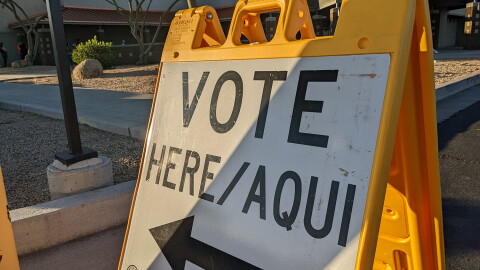 Sky Schaudt/KJZZElection Day is tomorrow, but more than 1.5 million Arizonans have already voted. And while we don’t know yet who they voted for, Democratic political strategist Sam Almy joined The Show to talk about everything we know about who they are.
-
 Tim Agne/KJZZTwo years ago, Apache county faced major problems on Election Day. Now, with midterms on Nov. 2, some residents and observers are worried history will repeat itself.
-
 Children’s Museum of Phoenix/CourtesyThe Children’s Museum of Phoenix will undergo expansion and renovations, including about 10,000 square feet for a new preschool.
-
 Chelsey Heath/KJZZ“Cheap water is over.” That’s the quote from Queen Creek utilities director Marc Skocypec at a recent town meeting.
-
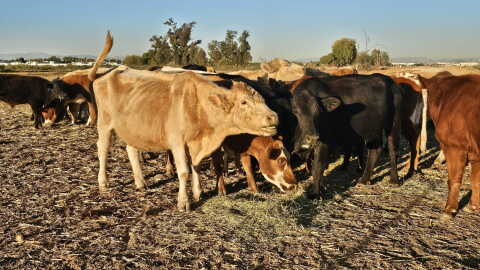 Chelsey Heath/KJZZScrewworm has been a big topic of conversation and concern among cattle ranchers for several months as it was detected in northern Mexico and then in the U.S., although not in Arizona until last week.
-
 Joseph Darius Jaafari/LOOKOUTA planned Phoenix location of Barracks, a well-known Palm Springs leather bar, faces an uncertain future as a legal challenge threatens its liquor license.


Transcript
ANNOUNCER: KJZZ’s original production The Show is supported by Banner Health, Arizona’s largest nonprofit healthcare system. Last year, Banner reinvested more than $1.1 billion in community health and charity care. Banner Health, nonprofit for Arizona. bannerhealth.com/nonprofitforaz.
MARK BRODIE: Hi, I’m Mark Brodie, co-host of The Show, an original production from KJZZ. Every weekday, we bring you the latest news and culture from across the state. You can find much more at theshow.kjzz.org. Here’s today’s episode.
MARK BRODIE: Good morning. It’s The Show here on KJZZ 91.5 in Phoenix. I’m Mark Brodie.
LAUREN GILGER: And I’m Lauren Gilger. Coming up, residents of Queen Creek are facing higher water rates as Colorado River water cutbacks hit.
MARK BRODIE: And what it means for Arizona ranchers now that New World screwworm is in the state.
LAUREN GILGER: But first, after a long and sometimes brutal campaign season, it’s finally almost here. Election Day is tomorrow, but more than 1.5 million Arizonans have already voted. And while we don’t know yet who they voted for, our first guest this morning is here to tell us everything we know about who they are.
Sam Almy is a Democratic political strategist with Uplift Campaigns who tracks early ballots, and he’s on the line now to tell us what he’s watching. Good morning, Sam.
SAM ALMY: Good morning, Lauren. Thanks for having me.
LAUREN GILGER: Thanks for coming back on. You track this stuff to a very fine detail, right? Hour by hour, lots of demographic stuff here. Tell us ... how much can you tell by watching early ballots?
SAM ALMY: One of the things you can tell about early balloting is the No. 1 thing is enthusiasm among voters. You can tell pretty quickly, week one or two, is this going to be a low-turnout, high-turnout, mid-turnout election. You can ... get breakdowns by party to see which parties are more enthusiastic, and if you’re on a campaign, you know which voters you need to start working on to turn out to get your votes in.
LAUREN GILGER: Right. So folks working on campaigns watch these numbers very, very closely, I know. But let’s talk about what you’re seeing so far in Arizona. Early voting is breaking records around the country. What about here in Arizona?
SAM ALMY: It’s breaking records around the country, but Arizona’s had early voting for decades, and it is a very typical midterm for us. Voting by mail remains very popular throughout the state. Right now, we’re at about 37% turnout, 1.6 million ballots in as of Friday.
This is right on pace with the 2022 numbers. It’s a little bit below 2018, which I believe was a record-turnout year. But if you break it down by party, Democrats are turning out a little bit more than 2022, about 3% more. Republicans are turning out 1.6% more, and then independents are a little light at half a percent down on turnout compared to 2022 at this time.
LAUREN GILGER: OK, so that’s turnout within their own parties. In Arizona, there’s this massive voter registration advantage for Republicans, right? Are we seeing that play out in the early returns?
SAM ALMY: Yes, absolutely. That’s the big thing that I’m watching right now. I mentioned Republican turnout is a little bit up from 2022. ... In 2022, there was a lot of reluctance on Republicans to vote early. But since they’re ahead in turnout and they’ve increased their registration by about 200,000 to 300,000 since that time, that means they’ve had to return roughly 44,000 more ballots than this time in 2022. They are ahead of where they were four years ago.
LAUREN GILGER: It’s interesting, because the other big narrative around the country this campaign season is that there’s going to be a "blue wave" for Democrats here. The president’s numbers are underwater, his party is kind of trailing with him. Do you see that playing out with what we’re seeing in Arizona? Polling has really shown that many Democrats are ahead.
SAM ALMY: Yeah, that’s going to be the really interesting thing. I like to joke that if I knew who people voted for, I’d be a lot better at my job. But, of course, I won’t know that until a week or two after tomorrow once all the ballots are counted.
What’s really interesting for the "blue wave" aspect is we can definitely see enthusiasm on the Democratic side. ... Turnout is up, returns are up about 12,000. But where it really comes down to is in the margins. This is where I get a little bit wonky, but I look at what we call high-turnout voters, people who have voted in four of the last four elections, and then I kind of break it down. So, I like to look at newly registered voters and people who haven’t voted in the last four elections.
LAUREN GILGER: So those who don’t vote very often. OK.
SAM ALMY: Yes, correct. Something interesting I’m seeing here is that independents are leading among these newly registered and never before in an Arizona election voted. They have about 48,000 returns, where Republicans and Democrats are closer to 35,000-37,000.
LAUREN GILGER: In terms of those low-propensity and new voters, that’s interesting. Who do we expect, Sam, to show up at the polls on Election Day and vote, demographic-wise?
SAM ALMY: We certainly will see Republicans turn out at the polls. That’s what we’ve seen since about 2020. When you break it down to demographics, this is where the electorate starts to get a little bit younger and a little bit more diverse.
Right now, half of the returns are from voters 65 and older, but that always changes on Election Day, whether that ballot is received, they’re voting in person or they’re just dropping off their early vote ballot.
LAUREN GILGER: What about those dreaded late earlies, the folks who drop off those early ballots at the polls on Election Day? They have a new option this time, right?
SAM ALMY: Yes, they do. They can take their early ballot in, present their ID, and they can get it scanned right then and there. This should, in theory, reduce time, but you might simply just want to drop off your ballot and leave.
I’m expecting between 500,000 and 600,000 late early ballots. That’s what we’ve seen in every election since I’ve been watching here.
LAUREN GILGER: That’s a lot. Do those usually trend Democratic or Republican one way or the other?
SAM ALMY: ... It’s an interesting question. They’ve been different in the past few years. Obviously, in 2024, they skewed more Republican. I think in 2020, they went Republican, but 2018, they went more Democratic. It kind of flips back and forth.
Typically, when I first started tracking this, it would mirror what had already happened in early balloting, but that is up in the air now.
LAUREN GILGER: Up in the air. Lots up in the air. Sam Almy, Democratic political strategist with Uplift Campaigns, joining us. Sam, thanks so much. Watching for Election Day.
SAM ALMY: All right. Thank you, Lauren. Bye.
MARK BRODIE: And let’s turn now to one rural Arizona county, Apache County, in the northeastern part of the state. Nearly 12,500 voters have already cast their ballots there, about 23% turnout.
The county is home to part of the Navajo Nation among other communities, and in 2024, it faced significant problems on Election Day and immediately after.
Sasha Hupka with Votebeat has detailed those problems in a new report done with the Arizona Center for Investigative Reporting.
Those problems seem to have started with Apache County’s electronic pollbooks. Those are the devices on which voters check in and that poll workers use to make sure voters get the right ballot and haven’t already voted.
But the problems didn’t end with those machines, and some observers and Apache County voters wonder if they’ve been fixed in advance of this year’s election.
Sasha joins me now to talk more about what she found. Good morning. Thanks for being here.
SASHA HUPKA: Good morning.
MARK BRODIE: Why, what happened? Let’s start off with what happened with these pollbooks. Why didn’t they work?
SASHA HUPKA: What we saw in the records suggests that the county uploaded fairly close to Election Day its final voter registration list, but then it didn’t check to see if its programming actually worked with its printers. They never tested these pollbooks after doing that final upload.
And so when these pollbooks went out across the county on Election Day, it quickly became apparent within the first 30 minutes of voting that they weren’t working — countywide tech breakdown. This set off this cascade of events that ultimately led to a complete election breakdown, and really highlights that the story went very differently than what the county was telling media and court at the time.
MARK BRODIE: And as you report, there clearly were voters who didn’t get to vote, right? This is not a place where you can just drive down the street from one polling place to another. It’s very rural, very remote, dirt roads. It takes a long time to get places, and it sounds as though voters were disenfranchised because of this.
SASHA HUPKA: Yes, voters absolutely were disenfranchised because of this. In the course of this reporting, we spoke with voters who were unable to vote on Election Day. We spoke with voters who had been turned away from the polls by poll workers, which is never supposed to happen.
It’s a very serious story, and it raises very serious questions for this county heading into this year’s election in just a few days.
MARK BRODIE: Let’s get to that in a moment. But I want to ask, what did the county tell you in terms of what their response was, how they tried to make sure that the voters were still able to cast ballots even though these pollbooks weren’t working, printers weren’t working? It seems like a bunch of stuff wasn’t working.
SASHA HUPKA: In 2024, I was at the time actually not with Votebeat. I was a reporter for the Arizona Republic, the state’s largest newspaper. But I was actually among the reporters covering this issue when it popped up on Election Day. I was actually one of the people who reached out to the county when we started hearing there were problems to ask about what was happening.
What the county told me at the time was sort of what they told everybody: The printers weren’t working, they were trying to fix them. However, voting was still continuing, there were these backup options for voters. Every county is going to have some type of voting backup in the event that their machines aren’t working.
In Apache County’s case, their backups were emergency pre-printed ballots that were available on-site, so they had some amount of ballots for every precinct.
MARK BRODIE: A finite amount, though, we should point out.
SASHA HUPKA: A finite amount. And then they also had what they called ExpressVotes, which are accessible voting devices that are required by federal law to have at least one at each voting site. They are used by voters with disabilities, so if a voter is blind and can’t fill out a paper ballot. But they’re also used very importantly for language translation. Navajo is primarily a spoken language, and there are many people, particularly older people, on Navajo Nation who only speak Navajo and prefer to vote in Navajo. These are the machines that those voters would use.
And so the county said, “Look, we had this problem, but we’re fixing it, and also there are these backups that people can use. Voting is continuing.”
Two years later, I’m looking at a set of records — thousands and thousands of pages of internal emails and other documents — that tell me it wasn’t the printers, it was the pollbooks. They tell me the emergency ballots, by fairly early in the morning on Election Day, were running low or running out. They tell me that some of these voting sites, it took almost the entire day before county election officials were able to get people out there to actually fix these machines.
Some of those polling sites were the same ones where these ballots were running low. And then in some of these polling sites, these accessible voting devices, these ExpressVotes, also weren’t working. So there were voting sites where it quickly became impossible or near impossible to vote, and you saw these hourslong lines build up in freezing temperatures.
The Nation was particularly impacted because it’s in the northern part of the county and it’s so remote. The distances are so huge. Just to put this in perspective for people, Apache County is the sixth-largest county by land area in the United States of America. Navajo Nation covers multiple counties and actually multiple Southwestern states, but Navajo Nation as a whole is about the size of Maryland.
MARK BRODIE: So it wasn’t just an issue of voters not being able to get from one place to another. The IT folks, the tech folks trying to come and fix these things, it took them a good amount of time to get where they were going, too.
SASHA HUPKA: Right. And the other thing was, because of the way Apache County set up its voting, voters actually couldn’t just go from one place to another. Apache County in 2024 used something called precinct-based voting. What that means is they assign you a voting location based on your home address, so if you don’t vote at your voting location, your vote doesn’t get counted. That became a major issue.
What we found when we looked through these records, not only was evidence of this complete breakdown, but we also found that it was preventable. There was evidence that suggested that the county had the option of changing to vote centers before the 2024 election at little to no cost to it, and it declined to do that.
MARK BRODIE: Very quickly before I let you go, they have done that for 2026. There are vote centers now in Apache County. Do folks up there think that enough has been done to try to make sure that what happened two years ago doesn’t happen now?
SASHA HUPKA: There’s definitely been significant changes. There are now vote centers. That’s a huge change that’s going to cut down on people’s ballots getting rejected because they’re voting in the wrong place, and also give voters more options if something does go wrong; they can go to a different voting site.
We’ve also seen that the county has internally made some changes. To be clear, nobody at the county would speak to us on the record for this story. But what we do know is that they now have a policy that prevents them from updating their Poll Pads too close to Election Day.
MARK BRODIE: All right. We’ll have to leave it there. Sasha Hupka with Votebeat, thanks so much.
SASHA HUPKA: Thank you.
LAUREN GILGER: Good morning. It’s The Show on KJZZ 91.5. I’m Lauren Gilger.
MARK BRODIE: And I’m Mark Brodie. Coming up, the legal fight over a local leather bar’s liquor license.
LAUREN GILGER: But first, “cheap water is over.” That’s the quote from Queen Creek Utilities Director Mark Skocypec at a recent town meeting. It made it into The Washington Post, which recently profiled the town and some of its residents who are not exactly happy about a new water resource fee being debated in the East Valley town.
It’s part of a plan the town has been working on to prepare for a drier future for almost a decade. The idea is to buy water from the Harquahala Valley, pump it out of the ground, and transport it via canal to the fast-growing suburb. But it won’t come cheap, hence that quote from Mark Skocypec.
The Town Council is voting on the new fee later this month, and I spoke with Skocypec more about Queen Creek’s long-term future water plan and why he thinks they are a model for other cities facing uncertain water futures.
MARC SKOCYPEC: Queen Creek has an abundant water supply. It is groundwater. But however, in Arizona, we have to replace that. Historically, we’ve used the Colorado River to do that. Queen Creek is implementing a strategy, and has been implementing a strategy over the last decade or so, that reduces its reliance on groundwater. That strategy that we’ve been employing is setting up Queen Creek very well for the next several generations in terms of an assured water supply.
LAUREN GILGER: Where is Queen Creek looking if it’s not to groundwater?
MARC SKOCYPEC: Most recently, we’ve been investing in a water source that’s out in Harquahala Valley, which is the western part of Maricopa County on I-10. It is a non-populated, historically agricultural area that’s been identified by the state as a water source that providers can deliver to its customers.
Harquahala, we’ve identified over 8 million acre-feet of water. Queen Creek’s annual demand is about 30,000 acre-feet a year.
LAUREN GILGER: But the Harquahala Valley, that’s also groundwater, right?
MARC SKOCYPEC: Yes, it is. It is groundwater in a basin that, again, has been identified by the state as transportable. Even though it is groundwater, it is not required to be replenished. It’s available for transport to other parts of need throughout the state.
LAUREN GILGER: Right, but you’re going to have to pay for that transport, and that’s where residents may see water rates going up, right?
MARC SKOCYPEC: It’s all part of the rates and charges. We not only have to purchase the water, but we have to remove it from the ground and transport it through the Central Arizona Project canal, which is the large waterway that a lot of folks see weaving through the Phoenix valley. That’s how we’ll get it directly to the town of Queen Creek in the southeast valley.
LAUREN GILGER: How much might this result in Queen Creek residents seeing their water rates go up? Tell us what this proposed water resource fee is and how much it might be.
MARC SKOCYPEC: The town, in purchasing all of this water and all of the estimated costs of delivery, we’ve structured a water resource fee for our customers to pay for and manage the cost of that water. It is just over $3 a thousand gallons for use.
The important thing that we’ve been discussing with our customers about, it’s all demand-based. For customers that are using from 5,000 to 10,000 gallons a month, the increases they’d see on their monthly bills is not substantial. It is less than $20 a month that would show up on their monthly bills. That’s over 60% of our customer base would be in that category.
Now, as you get up to higher water uses, which tend on being discretionary, because the higher water use is usually more landscaping and other personal choices that consumers have made, the costs go up depending on total demand.
LAUREN GILGER: Right. For some of those higher users, this could go up a whole lot, it sounds like.
MARC SKOCYPEC: We have looked at our customer base, and there’s only about 5% of our customers or so that are on the upper end. Those customers would be in excess of $100 or so a month. A lot of that use is discretionary. We have an aggressive conservation program working with our customers on ways to strategically use their water.
LAUREN GILGER: From those folks, they’re obviously concerned. But what kind of reaction have you gotten in general from folks to these increased water rates and fees?
MARC SKOCYPEC: The general reaction we’ve got is a lot of support and acknowledgment of the investments that Queen Creek has made in this strategic water effort. The discussions and the interest the customers have has been in terms of how it’s being implemented, and making sure each customer base is paying its fair share, growth isn’t being put on the backs of current customers, industrial is paying its fair share. They just want to make sure that everybody’s paying their fair share when it comes to how these costs are being distributed to the customers.
LAUREN GILGER: Right. I want to ask about the future here, because Queen Creek is one of these areas — and there are many of them in the valley — that is projecting a whole lot of growth, a lot more people expected to move there in the coming years. Do you see this as a model for the future? Is there a scenario in which this will last a very long time?
MARC SKOCYPEC: The investments that we’ve made for our current and anticipated customers is a multigenerational investment. We think will absolutely set Queen Creek above and beyond and apart from others who haven’t made those strategic investments. Rain or shine, Queen Creek has an investment and a water source that will be available for its customers over the next century.
LAUREN GILGER: Are these conversations you’re having with other cities, towns in the valley? Because everyone’s facing these exact questions, right? What are we going to do? How are we going to get water, and how are we going to pay for it without the Colorado River as the backbone of our water supply?
Queen Creek, it sounds like, got in on the Harquahala Valley thing earlier on at a cheaper price than folks are getting now. Do you think that you’ll end up being in a better position than other places because of that?
MARC SKOCYPEC: We do. Queen Creek began its due diligence and investment in Harquahala over eight or nine years ago, and prices for that water have gone up significantly. Historically, water on the Colorado River has been very inexpensive. That’s the genesis of my comment that the days of cheap water are over, in that we’re going to have to look at a different water model going forward, where water is a significant investment that communities need to make in terms of the sustainable portfolios that they’re looking at.
LAUREN GILGER: Are there going to be people who can’t afford this? Are there going to be ways to mitigate that for those folks?
MARC SKOCYPEC: Queen Creek has a sensitivity to the changes that its customers are seeing relative to that. Two answers to your question: The first is this is being ramped over time, so our customers are not going to be bearing the full brunt of this initially. We are going to work these new costs in over time.
The other thing the town is looking at regarding affordability is making sure the town takes advantage of any programs or opportunities that are out there to mitigate the impacts of these costs on the economically challenged that are in Queen Creek.
LAUREN GILGER: It sounds like, though, in general, when you say the days of cheap water are over, this is going to be something that people need to think differently about, in the same way that cities and towns like yours have to think differently about it. It’s going to cost more.
MARC SKOCYPEC: Absolutely. Electricity was historically the thing that you always watched very carefully — how much you were using, making sure you were using it efficiently. Water is to that level, where every drop of water we use has to be used efficiently and effectively.
The biggest resource which we are working with our customers on is conservation. It’s not finding new sources of water, but it’s getting folks to understand there are better strategic ways of using the water they have.
LAUREN GILGER: Do you think you can conserve enough water to make it 100 years into the future, though, with the water supply we’re looking at?
MARC SKOCYPEC: One of the things that we’ve built into the water resource fee is the replacement element of water. This is always a moving target. The fee, as it’s structured today, not only pays for the investments that we’ve made, it also pays for the replacement and replenishment of that investment as we go forward. Queen Creek will always be in a position to represent a 100-year supply of water.
LAUREN GILGER: All right, we’ll leave it there. Marc Skocypec, utilities director for the town of Queen Creek, joining us. Marc, thanks so much for coming on to explain this. Appreciate it very much.
MARC SKOCYPEC: Thank you.
LAUREN GILGER: Good morning. It’s The Show on KJZZ 91.5. I’m Lauren Gilger.
MARK BRODIE: And I’m Mark Brodie. Arizona has detected its first case of New World screwworm. The state Department of Agriculture says the parasite was found in a canine in Cochise County last week.
Screwworm has been a big topic of conversation and concern among cattle ranchers for several months as it was detected in northern Mexico and then in the U.S., although not in Arizona until last week.
Bas Aja is executive vice president of the Arizona Cattle Feeders’ Association. He’s joining me now in studio to talk more about this. Bas, good morning.
BAS AJA: Good morning, Mark. How are you?
MARK BRODIE: Doing all right. How concerned are you and your members about this?
BAS AJA: There’s concern. There’s not panic, but there’s concern. Animal care and animal disease is something we consistently watch and are worried about every day, so it just elevates it a little bit.
MARK BRODIE: Was this seen as kind of inevitable that it would be found in Arizona, especially once it crossed into the U.S. in Texas and New Mexico?
BAS AJA: It was expected once we saw the incursion in Texas and then in New Mexico, all near the border. And then with the big tropical storms we’ve been having, it comes on a fly. The fly can’t fly but about 2 miles a day, but if it gets in a windstorm, it can go 50 miles.
MARK BRODIE: So the weather might have brought maybe more of these flies into Arizona than would have been here anyway?
BAS AJA: Yes, that’s some of the assumption.
MARK BRODIE: Interesting. This first case I mentioned was in a dog. Does that matter to cattle ranchers that it wasn’t first found in cattle?
BAS AJA: No, it’s the same. We found it. It’s here. And so now, what people have been preparing for is what we call the observe, collect and treat.
We’ve had a lot of seminars and stuff throughout the last couple of months. The university and Extension Service and USDA have been doing them, so everybody’s been kind of prepared.
MARK BRODIE: Are ranchers now trying to be maybe even a little more vigilant than they had been prior to last week about checking their herds, making sure that they don’t have anything, and if they see something suspicious, getting it tested?
BAS AJA: Yes, they have. They have been for the past couple of months. They’ve been keeping their eye on the animals.
MARK BRODIE: You had talked when you came in several months ago about the potential economic impact should New World screwworm — at that point it hadn’t made it into the U.S. yet. Are there estimates into what kind of damage this might cause Arizona’s cattle industry?
BAS AJA: There’s some estimates that if we had outbreaks like we had in the ’60s and ’50s, that it would be upwards in the hundreds of millions. We had tens of thousands of animals infected in the United States back then, so those were kind of the top-end numbers.
MARK BRODIE: Is the feeling then that the surveillance is better now and the treatment is better now, so maybe it doesn’t spread that big?
BAS AJA: There’s three key things that are way different than the ’60s and the last time we had it.
Number one, we have half a dozen prophylactics. You’ve read through COVID a lot about ivermectin. Well, ivermectin, that is a great treatment, a prophylactic for screwworm. If the animal gets treated with ivermectin and the fly comes in to lay an egg, it will kill it. We didn’t have that in the ’60s, and there’s four or five other products just like that.
The other thing we have and is being developed now is what they call de novo flies. The sterile fly process is they sterilize all the flies in the batch. Half are female, half are male, but what they really sterilize are the males. They only have to do that because the female only breeds once in her life, and if she breeds with a sterile male, then she dies and there’s no eggs.
The new fly process they have, while they’re still doing the old fly, is they can target where 100% of the treatment is for males. It’s not half the flies, it’s 100% of them.
The other thing is technology. Everybody has a camera now. Everybody has a camera. We have cameras on trees, on water holes. We have cameras in your pocket. We didn’t have that back then. And so now, if you’re out on your ranch looking at animals, you snap a picture, send it in. Now, that doesn’t confirm the screwworm, but it gives you a good target area.
MARK BRODIE: It can give you a sense of this is maybe a cow that we should separate out or we should do some more testing on.
BAS AJA: Yes.
MARK BRODIE: How confident are you and are your members that this will not turn into what we’ve seen in the past in terms of many, many cows being affected?
BAS AJA: A couple of things: One is we now just saw it in late October, basically November. We’re coming into our temperate season, and the fly likes warm air. We’re not going to see that.
MARK BRODIE: Especially in Cochise County down near the border.
BAS AJA: Yeah, they’re getting down in the 40s, and so it’s colder.
The other thing is that when we had it before, it was massively in a lot of places. What we’re seeing now is pretty much isolated. Since June, there’ve been 74 incidents, and 20 to 21 are active today, meaning they’re still under investigation and that. And they’re releasing flies in those areas. So it’s somewhat isolated.
MARK BRODIE: And you feel like with everything that you have now that maybe we didn’t have in the past, you can keep it that way?
BAS AJA: Yeah. One great example is when they found that dog down in Cochise County, within days, one or two days, they ground-released a million sterile flies around that incident. And that gives people comfort.
MARK BRODIE: Sure. All right, we’ll have to leave it there. That is Bas Aja, executive vice president of the Arizona Cattle Feeders’ Association. Bas, thanks so much.
BAS AJA: Thank you, Mark.
MARK BRODIE: Good morning. It’s The Show on KJZZ 91.5. I’m Mark Brodie.
LAUREN GILGER: And I’m Lauren Gilger.
Now let’s turn to Phoenix’s Melrose District, the city’s so-called gayborhood where a famous gay bar was supposed to make a new start.
Barracks is an historic Palm Springs leather bar, one of the most popular in the country. Earlier this year, the team behind it announced it would be opening a new location here on Seventh Avenue.
But now that opening is in limbo and possibly headed to court.
The owner of the building next door, Stuart Shoen of U-Haul fame, is asking a judge to undo the process that gave Barracks its liquor license — a liquor license it didn’t get until going through a contentious eight-hour hearing.
Joseph Darius Jaafari has been following the story for LOOKOUT. He’s on the line now to tell us more. Good morning, Joseph.
JOSEPH DARIUS JAAFARI: Good morning. Thank you for having me.
LAUREN GILGER: Thanks for coming on. Tell us about Barracks. Folks in the LGBTQ+ community seemed pretty excited that this world-famous place was going to open here in Phoenix.
JOSEPH DARIUS JAAFARI: Yeah. There’s a couple of different things. One, there is the excitement about Barracks itself coming to Phoenix. There’s a number of different Barrackses, different types of leather bars across the nation, but this one specifically was exciting because Barracks is very well-known. It brings in world-class travelers within the leather community.
It brought in a lot of money — or it did bring in a lot of money for Cathedral City, which is just east of Palm Springs. The fact that it was going to be transplanted into Phoenix was a very big deal.
It was also a big deal because in Arizona, there really isn’t a leather space for the queer community that is owned and created by the queer community. There are some spaces that are owned by allied straight people, but there is not one that is specifically for and by the queer community like in other big cities across the nation.
So it was exciting for a number of different reasons.
LAUREN GILGER: What are the issues at hand here? Why doesn’t Stuart Shoen, who owns that building next door, want this there? What does he have to say?
JOSEPH DARIUS JAAFARI: I think there’s a bit of context for the history of Barracks in Cat City. There were a number of police stings into the location that found there was sexual conduct happening that didn’t result in any citations or criminal actions, but the owner of the space had to relinquish or decided to relinquish his liquor license.
And that space has been reopened into an Eagle. So they still have their liquor license, they still have the ability to do business, but they had to kind of shut down.
And that history of Barracks has followed into Arizona because the former owner of that space wanted to open it up into Phoenix in partnership with a local DJ who is very well-known in the Melrose community. His name is Matthew Moody.
That is the contentious issue, is that Stuart Shoen said, “Hey, listen, you have this guy who has basically opened what he calls an open-air sex club, essentially, and it’s re-transplanting itself into the Melrose District. And hey, this isn’t going to be a gay bar; this is going to be a sex club.”
There’s not really any evidence to show for that except for the history of Barracks in Cat City, and then he points to some other marketing that is akin to what you’d find for any sexy bar or even a lingerie shop. He points to these examples of, “Hey, you can’t trust this space of being a gay bar. It’s actually going to be a sex club.”
LAUREN GILGER: Tell us about this eight-hour hearing. It ended up being about a lot more than a liquor license, it sounds like.
JOSEPH DARIUS JAAFARI: This goes back into June or July when they were debating on whether or not Matthew Moody would be able to get his liquor license. He had gone through the process of removing the former owner of Barracks from the ownership, and apparently he hadn’t done everything to remove him from ownership.
These liquor board hearings are typically boring. You sit in these and it’s like you want to just put pencils in your eyes. But this one was eight hours long and really spent the entire time debating queer leather culture. It really spent time talking about what is cruising, what is the hanky code, things that are specific to what is queer culture.
It shone a light of, wow, it’s an insane amount of time to spend discussing leather culture when really they should be discussing — and whether or not leather culture is appropriate, for one — and when it really should have just been discussing whether or not the legal process was being done to get this liquor license.
It went on for far too long, a lot of people tuned in, and it was a bit of a wild ride.
LAUREN GILGER: Tell us about leather culture. Has this kind of been an issue in other places where there are leather bars?
JOSEPH DARIUS JAAFARI: I wouldn’t say this is a one-for-one issue that we’ve seen in other places, but there has always been a bit of a rub against leather culture.
To give some context for listeners, leather culture is a gay subculture that dates back to the years right after World War II. Many gay men coming home from the service wanted a way to be queer that didn’t fit the effeminate stereotype of the era, so they built one around motorcycle clubs, uniforms, boots, leather jackets.
The bars that grew out of that scene were some of the first places gay men could gather openly, and that’s kind of where names like the Eagle, the Tool Shed, the Anvil, the Rawhide and even The Barracks became a kind of code. You could walk into these spaces in almost any city and you would know what kind of crowd you’d find.
Is it about sex? Partly, yes. Leather is tied to kink and fetish, and nobody in the community pretends otherwise. But what most people picture isn’t really what happens at the bar. It has a whole culture: its own art, its own language, pageants, even its own music. Mostly, it’s a dress code and a social scene. It’s sexual in the way a lingerie store is sexual. It’s about desire, but nobody’s having sex in the aisles, and if they are, typically they are stamped out.
There’s a reason why a number of these places — and even straight leather spaces — get stung in the ’90s and the 2000s. But, yeah.
LAUREN GILGER: Let me ask you in the last minute here: This is heading to court. What’s the next step in the process here?
JOSEPH DARIUS JAAFARI: Stuart has argued that the liquor board did not do their due diligence when offering up the liquor license, and they point to the former owner of Barracks and his relationship to Matt Moody to kind of, “They didn’t do their due diligence in really making sure that this wasn’t going to be an illegal space,” right? That’s kind of what Stuart is arguing.
He has argued this is not based on bias. He’s like, “This is not me saying I have a problem with gay people.” He claims to have two LGBTQ family members. He says this is about he owns a property which he stores his cars in next door to the Barracks bar, and he wants this space to basically be in alignment with the law.
Now, as of now, there’s no reason to think that there won’t be any in alignment with the law except for what is following the Barracks name to Phoenix, and that’s inherently the problem.
LAUREN GILGER: All right. Lots to watch for, it sounds like. Joseph Darius Jaafari joining us with LOOKOUT. Thanks so much, Joseph. Appreciate it.
JOSEPH DARIUS JAAFARI: Thank you so much.
MARK BRODIE: A new preschool will be opening in downtown Phoenix next fall, and it’ll be located in a place that may be familiar to a lot of kids and their grownups. The Children’s Museum of Phoenix, which itself is located in an old school building, is undergoing a more than 35,000-square-foot expansion and renovation that includes about 10,000 square feet for a new preschool. There will also be a new early literacy learning center as well.
Kate Wells is the president and CEO of the Children’s Museum of Phoenix. She joins me, and Kate, why have a children’s museum start a preschool?
KATE WELLS: First of all, Arizona is an absolute childcare desert. We don’t have enough quality preschools at all, and they are concentrated in different parts of the community. Downtown Phoenix in particular is really a childcare desert.
While we as a museum meet the needs of all of the young children in our community, we also feel a special kinship with our local neighbors and the families that live close by us, and also the families that come downtown for work. We recognize this as a really big need in our downtown community, and it’s a way for us to create a super high-quality preschool, act as a learning lab for other preschools around the state.
And also, we have this really phenomenal partnership with the YMCA, and they’re actually the largest childcare provider in our state. We’ve worked together on many projects, and we’re really excited about taking preschool in Arizona to the next level. Having it here at the museum will allow us to do that.
MARK BRODIE: How big of a dent in the need do you think you can provide?
KATE WELLS: Our school will have between 70 and 80 children in it. We will go all the way down to infant, because we feel like it’s really important, especially for infant caregivers, to see great examples of high quality of classrooms.
While the impact is not huge at our particular school, because the YMCA is the largest childcare provider in the state, the things that we do at our school here as a learning lab preschool will infiltrate throughout the entire YMCA program.
MARK BRODIE: I assume that I don’t have to tell you some of the challenges of starting and operating a preschool. It can be very expensive. Finding the teachers, the caregivers can be a real challenge. How do you go about trying to do that?
KATE WELLS: During COVID, actually, we received a grant from LISC and the federal government. We actually did a study about what childcare could look like at the museum with our business hats on. We evaluated four different models, including running it ourselves, having a for-profit partner come in, partnering with our local school district, and then also partnering with a nonprofit who is already working in the space.
Our business modeling showed that working with a nonprofit partner that was already doing the good work, that was the best way for us to frame this as a business model. The hard parts, like the trainings and all of the software that you need to buy and the licensing, that can all be done by someone who’s great at doing it already.
The Children’s Museum, we don’t need to reinvent the wheel. We are going to stay in our wheelhouse, be really good at what we’re good at, and let our partner the YMCA be really good at what they’re great at.
MARK BRODIE: Are there other kids’ museums around the country that are doing this? It just seems like kind of — I don’t want to say outside of your lane, because that has a negative connotation to it, but it just seems like kind of an unusual thing that a children’s museum would also be an educational institution in this particular way.
KATE WELLS: There are actually about a dozen different examples of children’s museums who do have preschools or even full schools at their facility. It really kind of does make sense if you think about it, because especially in their early years, what we adhere to is that the most important learning for young children happens when they have hands-on opportunities, things are very experiential, they learn through play.
That’s what we do here every day at the Children’s Museum. Creating preschools, especially that are focused on learning through play and really hands-on learning, really just complements each other perfectly.
MARK BRODIE: And you’re also going to be opening, am I right, an early literacy learning center? What does that entail?
KATE WELLS: We are. We’re so excited about the literacy center. One of the biggest challenges in our state, and it doesn’t matter whether you talk to teachers in the classroom, parents, or business leaders, our literacy rates in Arizona are, frankly, embarrassing.
The Children’s Museum, as a partner in this, needs to and wants to, I should say, step up and make literacy more of a focus than we already do. We’re dedicating almost 3,000 square feet to this early literacy center, which, if you can imagine, like the most amazing children’s library, but kind of on steroids.
Our secret sauce is that, like the preschool, we’re going to bring in industry experts that are already doing great work in the space. Our plan is to partner with a handful or more literacy organizations that are already working in the field that all have very evidence-based and outcomes-based programs, and they’ll partner with us on our literacy space.
During the day when the Children’s Museum is open, we’ll have programs all day long, some of them brought to our visitors through our partnerships. But then also in the after-hours, our literacy partners will be able to use the museum’s literacy center to do programming for their clients, to bring in families, and to extend the learning and the literacy focus past the museum hours into evenings and weekends when families are available for these kinds of extra help in the literacy space.
MARK BRODIE: What do you think all of this says about the state of education in Arizona, that the Children’s Museum of Phoenix is stepping into this role that traditionally has been not played necessarily by an institution like yours?
KATE WELLS: Well, I think that this is a necessity, because Arizona continues to underfund education and make choices about how we support classroom learning that don’t necessarily support the way children learn.
We feel like it’s part of our role in the community. Our mission is to engage the minds, muscles, and imaginations of children and the grownups who care about them. It feels like a natural extension of what we’re doing.
Our board of directors, who are all volunteers, and our staff and all of our partner organizations feel like it’s time that many of us step up and do more to help move the needle, especially in early childhood education.
MARK BRODIE: It sounds like at least some part of the student population at the preschool will be people who live near the museum, or, as you referenced, come down and work downtown. Is that who you’re targeting? And if so, I wonder how you try to make sure that folks can afford it, because, as you know, childcare and preschool can be very expensive.
KATE WELLS: It’s very expensive, and that’s one of the other reasons we’re so excited to partner with the YMCA, is because they’ve really worked out this tiered-tuition system and they’re really good at it. We really intend to focus on low- and moderate-income families at our preschool to really help those families engage at a higher level in their children’s early education.
While it won’t be exclusively low- and moderate-income, and there’s certainly room for all of the tiers, we understand that being in downtown especially, that there’s a really big need and we want to make sure that everyone has access.
MARK BRODIE: That is Kate Wells, president and CEO of the Children’s Museum of Phoenix. Kate, thank you so much.
KATE WELLS: Thank you, Mark.
ANNOUNCER: Thanks for listening to The Show’s podcast. The Show is produced by Sativa Peterson, Nick Sanchez, Amber Victoria Singer and Ayana Hamilton. The Show was created by Jon Hoban, and our executive producer is Amy Silverman. You can find more of The Show and sign up for our newsletter at theshow.kjzz.org. You can also find us on Instagram @kjzztheshow.