


Today is Election Day, and lots of Arizonans are expected to go to the polls. We’ll check in on Valley polling places. Plus, what a new survey finds about how teens feel about climate change — and what they actually know about it.
Ways To Subscribe


-
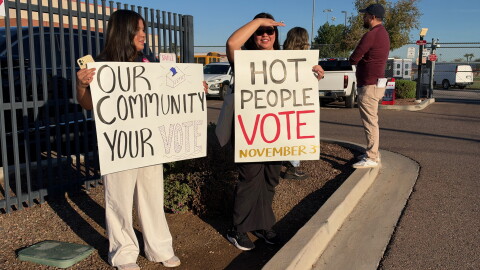 Jared Blair/KJZZMore than 1.5 million Arizonans voted early in these midterm elections, but lots of voters are still expected to turn up to cast their ballots today as well. The Show checked in at one vote center in Phoenix.
-
 Mariana Dale/KJZZEducators have noticed a disconnect between teenagers' fear of climate change and their understanding of its effects.
-
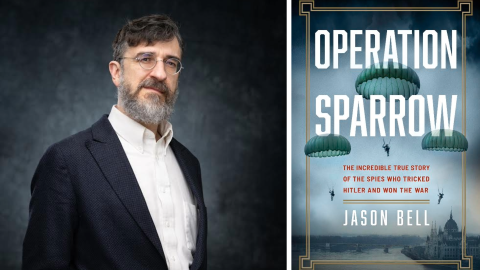 Cameron Fitch Media Services, Jason Bell/Courtesy“Operation Sparrow” tells the heroic story of Florimond Duke, who helped quite literally win World War II by undertaking what many thought would be a suicide mission — and then retired to Phoenix.
-
 Emily Mai/KJZZThe Valley was pounded with rain and flash floods over the weekend. But just how much does the wet weather help our water future?
-
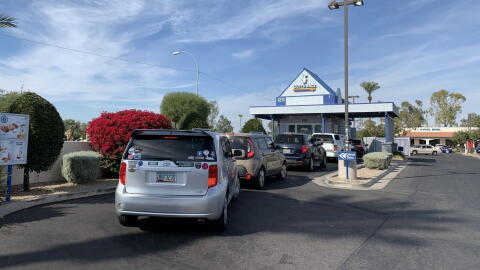 Tim Agne/KJZZCulver City has put a pause on building drive-thru restaurants, a parallel to the conversations Mesa, Arizona, held just a few years ago.
-
 Tim Agne/KJZZThe city has joined a wave of municipalities here and across the country who are questioning the technology — and its constitutionality.


Transcript
ANNOUNCER: KJZZ’s original production The Show is supported by Banner Health, Arizona’s largest nonprofit health care system. Last year, Banner reinvested more than $1.1 billion in community health and charity care. Banner Health, nonprofit for Arizona: bannerhealth.com/nonprofitforaz.
MARK BRODIE: Hi, I’m Mark Brodie, co-host of The Show, an original production from KJZZ. Every weekday, we bring you the latest news and culture from across the state. You can find much more at theshow.kjzz.org. Here’s today’s episode.
LAUREN GILGER: Good morning and welcome to The Show here on KJZZ 91.5. I’m Lauren Gilger.
MARK BRODIE: And I’m Mark Brodie. Coming up, the constitutional argument against advanced license plate reader technology.
LAUREN GILGER: And teenagers say they’re concerned about climate change, but they also say they don’t understand it all that well.
MARK BRODIE: But first, today, of course, is Election Day, and polls have been open for a few hours now. They’ll be open until 7 p.m. this evening around the state.
More than 1.5 million Arizonans voted early in these midterm elections, but lots of voters are still expected to turn up to cast their ballots today as well. The Show’s Nick Sanchez is at a Valley polling place and joins me now. Hey Nick, how are you?
NICK SANCHEZ: I’m good. I’m good. Beautiful day out here, Mark.
MARK BRODIE: Excellent. Where are you at?
NICK SANCHEZ: I am currently at the Osborn School District office in Phoenix, on Osborn and 11th Avenue.
MARK BRODIE: All right. What’s the scene?
NICK SANCHEZ: It is very busy. Throughout the morning, there’ve been long lines of cars going in both directions on Osborn, trying to turn into the one-way-in, one-way-out parking lot here at the district office, which is jam-packed. The parking lot’s packed. They’ve got somebody directing traffic into the parking spots, so like a busy school pickup day.
MARK BRODIE: And you’ve been there for a little while now. Has there been a steady stream of cars and voters coming in throughout the time you’ve been there?
NICK SANCHEZ: Yes, absolutely. It’s been busy throughout the whole time. Been here about an hour and a half or so, and it has not really let up. Lots of voters coming in, and lots of people dropping off those mail-in ballots.
MARK BRODIE: Oh, interesting. ... So you’ve seen people walking in with their ballots, as well as people going in just to vote today?
NICK SANCHEZ: Yes.
MARK BRODIE: OK. And this is not the first place you’ve been today, right? You were somewhere else earlier?
NICK SANCHEZ: That’s right. I was earlier this morning in Tempe at the Pyle Adult Recreation Center.
MARK BRODIE: And what was the scene like there?
NICK SANCHEZ: It was busy, but a little bit more mellow, a little bit steadier. Plenty of parking at the Pyle Center. People coming in, and again, like I said, a little bit more of a mellow scene, but also plenty of, if not more, mail ballots that I noticed being dropped off at that location.
MARK BRODIE: Interesting. All right. You’ve had a chance to talk to some of the folks going in and coming out. What have they told you?
NICK SANCHEZ: Yeah, I would say overall theme that was universal across multiple people who I talked to was cost of living: cost of groceries, gas, rent or housing. I met one teacher who teaches in Ahwatukee who mentioned he and his wife had just had a baby and had just bought a house, so he’s feeling that affordability crunch currently right now in that housing market especially.
MARK BRODIE: Interesting. Any other issues that folks said were on the top of their minds as they were deciding who to vote for?
NICK SANCHEZ: Education is a big one. That teacher who I mentioned was motivated to come out to vote particularly by Props. 320 and 318 — school funding proposition as well as the transgender bathroom proposition. And another teacher who I talked to who is over at Roosevelt Elementary in Mesa was also motivated by Prop. 320, very concerned about it. He told me that “his school will get hit the hardest if passed.”
MARK BRODIE: Interesting. So, Nick, there’s been so much talk about monitors and other folks sort of at the polling places. Have you seen anybody sort of just there watching, checking things out, other than other journalists like yourself?
NICK SANCHEZ: Sure. At the Pyle Rec Center in Tempe, there was a group sporting yellow T-shirts with a table outside and a few signs. Seeming, as they told me, just keeping an eye on things, making sure everything goes smooth. They were just happy, they told me, they were just happy to see people coming out and voting at all.
MARK BRODIE: Interesting. All right. That is The Show’s Nick Sanchez checking out polling places on this Election Day. Nick, thank you.
NICK SANCHEZ: Thanks, Mark.
LAUREN GILGER: Tempe recently became the first city in Arizona to ban automatic license plate reader technology, or ALPRs. It turns out ALPRs like Flock Safety cameras track a lot more than just license plate numbers, and people are starting to take notice. All over the country, cities and municipalities are rethinking how they use this technology in their communities. Our next guest this morning has been tracking it all. Alasdair Whitney is legislative counsel for the Institute for Justice, a nonprofit, nonpartisan, public interest law firm. They have databases tracking ALPR abuse and ALPR contract cancellations, and he told me they’re becoming increasingly common.
ALASDAIR WHITNEY: We’ve seen a lot of different responses. We’ve seen cities come out and say, “We want to ban this,” and it’s not just cities in Arizona. We’ve seen cities across the country say that. For example, in Colorado, like Fort Collins, and in Massachusetts, we’ve seen several cities just simply say, “We don’t want this technology in our communities anymore.” We’ve also seen some places try to strike a little bit more of a common-ground approach, saying that there is a way forward for this technology to be used, but there needs to be guidelines. Of course, what everybody is arguing about right now and many of the policy circles and conversations that are happening around the country is, what do those guidelines look like?
LAUREN GILGER: OK, so we’ll talk about that in a moment. But I want to back up for a minute and just talk about what prompted this from your point of view, at least. It seems like this sort of started to pop up in headlines and then more headlines, and it kind of snowballed from there. How long have these kind of license plate reader ALPR cameras been around?
ALASDAIR WHITNEY: License plate readers have been around for quite some time, but the most recent iteration of these cameras and these systems, and the ones that seem to be driving this national conversation, are relatively new. They’ve popped up in the last five, six, seven years. I think one of the reason why we’ve seen so much furor and conversation about the deployment of this technology is that people all of a sudden one day were driving out of their neighborhood, or driving into their church or mosque parking lot or synagogue, or into their Home Depot parking lot in their community and seeing these cameras, and wondering, “That’s odd. What is this?”
One of the reasons that people are upset about this is that they’ve just popped up seemingly overnight or in a very short period of time. A lot of folks feel like they weren’t asked or didn’t give their approval before these things were deployed in the manner in which they have been deployed.
LAUREN GILGER: Right. They’re noticing them everywhere and sort of starting to ask questions. It sounds like folks are starting to realize, too, that these are not just cameras. They do a whole lot more than a camera, right?
ALASDAIR WHITNEY: Lauren, calling these systems cameras is like calling an iPhone a telephone, right? It just does so much more than that. These are surveillance platforms, really. What they allow the user to do is not just tell information about a license plate, but also information about the vehicle — what we call vehicle characteristics, like bumps, dents, bumper stickers, roof racks, racing decals, whether or not a vehicle has any of those features — and also, in some instances, the identity even of a person driving the vehicle. This is another reason why folks are concerned, because I think these were sold or they are sold as license plate readers, but they do much more than read license plates.
LAUREN GILGER: Right. Talk about how law enforcement uses these. There are multiple examples of abuse by law enforcement in using these systems now that are coming to light as well.
ALASDAIR WHITNEY: The goal here of this technology, and the way that it is integrated with camera systems and other platforms across the nation and across jurisdictions, is so that law enforcement can, with the click of a button or a couple of keystrokes, find out where somebody is. Obviously, when law enforcement is using this technology in emergency situations, say to find a child who’s been kidnapped, I don’t think a lot of folks are out there saying that that’s a bad use for the technology. Certainly, if somebody has stolen a car, you do not have a privacy right or an interest, or what courts have said is a reasonable expectation of privacy in a stolen vehicle, so law enforcement can track that without issue, right, regardless of whether there is a constitutional framework governing their use.
Where folks again are getting really upset and are having understandable frustration and concern around this technology is that we’ve also seen across the country it being abused over and over and over again, with law enforcement tracking former partners, spouses, neighbors, colleagues. There don’t seem to be many restrictions. These stories keep coming up again and again and again. It seems like every single day.
LAUREN GILGER: Right. There’s no federal law. This is all at the discretion of the departments.
ALASDAIR WHITNEY: In many places, yes. There are some state laws that do restrict how this information and these systems are being used. For example, most recently, Washington state enacted some legislation that limits the data retention period for the data that is captured by automatic license plate readers and limits how that data is shared outside of the state. Oklahoma has a really interesting and somewhat older law that restricts ALPR data usage just to allow law enforcement to confirm a vehicle is registered and insured. New Hampshire has a really interesting model: They only allow ALPRs to keep data for three minutes, and then after three minutes, if the license plate or the vehicle is not attached or tagged to a hot list alert, then that data is deleted. Vermont most recently just effectively banned ALPRs from operating in the state beginning next year. And as you noted, Lauren, there is no federal law governing any of this.
LAUREN GILGER: Right. OK, so some states starting to take action on this. I wonder if you think there is a way to sort of balance the two kinds of needs here, right? Law enforcement will tell you this technology can be really useful in, like you said, tracking down suspects, finding stolen vehicles, missing persons, right? Some even argue that they can reduce racial profiling and human biases by using this data, because it’s obviously not going to factor that in. But I wonder, your organization basically is arguing that this isn’t being used in a constitutional way. Do you think that’s possible, though? Could those needs be balanced?
ALASDAIR WHITNEY: I think you can use this technology in a constitutional way, but really few states or jurisdictions have adopted or enacted the kind of constitutional framework that is required for using this technology.
The way that this technology can be used in our view in a constitutional way and going forward is by making sure that anytime a government official wants to query or search a database containing your information, my information, where we go, how we live our lives, things like that, that they get a warrant to do that, unless there’s one of those emergency situations that I was talking about earlier, right? The Constitution, the Fourth Amendment, has never required a warrant to go after and find somebody associated with a kidnapping, kidnapping a child. But absent those kinds of emergency situations, law enforcement should get a warrant before they go back and look through your driving history or your location history and recreate that location history over months, weeks, or days, right?
One state, Minnesota, has a warrant requirement. It’s written in a little bit of an unusual way, but it’s something that we think is a good starting point and is the bare minimum for making this technology constitutional and usable in 2026 and beyond.
LAUREN GILGER: OK, lots to watch for. Alasdair Whitney, legislative counsel for the Institute for Justice, joining us to talk about ALPRs here and across the country. Thank you very much for coming on, Alasdair. Appreciate it.
ALASDAIR WHITNEY: Thank you so much, Lauren.
MARK BRODIE: Good morning. It’s The Show here on KJZZ 91.5. I’m Mark Brodie.
LAUREN GILGER: And I’m Lauren Gilger. Coming up, the true story of three American commandos that reads like a spy thriller.
MARK BRODIE: But first, a small city just west of L.A. has decided it has enough drive-thrus and has implemented a temporary moratorium on new ones, this in the part of the country that’s had them since the late 1940s. But Culver City isn’t the only place debating the future of drive-thrus. A few years ago, Mesa was having similar conversations. And while that city did not end up banning new drive-thrus, it did make some changes to the process of approving them. Mary Kopaskie-Brown is Mesa’s planning director. She joins me to talk more about this. Mary, what led to Mesa rethinking how it handled drive-thru businesses?
MARY KOPASKIE-BROWN: I think in the city of Mesa, we were seeing a proliferation of drive-thrus. We were seeing a lot of drive-thrus coming along on a lot of our arterials, our collector streets, and it was starting to have an impact on the visual character of our city and kind of the aesthetics of it, as well as we were starting to see some impacts with traffic congestion because you could have one or two of these drive-thrus together. City Council directed staff to start an analysis of drive-thrus and how we might be able to address some of the concerns that we were having in the city.
MARK BRODIE: And what did you ultimately end up doing? What are the rules — pardon the pun — of the road now?
MARY KOPASKIE-BROWN: Back in 2024, the Mesa City Council adopted a text amendment to our zoning code. In that zoning code, we looked at primarily three clear areas. One was the aesthetics of the drive-thrus. The second was the traffic congestion that was potentially being caused both on-site and off-site as cars were queuing to get through the drive-thru lanes. And then a third area that staff identified as a concern after talking to some of our stakeholders is the potential noise impacts. As you have a call box and people are ordering their meals, if you’re in your backyard having a barbecue, you’re hearing that sound all day. We wanted to make sure that we were addressing that quality-of-life aspect of the drive-thrus also.
MARK BRODIE: And so now, if a business wants to open a drive-thru in Mesa, am I right there are some extra steps they have to go through, some studies they have to do before they’re allowed to do that?
MARY KOPASKIE-BROWN: They have to follow our development standards that are in the Mesa zoning ordinance, and those standards really focus on those three areas. They have to do a noise study, and they have to show that they’re not going to negatively impact, say, a surrounding residential development or land use. They have to do traffic and queuing studies both for the drive-thrus that would be on-site as well as on the road, so we don’t see that traffic spilling into the roads. They have to look at anything within, say, 1,200 feet of that property, so 600 feet either side of that property, to make sure that we weren’t going to see those queuing issues.
And then they also have to follow the development standards related to the aesthetics. They have to put in screen walls or an architecturally integrated canopy that kind of hides that drive-thru so that if you’re on an arterial, you’re not seeing just a line of cars. It actually is being screened so that it just helps to improve the aesthetics of our city. It really is about what our city looks like and the impression that we want to give to both our residents and our visitors.
MARK BRODIE: What has the impact of this been, like in the last couple of years since these rules have gone into effect? What have you seen in terms of the number of drive-thrus opening up?
MARY KOPASKIE-BROWN: I don’t think we’ve seen either a huge increase or decrease in the number of drive-thrus. I think what the text amendments in the zoning code did was it allowed staff to be able to point to an authority that said, “These are the things you must do in order to do a drive-thru in the city,” where before it was more of a negotiation and it was maybe a little bit more challenging for staff. I think it kind of gave them that backing that here now are the rules. Now if someone comes through and wants to do a drive-thru, they know exactly what the rules are. They know what they have to do. They know what they have to follow. I think it makes it clearer for an applicant, because they’re not spending their time negotiating this process. I don’t think it’s really had an impact on the number of applications that we’ve seen. It’s just made them maybe streamlined a bit.
MARK BRODIE: Do you see different types of drive-thru businesses differently? I know the rules are what they are, but in terms of the effects on the city, does it matter if it’s, for example, a pharmacy or a fast-food restaurant or a coffee place? Does that matter at all?
MARY KOPASKIE-BROWN: It does, actually. We’ve actually categorized the drive-thrus into three categories. There’s a drive-thru like a fast-food restaurant; there’s a pickup window where you can order ahead of time and then you can go and sit in the window and pick it up — so that could be at, say, a pharmacy, it could even be at a food establishment where you’ve ordered your food ahead of time on an app or whatever and then you go and you pick it up; and then the third is the ATM drive-thru lanes, because they all kind of have different times that people sit in a line to get served, and that tends to impact kind of the queuing and the noise and all of those things. If you have a pickup window, you don’t have a call box. If you have an ATM, you have a call box, but it’s in a different location than you would if you had a drive-thru. We did look and separate the three of them out so that they are treated just a little bit differently.
MARK BRODIE: I’m curious what you make of the story coming out of Culver City, California. Obviously, a different state, very different city to Mesa, but that city council there is putting a moratorium on new drive-thrus after residents had a number of the issues that you brought up that residents in Mesa had, but also some others. I’m curious what you make of the approach that that city is taking in terms of at least a temporary moratorium, as opposed to different rules, which is the approach Mesa took.
MARY KOPASKIE-BROWN: I think that they’re two very different legislative environments between California and Arizona. We have some state legislation related to private property rights, and so we have to be very cognizant about not impeding those property rights where we’re limiting the property owner’s ability to use their land as it’s been zoned, as they purchased it.
I also think that there are places in Mesa where it is appropriate to have drive-thrus and there are places where it may not be as appropriate. In our downtown area, you really want pedestrians to be prioritized. You want them to be kind of the focus of what’s going on. The drive-thrus downtown, suddenly what you’re doing is you’re shifting that and you’re making the downtown area more of an auto-focused area. They may not be appropriate in downtown, but they may be appropriate, say, in some areas out closer to the east side of the city. As long as we’re following the rules for the drive-thrus, there may be more of those right off of the freeway type of areas where it is more appropriate for a drive-thru. But in our more urban settings, we really don’t want to see those drive-thrus because they kind of impede on that pedestrian experience.
Culver City is also very different. It’s a very small city. It’s also a very historic city. I think that what they’re trying to do is to kind of protect that character. Drive-thrus, I guess in the opinion of the city council, kind of conflict with kind of who they are as a city. In Mesa, there is a place for drive-thrus, but maybe not every place.
MARK BRODIE: It sounds like, absent the state law, if that were not necessarily a factor here, it sounds like you maybe wouldn’t even want a blanket moratorium in Mesa on drive-thrus, because as you say, there are certainly places where you maybe don’t want them, but there are other places in the city where they’re perfectly fine.
MARY KOPASKIE-BROWN: When we went through this process with our stakeholders, with the Planning and Zoning Board recommendation, with City Council, I think that that is very much what we heard: There are places where drive-thrus seem to be appropriate; there are places where they’re not appropriate. When we did our text amendments and we identified where they would be located, those were some of the things that we had looked at, making sure that we weren’t doing anything against that private property rights legislation that’s out there.
MARK BRODIE: All right. That is Mary Kopaskie-Brown, planning director with the city of Mesa. Mary, thanks so much. I appreciate it.
MARY KOPASKIE-BROWN: Thank you, Mark.
LAUREN GILGER: Arizona was pounded with rainfall over Halloween weekend as the super El Niño continues to deliver. Across the state, we’ve seen reports of flooding, evacuations, and storm damage rack up. But here in the desert Southwest, we are in a megadrought, and headlines across the region have been dominated in recent months by dire warnings about our increasingly uncertain water future. So a whole lot of water on that level, at least, is a good thing, right? Jacob Richardson is SRP’s senior hydrologist, and he’s on the line now to tell us more. Good morning, Jacob.
JACOB RICHARDSON: Hi. Good morning.
LAUREN GILGER: Thank you for coming on. Over the weekend, I had more than one person ask me about this, basically the question being: All of this water falling from the sky right now has got to help our water situation, right? Tell us, does it?
JACOB RICHARDSON: Yeah, absolutely it does. These are wonderful precipitation events for the Valley’s water supply. These are the ones that we really rely upon to fill the reservoirs. Because we are a desert, we do experience these prolonged periods of drought. Periods like this past weekend, and really just over the last few months that have continued to bring rain kind of on a steady rhythm, have been really beneficial for us in terms of water supply.
LAUREN GILGER: OK, so talk about SRP’s water situation in particular, because you have reservoirs, as you’re talking about up north. These are not the big Colorado River reservoirs we’ve heard so much about of late in Lake Powell and Lake Mead, but we’ll talk more about that another time. Tell us about SRP’s system and where this water can be stored.
JACOB RICHARDSON: SRP manages reservoirs on two different river systems: the Verde River and the Salt River. Currently, the water that you see moving through the Valley, that’s coming through mainly from the Verde River system. The two reservoirs that we have on the Verde are Horseshoe and Bartlett. The percentage of storage that they provide for us in terms of storing water is much smaller than anything that we have on the Salt side, like Roosevelt Lake. When we have big events like we’ve had, those reservoirs are going to fill up faster. Just because of how much rain we got, the Verde system is now full and we’re having to release that water.
The Salt has seen just as much water as the Verde; it’s just that we have so much more storage space on the Salt side of things that we haven’t had to release water out of Roosevelt and the other lakes there. These things are something that, as the SRP system has been developed over 120 years, we’ve learned how to manage these types of events. Everything that’s been happening really has been just kind of according to the way that we operate during big flood events like we’ve had.
LAUREN GILGER: Right. I noticed this: I drove this morning over the Salt River, which is almost always dry down there, and it was like a real river. Tell us about how much water we’re talking about when you make these releases.
JACOB RICHARDSON: It’s been great to see the water in the river. Obviously, there’s some negative impacts that come along with that, but in general, these are really positive things for us. We’ve been releasing, like I mentioned, out of the Verde system from Bartlett Dam. Yesterday, we were releasing approximately 60,000 cubic feet per second. Today, that has come down. Now we’re down to about 33,000 cubic feet per second. That process is just us responding to how much water is coming into the system upstream, and we have to pass that water through the reservoirs. Those flow rates will continue to decrease as the waters recede in the rivers upstream, but it’s going to continue to flow. The Salt River will have water in it for several days, if not weeks, going forward.
LAUREN GILGER: How uncommon is this? I can remember one other time, I think, I remember seeing water flowing through the Salt here in Phoenix in recent years. Is this pretty uncommon?
JACOB RICHARDSON: I would say water in the river is probably not that uncommon. I think the last time we had releases into the river was in 2023. But the magnitude of releases that we’ve seen and had to make this year are relatively uncommon. The last time that I understand that we’ve released that much water from Bartlett was probably 1993. People who have been here for a while remember ’93 and how impactful that was. Over since then, a lot of the infrastructure that’s been built — the bridges, we have Tempe Town Lake, and all those things — have been built to manage these types of flows. We’ve seen fairly few negative impacts to infrastructure and things like that, so that’s a good thing.
LAUREN GILGER: Where does the water go? You can only store so much of it, as you’re saying, in the reservoirs upstream up north there. When you release it down, does it go into groundwater supply? Is it used?
JACOB RICHARDSON: That’s a great question, and one that’s kind of difficult to answer in terms of what happens to the groundwater. We do have some estimates based on flow rate and duration of the flooding, how much actually is going to soak in through the riverbed and into the aquifers below. But the majority of that water is going to make its way across the surface into the river and on downstream. The Salt River combines with the Gila River out on the west side of the Valley, so all this water that’s making it through that doesn’t soak in or doesn’t end up ponding and sticking around is going to make its way downstream into the Gila River.
LAUREN GILGER: And once it goes there, it’s not something we can benefit from here in the Valley. Does it go to agriculture after that, or just keep going?
JACOB RICHARDSON: In terms of water rights, there are folks downstream that have the ability to access that water. But once it’s out of the Salt River system and it crosses over Granite Reef, we don’t have any ability to pull that water back out of the river. A few folks do downstream, but once it’s released from us, it’s not something that’s necessarily used for Valley water supply.
LAUREN GILGER: Last question for you in the last minute here, Jacob. Tell us, what does this big picture do for our big-picture water supply going forward in the future? As we’ve said, there’s so much concern right now about the future of water in Arizona and where it’s going to come from, and cuts to the Colorado River, which so much of it comes from. This is a different water supply than that, but does this make a long-term dent?
JACOB RICHARDSON: Certainly, what I would say long term, this falls in line with what we’ve seen for decades here in Arizona. We have these periods that are dry, and then they’re followed by wetter periods that we refer to those as pluvials. The last pluvial, the last really wet period, was in the ’70s and ’80s, ended around ’97. And then we’ve been in this drought, as you mentioned, here in Arizona and more extended throughout the West.
These types of events like we’ve had this last weekend, we anticipate that they’ll continue, but they’re going to be interrupted by long periods of dry. That’s just kind of how the nature of Arizona works; we’re a desert area. But we rely on these types of events to fill the reservoirs to continue to provide that reliable water supply.
I would expect that to continue. As we speak and meet with climate forecasts and scientists, that’s what they continue to tell us: The drier periods are going to be drier, the wet periods may be wetter and more extreme, and so we need to be prepared to handle that. I think that’s been the case for us here in Arizona for a long time. Looking out further to the west as a whole, maybe there’s some more uncertainty about that, but in terms of SRP, the way we manage water supply, this event falls right in line with what we’ve been planning for over the last few decades going forward.
LAUREN GILGER: Jacob Richardson, SRP’s senior hydrologist, joining us. Thank you so much. Appreciate it.
JACOB RICHARDSON: Hey, thank you.
LAUREN GILGER: Good morning. It is The Show on KJZZ 91.5. I’m Lauren Gilger.
MARK BRODIE: And I’m Mark Brodie. Lots of teenagers say they’re worried about climate change, but most of them also say they don’t know a lot about the causes of climate change or what to do about it. Those are among the findings of a new survey from the Aspen Institute on youth climate literacy.
Laura Schifter is a senior fellow at the Aspen Institute and leads the This Is Planet Ed initiative. I spoke with her earlier, and we started with what surprised her about what she found.
LAURA SCHIFTER: We surveyed teenagers to better understand their knowledge about climate change. I think what surprised me — or I should say what concerned me — is that teenagers don’t feel very confident in their understanding about climate change. And that was then reflected in the fact that teenagers have a lot of misunderstandings about the causes, consequences, and solutions to climate change.
MARK BRODIE: So it’s not just that teens think they don’t necessarily know the causes and the solutions; as it turns out, they really don’t in large numbers.
LAURA SCHIFTER: They don’t in large numbers. Why that’s concerning is that this is something that our children are living with today. We’re seeing sports practices closed for heat days. We’re seeing schools experience floods. We’re living with the impacts of climate change today, and this is an issue that young people today are going to have to grapple with for decades to come.
Our responsibility as educators is to really empower them to face the world that they are inheriting. Right now, we’re not doing that well enough if they don’t understand climate change.
MARK BRODIE: Do you see it as somewhat of a disconnect that 85% of respondents indicated some amount of worry about climate change, and yet, as we’ve been talking about, lots of them don’t really understand it?
LAURA SCHIFTER: Yeah, I think it’s a disconnect. It’s a reality that I think our kids are living with. They know that something’s not right. They know that these impacts are happening around them, but then they’re not having the opportunity to learn and engage with it in school, and I think that’s where the disconnect is.
When we think about actually how to provide students with these experiences to process their worry and to be empowered to know how to advance solutions, we also need to help equip teachers with the knowledge and understanding of how to do this and how to do it well.
MARK BRODIE: What about climate change do you think should be taught in schools? Because, as I’m sure I don’t have to tell you, it can be somewhat of a controversial topic, elements of it anyway. To really make sure that students understand the facts of what is happening, how do you think schools should maybe go about teaching that?
LAURA SCHIFTER: Foundationally, all young people need to understand these four core principles that we’ve worked to develop on climate change. I’ve worked to develop them with Katharine Hayhoe, who’s the lead climate scientist with The Nature Conservancy.
At a very base level, it’s: Earth is our home; it’s getting warmer because of us; it’s changing now and that’s impacting us; but together, we can make the changes we need to build a brighter future.
All of those are expanded out, but that foundational knowledge around this is something: Earth is our home, it’s the only planet that we’ve got, and we depend on our climate and environment to thrive.
Right now, we are impacting that through how we are making electricity, through our transportation, through the way we live in our buildings and homes, through our manufacturing, how we make things that we then buy or live with, and through our food. It is really critical to understand that we’re having this impact on our environment, but similarly that there are solutions that we can advance today.
That foundational knowledge is sort of that first point. But ultimately, there are things that young people are going to have to understand in whatever profession that they do around how climate change is going to be impacting those things. The way that I like to talk about this often is the way that we think about technology right now. You and I, we know how to use a computer. I know how to use a computer in terms of writing these reports or doing this work, but do I know the internal mechanisms of how to work a computer? No. Doctors, similarly, they would need to know how to use a computer and how to work with a computer in their profession, but that might be slightly different. And then there are going to be the people that specialize in deep knowledge about a computer or engineering or anything like that.
It’s similar with climate change, in that you have to have the people that have the really deep scientific understanding of it, but then you need other people to understand how it’s going to impact the work and profession that they do. We need to provide those learning opportunities in schools as well.
MARK BRODIE: One of the other things that this study found was that only one in three teens see climate change as having a major impact on the area where they’re living. I wonder about some of the things that you talked about, how this is impacting all of our lives, but teens included. Do they just not recognize that, for example, if a soccer practice or football practice has to be canceled, that that’s why? That again seems like kind of a disconnect.
LAURA SCHIFTER: That number mirrors pretty well the way that adults think about that issue, too. I think a lot of it is around the way that we portray or have portrayed climate change in the past as being an issue that is for the distant future, or something that’s impacting the habitats of polar bears. We have not yet effectively made the connection between the heat waves that we are experiencing in oppressive ways to the fact that that’s climate change, too. And I think there are a lot of people working to make that connection; it just hasn’t resonated deeply for people that these things are climate change in action.
It’s not even just that it’s not impacting the areas where they are now. One of the things that’s interesting that the survey found, too, is that teens generally understand that this is impacting extreme weather. They understand that polar bears are losing their habitats, but they don’t understand the connections as much that this is going to make allergies worse. This is going to make or is making allergies worse; it’s making asthma worse; it’s going to impact hunger and malnutrition.
Those are the things that we need to help people better understand more broadly. We need to do a better job communicating the ways in which climate change is impacting people all across this country today.
MARK BRODIE: I want to go back to something you said about some of the basics of what students and teenagers need to be learning about, and the last one in terms of that basically the ship hasn’t sailed on this, that there are things that we can be doing to try to make things better. I wonder how important it is for especially for kids to know that, that this isn’t sort of a baked-in result, that our actions can have a difference here.
LAURA SCHIFTER: That is hugely important for young people to be able to understand. There are the things that we need to do to stop burning fossil fuels and stop relying on fossil fuels so much to prevent those future impacts from getting worse, but there are also things that we need to do to help keep our community safe and live well as these things are impacting us today.
MARK BRODIE: All right. That is Laura Schifter, senior fellow with the Aspen Institute, where she leads the This Is Planet Ed initiative. Laura, thanks so much. I appreciate it.
LAURA SCHIFTER: Thank you so much, Mark.
MARK BRODIE: Good morning. It’s The Show here on KJZZ 91.5. I’m Mark Brodie.
LAUREN GILGER: And I’m Lauren Gilger. The Valley has over the years been a place countless people who have lived interesting lives have come to retire. The new book “Operation Sparrow” tells the heroic story of one of them and how he helped quite literally win World War II by undertaking what many thought would be a suicide mission.
In 1944, Florimond Duke and a team of spies parachuted into enemy territory with the goal of being captured by the Nazis so they could sell a lie about where D-Day would take place. While everything didn’t go to plan, the lie worked, and Hitler’s troops were not amassed at Normandy when D-Day struck.
Duke, a former New York Giants football player and advertising executive and eventual Phoenix retiree, was the perfect man for the job. Author Jason Bell told me why.
JASON BELL: Florimond Duke was the functional equivalent of the American aristocracy. He was wealthy, good-looking guy, tall, well-built. He played professional football for the New York Giants. He joined World War I as the very first armed unit that went to the front, and then he became an officer with the French military before he was transferred to the American military flying fighter planes.
The 1920s, he was the advertising director for the Time publishing empire. This included Fortune, Newsweek, Life magazines. Became very wealthy. But when World War II broke out — and this was before America became involved — Florimond Duke volunteered to serve once again because he saw that the war was coming.
And then he was quickly recruited into the OSS, which was America’s wartime intelligence agency. It was kind of the CIA and the Army Special Forces rolled into one. He quickly was promoted within that organization to become the chief of OSS Southeastern Intelligence. So he was arranging for commandos to get into these countries, airdrops, getting intelligence out, sabotage.
LAUREN GILGER: Quite a resume there, and also like in the private sector. It sounds like his personality was fit for this. He had the sort of aristocracy, kind of ranking stuff that he could function in this world and be believable in this lie, but also that he was sort of prepped for it, right?
JASON BELL: Exactly. Allen Dulles was the architect of the Sparrow mission. He went on to found the CIA and became its first director and long-serving director. But he wrote to OSS and he said, “We need the right person for this job, and it’s somebody who is going to look convincing and be convincing, somebody who can go in behind enemy lines in this incredibly dangerous situation and to be building networks with the very top people, so the prime ministers, et cetera.”
Really what that gave Florimond Duke, when this mission went sideways — the Germans invaded Hungary to stop the Sparrow team, these three guys, from succeeding — Florimond Duke was then able to negotiate with these Germans. He was able to figure out which ones of them were anti-Hitler, which ones of them were just trying to save their own skin, which ones of them were pro-Nazi. He was able to use that leverage that he had from all these years in the intelligence business to be able to manipulate the bad guys and to work with the good Germans that he found.
LAUREN GILGER: Which was quite a feat, right? Tell us about the mission itself and how this began. Purposely, as you said, went behind enemy lines and purposely got captured before things kind of went sideways, right?
JASON BELL: The Sparrows went in with these orders to be airdropped into Hungary, surrender as quickly as possible to the Hungarians, who were allied with the Germans, then they would be handed over to the Germans to be interrogated. Then these Americans would sell the story that the invasion was going to happen through Southeastern Europe.
And then the plan was that the Hungarians were going to get possession of the Sparrows back again, and then announce their divorce from Germany. Florimond Duke was going to be in place to help wage this war with Hungary fighting the Germans, and Florimond Duke was going to be coordinating allied airdrops, commando drops, etc., to help the Hungarians fight the Germans.
LAUREN GILGER: Right, and that’s not exactly how things played out.
JASON BELL: Exactly.
LAUREN GILGER: I want to ask about the inherent risk in this and then the sort of obvious risk in it. They knew that if they did this, they might not be respected as prisoners of war, right? They might be seen as spies. They knew that they would not have a rescue mission come and get them if this was going to go wrong. They knew that none of this was going to probably all work. It sounds like even Duke himself did not really think every piece of this would work. How crazy was this?
JASON BELL: It was off the charts insane in one sense. Just imagine three CIA officers going into Iran today to be captured to mislead their murderous, torturous interrogators about what was happening, and the Nazis were at least that bad or worse. This was absolutely a crazy risk. There were numerous people in the OSS who tried to get it canceled, but President Roosevelt agreed that it was worth the risk.
And the risk was that these three guys could get captured, they could possibly get tortured, they could possibly reveal that D-Day was not happening through Southeastern Europe, but the risk of not doing it was even greater. If the Germans had been well prepared at Normandy, Hitler had the troops easily to defeat the invasion if he had known where it was going to come, but they had to take this crazy chance in order to make sure that D-Day could succeed.
LAUREN GILGER: You think it wouldn’t have happened the same way. History would have played out differently if this had not been as successful as it was?
JASON BELL: Absolutely. There were millions of troops that Hitler had in southeastern Europe, and he was convinced that a major invasion was going to happen there. Not only did this work on June 6, 1944, when D-Day struck, but to the amazement of Allied planners, it kept working for months afterwards. Hitler’s generals were pleading for him to redistribute these troops from the southeast to France, and Hitler, who thought he knew better, was certain that Normandy was the trick and that the real invasion was going to be elsewhere. Even deep into the summer, there were German generals who said, “We could win if we could get these troops where we needed them,” but Hitler just kept on refusing to let those troops be relocated.
LAUREN GILGER: Wow. OK, so a hugely important role there. Let’s talk then about the legacy of this man, of Florimond Duke. He retired to Arizona in the ’60s. He lived a whole life after this, it sounds like. He was writing a book about these events, about his career, when he died in the late ’60s. Is that right?
JASON BELL: He died shortly before it was published. His wife, Ellen, who had been a powerful editor in her own right, oversaw the final revisions. The book is called “Name, Rank, and Serial Number.” It’s a fantastic book, a firsthand account. He was not able to tell everything because Operation Bodyguard itself remained classified.
This was kind of the one quirk of the book. The other quirk of the book was he demanded of his co-editor, Charles Swofford, who was an Arizonan, that Florimond Duke not look heroic. He kept on making Charles take out all these passages where Florimond Duke was going to look like a tough guy.
Absolutely, he was a tremendously tough guy. At the age of 48, he was intimidating the Gestapo. Part of the reason that they avoided the worst kind of torture and execution was because Florimond Duke was a physically imposing guy who had this voice of authority, and was really able to scare the Gestapo that if they hurt and killed this team, that it would be on their own heads after the war.
LAUREN GILGER: What does this mean to you, Jason, to be able to bring this story and all of these details, all declassified now, to light? To give this guy kind of his due, which he didn’t even give himself in his own book?
JASON BELL: It gives me tremendous confidence in America. I’m an American citizen in addition to being a Canadian citizen. In this era of partisan discord and rancor and things like this, I think it’s just good to think that here’s a group of people, three people from across the political spectrum, Democrats and Republicans who are part of Sparrow, who were able to cooperate in the boldest, most courageous way possible to help win the war.
LAUREN GILGER: We’ll leave it there. Jason Bell, philosophy professor at the University of New Brunswick in Canada. The book is “Operation Sparrow.” Jason, thank you so much for coming on The Show. I appreciate you telling us this story.
JASON BELL: Thanks, Lauren. It was a pleasure.
MARK BRODIE: Thanks for listening to The Show’s podcast. The Show is produced by Sativa Peterson, Nick Sanchez, Amber Victoria Singer, and Ayana Hamilton. The Show was created by Jon Hoban. Our executive producer is Amy Silverman. You can find more of The Show and sign up for our newsletter at theshow.kjzz.org. You can also find us on Instagram @kjzztheshow.