


Lani Cupchoy wears many hats. She’s a public historian, an artist and a filmmaker as well as an assistant professor at Cal State University in Los Angeles.
Most recently, she directed a documentary about the displacement and repatriation of Pacific Islanders’ remains, called "Oceanbone." And, next up on her list of forthcoming projects is her latest book, "Curandereando."
It explores the history, present and future of healing practices in Indigenous Chicane culture. Cupchoy herself comes from a long and very mixed cultural heritage that truly combines east and west.
The Show spoke with Cupchoy about that, the new book and how these healing practices surface in her own life.
Full conversation
LANI CUPCHOY: “Curandereando,” which is the book title, it’s a verb. [LAUGHTER] Let’s start with that. It is a verb.
LAUREN GILGER: OK.
LANI CUPCHOY: I specifically chose “Curandereando” because it embodies this notion of healing. It’s not something we study, it’s something we practice. And so the title itself reflects healing as an ongoing way of living, remembering, caring for each other, for community, and pretty much remaining in relationship.
For me, we call it Madre Tierra, which is the Earth. So it’s how we maintain these relationships with the Earth, and we’re talking about sustainability. So “Curandereando” is like the act of it, right? The practice of it, of curanderismo, which is also, you know, forms of different what we would say otros saberes, other forms of knowing, Indigenous knowledge, Indigenous practice.
LAUREN GILGER: OK, OK. So it sounds like they are broad, but also probably impact and infiltrate all aspects of your life if you’re really practicing them, which you do, right?
LANI CUPCHOY: Yes, I’m definitely, I would say, a practitioner. And I think, you know, on a very basic level, I think each and every one of us practice forms of curanderismo, especially when we think about our bodies, our relationships to ourselves, you know, what we eat, you know, working out, you know, what we see, you know, what we observe, our perceptions, what we hear, what we listen to, music, right? All of these forms, they affect our body, right?
And I say like our physical body, but also like our emotional body as well, our mental body as well. And so this work is really looking at all the different ways historically, you know, that we maintain relation, I say we as in the royal we of people, humanity. The way in which humanity, humans have actually maintained relationships with themselves.
LAUREN GILGER: So what does this look like, this practice in your life? Like, like how do you practice curanderismo in your life?
LANI CUPCHOY: Yeah, I think for me personally, I mean, I grew up with it, right? I say, you know, my, you know, I grew up in Southern California. I came from a multicultural family. Healing was simply a part of everyday life. And I say this, you know, I like to make jokes about it, but really it’s like my mother, my abuelas, you know, the way in which they use herbs, traditional remedies, you know, knowledge, right?
Of how to use these herbs, you know, when you’re sick, for example, you know, if you have a sore throat, right? You’re going to grab some lemon and then use the skin, right, from the lemon and some garlic and, you know, some honey and maybe, you know, make something and you drink it and then it like helps to soothe it, right? So there’s, there’s all this kind of knowledge, you know, that I think growing up, I just every it’s just part of our everyday life, if that makes sense.
LAUREN GILGER: Yeah, that’s really interesting. So you call yourself a curandera of history. What does that mean?
LANI CUPCHOY: Yes, I think for me, you know, I grew up, I’m not going to say I coined it because it actually came from, from ... right? She talks about how, you know, we, many of us as a as practitioners of storytelling, of histories, you know, the way in which we gather this knowledge, whether it’s from archives or oral history, testimonios, right? The way in which that we connect all of these histories together, right? That’s part of it.
But the other part is the healing aspect, that sometimes, many times as historians, we are dealing with very traumatic events: war, violence, on different communities, you know, thinking like even in the, for example, like the civil rights in the U.S., right? There was a lot of violence that was happening at the time.
And so our communities are trying to, you know, even this is what, 2026? Our communities are trying to heal, you know, from a lot of the trauma that has been inflicted from, you know, what we would say like colonial violence, right? Coming back, you know, hundreds of years. And so part of our work, I say I’m a curandera of history because it’s like bringing all of these different knowledges to hopefully help connect with readers, and maybe they might find forms of understanding, not just trauma, but processing it and healing as well.
LAUREN GILGER: Yeah. So tell us about your own heritage, because it’s very diverse, like East and West, right?
LANI CUPCHOY: Definitely East and West. So let’s see. Dad was a Kānaka Maoli, so that’s Native Hawaiian, and also Chinese. And then, and then Mom, Mom is actually a Mexicana, but part of the Mexicana is we are, we say Afro-Indigenous because we have African roots and also Indigenous roots, right?
So, you know, I had a great-great-great-great-grandmother who was Purépecha, spoke Tarascan, or do we say Tarascan, right, the, they’re the only group that wasn’t conquered by the by the Mexica or the Aztecs, right? [LAUGHTER] Just a quick historical fact.
And yes, so that’s one of the tribes, but we’re also part Mexica as well, you know, part Aztec, traditionally, that’s the language. And Mexicana, right? So, you know, from Mexico.
So I have all of this. And then Chicana, you know, I was technically, you know, born and raised in the United States. So I have all of these, how do we say, like multicultural identities, right, that are fluid through me.
LAUREN GILGER: Yeah. Well, and that seems to be reflected in in in this practice, right, of curanderismo, because you’ve got tthis impact on Western medicine. You talked about this in a really interesting way and that it’s not like this conflict of traditional healing and how Western medicine approaches healing, which is how I think we would normally frame it.
It’s more like one led to the other?
LANI CUPCHOY: Yes, I think well, it’s it’s a couple things. I think, see, I personally, I don’t see curanderismo and modern medicine as opposites. That’s just me, right? I think there’s a lot of debate and a lot of opinions about it, right?
My own little humble perspective, you know, I think many medicines and healing practices have roots in Indigenous knowledge, traditional healing systems. If you take it back, we’re going world history, I mean, you know, a lot of a lot of modern medicine evolved from Indigenous knowledge. You go back to like, for example, uh, you know, Greeks and Romans who used to use rosemary, for example, as a form of an antiseptic before they did any forms of surgeries, right? Or if you even go back to like ancient China, you know, and the way in which they also used different kinds of herbalism that is used today, right?
And again, this is Indigenous knowledge, right? So, I think what’s happened, though, is over time, these healing systems were refined over generations, right? And it looks like or is couched as this modern medicine in quotes, right? But in reality, yes, you know, modern medicine has, you know, extraordinary advances in treating, you know, disease, saving lives. I get that.
But there’s also this connection that curanderismo adds another dimension, you know, by asking how we restore balance, not only in body, spirit, I use that word a lot, right? Community, our relationship to the Earth. So I believe that these approaches complement one another rather than compete.
LAUREN GILGER: All right. Well, maybe a hopeful note then to end on. Lani Cupchoy, thank you so much for coming on The Show to tell us about this book, and congratulations on the book. Appreciate it very much.
LANI CUPCHOY: Thank you. Thank you so much, Lauren.
-
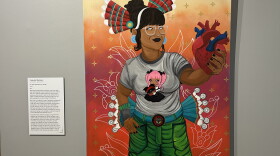 From graduation stoles to a Louis Vuitton drum, “Indigenous Identities! is a new art exhibit opening in Phoenix this week, October 8. The artists present work from a mix of their heritage, personal memory and modern circumstances.
-
 Silas John Edwards was a towering figure among the Apache people in Arizona about a century ago — until he was accused of murdering his wife and put behind bars
-
 Arizona’s history is well documented through its newspapers, and ASU English professor Vanessa Fonseca-Chavez dove deep into the long Spanish-language newspaper history here.
-
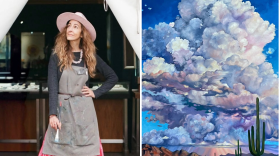 The painter, whose artwork focuses on Arizona landscapes during its stormiest seasons, says her paintings are representative of life.
-
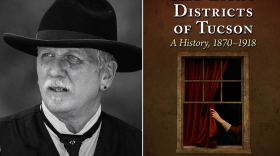 Red light districts operated years after they were outlawed in Tucson. An Arizona historian explored in his recent book what these areas looked like and how women who worked there were treated.


