


There are many symphonies and orchestras throughout metro Phoenix, but Scott Helms leads one that is on something of a mission.
Desert Overture is what Helms calls Phoenix’s Pride band. They’re a wind symphony made up of LGBTQ+ players and allies.
Helms is their founding artistic director. On Sept. 13, they’ll be playing at Tempe Center for the Arts alongside renowned pianist James Adler, who made his orchestral debut at 17 years old playing alongside the Chicago Symphony Orchestra. Adler will be premiering two pieces.
Helms came into KJZZ's studios to talk about the origins of Desert Overture and how he got involved from the very start.
Full conversation
SCOTT HELMS: I moved to the Valley in 2006, and I have a background in band directing. And I knew from the time I moved to a big metropolitan area that I really wanted to start one of these Pride bands. And kind of set my sights on it, and by 2010, we got it going.
LAUREN GILGER: That’s amazing. So it didn’t take you long to to make this dream happen. [LAUGHTER] When you say like "one of those Pride bands," is this a thing? They exist all over the country?
SCOTT HELMS: It is a thing. There’s actually an international organization called the Pride Bands Alliance. And there are, I believe, 32 member bands.
LAUREN GILGER: So you’re part of this kind of broader community, this bigger legacy.
SCOTT HELMS: Yes.
LAUREN GILGER: Yeah. So this one, I understand, and the name in particular, is sort of a tribute to a marching band that used to be in Phoenix back in the ’80s?
SCOTT HELMS: It is, yeah. The Pride bands movement started in the ’80s, and there was one in Phoenix that was called Desert Overture. I believe that they were mostly a marching band, not so much a sit-down concert band like we are.
And they were going strong until the AIDS crisis hit, and like so many LGBTQ organizations back then, their membership was just decimated to the point where they couldn’t — they folded.
So when we started this group and learned of that history, we decided, you know, we really need to pay tribute to the people who paved the way for us to be able to do this.
LAUREN GILGER: Wow, okay. That’s amazing. OK, so I want to back up and talk about you a little bit and how you got here. You said you moved here in 2006. And it sounds like you kind of had this goal in mind from the very beginning.
Why? Like, what was it about your history, your story, that made you want to do something like this, not just in terms of doing something musically, but also doing something for the LGBTQ+ community?
SCOTT HELMS: Well, in terms of the musical end of things, I’ve been a quote-unquote "band geek" since I was in fifth grade. And in fact, I grew up in a musical family. So I’ve been around music all my life. And anybody who has been involved in a large music organization like a band or an orchestra or a choir knows that once you get involved and get the bug, it never really goes away.
LAUREN GILGER: What instrument do you play?
SCOTT HELMS: I play trumpet. I also play organ and piano, but in the band, I play trumpet.
LAUREN GILGER: Wonderful, OK.
SCOTT HELMS: As far as the LGBTQ community aspect of it, I went through a really difficult childhood in terms of being closeted. I grew up in a very small town that would have been dangerous for me, I think, in some ways, to have been out. I know the struggles from that of feeling so alone.
And I wanted to kind of take the band idea and marry it, so to speak, with creating a safe space for people who are maybe going through the same thing that I did when I was a kid and having trouble coming out or feeling comfortable being open about who they are.
LAUREN GILGER: Yeah. When did you finally come out?
SCOTT HELMS: I think I was like 22. Coming out is a never-ending process. It’s not something you just do once and you’re done, because you meet new people, you have work situations, you have social situations with people who don’t know, and in each of those situations, you have to make a decision, a conscious decision, of how open you are willing to be and how open you feel like you can be safe.
LAUREN GILGER: What did it feel like when you came out that first time at least?
SCOTT HELMS: It was awful. [LAUGHTER]
LAUREN GILGER: Not the catharsis you wanted?
SCOTT HELMS: Well, it was, and it wasn’t. I was outed, actually. So it was pretty traumatic. I was outed to my family and to all my best friends.
And there was some turmoil there, because, of course, they have a process to go through, as well, in coming to terms with a new big piece of information that they had never had about me before. So they’re getting to know a side of me that they never knew existed.
So that was rough, but we worked through it. And I’m very close with my family, and I’m glad I went through it. Even though it was hard, I’m glad I went through it.
LAUREN GILGER: Yeah. So when you say you have to come out all the time, it’s this unending process, like, is that exhausting?
SCOTT HELMS: Well, it can be, certainly. If you would imagine for a straight person who’s married and has a family at home, going to work and never being able to mention any reference to any of your family — never mention your spouse, never mention your kids, any of that — it is exhausting.
LAUREN GILGER: That sounds exhausting, yeah.
SCOTT HELMS: And I went through that early on when I was a public school teacher. I was a middle school and high school band director in a very, very conservative area. And I constantly had to think ahead of time of what came out of my mouth. So it was exhausting.
LAUREN GILGER: Yeah. OK, so you spent a lot of your life kind of in that closet, right? Like keeping yourself secret and hidden and not being able to be open or, let alone, public about your own identity.
So what does it feel like now when you get to get up in front of a crowd in front of the Desert Overture and direct the symphony that is all about LGBTQ+ pride and community?
SCOTT HELMS: It’s invigorating. I tell people it’s my passion. It really feels liberating, and especially to have such a supportive audience. So it just feels terrific.
LAUREN GILGER: What do you feel like is your mission in trying to not just like bring talented musicians together on the stage, but to do it with this kind of message behind it?
SCOTT HELMS: Well, I see our mission as kind of twofold: to be a supportive community for our musicians —
LAUREN GILGER: Yeah, for the people in it, yeah.
SCOTT HELMS: — for the people in it. But the other is to serve as kind of — I guess you could say cultural ambassadors to the wider community, regardless of orientation. Music is a universal language. It’s something that everybody enjoys. It’s something that everybody can understand on some level and get away from the cultural issues of the day. And to that end, it allows an opportunity for us to build a bridge of acceptance.
Certainly, the acceptance of the LGBTQ community now is way better than it was when I was young. But there are still cultural challenges for sure. The trans community right now is really facing it. So this gives us an opportunity for people to come and just realize that we’re just people like everybody else, and just trying to live this life and make it through the world happily. And if we can communicate nonverbally somehow through music that we have a commonality, we have a lot more in common than we have different.
I like to say maybe if they hear us in the concert hall, they’ll be more likely to hear us at City Hall.
LAUREN GILGER: I guess that makes sense. Scott Helms, founding artistic director of Desert Overture, joining us. Scott, thank you so much for coming in. Appreciate it.
SCOTT HELMS: Thank you for having me.
-
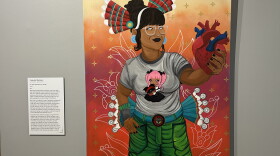 From graduation stoles to a Louis Vuitton drum, “Indigenous Identities! is a new art exhibit opening in Phoenix this week, October 8. The artists present work from a mix of their heritage, personal memory and modern circumstances.
-
 Silas John Edwards was a towering figure among the Apache people in Arizona about a century ago — until he was accused of murdering his wife and put behind bars
-
 Arizona’s history is well documented through its newspapers, and ASU English professor Vanessa Fonseca-Chavez dove deep into the long Spanish-language newspaper history here.
-
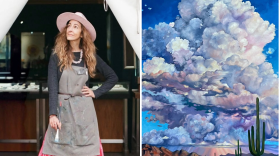 The painter, whose artwork focuses on Arizona landscapes during its stormiest seasons, says her paintings are representative of life.
-
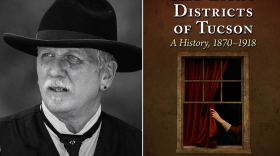 Red light districts operated years after they were outlawed in Tucson. An Arizona historian explored in his recent book what these areas looked like and how women who worked there were treated.


