


MARK BRODIE: Today, of course, is the 25th anniversary of the terror attacks of Sept. 11, 2001. As part of the observance, Phoenix last night hosted a ceremony at Steele Indian School Park. As part of that event, members of the Phoenix Fire Department and Arizona Task Force 1, who deployed to New York City after the attacks, answered questions from members of Outstanding Phoenix Youth Leaders — none of whom were alive 25 years ago. Let’s listen to a few of the questions and answers.
AMANDA HOGLUND: Can you tell us about a moment of hope or human connection that stands out from your experience?
TIM HILL: Yeah, I mean, when you talk ... about hope, to talk follow up on what Brian was talking about, is one of the things that would impress me every day, where there weren’t just hundreds of flyers and posters up of families looking for loved ones. There were — they’d line the streets on the approach to Ground Zero so that every time you went in there, there were hundreds of people holding up their flyers trying to get it as close to you as they could.
And while ... loved ones did not see rescue come to fruition, there certainly was a lot of hope there. And the way the members of FDNY and Task Force 1 and all the task forces as they came in from across the country worked, they were working under the premise that there was hope. That there was somebody that they could find.
And even though those efforts weren’t unsuccessful — not because of their efforts, just because of the damage to the building, which made it unsurvivable — the fact that people will work and work and work on the fuel of hope is something that’s important, I believe, to mankind, that I hope we never lose. And certainly the younger generation, I hope that you can continue to use the fuel of hope, whether it’s a disaster or childcare or fixing the world’s bigger problems. Hope is an enormous fuel. I think I learned that there.
AMANDA HOGLUND: What do you think people who weren’t there might not understand about the way people came together during those first few days and weeks?
BRIAN TOBIN: Well, the old fire chief in Phoenix before Bob was the fire chief used to say to us that, "If you want to know how people will act to one another after a tragedy is see how they’re acting to each other the week before." So that’s deep, right? But I think we had such a swell of patriotism because our country was attacked and everybody was — had a common cause.
And before 9/11 wasn’t perfect, that’s for sure, right? There was a lot of division as well. But it did bring us together for a common cause and to feel and to try and give comfort to those in New York and in Washington and in Pennsylvania, the people that were involved.
So I would say that we came together at a very important time to do some really important work, and then we tried to keep that going patriotically. And there was a — I mean, there was a lot of people that were organized and felt like they needed to serve their country. There were there were people that also came into the law enforcement and fire service as a result of these type of things. So I think what we see that happening after an event like this is important, right?
VALERIA VENZOR: Hi, thank you all for being here. My question is: What is something about your experience that you don’t think people fully understand from the pictures and stories we’ve seen over the years?
BOB KHAN: When I think about that, I think I go right back to when we first got there. And we drove past the Bear and the Bull on Wall Street, and it looked like somebody took a bag of flour and dumped it into the Grand Canyon, which was the World Trade Center. But on the streets, there were shoes everywhere of people that ran out of their shoes, right? And you don’t know if they made it or not.
There were fire engines and fire ladder companies that were mangled like they were kids’ toys that got run over by a car. We were disoriented. And every pair of shoes to us, that was a soul, that was somebody in there, you know?
So when you saw the towers collapse — being in the business, that’s a big fire department. So you knew it was going to be hundreds of firefighters that were in there, and they were doing their jobs.
So it’s just — still is. It’s just a very vivid image of all that together, the humanity of it. And then the power of everybody coming together to help. I mean, there was, like the guy said, the community there rallied around us. We felt like we were unworthy of being there. We couldn’t do enough. They couldn’t do enough for us. It was America’s finest moment in a long time.
MARK BRODIE: Those were some of the voices from a 9/11 observance held last night in Phoenix, featuring members of the Phoenix Fire Department and Arizona Task Force 1 who deployed to New York City after the attacks, in conversation with a group of young leaders, all of whom were born after 9/11.
-
 How do we go about turning casual friends into closer ones? It can be difficult to do, especially as an adult.
-
 What is the purpose of these so-called military-style workouts in collegiate or professional sports? Why are they prominent today?
-
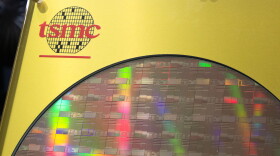 TSMC has invested a record-setting $265 billion in Arizona as it continues to expand its massive semiconductor plant here. But now, Gov. Katie Hobbs is getting warnings from China about developing political ties with Taiwan.
-
 Jackie Alpers is a Tucson-based cookbook author and food photographer and Sonoran cuisine expert, and she just came out with a free digital salsa cookbook outlining her essential salsa recipes, ingredients and more.
-
 Open AI, the company behind ChatGPT, said it canceled the planned release of its new AI model over safety concerns. Artificial intelligence and its uses have grown exponentially recently, and that includes in scams.


