


Over Labor Day Weekend, President Donald Trump went to social media to float a new idea: Renaming New Mexico to New America.
It’s not the first time the president has suggested something like this and in some cases, he’s carried it through. He’s taken aim at the Gulf of Mexico, which currently says Gulf of America on online maps across the country. More recently, as his trade war with Canada has heated up, Trump officially renamed Lake Ontario to Lake America.
However, the suggestion of renaming of New Mexico hits closer to home for many. Elvia Díaz, former editorial page editor of the Arizona Republic, wrote about her views on Trump's comment on her Substack, Notas con Elvia Díaz, and joined KJZZ to share more.
Full conversation
LAUREN GILGER: Good morning, Elvia.
ELVIA DÍAZ: Good morning. Thank you for not forgetting about this.
LAUREN GILGER: Right. I mean, this was one of those stories that pops up, grabs a lot of headlines, and then people kind of moved on. But you lived in New Mexico for a good part of your career, you worked at the Albuquerque Journal, and you write that New Mexicans are kind of uniquely proud of their land, the kind of distinct cultures and heritage there. Tell us about that.
ELVIA DÍAZ: Yeah, you know, the first thing that caught my attention when I saw the president float that idea is the fact that he described this new name, New America, as more prestigious and more beautiful. And I immediately recalled my days in New Mexico. I lived in northern New Mexico, in Santa Fe specifically, and the melting pots of cultures there is so evident.
So to me, I imagine the president thinking that this diversity of people, of culture, of food, of art is not beautiful, and therefore we need to change it to New America. And in that case, he’s trying to define what America means for him anyway, and it’s certainly not this melting pot that I saw and lived in New Mexico.
LAUREN GILGER: Right, and the history there is so interesting. There’s Mexican, Spanish, Native American traditions all in one place that have a very long history in this part of the country in particular. And it sounds like, you know, for lots of people in New Mexico, this was different than some of the president’s other attempts at changing names like this. You view it essentially as an attempt to quash diversity.
ELVIA DÍAZ: Yeah, no, exactly. The history of New Mexico is so unique. I’m imagining that the president associates New Mexico with Mexico, and there’s some truth to that. But the state —
LAUREN GILGER: Seems like we are losing the connection with Elvia Díaz, who’s joining us to talk about this story. We will return to that segment when we have a better connection. You’re listening to The Show.
LAUREN GILGER: And now let's return to our conversation with Elvia Díaz, former editorial page editor of The Arizona Republic, who now writes on Substack. We were talking about President Trump's suggestion that New Mexico be renamed New America. We got you back on the line, Elvia?
ELVIA DÍAZ: Yes, I'm here. You can always count on technology to fail us.
LAUREN GILGER: It's the way it goes. So let's take a few minutes to talk a little bit about your point of view on this. You write that this is one of those stories about what President Trump posts on social media that we might all dismiss — he posts a lot of things — but this one caught your attention. Tell us why you think it's worth talking about for a minute.
ELVIA DÍAZ: Well, because it's not in a vacuum. I believe the New Mexico governor said, you know, this is not up for debate. And also she mentioned that possibly President Donald Trump was doing this as a distraction because he doesn’t want the American people to talk about the war in Iran and so many other, you know, the trade at the time, the trade deals. And so I think it’s part of that.
It is a distraction, in fact, but it’s also, just like I mentioned, it’s not in a vacuum. He’s been saying this for a long time. He’s been attacking Mexico since the beginning of his campaign, and so he associates, I presume, you know, New Mexico with Mexico. He’s been talking about invading that country, and now all of a sudden, he’s into name-changing, and he just doesn’t like the word "Mexico." So that’s why he’s suggesting to change it to New America to a more, you know, prestigious and beautiful than it is right now.
LAUREN GILGER: So when President Trump did this before, right, he wanted to rename Lake Ontario to, you know, Lake America, he wanted to rename the Gulf of Mexico to Gulf of America, he did that. He issued executive orders, now those names are different on your map, right? But the situation is different for states, right?
ELVIA DÍAZ: Yeah, it is. He cannot legally change New Mexico to America. You know, that will have to go through a congressional process. New Mexico became a state in 1912. But this is the thing, Lauren, that he doesn't really care about the laws sometimes. We have seen that throughout his presidency.
I mean, who’s to say he’s not going to sign an executive order just changing the name like he has done, you know, to other places, and then, you know, there will have to be legal challenges to say, "No, you can't do that. You know, that's illegal," and then it will have to go through the courts in order to tell him, "No, you can't do that."
So that's why I think it's not a laughing matter, and it's certainly not a laughing matter for the people of New Mexico. We were talking about the melting pot there. They're not laughing about this.
LAUREN GILGER: Right, and you talked about the kind of reaction from the governor there. You write, "I think it is Trump's calculated message about whose history counts, whose culture belongs, what kind of America he still wants." I think this is interesting in light of what happened in the last election, though, Elvia, where we saw record numbers of Latino voters voting for President Trump.
ELVIA DÍAZ: Yeah, I mean, he’s trying to define America and New America as one people, meaning Anglo-Saxons, the way that he sees it, and he doesn’t really care for the melting pot of America, for, you know, the Native Americans in New Mexico, their 23 Pueblos and Nations, and then, of course, there’s the Spanish connection there, the Mexican connection.
But he is just talking about redefining who is America, and he has done it. And Latinos, you are correct, many Latinos, and especially Latino men, voted for him in the last election. And according to new polls, at least the ones that I have seen, a lot of them are changing their minds, and I think it’s precisely not just because of immigration, but also because he’s been doing nothing but attacking anyone who’s not Anglo-Saxon.
LAUREN GILGER: There's probably not much political risk here for President Trump, Elvia. New Mexico is a solidly blue state. You mention, though, that you think this is a distraction. Do you think these distractions work, in the last minute or so here?
ELVIA DÍAZ: Well, I think it works for people who are not paying attention. I mean, I am grateful that you are still talking about it when there are so many things going on, but I think it will backfire, especially with Latinos who still have deep connections to their culture back in Mexico and Spain, Native Americans.
That's definitely not going to help in New Mexico, and he doesn't need New Mexico, but elsewhere, like in Arizona, California, and so many other places where Latinos voted for him and now are having second thoughts.
LAUREN GILGER: All right, we'll leave it there. Elvia Díaz, former editorial page editor for the Arizona Republic, now writes on Substack. Elvia, thanks so much.
ELVIA DÍAZ: Thank you.
-
 Pima County has paused all data center development as leaders consider new rules and regulations for their development. The Goldwater Institute believes that pause goes against state property rights, but county officials say its necessary to buy time to revise their code to stop unregulated data center construction.
-
 The executive director of the Arizona Corporation Commission is facing allegations he overstepped his authority after he fired a top staffer working for Commissioner Lea Márquez Peterson, who was elected by voters in 2024.
-
 The Mayor of Willcox in Southern Arizona is optimistic that Chiricahua National Monument will soon be the country’s 64th National Park.
-
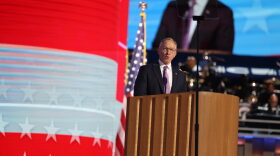 The nominee for lieutenant governor on the Democratic ticket is brushing aside the multiple speeding tickets he got while mayor of Mesa.
-
 The Show spoke with Paul Bentz of Highground and Sam Richard of Consilium Consulting to talk about mail ballots sent out too early in Maricopa County, the state of Arizona’s governor’s race, the election in the 1st Congressional District and more.


