


Tatreez is a traditional Palestinian hand-embroidery art form using a cross-stitch technique to decorate traditional dresses and household items. The artists incorporate different motifs and colors to represent regional identity and social relationships.
Since October 2023, Israel's war on Gaza has caused widespread destruction, a humanitarian crisis and famine. So some Phoenix community members are hosting beginner-friendly Tatreez workshops in Phoenix to help keep the art alive.
"And then when it's through the needle, then you take your thread, put it through the wire loop from a couple inches, and when it's a couple inches nice and secured — oops, like that," said Michelle Barghout. "Nice and secured through the eye of your needle, which is my fingers at this point, then you're just going to pull this little plastic part back through the needle and then keep pulling it and pull it off the thread."
Barghout hosts of the Phoenix Tatreez Circle. She and Farah El-Jayyousi have been leading Tatreez workshops around the Phoenix area for about a year now. El-Jayyousi says she wanted to start a circle to build community and give people a space to come together and destress from news of the ongoing violence in the Gaza Strip.
"So a lot of people that come to our Tatreez circles have been like people who are activists and organizers in different capacities. And this is a way for us to come together outside of that and practice the culture and like just be in community with each other," said El-Jayyousi.


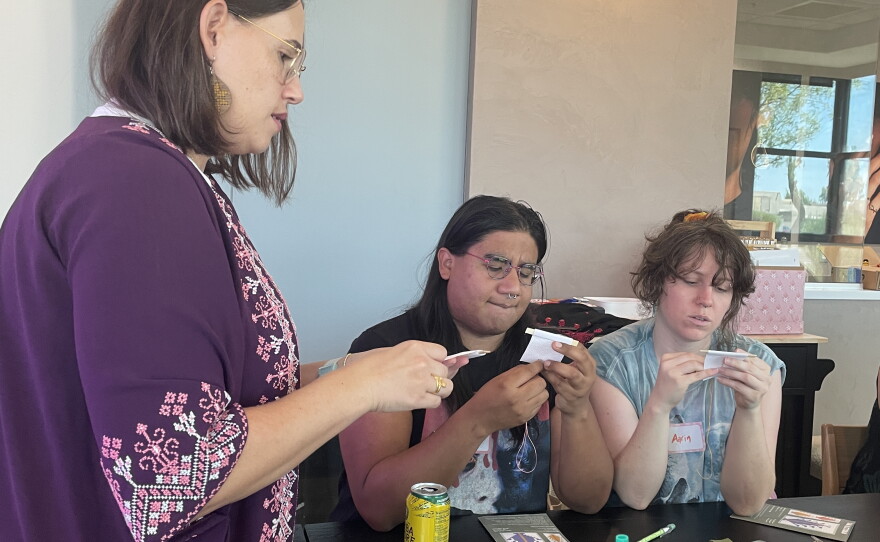


Tatreez is the Arabic word for embroidery and is practiced throughout the Middle East. There’s Syrian embroidery, Moroccan embroidery; each country has its own uniqueness. El-Jayyousi explains.
"So, in terms of what actually makes it Palestinian, it's some of the individual stitches that we use in combination with the motifs the placement on the dresses, because you might see certain motifs show up in other cultures as well. You might see certain stitches show up throughout different cultures, but it has to do with the technique or approach to it, the symbolism behind it," said El-Jayyousi.
In Palestinian culture, the practice has been passed down through generations of women as a means of storytelling and communication. The art was also influenced by women moving between villages and by local and international trade before the practice was affected by the 1948 Nakba, or catastrophe.The Nakba displaced over 700,000 Palestinians. This turned the everyday practice into a means of preserving Palestinian culture.
Tatreez patterns use geometric shapes like diamonds, squares and triangles that have symbolic meanings. Tatreez also has nature-inspired symbols like the cypress tree, which symbolizes longevity and strength. The embroidery uses color to express emotion and the most common colors in Palestinian dresses are red and black.

In one recent workshop held in Tempe, beginners worked on a tapestry of a cypress tree. They used a gridded fabric, which makes it easier to master cross-stitch. Barghout starts by threading her needle.
"Alright, so what you'll do with your cut thread is if you want to use it, hold the end of your thread in one hand, your needle thread in the other, and just put, put it through this little wire loop," said Barghout.
Once you cut the thread, line up the thread with the eye of the needle and pull several inches of the thread through the needle. Then knot the long end of the thread by tying one or two knots. And finally, you can start your first stitch.
"OK, so cross stitch is named as such because it's little X's," Barghout said.
Once you accomplish your first little X, you repeat the steps to make a thousand more X’s, as Barghout says.
The workshop lasts about two hours before the rest of the group stops for a “Tatreez Celebration” to celebrate one year of El-Jayyousi and Barghout’s circles. The group gathers, snacking on shortbread cookies filled with dates, fruit salad with watermelon and cheese and a homemade strawberry refresher, as they finish stitching their pieces together.
The celebration also included a Tatreez gallery showcasing traditional clothing and frames featuring the detailed motifs and colors of Tatreez designs. One frame featured designs from different Tatreez styles of Palestinian cities such as Ramallah, Gaza and Bethlehem. A white traditional dress featured blue cross-stitching using the diamond motif and nature symbols.
Omaya Ahmad showcased two kid-sized Palestinian dresses. One she made for her daughter, and another her grandmother made for her.

"So in this smaller thobe — it's called a thobe, all the dresses are thobes — it mimics the certain components of the bigger one. But so like there's front panels, so there's a design up and down the panel. And then the central eye focus is on the chest piece. So there's always a chest piece on Palestinian dresses," said Ahmad.
Ahmad is half-Palestinian and didn’t start doing Tatreez until around the Israel-Gaza war in October 2023 with the desire to preserve Palestinian culture.
"Yeah, so something that is beautiful that I love about our culture and that is emulated through the art of Tatreez is it's not supposed to— it's not intended to be an individual art form, right? We are not artists in the basement practicing our art. The art is traditionally done with people, and that's how it develops," Ahmad said.
-
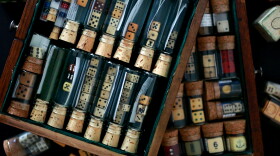 For the next several days, you can tour a huge RV trailer packed with drawers of dice, erasers and just about anything you can imagine that’s both tiny and collectible. The Show’s Amber Victoria Singer got a virtual preview from its founder and curator.
-
 New research shows the ancient site is much older than previously thought. In fact, it’s now confirmed to be the oldest known scientifically dated geoglyph in the Americas, 2,000 years older than the first Pyramids built in Egypt.
-
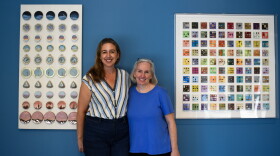 For years, mixed-media/ceramic artist Heidi Dauphin and painter/muralist Laura Spalding Best were casual acquaintances and fans of each other’s work. In 2024, they were paired up for an installation for a gala benefiting the nonprofit Artlink. When they got together to brainstorm for their project, they made a list of things they had in common — including multiples, found objects, collections and numbers.
-
 How do we go about turning casual friends into closer ones? It can be difficult to do, especially as an adult.
-
 Double Ten is the Taiwanese national holiday, and the event hosted by the city of Phoenix has been called the largest Double Ten celebration on the continent.


