


More often than not, the political landscape in our country today is anything but civil. But, Liam Julian, chief of programs and public policy at the Sandra Day O’Connor Institute For American Democracy, says that’s what makes civics — and learning to debate civilly — more important than ever.
The Sandra Day O’Connor Institute surveyed recent alumni of their national civics and debate program about their experiences in high school civics classes and they found many participants were likely to censor themselves. 58% said they didn’t say what was on their mind in class for fear of how others might react, while almost all of them said it was because of their classmates.
The Show's Lauren Gilger spoke with Julian more about the center's recent study.
Full conversation
LIAM JULIAN: Well, I think the biggest finding is that when the students self-censor, they are most concerned about their classmates. So we asked them, “When you hold back in class, what are you concerned about?” 91% said that they were worried about their classmates’ reactions, and that’s compared to 41% who were worried about the teacher.
LAUREN GILGER: And this is of a specific group of kids, right? Like these are kids who are obviously interested in civics and politics and government, right? Were you surprised that even this group of kids was unwilling to sort of voice their opinions all the time in classes like this?
LIAM JULIAN: We were. We were. You know, we’ve heard from them that our sort of civics and debate program that we offer is one of the only places where they actually get that kind of conversation. That’s what led us to dig deeper into this, to sort of really try to understand a little bit more about what was happening in their high school classes.
I had expected that these students would certainly have been comfortable volunteering in their classes and talking about civics issues. They do that with us. That’s the whole basis of our program. So this was a little alarming because, certainly, we can’t prove this, but you would assume that if a majority of these students are self-censoring in their civics classes, it really makes you wonder about students who are not joining an extracurricular high school debate program. What are they not saying, you know? So ...
LAUREN GILGER: I think it makes sense in light of the kind of divisive political rhetoric we hear, the kind of political environment we’re in right now. But let’s talk a little bit about the teacher’s role here and what they can do, or maybe are doing in some instances, to try to I guess like ease that social anxiety that kids feel in classes like this about speaking up, about debating, about disagreeing with anyone. Are there ways that teachers can do this well?
LIAM JULIAN: There are. I should say, though, that teachers, I mean, they are in a tough spot themselves. Last year, we interviewed teachers about this exact idea, what was going on in civics classes, and we found that almost 80% of civics teachers are uncomfortable teaching civics today, in large part because they fear that they’re going to be embroiled in some kind of controversy, that they fear that they don’t have the preparation necessary to touch on these topics in the right ways. So teachers themselves are feeling pressure.
That said, there are strategies that teachers can use to sort of encourage this sort of classroom engagement that is so crucial for a civics class. And I think the first thing that can be done is that you actually make constructive disagreement — you make that like an explicit civic learning outcome. You say in your class, “That is something we are going to practice in class. We are going to practice disagreement. This is a civic skill,” so that it kind of makes that the norm.
And the other thing, too, is to sort of enlist students themselves in shaping the norm that you want to create in your classroom. A lot of teachers do this. They basically get students to volunteer, “What would a really productive classroom discussion look like? How can we disagree in this class with each other in a constructive, productive way?”
One thing that a lot of teachers told us that they do that is really effective is, at the start of school especially, people take anonymous positions. And that’s another way to sort of get people practice, get students practice in disagreeing without requiring them to sort of put their political beliefs out there in the first week of school, you know? So different strategies.
LAUREN GILGER: Yeah. So, I mean, bottom line here, I want to emphasize something you just got at there, which is that the definition of civics is at hand here, right? Like, are we just learning how government works and what it means to pass a bill and make it into a law, or are we learning how to be citizens of a democracy, right? I mean, this is the thing that kids seem to be missing out on today.
LIAM JULIAN: That’s exactly right. Any subject in school, there’s knowledge and there’s skills. And when we talk about civics, I would argue that the civic skills are so crucial. So, yes, students need civics knowledge. They need to understand how their government works, and it’s been widely reported that that is not really where we need it to be, right? The civics knowledge isn’t getting transmitted.
But what is less reported is the sort of lack of practice in these civic skills. And this continues to translate. So if students don’t get this practice in high school, the question is, do they ever get it? What we’ve seen on college campuses kind of leads you to think that actually maybe not. You know that maybe high school is the place where they really need to start learning how to disagree.
And I’ll say something else, too, which is just that I think what doesn’t get conveyed to students enough is that disagreement is at the heart of what it means to be a citizen in the United States. It’s kind of baked into this country. We’ve been disagreeing since the jump, so to speak. We’ve gotten to where we are through productive disagreement and compromise. And that’s just so crucial. It’s just such a crucial civic skill to learn.
LAUREN GILGER: Were these conservative students who were worried, liberal? Do we know if the political bent of any of these respondents mattered or changed their responses here?
LIAM JULIAN: Well, we saw some of that in the qualitative responses when we asked them. So it was on both sides. You know, we had conservative students who felt that their views wouldn’t be welcome, and there were more liberal students who felt their views wouldn’t be welcome. And that sort of tracks with the broader research on this, which is that there’s really no difference when you’re talking about your political affiliations. There’s really no difference.
I guess what I’m trying to say is that everyone’s uncomfortable. It doesn’t particularly matter if you’re on the left or the right, you’re still potentially self-censoring in these situations.
LAUREN GILGER: So you talked about some ways in which teachers can kind of create the environment so that students feel comfortable to learn how to disagree, right? But I mean, what do you think the broader impact of that could be or should be on the country, on future leaders, as I’m sure many of these students are?
I mean, if we can get back to a place, or maybe get to a place in American politics in which we’re bringing up students who know how to disagree, who know how to debate, who know how to still respect one another, what do you think that does for the health of this country?
LIAM JULIAN: I think it’s crucial for the health of the country. Regardless where you fall on the political spectrum, you look at the political sort of discussions and debates that we’re having today, and I think pretty much everyone thinks that they could improve. I do think that this is a crucial skill, and that by imparting it to students, we are setting them up to be better citizens and to lead us in better ways.
Justice O’Connor always used to talk about how, you know, civics is not something that’s just sort of passed on in the gene pool, this understanding of what it means to be a citizen. This has to be taught to each new generation. And so the knowledge and skills are just absolutely crucial to continue to convey to new generations.
LAUREN GILGER: Yeah. All right, we’ll leave it there. Liam Julian is chief of programs and public policy at the Sandra Day O’Connor Institute, joining us to talk about this recent survey on civics and students. Liam, thank you for coming on The Show. Appreciate you coming on.
LIAM JULIAN: Well, thanks so much for having me.
-
 Kerr Kriisa, an Estonian national, became a fan favorite while at UA from 2020 through the spring of 2023.
-
 Long before the National Science Foundation ever looked up to the starry sky searching for answers about the mysterious cosmos and universe, O’odhams like Jacelle Ramon-Sauberan stood atop I’oligam Du’ag — or Manzanita Shrub Mountain.
-
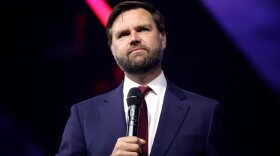 Vice President JD Vance says ASU — along with nine other universities across the country — are using the J-1 visa program to employ foreign workers as researchers, while paying them less than Americans in the same job.
-
 The University of Arizona suspended all fraternity activities this week in order to address a backlog of misconduct reports.
-
 The Tolleson Elementary School District is one of several districts implementing new strategies to fight chronic absences. The superintendent says they saw a 12-percentage-point decrease in chronic absenteeism from the 2024–2025 school year to the 2025–2026 school year.


