LAUREN GILGER: Taiwan’s TSMC semiconductor plant in North Phoenix keeps growing as demand for the technology grows. Today, it represents a massive and growing role in Arizona’s economy and a growing connection with the self-governing democratic island it comes from.
And so, it probably doesn’t come as a surprise that Taiwanese leaders have moved to open a Taiwanese cultural and economic office here in the state.
But now, China is warning Gov. Katie Hobbs not to develop political ties with Taiwan. China considers the island a breakaway province and wants it back.
KJZZ has obtained letters from the Chinese Consulate addressed to Hobbs, and our own Greg Hahne has the story.

LAUREN GILGER: Good morning, Greg.
GREG HAHNE: Good morning, Lauren.
LAUREN GILGER: Okay, so maybe folks have heard of these kind of giant numbers related to TSMC in Arizona. Or maybe they’ve driven past the kind of massive city the company is essentially building in North Phoenix. If you’re driving up the I-17, lots of folks have seen that out there. But for folks who are not super familiar, Greg, let’s just start with how big the investment from TSMC has been in our state.
GREG HAHNE: Yeah, so the latest news that came this July was that they were expanding their already large investment of $165 billion in Arizona up to $265 billion. And it has been called not just the largest foreign direct investment in Arizona, but the largest foreign direct investment in U.S. history.
LAUREN GILGER: And this has to do with demand, as I said, for the growing technology here. Like, semiconductors are key to AI, to our phones, to kind of the way all of this operates.
GREG HAHNE: Yeah, so we have been seeing numbers that AI has been a major driver in the U.S. economy, and it doesn’t come as a surprise, because Nvidia and Apple are major companies, and the kinds of chips they design have ridiculous amounts of demand. And TSMC is the company that steps up and makes the chips for companies like Apple and Nvidia.
LAUREN GILGER: So, you found this relationship between Phoenix and Taiwan actually goes back decades.
GREG HAHNE: Yeah, so Taipei was one of Phoenix’s first sister cities, and that was established in 1979. And actually beyond that, Barry Goldwater sued the federal government, sued Jimmy Carter after the United States cut diplomatic ties with Taiwan and engaged in diplomatic relations with China.
LAUREN GILGER: Wow, okay. So, this relationship has only grown now with TSMC and is continuing to grow. And earlier this summer, we saw Taiwan’s Ministry of Foreign Affairs, right, announcing it will open a representative office essentially in Phoenix. What’s the goal there?
GREG HAHNE: So, this office will accomplish a couple of things. First, as with the investments we’ve been talking about, it’ll help facilitate further investments and trade, you know, just by having some officials from the Taiwan side in Phoenix, it’ll provide a place for them to connect with political leaders in Arizona.
But also another thing that I learned is that it kind of acts as a sort of consulate for Taiwanese nationals, so it’ll provide consular services like providing Taiwanese nationals passports, you know, other bureaucratic things that they might need in order to operate here in Arizona.
LAUREN GILGER: And there certainly is a growing number of Taiwanese nationals here in the state now, right?
GREG HAHNE: Oh, absolutely. I’ve seen conflicting numbers between official U.S. census data. One of the estimates I’ve seen are as low as like 2,800, but that was a couple years ago. But last year, I think the president of Taiwan said it was up to 30,000 Taiwanese nationals in Arizona. I just don’t know how true those numbers are.
LAUREN GILGER: Okay. This isn’t the first consulate-type kind of thing, this representative office in Phoenix in the country, right? There are many others.
GREG HAHNE: Yeah, so this will be the 14th Taipei Economic and Cultural Representative Office in the United States.
LAUREN GILGER: But China is not happy about this, apparently. Tell us about these letters you obtained that lay that out pretty clearly.
GREG HAHNE: Yeah, so I first found out about the letters as I was researching the historical ties between Arizona and Taiwan and the United States and Taiwan. While this is called a Taipei Economic and Cultural Office, they can’t really call it a consulate because of the different geopolitical things happening.
The U.S. kind of has a similar situation. They have an office called the American Institute in Taiwan. It is a nonprofit, but it kind of acts as the agency that represents US interests. So, I was browsing their website and I found that three different federal departments had sent a joint letter to different states saying, "You might receive messages from China saying, 'Do not pursue economic partnerships with Taiwan.'"
So, I thought, that’s interesting. We’ve been seeing $265 billion investments from TSMC. I reached out to the governor’s office to see if they received that letter from the government. They did, and I did a public records request, and I got those two letters.
LAUREN GILGER: Right. And so tell us what they say.
GREG HAHNE: Yeah, one of them recommends that Arizona stops doing any gimmicks that harm the friendship and cooperation between China and the state of Arizona.
LAUREN GILGER: Gimmicks?
GREG HAHNE: Yeah, and then another one accuses Arizona, in allowing this office to happen, of lending credence to Taiwan’s independence, which China does not want.
LAUREN GILGER: What did Hobbs’ office have to say about these letters? Have they responded?
GREG HAHNE: Yeah, so when I received the letters from the governor’s office, they sent me a statement saying that the state of Arizona will continue pursuing economic relationships with Taiwan that adhere to the broader U.S. foreign policy framework. And that broader U.S. foreign policy framework says, "Okay, we can have business deals with Taiwan, we can, you know, do military arms deals with Taiwan, but we’re not going to officially recognize you as your own country."
LAUREN GILGER: It sounds like this is something China kind of does, Greg. Like, this isn’t unique to Arizona to kind of get these warnings from China.
GREG HAHNE: Yeah, that’s my understanding, too. While I don’t have other states’ kind of warnings that they might have seen from China, I spoke to the Phoenix Committee on Foreign Relations President, Lily McElwee. She said that she wasn’t at all surprised by these letters, as other states have likely seen them and the state of Arizona has likely seen them before.
LAUREN GILGER: All right, and let’s hear a little bit about what she had to say.
LILY MCELWEE: They very much adhere to Beijing’s firm stance that it will do whatever it takes to reduce Taiwan’s international space. We’re going to see Beijing react to any, any development that will enhance awareness of Taiwan and cross-strait relations in Arizona or elsewhere, and so these letters fall squarely within what I would expect from Beijing.
LAUREN GILGER: So, doesn’t surprise her. Is there any sense that this will potentially chill business ties between Arizona and Taiwan, which are, you know, growing and so big right now?
GREG HAHNE: I don’t know how much I could say that they would chill Arizona’s business ties with Taiwan. I think considering the fact that it is the largest foreign direct investment in the United States, that these business deals are going to keep on going.
The Arizona Commerce Authority led a delegation to Taiwan at the beginning of this month, and it included 100 state and city leaders from Arizona traveling to Taiwan, so I don’t think there’s any sign that business deals are going to be slowing down between Arizona and Taiwan.
LAUREN GILGER: Greg, you’ve been doing a lot of reporting on this, obviously, on TSMC and their investment in Arizona and why here of all places. You’ve been out to the facility here, which is so big. You met with TSMC Arizona’s president, you asked her about this, right, about tensions with China, which are kind of ramping up right now. What did she have to say?
GREG HAHNE: She didn’t really have much to say. We have to remember that TSMC, while they are Taiwan-based, they are a private company at the end of the day, and they want to sell chips. They are here to do a certain business. So, she just said that they came here because their customers wanted them here, and that their goal and what they’re focusing on is building up their facilities and securing supply chains, having vendors around them, etc. She didn’t comment directly on geopolitics.
LAUREN GILGER: Not surprising, I suppose. But one expert told you that potential conflict between China and Taiwan is the biggest threat to this massive semiconductor industry.
GREG HAHNE: Yeah, and he did a report for the federal government that just kind of highlighted some of the threats and the need to have semiconductors on shore, because there’s so many question marks around TSMC’s advanced chips. I mean, while they’re building up advanced facilities here, the top-of-the-line chips are still going to always be made in Taiwan as of right now, and the U.S. uses those chips still. So, the U.S. needs those supply chains even though the U.S. is seeing major investments from TSMC. It still needs those chips on the island of Taiwan, so if the United States lost access to those chips, it’d be a major hit.
LAUREN GILGER: Okay. Greg Hahne, thank you so much.
GREG HAHNE: Lauren, thanks.
-
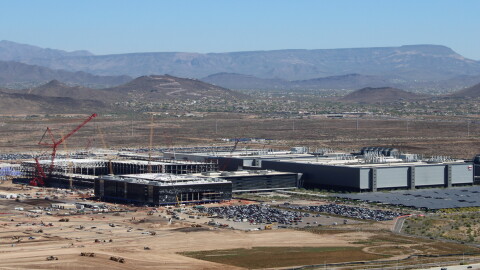 Alex Hager/KJZZArizona business and political leaders have leaned on Taiwan to help transform the state into a hub for semiconductor manufacturing. But the island faces other pressures. KJZZ has obtained multiple letters addressed to Gov. Katie Hobbs from China’s LA consulate protesting the office and asking the state to stop building political ties with Taiwan.
-
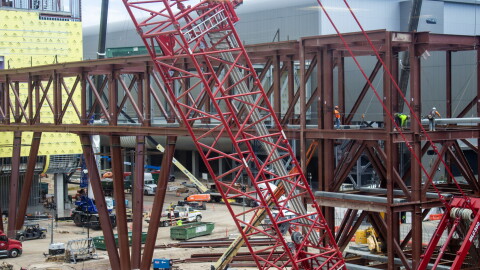 Greg Hahne/KJZZTSMC has elevated Taiwan’s prominence on the global stage. So why is it investing $265 billion in Arizona?
-
 Greg Hahne/KJZZHow are Arizona and the city of Phoenix responding as TSMC has committed $265 billion in investments in the state?