


LAUREN GILGER: This week on “The Show,” we’ve been talking about collections and collections of collections. Today we’ll talk about the line between collecting and hoarding.
Amanda Kelly is an artist based in New York City. She has a new exhibition at The Mini Time Machine Museum of Miniatures in Tucson called “The Need to Keep.” In it, she shows scenes that have a lot of stuff in them, from bathrooms to kitchens to end tables, all in miniature form.
My co-host Mark Brodie spoke with Kelly about her work, and they started with how she described the exhibit.

AMANDA KELLY: I would describe this exhibition as a lot of my recent body of work having to do with hoarding disorder. And a lot of these works have to do with the accumulation of objects, what are the meanings of objects, and the effects of hoarding disorder as a mental illness.
MARK BRODIE: How do you look at that in an artistic format? Because in a sense, you’re looking at the accumulation of things as you are creating new and more things, right?
AMANDA KELLY: Right, yeah, it’s sort of a bit meta to make these scenes of all of these objects, and then the process of making all the objects as I put them in the tiny scene. It’s sort of like this really great healing journey for me because I have a lot of personal connections with people who have hoarding disorder in my family and then friends of friends. So it was really great to make these works, not just as art therapy, but also to show the viewer that it’s relatable. They might see themselves in the works.
MARK BRODIE: It’s interesting because in some of the scenes, it looks just like what I imagine a lot of people have at their homes, like piles of things on a table or another surface. It’s not, you know, it’s not like kind of what we’re led to believe watching TV, like you have a garage that is overflowing full of stuff. It could be something more simple and maybe more relatable than that.
AMANDA KELLY: Yeah, definitely. I mean, there is a scale of hoarding disorder, so, you know, not everyone’s hoarding situation might look like something on the TV show “Hoarders,” for example. But there’s a lot more tied to it than just a messy room or piles of things. It’s more about the person behind that mess and why they’ve created that mess, or they can’t take care of their environment.
MARK BRODIE: What appeals to you about doing this in miniature? Because it seems like there’s an interesting sort of juxtaposition of scale there.
AMANDA KELLY: Yeah, I think the fascination of miniatures captures a lot of people. I think a lot of people, when they think about miniatures, they think about dollhouses, you know, the traditional dollhouse and clean, maybe Victorian era. Sometimes, you know, they think of it as a child’s toy.
But for me, I think miniatures places a lot in my own hands. I get a lot of control from creating these tiny scenes and rooms. And I like that sense of control when I’m creating a sculpture. Sculpting things with my hands and creating miniatures by hand just is a different type of way of making that I really enjoy.
And I think it works well for this type of subject matter because then people can kind of look at it as a whole instead of being surrounded by the mess and everything, you can kind of look over it like from a bird’s-eye view.
MARK BRODIE: Oh, that’s interesting. Because I was thinking that it would be easy to sort of maybe minimize the clutter, the mess, you know, the amount of things that are around in these scenes because it’s miniaturized. But it sounds like you kind of have the opposite take on it, where you can really take it all in as opposed to having to do like maybe a 360-degree view of it where maybe you can’t take it all in.
AMANDA KELLY: Yeah, absolutely. And some of my works in the show are 360, so you can look at them all the way around. Specifically, the two works that are in the center of the gallery, those works you can actually walk around and really get the sense of the whole piece. Other works that I have, you can only see them from the front or the side. But I put so much detail and, you know, little things in my work that no one else would ever notice except me.

MARK BRODIE: Well, did you find that you learned something as you were doing this work, as you were putting these little scenes together?
AMANDA KELLY: Yeah, I learned a lot just from researching compulsive hoarding disorder. And I mostly learned that I definitely don’t have hoarding disorder. I think a lot of people joke about having, you know, that they hoard things. But when you truly have the condition, it affects your life in every single way. And, you know, having some clutter or having a collection is not hoarding, so that was interesting for me to learn.
MARK BRODIE: How do you think that the things that we surround ourselves with define us, either in terms of if we are collectors of things, or if we have hoarding disorder?
AMANDA KELLY: Yeah, I think the objects around us tell a lot about who we are, especially if you collect like tchotchkes, or people collect figurines, things like that, that they put on display, and they want other people to look at, and they have this set collection that they’re keeping track of, that they want the next one in the collection, or they’re looking for a specific one for this collection.
I think the difference between that and hoarding disorder is that you may just be compulsively buying to kind of self-soothe in a way. Some people do that. Some people call it shopping therapy, but it’s a little more like a defense mechanism people use. And I think if it’s affecting your life where you can’t move through your house, or if your house is falling apart to the point where you could get evicted, things like that where it’s a lot more serious, there’s definitely a stark difference between those two things.
MARK BRODIE: What do you hope that people who come to see this exhibition take away from it?
AMANDA KELLY: Yeah, I mean, like I made these works so people could relate to them. I think before I made these works, I struggled a lot thinking that I was the only person in the world to have this experience growing up, and that’s just not the case. So I really wanted to kind of bring awareness to it. You know, I think art is meant to make you uncomfortable and make you kind of reflect on yourself and your life and your environment.
So I’m hoping that people reflect on maybe some of the objects in their life. If they know somebody who suffers from hoarding disorder, I hope that maybe they can try and get them help, or understand them a little bit better, rather than just dismissing them and just saying, “Well, everybody collects things,” and that’s not really the case.
MARK BRODIE: It kind of sounds like you’re hoping this exhibit does for other people sort of what has been done for you through your life experiences.
AMANDA KELLY: Yeah, absolutely. As the artist, making this work was once it was finished, it was like this huge weight off of my shoulders. I felt relieved after it was done. I think it helped me work through a lot of things, so I hope that people can relate to it as well.
MARK BRODIE: All right, that is Amanda Kelly, an artist based in New York City. Amanda, thanks so much for the conversation.
AMANDA KELLY: Thank you so much, Mark.


-
 Artists who work with found objects are notorious for having strange collections of random items waiting to be turned into art. An installation by two local artists spotlights their unusual collections and chronicles their time making art in the Valley.
-
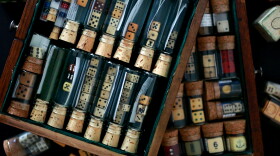 For the next several days, you can tour a huge RV trailer packed with drawers of dice, erasers and just about anything you can imagine that’s both tiny and collectible. The Show’s Amber Victoria Singer got a virtual preview from its founder and curator.
-
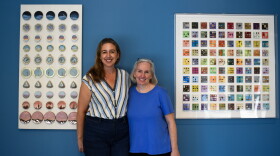 For years, mixed-media/ceramic artist Heidi Dauphin and painter/muralist Laura Spalding Best were casual acquaintances and fans of each other’s work. In 2024, they were paired up for an installation for a gala benefiting the nonprofit Artlink. When they got together to brainstorm for their project, they made a list of things they had in common — including multiples, found objects, collections and numbers.
-
 The man behind Pollack Cinemas — packed with life-size figures of movie stars and characters — has a whole other collection behind closed doors at an office building in Mesa.
-
 Most collectors of presidential items have a specific niche. Maybe it’s campaign buttons, bobble heads or White House Christmas cards. Maybe they focus on a handful of select presidents or a certain time period. Not Steve Ferber. He just likes collecting what he calls "pieces of history."


