


MARK BRODIE: Sun City takes up a little less than 15 square miles in the West Valley, and as of the last census in 2020, had almost 40,000 residents. None of those residents are allowed to be younger than 19. At least one person in each household has to be at least 55 years old.
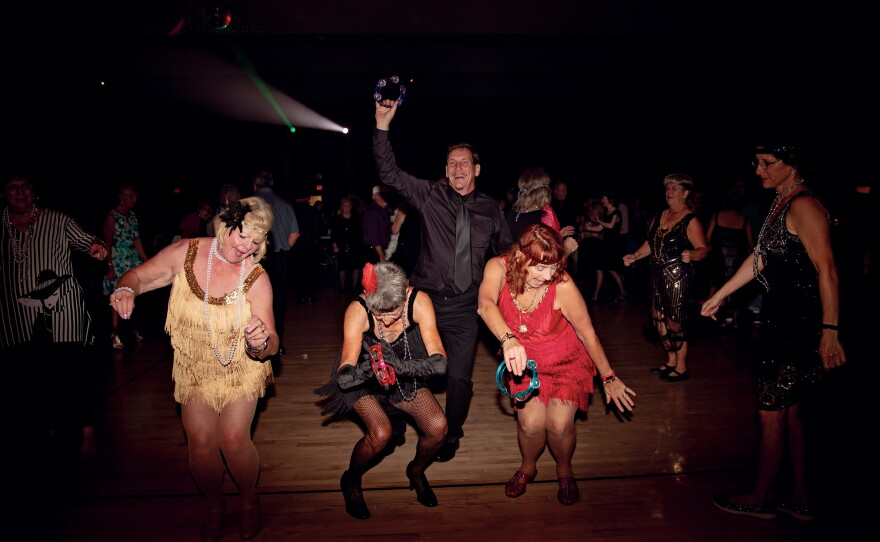
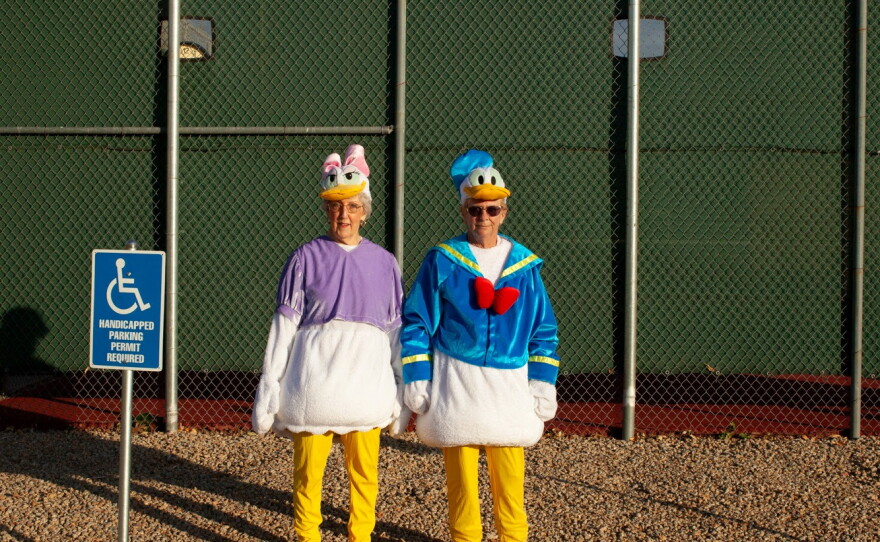
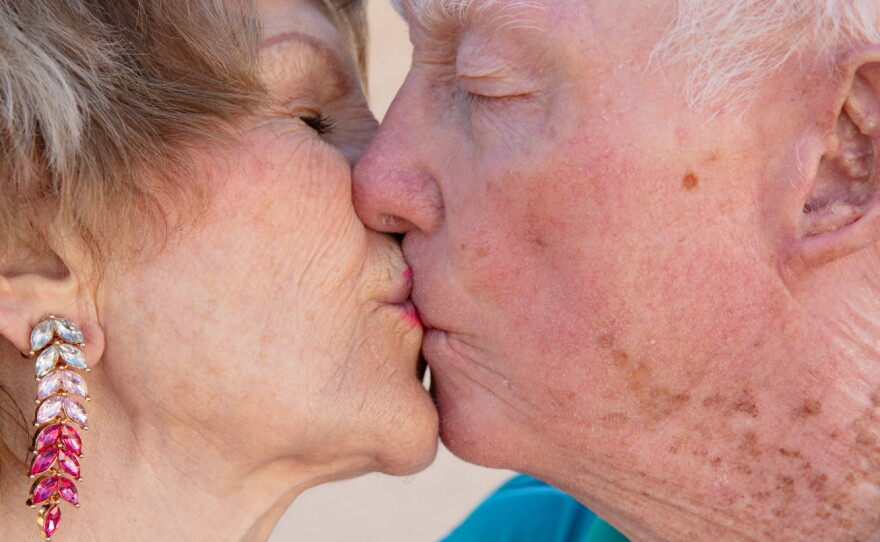
A new book takes a different look at Sun City and the people who live there. "Sun City: A Love Letter to the Golden Years" is full of photos of the community and its residents. Kendrick Brinson is an Atlanta-based photojournalist and the book’s author. She joins me to talk more about it, and Kendrick, you visited Sun City for more than a decade. How did you first start going there and meeting residents?
KENDRICK BRINSON: Yes, it was kind of by accident. I had just left my last full-time staff newspaper job, and I knew that I wanted to start some kind of project that would be long-term that I could work on, you know, between other assignments for magazines and newspapers. And I was watching a movie, and the first like 10 minutes of the movie, there was a couple of scenes in Sun City.
And I’m from South Carolina, I live in Georgia. I’m used to lush green, I’m used to brick houses. There’s just like a certain look to the South. And I was so fascinated by the desert landscape, the houses from the 1960s, the bright blue sky. And so I just started Googling like, where was this shot? You know, and so I looked it up and I found out it was shot in Sun City. And then instead of watching the movie, I was just, you know, kind of scrolling on my phone, and I saw that there were cheerleaders, and then I saw it was about to be the 50th anniversary of Sun City opening.
And so I thought, “OK, well there’s a news hook.” And so I saved up some money, I reached out to some people, made some contacts, and I went in December 2009, and I went back the next month for the parade, for the 50th anniversary. And it just kind of, I kind of thought I would work on it for maybe a year off and on, and somehow it turned into 16 years.
MARK BRODIE: Yeah, what happened? What led you to keep going back?
KENDRICK BRINSON: You know, it was published multiple times, and so that was nice that I could, you know, be reimbursed by, I guess Time magazine, AARP has sent me there, I’ve gone for National Geographic.
And I think just having that like continuous interest from the people who pay me as well as from me — like I really like being there, I like the community, I feel so welcome there, it’s very inspiring to me. So it’s just kind of just been like a break from working on sad news stories. I’ll go once or twice a year and I’ll see the same people, but then try to meet new people every time.

MARK BRODIE: What inspires you about Sun City?
KENDRICK BRINSON: You know, I think a little bit at first it was, I’m a little bit of a perfectionist, and I think seeing people do things just for the sheer joy and pleasure of it, rather than, you know, having to be the best at it, the best swimmer that’s swimming there or the best tap dancer — there’s so many different clubs there. And I saw that like there was people of all skill levels.
So it was kind of just this rethinking of, you know, I can do things because I like to do them, or I’m curious, or I want to be in community, instead of just like, “This is something I can be successful at, this is something I can make money at, or I can be the best person.” And I think that really shifted something in me and kind of changed how I move through the world.
MARK BRODIE: I’m curious about some of the photos and sort of your approach to them, because I think it would be pretty easy to look at, you know, some of the residents of Sun City, you know, cheerleading or swim meets, and sort of do it in a like, “Oh, look, isn’t this cute” kind of thing, or even in like a less pleasant, like more of a mocking way.
But that’s not what your photos are. As you’ve written about, and as you’ve mentioned, like, they really show a sense of joy and curiosity and community. And I’m wondering what speaks to you about that, and how did you try to get that into your photos?
KENDRICK BRINSON: Yeah, from the start, I was very interested in showing what we don’t expect to see from the older population. I feel like we’ve seen mourning, we’ve seen, you know, the person in the rocking chair on the porch, we’ve seen sickness and wheelchairs, and of course that’s there, that’s everywhere. And so I really prioritized photographing all the living that’s happening there.
And so I think that was just always my focus. I’ve gone to the cemetery there many times and just admired all the names, and you know, a man had a heart attack while I was photographing one of the parades. That’s going to be there. There’s going to be ambulances going by, but I feel like I wanted to show like we can look forward to growing old. This is the time to play, this is the time to try the things that we never thought we had the time to because we were too busy working or raising children.
MARK BRODIE: Have you found that since you have started documenting this community, that you’ve tried to maybe try things that you haven’t done before, or, you know, take joy in maybe not being the best at something and just, you know, participation, that kind of thing?
KENDRICK BRINSON: Oh, absolutely. And every time I go there, I am against my will, like I’m photographing the ballroom dance club, I’m forced onto the dance floor. Like people there will not let me just, I’m like, “No, I’m here to take photos,” or they’re like, “Why don't you drive my golf cart?”

MARK BRODIE: Did you find at first that people were maybe reluctant to let you in to talk to you about their stories or let you photograph them?
KENDRICK BRINSON: I think that is one of the things that made me keep going back to Sun City is I’m obviously an outsider. You have to be 55 or older to own property there, and I started going there in my late 20s. So automatically I kind of stood out, and I have tattoos, and I have red hair, and I’m tall, and I’ve got two cameras swinging from me. So I’m automatically a person that people might be curious about and might stop to say hello to, just if I’m walking down the street there.
And so I think that kind of lets me in faster, because I get to tell people I’m interested in this place, and everyone who lives there chose it. Like nobody was born there. So I find that interesting that there’s people from Michigan, there’s people from all over the country who’ve decided that they want to spend the rest of their lives in this place. And my interest and their interest kind of connects us right away.
MARK BRODIE: Is there something visually that appeals to you about this community in addition to the people who live there?
KENDRICK BRINSON: Yeah, I think I honestly think one of the characters is the light in my book, because the light is so bright and everything is so saturated. And you can, like when I was going through all the photos from, you know, over 16 years for this book, I was looking through and I could see where I figured out how to use a flash much better, and I could show like really how vibrant it was, you know, I could kind of light the shadows, too.
So I think the landscape is something that seems kind of, the desert landscape is just different to me from what I grew up seeing, and the cacti, the palm trees, I can’t tell you how many palm tree photos that I looked through for my edit.
So, yeah, I think I think that’s part of it. I think the character, that’s part of the character in the photos to me is just like that saturated, hot light.
MARK BRODIE: Have you gotten feedback from some of the folks in Sun City about the photos that you’ve taken and published over the years?
KENDRICK BRINSON: I have. One of the women that I’ve become much, much closer to in the past five years, her name is Sharon Word, and she’s one of the Sun City Poms, she’s a senior beauty queen, she’s just like the light of the party everywhere she goes. And she was the one who really made me make the book, because I told people for over a decade, “I’m here working on a book.” You know, so sometimes I could say, “I’m here for National Geographic,” or whoever I was working for, but mostly it’d be like, “Oh, it’s a book,” but it would just be kind of like a dot-dot-dot, never going to happen.
And since I’ve become closer to Sharon, she’s like, “Kendrick, I am going to die, and I want to see the book while I’m still alive.” And I was like, “OK.” She’s in her late 80s, I need to do this now! Like it was, it was so true, and a handful of people that I did become close to there have died, and one of them was this year, and I was just, you know, I really cared about her, but also I think she would have been just so delighted to see how many photos of her were in a book.
MARK BRODIE: Yeah, I guess that’s — that’s a lot of pressure. I mean, somebody tells you, “I’m going to die, I want to see this while I’m still alive,” like that’s a real like get your butt off the couch kind of moment, huh?
KENDRICK BRINSON: It really is. I feel like there could have been 40 different versions of this book, but really the priority is always joy.
MARK BRODIE: Sure. All right, that is Kendrick Brinson, a photojournalist and author of the new book "Sun City: A Love Letter to the Golden Years." Kendrick, thanks so much, I appreciate it.
KENDRICK BRINSON: Thank you, it was a pleasure.

-
 Janelle Molony has delved into that history in her new book "Birds Gone Wild (And Other Stories of Arizona Ostrich Ranching)."
-
 Seth Rachlin is an assistant teaching professor in ASU’s School of Social and Behavioral Sciences and co-author of the new book "Social Capital at Work: Building the Hidden Asset that Drives Trust, Engagement and Performance."
-
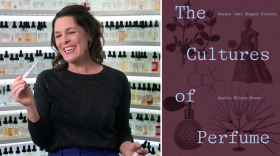 The founder and executive director of The Institute for Art and Olfaction has released a new book diving deep into the impact perfume has had on history.
-
 Carlos Alonso Nugent is a scholar of the U.S.-Mexico borderlands and author of the new book “Imagined Environments: The Making of Borderlands.”
-
 “Operation Sparrow” tells the heroic story of Florimond Duke, who helped quite literally win World War II by undertaking what many thought would be a suicide mission — and then retired to Phoenix.


