LAUREN GILGER: The surge in federal immigration enforcement around the country may be a policy issue and a point of political debate in this country, but it is also a reality that has dramatically changed people’s lives.
Diana Guelespe is senior research associate behind the study. She is on the line now to tell us more. Good morning, Diana.
DIANA GUELESPE: Good morning.
LAUREN GILGER: So this study talked to parents in Chicago and Charlotte, North Carolina. But it obviously gives us a lens into how mixed-status families are being impacted all around the country. These parents essentially told you they are still staying inside all the time, right? Isolating.
DIANA GUELESPE: That is right. Across the interviews, the threat of an encounter with ICE that could separate an undocumented parent from their family dominated the daily lives of family members, including their U.S. citizen children. And we did find that families were still largely isolating themselves in their homes and avoiding nonessential activities even months after those targeted operations took place — Charlotte’s Web in Charlotte and Midway Blitz in Chicago.
LAUREN GILGER: So as we said, these are mixed-status families you talked to. That means at least one person or more in the family is undocumented. Are these folks who have come to the country recently or been in the U.S. for a long time?
DIANA GUELESPE: The majority of the people that we spoke to have been in the country for over 15 to 20 years, and many of them have U.S. citizen children. The vast majority of them had U.S. citizen children.
LAUREN GILGER: OK. So many of them are not, the people who talked to, are not necessarily the one who are undocumented. They have status, maybe some of them are citizens, but they often have U.S. citizen children. Some had partners, husbands, family members who had already been deported, right?
DIANA GUELESPE: That’s correct, yeah. A few of them did.
LAUREN GILGER: So let’s talk about what mothers in particular told you in these interviews. It sounds like this really hits their bottom line in a way that is unique to mothers. They work less, some left their jobs. What did the economic impact look like here?
DIANA GUELESPE: Sure, so mothers, as you know, they play key roles in these families. They are caretakers, economic contributors, and they told us how they were suffering both economic and health hardships as they work to protect their families.
They shared that they worked less or left their jobs due to the fear of ICE activity or an ICE encounter. They also described some of the mental health challenges their children were experiencing as a result of their fear of ICE in their communities, and how some of their children were also receiving therapy as a result of this fear.
LAUREN GILGER: That was an interesting point — that many of them, not just for the children, but for themselves, were open to therapy, already talking about mental health issues and getting help, right?
DIANA GUELESPE: That’s correct, yeah. Many women, for their physical health, talked about how they missed doctor’s appointments, appointments like regular checkups for chronic illnesses or mammograms. But then they were aware of how their own mental health was being negatively impacted and talked about it in a way that said, “I am bottling up a lot of emotions inside. I know it would be good to speak to someone.”
I even recall a mother saying, “I have been told that if you aren’t doing well, your children won’t be doing well either.” So they are aware of the negative impacts, and some had started to access counseling at community-based organizations. But a great number said that they wished that they had access to more mental health programs.
LAUREN GILGER: When you talk about folks leaving their jobs, working less because they cannot or don’t want to be out in public, how are they surviving financially? Did they talk about falling behind on bills? Can they keep up with expenses?
DIANA GUELESPE: They talked about certain programs that were really helpful to them, some financial assistance programs that helped them, perhaps helped them keep up on their rent or helped them pay a utility bill. One of the most common things that we heard was how they received food donations from community-based organizations or sometimes their children’s schools or churches to just help them keep up with those basic expenses. But yes, they were struggling. They were having financial hardships for sure.
LAUREN GILGER: I mentioned you looked at Chicago and Charlotte. And it sounds like also — I mean, the Urban Institute — it sounds like you’re also looking at the policies that these cities have and how cities can address heightened immigration enforcement and what cities are doing in particular. Was there anything interesting that stood out for you there?
DIANA GUELESPE: Well, we chose Chicago and Charlotte, as you said, because there is a bit of a contrast in their policy environments when it comes to immigrant protection and inclusion. Both cities had this high-visibility enforcement operation take place, but localities and states have responded in different ways.
For example, in Illinois and Chicago, they established policies limiting cooperation with federal immigration enforcement and passed legislation mandating protections at schools, universities, courtrooms, hospitals.
In Charlotte, Charlotte is known as a welcoming city. However, it is situated in a Dillon’s Rule state, where local governments are limited by the authority of the state General Assembly. And the General Assembly has moved in the opposite direction of the city, for example, and mandated sheriffs cooperate with ICE.
LAUREN GILGER: Did you see different trends in these responses from these families in these places with different policies?
DIANA GUELESPE: One of the main differences that we saw was when it came to families experiencing navigating schools, taking their kids to school or picking them up. And so the difference there was that parents in Chicago tended to mention lots of different supports that they received through the school. They talked about the schools providing know-your-rights information to them and alerting them to any kind of issue that may have happened around the school related to ICE, and even offering therapy sessions to some of their students. Whereas in Charlotte, we heard that it was less consistent and less comprehensive and a little bit more dependent on a particular teacher or a particular school.
LAUREN GILGER: Diana Guelespe, senior research associate with the Urban Institute, joining us to talk about this new report. Diana, thank you for coming on. Thanks for your research, I appreciate it.
DIANA GUELESPE: Thanks for having me.
-
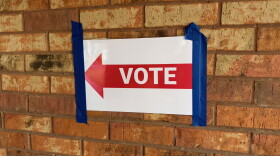 The 2026 Midterm Election Voter Poll surveyed more than 10,000 Asian American, Black, Latino, Native American and white voters between Oct. 19 — when early voting began — and Election Day — including in 50 of the most competitive House districts.
-
 ICE and other armed federal personnel are not legally allowed to be at polling sites. But for months, rights groups worried a federal deployment might still happen — especially after Homeland Security Secretary Markwayne Mullin said ICE agents may go to polls for specific threats.
-
 Lawyers for the state are telling a federal judge it's none of the business of the Trump administration who gets reduced tuition at Arizona's public universities.
-
 The Trump administration has deported thousands of immigrants to countries other than their own under a process known as third country removals. For one woman, that process from arrest to deportation took less than a week.
-
 Video shows a large saguaro toppled over in the dirt. Its pale green trunk and thick roots stick out among a pile of vegetation that’s been downed.