


MARK BRODIE: Phoenix Pride and other similar organizations have been holding events celebrating the LGBTQ community in October, including a parade earlier this month. Much of the rest of the country celebrates pride in June, but organizers here say they delay it to avoid extreme summer temperatures.
As the month comes to an end, we wanted to check in on the state of advocacy for and within the LGBTQ community. And to do that, we got a hold of Neil Giuliano. He is currently the president and CEO of Greater Phoenix Leadership. He has also served as mayor of Tempe, and in leadership roles with groups including the San Francisco AIDS Foundation and the Gay and Lesbian Alliance Against Defamation. And when we spoke earlier, I asked Giuliano how he would describe the evolution of advocacy in this community.
NEIL GIULIANO: I would have to acknowledge from the get-go that the culture shift is what has led to the advancements for the LGBTQ community. We have seen the culture shift over the last 20 to 30 years in a number of ways. People have come out more, major employers and corporations started providing domestic partnership benefits, government entities started providing civil unions, and all of that took place in a relatively short period of time over 20 to 25 years, which brings us to the point ... we are at today. So the culture shift is what has brought about the most significant changes.
MARK BRODIE: In what ways do you think the culture has shifted to maybe allow for more advocacy and maybe more acceptance?
NEIL GIULIANO: Sure, well, we have seen over time, especially with the advent of social media in the mid-2000s range — 2005, 2006 — all the social media platforms starting to emerge, people got connected and people felt connected to their other folks who were LGBTQ. That allowed greater visibility and that allowed our major media networks and institutions to start covering the LGBTQ community much more than it had in the past, because they were simply reflecting what was going on in the broader society.
So fair, accurate, inclusive representations of LGBTQ people in the media just exploded when social media exploded. And quite honestly, society and our friends and neighbors followed suit. And the overwhelming response was why were we so upset about all these issues for so long? The LGBTQ people, our neighbors, our friends, the people we sit next to at church, we work with them. And so that all led to the rapid ascent for greater LGBTQ equality, not that we have achieved it fully, but certainly much greater.

MARK BRODIE: So where do you think we are now in terms of getting equality and fairness and advocacy for this community?
NEIL GIULIANO: I kind of describe it this way, Mark. I think we are kind of in a holding pattern. I do not see a lot of our advancements and things that have been granted rapidly being taken away, but they are under siege. And they are being talked about as things that should be taken away by people with a lot of power in government at all levels.
And these days, it is really focused more on the transgender members of the LGBTQ community than just lesbian and gay folks, because our transgender brothers and sisters are the people who are least known, least visible, and make up the least amount of the population within the LGBTQ community. And so they are the most marginalized members of the community right now.
MARK BRODIE: Do you see it as a good comparison looking at where lesbian and gay and to an extent bisexual people were, maybe a decade or two decades ago, to where transgender people are seen now?
NEIL GIULIANO: I would go back even further. I would say it is two or three decades ago, because there simply is not the same level of visibility of transgender people in the community. Despite the ongoing attacks coming from more right-wing focused people in politics, they are just not as visible. So yes, it is like where the lesbian and gay community was, I would say, in the early to mid-1980s and early-1990s.
MARK BRODIE: Do you get the sense that visibility is key for transgender residents, like it has been, as you described, for others in this community?
NEIL GIULIANO: It is key. But there are so fewer members of the transgender community, it is harder for that visibility to become noticed as much as it probably needs to, and so that is part of the challenge that we have.
MARK BRODIE: You mentioned social media as being a catalyst to some extent for helping the LGBTQ community find each other and increase their visibility. I wonder about some of the negative impacts of social media, though, in terms of conspiracy theories and rumors and other hate being able to be spread much more quickly. What have you seen in that area?
NEIL GIULIANO: That is exactly right. For all of the positive aspects of being connected and sharing information and understanding and hearing people's stories, you have others who are using social media to tear people down, to make false accusations, false representations, disinformation, misinformation about the LGBTQ community more than ever as well.
Now, that just does not go as far because our friends and neighbors are a lot more educated about who the LGBTQ community members are and there is nothing to fear, unlike what many people wanted to make us out to be people to be afraid of. But yes, there are both sides to the social media coin.
MARK BRODIE: Do you envision a time when members of the LGBTQ community will achieve full equality in this country?
NEIL GIULIANO: I am aspirational and hopeful for that, but these are ongoing battles. ... They are in three camps. There are the very legal battles that must be fought and won in courts of law over time. There are the political battles that literally are on the ballot every time we are voting, and you research what folks running for office may think about equality for LGBTQ people. So that's constant. And then there is the ongoing cultural and human nature challenges of educating people and helping people understand what the LGBTQ community faces while we don't have yet full equality.
MARK BRODIE: Well, given all of those and given where we are and where we have been, what to you are the most important things to focus on in terms of advocacy at this point?
NEIL GIULIANO: Strengthening relationships with allies. Bottom line. The LGBTQ community will never be the majority population. We will not be even close to the majority part of the population. We need our allies, our friends, our neighbors, our family members, our coworkers to stand with us, and for those issues related to the LGBTQ community to rise on their level of importance so it does become a filter for them when they are choosing politicians and when issues that do come up regarding members of our community, they are dealt with according to the processes and procedures that are already in place and overwhelmingly dealt with to a very successful conclusion from all parties' perspectives. But yes, we still face these kinds of things and we have to speak out about them and we have to try to overcome them.
MARK BRODIE: Do you find that the situation in Arizona in terms of advocacy is roughly the same as it is in the country as a whole?
NEIL GIULIANO: I think we are lagging, to be honest. We are lagging because we do not have the same urban core of folks, we do not have the same representation of folks in a variety of fields all in one place where they can learn and congregate and get to know these issues closely. I would put us in the middle of the pack of states. We have a vibrant community, we have a strong community, we have wonderful people working in this space, and we stay vigilant and we stay focused.
MARK BRODIE: All right, Neil Giuliano, thanks so much for the conversation. I appreciate it.
NEIL GIULIANO: Thank you, Mark.
-
 Raquel Terán — former state lawmaker, community advocate and founder of advocacy group Proyecto Progreso — says her own career as a Latina activist in Arizona was inspired by Dolores Huerta’s message.
-
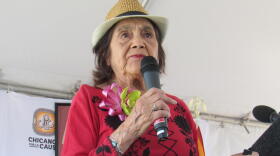 In a 2022 golden anniversary visit to Santa Rita Hall near 10th Street and Buckeye Road, Dolores Huerta recounted the history she made there after meeting with prominent Latinos to seek help overturning a law to stop farmworkers from organizing.
-
 Two podcasters dug into how the famously liberal Colorado earned the nickname the Hate State after residents voted to make it illegal to prohibit discrimination on the basis of sexual orientation.
-
 Maricopa County is appealing a judge’s decision to keep the Sheriff’s Office under federal court oversight, citing cost and claiming racial profiling behavior by the department has been fixed.
-
 ABC15 chief investigative reporter Dave Biscobing broke the story and sat down with Phoenix police Chief Matt Giordano to talk more about how people in south Phoenix can trust the department given its history there and this latest scandal.


