MARK BRODIE: Ten years ago, Tucson band XIXA released its first full-length album, “Bloodline.” They started as an underground cover band called Chicha Dust, playing Peruvian chicha songs to increasingly bigger crowds.
But by the time they released “Bloodline,” they found their own sound within the genre, a moody Southwestern psychedelic rock ’n’ roll vibe, befitting of their border roots. Tomorrow at Valley Bar in downtown Phoenix, they’ll be celebrating 10 years of “Bloodline” and their career since.
My co-host Lauren Gilger spoke with XIXA singer, songwriter and guitarist Brian López more about it. And he told her at the time, he and co-founder Gabriel Sullivan were both trying to push their solo careers, and they just needed a way to pay the bills.
BRIAN LÓPEZ: We just had this idea, why don’t we subsidize our solo careers by starting a really fun cover band just so we don’t have to get jobs, you know? Don’t have to be like a waiter, I don’t have to go and substitute teach at a high school, you know? And that’s kind of how it started. That was the impetus of the band Chicha Dust.
LAUREN GILGER: OK, so it was Chicha Dust, and you’re doing covers of chicha music. Tell us first just like what that is, what that genre is all about.
BRIAN LÓPEZ: Chicha is a specific type of cumbia. It comes from Peru, and it was kind of the sound of the underclass, coming from Iquitos or Lima in the ’60s — late ’60s, ’70s and early ’80s. And yeah, it was kind of the sounds of the working-class type music, so it wasn’t really exploited as an export early on, and it wasn’t until much later when I received what would be like a quintessential album, it was called “The Roots of Chicha: Volume 1,” and it was put out by Barbès Records.
[MUSIC CLIP PLAYS]
So I was opening up for a French chanteuse, Marianne Dissard, in New York City at a place called Barbès. And Barbès is kind of like a world music venue and record label, and I played a Peruvian song that I had incorporated into my set at the time called “Ojos Azules.”
[MUSIC CLIP PLAYS]
And the owner, Olivier Conan, was like, “Hey, that’s a Peruvian song. You know, we just released a full compilation called "Roots of Chicha, and it’s all Peruvian chicha cumbia music, psychedelic cumbia music from the ’60s and ’70s.” And I was like, “OK, that sounds cool.”
And he gave me a CD, and it just — it blew my mind. This music, because, you know, I’d been in these indie rock band circuits for so long, and it kind of gets tiring and boring, and you kind of become a caricature of yourself, you know? Everybody has like a 3 o’clock shadow beard and a little bit disheveled enough to still be stylish, and plaid T-shirt. And, you know, I mean, mostly dudes, and everyone has like 30 guitar pedals, and most of them are delays and reverbs, and they all start to sound the same. You’re just like, what am I doing here?
So to receive this music, and as somebody who comes from a classical guitar background, the musicality of it first struck me, as did the infectiousness of not just the melodies, but now you have these amazing cumbia rhythms incorporated into it, and the phrasings were so wild and different and off-time.
[MUSIC CLIP PLAYS]
So we learned — we covered all these chicha standards from this compilation, and we became Chicha Dust, you know? Jason Urman playing keyboards from Nogales, Arizona, jumped on early. Geoffrey Hidalgo, who played, you know, we played music with him in many bands. Winston Watson, who played with Bob Dylan, joined us. I mean, and we’re all coming from this kind of rock ’n’ roll background, so we had a different take on chicha music.
LAUREN GILGER: Right. It was cover songs to begin with, but this became something entirely different, kind of without you meaning it to be, right? Like it was an unexpected hit, people were asking for you to keep going in this?
BRIAN LÓPEZ: Yes, so we prided ourselves on like, we’re not going to do any marketing, we’re not going to do any social media, no handle of Chicha Dust, no Facebook page, no Instagram, no photos, no bio, no nothing. It’s going to be word of mouth, super old school, and if you know, you know.
And it turns out that’s a great marketing tool in the age where everyone’s doing the same thing. We zagged, and we just kind of blew up at a local level and got invited to like South by Southwest, and they were like, “Well, look, you can’t get in unless you can give us like a photo and like a short bio.” We’re like, “All right, fine.” So we caved in in 2013, and then we played a tour with two other national chicha bands at the time, Chicha Libre from New York and Money Chicha from Austin, Texas. And we did this little short tour together, and that was really cool.
But we kind of saw the writing on the wall around 2014. There was a lot of people listening to chicha in any, you know, any kind of cumbia, and a lot of like, to be honest, just like a lot of bad bands. We were like, “All right, let's just — let’s go a different direction. Let’s start writing our own material and kind of filter it through our own natural backgrounds of indie rock, songwriter Americana kind of genres, and still kind of incorporate the infectious chicha and sonidero and bolero and all these other things that we like from the border region and kind of keep that Peruvian chicha psychedelic vibe alive, but not put it in the forefront and just write our own material.”
LAUREN GILGER: So you turned it into your own kind of thing here. Like this is this kind of unique sound that feels very of Tucson, of the border region. It’s psychedelic, and it’s got those sort of, you know, chicha or cumbia rhythms, right? But you’re doing something totally different with this, too. Talk about how that came about in the writing of this album, of “Bloodline.”

BRIAN LÓPEZ: When I listen back to this album, it’s just so wild. It’s like a very schizophrenic album where we have all these different songwriters trying to get their musical DNA onto an album. There’s stuff that’s like super heavy that I forgot about, like “Down From the Sky.”
[CLIP OF "DOWN FROM THE SKY" PLAYS]
And then there’s stuff like — like me, like “Killer,” for example, that’s — that’s something that I had a heavy hand in, which is more of like the poppier side of chicha music.
[CLIP OF "KILLER" PLAYS]
That’s where I thought we were going. And then you have something right down the middle, which I feel is kind of indicative of our North Star, which would be the song “Bloodline.”
[CLIP OF "BLOODLINE" PLAYS]
Something that kind of has that Southwestern, border region cumbia, but also Americana songwriter sensibility. When I listen back to that record, that’s the one song that that kind of — it’s a throughline through the rest of our records. We honed in on it more as time went on. But at the time, we’re just throwing everything at the wall and just seeing what would stick. And, you know, you get “Bloodline.”
LAUREN GILGER: So what’s it like, Brian, to look back at 10 years since that album, since you were throwing ideas at the wall and trying to figure out what this band would be?
BRIAN LÓPEZ: I mean, it’s — in one sense, it’s only 10 years, but in another sense, it feels like a lifetime because we did so much touring. People don’t understand, like, traveling, being in the same bus, living together, experiencing all these new things with each other abroad.
It took us all over the world, and these experiences — like, I have like a hard time understanding the concept of time these days. Like, I know there’s an X and Y axis, but like I don’t understand how that’s 10 years.
And it was such an easy decision to get rid of this wildly popular cover band. Like, honestly, we could have just made money and had like a steady career or something doing that.
But that’s not us, like we wanted to write our own music, and we knew that there was going to be a bunch of terrible cumbia bands in the next two years, and we didn’t want to be a part of that. So we gambled, and I’m really proud of us for doing that — very, very proud.
LAUREN GILGER: So where has this brought you today? I mean, a decade after this original album, what’s next for XIXA?
BRIAN LÓPEZ: I don’t know. I don’t know. We put out an album last year, “Cholo.” We toured Europe. Everyone’s lives are getting more complicated. I have a lot going on with my solo career now. Gabriel has a lot of great stuff going on with his production. Jason’s got a family and a mortgage, and his life is wonderful.
You know, I don’t know. Maybe it’s run its course, maybe not, but I’m really happy to be celebrating at least this milestone right now.
LAUREN GILGER: All right. A good note to end on. That is Brian López, the co-founder, singer, songwriter, guitarist for XIXA. Brian, thank you so much for coming on The Show. I really appreciate it. Congratulations on 10 years of this album.
BRIAN LÓPEZ: Thank you so much, Lauren, for having me. Thank you, KJZZ.
-
 Janelle Molony has delved into that history in her new book "Birds Gone Wild (And Other Stories of Arizona Ostrich Ranching)."
-
 Sarah Brooks is the owner of Tucson Tannery, where she makes animal hides into leather using a traditional, time-consuming process she never imagined would become part of her life.
-
 On the 100th anniversary of the highway, a quirky museum keeps Ross Ward's world of miniatures and creative legacy alive.
-
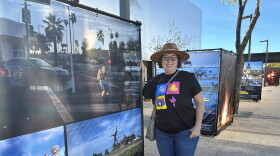 Maryvale is hosting its first ever arts festival this weekend, celebrating local artists and other creatives from the neighborhood. The event will also feature a photography exhibition honoring the work of the late Arizona Republic photojournalist Nick Oza.
-
 Barbara VanDenburgh, communications manager for the Sidney Poitier New American Film school at ASU, tells us about what she’s watching this season.